Private Tour to Tomar and Almourol Knights Templar Route
Active
8h - 9h
For a full refund, cancel at least 24 hours before the scheduled departure time.
Instant confirmation
Mobile or paper ticket accepted
About this experience
An extraordinary immersion into the history of the Knights Templar!
In the hills of central Portugal, privileged by strategic isolation, is the Route of the Knights Templar, which passes through the cities of Tomar and Almourol. A route between the castles, forts and churches that the knights of antiquity left as architectural and religious heritage.
You certainly won't want to miss this tour of paradise landscapes!
Available options
Private Tour to Tomar and Almourol Knights Templar Route
Pickup included
What's included
Bottled water
Air-conditioned vehicle
Entrances to the Monuments
Detailed itinerary
1
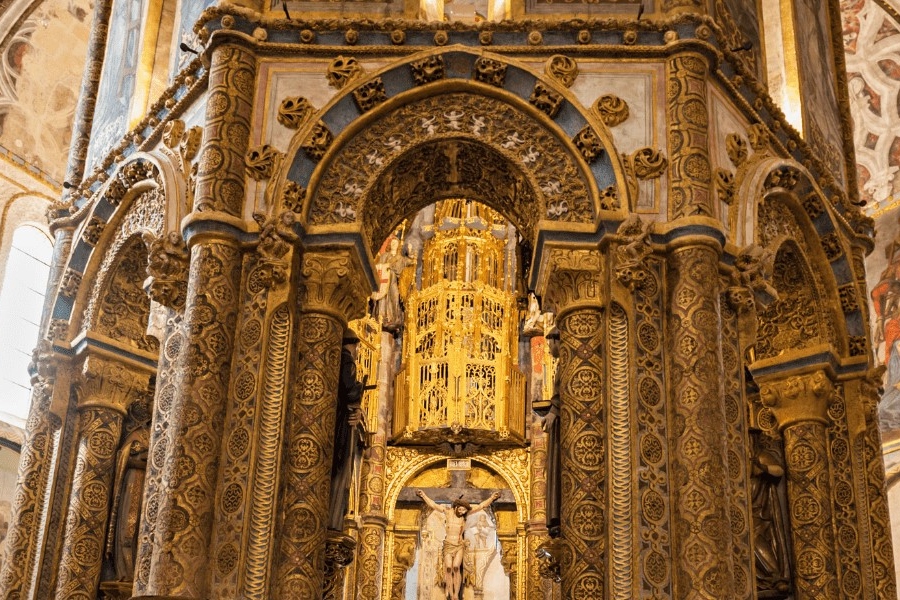
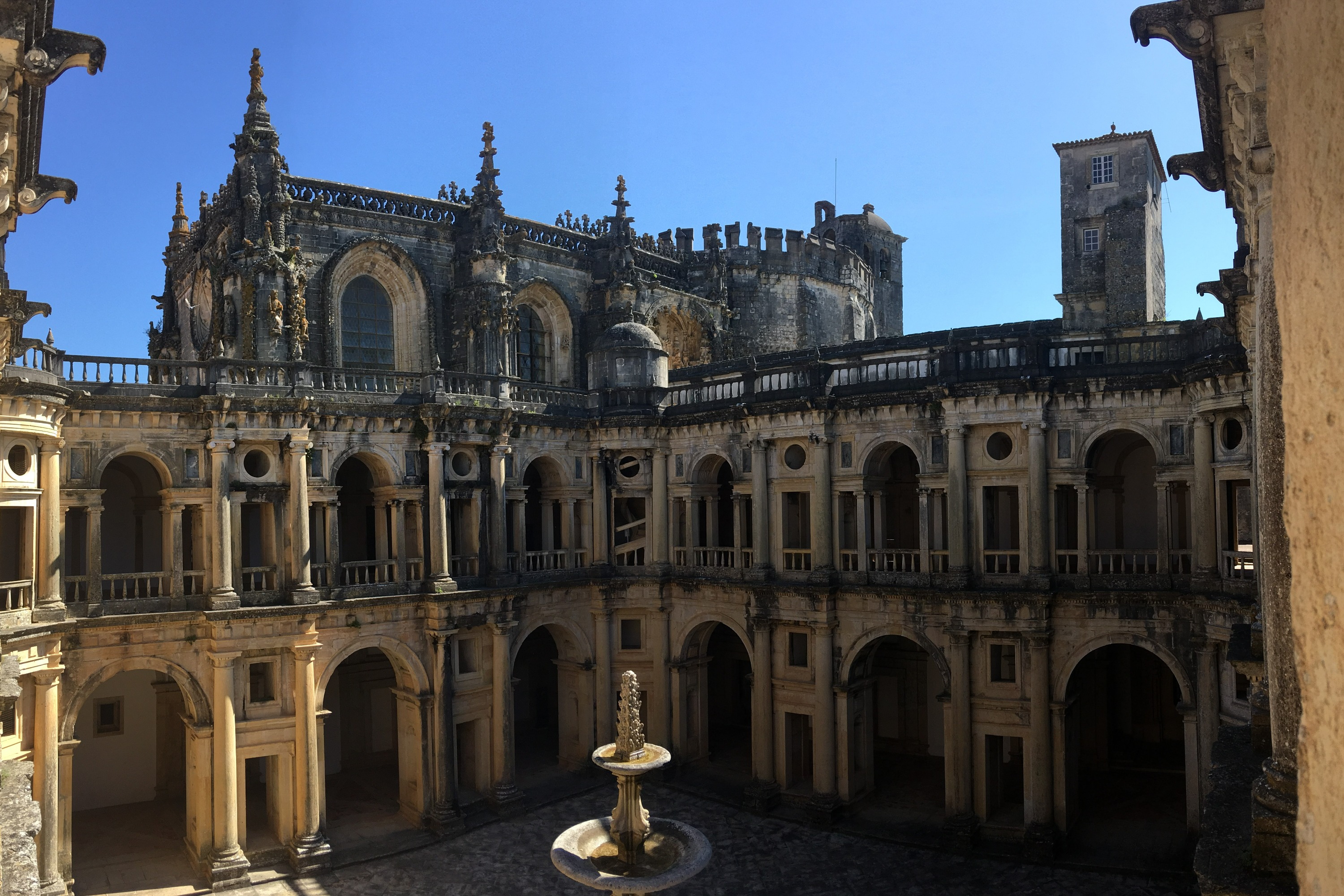
Known City of the Templars. It is essential to climb the majestic Castelo de Tomar to discover the monumental work of the Convent of Christ.
The ensemble of great architectural splendor justified its classification as a World Heritage Site by UNESCO. A careful visit to the Convent allows us to discover the treasures that the place has kept for centuries, linked to the Templar rituals and the history of the city.
Tomar also offers regional pastry delights and is the stage for one of the biggest traditional events in Portugal, the Festa dos Tabuleiros.
2
Stop 2
Almourol became famous for its unique castle, in a strategic position, located on an island in the middle of the Tagus River. It is one of the most emblematic and scenographic medieval monuments in Portugal, due to its significance and the landscape that surrounds it. The Castle of Almourol is accessible by a small boat, which allows you to get to know this stage of legends and its walls with more than eight centuries of history.
3
The Convento de Cristo Aqueduct was built to supply the Convento de Cristo, in Tomar, from 4 different sources. It is about 6 kilometers long, being formed by 180 arches for the air passages of the conduit.
4
Stop 4
Tomar was born from the donation of Castelo de Ceras and its end to the Templars, by D. Afonso Henriques in 1159. The territory was crossed to the south by the river Tomar, with a fertile valley limited to the west by a chain of hills of accentuated relief. It was on one of these hills, overlooking the river, that Master D. Gualdim Pais founded, in 1160, the castle and village of Tomar.
The castle consisted of a belt of walls that surrounded the hill. Two wall curtains divided it inside into three enclosures. In the southern part of the fortress was the village precinct, where the orange grove is today. To the north, on the highest part of the hill, the military house of the Templars was established, flanked to the east by the Master's house, the Alcáçova with its keep, and to the west by the knights' oratory, the Charola. A third separated these two precincts, the vast courtyard of the castle, now landscaped.
What's not included
Meals and Drinks
Available languages
Guide guide
EN
FR
ES
Important information
Infants are required to sit on an adult’s lap
Suitable for all physical fitness levels
About Lisbon
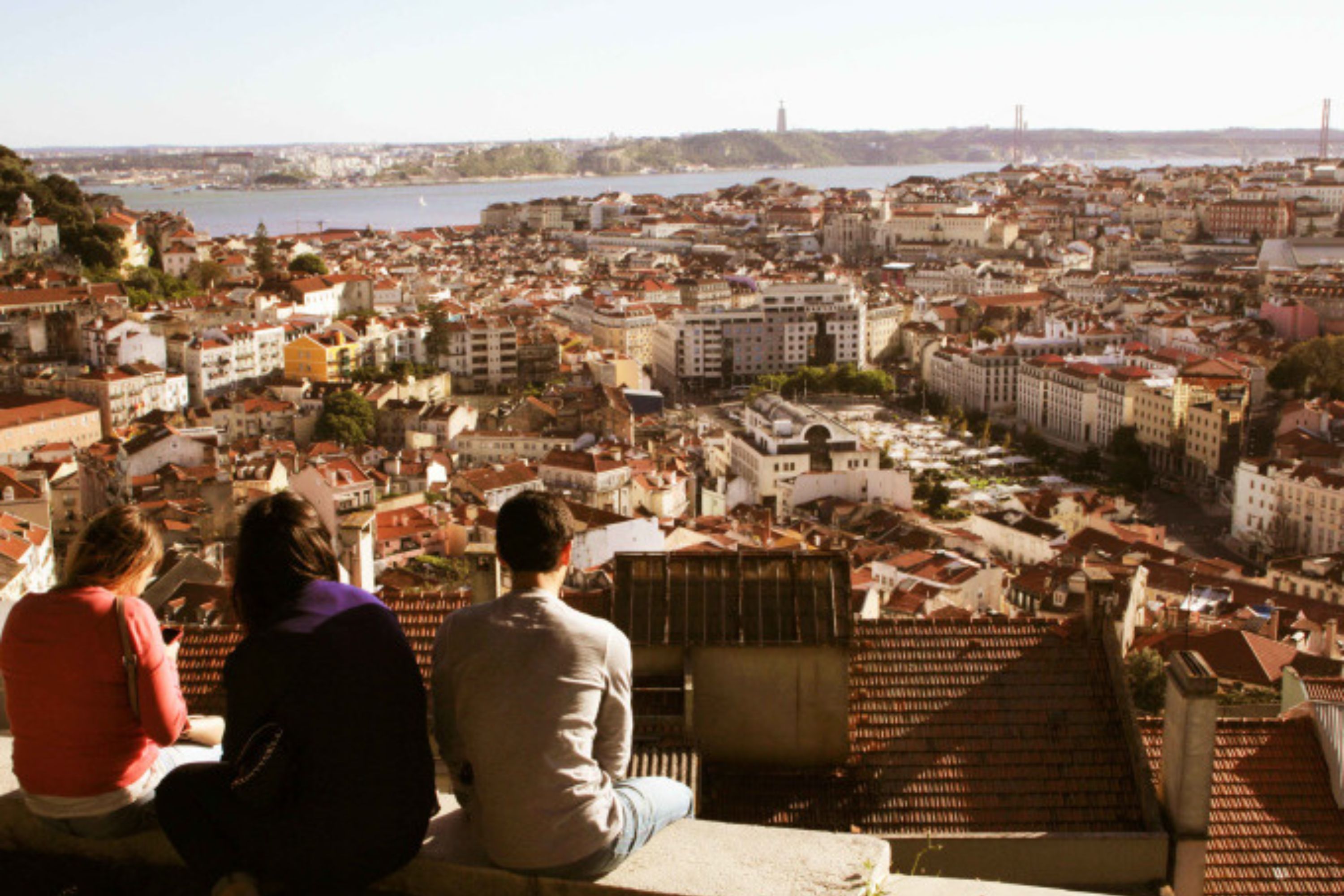
Lisbon, the capital of Portugal, is a vibrant city known for its rich history, stunning architecture, and warm climate. With its charming streets, historic trams, and breathtaking viewpoints, Lisbon offers a unique blend of old-world charm and modern energy.
Top Attractions
Belém Tower
A UNESCO World Heritage Site, this 16th-century tower is an iconic symbol of Lisbon's Age of Discoveries.
Historical
1-2 hours
€6
Alfama District
Lisbon's oldest district, known for its narrow, winding streets, Fado music, and historic charm.
Historical
Half day
Free to explore, attractions may have entry fees
Sintra
A UNESCO World Heritage Site, Sintra is a romantic town with stunning palaces and castles.
Historical
Full day
Varies by attraction, around €10-€15 per site
Must-Try Local Dishes
Bacalhau à Brás
Shredded codfish with eggs, potatoes, and onions
Main Dish
Contains fish and eggs
Pastel de Nata
Custard tart with a flaky pastry crust
Dessert
Contains dairy and eggs
Francesinha
A sandwich with meat, cheese, and a beer-based sauce
Main Dish
Contains meat, cheese, and gluten
Popular Activities
Hiking in Sintra
Surfing in Ericeira
Parasailing in Cascais
Beach lounging in Costa da Caparica
Spa day in a luxury hotel
Picnic in Jardim da Estrela
Visiting museums and galleries
Attending Fado performances
Best Time to Visit
March to May, September to October
These months offer pleasant weather and fewer crowds, making it ideal for sightseeing and outdoor activities.
15-25°C
59-77°F
Practical Information
Language
- Official: Portuguese
- Widely spoken: English, Spanish, French
- English: Moderately spoken
Currency
Euro (EUR)
Time Zone
GMT+1 (Western European Time, WET)
Electricity
230VV, 50HzHz
Safety Information
Overall Safety Rating: Generally safe
Lisbon is generally safe, but pickpocketing and petty theft can occur in crowded areas.
Important Precautions:
- • Be cautious of pickpockets in crowded areas
- • Use licensed taxis or ride-sharing apps
- • Avoid walking alone at night in less crowded areas
Getting there
By air
- Humberto Delgado Airport • 7 km from city center
By train
Santa Apolónia, Oriente
By bus
Sete Rios, Jardim do Campo Grande, Gare do Oriente
Getting around
Public transport
Efficient and clean, with four lines connecting major attractions.
Taxis
Available • Apps: Bolt, FreeNow
Rentals
Car, Bike, Scooter
Neighborhoods
Alfama
Baixa
Bairro Alto
Day trips
Sintra
25 km from Lisbon • Full day
A romantic town with stunning palaces, castles, and lush gardens.
Cascais
30 km from Lisbon • Half day to full day
A charming coastal town with beautiful beaches, historic sites, and a relaxed atmosphere.
Óbidos
80 km from Lisbon • Full day
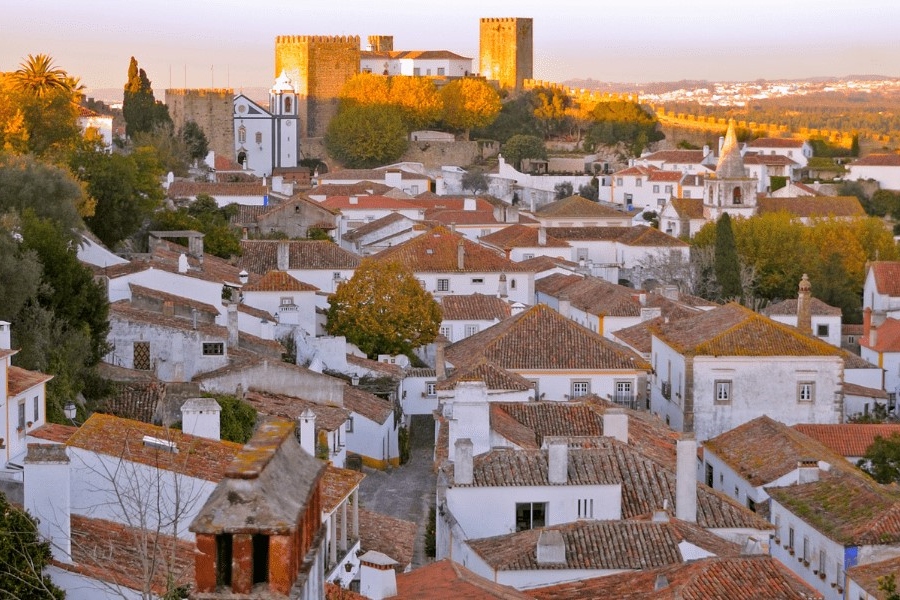
A medieval town with a well-preserved castle, narrow streets, and charming shops.
Festivals
Santos Populares • June 13th
Festival dos Oceanos • June to September
Arraial do Alfoz • June to September
Pro tips
- Visit the Time Out Market for a variety of local and international cuisines
- Take a day trip to Sintra and Cascais for a mix of history and beach relaxation
- Explore the LX Factory for a unique shopping and dining experience
- Ride the historic Tram 28 for a scenic tour of the city
- Visit the MAAT museum for a blend of art, architecture, and technology
From $25
per person
Price varies by option
Secure booking
Free cancellation available
Instant confirmation