Shore Excursion: Day Trip of the Ancient Rome from Civitavecchia Port
Active
7h
For a full refund, cancel at least 24 hours before the scheduled departure time.
Instant confirmation
Mobile or paper ticket accepted
About this experience
Just Sit in a comfortable Mercedes car or minivan with air conditioning And enjoy the famous monuments and most beautiful squares in Rome. See St. Peter's, Piazza Navona, the Colosseum, the Roman Forum, the Pantheon, the Spanish Steps, the Trevi Fountain, Piazza del Popolo, and more. Explore the magnificent Eternal City on a comfortable half-day tour, collected from your ship by a private driver. You will enjoy a wonderful journey through ancient Rome.
Available options
1 to 3 passengers
Tour of Rome from Civitavecchia port<br/>Pickup included
4 to 8 passengers
Tour of Rome from Civitavecchia port<br/>Pickup included
What's included
Private tour
Round-trip private transfer
Driver/guide
Transport by air-conditioned minivan
Transport by private vehicle
Detailed itinerary
1
Stop 1
Defined as a public space in the last years of 15th century, when the city market was transferred there from the Campidoglio, Piazza Navona was transformed into a highly significant example of Baroque Roman architecture and art during the pontificate of Innocent X, who reigned from 1644 until 1655, and whose family palace, the Palazzo Pamphili, faced the piazza. It features important sculptural creations: in the center stands the famous Fontana dei Quattro Fiumi or Fountain of the Four Rivers (1651) by Gian Lorenzo Bernini, topped by the Obelisk of Domitian, brought in pieces from the Circus of Maxentius;[2] the church of Sant'Agnese in Agone by Francesco Borromini, Girolamo Rainaldi, Carlo Rainaldi and others; and the aforementioned Pamphili palace, also by Girolamo Rainaldi, that accommodates the long gallery designed by Borromini and frescoed by Pietro da Cortona.[3]
Piazza Navona Flooded by Antonio Joli. Circa 1760
Piazza Navona has two other fountains. At the southern end is the Fontana del Moro with a basin and four Tritons sculpted by Giacomo della Porta (1575) to which, in 1673, Bernini added a statue of a Moor, wrestling with a dolphin. At the northern end is the Fountain of Neptune (1574) also created by Giacomo della Porta; the statue of Neptune, by Antonio Della Bitta, was added in 1878 to create a balance with La Fontana del Moro.
2
Stop 2
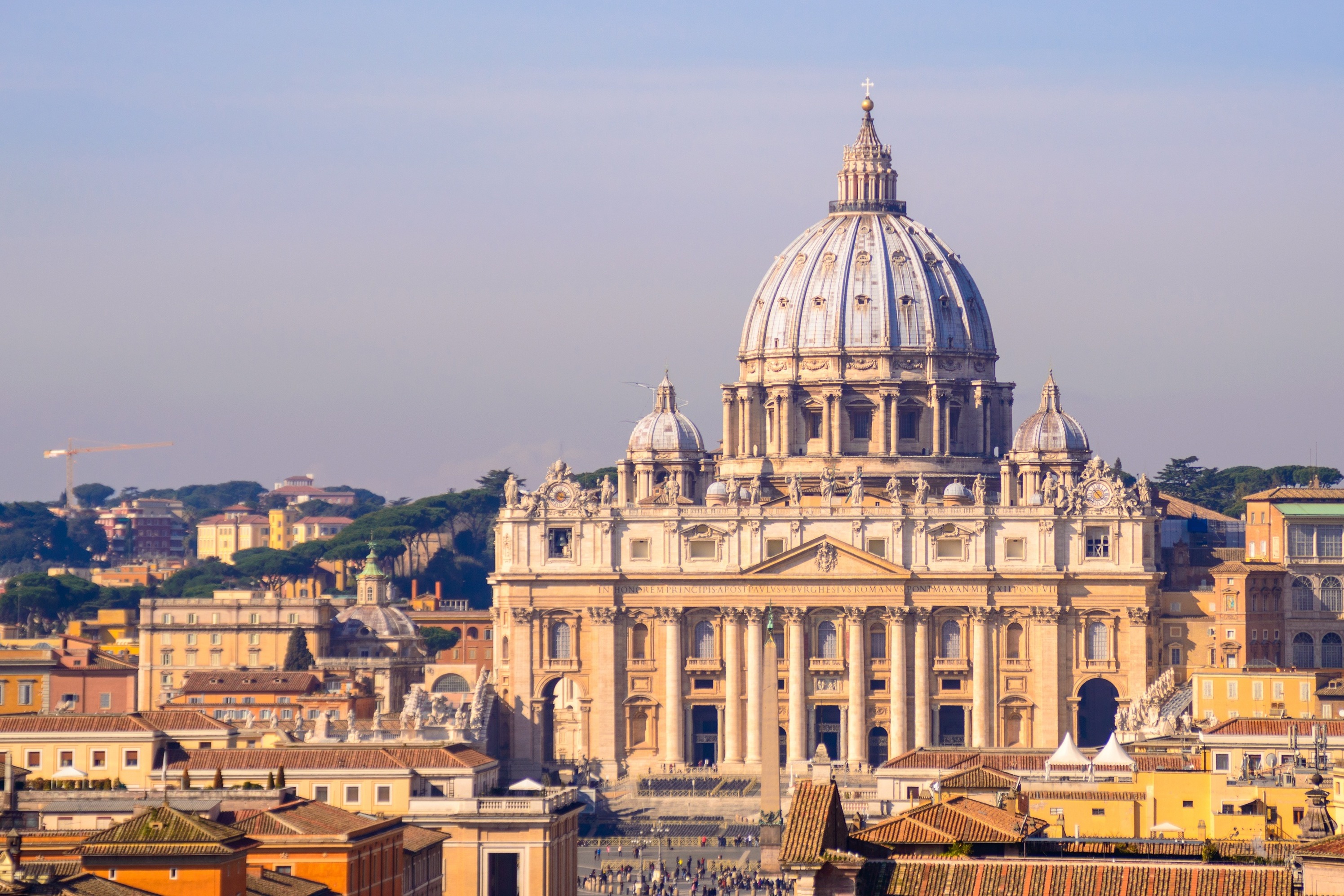
St. Peter's Square (Italian: Piazza San Pietro [ˈpjattsa sam ˈpjɛːtro], Latin: Forum Sancti Petri) is a large plaza located directly in front of St. Peter's Basilica in the Vatican City, the papal enclave inside Rome, directly west of the neighbourhood or rione of Borgo. Both the square and the basilica are named after Saint Peter, an apostle of Jesus considered by Catholics to be the first Pope.
At the centre of the square is an ancient Egyptian obelisk, erected at the current site in 1586. Gian Lorenzo Bernini designed the square almost 100 years later, including the massive Doric colonnades,[1][2] four columns deep, which embrace visitors in "the maternal arms of Mother Church". A granite fountain constructed by Bernini in 1675 matches another fountain designed by Carlo Maderno in 1613
3
Stop 3
The Pantheon (UK: /ˈpænθiən/, US: /-ɒn/;[1] Latin: Pantheum,[nb 1] from Greek Πάνθειον Pantheion, "[temple] of all the gods") is a former Roman temple, now a church, in Rome, Italy, on the site of an earlier temple commissioned by Marcus Agrippa during the reign of Augustus (27 BC – 14 AD). It was completed by the emperor Hadrian and probably dedicated about 126 AD. Its date of construction is uncertain, because Hadrian chose not to inscribe the new temple but rather to retain the inscription of Agrippa's older temple, which had burned down.[2]
The building is cylindrical with a portico of large granite Corinthian columns (eight in the first rank and two groups of four behind) under a pediment. A rectangular vestibule links the porch to the rotunda, which is under a coffered concrete dome, with a central opening (oculus) to the sky. Almost two thousand years after it was built, the Pantheon's dome is still the world's largest unreinforced concrete dome.[3] The height to the oculus and the diameter of the interior circle are the same, 43 metres (142 ft).[4]
4
Stop 4
In the middle of the square is the famous Fontana della Barcaccia, dating to the beginning of the baroque period, sculpted by Pietro Bernini and his son, the more famous Gian Lorenzo Bernini.
At the right corner of the Spanish Steps rises the house of the English poet John Keats, who lived there until his death in 1821: nowadays it has been changed into a museum dedicated to him and his friend Percy Bysshe Shelley, displaying books and memorabilia of English romanticism. At the left corner there is the Babington's tea room, founded in 1893.
5
Stop 5
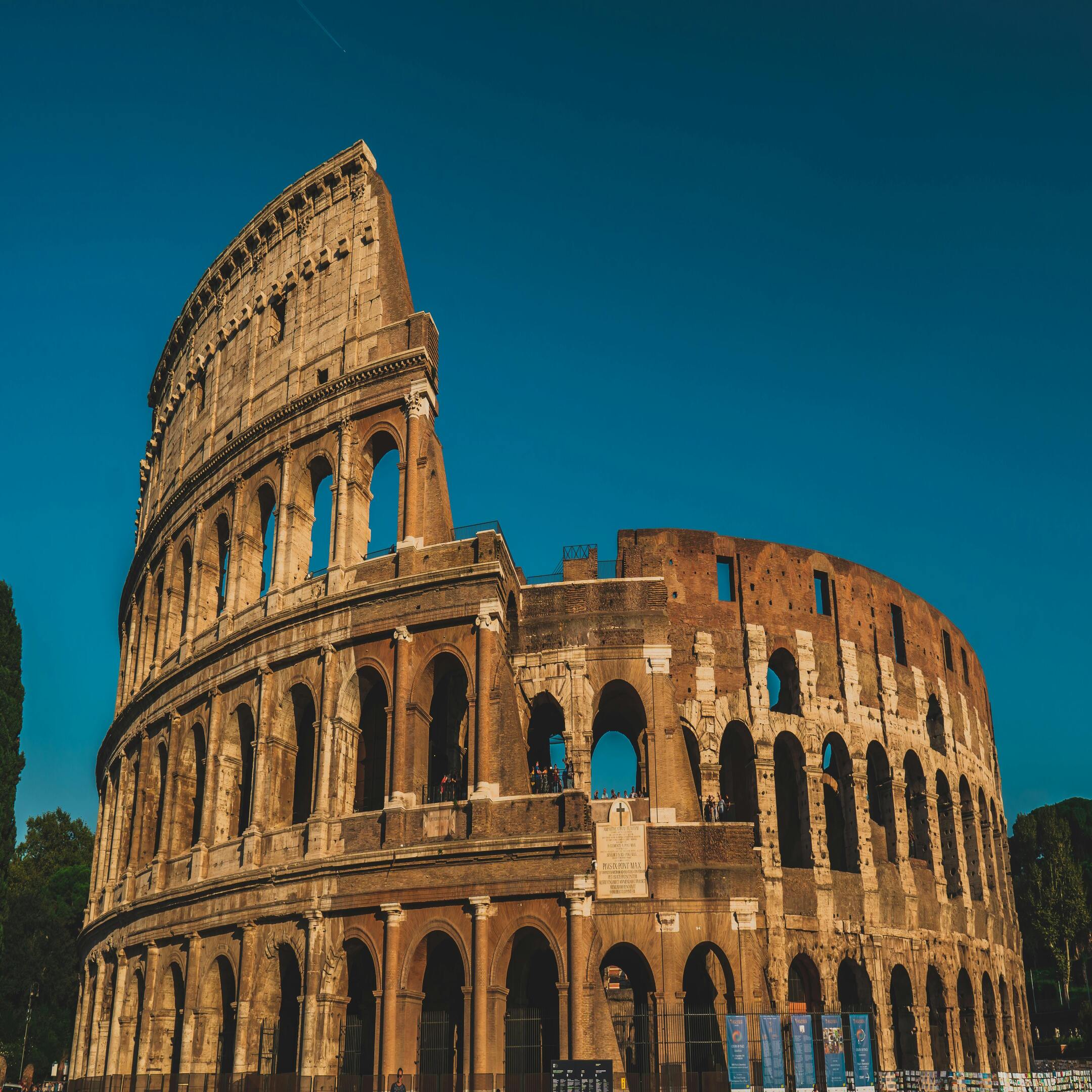
The Roman Forum, also known by its Latin name Forum Romanum (Italian: Foro Romano), is a rectangular forum (plaza) surrounded by the ruins of several important ancient government buildings at the center of the city of Rome. Citizens of the ancient city referred to this space, originally a marketplace, as the Forum Magnum, or simply the Forum.
For centuries the Forum was the center of day-to-day life in Rome: the site of triumphal processions and elections; the venue for public speeches, criminal trials, and gladiatorial matches; and the nucleus of commercial affairs. Here statues and monuments commemorated the city's great men. The teeming heart of ancient Rome, it has been called the most celebrated meeting place in the world, and in all history.[1] Located in the small valley between the Palatine and Capitoline Hills, the Forum today is a sprawling ruin of architectural fragments and intermittent archaeological excavations attracting 4.5 million or more sightseers yearly.
What's not included
Food and drinks
Tickets for attractions
Tour guide
Available languages
Audio guide
EN
Reviews breakdown
Viator
4.0
3 reviews
5★
2
4★
0
3★
0
2★
1
1★
0
Important information
Specialized infant seats are available
Infants and small children can ride in a pram or stroller
Service animals allowed
Public transportation options are available nearby
Suitable for all physical fitness levels
Please note: A tour guide and tickets for attractions are not included in the price.
Important notes
• Tour guide is not inclusive
• A dress code is required to enter places of worship and selected museums. No shorts or sleeveless tops allowed. Knees and shoulders MUST be covered for both men and women. You may risk refused entry if you fail to comply with these dress requirements
• Comfortable walking shoes are recommended
• If you will not be arriving at your destination within the specified reconfirmation period, please reconfirm with the local service provider prior to travel, or upon arrival at your destination. Please note that departure times and locations may vary slightly.
• If you will not be arriving at your destination within the specified reconfirmation period, please reconfirm with the local service provider prior to travel, or upon arrival at your destination. Please note that departure times and locations may vary slightly.
• A current valid passport is required on the day of travel
• Minimum age is 18 years
• Not recommended for participants with back problems
• Not recommended for participants with heart complaints or other serious medical conditions
• Visitors must pass through metal detectors at the security check point. Please expect to wait 20-30 minutes to clear security. A dress code is required to enter the Vatican Museums and knees and shoulders MUST be covered for both men and women. This dress code is strictly enforced and you will be refused entry if you fail to comply with requirements
• The duration of transfers are approximate, the exact duration will depend on the time of day and traffic conditions
Times are subject to change due to local traffic conditions.
About Vatican City
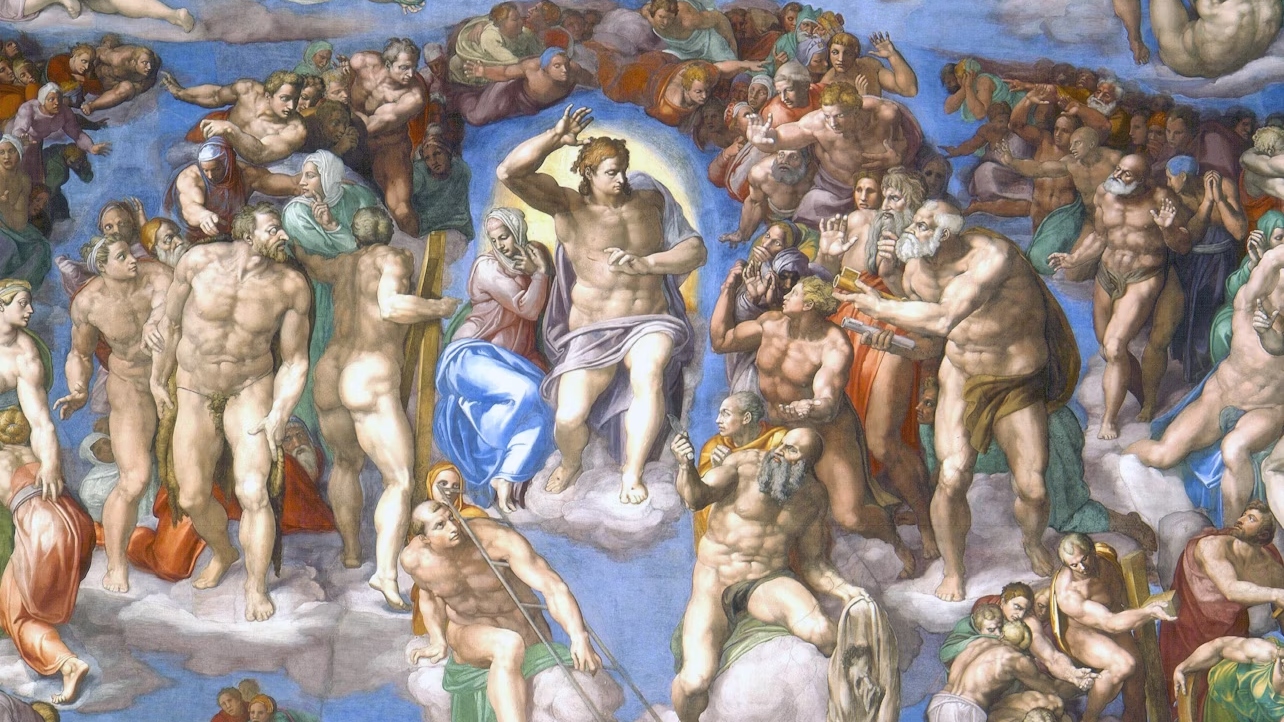
Vatican City, the world's smallest independent state, is the spiritual and administrative headquarters of the Roman Catholic Church. Nestled within Rome, Italy, it's home to iconic landmarks like St. Peter's Basilica and the Vatican Museums, which house some of the world's most renowned art collections, including the Sistine Chapel.
Top Attractions
St. Peter's Basilica
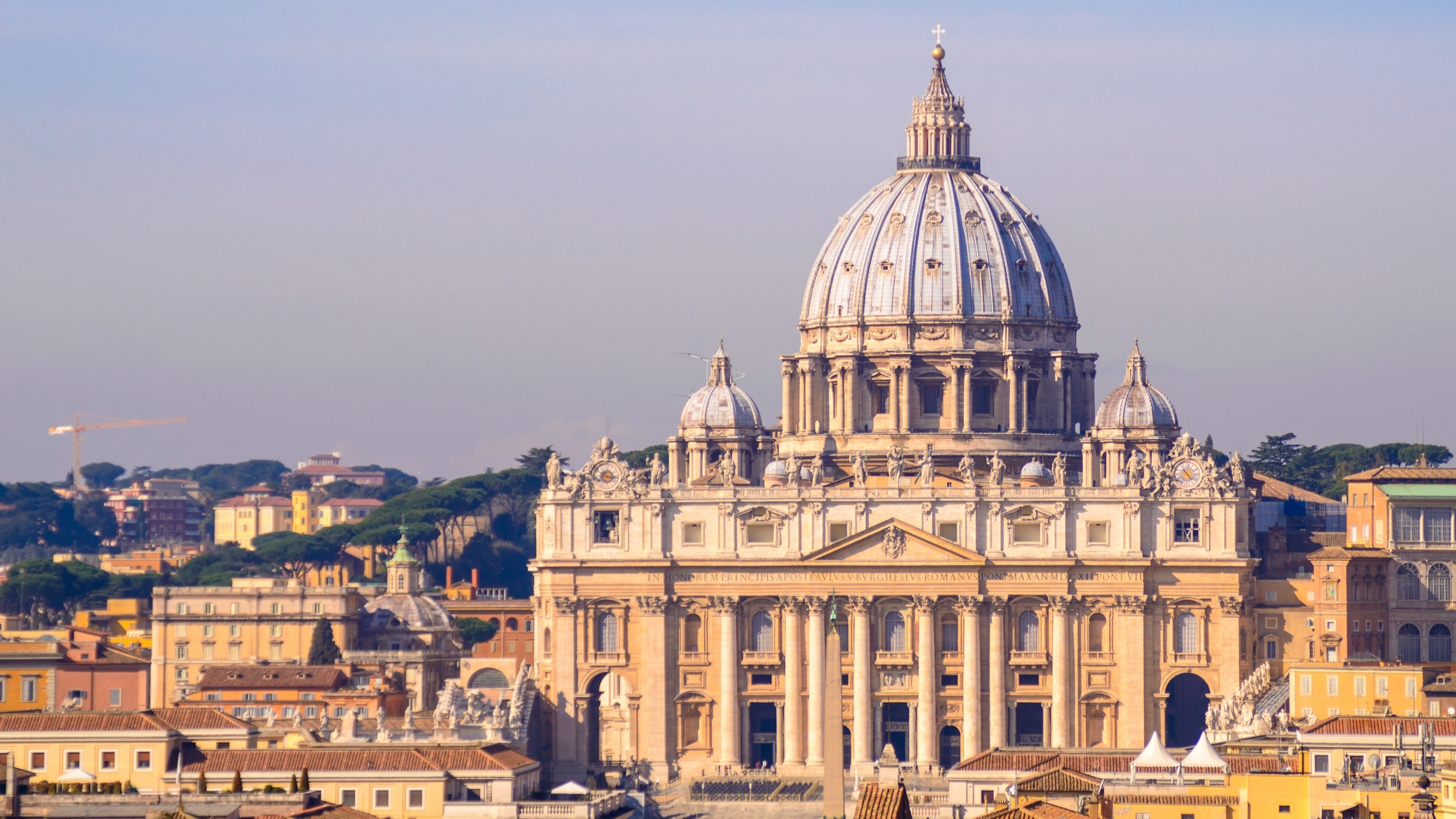
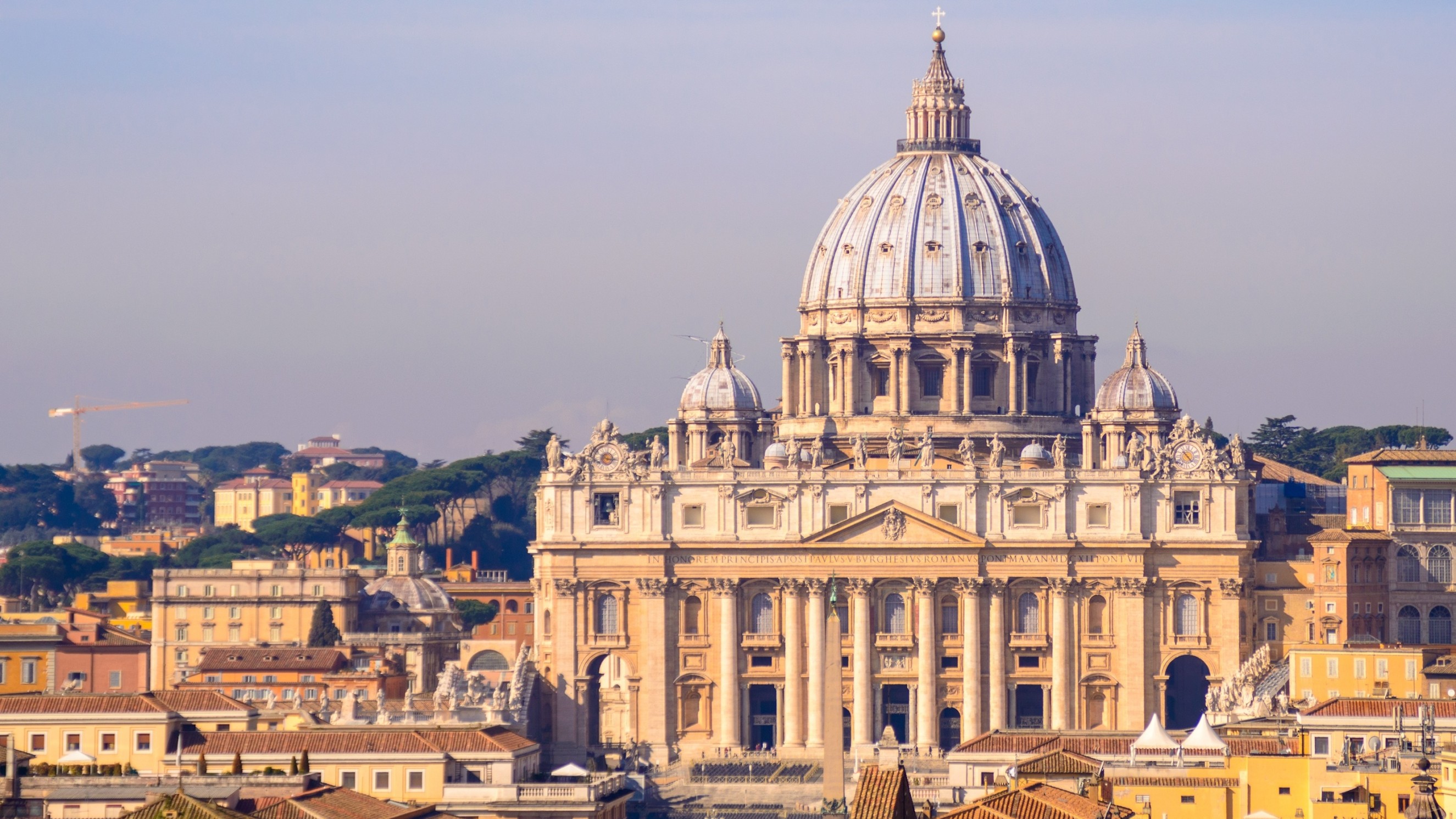
St. Peter's Basilica is one of the most renowned churches in the world and a masterpiece of Renaissance architecture. It is a significant pilgrimage site and a must-visit for its stunning interior, including Michelangelo's Pietà and the dome offering panoramic views of Rome.
Religious/Architecture
1-2 hours
Free entry (€8 for dome climb)
Vatican Museums
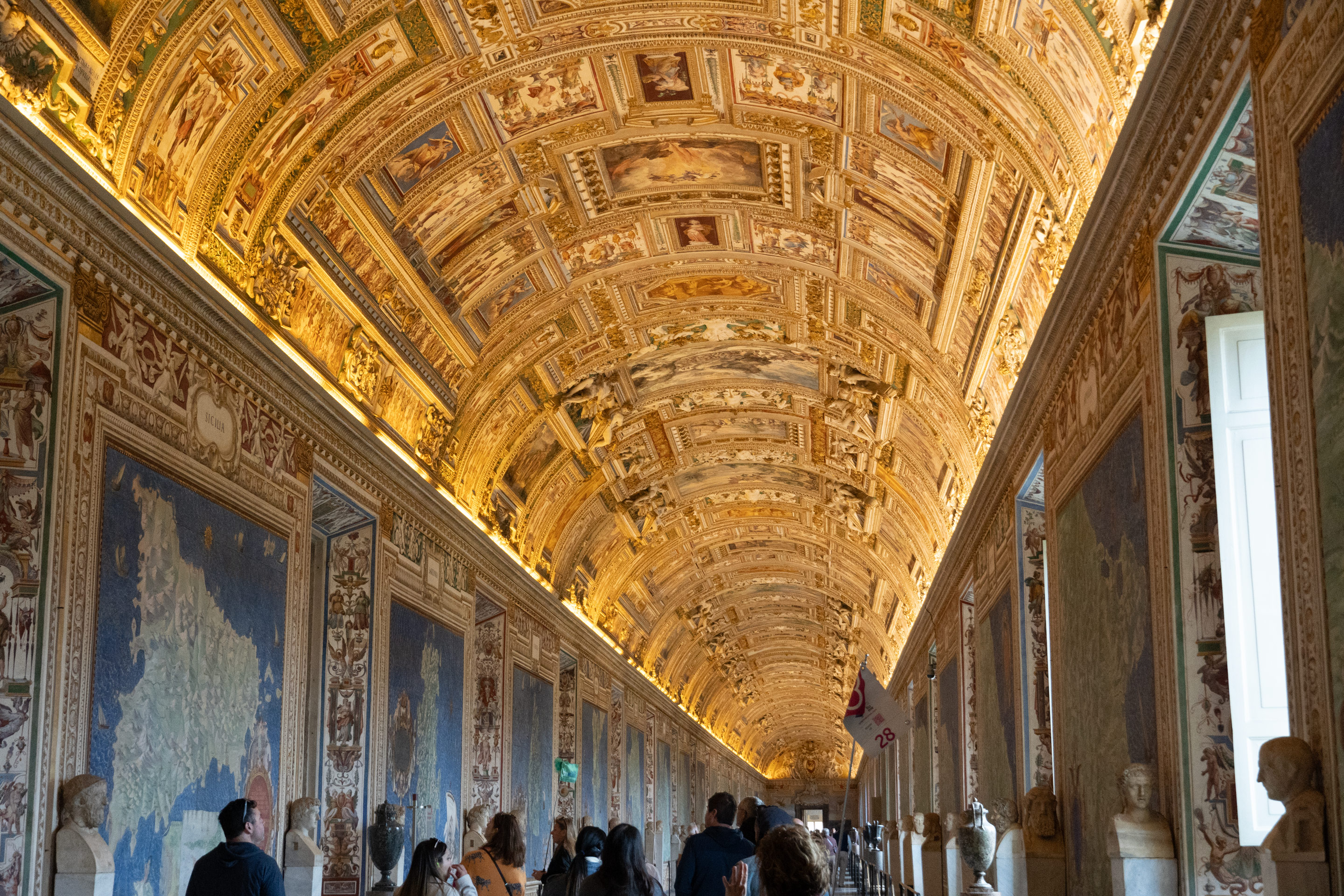
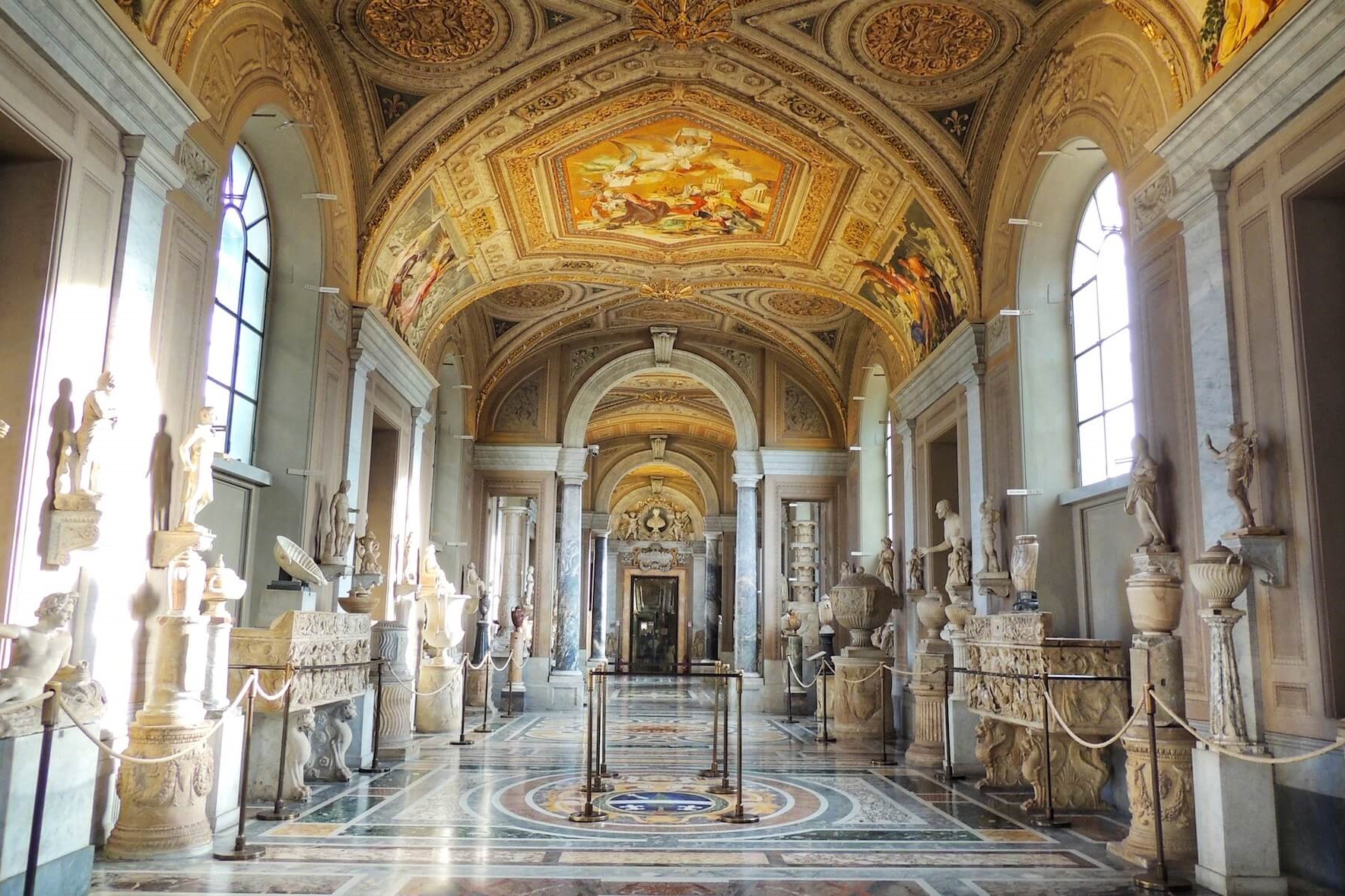
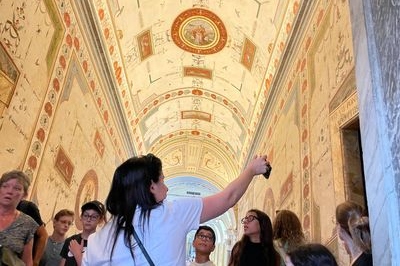
The Vatican Museums house an extensive collection of art and artifacts amassed by the Catholic Church over the centuries. Highlights include the Sistine Chapel, the Raphael Rooms, and the Gallery of Maps. It's a treasure trove for art lovers and history enthusiasts.
Museum/Art
3-4 hours
€17 (includes entry to St. Peter's Basilica)
Castel Sant'Angelo
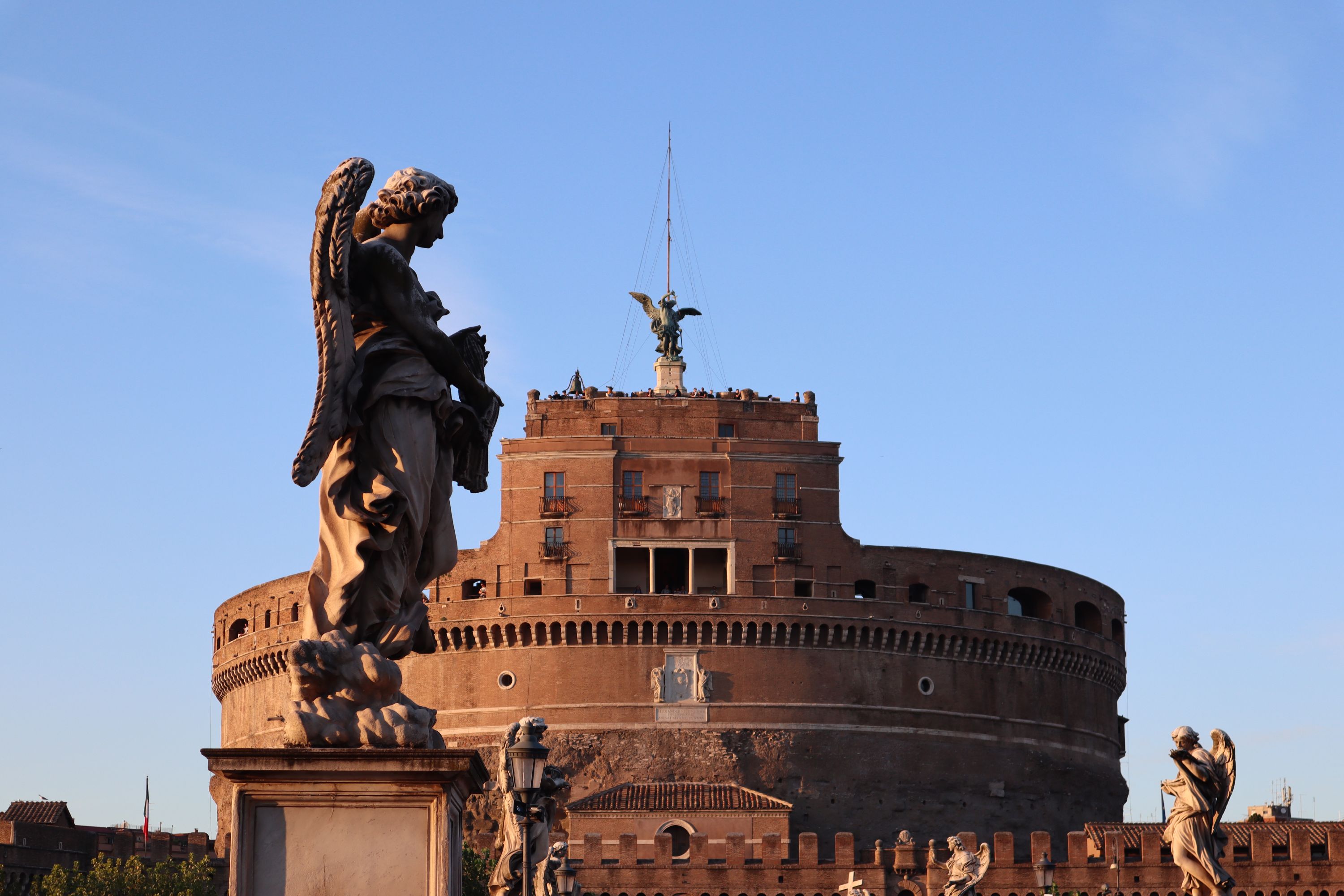
Originally built as a mausoleum for Emperor Hadrian, Castel Sant'Angelo is now a museum and fortress. It offers fascinating exhibits and panoramic views of Rome from its terrace. The passage leading to the Vatican, known as the Passetto di Borgo, is a historical highlight.
Historical/Architecture
1-2 hours
€15
Must-Try Local Dishes
Cacio e Pepe
A classic Roman dish made with pecorino cheese and black pepper, creating a creamy and flavorful sauce.
Pasta
Vegetarian
Supplì
Fried rice balls filled with tomato sauce and mozzarella, similar to Sicilian arancini.
Appetizer
Vegetarian (some versions contain meat)
Tiramisu
A popular Italian dessert made with layers of coffee-soaked ladyfingers and mascarpone cheese.
Dessert
Vegetarian
Popular Activities
Hiking in nearby parks
Biking tours
Strolling through historic neighborhoods
Visiting parks and gardens
Museum visits
Art tours
Historical site exploration
Boat tours on the Tiber River
Best Time to Visit
April to June, September to October
The best time to visit is during the spring and fall when the weather is mild, and the tourist crowds are manageable. These months offer the best conditions for sightseeing and exploring the city's outdoor attractions.
15-30°C
59-86°F
Practical Information
Language
- Official: Italian, Latin
- Widely spoken: English, French, Spanish
- English: Moderately spoken in tourist areas, limited elsewhere
Currency
Euro (EUR)
Time Zone
GMT+1 (Central European Time, CET)
Electricity
230VV, 50HzHz
Safety Information
Overall Safety Rating: Generally safe
Vatican City is generally safe, with a strong police presence and low crime rates. However, petty theft and pickpocketing can occur in tourist areas, so it's important to stay vigilant.
Important Precautions:
- • Keep valuables secure and out of sight.
- • Be cautious of your surroundings, especially in crowded areas.
- • Use licensed taxis or ride-sharing services.
Getting there
By air
- Leonardo da Vinci-Fiumicino Airport • 30 km from Vatican City
By train
Roma San Pietro Station
By bus
Roma Termini Bus Station
Getting around
Public transport
The metro system in Rome is efficient and connects to Vatican City via the Ottaviano Station, which is a short walk from St. Peter's Basilica.
Taxis
Available • Apps: FreeNow, MyTaxi
Rentals
Car, Bike, Scooter
Neighborhoods
Borgo
Prati
Day trips
Rome
0 km (Vatican City is an enclave within Rome) • Full day or more
Rome, the capital of Italy, is a treasure trove of ancient history, art, and culture. It offers iconic landmarks like the Colosseum, Roman Forum, and Trevi Fountain, as well as world-class museums and vibrant neighborhoods.
Ostia Antica
30 km from Vatican City • Half day
Ostia Antica is an ancient Roman port city that offers a fascinating glimpse into Roman life. The well-preserved ruins include homes, shops, and public buildings, providing a unique historical experience.
Festivals
Easter Celebrations • March or April (dates vary)
Christmas Celebrations • December 24-25
Pro tips
- Book tickets for major attractions like the Vatican Museums and St. Peter's Basilica in advance to skip the lines.
- Dress modestly when visiting religious sites to show respect and avoid being turned away.
- Use public transportation or walk to get around Vatican City and Rome, as driving can be challenging and parking is limited.
- Learn a few basic Italian phrases to enhance your experience and interact with locals.
- Visit popular attractions early in the morning or late in the afternoon to avoid crowds and enjoy a more peaceful experience.
From $25
per person
Price varies by option
Secure booking
Free cancellation available
Instant confirmation