Full-Day Tour to Uros and Taquile on Lake Titicaca
Active
8h
For a full refund, cancel at least 24 hours before the scheduled departure time.
Instant confirmation
Mobile or paper ticket accepted
About this experience
You will learn about one of the cultures considered to be the “pre-solar” culture or “survivors of a previous or primordial humanity”…
The origin of the Uros dates back to pre-INCA times, where they were the oldest population of the Collao plateau and would have settled in this territory around the year 1200 BC.
The island of Taquile was part of the Inca Empire, and some archaeological remains can be seen. This island was one of the last Inca sites that capitulated to the Spanish in the 16th century.
Mother Earth (Pachamama), the main Andean deity, determines the abundance of the harvest and fertility, and to whom they offer a series of payments (offering) per year and three coca leaves before each activity or trip. God is present throughout the year at the festivities.
There are several natural viewpoints that allow you to take spectacular photos of the island and Lake Titicaca.
Available options
Full-Day Tour to Uros and Taquile on Lake Titicaca
Pickup included
What's included
- Transfer Hotel-Port-Hotel
- Entrance tickets to Uros & Taquile.
- Speedboat.
Totora boat ride
- Tour Guide, English / Spanish
- Lunch
Detailed itinerary
1
Stop 1
One of the cultures, considered as the “pre-solar” culture or “survivors of a previous or primordial humanity” …
The origin of the Uros dates back to Pre-INCA times, where they were the oldest population of the Collao plateau and would have settled in this territory around the year 1200 BC.
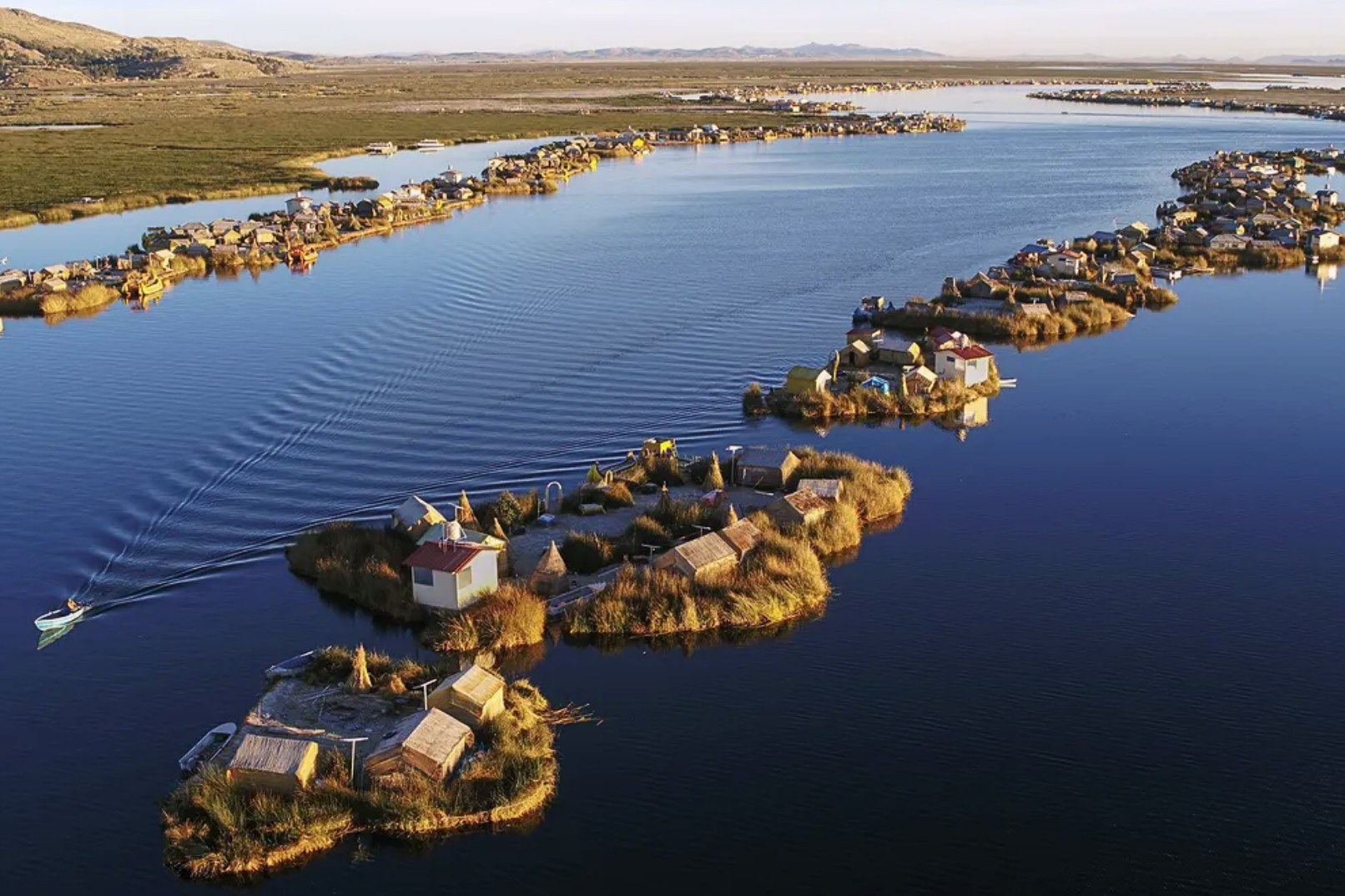
Today their descendants are the mixture of cultures: Uro & Aymara, they preserve many of their ancestral customs. They live on floating islands, made up of 4 to 7 families. There are more than 140 floating islands, they are located within the Titicaca National Reserve.
On this tour we will learn much more about their coexistence and way of life.
One of their deities called, “MAMA QOTA”, (mother of the lake).
You will be able to enjoy nature: The fauna of Lake Titicaca, where on the way you will observe; Birds, such as the Grebe, (an endemic bird of Titicaca), also the White Heron, Choca, Tiquicho and the fish, the Ispi, Carachi, Mauri or Suche (endemic fish).
2
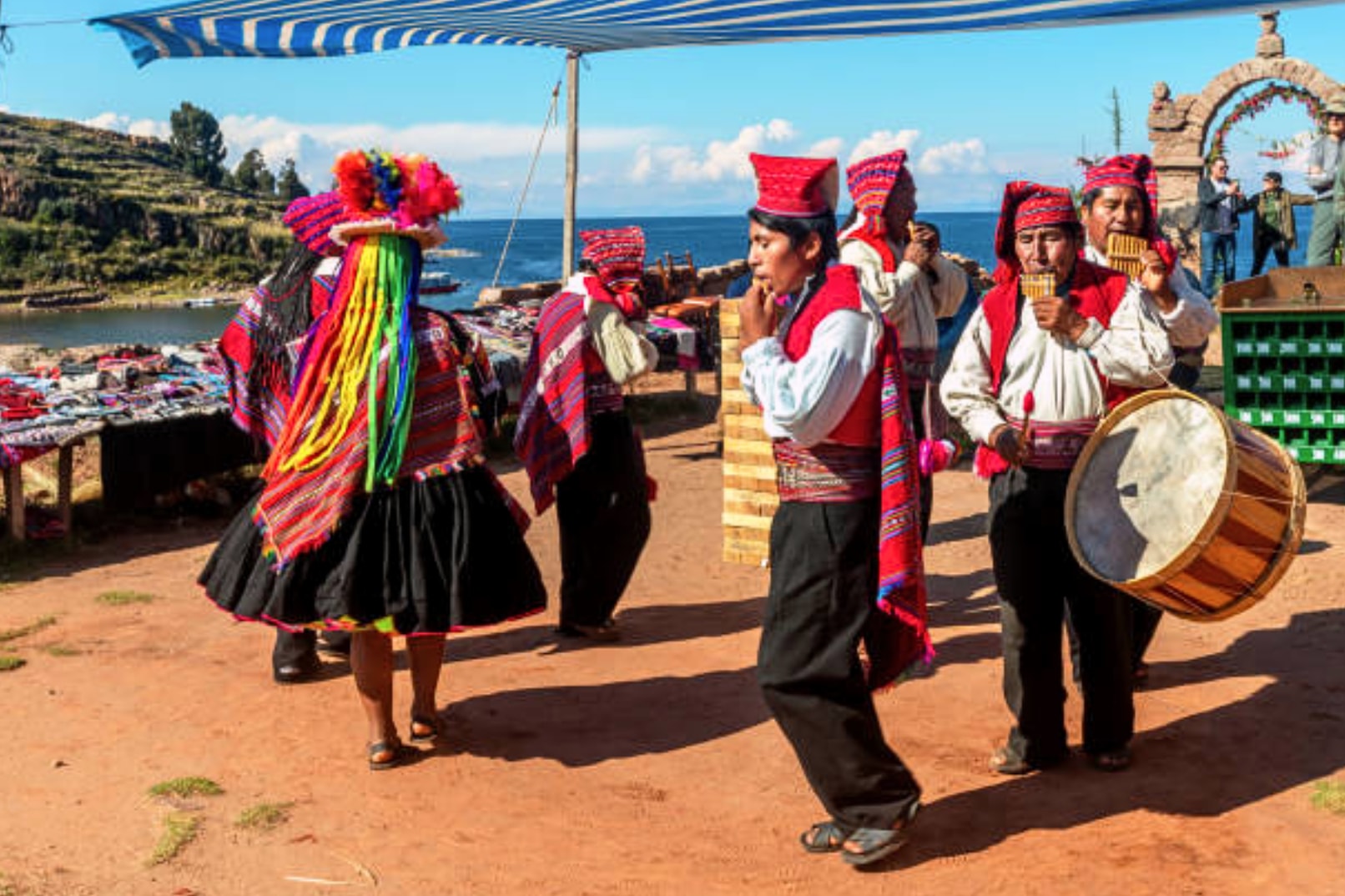
It is worth noting that Taquile Island was declared a masterpiece of oral and intangible heritage of humanity by UNESCO, thanks to the extraordinary work of its inhabitants in textile art, where they express their experience, their customs and their culture, and they also maintain their Inca customs: the principles of Ama Sua (Do not be a thief), Ama Llulla (Do not be a liar) and Ama Quella (Do not be lazy), from children to grandparents, they make these fine fabrics that resemble the textiles of the Paracas and Incas.
Taquile Island was part of the Inca Empire, and some archaeological remains can be seen. This island was one of the last Inca sites that capitulated to the Spanish in the 16th century.
Later it was taken in the name of Emperor Charles V and finally passed to the court of Pedro Gonzales de Taquila, from whose surname its name is derived. The Spanish banned traditional Inca clothing, for which they wear a peculiar outfit.
What's not included
- Tips (optional).
Available languages
Guide guide
EN
ES
Reviews breakdown
Tripadvisor
4.8
21 reviews
5★
19
4★
1
3★
0
2★
1
1★
0
Important information
Infants and small children can ride in a pram or stroller
Service animals allowed
Not recommended for travelers with spinal injuries
Not recommended for pregnant travelers
Not recommended for travelers with poor cardiovascular health
Suitable for all physical fitness levels
About Puno
Puno is a picturesque city located on the shores of Lake Titicaca, the world's highest navigable lake. Known for its rich cultural heritage, vibrant festivals, and stunning natural beauty, Puno is a must-visit destination for those exploring Peru's cultural heartland. The city is the gateway to the Uros Floating Islands and Taquile Island, offering unique experiences and breathtaking landscapes.
Top Attractions
Lake Titicaca
Lake Titicaca is the world's highest navigable lake and a UNESCO World Heritage Site. It offers stunning landscapes, cultural experiences, and unique islands like the Uros Floating Islands and Taquile Island.
Nature
Full day
Budget to Moderate (Boat tours range from 50-150 PEN)
Sillustani
Sillustani is an archaeological site featuring ancient burial towers called 'chullpas.' These towers were built by the Colla people and offer a glimpse into pre-Inca history.
Historical
Half day
Budget (Entrance fee around 10 PEN)
Plaza de Armas
The Plaza de Armas is the heart of Puno, surrounded by colonial-era buildings, churches, and vibrant local life. It's a great place to relax and soak in the city's atmosphere.
Historical
1-2 hours
Free
Cathedral of Puno
The Cathedral of Puno is a beautiful colonial-era church located on the Plaza de Armas. It features a mix of Baroque and Renaissance architecture and houses several religious artifacts.
Religious
30-60 minutes
Free (donations welcome)
Puno Museum of Art and Culture
This museum showcases the rich cultural heritage of the Puno region, featuring artifacts, textiles, and art from the Aymara and Quechua cultures, as well as pre-Inca and Inca civilizations.
Museum
1-2 hours
Budget (Entrance fee around 10 PEN)
Must-Try Local Dishes
Trucha a la Plancha (Grilled Trout)
Fresh trout from Lake Titicaca, grilled and served with local potatoes and vegetables. A must-try for seafood lovers.
Main Course
Gluten-free, but may contain allergens like fish.
Chairo
A hearty soup made with lamb, potatoes, corn, and quinoa, flavored with local herbs and spices. A traditional dish of the Puno region.
Soup
Contains meat and gluten.
Sopa de Quinoa (Quinoa Soup)
A nutritious and flavorful soup made with quinoa, vegetables, and sometimes meat. A staple in the Andean diet.
Soup
Can be vegetarian or vegan if made without meat.
Pique a la Puneña
A spicy and flavorful dish made with diced beef, potatoes, onions, and aji amarillo (yellow chili pepper). A popular appetizer in Puno.
Appetizer
Contains meat and gluten.
Popular Activities
Hiking
Boating
Cultural tours
Lakefront walks
Spa treatments
Coffee shop visits
Visiting museums
Attending festivals
Best Time to Visit
May to October (Dry Season)
This is the best time to visit Puno as the weather is dry and sunny, making it ideal for outdoor activities and exploring the attractions. The temperatures are cool but comfortable.
5°C to 20°C (41°F to 68°F)
41°F to 68°F
Practical Information
Language
- Official: Spanish
- Widely spoken: Aymara, Quechua, English (limited)
- English: Limited
Currency
Peruvian Sol (PEN)
Time Zone
GMT-5
Electricity
220VV, 50HzHz
Safety Information
Overall Safety Rating: Generally safe, but exercise caution
Puno is generally safe for tourists, but petty crime can occur, especially in crowded areas. Be cautious with your belongings and avoid walking alone at night in poorly lit areas.
Important Precautions:
- • Keep an eye on your belongings in crowded areas.
- • Use reputable taxi services or apps to avoid scams.
- • Be cautious with street food and drink only bottled or purified water.
Getting there
By air
- Puno International Airport (JUL) • 10 km (6 miles) from the city center
By train
Puno Station
By bus
Puno Bus Terminal
Getting around
Public transport
Public buses are the most common and affordable way to get around Puno. They cover most of the city and surrounding areas.
Taxis
Available • Apps: Beat, Local taxi apps
Rentals
Car, Bike, Scooter
Neighborhoods
City Center
Alto de la Alameda
El Mirador
Day trips
Uros Floating Islands
1-2 hours by boat • Half day to full day
The Uros Floating Islands are a unique attraction in Lake Titicaca, made entirely of totora reeds by the Uros people. Visitors can learn about their culture, traditions, and way of life.
Taquile Island
3-4 hours by boat • Full day to overnight
Taquile Island is known for its stunning landscapes, traditional textiles, and unique culture. The island is home to a close-knit community that preserves its ancient customs and way of life.
Sillustani
35 km (22 miles) from Puno • Half day
Sillustani is an archaeological site featuring ancient burial towers called 'chullpas.' These towers were built by the Colla people and offer a glimpse into pre-Inca history.
Festivals
Festival of the Virgen de la Candelaria • February
Puno Week • November 5-12
Carnaval de Puno • February or March (depending on the lunar calendar)
Pro tips
- Acclimate to the high altitude by taking it easy for the first day or two.
- Book tours and accommodations in advance, especially during peak season and festivals.
- Learn a few basic Spanish phrases to enhance your experience and interact with locals.
- Dress in layers to accommodate changing temperatures throughout the day.
- Try local dishes and support local businesses to get an authentic experience.
From $25
per person
Price varies by option
Secure booking
Free cancellation available
Instant confirmation