





Journey Through Time: A Private Tour of Tripoli and Byblos
Active
6h
For a full refund, cancel at least 24 hours before the scheduled departure time.
Instant confirmation
Mobile or paper ticket accepted
About this experience
Welcome to a journey through time and culture as we embark on a private tour of two of Lebanon's most storied cities: Tripoli and Byblos. Today, we invite you to delve into millennia of history, where ancient civilizations and vibrant modern life intertwine seamlessly. From the bustling markets and imposing citadels of Tripoli to the ancient port and archaeological marvels of Byblos, each step promises a deeper understanding of Lebanon's rich heritage and enduring charm. Join us as we uncover the tales of empires, traders, and artisans that have shaped these iconic cities, making them timeless jewels of the Mediterranean. Let's begin our adventure together.
Available options
Journey Through Time: A Private Tour of Tripoli and Byblos
Pickup included
What's included
Private transportation
English speaking driver
Hotel Pick up & Drop off
Air-conditioned vehicle
Detailed itinerary
1
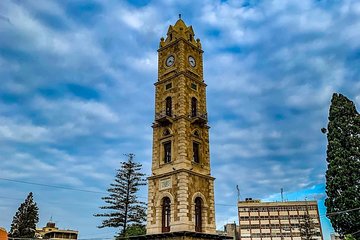
Tripoli, In Arabic: Ṭarābulus, city and port, northwestern Lebanon. It lies on the Mediterranean coast at the mouth of the Abu Ali River, 50 miles (80 km) north-northeast of Beirut. Tripoli is the ancient city that dates back to the Phoenician era, and is one of Lebanon's oldest cities, alongside Byblos, Tyre and Sidon.
Forty-five buildings in the city, many dating from the 14th century, have been registered as historical sites. Twelve mosques from Mamluke and Ottoman times have survived. Secular buildings include the “hammam” or the bathing-house, the souks, and the “khans”, that form an agglomeration of various trades
2
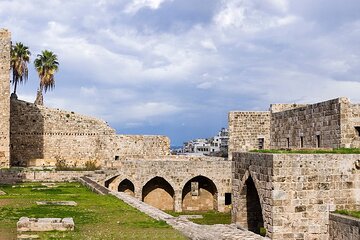
Overlooking Tripoli city is the imposing Citadel of Tripoli known as Qal’at Sinjil (Saint Gilles), which has been renovated and changed many times during its history.
Today the castle’s main features are an octagonal Fatimid construction converted to a church by the Crusaders, some Crusader structures of the 12th-13th centuries, a number of 14th century Mamluke additions, as well as additions made by the Ottomans in the 16th century. The present state of this huge fortress (140 meters long and 70 meters wide) is largely the result of extensive restoration work by Mustafa Barbar Agha, governor of Tripoli at the beginning of the 19th century.
3
Begun in 1294 and completed in 1315, the Great Mosque or Al Mansouri Mosque was built on the ruined 12th century Crusader cathedral of St. Mary of the Tower. Its large courtyard is surrounded by a vaulted prayer hall. Inside, one can still see elements of Western architecture from the old church, including the northern entrance and the Lombard style bell tower, which was transformed into the minaret. The many foundation plaques and decrees inscribed in the great Mosque not only inform us about the building but also reveal details of the daily life of the Mamluke period.
4
Taynal Mosque is an important mosque built in 1336 by Saif Ed-Dine Taynâl on the site of a ruined Crusader church. The adjoining domed mausoleum holds the tomb of the founder. Some elements of the original structure were re-used in the mosque, for example, the two rows of granite columns with late Roman capitals, which stand in the middle of the first prayer hall. The entrance of the second prayer hall is a unique example of the architectural decoration in Tripoli during the Mamluke era.
5
Tripoli souks are marvelous. They allow visitors to step into a unique, busy and colorful universe and gain insight into centuries old traditions. Meandering through the souks with its lively passageways and small hidden alleys, plentiful smells and plethora of sounds and colors, is like stepping into a theatre filled with fantastic characters, props and stories.
There are 9 souks in total in Tripoli: Attareen, Bazerkan, Haddadin, Haraj, Kameh, Koundarjiyeh, Nahhasin, Samak, Sayyaghin. Besides the food souk with plenty of fresh produce as well as meat, fish and much more.
6
The Khayyatin Khan is a part of Tripoli Souks, it is a long rectangular building of about 40 by 80 meters with a covered central courtyard and shops on either side. As the name Khan al Khayyatin implies, the khan housed and still houses tailors and other related trades as needles, thread, sewing machines etc.
7
The Khan As Sabon (Soap Khan) was built at the beginning of the seventeenth century. Originally it was intended to serve as a military barracks to garrison Ottoman troops and it was purposely built in the center of the city to enable the pasha to control any uprising. It is a large rectangular structure with two story arcaded corridors running around a fountain courtyard.
8
Hammam Al-Jadid was built around 1740, and called the “New Bath”, it is the largest “hammam” in Tripoli, although it has not been in operation since the 1970’s, its faded grandeur still stirs the imagination.
9
Hammam Izzed-dine is a public bathing-house was given to Tripoli city by its Mamluke governor 'Izz ed-Dîne Aybak. The governor, who died in 1298, is buried in a mausoleum beside the hammam. The Hammam 'Izz ed-Dîne was in continual use until recently and it is now under restoration.
10
Since 1881, and originating from Tripoli, Abdul Rahman Hallab has been a pioneer in the world of Lebanese sweets. Today, “Kasr El Helou” is considered one of Tripoli’s most renowned landmarks, visited by thousands of people from all parts of the globe.
11
Al-Mina is a coastal town in Tripoli. It occupies the location of the old Phoenician city of Tripoli and acts as the harbor city for modern neighboring Tripoli.
It has nine islands, four of them have been declared as natural reservations, to help breed fish, and preserve their natural habitat.
12
Byblos, one of the world's oldest continuously inhabited cities, captivates visitors with its profound historical significance and picturesque coastal setting along the Mediterranean. Renowned as the birthplace of the Phoenician alphabet, Byblos boasts archaeological sites dating back over 7,000 years, including the impressive Crusader castle that overlooks the ancient harbor. Strolling through its narrow streets, adorned with charming cafes and artisan shops, evokes a sense of stepping back in time while simultaneously embracing modern Lebanese culture. Byblos remains a living testament to the enduring legacy of civilizations that once thrived on its shores, making it a must-visit destination for history enthusiasts and travelers seeking to uncover Lebanon's captivating past.
13
The Old Souk of Byblos is a vibrant labyrinth of narrow alleys and bustling market stalls nestled within the ancient city walls. Here, amidst the scent of spices and the chatter of merchants, visitors can explore a treasure trove of traditional handicrafts, jewelry, textiles, and souvenirs. The souk's centuries-old architecture, adorned with colorful wooden shutters and stone archways, creates an enchanting backdrop for discovering local Lebanese culture and heritage. Whether you're sampling authentic street food, bargaining for handmade goods, or simply soaking in the lively atmosphere, a visit to the Old Souk of Byblos promises an unforgettable glimpse into Lebanon's rich cultural tapestry.
14
Stop 14
Perched majestically atop a hill overlooking the ancient port city, the Byblos Crusader Castle stands as a formidable testament to Lebanon's medieval history. Originally constructed by the Crusaders in the 12th century atop earlier fortifications, the castle boasts impressive stone walls and towers that offer panoramic views of the Mediterranean coastline and the surrounding countryside. Visitors can explore the well-preserved interior, which includes chambers, vaulted rooms, and a central courtyard, all revealing glimpses of the castle's strategic importance throughout the centuries. The Byblos Crusader Castle remains an iconic landmark, inviting travelers to step back in time and imagine the battles, rulers, and traders who once shaped this coastal stronghold.
15
The ancient port of Byblos, nestled on Lebanon's Mediterranean coast, is a timeless gateway to history and maritime heritage. Dating back over 5,000 years, it is one of the oldest ports in the world, known for its role in trade and cultural exchange since the Phoenician era. Today, visitors can stroll along its picturesque harbor, lined with colorful fishing boats and waterfront restaurants offering fresh seafood. The port area also features archaeological remains, including ancient docks and stone quays, providing a fascinating glimpse into Byblos' maritime past. Whether exploring its historical significance or enjoying its vibrant ambiance, the Byblos port remains a captivating destination that blends ancient charm with contemporary Mediterranean allure.
What's not included
Lunch
Gratuity
Available languages
Guide guide
AR
EN
Reviews breakdown
Tripadvisor
5.0
1 reviews
5★
1
4★
0
3★
0
2★
0
1★
0
Important information
Public transportation options are available nearby
Specialized infant seats are available
Suitable for all physical fitness levels
About Beirut
Beirut is the capital and largest city of Lebanon, renowned for its rich history, vibrant culture, and stunning Mediterranean coastline. Known as the 'Paris of the Middle East,' it offers a unique blend of ancient ruins, modern luxury, and bustling street life.
Top Attractions
Beirut Central District
The heart of Beirut, this district is a blend of modern skyscrapers and ancient ruins, offering a glimpse into the city's rich history and vibrant present.
Historical/Architecture
Half day to full day
Free to moderate
National Museum of Beirut
One of the most important archaeological museums in the Middle East, showcasing artifacts from various periods of Lebanese history.
Museum
2-3 hours
Moderate (around $5-$10)
Raouche Rock
A stunning natural limestone rock formation rising from the Mediterranean Sea, offering breathtaking views and a popular spot for photos.
Nature/Scenic
1-2 hours
Free (unless dining at the restaurant)
Byblos
One of the oldest continuously inhabited cities in the world, Byblos offers ancient ruins, a charming old souk, and a picturesque harbor.
Historical/Cultural
Half day to full day
Moderate (entry fees for some sites)
Must-Try Local Dishes
Hummus
A creamy dip made from chickpeas, tahini, lemon juice, and garlic, often served with pita bread.
Appetizer
Vegetarian, Vegan
Tabbouleh
A refreshing salad made from parsley, bulgur wheat, tomatoes, and lemon juice.
Appetizer
Vegetarian, Vegan
Kibbeh
A dish made from ground meat (usually lamb or beef) mixed with bulgur and spices, often fried or baked.
Appetizer
Contains meat
Kafta
Ground meat (usually lamb or beef) mixed with spices and herbs, often grilled or fried.
Main Course
Contains meat
Popular Activities
Hiking in the nearby mountains
Scuba diving and snorkeling in the Mediterranean
Beach lounging at Raouche or Dbayeh
Spa and wellness treatments
Visiting museums and historical sites
Attending local festivals and events
Swimming and water sports
Boat tours along the coast
Best Time to Visit
March to May, September to November
Spring and autumn offer the best weather for sightseeing and outdoor activities. The temperatures are comfortable, and the city is in full bloom during these seasons.
15°C to 28°C
59°F to 82°F
Practical Information
Language
- Official: Arabic
- Widely spoken: French, English
- English: Moderately spoken
Currency
Lebanese Pound (LBP)
Time Zone
GMT+2 (EET)
Electricity
220VV, 50HzHz
Safety Information
Overall Safety Rating: Exercise caution
Beirut is generally safe for tourists, but it's important to be aware of your surroundings and take precautions to ensure a safe and enjoyable trip. Petty crime and scams can occur, especially in tourist areas.
Important Precautions:
- • Be aware of your surroundings and keep valuables secure
- • Use reputable taxi services or ride-hailing apps
- • Avoid walking alone at night in isolated areas
Getting there
By air
- Rafic Hariri International Airport • 9 km (5.6 miles) from city center
By bus
Charles Helou Bus Station, Dawra Bus Station
Getting around
Public transport
Buses are the most common form of public transport, but they can be crowded and may not have fixed schedules.
Taxis
Available • Apps: Bolt
Rentals
Car, Bike, Scooter
Neighborhoods
Gemmayzeh
Hamra
Achrafieh
Day trips
Byblos
40 km (25 miles) • Half day to full day
One of the oldest continuously inhabited cities in the world, Byblos offers ancient ruins, a charming old souk, and a picturesque harbor.
Jeita Grotto
20 km (12 miles) • Half day
A stunning natural limestone cave system with a breathtaking underground river and waterfalls, offering a unique and unforgettable experience.
Harissa
20 km (12 miles) • Half day
A picturesque hilltop town offering panoramic views of the Mediterranean Sea and the famous Our Lady of Lebanon shrine, a popular pilgrimage site.
Festivals
Beirut International Film Festival • October to November
Beirut Jazz Festival • July
Eid al-Fitr • Varies by lunar calendar (usually April to June)
Pro tips
- Learn a few basic phrases in Arabic to enhance your experience and interact with locals
- Visit the Beirut Central District early in the morning or late in the afternoon to avoid crowds and the heat
- Try local street food like falafel, shawarma, and manakish for an authentic and affordable dining experience
- Use ride-hailing apps like Bolt for a more convenient and reliable taxi experience
- Explore the city's vibrant nightlife in neighborhoods like Gemmayzeh and Hamra, where you'll find a mix of bars, clubs, and live music venues
From $25
per person
Price varies by option
Secure booking
Free cancellation available
Instant confirmation


