Ravenna in half a day
Active
3h
For a full refund, cancel at least 24 hours before the scheduled departure time.
Instant confirmation
Mobile or paper ticket accepted
About this experience
You can visit Ravenna even in half a day: this will be enough to know its culture and history and to realize how this town is rich in architecture and art by the knowledge of the different religions that during the past strongly influenced all the mosaics decorations and its buildings.
Available options
Ravenna in half a day
What's included
Guided tour
Detailed itinerary
1
Our tour will start from the Church of Sant’ Apollinare Nuovo and after walking in Piazza Del Popolo the main square and Dante’s tomb area will end at the Basilica of San Vitale. (first half VI cent.). All the monuments involved in our tour are in the city centre – walking area where we can also also drink a good coffee!
Sant’Apollinare Nuovo (end V cent.) is in Via di Roma near the railway station.
This area is very quiet. The external of the church is very simple but inside you can find beautiful mosaics decorations of Justinianean age (Catholic) and the age of Theodoric (Arian faith) .
In fact this church has been defined the “church for two religions”: we will discover together why.
The king Theodoric in fact (454-526) of arian religion commissioned the building of this church at the end of V cent. Mosaics decorations got inspiration from the influence of the greek-roman taste and from Justinian mosaic taste . Consequently it is the most characteristic building concerning the ravennate byzantine art.
Mosaics decorations on the walls allow us to follow the evolution from the age of king Theodoric to Justinian one, an important melting port of different cultures and languages.
2
From Via di Roma we will go to the city centre to reach the “silent area” : here the famous Italian poet Dante Alighieri lived. This area is dedicated to its memory and cult . His tomb is a simple neo-classical building near St.Francis cloisters and church in which in 1321 Dante’s funerals took place.
3
Next monument of our tour will be the Battistero Neoniano (beg.V cent.) from bishop Neon who got the baptistery decorated with the mosaics of the dome. It is situated near the actual cathedral and it is richly decorated with stuccos, inlays of polychrome marbles and mosaics: different techniques integrated themselves perfectly to give life to an extraordinary united and harmonic complex.
4
Stop 4
After the visit to the Baptistery we will reach the basilica of San Vitale (VI cent.) the byzantine monument “par excellence” . The church has a central octagonal plan and its wonderful panels that represent the emperor Justinian with its suite and the empress Theodora, his wife, are famous all over the world.
Both the scenes as well as their artistic value have a documentary one really extraordinary. From them in fact we can deduce the splendour of the byzantine court.
5
Stop 5
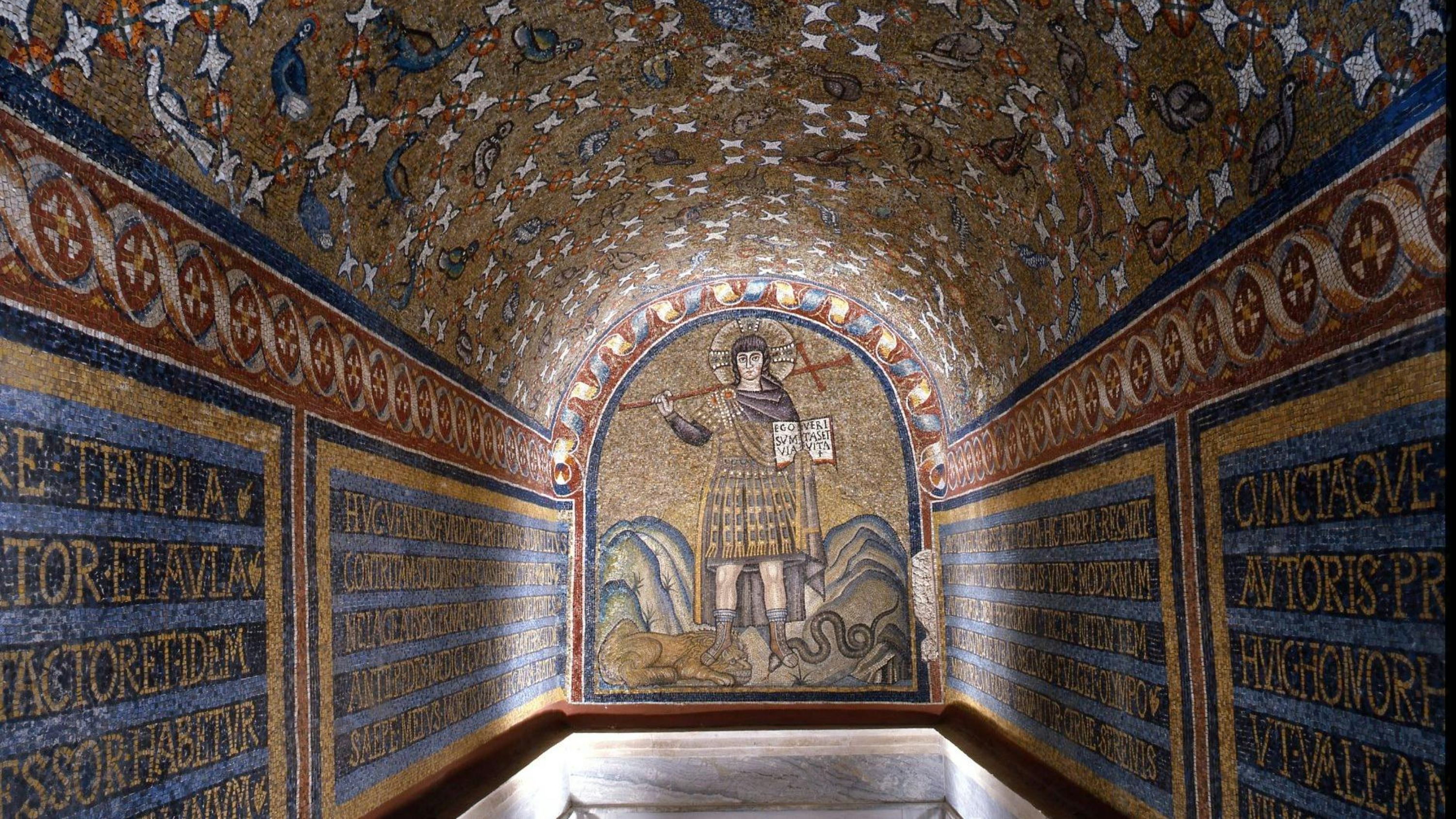
Going out of the basilica we go towards the mausoleum of the roman empress Galla Placidia. It was built within the first half of the Vth cent. probably by Galla Placidia.
It is a little construction but on entering you will be impressed by the magnificence of the decorations and of the mosaic scenes, especially by the unreal atmosphere in which you find yourselves.The lunette of the Good Shepherd among his flock is one of the most beautiful mosaics of Early Christian Art.
What's not included
Lunch
single entrance ticket to 5 monuments
Available languages
Guide guide
DE
EN
IT
FR
Reviews breakdown
Viator
3.7
3 reviews
5★
2
4★
0
3★
0
2★
0
1★
1
Tripadvisor
3.5
4 reviews
5★
1
4★
2
3★
0
2★
0
1★
1
Important information
Wheelchair accessible
Infants and small children can ride in a pram or stroller
Service animals allowed
Public transportation options are available nearby
Transportation options are wheelchair accessible
All areas and surfaces are wheelchair accessible
Suitable for all physical fitness levels
About Ravenna
Ravenna is renowned for its well-preserved late Roman and Byzantine architecture, including eight UNESCO World Heritage Sites. The city is a treasure trove of intricate mosaics, making it a must-visit for art and history enthusiasts. Its rich cultural heritage and serene atmosphere offer a unique blend of ancient and modern Italian life.
Top Attractions
Basilica di San Vitale
This UNESCO World Heritage Site is famous for its stunning Byzantine mosaics, which depict religious and imperial scenes. The basilica is a masterpiece of early Christian architecture.
Historical/Religious/Architecture
1-2 hours
€9.50 (combined ticket with other sites)
Mausoleo di Galla Placidia
Another UNESCO-listed site, this small mausoleum is renowned for its exquisite mosaics, which are among the best-preserved in the world. It is a testament to the artistic achievements of the early Byzantine period.
Historical/Religious/Architecture
30-45 minutes
€9.50 (combined ticket with other sites)
Battistero Neoniano
This octagonal baptistery is another UNESCO World Heritage Site, featuring beautiful mosaics that date back to the 5th century. It is one of the oldest surviving baptisteries in Christendom.
Historical/Religious/Architecture
30-45 minutes
€9.50 (combined ticket with other sites)
Dante Alighieri's Tomb
This monument honors Dante Alighieri, the famous Italian poet who spent his final years in Ravenna. The tomb is a significant cultural site and a place of pilgrimage for literature enthusiasts.
Historical/Cultural
30 minutes
Free
Parco della Pilotta
This large public park is a popular spot for locals and visitors alike. It features beautiful gardens, walking paths, and a playground, making it an ideal place for a leisurely stroll or picnic.
Nature/Relaxation
1-2 hours
Free
Must-Try Local Dishes
Piadina
A traditional flatbread filled with various ingredients such as cheese, cured meats, and vegetables. It is a popular street food in the region.
Snack
Vegetarian options available
Cappelletti in Brodo
A traditional pasta dish consisting of small, hat-shaped pasta filled with meat and served in a rich broth.
Dinner
Contains meat and gluten
Romagna Coast Fish Soup
A hearty seafood soup made with a variety of fresh fish and shellfish, tomatoes, and herbs.
Dinner
Contains seafood and gluten (if served with bread)
Squacquerone
A soft, creamy cheese often spread on piadina or eaten with bread. It has a mild, slightly tangy flavor.
Snack/Dessert
Contains dairy
Popular Activities
Boat tours in the Po Delta
Cycling in the countryside
Picnicking in Parco della Pilotta
Enjoying a spa day
Visiting UNESCO World Heritage Sites
Attending local festivals
Boating in the Po Delta
Swimming at nearby beaches
Best Time to Visit
April to June, September to October
These months offer pleasant weather with fewer tourists, making it ideal for sightseeing and outdoor activities.
15°C to 28°C
59°F to 82°F
Practical Information
Language
- Official: Italian
- Widely spoken: English, French, German
- English: Moderately spoken in tourist areas, limited elsewhere
Currency
Euro (EUR)
Time Zone
GMT+1 (Central European Time, CET)
Electricity
230VV, 50HzHz
Safety Information
Overall Safety Rating: Generally safe
Ravenna is a safe city with low crime rates. However, as with any destination, it is important to take basic precautions to ensure a safe and enjoyable trip.
Important Precautions:
- • Keep valuables secure and out of sight
- • Be cautious of pickpockets in crowded areas
- • Use licensed taxis or ride-sharing services
Getting there
By air
- Bologna Guglielmo Marconi Airport • 80 km from Ravenna
- Forlì Airport • 50 km from Ravenna
By train
Ravenna Station
By bus
Ravenna Bus Terminal
Getting around
Public transport
The bus system is efficient and affordable, with frequent services throughout the day. Buses are a convenient way to get around Ravenna.
Taxis
Available • Apps: MyTaxi, FreeNow
Rentals
Car, Bike, Scooter
Neighborhoods
Centro Storico
San Rocco
Porto
Day trips
Bologna
80 km from Ravenna • Full day
Bologna is a vibrant city known for its medieval architecture, rich history, and delicious cuisine. It is a great day trip from Ravenna, offering a mix of cultural and culinary experiences.
Comacchio
30 km from Ravenna • Half day to full day
Comacchio is a charming town known for its canals and historic center. It is often referred to as the 'Little Venice' of the Po Delta and offers a unique blend of history and natural beauty.
San Marino
100 km from Ravenna • Full day
San Marino is a small, independent country nestled in the Apennine Mountains. It is known for its medieval architecture, stunning views, and rich history. A day trip to San Marino offers a unique cultural experience.
Festivals
Ravenna Festival • June to July
Mosaico Festival • May to June
Fiera di San Romualdo • February
Pro tips
- Visit the UNESCO World Heritage Sites early in the morning to avoid crowds
- Try local specialties like piadina and cappelletti in brodo at traditional trattorias
- Explore the city on foot or by bike to discover hidden gems and charming streets
- Attend local festivals and events for a unique cultural experience
- Learn a few basic Italian phrases to enhance your interactions with locals
From $25
per person
Price varies by option
Secure booking
Free cancellation available
Instant confirmation