Medieval Carcassonne: Interactive Ghost Story & City Game
Active
1h
For a full refund, cancel at least 24 hours before the scheduled departure time.
Instant confirmation
Mobile or paper ticket accepted
About this experience
Storm the walls of Carcassonne on a medieval adventure!
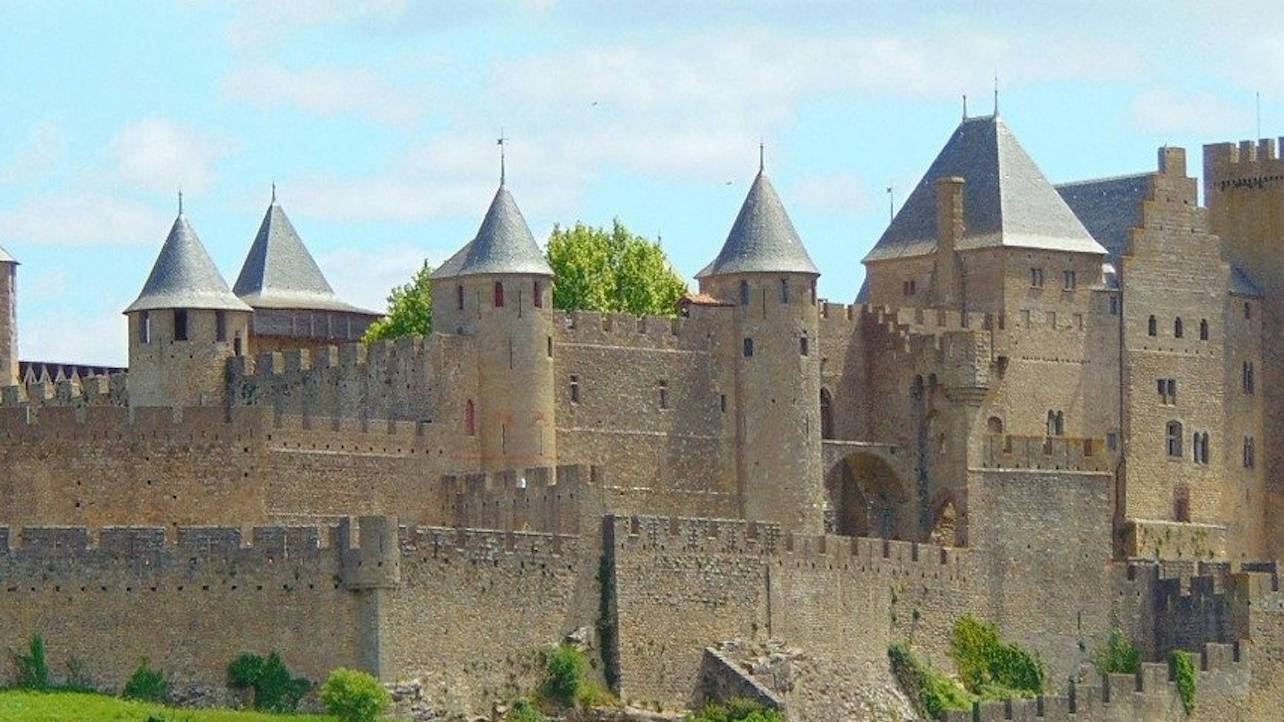
Don't just walk the ramparts, unlock their secrets. On this self-guided tour of the UNESCO site La Cité, play as a trapped spirit seeking redemption. Solve clues to uncover stories behind the sieges and the legendary Lady Carcas.
Quest Highlights:
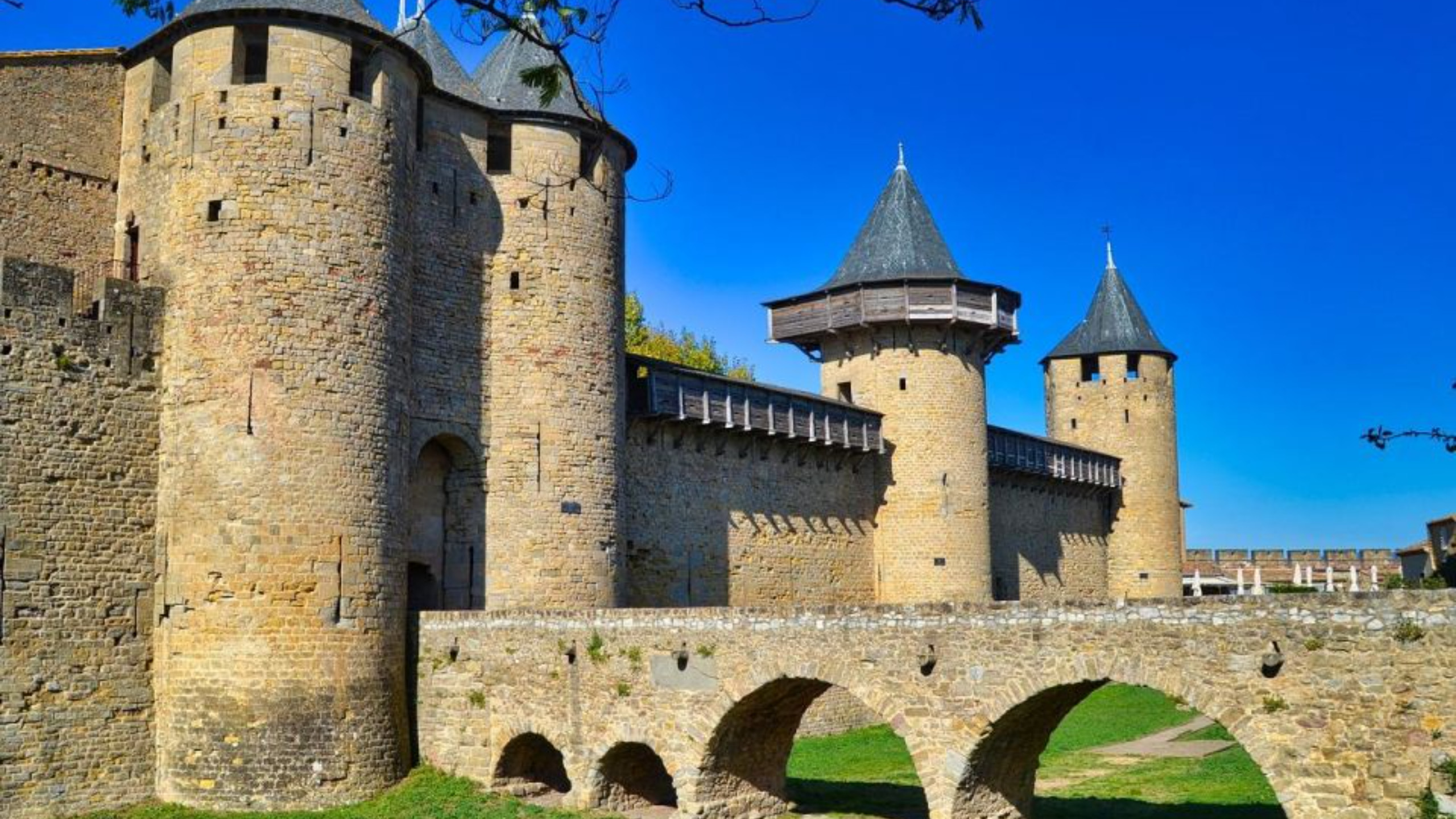
The Icons: Solve riddles at the Château Comtal (Count’s Castle) and the Basilica of Saints Nazarius and Celsus.
The Legends: Discover the truth behind the "Lady Carcas" legend and why the bells ring.
Escape the Crowds: Find quiet alleys and rampart views that most tourists miss.
Medieval Mysteries: Learn about the Inquisition, the Cathars, and ghosts haunting the citadel.
How it works:
No Guide Needed: Your phone gives exact directions. No maps, no GPS.
100% Flexible: Takes ~1.5 hours. Pause for food or wine anytime, you are in control.
Instant Access: Start playing immediately.
The Mission: Can you solve the riddles and free the ghost of Carcassonne?
Available options
Medieval Carcassonne: Interactive Ghost Story & City Game
What's included
Full flexibility: start at any hour, take a break at any time and resume later
Unlimited access: play anytime, pause and resume
If your group is larger than 15 people, just make multiple bookings.
Local stories and legends at each stop
10 interactive puzzles along a ~3 km route
Access to the mobile escape game via the Questo app
Private, contactless experience (no groups or guides)
Detailed itinerary
1
Square Gambetta is a large square in Carcassonne on the other side of the river Aude and the famous Cité. With this square begins the old walled city, built by King St. Louis of France: La Bastide de Saint Louis.
Here you will have to look around to find the answer to our challenge to advance to the new location and learn the story of this place.
2
According to notarial acts, the little chapel Notre Dame de la Santé was built with money from the legacy of Jean de Saix, in 1527, as a hospital for those suffering from the plague. It was considered a faithful guard in that strategic location, the narrow passage between fortified buildings.
Here you will have to look around to find the answer to our challenge to advance to the new location and learn the story of this place.
3
At the foot of the Pont-Vieux, on the right bank of the Aude, a facade bears witness to this prosperous period for the city. Former home of a noble Carcassonnaise family, the building was bought in 1694 by someone close to Colbert who founded a cloth factory there. The latter will take the title of Manufacture Royale in 1696. The only building dating from this period, still visible, is the owners' residence. This construction is, in many ways, similar to those of the Lower Town dating from the 18th century.
Here you will have to look around to find the answer to our challenge to advance to the new location and learn the story of this place.
4
The church Saint-Gimer was built between 1854 and 1859, by architect Eugène Viollet-le-Duc. Modesty was one of its stated goals; it has a nave and two aisles and a polygonal apse stationed on two vestries, all preceded by a porch.
Here you will have to look around to find the answer to our challenge to advance to the new location and learn the story of this place.
5
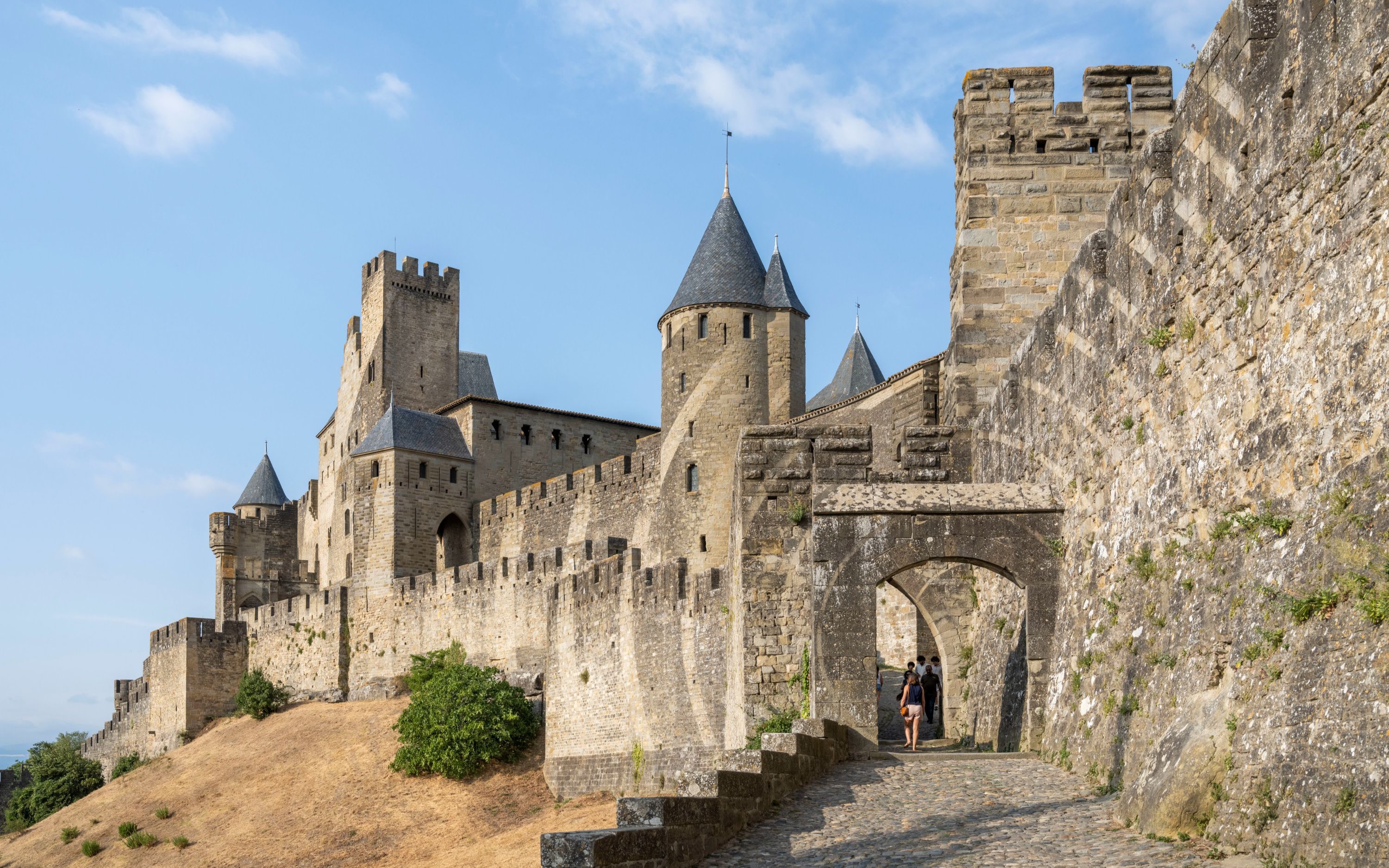
Porte de l'Aude is a part of the preserved medieval walled city, this iconic gate overlooks the river.
Here you will have to look around to find the answer to our challenge to advance to the new location and learn the story of this place.
6
The Inquisition Museum is located in a large 17th century building and presents a large collection of Instruments of torture, ranging from the 12th century to the French Revolution. It is completed by the various characters who played an important role during this period as well as their biography. You will also find the history of the main Cathar Castles, part of the history of the Inquisition and the riches of our region.
Here you will have to look around to find the answer to our challenge to advance to the new location and learn the story of this place.
7
Stop 7
Pass by
The present Romanesque cathedral started to be built in June 1096. A Lady Chapel was added in the early 15th century, adjoining the infirmary and chapel built by Bishop Radulph in the 1260s. The Château Comtal was built in the 12th century by Bernard Aton Trencavel over the western part of the Roman walls.
Here you will have to look around to find the answer to our challenge to advance to the new location and learn the story of this place.
What's not included
A physical tour guide
Entry tickets to monuments or attractions
Available languages
Written guide
DE
EN
FR
ES
Reviews breakdown
Viator
2.9
12 reviews
5★
2
4★
3
3★
2
2★
2
1★
3
Tripadvisor
3.8
21 reviews
5★
8
4★
6
3★
4
2★
1
1★
2
Important information
Infants and small children can ride in a pram or stroller
Service animals allowed
Public transportation options are available nearby
Suitable for all physical fitness levels
Meeting point
Please use Google Maps or other map services to arrive at this location. When you arrive, please follow the instructions inside the Questo app closely.
Important notes
To unlock the experience in the Questo app, go to https://www.questoapp.com/unlock, and add your booking number and e-mail address. If you booked on TripAdvisor/Viator, then your booking number starts with BR. If you booked on a different platform, please contact our customer support at: questoapp.com/chat. Then, download the Questo app and create a new account with the e-mail address you used for unlocking.
About Carcassonne
Carcassonne is a historic fortified city in southern France, famous for its medieval architecture and UNESCO World Heritage-listed Cité de Carcassonne. It offers a unique blend of history, culture, and scenic beauty, making it a must-visit destination for history enthusiasts and travelers seeking a fairy-tale experience.
Top Attractions
Cité de Carcassonne
The Cité de Carcassonne is a medieval fortress and UNESCO World Heritage site. It is one of the most visited historic sites in France, featuring a double-walled fortress, 52 towers, and a drawbridge.
Historical/Architecture
2-3 hours
€9.50
Château Comtal
The Château Comtal is a medieval castle within the Cité de Carcassonne. It offers guided tours that take visitors through its rich history and stunning architecture.
Historical/Architecture
1-2 hours
Included in the Cité de Carcassonne ticket
Basilica of Saints Nazarius and Celsus
This beautiful Romanesque basilica is located within the Cité de Carcassonne. It is known for its stunning architecture and historical significance.
Religious/Architecture
30 minutes to 1 hour
Free
Musée de l'Ecole Française
This museum is dedicated to the history of education in France. It features a collection of school-related artifacts and provides a unique insight into the educational system of the past.
Museum
1-2 hours
€5
Lake Cavayère
Lake Cavayère is a popular spot for outdoor activities, including swimming, boating, and picnicking. It is a great place to relax and enjoy the natural beauty of the region.
Nature
Half day
Free (activities may have separate costs)
Must-Try Local Dishes
Cassoulet
A traditional dish made with white beans, meat (usually duck, goose, or sausage), and slow-cooked in a clay pot.
Main course
Contains meat and beans, not suitable for vegetarians or vegans.
Confit de Canard
Duck confit is a dish where duck legs are slow-cooked in their own fat, resulting in tender, flavorful meat.
Main course
Contains duck, not suitable for vegetarians or vegans.
Foie Gras
A delicacy made from the liver of a duck or goose, often served as a pâté or mousse.
Appetizer or Dessert
Contains animal products, not suitable for vegetarians or vegans.
Croustade de Carcassonne
A traditional pastry filled with apples, cinnamon, and sometimes almond cream.
Dessert
Contains dairy and sometimes nuts, suitable for vegetarians.
Popular Activities
Hiking in the nearby mountains
Boating at Lake Cavayère
Picnicking by the lake
Enjoying a leisurely meal at a local restaurant
Exploring the Cité de Carcassonne
Visiting local museums and galleries
Swimming at Lake Cavayère
Visiting local Christmas markets
Best Time to Visit
June to August
This is the peak tourist season with warm weather, festivals, and outdoor activities. The city is bustling with visitors, and the weather is ideal for exploring the medieval streets and enjoying outdoor dining.
20°C to 30°C
68°F to 86°F
Practical Information
Language
- Official: French
- Widely spoken: English, Spanish, Occitan
- English: Moderately spoken
Currency
Euro (EUR)
Time Zone
GMT+1 (CET), GMT+2 (CEST during daylight saving time)
Electricity
230VV, 50HzHz
Safety Information
Overall Safety Rating: Generally safe
Carcassonne is generally safe for tourists, with low crime rates. However, as with any tourist destination, it's important to be aware of your surroundings and take basic precautions.
Important Precautions:
- • Keep valuables secure and out of sight.
- • Be cautious of pickpockets in crowded areas.
- • Use licensed taxis or ride-sharing services.
Getting there
By air
- Carcassonne Airport • 3 km from city center
By train
Carcassonne Station
By bus
Carcassonne Bus Station
Getting around
Public transport
The bus network is efficient and affordable, with routes covering most parts of the city and surrounding areas. Buses are a convenient way to get around, especially for those staying outside the Cité.
Taxis
Available • Apps:
Rentals
Car, Bike, Scooter
Neighborhoods
La Cité
Bastide Saint-Louis
Montlegun
Day trips
Toulouse
90 km • Full day
Toulouse, known as 'La Ville Rose' (The Pink City), is a vibrant city with a rich history, beautiful architecture, and a lively cultural scene.
Narbonne
50 km • Half day
Narbonne is a charming town with a rich history, beautiful architecture, and a relaxed atmosphere. It is known for its Roman ruins and canals.
Minerve
60 km • Full day
Minerve is a picturesque medieval village nestled in the heart of the Haut-Languedoc Regional Natural Park. It is known for its stunning views and historic sites.
Festivals
Carcassonne Festival • July and August
Fête de la Saint-Jean • June 24
Pro tips
- Visit the Cité early in the morning or late in the afternoon to avoid the midday heat and crowds.
- Wear comfortable shoes for walking on cobblestone streets.
- Try the local specialties, such as cassoulet and foie gras.
- Book accommodations and tickets for major attractions in advance, especially during peak season.
- Explore the Bastide Saint-Louis for a more modern and vibrant atmosphere.
From $25
per person
Price varies by option
Secure booking
Free cancellation available
Instant confirmation