Valencia guided tours - walking tours -
Active
3h - 4h
For a full refund, cancel at least 24 hours before the scheduled departure time.
Instant_then_manual confirmation
Mobile or paper ticket accepted
About this experience
In this walking tour, you will discover the city of Valencia, a dynamic and modern city that has changed a lot in the last years, from its roman origin (founded in 138 b.C. by Junius Brutus a roman consul) another important attraction such as the silk exchange (Lonja) it was declared the a world hertitage monument in 1996 by UNESCO and is one of the most famous artitrcture europe can offer, or the Catedral where you can see te holy grail which it was celebrated the last Supper of Christ, to the modern architecture like the City of the Arts and Sciences with designs by Santiago Calatrava from Valencia, a space for leisure activities, were culture and science take the leading role. Valencia is a city of contrast where you will have a great choice to enjoy if you stay in Valencia for a few days: large sandy beaches, the Port America's Cup ad the Marina, the Turia Garden (old Turia river bed, converted into a garden) where you can make bike tours, the Natural Park of the Albufera...
Available options
Valencia guided tours - walking tours -
Duration: 3 hours<br/>a pie<br/>Pickup included
Scheduls for National Festival
Special prices : Scheduls for national Festival "las Fallas" (Floats Festival) from 15th to 19 March.<br/>Pickup included
What's included
Professional guide
Detailed itinerary
1
The North Railway Station, one of the finest examples still preserved in Spain of railway architecture, a Secession Modernist style building, inaugurated in 1917 by the architect Demetrio Ribes from Valencia. One of the main aesthetical aims was to integrate in it different products of the valencian industry (forgy works, iron fences, wood, ceramic, bronze and stone) as if they tried to welcome everybody with products of this region.
2
The Round Square is one of the most picturesque place from the city. It was built from 1839 to 1856 so that the street sellings could be regulated. it is composed of three- storey. symmetrical buildings and business premises. There is a pool of still water with a central fountain (that was one of the first drinking water fountain in Valencia). There, you can find all kind of embroideries, baby clothes, ceramics and other souvenirs.
3
Stop 3
La Lonja - Commodity Exchange, is one of the most characteristic monuments of the city, as well as being one of the most famous examples of Gothic civil architecture that Europe can offer. This building was destined for the carrying out of commercial transactions related to the prosperity which characterized the city at the end of the XV century.
Very interesting is the Hall of Pillars or Contract Hall with its 24 helicoidal columns that allude to the ship ropes or twisted silk, opening out like palm-trees.
It was declared World Heritage monument in 1996.
4
Stop 4
The Central Market is a modernist style building constructed in between 1914-1928. It is one of the largest in Europe, with a surface of more than 8000 square metres. This market with nearly 400 stalls, is an aesthetic delight and pleasure for the senses. This sales centre of fresh products stands out for its exquisite combination of glass and metal and for its central dome finished off with a weathercock in the shape of a parrot, alluding to the great bustle of the people.
5
Stop 5
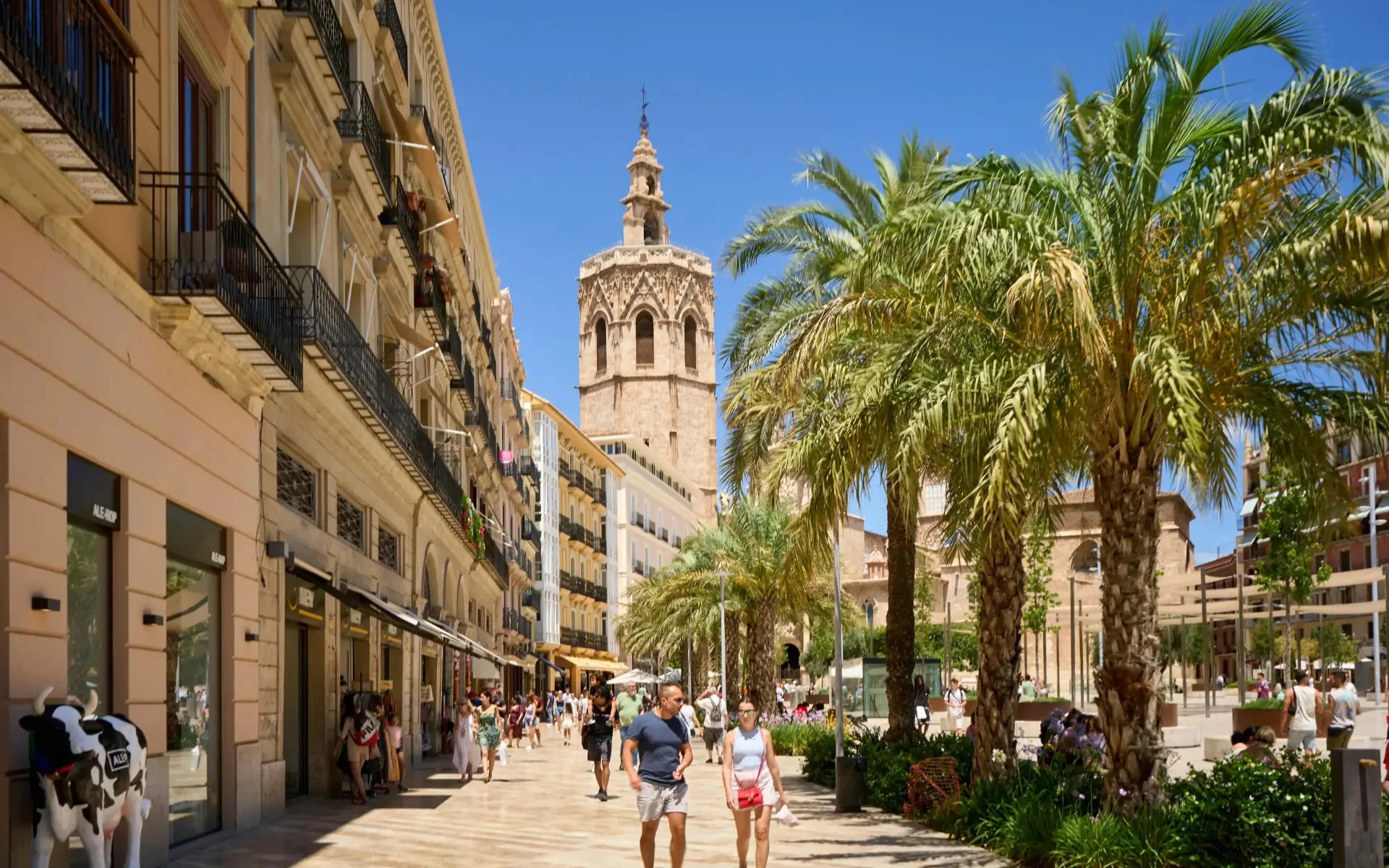
The cathedral was built on the site of a Roman temple, later a mosque, it dates back to the 13th century. The mix of architectural styles, from romanesque to Baroque, can be seen in each of its three doors: the main door, or Puerta de los Hierros, is Baroque, the Puerta de los Apóstoles is Gothic, and it is there, that every Thursday at 12 o'clock the Water Tribunal takes place, an institution that has been in existence for over 1000 years (it was founded in 960) without a break and still applies the oral law that governs the use of water in the fertile fields of Valencia.The third door is the Puerta del Palau, in Romanesque style. Of particular note is the Holy Grail Chapel, which houses the chalice used by Jesus Christ at the Last Supper. There are wonderful views of the city from the cathedral's "Miguelete" belfry after climbing up the tower's 207 steps.
I can explain you the cathedral, its history and architecture from outside. Entrance at the request of the client.
What's not included
Entrance fees (unless they are free)
Food and drinks
Transportation to/from attractions
Available languages
Guide guide
DE
EN
IT
FR
ES
Reviews breakdown
Viator
5.0
3 reviews
5★
3
4★
0
3★
0
2★
0
1★
0
Tripadvisor
5.0
41 reviews
5★
40
4★
1
3★
0
2★
0
1★
0
Important information
Wheelchair accessible
Infants and small children can ride in a pram or stroller
Public transportation options are available nearby
Infants are required to sit on an adult’s lap
Transportation options are wheelchair accessible
All areas and surfaces are wheelchair accessible
Suitable for all physical fitness levels
Children must be accompanied by an adult
May be operated by a multi-lingual guide
Only the Serranos Gates is not accesible to wheechair, but anyway It is not included and it can be seen from outside
Meeting point
At the façade of the train station.
To be agreed with the client
About Valencia
Valencia is a vibrant city on Spain's eastern coast, known for its City of Arts and Sciences, beautiful beaches, and rich culinary traditions. The city blends modern architecture with historic charm, offering a unique Mediterranean experience.
Top Attractions
City of Arts and Sciences
A futuristic complex featuring an opera house, science museum, and oceanographic park.
Architecture
Half day to full day
€30-€50 (depending on the attractions visited)
Valencia Cathedral
A stunning Gothic cathedral with a mix of architectural styles, home to the Holy Grail.
Historical
1-2 hours
€3-€5 (additional cost for tower access)
La Lonja de la Seda
A late Valencian Gothic-style civil building and a UNESCO World Heritage Site.
Historical
1 hour
€2-€4
Malvarrosa Beach
A popular urban beach with a long promenade, perfect for relaxation and water sports.
Beach
Half day to full day
Free
Central Market
One of the largest fresh produce markets in Europe, offering a variety of local and international products.
Market
1-2 hours
Free to enter, prices vary for purchases
Must-Try Local Dishes
Paella Valenciana
A traditional rice dish cooked with rabbit, chicken, and vegetables.
Main Course
Contains meat and vegetables
Fideuà
A noodle-based dish similar to paella, made with seafood.
Main Course
Contains seafood
Horchata
A sweet, milky drink made from tiger nuts, typically served with fartons (sweet pastries).
Drink
Vegan and gluten-free
All i Pebre
A traditional dish made with eel, garlic, and peppers.
Main Course
Contains fish and seafood
Popular Activities
Hiking in Albufera Natural Park
Water sports at Malvarrosa Beach
Beach lounging
Spa treatments
Visiting museums and historic sites
Attending local festivals
Boat tours in Albufera
Swimming and water sports
Best Time to Visit
March to May, September to November
These months offer pleasant weather and fewer tourists compared to the summer peak.
15-28°C
59-82°F
Practical Information
Language
- Official: Spanish
- Widely spoken: Valencian, English
- English: Moderately spoken
Currency
Euro (EUR)
Time Zone
GMT+1 (CET), GMT+2 (CEST during daylight saving time)
Electricity
230VV, 50HzHz
Safety Information
Overall Safety Rating: Generally safe
Valencia is generally safe for tourists, but it's important to be aware of pickpockets and scams in crowded areas.
Important Precautions:
- • Keep valuables secure and out of sight
- • Use licensed taxis or ride-sharing apps
- • Be cautious of strangers approaching you with offers or requests
Getting there
By air
- Valencia Airport • 8 km from city center
By train
Valencia Joaquín Sorolla Station
By bus
Valencia Bus Station
Getting around
Public transport
Efficient and affordable, with multiple lines connecting major attractions.
Taxis
Available • Apps: Cabify, Uber
Rentals
Car, Bike, Scooter
Neighborhoods
Ciutat Vella (Old Town)
El Carmen
Ruzafa
Malvarrosa
Day trips
Albufera Natural Park
10 km from Valencia • Half day to full day
A beautiful wetland area with a variety of birdlife and traditional fishing villages.
Sagunto
30 km from Valencia • Half day
A historic town with a Roman theater, castle, and medieval center.
Requena
100 km from Valencia • Full day
A picturesque town known for its wine production and historic center.
Festivals
Fallas Festival • March 15-19
Tomatina Festival • Last Wednesday of August
Las Fallas de Valencia • March 15-19
Pro tips
- Visit the City of Arts and Sciences early in the morning or late in the afternoon to avoid the midday sun and crowds
- Try local specialties like paella, fideuà, and horchata at traditional restaurants and markets
- Explore the city's neighborhoods, each with its unique character and attractions
- Use the Valencia Tourist Card for unlimited public transportation and discounts at major attractions
- Be cautious of pickpockets and scams in crowded areas, especially during festivals and peak tourist seasons
From $25
per person
Price varies by option
Secure booking
Free cancellation available