Day Trip to Lalibela Churches
Active
8h
For a full refund, cancel at least 24 hours before the scheduled departure time.
Instant confirmation
Mobile or paper ticket accepted
About this experience
Day trip to Lalibela Churches tour stands out from standard tours because it offers a seamless, all-inclusive, and deeply immersive experience with premium conveniences and expert insights.
Here is why this tour is truly unique;
1. Hassle-Free: Door to Door Service
Pick-up & drop-off directly from your hotel or airport. No stress arranging taxis or navigating Lalibela’s rugged terrain.
2. Exclusive Access with a Private Professional Guide
Unlike crowded group tours, your private guide provides personalized attention & tailoring explanations.
3. All Fees Covered, No Hidden Costs
Church entrance fees are prepaid, avoiding long ticket lines or currency confusion. Admission includes access to all 11 rock-hewn churches.
4. Deeper Cultural & Spiritual Engagement
Special access to areas less frequented by large groups, like priest-led blessings.
5. Time Optimization – See More in Less Time
Efficient routing, no wasted moments, your guide prioritizes the most iconic and profound sites.
Available options
Day Trip to Lalibela Churches
Pickup included
Afternoon Arrivals
If you arrive in the afternoon, visit the Northwest group of churches from 2pm - 5pm and the remaining churches next morning.<br/>Pickup included
What's included
Professional guide
Entrance fee
Bottles of drinking water during the tour
pick up and drop off from/to hotel or airport in Lalibela
ground transportation during the tour
Detailed itinerary
1
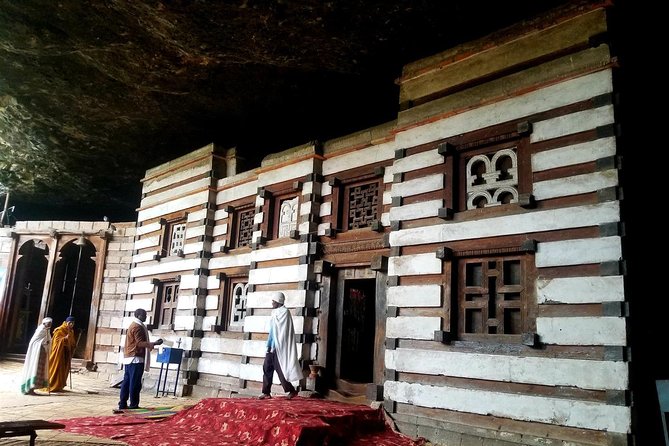
The 12th century old Lalibela rock-hewn churches, are divided into two main clusters: the Northwestern cluster and the Southeastern cluster.
This morning you visit Northwestern cluster which consists Five of the most impressive and interconnected churches, namely;
Bete Medhane Alem (House of the Saviour of the World): The largest monolithic church in the world, surrounded by 34 exterior columns and featuring an ancient golden cross said to have been owned by King Lalibela.
Bete Maryam (House of Mary): One of the oldest and most decorated churches, dedicated to the Virgin Mary.
Bete Meskel (House of the Cross): A smaller chapel connected to Bete Maryam, with a simple yet elegant design.
Bete Denagel (House of Virgins): A small chapel dedicated to female martyrs.
Bete Mikael (House of Michael) and Bete Golgotha (House of Golgotha): This church is believed to contain the tomb of King Lalibela.
2
In the afternoon you visit the Southeastern cluster of churches along with the iconic Bete Giyorgis (Church of St. George) standing separately.
The Southeastern cluster of Lalibela’s churches includes some of the most impressive and spiritually significant structures, namely;
Bete Gabriel-Rufael (House of Gabriel and Raphael): A twin church connected by a tunnel, believed to have been a royal palace before becoming a place of worship.
Bete Merkorios (House of Merkorios): Thought to have been a prison or court, now a church with beautiful frescoes and an underground passage.
Bete Amanuel (House of Emmanuel): One of the finest examples of Axumite architecture, possibly a royal chapel.
Bete Abba Libanos (House of Abba Libanos): A small but significant church, said to have been built in a single night with the help of angels.
Conclude the tour with a visit to the purely monolithic church of Saint George, (Bet Giorgis), constructed by King Lalibela in honor of the patron Saint George.
What's not included
Alcoholic drinks (available to purchase)
Food and drinks
Souvenir photos (available to purchase)
Available languages
Guide guide
EN
Reviews breakdown
Tripadvisor
5.0
1 reviews
5★
1
4★
0
3★
0
2★
0
1★
0
Important information
Public transportation options are available nearby
Specialized infant seats are available
Suitable for all physical fitness levels
About Lalibela
Lalibela is a small town in northern Ethiopia renowned for its rock-hewn churches, which are part of a UNESCO World Heritage Site. These churches, carved from living rock in the 12th and 13th centuries, are a testament to the town's rich history and religious significance. Lalibela is a pilgrimage site for Ethiopian Orthodox Christians and a fascinating destination for travelers interested in history, architecture, and spirituality.
Top Attractions
Rock-Hewn Churches of Lalibela
The Rock-Hewn Churches of Lalibela are a UNESCO World Heritage Site consisting of 11 medieval churches carved from living rock. These churches are a testament to the skill and dedication of the artisans who built them and are a significant pilgrimage site for Ethiopian Orthodox Christians.
Historical/Religious/Architecture
Half day to full day
ETB 200 (USD 7) for foreigners, ETB 50 (USD 2) for locals
Yemrehana Kristos
Yemrehana Kristos is a 12th-century church located about 40 km (25 miles) from Lalibela. Unlike the rock-hewn churches, this church is built in a traditional Ethiopian style and is known for its beautiful wooden ceiling and ancient manuscripts.
Historical/Religious/Architecture
Half day
ETB 50 (USD 2) for foreigners, ETB 10 (USD 0.50) for locals
Nakuto La'ab Monastery
Nakuto La'ab Monastery is a 13th-century monastery located on an island in Lake Ashenge, about 35 km (22 miles) from Lalibela. The monastery is known for its ancient manuscripts, religious artifacts, and beautiful views of the surrounding landscape.
Historical/Religious
Half day
ETB 50 (USD 2) for foreigners, ETB 10 (USD 0.50) for locals
Lalibela Museum
The Lalibela Museum is a small museum located near the rock-hewn churches, showcasing the history and culture of the town and its people. The museum houses a collection of artifacts, photographs, and exhibits that provide insight into the rich heritage of Lalibela.
Museum
1-2 hours
ETB 20 (USD 1) for foreigners, ETB 5 (USD 0.25) for locals
Must-Try Local Dishes
Doro Wat
A spicy chicken stew made with berbere spice, onions, and garlic, served with injera.
Main dish
Contains meat and gluten (injera).
Injera
A sourdough flatbread made from teff flour, used as both a plate and utensil in Ethiopian cuisine.
Staple food
Gluten-free if made from pure teff flour, but may contain traces of gluten if made with other flours.
Tibs
Sautéed meat, usually beef or lamb, cooked with onions, peppers, and spices.
Main dish
Contains meat and gluten (if served with injera).
Shiro Wat
A spicy stew made from chickpea flour, berbere spice, and garlic, served with injera.
Vegetarian dish
Vegetarian and gluten-free (if made with pure teff injera).
Popular Activities
Hiking
Exploring the countryside
Visiting remote monasteries
Enjoying the scenic views
Relaxing in local cafes
Participating in traditional coffee ceremonies
Visiting the rock-hewn churches
Exploring local markets
Best Time to Visit
September to May
This period offers the best weather for visiting Lalibela, with warm days and cool nights. The rainy season has passed, making it ideal for exploring the rock-hewn churches and enjoying outdoor activities.
15°C to 25°C (59°F to 77°F)
59°F to 77°F
Practical Information
Language
- Official: Amharic
- Widely spoken: English (in tourist areas)
- English: Moderately spoken in tourist areas, limited elsewhere
Currency
Ethiopian Birr (ETB)
Time Zone
GMT+3
Electricity
220VV, 50HzHz
Safety Information
Overall Safety Rating: Generally safe
Lalibela is generally a safe destination for travelers, with low levels of violent crime. However, petty crime, such as pickpocketing and bag snatching, can occur, especially in crowded areas and tourist sites. It's important to take precautions to protect your belongings and be aware of your surroundings.
Important Precautions:
- • Be cautious when using taxis, and always negotiate the fare in advance.
- • Avoid carrying large amounts of cash, and keep your valuables secure.
- • Be wary of strangers offering help or services, as they may be trying to scam you.
Getting there
By air
- Lalibela Airport • 5 km (3 miles) from the city center
By bus
Addis Ababa, Gondar, Mekele
Getting around
Public transport
Taxis are available in Lalibela but are not as common as in larger cities. They can be hired for short trips around the town.
Taxis
Available • Apps:
Rentals
Car
Neighborhoods
Central Lalibela
Asheten Maryam
Day trips
Yemrehana Kristos
40 km (25 miles) • Half day
Yemrehana Kristos is a 12th-century church located about 40 km (25 miles) from Lalibela. Unlike the rock-hewn churches, this church is built in a traditional Ethiopian style and is known for its beautiful wooden ceiling and ancient manuscripts.
Nakuto La'ab Monastery
35 km (22 miles) • Half day
Nakuto La'ab Monastery is a 13th-century monastery located on an island in Lake Ashenge, about 35 km (22 miles) from Lalibela. The monastery is known for its ancient manuscripts, religious artifacts, and beautiful views of the surrounding landscape.
Asheten Maryam
30 km (19 miles) • Full day
Asheten Maryam is a rural area located about 30 km (19 miles) from Lalibela, known for its beautiful landscapes and hiking trails. It's a great destination for those looking to explore the countryside and experience the local way of life.
Festivals
Timket (Epiphany) • January 19
Meskel (Finding of the True Cross) • September 27
Genna (Ethiopian Christmas) • January 7
Pro tips
- Hire a local guide to learn more about the history and significance of the rock-hewn churches and other attractions.
- Bring comfortable walking shoes, as you'll be exploring the town on foot and visiting sites with uneven terrain.
- Carry enough cash, as ATMs and card acceptance are limited in Lalibela.
- Be prepared for cool temperatures, especially at night, as Lalibela is located at a high altitude.
- Respect local customs and traditions, especially when visiting religious sites, and always ask for permission before taking photographs of people or religious ceremonies.
From $25
per person
Price varies by option
Secure booking
Free cancellation available
Instant confirmation