Malacca Heritage City Day Trip
Active
10h
For a full refund, cancel at least 24 hours before the scheduled departure time.
Instant confirmation
Mobile or paper ticket accepted
About this experience
We will Explore the historic town of Malacca, a key port for trade between the East and West with influence of former Asian and European rulers evident throughout this World Heritage City. Here, many battles had been fought to gain control of this strategic port, leading to the monopoly and control of the lucarative East Indies Spice Trade.
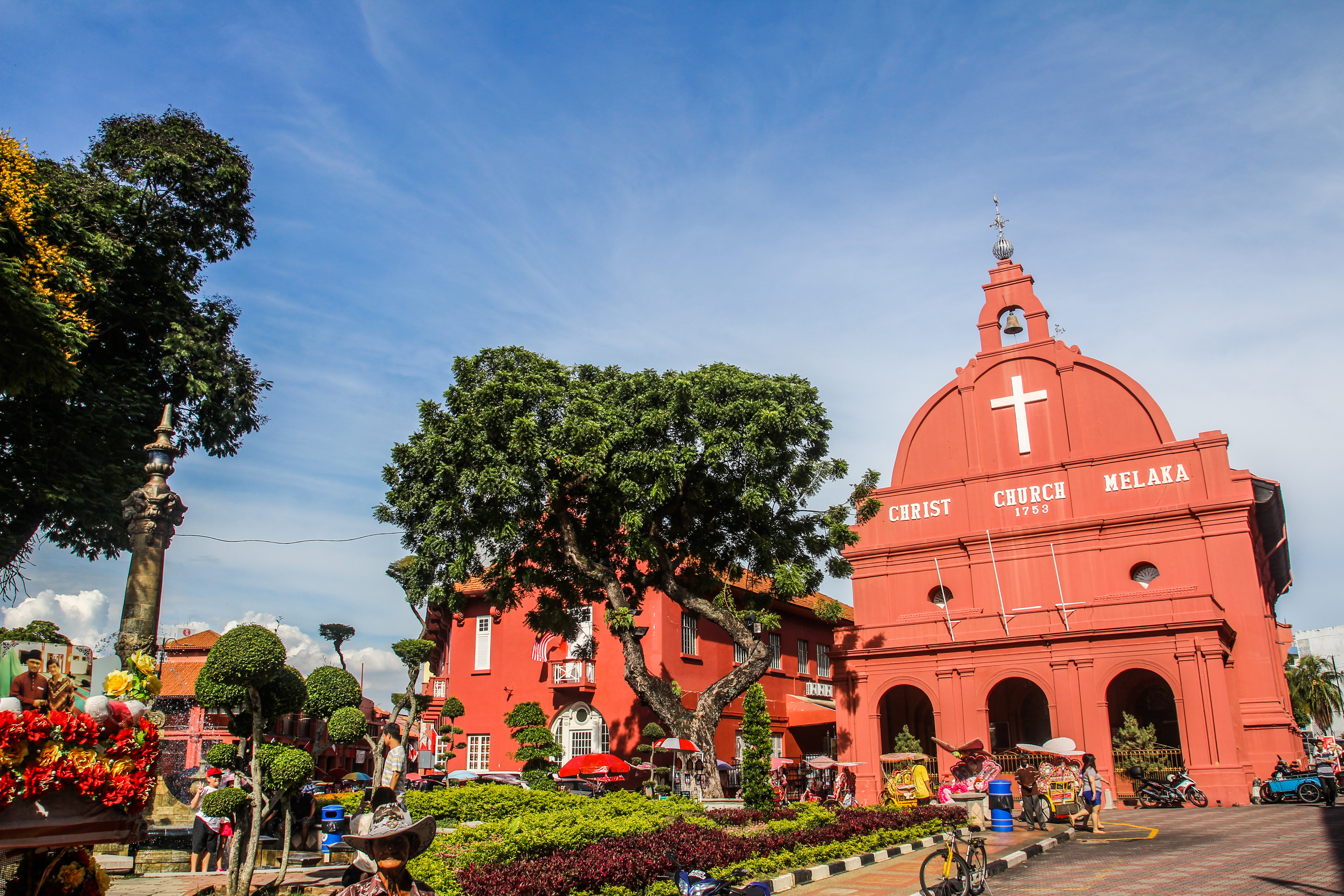
You will be visiting the Dutch Square (Red Building) The Stadhuys that were once the offices of the Dutch Governor.
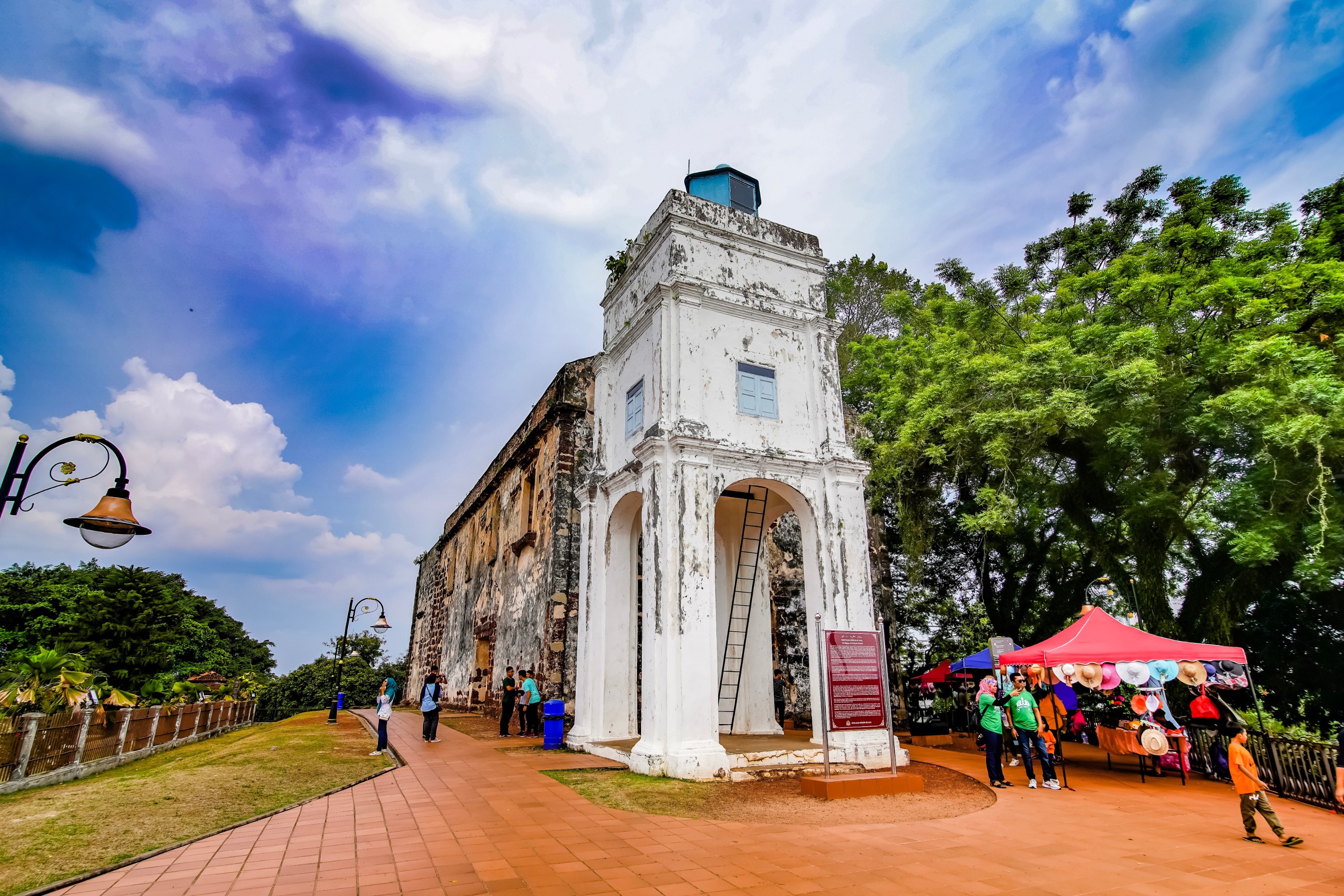
The other main attraction is the Main gate of the Malacca fort which been reinforcement back after the battles between Malacca and Portugese, A Famosa or Porta De Santiago.
Beside this two (2) places we also visiting the :
* Straits Mosque
* Jonker Walk
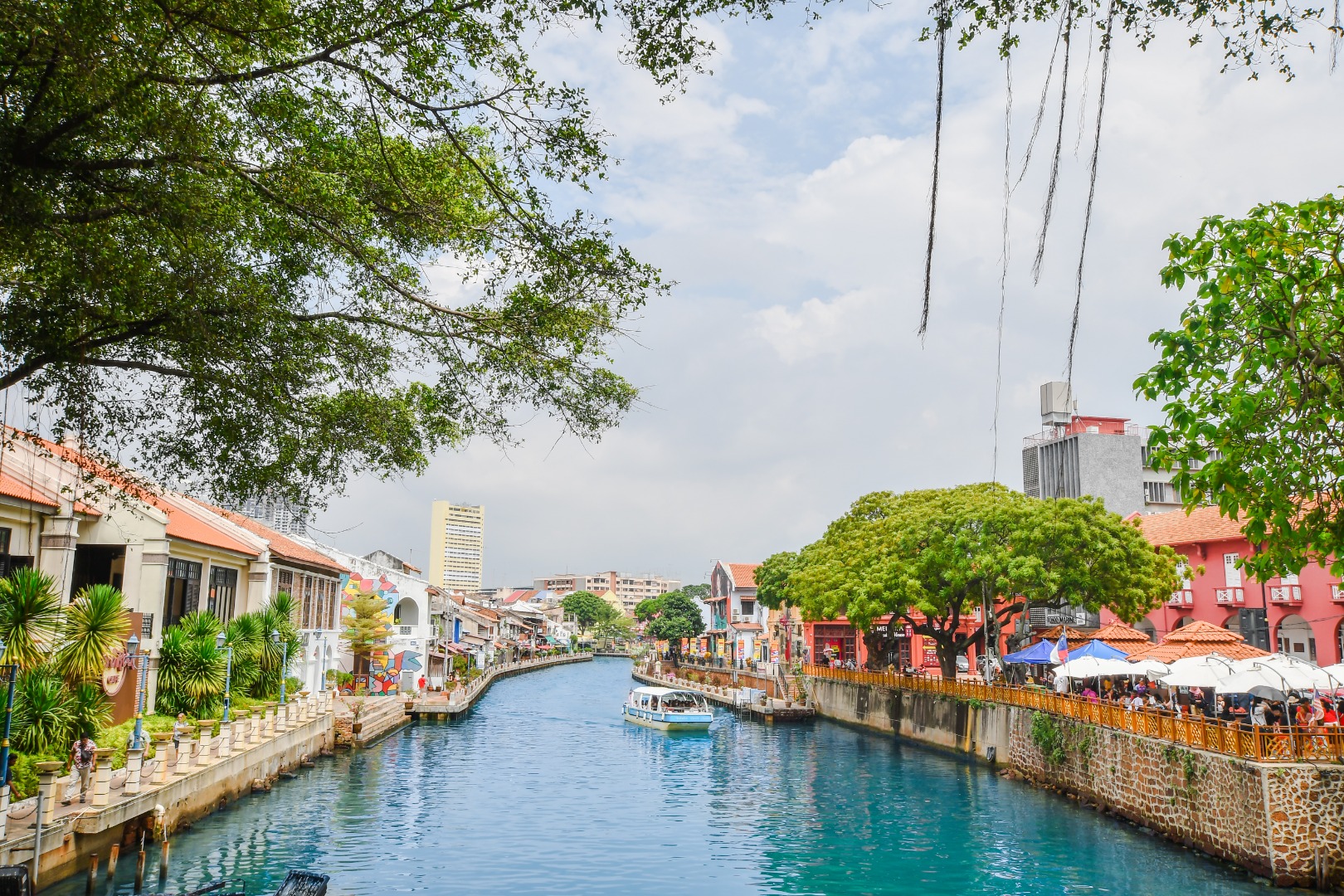
* Riverside Artwalk
and few other places as surrounding the Banda Hilir, Malacca.
We drive our traveller around Malacca and not just leave you at town
Available options
Malacca Day trip from Hotel KL
Pickup included
What's included
Private transportation
Local dishes at Local Restaurant
Air-conditioned vehicle
Fuel surcharge
Parking Fees
Detailed itinerary
1
After a journey of 1 hour 30 min by driving and seating in the car first stop will be the Butterfly Sanctuary and breeding places of all Malaysian species of butterfly. This place not just have a butterfly but they offer a reptile, birds and other things as well.
Imagine a place where you are surrounded by hundreds of colorful butterflies where flowers burst with colors and life. Watching these butterflies dance in the morning sun with water trickling over the garden stones will remind you just how simple and beautiful life can be. Where the passion is for butterflies, here in the Melaka Butterfly and Reptile Sanctuary, our newly launched butterfly garden offers you the perfect ticket to relaxation – a retreat everyone will enjoy.
Today, the Melaka Butterfly and Reptile Sanctuary is home to more than 20 different species of butterflies, including the Black and White Helen (Papilio nephelus), Malayan Birdwing (Troides), and the Malaysian National Butterfly, the Rajah Brooke’s Birdwing – the butterfly that was named after Sir James Brooke, the Raja(King) of Sarawak.
You will feel like Alice in Wonderland watching these magnificent creatures performing their daily routine over the inviting flowers that blooms by hundreds and filled with the magical nectar. For butterflies’ lover, this aviary is not a spot to be missed!
It all begins when the first butterfly was seen flying in the Sanctuary. Ever since then, the flying never ends. Sprawled over an 11 acre jungle site, the Malacca Butterfly & Reptile Sanctuary was first opened to the public on the 1st February 1991. Launched by the Chief Minister of Malacca, the Sanctuary known only then as The Butterfly Park Malacca originally ventured off as a haven for butterflies.
To date, after 22 years of establishment, thousands of images have been captured by our delighted tourists who were amazed by the surprisingly friendly and lovely little pilots in the Sanctuary. The 'flying' of the butterfly has since reached the very heart of thousands of tourists in many parts of the world including much of Southeast Asia and Middle East through to Europe. Within Malaysia, the Sanctuary has now established itself as a major tourist attraction in the fast growing historical city of Malacca which has itself been recognized by UNESCO as the World Heritage City since June 2008.
Not only does the flying of the butterfly brings in thousands of tourist to the Sanctuary, amazingly, the magical friendship between the butterflies and reptiles in the Sanctuary has also attracted the Lizards, the Amphibians, the Crocodilians, the Mammals, the Birds and last but not least, the Koi in the Koi Garden.
After spending almost about an hour we will be going to the next location.
1)Malacca Butterfly and Reptile Park
2)Mini Malaysia (Optional)
3) Riverside Artwalk
4) Maritime Museum
5) Straits Mosque
6) A Famosa
7) Dutch Square
8) Jonker Walk
9) River Cruise
2
Stop 2
(OPTIONAL)
Mini Malaysia & ASEAN Cultural Park is a cultural park where impressive replicas of traditional Malaysian and ASEAN homes can be seen. Similar to the Karyaneka Handicraft Centre in KL, each house contains furnishings, fixtures and works of art depicting the culture of each state or country. Located in Ayer Keroh, the Mini Malaysia & ASEAN Cultural Park showcases the country’s 13 states represented with houses that actually look alike to the untrained eye (save for the Borneo house). However inside each abode is where the differences can be seen with life-sized wax dummies dressed in respective traditional costumes as well as local handicrafts. At the Mini Malaysia Complex there is also a model of an Orang Asli village.
A great place for families, kids can learn to play traditional Malay games such as congkak or even hone their skills on an Iban blowpipe at Mini Malaysia & ASEAN Cultural Park; on the weekends there are cultural dance shows.
3
RIVERSIDE ARTWALK
Situated along the Malacca river and very close to the Kampung Hulu Mosque one of the oldest mosque in Malaysia. You will find massive and bold-coloured street art by the Melaka River, most of which are along Jalan Kampung Hulu, right outside Jonker Street. Also known as the Melaka River Street Art Project, it was a collaboration between local painters and graffiti artists, producing eye-catching designs with the city’s shophouses and guesthouses as their canvas. Commemorating the city’s unique identity, heritage, and iconic landmarks, these mural paintings range from orangutans and wild stallions to local fruits and noodles. Although you can easily spot them during a boat cruise along Melaka River, we highly recommend exploring these street artworks on foot as you may find a number hidden spots that make for great snapshots. After walking and taking some photos you may relaxing and having a nice and popular Malaysia drink, Cendol very nice and tasty with a rich taste of Coconut milk with some pandan leaves, kidney beans, brown sugar and you may choose to have a plain cendol, mango cendol or Durian Cendol.
4
Melaka Maritime Museum is a replica of the Flor de la Mar, a Portuguese ship said to have been carrying loot plundered from Malacca when it sank off the coast of Malacca on its way back to Portugal. Opened to the public in 1994, this unique museum is an enlightening trip back into Malacca’s past. The 34m-high, 36m-long and eight-metre-wide structure is located at Quayside Road (right beside the. Set 10 minutes away from the Dutch Square, the Melaka Maritime Museum is divided into the different eras that Malacca has gone through, from the Melaka Sultanate period, to Portuguese, Dutch and British rule.
The Melaka Maritime Museum aims to highlight Malacca’s importance back in the day as ‘a regional and international business centre’. Displays include artefacts and documents from the Malacca Sultanate, Portuguese, Dutch and British administration era that reveal why political control of Malacca was essential to maritime dominance of the region. Additionally, there is a collection of model ships as well as reading material on Malacca’s history and famous Malaccan legends such as Hang Tuah.
5
The Melaka Straits Mosque is known as Malacca's floating mosque as it is built on stilts above the sea.
It was officially opened by Malaysia's King on 24th November 2006. It is constructed with modern Islamic design and craftsmanship. While the main dome is Middle Eastern in appearance, the four corner turrets are topped with typical Malaysian rooflines.
The facade of the mosque is decorated with stained glass windows with Islamic motifs. The minaret also has a striking and unusual design.
It is an attractive building that has already become popular with photographers.
6
A’Famosa is more than just quick photo stop opportunity for tourists. Built in 1511, the settlement used to sprawl across a whole hillside but now only a lone gate (Porta de Santiago) remains. One of the oldest surviving European architectural remains in Asia; it is set beside the Istana kesultanan on Jalan Kota. A’Famosa is perhaps Malacca’s best known sightseeing spot. Originally constructed by Alfonso de Albuquerque (who led the Portuguese invasion on the Malacca Sultanate), the remains of the fort is now a crumbling whitewashed gatehouse and is located downhill from St. Paul’s Church.
In the 16th century A’Famosa housed the entire Portuguese administration, including its hospitals, five churches, elongated stockades and four key towers. One tower was a four-storey keep; the others were an ammunition storage room, captain’s residence and an officer’s quarters. The rest of the bastion comprised of townhouses clustered inside the fortress walls. The fort was expanded in 1586 to accommodate Malacca’s growing population.
At the beginning of the 16th century, the Portuguese were establishing outposts in Macau, China and India in order to create a string of friendly ports for their ships plying the routes between China and Portugal. Malacca’s growing popularity meant that it was fast becoming an important link for Portugal to the Spice Route in China. In 1511 the Portuguese fleet, under the command of Alfonso de Albuquerque arrived and launched an attack on the armies of the Malacca Sultanate and defeated them. Albuquerque moved swiftly to consolidate his gains by building a fortress around a hill near the sea. He used 1,500 slaves to construct A’Famosa as a stronghold to defend against foreign invasion. Dutch History In 1641 the Dutch wrested control of A’Famosa from the Portuguese and drove them out of the city. What remains is largely the Dutch reconstruction as they carried out renovation works in 1670, following the siege. To this day you can see a small inscription (ANNO 1670) on the fort’s arch as well as the coat-of-arms of the Dutch East India Company (VOC). A’Famosa changed hands again when Malacca fell into British hands during expansionist Napoleonic times. Initially under the impression that the VOC was to act as a caretaker administration until a time when the Dutch were able to fully resume control, they had no idea the fort would soon be lost to them forever. British History Due to the fact that they offered too little and asked for too much, the Dutch forces soon lost the respect of their Malay subjects and in the early 19th century Malacca was fully conquered by the British. Wary of maintaining the fort, should it fall into enemy hands, the English ordered its destruction in 1806. Fortunately, Sir Stamford Raffles (founder of Singapore) who was visiting Malacca in 1810 arrived in the nick of time. Due to his love of history he stepped in before the complete destruction of the old fortress. It was a close call though and the crumbling remains of Porta de Santiago, a small gate house, were all that could be salvaged from total destruction. When work was undertaken on the Menara Taming Sari revolving tower in 2006, another part of the A’Famosa was discovered. As a result the revolving tower was relocated further inland and A’Famosa’s newly-discovered fortress walls were reconstructed.
Due to the fact that they offered too little and asked for too much, the Dutch forces soon lost the respect of their Malay subjects and in the early 19th century Malacca was fully conquered by the British. Wary of maintaining the fort, should it fall into enemy hands, the English ordered its destruction in 1806. Fortunately, Sir Stamford Raffles (founder of Singapore) who was visiting Malacca in 1810 arrived in the nick of time. Due to his love of history he stepped in before the complete destruction of the old fortress. It was a close call though and the crumbling remains of Porta de Santiago, a small gate house, were all that could be salvaged from total destruction. When work was undertaken on the Menara Taming Sari revolving tower in 2006, another part of the A’Famosa was discovered. As a result the revolving tower was relocated further inland and A’Famosa’s newly-discovered fortress walls were reconstructed.
Beside the Porta De Santiago ruin fortress travelers also may climb a hill behind the fortress to visit the ruin St Paul Church, a Malacca Sultanate Replica Museum on the left of the A Famosa and also the Malaysia Independence Memorial Museum.
7
After we left the A Famosa area our driver will drive you to the famous Dutch Square and leave you by yourself to have your own privacy time for about 3-4 hours.
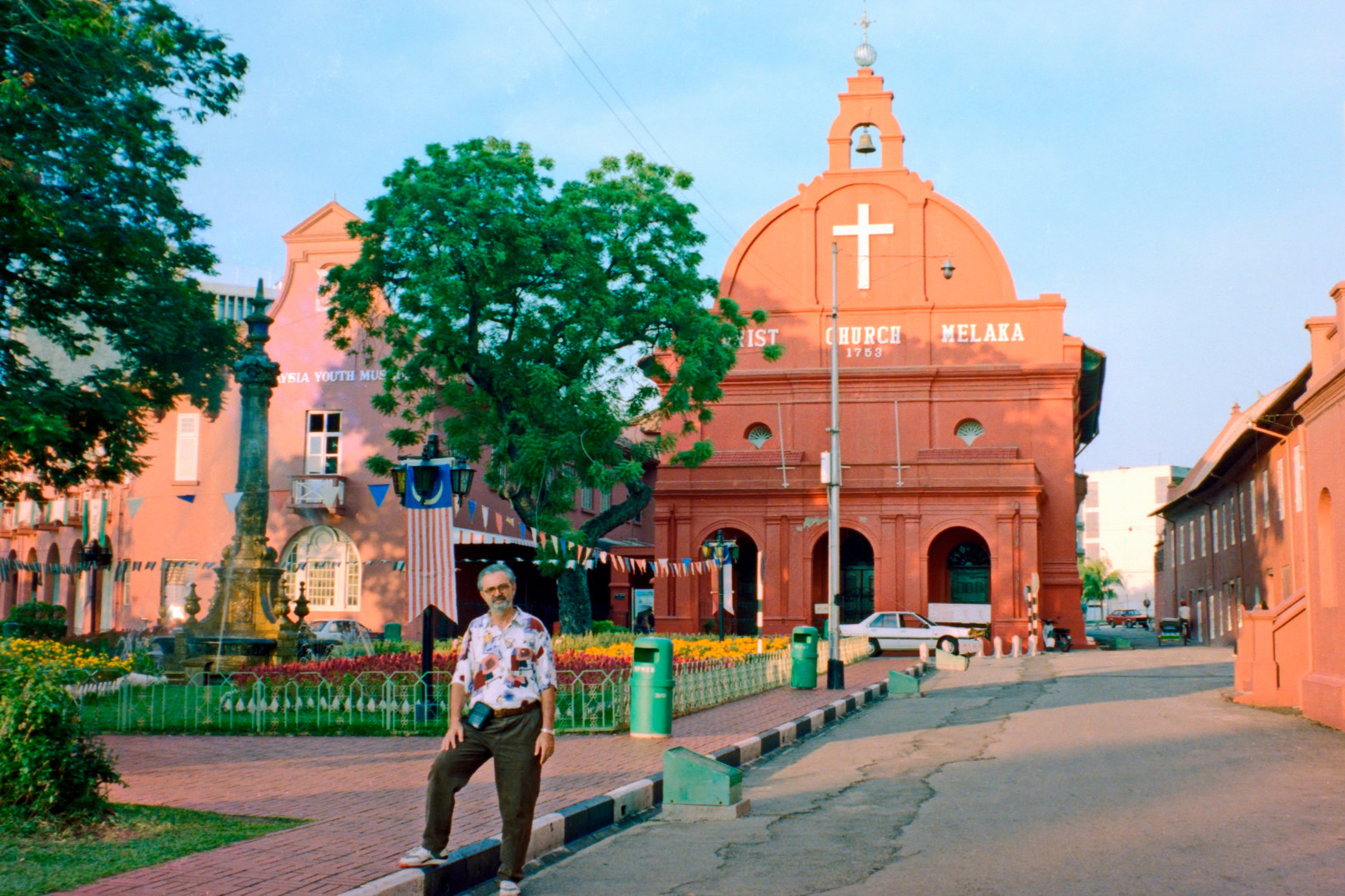
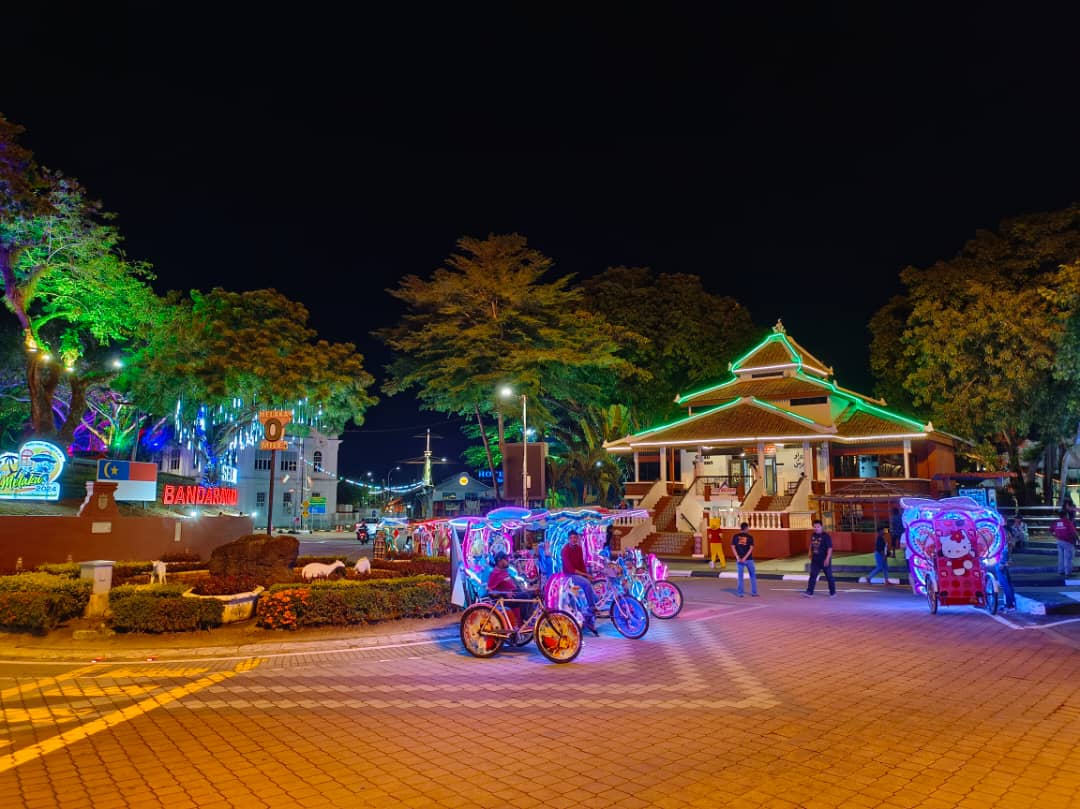
Dutch Square Malacca is the most picturesque along Jalan Kota. It's also a colourfull trishaw pickup point, it is distinguished by a group of bright, terracotta-red colonial Dutch buildings, built between 1660 and 1700, with louvered windows and chunky doors with wrought iron hinges. A central fountain dominates the area: it is an ornate Victorian marble addition, erected in 1904 to commemorate Queen Victoria’s Diamond Jubilee. One of the oldest surviving parts of Malacca, Dutch Square’s most prominent building is the Stadthuys. Presiding over the entire south side of Dutch Square it was completed in 1660 and is said to be the oldest-existing Dutch building in the East.
The simple, sturdy Stadthuys in Dutch Square originally served as the official residence of the Dutch governors and was used as a town hall throughout the British administration; it now houses a collection of museums. A few of the galleries in the renovated building merit a visit – such as the Islamic Museum, Architecture Museum and the Muzium Rakyat (Peoples Museum), which covers everything from gasing uri (top-spinning) to Malay and Chinese ceramics and weaponry. Also interesting is the History & Ethnography Museum: it has an endless collection of maps, prints and photos giving a blow-by-blow account of Malaccan history and development. Also check out the upstairs reconstruction of a 17th-century Dutch dining room.
The inside of the Stadthuys is beautiful with white, monumental staircases and high windows: it looks like a typical 17th-century Dutch municipal building and is very attractive and well maintained. The view from the back windows is of whitewashed homes lining the courtyard – a picturesque sight indeed.
Turning to the right as you leave the Stadthuys is Christ Church. Also facing the fountain, it was built in 1753 to commemorate the centenary of Dutch occupation in Malacca and to replace an earlier Portuguese church, which was by then a ruin. Check out the elegant collection of sacramental silverware which bears the Dutch coat-of-arms and also the intricate painting of the Last Supper on the glazed tiles of the altar. Christ Church Design Malaysia’s oldest Protestant church, Christ Church’s red bricks were shipped all the way from Zeeland in Holland. The cool, whitewashed interior has decorative fanlights high up on the walls, the floor is studded with Dutch tombstones while the walls have plaques recording WWII and epidemic deaths. The church is of simple Dutch design, with neither aisles nor chancel: its most significant features are the original, elaborate, 200-year old hand-carved pews plus its heavy timber ceiling beams, each carved from a single tree trunk, which span more than 15m long. The porch and vestry were added in the 19th-century.
Sandwiched between Christ Church and Laksamana Road is the Malaysia Youth Museum & Art Gallery. Built in 1784, it was originally intended as the Dutch Administrative Complex but was turned into the Malacca Free School in 1826. In the 1920s it was used as a post office and today it is a museum. Also within Dutch Square is the Tang Beng Swee Clocktower. Even though it looks distinctly Dutch, it was actually built by a wealthy Straits Chinese family in 1886 in honour of Tan Beng Swee, a rich Chinese merchant. Away From Dutch Square A short walk down the lane to the left of Christ Church in Dutch Square leads to the overgrown remains of the Dutch Graveyard. It was originally used as a Dutch graveyard in the late 17th-century when the VOC was still in control, but nowadays British graves easily outnumber those of their predecessors. There is a tall column in the centre of the graveyard which is a memorial to soldiers that were killed in the 1831 Naning War.
Driver will pick you up after you finish your trip at Jonker Walk and River Cruise before leaving back to Kuala Lumpur
8
World heritage city recognition by UNESCO
What's not included
Entrance Fee
Dinner
Available languages
Guide guide
EN
Reviews breakdown
Tripadvisor
4.8
5 reviews
5★
4
4★
1
3★
0
2★
0
1★
0
Important information
Infants and small children can ride in a pram or stroller
Infants are required to sit on an adult’s lap
Suitable for all physical fitness levels
About Kuala Lumpur
Kuala Lumpur is a vibrant metropolis where modern skyscrapers stand alongside historic mosques and colonial-era buildings. Known for its multicultural diversity, bustling street markets, and iconic landmarks like the Petronas Twin Towers, KL offers a unique blend of tradition and modernity.
Top Attractions
Petronas Twin Towers
The iconic Petronas Twin Towers were the tallest buildings in the world from 1998 to 2004. The towers feature a skybridge and a shopping mall at the base.
Architecture
1-2 hours
MYR 83 (adult), MYR 33 (child)
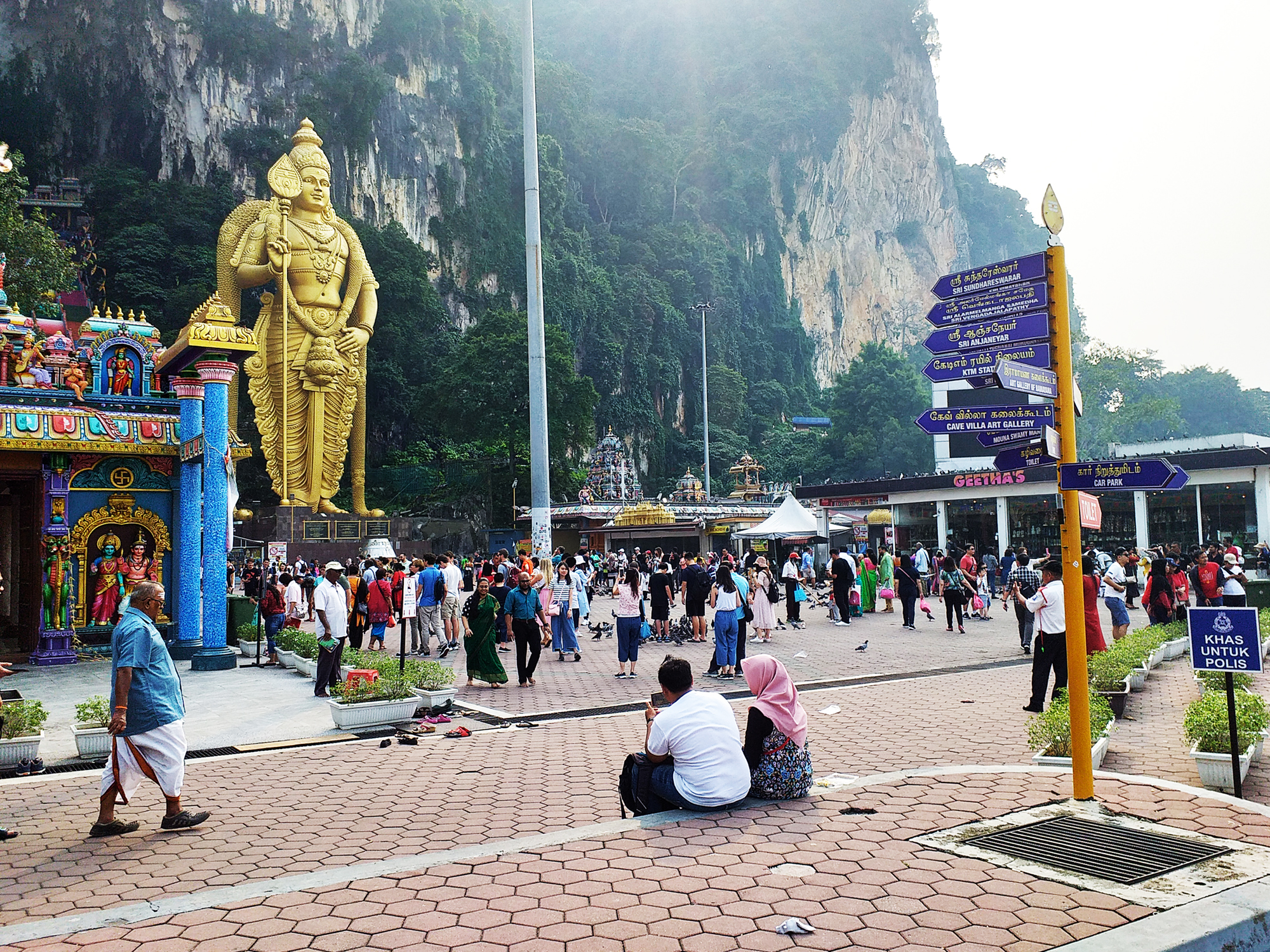
Batu Caves
Batu Caves is a Hindu shrine and temple complex located in a limestone hill. It is known for its colorful statues and the annual Thaipusam festival.
Religious
2-3 hours
Free (donations welcome)
Kuala Lumpur Tower
The Kuala Lumpur Tower is the second-tallest freestanding tower in the world. It offers panoramic views of the city from its observation deck.
Architecture
1-2 hours
MYR 50 (adult), MYR 30 (child)
Must-Try Local Dishes
Nasi Lemak
Coconut milk-infused rice served with spicy sambal, fried anchovies, peanuts, and boiled egg.
Breakfast/Lunch
Vegetarian options available
Roti Canai
Flaky, layered flatbread served with curry.
Lunch/Dinner
Vegetarian options available
Satay
Grilled skewered meat served with peanut sauce.
Snack
Vegetarian options available
Popular Activities
Hiking in the highlands
Water sports in Port Dickson
Spa treatments
Tea tasting in Cameron Highlands
Visiting temples and mosques
Exploring Chinatown
Swimming
Boat rides
Best Time to Visit
December to February
This period offers cooler temperatures and lower humidity, making it ideal for outdoor activities and sightseeing. The city is lively with various festivals and events.
26-31°C
79-88°F
Practical Information
Language
- Official: Malay
- Widely spoken: English, Chinese, Tamil
- English: Widely spoken
Currency
Malaysian Ringgit (MYR)
Time Zone
GMT+8
Electricity
240VV, 50HzHz
Safety Information
Overall Safety Rating: Generally safe
Kuala Lumpur is generally safe for travelers, with low crime rates and a strong police presence. However, petty crimes like pickpocketing and scams can occur in crowded areas.
Important Precautions:
- • Be cautious of your surroundings
- • Keep valuables secure
- • Use reputable tour operators and transport services
Getting there
By air
- Kuala Lumpur International Airport • 50 km south of the city
By train
Kuala Lumpur Sentral
By bus
Pudu Sentral, Titiwangsa Bus Station
Getting around
Public transport
RapidKL is the main public transport system, including LRT (Light Rail Transit), MRT (Mass Rapid Transit), Monorail, and BRT (Bus Rapid Transit).
Taxis
Available • Apps: Grab
Rentals
Car, Bike, Scooter
Neighborhoods
Bukit Bintang
Chinatown
KLCC
Day trips
Cameron Highlands
200 km north of KL • Full day
A scenic highland region known for its tea plantations, cool climate, and lush landscapes.
Port Dickson
100 km south of KL • Full day
A popular beach destination with beautiful sandy beaches and water sports activities.
Putrajaya
30 km south of KL • Half day
A planned administrative and judicial center with beautiful architecture and landscaped gardens.
Festivals
Thaipusam • January/February (based on the Hindu calendar)
Chinese New Year • January/February (based on the lunar calendar)
Hari Raya Aidilfitri • Varies (based on the Islamic calendar)
Pro tips
- Visit Batu Caves during the Thaipusam festival for a unique cultural experience
- Explore the city's street food scene for authentic and affordable dining options
- Use the RapidKL public transport system to avoid traffic congestion
- Visit the KL Tower Sky Box for a unique and thrilling experience
- Experience the city's nightlife in areas like Changkat Bukit Bintang and Jalan Alor
From $25
per person
Price varies by option
Secure booking
Free cancellation available
Instant confirmation


![Pink Mosque + Malacca Straits Mosque + Stadthuys + Malacca River [Night Tour]](https://res.klook.com/image/upload/activities/jcteyfw2joef5fxwi0mb.jpg)