

Discover Bologna an amazing city
Active
3h
For a full refund, cancel at least 24 hours before the scheduled departure time.
Instant confirmation
Mobile or paper ticket accepted
About this experience
The beauty of Bologna is not only that it's got (almost) everything that you expect of a big city, but on a human scale, Bologna is not only the seat of the oldest Western World University, founded in 1088, it also has an established reputation of capital of gastronomy and a well preserved medieval city centre containing some 40 kilometres of porticoes built over 1,000 years.
Available options
Discover Bologna an amazing city
What's included
Qualified local tour guide
Private tour
Professional guide
Detailed itinerary
1
Stop 1
When you think of Italy, famous cities like Rome, Venice and Florence definitely come to mind and while these are home to wonderful landmarks they are also places for mass tourism but if you want to escape the crowds and discover a part of Italy that isn’t often talked about come and visit Bologna an underrated city - from a foreign tourist perspective - that will help you get a sense of what the country and culture is truly about. It may not be a top tourist venue but it is a living breathing Italian experience, which can be hard to find in more popular destinations. It is very easy to reach Bologna, located halfway between Venice and Florence it is a major transport hub for rail travel throughout the country and it has got an international airport.
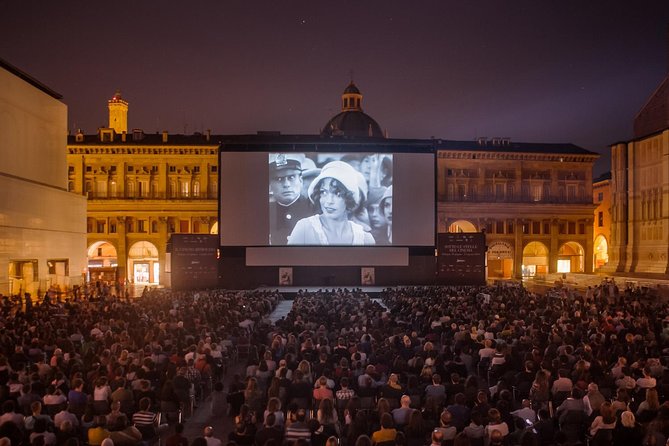
Piazza Maggiore, Bologna historical centre since Roman time. The square is surrounded by important monuments such as the Neptune fountain, the Basilica of San Petronio, the old town halls, the Palazzo dei Banchi and the Sala Borsa.
2
Stop 2
The Fountain of Neptune is a monumental civic fountain located in the eponymous square, Piazza del Nettuno. The fountain is a model example of Mannerist taste of the Italian courtly elite in the mid-sixteenth century.The trident of the Neptune's statue was used by Maserati brothers as emblem for their first car and it is still today the logo of the Maserati car company.
3
Via Rizzoli together with via Ugo Bassi follow the route of the main Roman axis of the city and the Roman Via Emilia built in the 2nd century B.C. From via Rizzoli you can see the two medieval leaning towers, symbol of the city, and via Indipendenza, one of the shopping areas of the city
4
Stop 4
The huge basilica is famous for some famous events: it was in this church that Charles V became the last Holy Roman Emperor to be crowned by a pope in 1530 and a section of the Council of Trent, the embodiment of the Counter-Reformation, took place.
The church hosts also a marking in the form of a meridian line inlaid in the paving of the left aisle in 1655. It is the longest covered sundial in the world.
ATT. a dress code is required in this church
5
Stop 5
Bologna is one of those iconic cities that has a proud and amazing food culture and, not without reason, it is known locally as ‘La Grassa’ (the fat one). The Quadrilatero or ancient Bologna food market is a very colourful area of very narrow streets with packed vendors and old food stalls that are typical of how they were during the medieval time frame, selling right into the narrow passageways.
6
Stop 6
The purpose of this building was that to give a unit seat to the university teaching until then dispersed in various seats. The rich decorations of the Archiginnasio constitute the biggest existing heraldic wall complex.
ON REQUEST: you can also visit the old anatomy theatre. Entrance fee € 3,00/each to be paid directly by you on tour date
7
Piazza Santo Stefano also known as Piazza delle Sette Chiese (Seven churches square) is a pedestrian square near the beginning of via Santo Stefano, both of which are named after the church complex of Santo Stefano which is located on the piazza. It is often used for cultural events, flea-markets and concerts, it has porticos along both long sides
8
Stop 8
The basilica of Santo Stefano is a complex of religious edifices locally known as Seven Churches and Holy Jerusalem. The complex includes the Church of Saint Stephen (8th century), the Church of the Holy Sepulchre (5th century) rebuilt on a Roman temple, the Church of the Saints Vitale and Agricola (5th century, rebuilt first in the 12th century), the Courtyard of Pilate and the Church of the Trinity or of the Martyrium (13th century). At the moment the complex is closed on Mondays
9
Stop 9
The complex owned by the Isolani counts, between Strada Maggiore and Piazza Santo Stefano, is crossed by a gallery linking the two places. On the side of Strada Maggiore the entrance aspect of the gallery is that of a medieval house, with many Romanesque-Gothic elements. On the opposite side, that is on Piazza Santo Stefano, there is instead the vision of a senatorial palace of Renaissance style. The realization was carried out for the family of Cypriot origin, that's why of the surname Isolani, which has become one of the most important in the city. One of the most evocative Bolognese arcades is undoubtedly that of Casa Isolani which is located at Strada Maggiore. His sight is dizzying,
for the height of the oak beams that, with their 9 meters, support the third floor of the one that was born in the Middle Ages as a civil dwelling. Built in the middle of the 13rd century, it remains the house with the highest wooden portico in the city.
10
Stop 10
The Two Towers (Asinelli and Garisenda), both of them leaning, are the symbol of Bologna and the most prominent of the Towers of Bologna. They are located at the intersection of the roads that lead to five gates of the old ring wall. Their names derive from the families who built them between 1109 and 1119
What's not included
Transportation to/from attractions
Tickets, food and drinks
Available languages
Guide guide
DE
EN
IT
ES
Reviews breakdown
Viator
5.0
4 reviews
5★
4
4★
0
3★
0
2★
0
1★
0
Tripadvisor
4.5
2 reviews
5★
1
4★
1
3★
0
2★
0
1★
0
Important information
Wheelchair accessible
Infants and small children can ride in a pram or stroller
Public transportation options are available nearby
Not recommended for travelers with spinal injuries
Not recommended for pregnant travelers
Not recommended for travelers with poor cardiovascular health
Suitable for all physical fitness levels
A dress code is required to enter places of worship. You may risk refused entry if you fail to comply with these dress requirements
Meeting point
Close to the Tourist office entrance door (outside).
The tourist office entrance is located under the portico/arcade of the big building in front of the Saint Petronio church at Piazza Maggiore
Important notes
• A dress code is required to enter places of worship. You may risk refused entry if you fail to comply with these dress requirements
• Comfortable walking shoes are recommended
About Bologna
Bologna, the capital of the Emilia-Romagna region in Italy, is renowned for its rich history, vibrant culture, and exceptional cuisine. Known as 'La Dotta' for its university, 'La Grassa' for its food, and 'La Rossa' for its red-tiled roofs, Bologna offers a unique blend of medieval charm and modern sophistication.
Top Attractions
Two Towers (Due Torri)
The Two Towers, Garisenda and Asinelli, are iconic symbols of Bologna. Built in the 12th century, they offer panoramic views of the city from the top.
Architecture
1-2 hours
€5 for the Asinelli Tower, €2 for the Garisenda Tower
Piazza Maggiore
Piazza Maggiore is the heart of Bologna, surrounded by stunning medieval buildings, including the Basilica di San Petronio and the Palazzo d'Accursio.
Historical
30 minutes to a few hours
Free
Basilica di San Petronio
This massive basilica is one of the largest churches in the world. Built in the 14th century, it features a stunning interior with beautiful art and architecture.
Religious
1 hour
Free, €3 for the museum and crypt
Piazza Santo Stefano
Known as 'Piazza dei Guai' (Square of Troubles), this charming square is surrounded by medieval buildings and features the Basilica di Santo Stefano.
Historical
30 minutes to 1 hour
Free
Piazza del Nettuno
This square is home to the Fontana del Nettuno, a stunning fountain featuring a statue of Neptune. The square is also surrounded by beautiful Renaissance buildings.
Historical
30 minutes
Free
Archiginnasio
The Archiginnasio was the main building of the University of Bologna from 1563 to 1803. Today, it houses the Anatomical Theatre and the Historical Library.
Historical
1 hour
€5
Must-Try Local Dishes
Tortellini in Brodo
Tortellini pasta filled with a mixture of meats, served in a rich broth. A classic Bolognese dish, perfect for a comforting meal.
Main Dish
Contains meat and gluten
Ragù alla Bolognese
A rich meat-based sauce served with tagliatelle pasta. This iconic dish is a must-try for any visitor to Bologna.
Main Dish
Contains meat and gluten
Lasagne alla Bolognese
Layered pasta with ragù sauce and béchamel, baked to perfection. A hearty and delicious dish that showcases Bolognese cuisine.
Main Dish
Contains meat and gluten
Mortadella
A type of large Italian sausage made from finely ground heat-cured pork, flavored with spices. Often served in thin slices as an antipasto.
Snack
Contains pork and may contain other meats
Popular Activities
Cycling tours
Hiking in the nearby Apennine Mountains
Visiting spas and wellness centers
Strolling through the city's parks and gardens
Attending concerts and performances at Teatro Comunale
Visiting museums and art galleries
Boating on the Reno River
Ice skating in Piazza Maggiore
Best Time to Visit
April to June, September to October
The best time to visit Bologna is during the spring and autumn months when the weather is mild, and the tourist crowds are smaller. These seasons offer pleasant temperatures and fewer crowds, making it ideal for sightseeing and outdoor activities.
15-28°C
59-82°F
Practical Information
Language
- Official: Italian
- Widely spoken: English, French, Spanish
- English: Moderately spoken in tourist areas, limited elsewhere
Currency
Euro (EUR)
Time Zone
GMT+1 (CET), GMT+2 (CEST) during daylight saving time
Electricity
230VV, 50HzHz
Safety Information
Overall Safety Rating: Generally safe
Bologna is generally a safe city for travelers, with low crime rates and a welcoming atmosphere. However, as with any destination, it's important to be aware of your surroundings and take precautions to protect yourself and your belongings.
Important Precautions:
- • Keep valuables secure and out of sight
- • Be cautious of pickpockets and bag snatchers, especially in crowded areas
- • Avoid walking alone at night in isolated areas
Getting there
By air
- Bologna Guglielmo Marconi Airport • 6 km from city center
By train
Bologna Centrale
By bus
Bologna Autostazione
Getting around
Public transport
Bologna's public bus network is efficient and covers most of the city. Buses are a convenient way to get around, especially for reaching areas not served by the tram.
Taxis
Available • Apps: FreeNow, MyTaxi
Rentals
Car, Bike, Scooter
Neighborhoods
Centro Storico
Saragozza
San Vitale
Sant'Agostino
San Donato
Day trips
Modena
45 km from Bologna • Half day to full day
Modena is a charming city known for its rich history, beautiful architecture, and world-famous balsamic vinegar. It's a great day trip from Bologna, offering a mix of culture, history, and gastronomy.
Parma
100 km from Bologna • Full day
Parma is a beautiful city known for its rich cultural heritage, stunning architecture, and delicious food. It's a great day trip from Bologna, offering a mix of art, history, and gastronomy.
Ferrara
50 km from Bologna • Full day
Ferrara is a charming city known for its well-preserved Renaissance architecture, rich history, and vibrant cultural scene. It's a great day trip from Bologna, offering a mix of history, art, and local traditions.
Festivals
Bologna Jazz Festival • July
Bologna Children's Book Fair • March
Bologna Film Festival • June
Pro tips
- Explore the city's historic center on foot, as it's compact and pedestrian-friendly
- Try local specialties like tortellini, ragù alla Bolognese, and mortadella
- Visit the Two Towers for a panoramic view of the city
- Take a food tour to discover the city's rich culinary heritage
- Use public transportation or walk to get around, as driving in the city center can be challenging
From $25
per person
Price varies by option
Secure booking
Free cancellation available
Instant confirmation


