Sparta Full Day Tour
Active
12h - 13h
For a full refund, cancel at least 24 hours before the scheduled departure time.
Instant confirmation
Mobile or paper ticket accepted
About this experience
Explore the legacy of Sparta, home to Mystras fortress – the ‘wonder of the Morea’ and the legendary “300” of King Leonidas in a full day tour starting from Athens.
Why Hellenic Private Tours?
Flexible tours and services tailored to your needs.
Professional, certified drivers fluent in English.
Well maintained, latest model Mercedes vehicles (sedans, minivans & minibuses), licensed andcertified for tourist use by the state authorities.
Exceptional client feedback from around the world.
Dedicated customer service team available for prompt assistance.
Extensive network of licensed, experienced tour guides available upon request.
Available options
Private Tour for 1-2 Travelers
Private -Lyxury - Stressfree<br/>Duration: 12 hours<br/>Bottled Water<br/>Mercedes sedan or similar: 3-passenger seater , Fully air-conditioned, Smoke Free<br/>Sparta Full Day Tour: Experience the Sparta Full Day tour in a private tour by a luxurious Mercedes sedan or similar in style<br/>Pickup included
Private Tour for 3-6 Travelers
Private -Lyxury - Stressfree<br/>Duration: 12 hours<br/>Bottled Water<br/>Mercedes minivan,Vito or Viano: 6-passenger seater
Fully air-conditioned
Non smoking
Free WiFi <br/>Sparta Full Day Tour: Experience the Sparta Full Day tour in a private tour by a Mercedes minivan in style<br/>Pickup included
Private Tour 7-10 Travelers
Private - Luxury - Stressfree<br/>Duration: 12 hours<br/>Bottled Water<br/>Mercedes Minibus: 11 Passengers' seater
Fully air-conditioned
Non smoking
Free WiFi<br/>Sparta Full Day Tour: Experience the Sparta Full Day Tour in a private tour by a Mercedes minibus in style<br/>Pickup included
PrivateTour:11-15 Travelers
Private - Lyxury - Stressfree<br/>Duration: 12 hours<br/>Bottled Water<br/>Mercedes Minibus: 16 Passengers' seater
Fully air-conditioned
Non smoking
Free WiFi<br/>Sparta Full Day Tour: Experience the Sparta Full Day tour in a private tour by a Mercedes minibus in style<br/>Pickup included
What's included
WiFi on board
Bottled water
Air-conditioned vehicle
Professional Drivers (Not licensed to accompany you into the sites)
Athens Hotel/Piraeus Port pickup and drop-off included
Detailed itinerary
1
Stop 1
The Full Day Sparta tour starts with a 45-mile drive along the National highway. We will reach the well-known Corinthian canal or else Isthmus canal that connects the Saronic Sea and the Corinthian Sea.
The canal, though executed in the late 19th century, has been a 2000-year-old dream. Before its construction, ships in the Aegean Sea that wanted to cross to the Adriatic or anchor in Corinth, a rich shipping city, had to circle the Peloponnese, which would prolong their journey an extra 185 nautical miles.
It is believed that Periander, the tyrant of Corinth (602 BC), was the first to conceive of the idea of digging the Corinth Canal. As the project was too complicated given the limited technical capabilities of the times, Periander constructed the diolkós, a stone road which allowed ships to be transferred on wheeled platforms.
On 67 AD that Emperor Nero attempted the construction of the canal with a group of 6,000 slaves. But he was murdered before the plans were finalized. Finally, the construction of the canal came to an end at the last decade of the 19th century.
2
Continuing with a 2-hour drive through the mountains, in central Peloponnese, arriving at Sparta, a prominent city-state in Ancient Greece, situated on the banks of Eurotas River in Laconia, in the southeastern Peloponnese.
Findings at this archaeological site were unearthed by the pioneer excavations of the British School of Archaeology starting in 1910. Excavations resumed in the early 1990’s, primarily in the areas of the ancient theatre and the merchant stalls.
The most significant monuments of this archeological site include:
The Temple of Athena Chalkioikos whose position has been defined by few surviving relics found at the northwest end of the Acropolis.
The ancient theater of Sparta on the south side of the Acropolis is a product of the early Imperial Period. The orchestra, the retaining wall with engraved inscriptions of the rulers of Sparta in Roman times and the concave portion of the large theater has been preserved.
The so-called Circular Building of Unknown Destination is a circular structure built of hewn blocks and smaller stones. The section that has been preserved, perhaps due to Roman repairs, seems to have been an important building in ancient Spartan life (the Skias).
The remains of merchant stalls adjacent to the ancient theater discovered in recent excavations by the British School seem to be products of the Roman Imperial period.
The relics of a grand Basilica of the mid Byzantine Era have been linked to the Basilica of Saint Nikon (10th century AD).
Concluding the visit at the archaeological site of Sparta the traveler will continue with a visit at the archaeological museum of Sparta.
The museum hosts thousands of findings from the province of Lacedaemon, along with those coming from other areas of the Laconian prefecture,which are not included in the archaeological collections of Gytheion and Neapolis Vion. The objects exhibited in its halls, cover the time period between the Neolithic and the Later Roman eras, while findings from the great sanctuaries of Sparta hold the most prominent position. The museum visitors will have the opportunity to admire retrieved material coming from the greater pre-historical sites of Laconia, sculptures dated from the Archaic to the Roman eras, found at various locations of the prefecture, along with artefacts from rescue excavations, the most important of which being the remains of Roman mosaic floors from Sparta. In addition, the museum exhibition includes a few but extremely valuable epigraphs,providing rare information on the history of the area.
3
Stop 3
The Museum of the Olive and Greek Olive Oil, in Sparta (Peloponnese), transports you to the culture, history and technology of the olive and olive oil production in the Greek realm, from prehistoric times to the early 20th century.
The Museum of the Olive and Greek Olive Oil offers you the opportunity to see the very first testimonies about the presence of the olive tree and the production of olive oil in Greece.
For each historical period the visitor will discover the contribution of the olive and olive oil to the economy and to everyday life: nutrition, body care, but also now outdated uses, such as lighting.
4
Mystras, the ‘wonder of the Morea’, developed down the hillside from the fortress built in 1249 by the prince of Achaia, William II of Villehardouin, at the top of a 620 m high hill overlooking Sparta. The Franks surrendered the castle to the Byzantines in 1262, it was the centre of Byzantine power in southern Greece, first as the base of the military governor and from 1348 as the seat of the Despotate of Morea. Captured by the Turks in 1460, it was occupied thereafter by them and the Venetians. After 1834 the inhabitants of Mystras gradually started to move to the modern town of Sparta leaving only the breath-taking medieval ruins, standing in a beautiful landscape.
Many monasteries were founded there, including those of the Brontochion and the monastery of Christos Zoodotes (Christ the Giver of Life). Under the Despots, Mystras reached its zenith with the building of churches, outstanding examples of Late Byzantine church architecture, such as Hagioi Theodoroi (1290-1295), the Hodegetria (c. 1310), the Hagia Sophia (1350-1365), the Peribleptos (3rd quarter of the 14th century), the Evangelistria (late 14th – early 15th century) and the Pantanassa (c. 1430). The city was a major piece on the political chessboard of the time and was developed and beautified as befitted its role as a centre of power and culture. The city’s complex history is clearly evident in its fortifications, palaces, churches, convents, houses, streets and public squares.
Mystras is a truly outstanding example of late Byzantine culture which influenced the rest of the Mediterranean world and beyond.
What's not included
Lunch
Local licensed tour guide (Optional / 210 Euros payable in cash). Subject to availability.
Airport pickup/drop-off on request (additional fee varies by vehicle type)
Gratuities
Entrance fees for the Archaeological Museum of Sparta, the Museum of the Olive and Greek Olive Oil & the Mystras fortress and museum (35.00 Euros per adult)
Available languages
Guide guide
EN
Reviews breakdown
Viator
5.0
1 reviews
5★
1
4★
0
3★
0
2★
0
1★
0
Tripadvisor
5.0
5 reviews
5★
5
4★
0
3★
0
2★
0
1★
0
Important information
Infants and small children can ride in a pram or stroller
Specialized infant seats are available
Suitable for all physical fitness levels
Your English- speaking driver will explain about the ancient monuments that you are about to visit, the ancient history of Greece and interesting facts about historical and modern-day Greece but is not allowed by law to accompany you in the sites. If you wish to have a licensed tour guide to accompany you into the sites, we will help you arrange a licensed tour guide to be with you at an extra cost
Your tour is totally private. No unknown passengers will participate in your group.
Infant car seats are available upon request
About Athens
Athens, the capital of Greece, is a city rich in history and culture, often considered the cradle of Western civilization. It is home to iconic ancient landmarks, vibrant neighborhoods, and a thriving modern scene.
Top Attractions
Acropolis of Athens
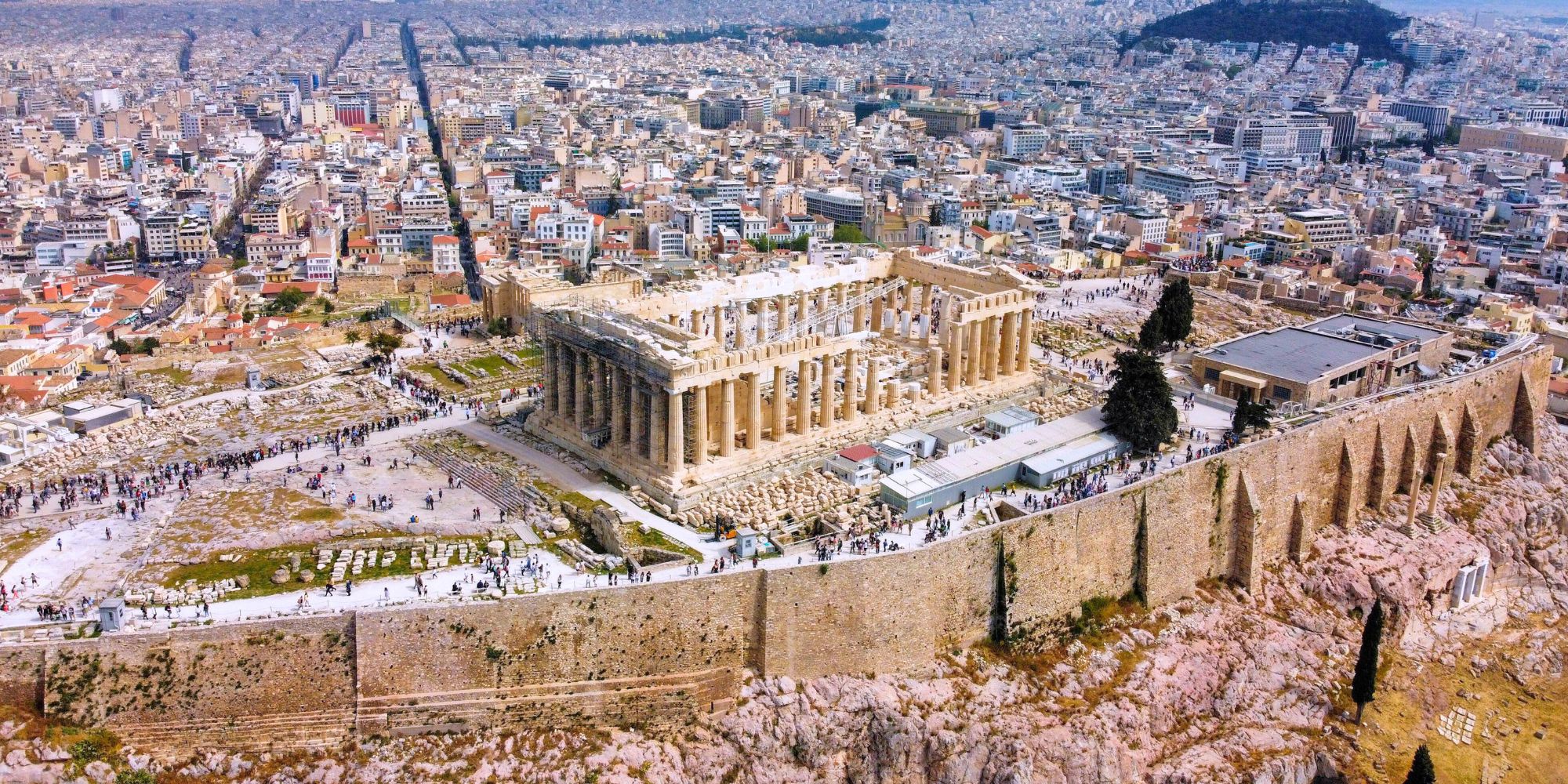
The Acropolis is the most iconic landmark in Athens, featuring ancient ruins and temples, including the Parthenon.
Historical
2-3 hours
€20 (combined ticket for multiple sites)
Ancient Agora of Athens
The heart of ancient Athens, featuring the Temple of Hephaestus and the Stoa of Attalos.
Historical
1-2 hours
€8 (included in the combined ticket)
Plaka
A charming, historic neighborhood with narrow streets, neoclassical houses, and vibrant nightlife.
Cultural
2-3 hours
Free to explore
Acropolis Museum
A modern museum showcasing artifacts from the Acropolis and its surroundings.
Museum
1-2 hours
€10
Temple of Olympian Zeus
An ancient temple dedicated to Zeus, once the largest temple in Greece.
Historical
30 minutes to 1 hour
€6 (included in the combined ticket)
Must-Try Local Dishes
Moussaka
A baked dish with layers of eggplant, minced meat, and béchamel sauce.
Dinner
Vegetarian versions available
Souvlaki
Grilled meat skewers, often served with pita bread and tzatziki.
Snack
Can be made with chicken, pork, or vegetarian options
Tzatziki
A yogurt-based dip with cucumber, garlic, and herbs.
Snack
Vegetarian and vegan options available
Baklava
A sweet pastry made with layers of filo, nuts, and honey syrup.
Dessert
Vegetarian
Popular Activities
Hiking in the mountains
Rock climbing
Scuba diving
Beach visits
Spa treatments
Café hopping
Museum visits
Theater performances
Best Time to Visit
April to June, September to October
The best time to visit Athens is during the spring and autumn months when the weather is pleasant and the tourist crowds are smaller.
18°C to 32°C
64°F to 90°F
Practical Information
Language
- Official: Greek
- Widely spoken: English, French, German
- English: Moderately spoken
Currency
Euro (EUR)
Time Zone
GMT+2 (EET)
Electricity
230VV, 50HzHz
Safety Information
Overall Safety Rating: Generally safe
Athens is generally safe for travelers, but petty crime and pickpocketing can occur in tourist areas. Be cautious with your belongings and avoid poorly lit areas at night.
Important Precautions:
- • Keep valuables secure
- • Use licensed taxis or ride-sharing apps
- • Be cautious with ATMs and credit cards
Getting there
By air
- Eleftherios Venizelos International Airport • 30 km from city center
By train
Athens Central Railway Station
By bus
KTEL Bus Station
Getting around
Public transport
Clean, efficient, and air-conditioned. Easy to navigate with clear signage in English.
Taxis
Available • Apps: Beat, Uber
Rentals
Car, Bike, Scooter
Neighborhoods
Plaka
Monastiraki
Psiri
Koukaki
Kolonaki
Day trips
Cape Sounion
65 km from Athens • Half day to full day
A scenic coastal area featuring the Temple of Poseidon with stunning views of the Aegean Sea.
Delphi
180 km from Athens • Full day
An ancient archaeological site and home to the famous Oracle of Delphi.
Meteora
350 km from Athens • Overnight
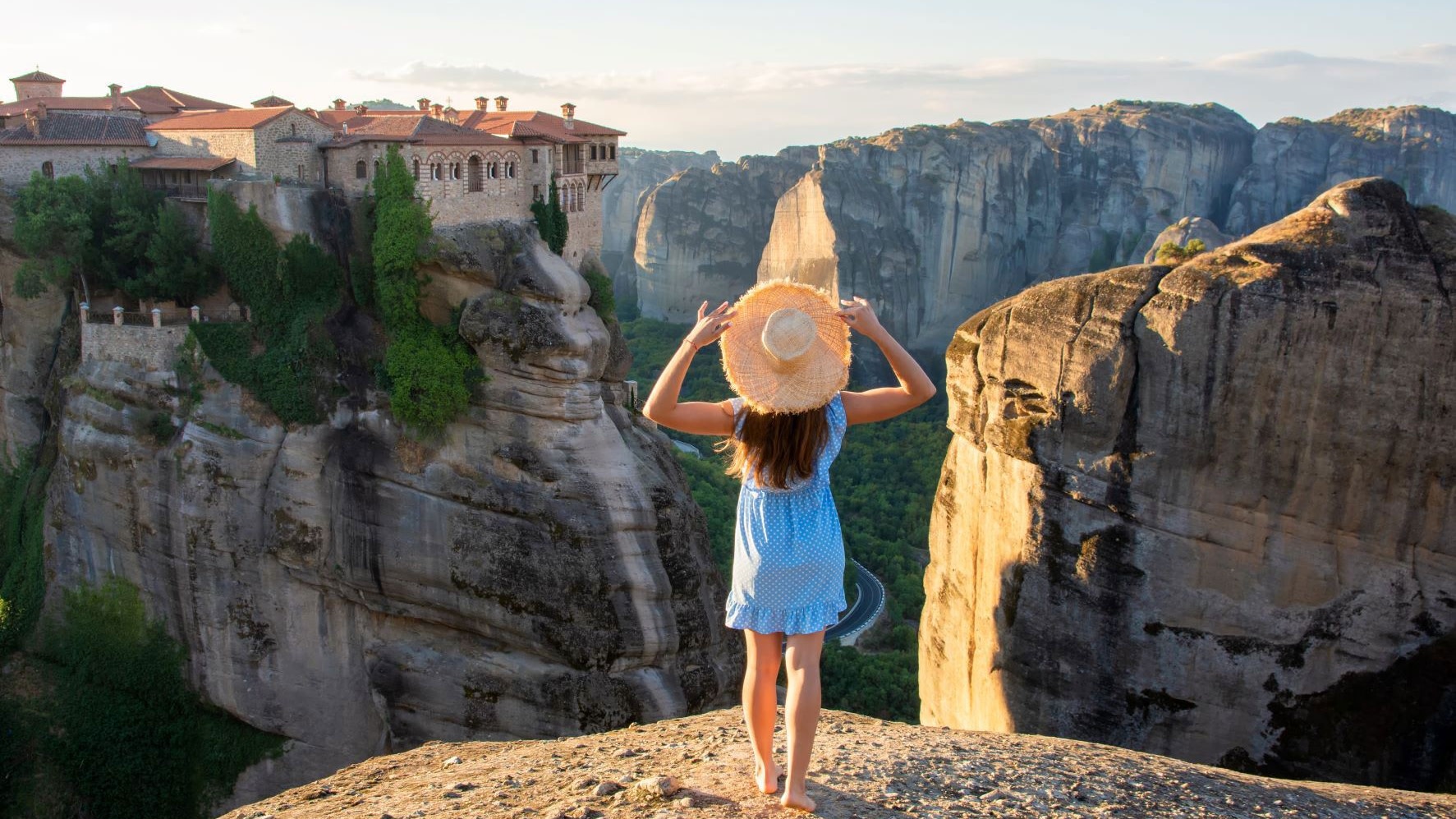
A unique landscape featuring rock formations and medieval monasteries perched atop cliffs.
Festivals
Athens Festival • May to October
Athens Epidaurus Festival • June to August
Athens International Film Festival • October
Pro tips
- Visit major attractions early in the morning or late in the afternoon to avoid crowds and heat
- Use the metro for easy and efficient travel around the city
- Explore local neighborhoods for an authentic Greek experience
- Try local street food for a quick and delicious meal
- Learn a few basic Greek phrases to enhance your experience and connect with locals
From $25
per person
Price varies by option
Secure booking
Free cancellation available
Instant confirmation