Kyoto Arashiyama & Sagano Bamboo Private Tour with Government-Licensed Guide
Active
6h
For a full refund, cancel at least 24 hours before the scheduled departure time.
Instant confirmation
Mobile or paper ticket accepted
About this experience
Accompanied by a government-licensed and experienced multilingual guide, explore the area of Arashiyama and Sagano, where aristocrats once unwound in their villas more than 1,000 years ago.
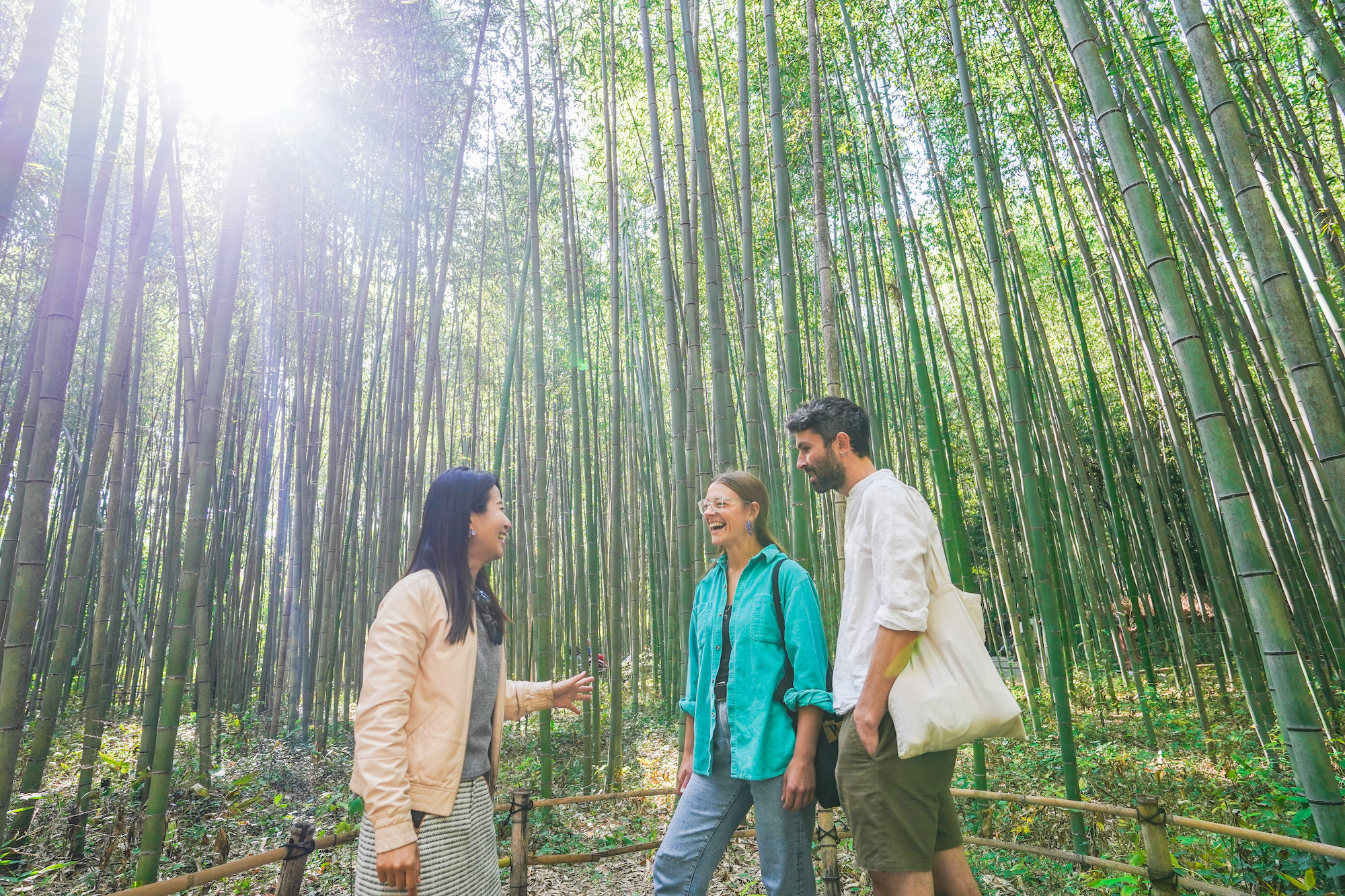
The highlights of this tour include the scenic countryside views from Togetsukyo bridge; Tenryu-ji temple with its beautiful traditional gardens; the enchanting world from within the Bamboo Grove; and Jojakko-ji Temple with its breathtaking green moss. During the tour you will also visit some secret spots unfamiliar to the usual tourists.
Enjoy the walk and delicious food while learning about Japanese culture and history. Our guides are looking forward to arranging a tour that’s best for you!
Note*1: Please select your must-see spots from a list in the tour information to create your customized itinerary.
Note*2: The National Government Licensed Guide Interpreter certification is issued by the Japanese government requires a good knowledge and understanding of Japanese culture and history.
Available options
Kyoto Arashiyama & Sagano Bamboo Private Tour with Government-Licensed Guide
Pickup included
What's included
Customizable Walking Tour of your choice of 3-4 sites from 'What to expect' list
Meet up with guide in Kyoto
Licensed Local English Speaking Guide
The pick up/drop off for this tour is on foot.
Detailed itinerary
1
Stop 1
Arashiyama (嵐山) is a pleasant, touristy district in the western outskirts of Kyoto. The area has been a popular destination since the Heian Period (794-1185), when nobles would enjoy its natural setting. Arashiyama is particularly popular during the cherry blossom and fall color seasons.
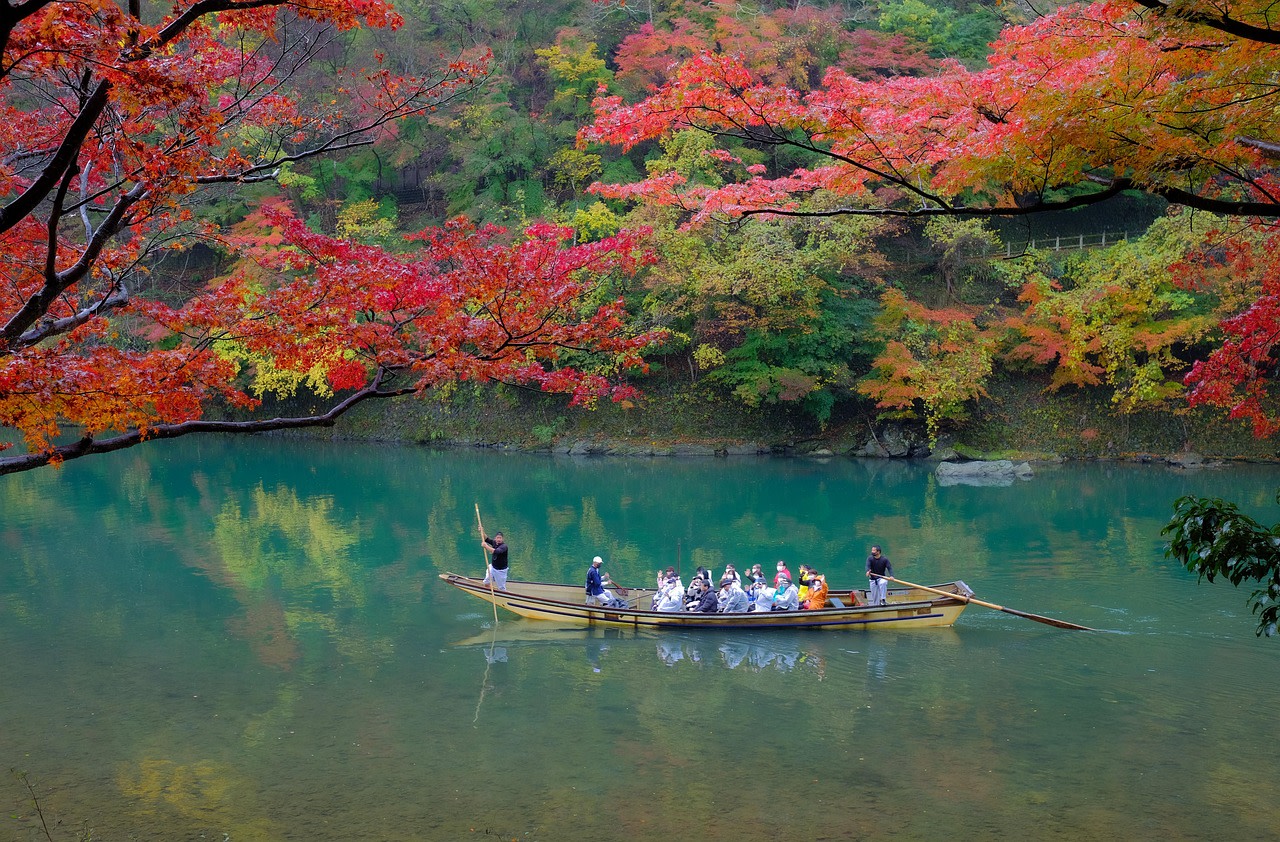
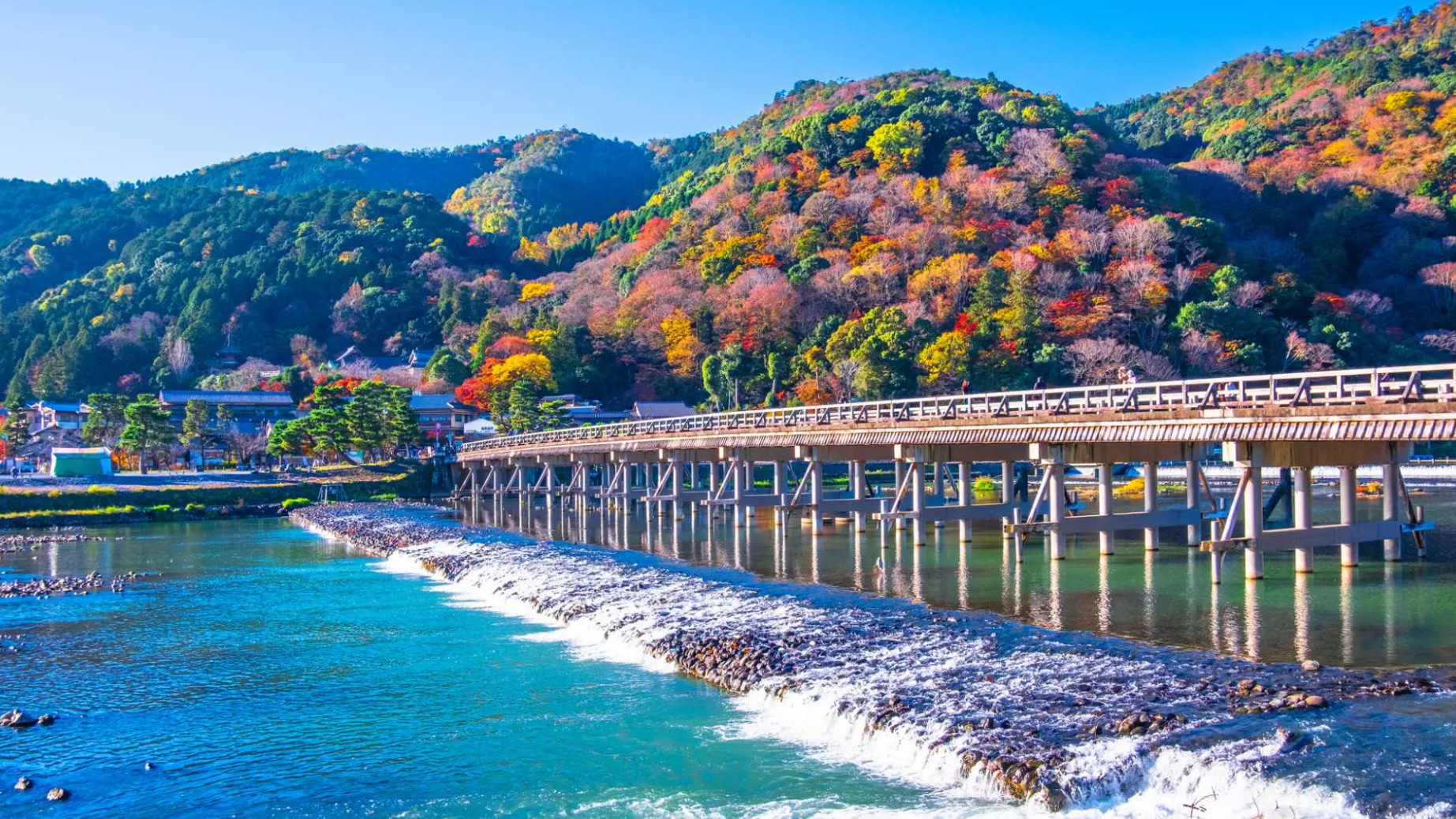
The Togetsukyo Bridge is Arashiyama's well known, central landmark. Many small shops, restaurants and other attractions are found nearby, including Tenryuji Temple, Arashiyama's famous bamboo groves and pleasure boats that are available for rent on the river.
2
Stop 2
The Togetsukyo Bridge (lit. "Moon Crossing Bridge") is Arashiyama's most iconic landmark. It was originally built during the Heian Period (794-1185) and most recently reconstructed in the 1930s. The bridge looks particularly attractive in combination with the forested mountainside in the background. A riverside park with dozens of cherry trees is located just adjacent to the bridge.
3
Stop 3
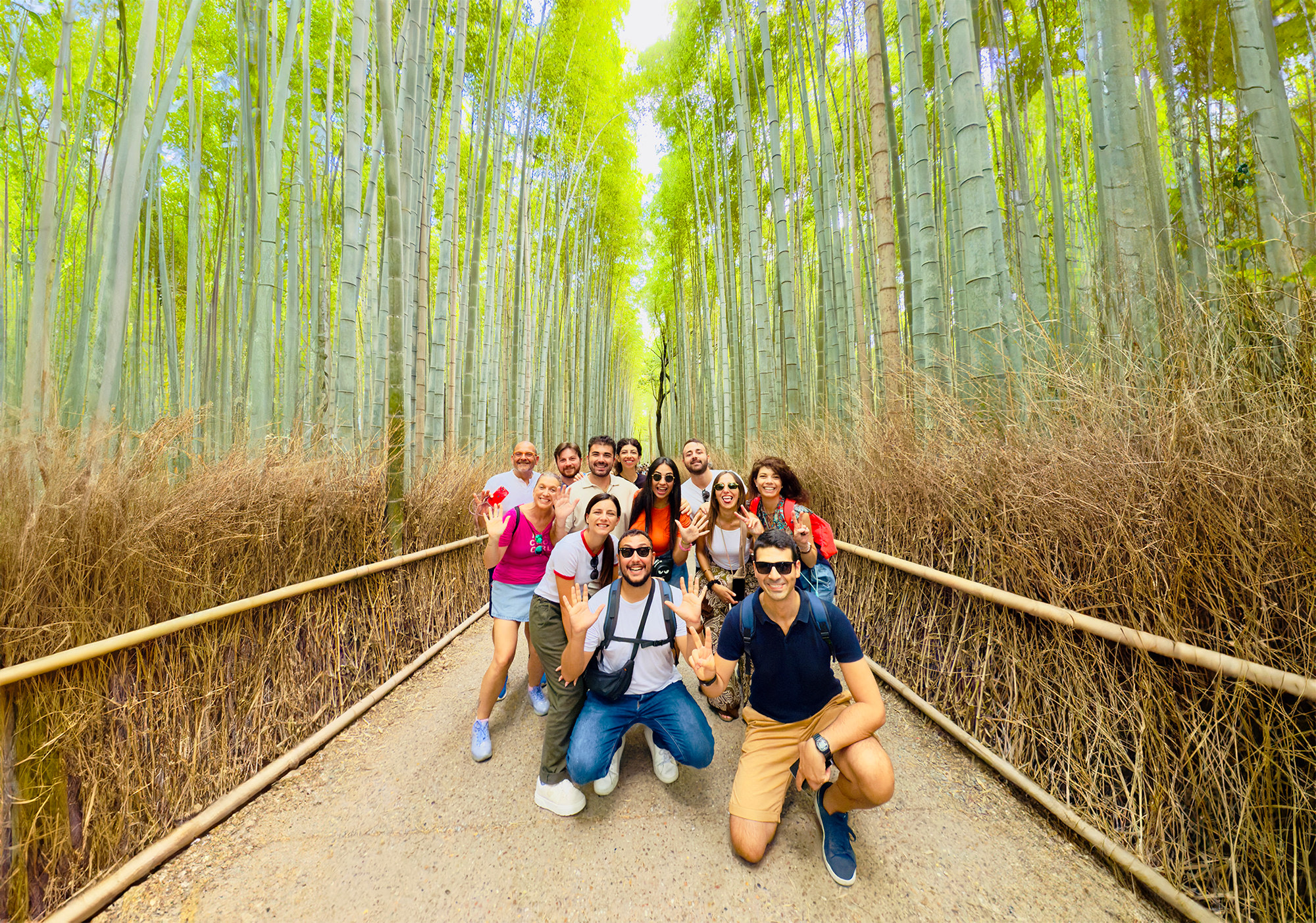
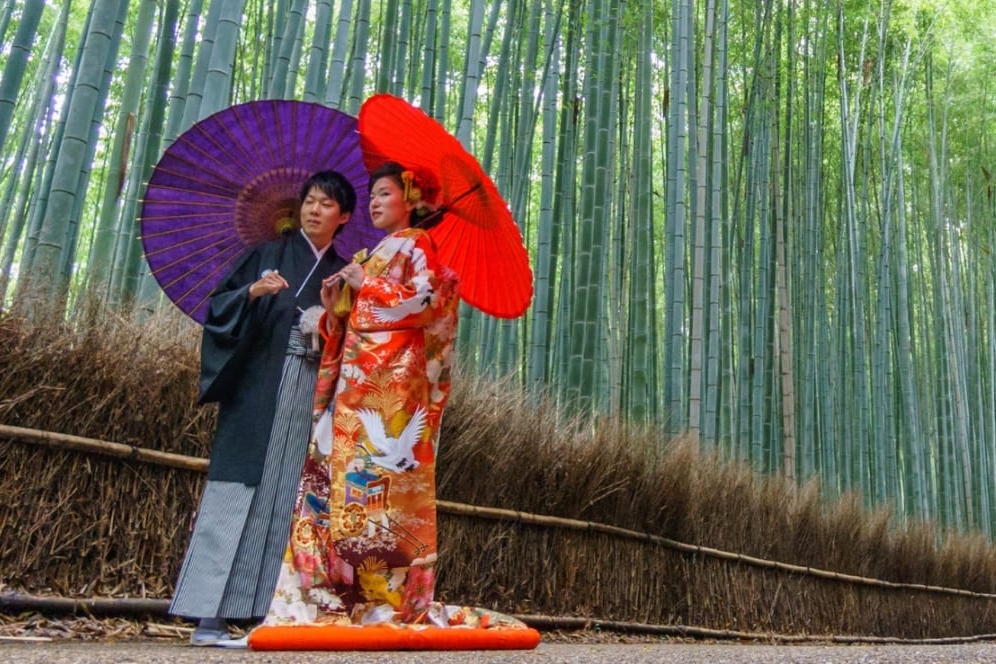
The walking paths that cut through the bamboo groves make for a nice walk or bicycle ride. The groves are particularly attractive when there is a light wind and the tall bamboo stalks sway gently back and forth. The bamboo has been used to manufacture various products, such as baskets, cups, boxes and mats at local workshops for centuries.
4
Shugakuin Imperial Villa (修学院離宮, Shugakuin Rikyū) was built in the 17th century by Emperor Gomizuno and is now managed by the Imperial Household Agency. It consists of the Upper, Middle and Lower Villa areas, each featuring gardens and buildings of the traditional imperial style.
Shugakuin's name comes from a former temple built on the same site in the tenth century. The Imperial Villa was constructed between 1655 and 1659, with a palace for Gomizuno's daughter added ten years later. More recently in 1964, the surrounding farmlands were bought by the Imperial Household Agency. They are leased out to local farmers who continue to work the fields.
5
Stop 5
Katsura Imperial Villa (桂離宮, Katsura Rikyū) is one of the finest examples of Japanese architecture and garden design. The villa and garden in their present form were completed in 1645 as the residence for the Katsura Family, members of Japan's Imperial Family.
Visiting Katsura Imperial Villa requires joining a tour. The tour follows the garden's circular walking trail around the central pond. Palace buildings can be viewed only from the outside, and photographing is allowed only from designated spots. Tours in English are available.
6
Kurama (鞍馬) is a rural town in the northern mountains of Kyoto City, less than one hour from the city center. Kurama is best known for its temple Kurama-dera and its hot spring, one of the most easily accessible hot springs from Kyoto.
Outdoor and indoor baths can be enjoyed at Kurama Onsen, a ryokan located at the upper end of the town of Kurama. It can be reached in a 10 minute walk from the train station along the town's only road or along a nature trail following the river. Staying guests can use the baths for free, while daytrippers pay 2500 yen(Weekday), 2700 yen(Weekend) to use all of the baths or 1400 yen(Weekday), 1600 yen(Weekend) for just the outdoor bath (rotemburo).
7
Yoshiminedera (吉峰寺) is a temple of the Tendai sect of Japanese Buddhism located in Kyoto's western mountains. Similar to Kiyomizudera on the opposite side of town, Yoshiminedera is built along the mountain side and looks out onto Kyoto. The temple grounds are spacious and there are many buildings distributed up the mountain side.
A priest from Enryakuji, named Gesan, established Yoshiminedera as a personal retreat in 1029. In 1467 the temple was destroyed in the Onin War but was rebuilt in 1621. The temple's main objects of worship are a Kannon statue carved by Gesan and a Kannon statue given to the temple by Emperor Gosuzaku in 1042.
8
Stop 8
Daikakuji (大覚寺) is a large temple in the northern part of Kyoto's Sagano district. It was originally built in the early 800s as the detached palace of Emperor Saga, who thoroughly enjoyed spending time in this calm area on the outskirts of Kyoto. Thirty years after the emperor's death, the palace was converted into a temple and has since been one of the highest ranked temples of Shingon Buddhism.
Daikakuji has had a role in several significant historical events. A succession of retired emperors reigned from here, and in the 12th century the temple hosted peace talks that reunited the Northern and Southern Imperial Courts after 50 years of civil war. Daikakuji is also featured in the Tale of Genji, the first novel in Japanese literature. Today, the temple is one of the best places to still feel the ancient court atmosphere described in the novel and is often used for filming historical dramas.
9
Daikakuji is a temple of the Shingon sect of Japanese Buddhism. Formerly the residence of an emperor, the buildings were converted into a temple in 876. During its history the temple traditionally had members of the imperial family serve as the head priest. Beside the main temple buildings there is a large pond and a pagoda.
10
This is the former villa of the popular actor Okochi Denjiro (1896-1962), located in the back of Arashiyama's bamboo groves. Okochi Sanso consists of several different gardens and buildings, including living quarters, tea houses and gates. The buildings can only be viewed from the outside.
11
Stop 11
Ranked among Kyoto's five great Zen temples, Tenryuji is the largest and most impressive temple in Arashiyama. Founded in 1339 at the beginning of the Muromachi Period (1338-1573), the temple is one of Kyoto's many UNESCO World Heritage Sites. In addition to its temple buildings, there are attractive gardens with walking paths.
12
Stop 12
Katsura Imperial Villa (桂離宮, Katsura Rikyū) is one of the finest examples of Japanese architecture and garden design. The villa and garden in their present form were completed in 1645 as the residence for the Katsura Family, members of Japan's Imperial Family.
Visiting Katsura Imperial Villa requires joining a tour. The tour follows the garden's circular walking trail around the central pond. Palace buildings can be viewed only from the outside, and photographing is allowed only from designated spots. Tours in English are available.
13
Stop 13
This mountainside temple was founded in 1596. With small, attractive buildings and gates, the temple has a quiet and understated atmosphere. Maple trees and moss are located just beside the paths and stairs that lead across the temple grounds. From a number of spots, visitors can enjoy views over Kyoto.
14
Similar to Jojakkoji, Nisonin Temple is a hillside temple with slightly larger and imposing buildings. A generally understated atmosphere on the temple grounds is partly due to the overhanging trees along approach. Founded in the mid 9th century, Nisonin is a temple of the Tendai sect. There are views over the city from the upper grounds.
15
Gioji is even more nestled into the forest than Jojakkoji and Nisonin. It is known for its moss garden that is punctuated with tall maple trees. The temple's entrance gate and small main hall have thatched roofs. The latter has an attractive round window looking into the gardens.
16
Adashino Nenbutsuji is located at the end of the Saga-Toriimoto Preserved Street. The temple was founded in the early 9th century when the famous monk Kobo Daishi placed stone statues for the souls of the dead here. Today, the temple grounds are covered by hundreds of such stone statues. In the back of the temple, a short path leads through a bamboo forest.
17
Another ten minute walk north of the similarly named Adashino Nenbutsuji, the Otagi Nenbutsuji Temple is famous for its 1200 stone statues of rakan, devoted followers of Buddhism, each with a different facial expression. Created relatively recently in the 1980s and early 1990s, the many statues stand across the temple grounds which cover part of a forested mountain slope.
18
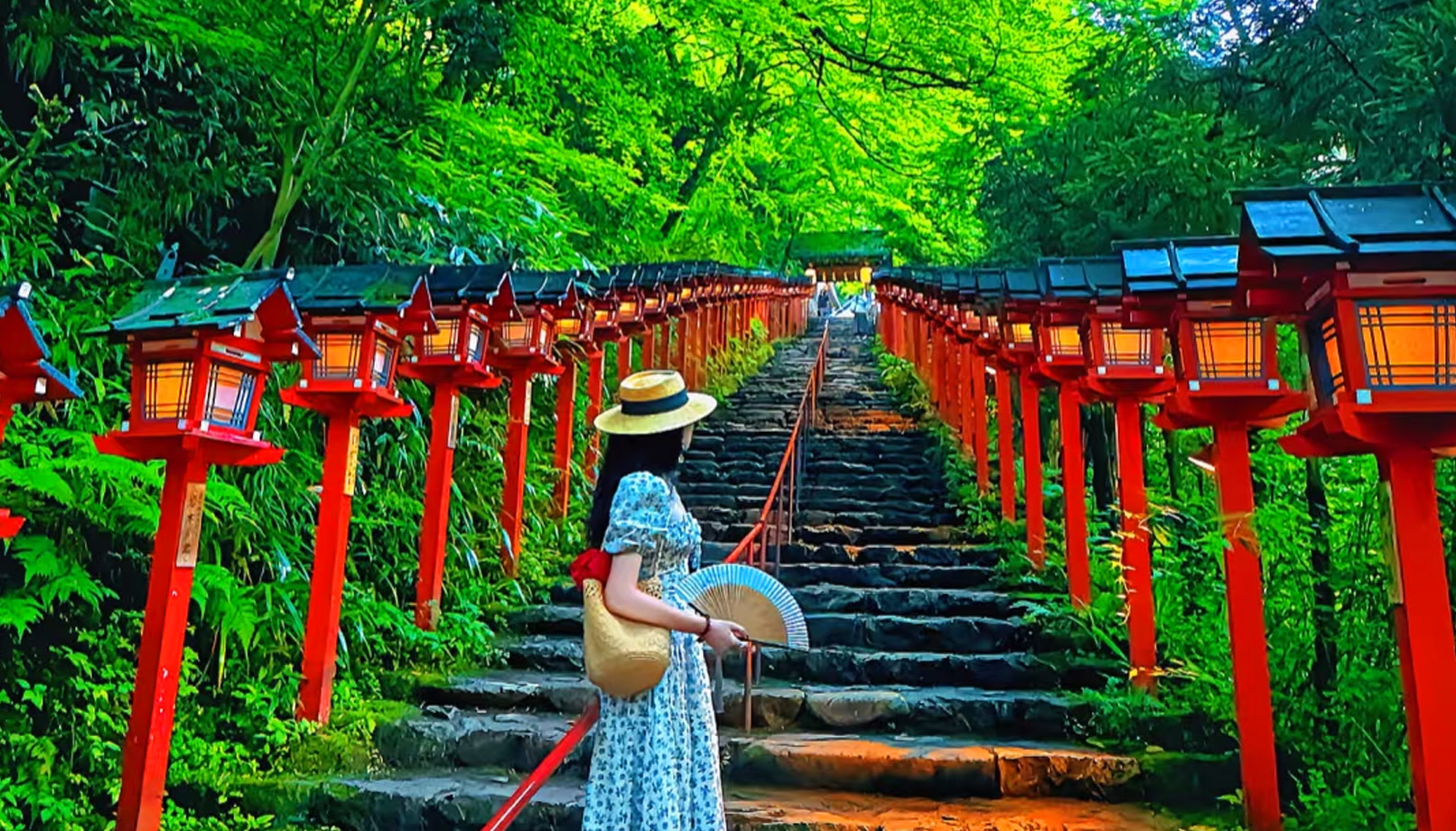
Kibune (貴船) is a small town in a forested valley in the northern mountains of Kyoto City, which developed around Kifune Shrine. According to legend, a goddess traveled in a boat from Osaka all the way up the river into the mountains north of Kyoto, and Kifune Shrine was built at the site where her boat journey had come to an end.
Kifune Shrine is dedicated to the god of water and rain and believed to be the protector of those at sea. Here you can obtain a unique type of fortune written on paper slips (omikuji) that reveal their messages when dipped into water. Okunomiya, the inner sanctum and original site of Kifune Shrine, lies about one kilometer further up the valley. It has a large rock, known as the boat stone, which is said to be where the goddess' yellow boat is buried.
What's not included
Lunch - Lunch (for yourself)
Entrance fee (for yourself)
Transportation fee (for yourself and your guide)
Private Vehicle
Other personal expenses
You cannot combine multiple tour groups.
Guide Entry fees are only covered for sights listed under What to Expect.
Available languages
Guide guide
JA
EN
Reviews breakdown
Viator
4.8
21 reviews
5★
17
4★
3
3★
1
2★
0
1★
0
Tripadvisor
4.9
31 reviews
5★
27
4★
4
3★
0
2★
0
1★
0
Important information
Specialized infant seats are available
Service animals allowed
Public transportation options are available nearby
Infants and small children can ride in a pram or stroller
All areas and surfaces are wheelchair accessible
Transportation options are wheelchair accessible
Suitable for all physical fitness levels
Wheelchair accessible
About Kyoto
Kyoto, once the imperial capital of Japan, is a city rich in history, culture, and tradition. Known for its numerous classical Buddhist temples, as well as gardens, imperial palaces, Shinto shrines, and traditional wooden houses, Kyoto offers a unique blend of ancient and modern Japan. The city is a must-visit for travelers seeking to experience the heart of Japanese heritage.
Top Attractions
Kinkaku-ji (Golden Pavilion)
A Zen Buddhist temple covered in gold leaf, Kinkaku-ji is one of Kyoto's most iconic landmarks. The temple's top two floors are completely covered in gold leaf, reflecting beautifully on the surrounding pond.
Historical/Religious
1-2 hours
¥400
Fushimi Inari Taisha
Famous for its thousands of vermilion torii gates, Fushimi Inari Taisha is a Shinto shrine dedicated to Inari, the god of rice. The trails leading up the mountain offer stunning views of Kyoto.
Religious
2-4 hours (depending on how far you hike)
Free
Kiyomizu-dera
A historic wooden temple with a large veranda supported by massive wooden pillars, Kiyomizu-dera offers panoramic views of Kyoto. The temple is particularly famous for its spring and autumn foliage.
Religious
1-2 hours
¥400
Arashiyama Bamboo Grove
A stunning grove of bamboo, Arashiyama is one of Kyoto's most famous natural attractions. The towering bamboo stalks create a surreal and peaceful atmosphere.
Nature
1-2 hours
Free (Tenryu-ji Temple costs ¥500)
Gion
Kyoto's most famous geisha district, Gion is known for its traditional wooden machiya houses, teahouses, and the chance to spot geishas and maikos (apprentice geishas).
Cultural
1-2 hours (longer if dining or attending a cultural event)
Free to explore (dining and cultural events can be expensive)
Must-Try Local Dishes
Kaiseki Ryori
A traditional multi-course Japanese meal that emphasizes seasonality and presentation. Each dish is carefully prepared and artfully presented.
Dinner
Often includes fish, meat, and vegetables, but vegetarian options are available.
Yudofu (Tofu Hot Pot)
A Kyoto specialty featuring tofu simmered in a light kombu (kelp) broth, often served with vegetables and condiments.
Lunch/Dinner
Vegetarian-friendly, can be made vegan if broth is vegetable-based.
Matcha Desserts
Kyoto is famous for its high-quality matcha (green tea) powder, used in various desserts like ice cream, parfaits, and wagashi (traditional sweets).
Dessert
Vegetarian and vegan options available.
Obanzai
Home-style Kyoto dishes made with fresh, local ingredients, often featuring vegetables, fish, and tofu.
Lunch/Dinner
Can be adapted to various dietary preferences.
Popular Activities
Hiking in the mountains
Cycling through the countryside
Rafting on the Hozu River
Onsen (hot spring) visits
Tea ceremonies
Scenic walks in gardens and parks
Temple and shrine visits
Traditional tea ceremonies
Best Time to Visit
March to May (Spring), October to November (Autumn)
Spring and autumn offer pleasant weather and are the best times to visit for cherry blossoms and autumn foliage. These seasons also see the highest tourist volumes.
15°C to 25°C (Spring), 10°C to 20°C (Autumn)
59°F to 77°F (Spring), 50°F to 68°F (Autumn)
Practical Information
Language
- Official: Japanese
- Widely spoken: English (limited)
- English: Limited/Rare
Currency
Japanese Yen (JPY)
Time Zone
JST (UTC+9)
Electricity
100VV, 50/60HzHz
Safety Information
Overall Safety Rating: Very safe
Kyoto is a very safe city with a low crime rate. Violent crime is rare, and petty crime is uncommon. However, as with any tourist destination, it's important to take basic precautions to protect yourself and your belongings.
Important Precautions:
- • Keep valuables secure and out of sight
- • Be cautious of your surroundings, especially in crowded areas
- • Use reputable tour operators and taxis
Getting there
By air
- Kansai International Airport • 115 km from Kyoto
- Osaka International Airport (Itami) • 40 km from Kyoto
By train
Kyoto Station
By bus
Kyoto Station Bus Terminal
Getting around
Public transport
Buses are the most extensive and affordable way to get around Kyoto. They cover most areas of the city and are especially useful for reaching temples and shrines.
Taxis
Available • Apps: JapanTaxi, INDRIVER
Rentals
Car, Bike, Scooter
Neighborhoods
Gion
Higashiyama
Arashiyama
Downtown Kyoto (Shijo-Kawaramachi)
Day trips
Nara
40 km from Kyoto • Half day to full day
Nara is a historic city known for its ancient temples, shrines, and the famous Nara Park, home to hundreds of free-roaming deer.
Uji
20 km from Kyoto • Half day
Uji is a small city known for its historic temples, beautiful riverside scenery, and high-quality matcha (green tea).
Kurama and Kibune
25 km from Kyoto • Full day
Kurama and Kibune are two neighboring villages in the mountains north of Kyoto, known for their hot springs, hiking trails, and scenic beauty.
Festivals
Gion Matsuri • July (main events on July 17th and 24th)
Jidai Matsuri • October 22nd
Aoi Matsuri • May 15th
Pro tips
- Visit popular attractions like Fushimi Inari Taisha and Kinkaku-ji early in the morning or late in the afternoon to avoid crowds.
- Consider purchasing a Kyoto City Bus Pass or other transportation passes to save money on getting around the city.
- Try local specialties like yudofu (tofu hot pot), matcha desserts, and obanzai (home-style Kyoto dishes).
- Explore the city's many temples and shrines, but don't forget to take time to enjoy the natural beauty of Kyoto's gardens and parks.
- Learn a few basic Japanese phrases to enhance your experience and show respect for local customs and traditions.
From $25
per person
Price varies by option
Secure booking
Free cancellation available
Instant confirmation


![[Kyoto & Nara Day Trip] Arashiyama Train & Nara Park & Fushimi Inari Shrine's Thousand Torii Gates & Togetsukyo Bridge & Bamboo Forest Path & Kimono Forest (Departure from Osaka)](https://res.klook.com/image/upload/activities/nwrlvoqxc4roubxbiywr.jpg)