Tokyo 5hr Private Guided Tour & 1hr Soba Making Experience
Active
6h
For a full refund, cancel at least 24 hours before the scheduled departure time.
Instant confirmation
Mobile or paper ticket accepted
About this experience
This 6 hr walking tour includes 60 min Soba making experience at SOBAGIRI. Before your Soba making experience, you will go on a walking tour with our licensed guide! Your guide will drop you off at SOBAGIRI after a 5 hour walking tour. Start time: Your start time for the experience may vary. The estimated time for the experience will be about 5 hours from the start of the tour.
You can customize your tour directly with the guide after placing your reservation.
Please craft your itinerary by choosing 3 to 4 spots on the ‘what to expect’ or ‘itinerary’ list.
Available options
Tokyo 5hr Private Guided Tour & 1hr Soba Making Experience
Pickup included
What's included
Meet up with guide within Tokyo's 23 wards on foot
Licensed Local English Speaking Guide
Customizable Tour of your choice of 3-4 sites from 'What to expect' list
Detailed itinerary
1
In Tokyo, Asakusa is the hub of the shitamachi district, which maintains an atmosphere similar to
that of previous decades.
2
Stop 2
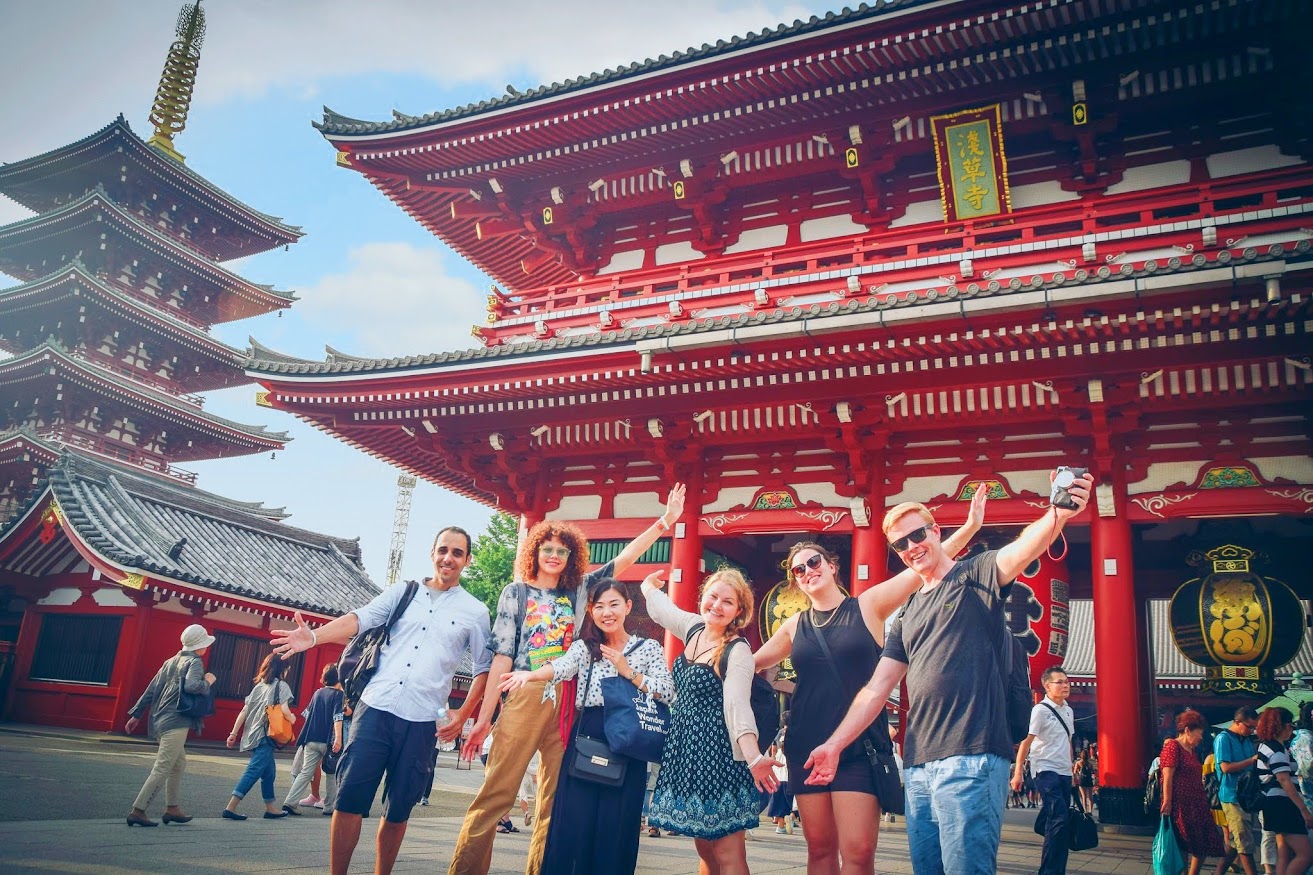
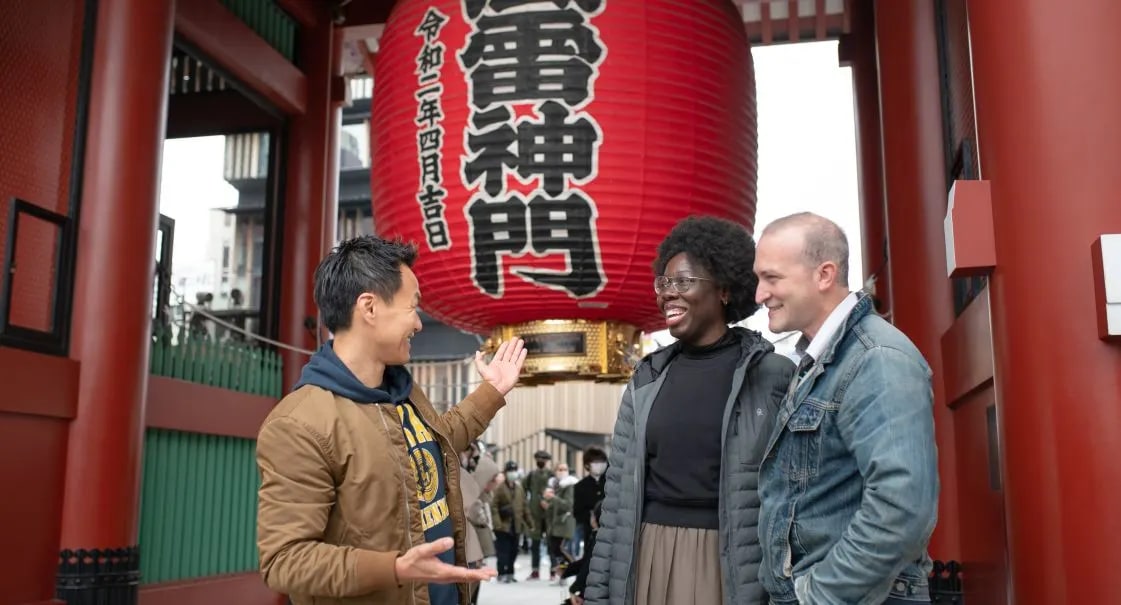
The Sensoji (...ea o, or simply SennAji), which is also called the Asakusa Kannon Temple, is
a Buddhist temple in Asakuse. Among Tokyo's most famous and vibrant temples, it is one
of the most colorful.
3
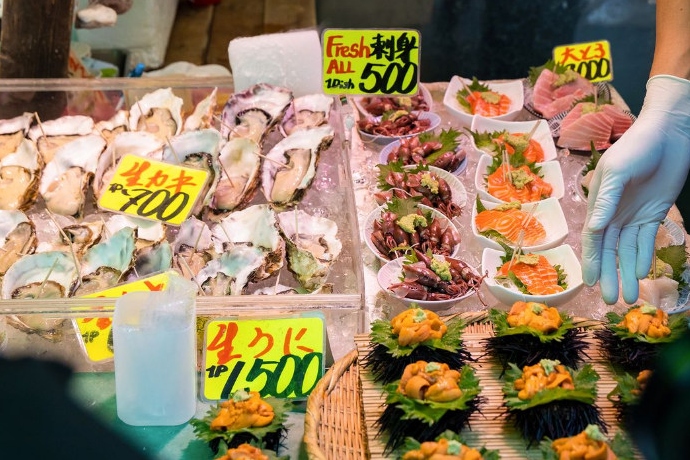
Explore the antique fish market in Tokyo! Tokyo Fish Market
The Tokyo Fish Market is one of
the oldest fish markets in the world. It is located in the heart of the
city and is the only place in Japan where you can buy and sell fish.
The fish market is open every day of the week from 9am to 6pm. You
can also buy fish at the fish market at any time of the day or
night.
4
Stop 4
The Meiji JingA Shrine, also known as Z2cza, is dedicated to the spirits of Emperor Menji
and his wife Empress Shoken. Located in the densely populated city, Meiji Shrine and Yoyogi
Park are two of the many forested areas that surround the JR Yamanote Line's bustling
Harajuku Station. A large area of shrine land with walking paths makes excellent for leisurely
strolling. The shrine was finished and dedicated to Emperor Meiji and Empress Shoken in 1920,
eight years after the deaths of the emperor and six years following the death of
their mother. Despite being destroyed during the Second World War, the shrine was reconstructed soon
after.
5
Stop 5
Tokyo's most extensive and well-liked parks include Shinjuku Gyoen. The park, which is just a short
walk from Shinjuku Station, offers secluded surroundings with vast lawns, winding walking trails, and scenic
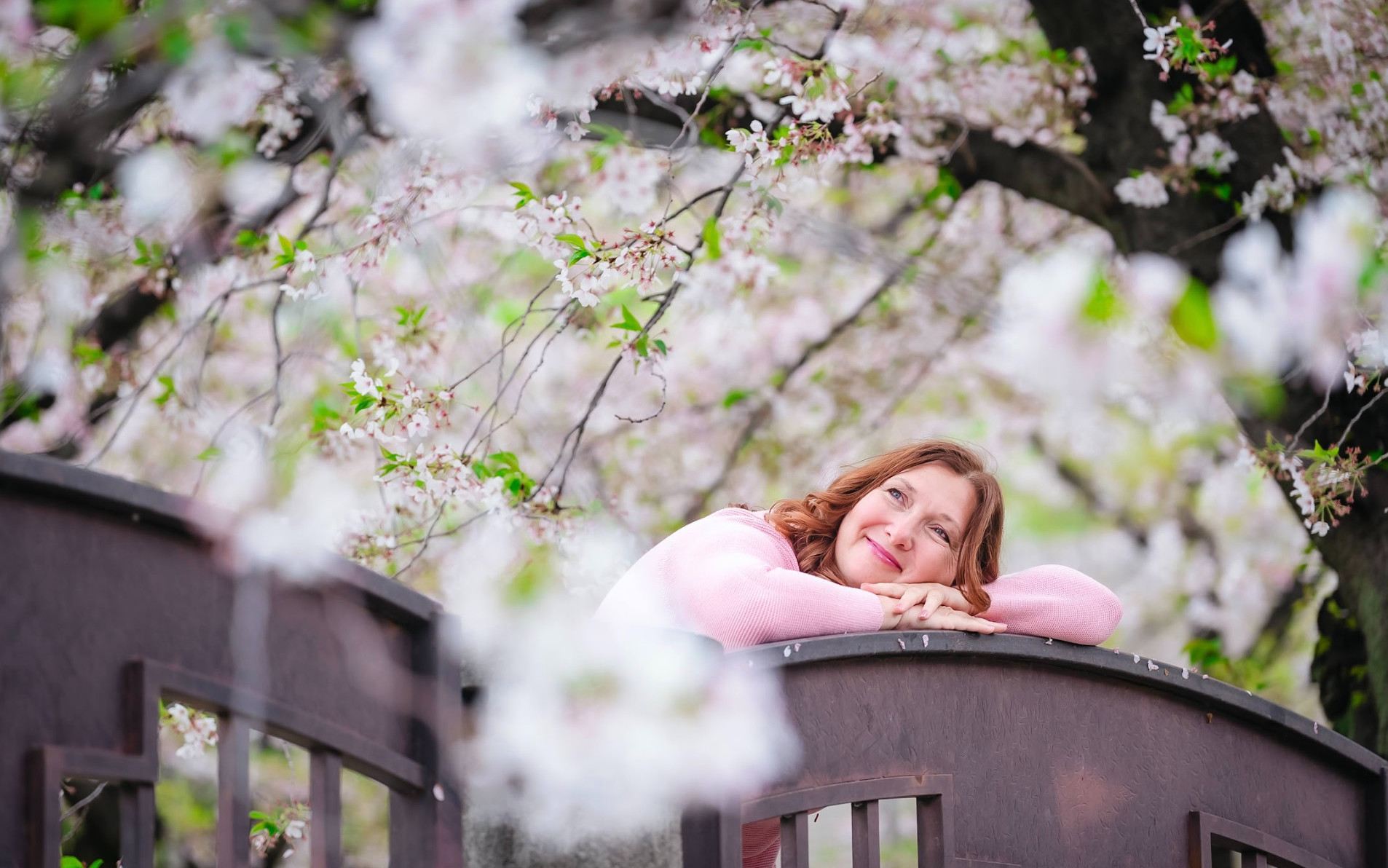
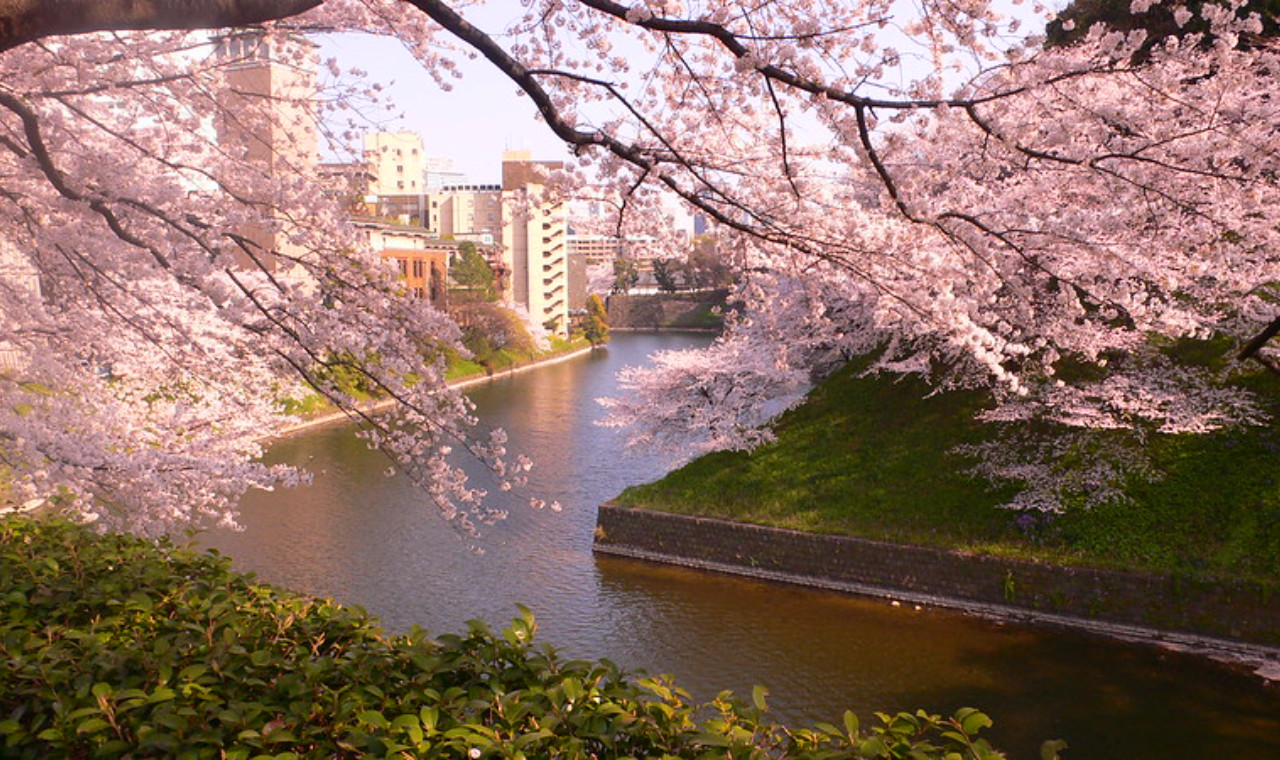
views that make it incredibly peaceful. The cherry blossom season in spring puts Shinjuku Gyoen
among the top places to enjoy. Adults must have a group of 500 (400) members,
65 and above; they must also have at least 250aaValid IDs. We request that you
purchase a ticket at an available counter. Students must present 250 valid student identification to
be eligible for admission, as per the new regulations. Purchasing a ticket at staffed counters
is required. Children under 15 years old receive 0% off their admission.
6
Stop 6
Central Tokyo's Hama Rikyu is an expansive and visually stunning landscape garden. Positioned along Tokyo Bay,
Hama Rikyu features seawater ponds that rise and fall, as well as an island-wide teahouse
where guests can enjoy the natural beauty of the surrounding area. This traditional garden stands
in stark contrast to the skyscrapers in the nearby Shiodome district. Admission fee 300JPY for
adults, seniors (+65) and children under 12 years of age 150JpY with no admission fees.
7
Stop 7
**This tour does not include access to the inside of the Imperial Palace**
A short walk from Tokyo Station, the current Imperial Palace is situated in the center of
Tokyo on the former site of Edo Castle (known as "the Great Park", after Yojibao),
which was originally part of an area with moats and stone walls. Edo Castle, which
was once the capital of the Tokugawa shogun, was used as their headquarters from 1603
to 1867. It is also the residence of Japan's Imperial Family. After the shogunate was
toppled in 1868, the capital and imperial headquarters of the nation were relocated from Kyoto
to Tokyo. In 1888, the construction of a new Imperial Palace was finished. During World
War Two, the palace was destroyed and then reconstructed in the same style.
8
Stop 8
The most beautiful Japanese landscape garden in Tokyo is often referred to as Rikugien, which is
also named Koishikawa Korakuen.88 famous poems are reproduced in miniature as Rikugien, a structure constructed
for the 5th Tokugawa Shogun circa 1700. It is an Edo Period strolling garden with
a large central "pond" set against artificial terrain and forest fringed by man made hills
and trails, all trail-connected. Admission fee Adults 300 JPY Seniors (+65) 150 Children (12 and
under) Free admission in park conditions!
9
Stop 9
Akihabara (秋葉原), also called Akiba after a former local shrine, is a district in central Tokyo that is famous for its many electronics shops. In more recent years, Akihabara has gained recognition as the center of Japan's otaku (diehard fan) culture, and many shops and establishments devoted to anime and manga are now dispersed among the electronic stores in the district. On Sundays, Chuo Dori, the main street through the district, is closed to car traffic from 13:00 to 18:00 (until 17:00 from October through March).
10
Stop 10
Pass by
Yoyogi Park (代々木公園, Yoyogi Kōen) is one of Tokyo's largest city parks, featuring wide lawns, ponds and forested areas. It is a great place for jogging, picnicking and other outdoor activities. Although Yoyogi Park has relatively few cherry trees compared to other sites in Tokyo, it makes for a nice cherry blossom viewing spot in spring. Furthermore, it is known for its ginko tree forest, which turns intensely golden in autumn.
11
Koishikawa Korakuen (小石川後楽園, Koishikawa Kōrakuen) is one of Tokyo's oldest and best Japanese gardens. It was built in the early Edo Period (1600-1867) at the Tokyo residence of the Mito branch of the ruling Tokugawa family. Like its namesake in Okayama, the garden was named Korakuen after a poem encouraging a ruler to enjoy pleasure only after achieving happiness for his people. Koishikawa is the district in which the garden is located in.
12
Stop 12
The Tokyo National Museum (東京国立博物館, Tōkyō Kokuritsu Hakubutsukan) is the oldest and largest of Japan's top-level national museums, which also include the Kyoto National Museum, the Nara National Museum and the Kyushu National Museum. It was originally established in 1972 at Yushima Seido Shrine and moved to its current location in Ueno Park a few years later. The Tokyo National Museum features one of the largest and best collections of art and archeological artifacts in Japan, made up of over 110,000 individual items including nearly a hundred national treasures. At any one time, about 4000 different items from the permanent museum collection are on display. In addition, visiting temporary exhibitions are also held regularly. Good English information and audio guides are available.
13
Stop 13
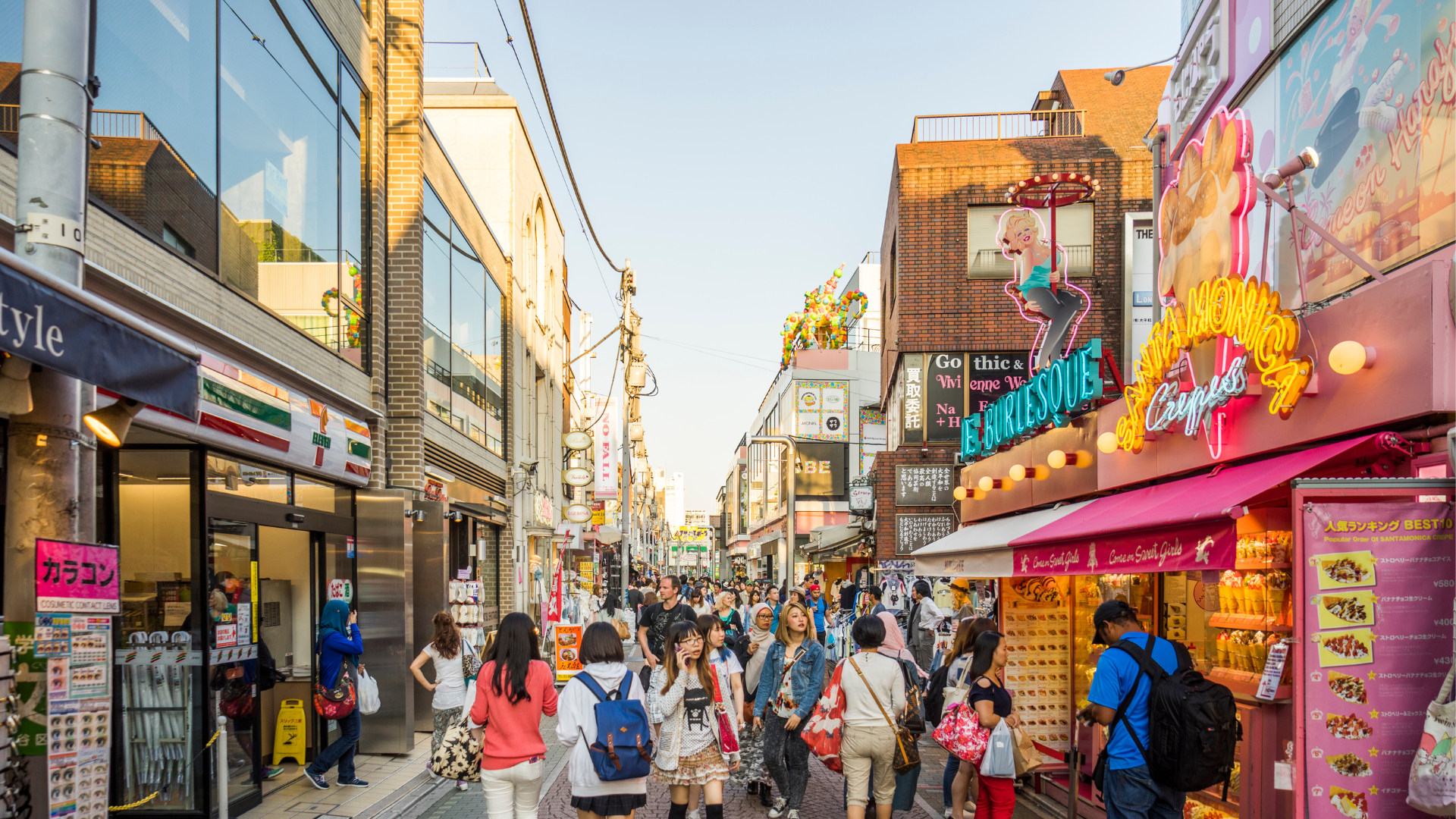
Harajuku (原宿) refers to the area around Tokyo's Harajuku Station, which is between Shinjuku and Shibuya on the Yamanote Line. It is the center of Japan's most extreme teenage cultures and fashion styles, but also offers shopping for adults and some historic sights. The focal point of Harajuku's teenage culture is Takeshita Dori (Takeshita Street) and its side streets, which are lined by many trendy shops, fashion boutiques, used clothes stores, crepe stands and fast food outlets geared towards the fashion and trend conscious teens.
14
Stop 14
Odaiba (お台場) is a popular shopping and entertainment district on a man made island in Tokyo Bay. It originated as a set of small man made fort islands (daiba literally means "fort"), which were built towards the end of the Edo Period (1603-1868) to protect Tokyo against possible attacks from the sea and specifically in response to the gunboat diplomacy of Commodore Perry. More than a century later, the small islands were joined into larger islands by massive landfills, and Tokyo began a spectacular development project aimed to turn the islands into a futuristic residential and business district during the extravagant 1980s. But development was critically slowed after the burst of the "bubble economy" in the early 1990s, leaving Odaiba nearly vacant.
15
Stop 15
Shibamata (柴又) is a neighborhood on the eastern end of Tokyo, not far from the Edogawa River which is the natural border between Tokyo and Chiba Prefecture. The town retains its old-school charm from yesteryear and is a perfect break away from modern Tokyo. One of the main attractions to see is the Shibamata Taishakuten Temple not far from the station.
16
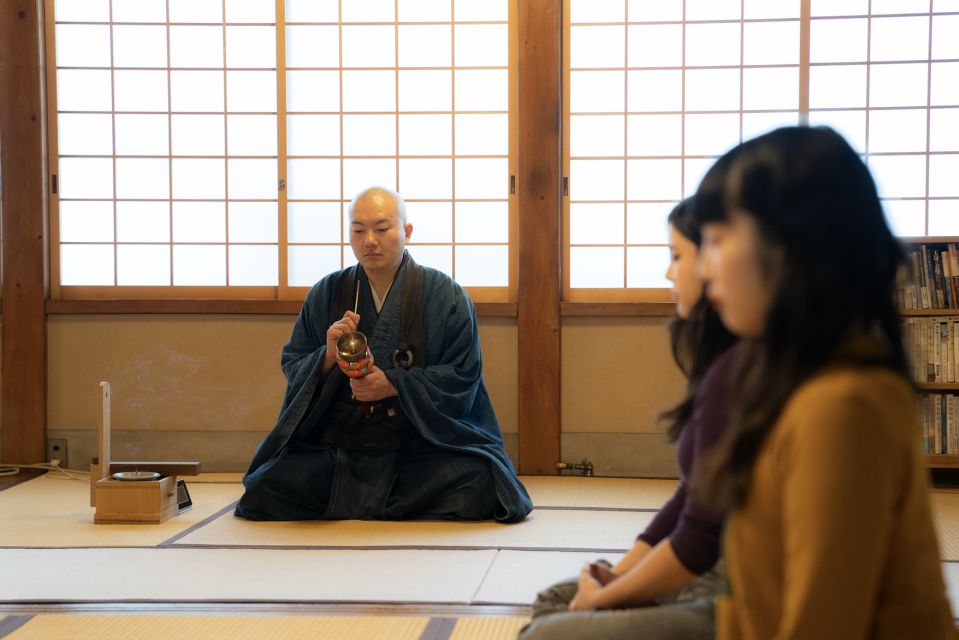
Food entertainment at SOBAGIRI RAKUJYO in Kappabashi is a Soba Cutting experience!
Sobagiri is a technique that has been practiced since the Edo period and can be completed in 1hour.
Please experience “SOBAGIRI,” where you can experience the fun and the “slice” as the main part of the experience.
What's not included
You cannot combine tour groups
Private Vehicle
Guide Entry fees are only covered for sights listed under What to Expect.
Transportation fees, Entrance fees, Lunch, and Other personal expenses
Available languages
Guide guide
JA
EN
Important information
Service animals allowed
Public transportation options are available nearby
Infants and small children can ride in a pram or stroller
All areas and surfaces are wheelchair accessible
Transportation options are wheelchair accessible
Wheelchair accessible
Suitable for all physical fitness levels
Please be mindful of buckwheat flour allergies.
If you have any specific requests, we can accommodate them, but please note the following additions:
Our restaurant also serves as a dining establishment.
While we strive to understand our food ingredients, we do not notify customers of potential cross-contamination.
Soy sauce may contain trace amounts of wheat.
While we aim to meet your preferences, we cannot assume responsibility for ingredients.
We do not use Halal-certified ingredients, so ingredient choices are solely the responsibility of the customer.
About Tokyo
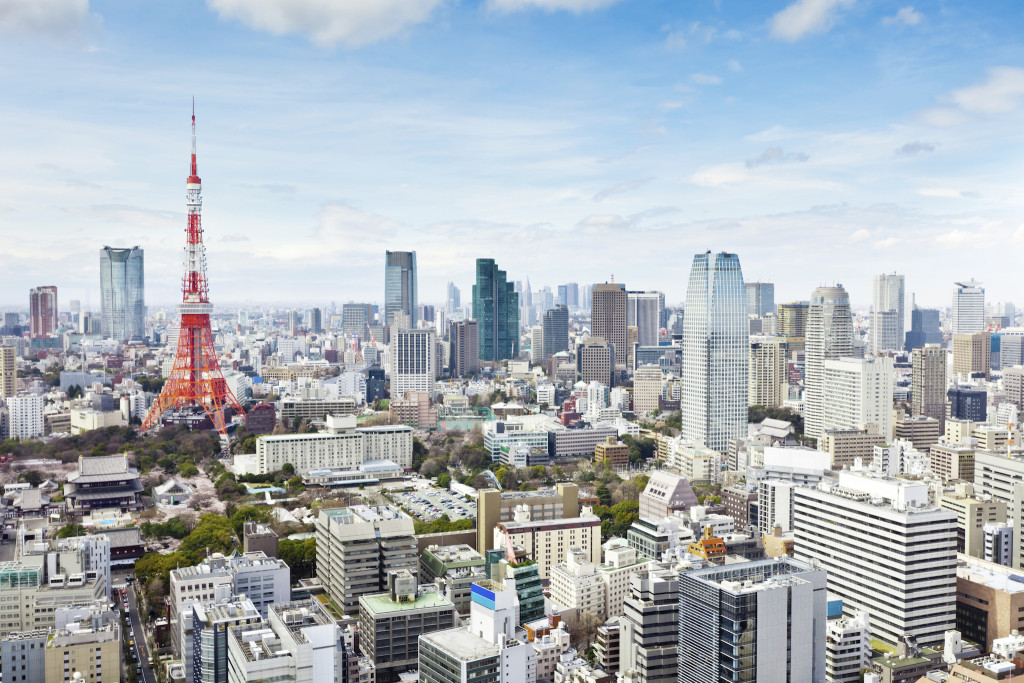
Tokyo, the capital of Japan, is a bustling metropolis that beautifully blends traditional culture with cutting-edge technology. Known for its neon-lit streets, historic temples, and world-class cuisine, Tokyo offers a unique experience that caters to every type of traveler.
Top Attractions
Senso-ji Temple
Senso-ji is Tokyo's oldest temple and one of its most significant. The temple's massive lantern and five-story pagoda are iconic landmarks.
Historical/Religious
1-2 hours
Free (small fee for some areas)
Meiji Shrine
Meiji Shrine is a Shinto shrine dedicated to the deified spirits of Emperor Meiji and his wife, Empress Shoken. It is surrounded by a beautiful forest.
Historical/Religious
1-2 hours
Free
Shibuya Crossing
Shibuya Crossing is the world's busiest pedestrian crossing and a symbol of Tokyo's bustling urban life. It's a must-see for its chaotic yet orderly nature.
Cultural
30 minutes to 1 hour
Free (¥2,200 for Shibuya Sky)
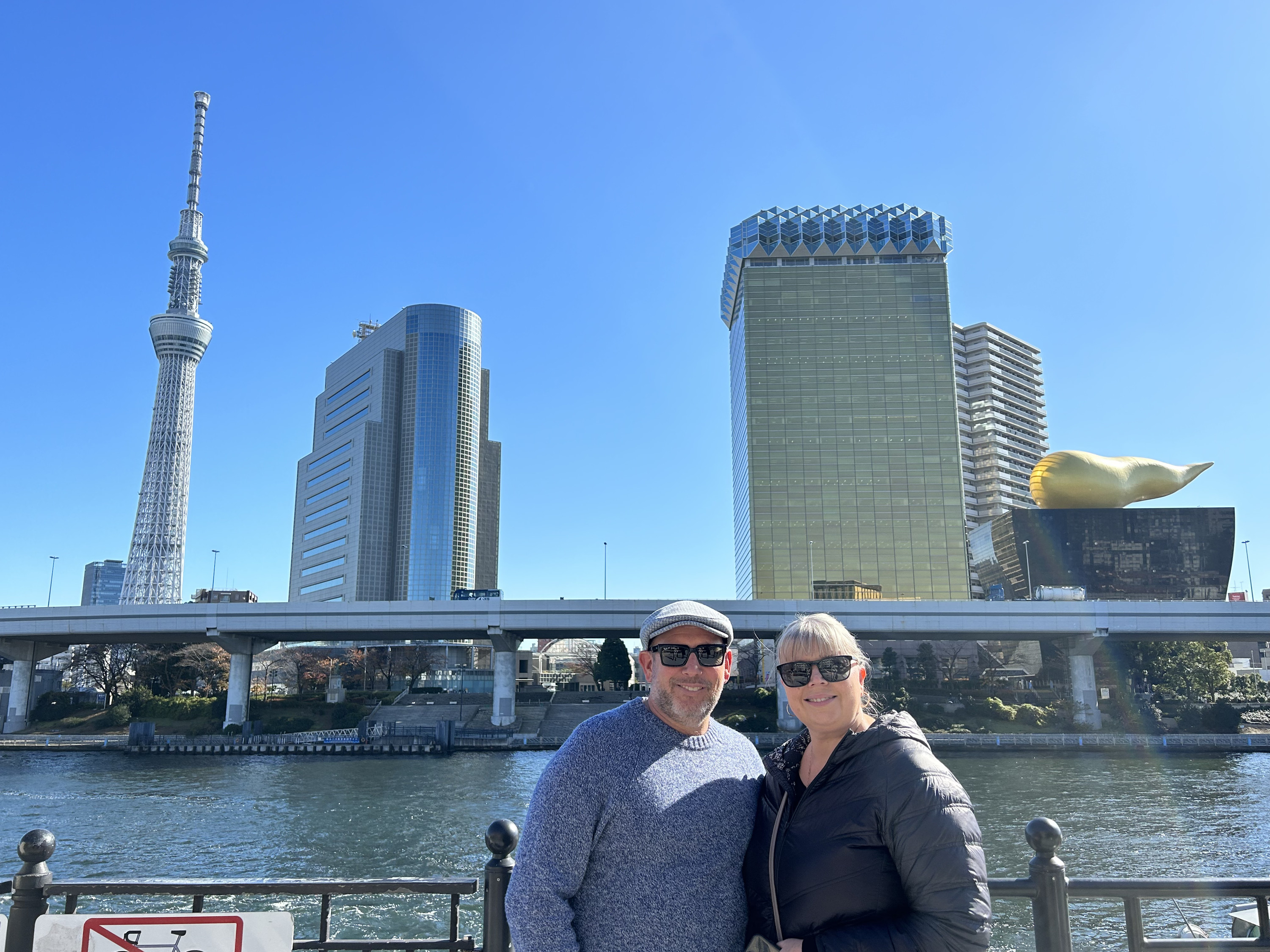
Tokyo Skytree
Tokyo Skytree is the tallest tower in Japan and the second tallest freestanding structure in the world. It offers breathtaking views of the city.
Architecture
2-3 hours
¥2,100 to ¥3,100 (USD $15 to $22)
Odaiba
Odaiba is a man-made island in Tokyo Bay known for its shopping, dining, and entertainment options. It's a great place for families and tech enthusiasts.
Entertainment
Half day to full day
Varies by attraction
Must-Try Local Dishes
Sushi
Fresh raw fish served on vinegared rice, a staple of Japanese cuisine.
Dinner
Contains fish, can be vegetarian with substitutes.
Ramen
Noodle soup with various broths and toppings, a popular comfort food.
Lunch/Dinner
Vegan and vegetarian options available.
Tempura
Deep-fried seafood and vegetables, known for its crispy texture.
Lunch/Dinner
Contains seafood and deep-fried ingredients.
Okonomiyaki
Savory pancake with various ingredients, often topped with sauce and bonito flakes.
Lunch/Dinner
Contains seafood and can be made vegetarian.
Popular Activities
Hiking in the nearby mountains
Parasailing at Odaiba
Onsen (hot spring) visits
Tea ceremonies
Traditional tea ceremonies
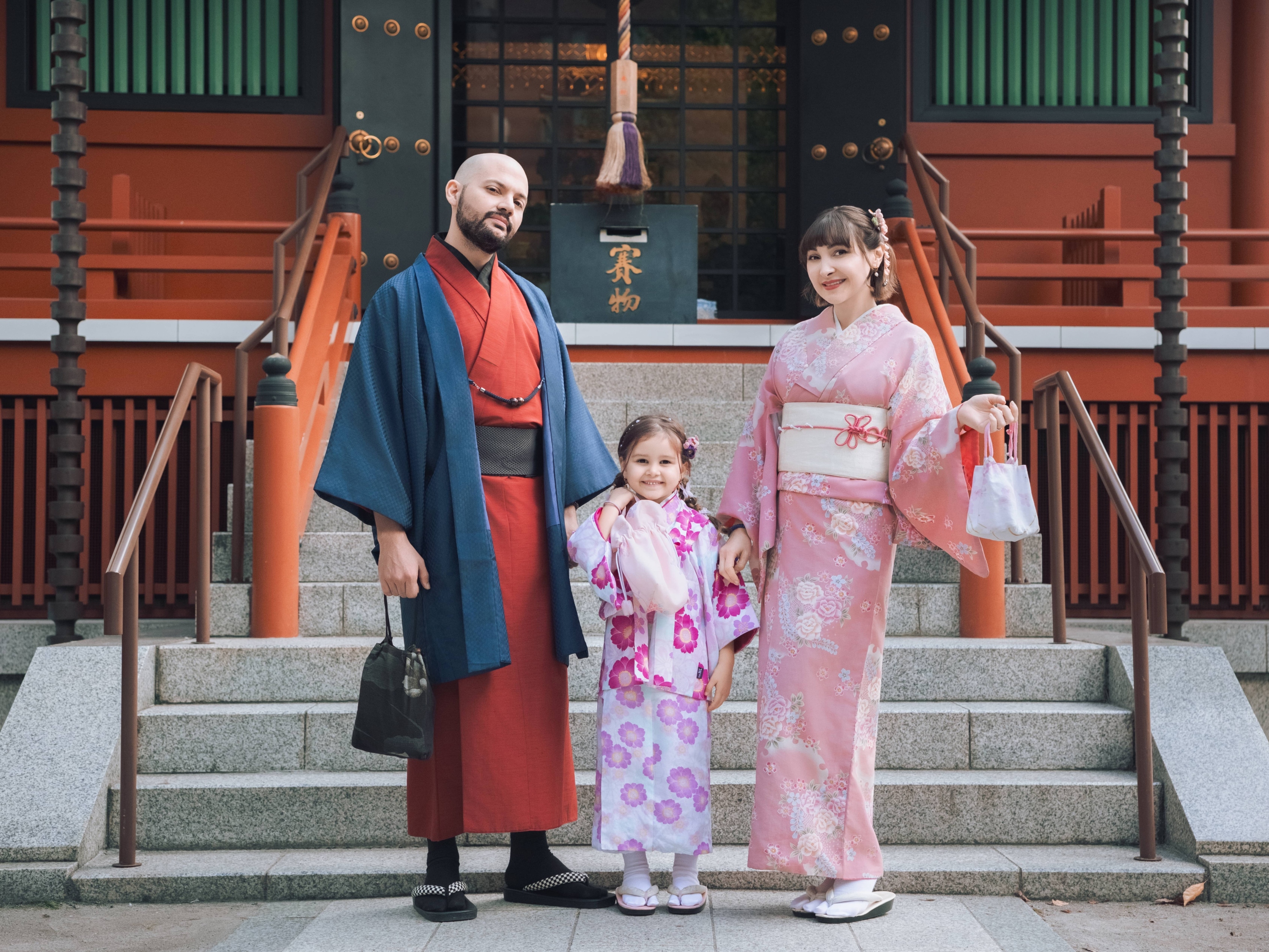
Kimono rentals and photo shoots
Boat tours on the Sumida River
Beach activities at Odaiba
Best Time to Visit
March to May (Spring) and September to November (Autumn)
These seasons offer comfortable temperatures and beautiful scenery, with cherry blossoms in spring and vibrant foliage in autumn. However, these are also the busiest times for tourism.
10°C to 25°C (50°F to 77°F)
50°F to 77°F
Practical Information
Language
- Official: Japanese
- Widely spoken: English, Chinese, Korean
- English: Moderately spoken in tourist areas, limited elsewhere
Currency
Japanese Yen (JPY)
Time Zone
GMT+9
Electricity
100VV, 50/60HzHz
Safety Information
Overall Safety Rating: Very safe
Tokyo is generally very safe, with low crime rates and a strong emphasis on public order. However, petty crimes like pickpocketing can occur in crowded areas.
Important Precautions:
- • Be cautious of your belongings in crowded areas.
- • Use licensed taxis and check fares before getting in.
- • Be aware of your surroundings, especially at night.
Getting there
By air
- Narita International Airport • 60 km (37 miles) from city center
- Haneda Airport • 15 km (9 miles) from city center
By train
Tokyo Station, Shinjuku Station
By bus
Tokyo Station Bus Terminal, Shinjuku Expressway Bus Terminal
Getting around
Public transport
Tokyo's subway system is efficient, clean, and punctual. It consists of multiple lines operated by Tokyo Metro and Toei Subway.
Taxis
Available • Apps: JapanTaxi, DiDi
Rentals
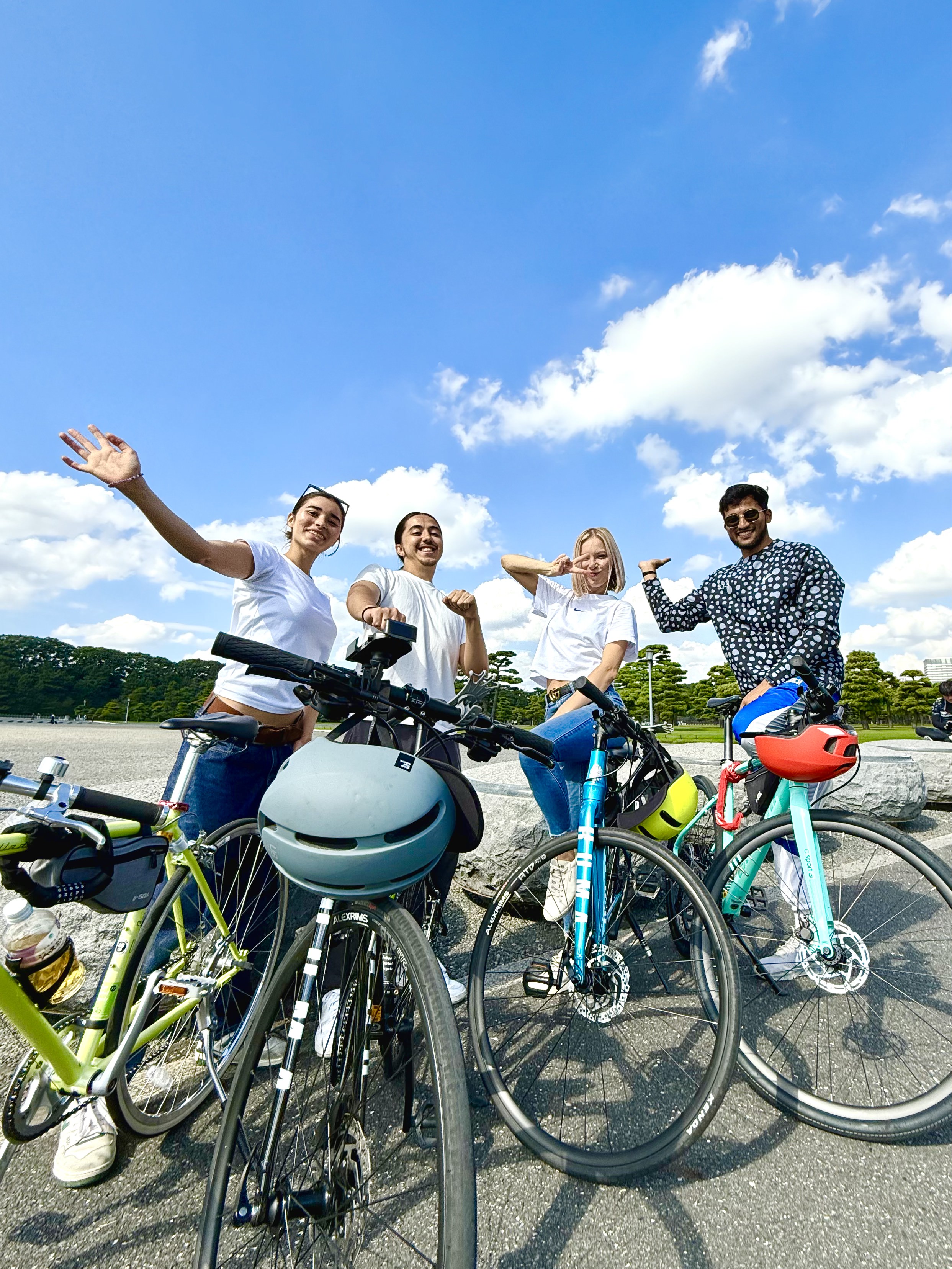
Car, Bike, Scooter
Neighborhoods
Shibuya
Shinjuku
Asakusa
Ginza
Akihabara
Day trips
Nikko
120 km (75 miles) from Tokyo • Full day
Nikko is a city known for its beautiful shrines, temples, and natural scenery. It's a UNESCO World Heritage site and offers a peaceful retreat from the bustling city.
Kamakura
50 km (31 miles) from Tokyo • Half day to full day
Kamakura is a coastal town known for its historic temples, shrines, and the Great Buddha statue. It's a great place to experience traditional Japanese culture.
Hakone
90 km (56 miles) from Tokyo • Full day or overnight
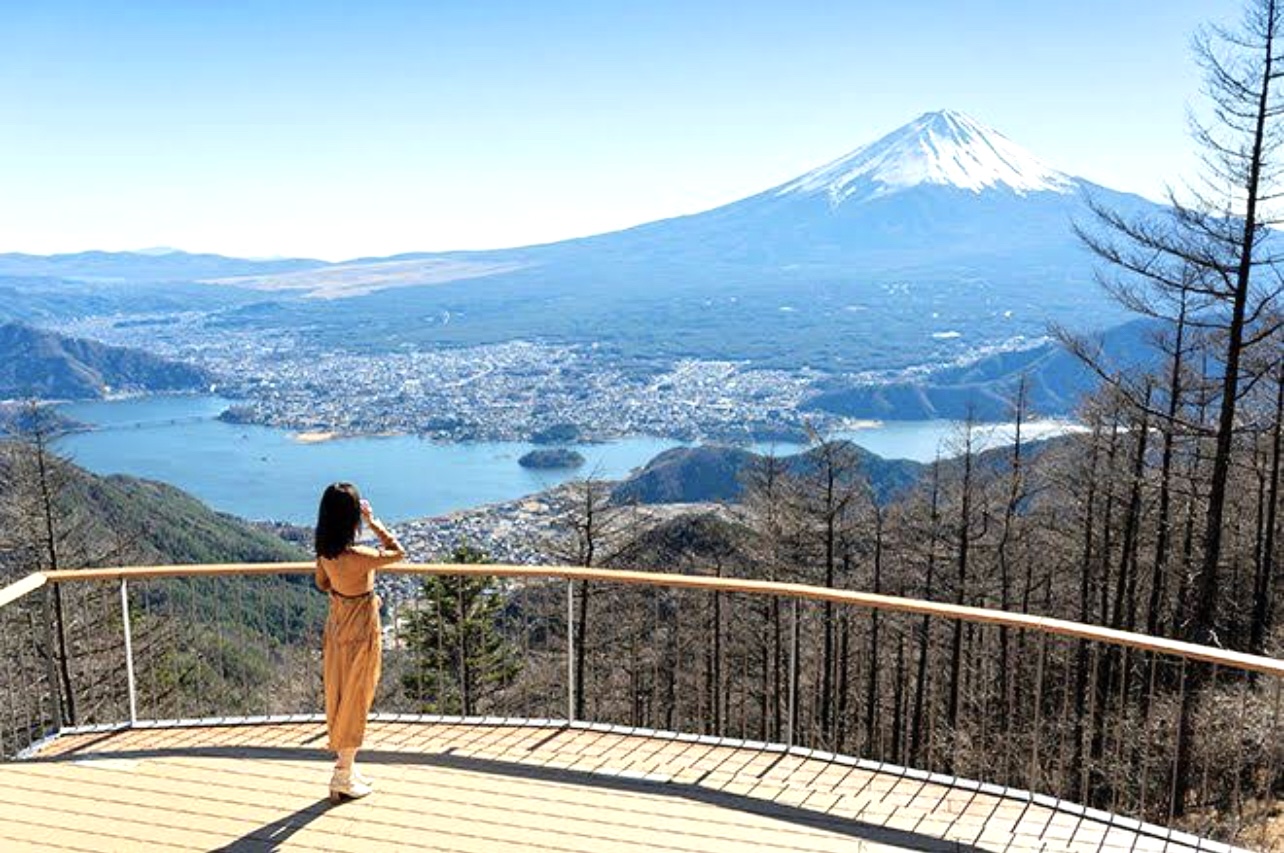
Hakone is a hot spring resort town known for its onsen (hot springs), scenic views of Mount Fuji, and the Open-Air Museum. It's a popular destination for relaxation and nature.
Festivals
Sannō Matsuri • Mid-June (every 2 years)
Kanda Matsuri • Mid-May (every 2 years)
Sumida River Fireworks Festival • Last Saturday of July
Pro tips
- Use IC cards like Suica or Pasmo for convenient and discounted public transport.
- Download useful apps like Google Maps, Japan Transit Planner, and Japan Travel by Navitime.
- Learn a few basic Japanese phrases to enhance your experience and show respect for the local culture.
- Carry cash, as some smaller shops and restaurants may not accept credit cards.
- Visit popular attractions early in the morning or late in the afternoon to avoid crowds.
From $25
per person
Price varies by option
Secure booking
Free cancellation available
Instant confirmation