Beppu 6hr Private Trip with Government-Licensed Guide
Active
6h
For a full refund, cancel at least 24 hours before the scheduled departure time.
Manual confirmation
Mobile or paper ticket accepted
About this experience
This value-packed trip with a government-licensed and experienced multilingual tour guide is a fantastic and efficient way to explore Beppu! Beppu is famous as a hot spring resort, the point clearly seen in the hot steam rising from vents in the earth. Onsens being the main point of attraction to the area, there are several ways to enjoy them. Along with the traditional way of bathing, some hot springs are just for viewing, as their beauty can be very charming. In addition, boiled eggs and pudding cooked using the high temperature steam are also popular.
Let us know what you would like to experience and we will customize a six-hour tour that's best for you!
Note*1: Please select your must-see spots from a list in the tour information to create your customized itinerary.
Note*2: The National Government Licensed Guide Interpreter certification is issued by the Japanese government requires a good knowledge and understanding of Japanese culture and history.
Available options
Beppu 6hr Private Trip with Government-Licensed Guide
Pickup included
What's included
Guide Entry fees are only covered for sights listed under What to Expect
Meet up with guide on foot within designated area of Beppu
Licensed Local English Speaking Guide
Customizable Tour of your choice of 3-4 sites from 'What to expect' list
Detailed itinerary
1
Jigokumushi Kobo is a unique steam-cooking experience located in Beppu, one of Japan’s most famous hot spring towns. Using natural geothermal steam, visitors can cook fresh local ingredients like vegetables, seafood, and eggs in traditional “hell-steaming” style. It’s a fun, hands-on way to enjoy Beppu’s natural wonders and delicious regional flavors!
**Please note that there is a charge to take part in the experience.
2
One of the more beautiful hells, the "sea hell" features a pond of boiling, blue water. In its spacious gardens, there are a few smaller, orange colored hells and a clear water pond with lotus flowers whose large leaves are strong enough to carry small children.
3
This hell is named after the mud bubbles, which emerge from boiling mud pools and look like the shaven heads of monks. There is also a foot bath with clear water. Adjacent to the hell is a public bath with multiple pools that costs an additional 620 yen.
4
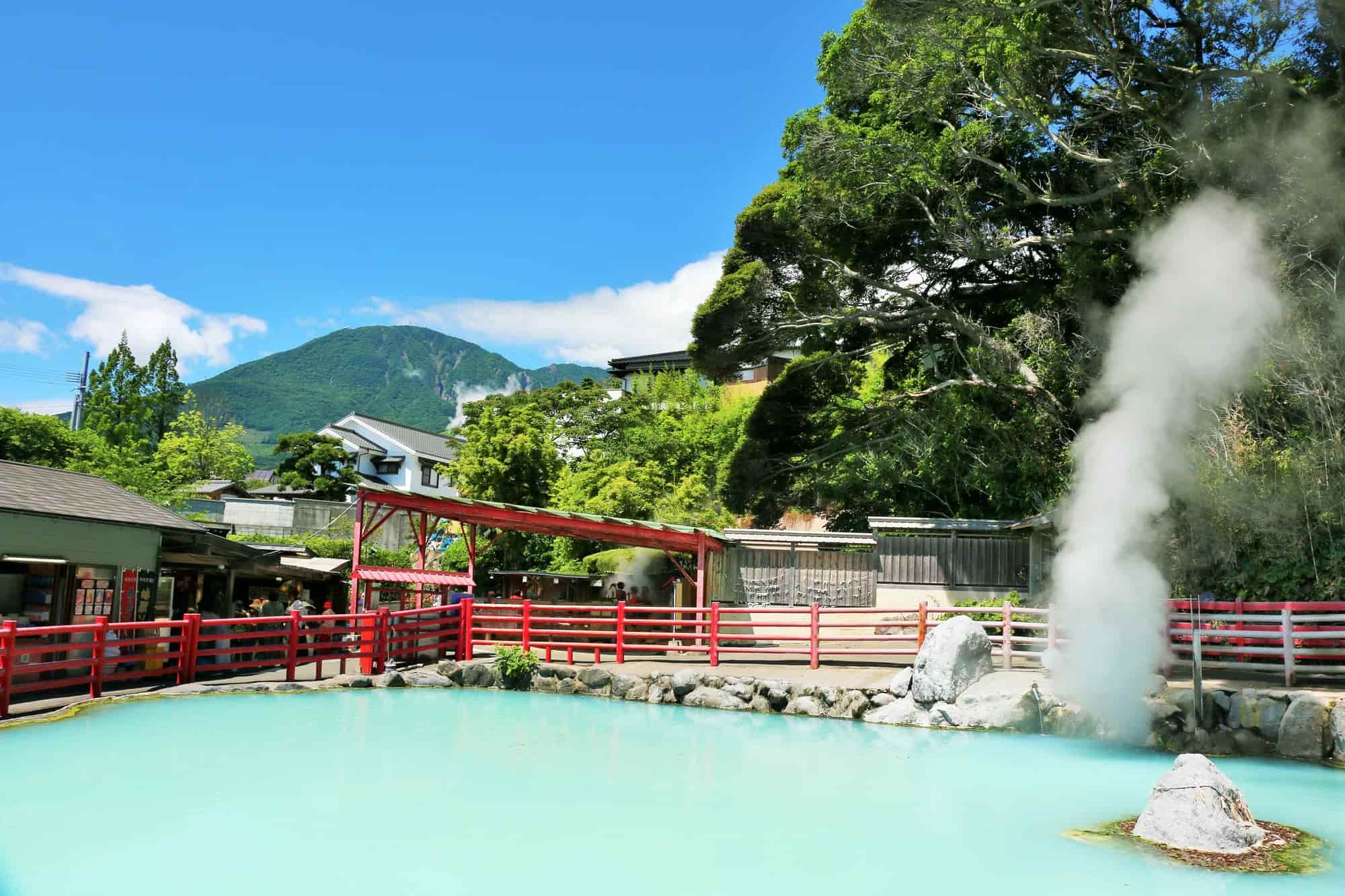
True to its name, the "white pond hell" features a pond of hot, milky water. The pond is surrounded by a nice garden and a small, run-down aquarium that has seen better days.
5
The "cooking pot hell" features several boiling ponds and a flashy demon statue as cook. On the grounds, visitors can drink the hot spring water, enjoy hand and foot baths, inhale the hot spring steam and try various snacks cooked or steamed by the hot spring.
6
A large number of crocodiles are bred and kept on the grounds of the "monster mountain hell".
7
The "blood pond hell" features a pond of hot, red water and a large souvenir shop. It is one of the more photogenic hells.
8
The "spout hell" features a boiling hot geyser, which erupts every 30-40 minutes for about 6-10 minutes. A stone plate above the geyser hinders it to reach its full height. A short walking trail leads up the forested slope in the back of the hell grounds.
9
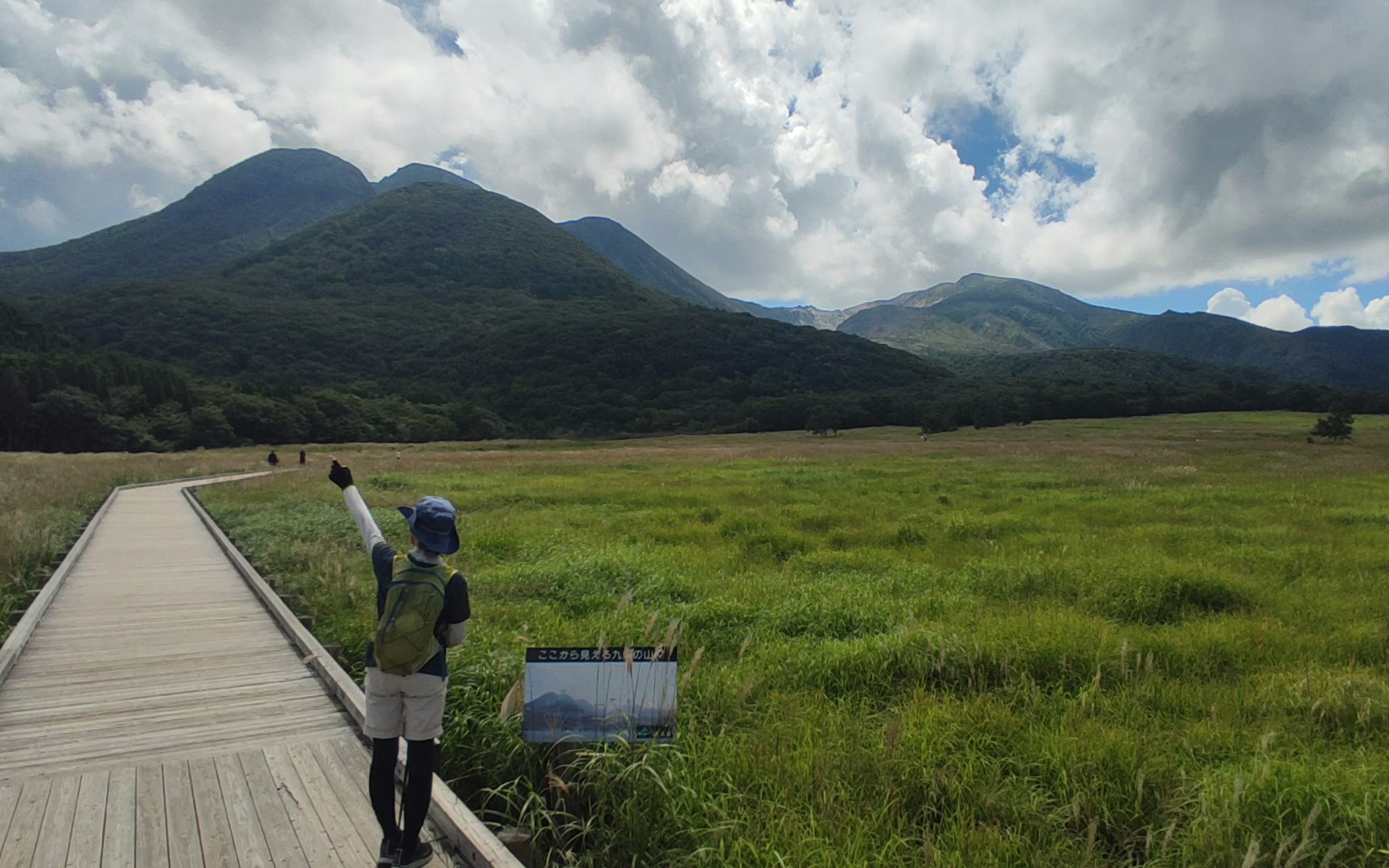
Mount Tsurumi (鶴見岳, Tsurumidake) is a 1375 meter high mountain that overlooks Beppu. The mountain is accessible via the Beppu Ropeway which takes visitors nearly 800 meters up the steep slopes to a small park near the summit. The park offers multiple observation decks with panoramic views of Beppu and Oita City, Mount Yufu and as far as the Kuju Mountains when visibility is good.
The small park is covered by a network of walking paths that lead to the various nearby viewpoints. The actual summit of Mount Tsurumi can be reached in a 15 minute walk from the upper ropeway station. More demanding hiking trails connect Mount Tsurumi to the surrounding mountain peaks. It is also possible to bypass the ropeway and climb up the entire mountain in about two hours via a hiking trail that starts at the lower ropeway station.
10
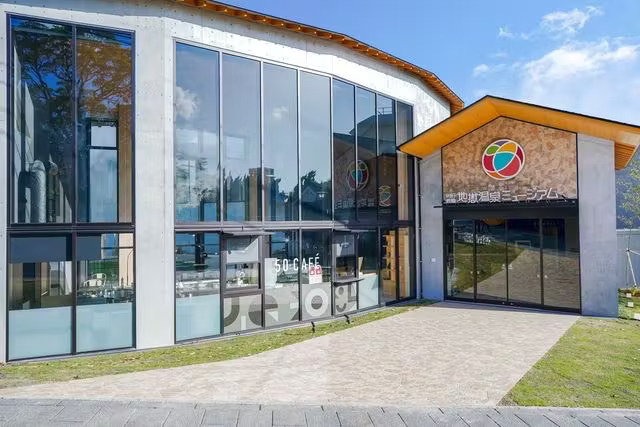
The Oita Prefectural Art Museum (OPAM, 大分県立美術館, Ōita Kenritsu Bijutsukan) is an art museum located about 30 minutes away from central Beppu in downtown Oita City. Not to be mistaken with the nearby Oita City Museum, the Oita Prefectural Art Museum was opened in April 2015 in an eye-catching building designed by Japanese architect Ban Shigeru, who is known for his innovative designs that often incorporate structural elements made of cardboard and paper.
The exterior of the building is encased in a wooden facade which resembles woven bamboo handicrafts, and features large glass walls that fold up, blending the indoor and outdoor spaces of the museum. Upon entering the building, visitors are greeted by a large atrium featuring a museum shop and space for large art installations besides the ticket counter.
11
Beppu is known for its quirky attractions and one of these is the sand baths that you can try all over town.
One of the best places to have a sand bath however is at Shoningahama Beach which is a place on the coast where the sand is heated by the spring waters which bubble beneath the surface.
People flock here to be buried up to their necks in the sand, and this is said to have thermal properties which make the body more relaxed and soothe aches and pains.
12
Takegawara Koji Arcade is an atmospheric retro alley and shopping street in Beppu, Oita Prefecture, Japan, known for being the oldest timber arcade in the country. It leads to Takegawara Onsen, a well-known hot spring, and is lined with retro-style shops, including coffee houses, massage parlors, and bars. The arcade is said to have been built to allow tourists to reach the onsen without getting wet from the rain.
13
Beppu Park is located in the center of the city and is known for being reminiscent in style of parks in Tokyo and Kyoto.
This is a nice strip of greenery in the city, and if you happen to be here in the spring time then you can walk around and check out the fluffy pink cherry blossom trees in full bloom.
The park is also a riot of color in the fall season when you can check out the burnt copper autumn leaves.
What's not included
Transportation fees, Entrance fees, Lunch, and Other personal expenses
Private Vehicle
You cannot combine multiple tour groups.
Available languages
Guide guide
JA
EN
Important information
Specialized infant seats are available
Service animals allowed
Public transportation options are available nearby
Infants and small children can ride in a pram or stroller
All areas and surfaces are wheelchair accessible
Transportation options are wheelchair accessible
Wheelchair accessible
Suitable for all physical fitness levels
Tour dates can be changed up to 2 days before the tour. Any tour date change may result in a change of tour guide or tour unavailability.
About Gifu Prefecture
Gifu Prefecture, located in the Chubu region of Japan, is renowned for its stunning natural landscapes, rich history, and traditional crafts. From the iconic Mount Kinka to the serene Gifu Castle, this destination offers a unique blend of cultural heritage and outdoor adventures, making it a must-visit for travelers seeking an authentic Japanese experience.
Top Attractions
Gifu Castle
Gifu Castle, also known as Inabayama Castle, is a reconstructed castle with a rich history dating back to the 13th century. It offers panoramic views of the city and the surrounding mountains.
Historical
1-2 hours
¥350
Mount Kinka
Mount Kinka is a scenic mountain located in the heart of Gifu City. It is home to Gifu Castle and offers hiking trails with beautiful views of the city and the surrounding landscape.
Nature
2-3 hours
Free (except for castle entry fee)
Shirakawa-go
Shirakawa-go is a UNESCO World Heritage Site known for its traditional gassho-zukuri farmhouses. This picturesque village offers a glimpse into rural Japanese life and is especially beautiful during the winter when the thatched roofs are covered in snow.
Cultural
Half day to full day
Free to explore, ¥800 for the Shirakawa-go Gassho Style Houses Museum
Takayama
Takayama is a charming town known for its well-preserved Edo-period streets, traditional architecture, and rich cultural heritage. It is also famous for its annual Takayama Festival, one of Japan's most important festivals.
Historical
Full day to overnight
Free to explore, ¥600 for the Hida Folk Village
Gujo Hachiman Castle
Gujo Hachiman Castle is a beautifully preserved castle with a rich history dating back to the 16th century. It is known for its unique architecture and stunning views of the surrounding countryside.
Historical
2-3 hours
¥500
Must-Try Local Dishes
Hida Beef
Hida beef is a high-quality, tender beef from the Hida region, known for its marbling and rich flavor. It is often served as sushi, steak, or hot pot.
Main Dish
Contains meat
Gifu Crab
Gifu crab, particularly snow crab and horsehair crab, is a delicacy in the region. It is often served steamed, grilled, or in hot pot dishes.
Main Dish
Contains shellfish
Takayama Ramen
Takayama ramen is a local specialty featuring a rich, miso-based broth with noodles, topped with ingredients like Hida beef, green onions, and bamboo shoots.
Main Dish
Contains meat and soy
Gohei Mochi
Gohei mochi is a traditional Gifu sweet made from glutinous rice dough grilled over an open flame and topped with sweet soy glaze and bonito flakes.
Snack
Vegetarian (without bonito flakes)
Popular Activities
Hiking in the Japanese Alps
White-water rafting on the Nagara River
Mountain biking in the countryside
Onsen (hot spring) visits
Picnicking by the Nagara River
Tea ceremonies in traditional settings
Visiting historic castles and temples
Participating in traditional festivals
Best Time to Visit
April to May (Spring), October to November (Autumn)
Spring offers cherry blossoms and mild weather, while autumn provides vibrant foliage and comfortable temperatures. These seasons are ideal for outdoor activities and sightseeing.
10°C to 25°C
50°F to 77°F
Practical Information
Language
- Official: Japanese
- Widely spoken: English (limited)
- English: Limited
Currency
Japanese Yen (JPY)
Time Zone
JST (UTC+9)
Electricity
100VV, 50/60HzHz
Safety Information
Overall Safety Rating: Very safe
Gifu Prefecture is generally very safe, with low crime rates and a friendly local population. However, as with any destination, it is important to take basic precautions to ensure a safe and enjoyable trip.
Important Precautions:
- • Keep valuables secure and out of sight
- • Be cautious when using ATMs, especially at night
- • Avoid unlicensed taxis or tour guides
Getting there
By air
- Chubu Centrair International Airport • 60 km from Gifu City
- Gifu Airport • 10 km from Gifu City
By train
Gifu Station, Nagoya Station
By bus
Gifu Bus Center, Meitetsu Bus Center
Getting around
Public transport
Buses are the primary mode of public transport in Gifu, connecting major attractions and neighborhoods. The system is efficient and affordable.
Taxis
Available • Apps: JapanTaxi, DiDi
Rentals
Car, Bike, Scooter
Neighborhoods
Gifu City
Takayama
Shirakawa-go
Gujo Hachiman
Day trips
Shirakawa-go
60 km from Gifu City • Full day
Shirakawa-go is a UNESCO World Heritage Site known for its traditional gassho-zukuri farmhouses. This picturesque village offers a glimpse into rural Japanese life and is especially beautiful during the winter when the thatched roofs are covered in snow.
Takayama
100 km from Gifu City • Full day to overnight
Takayama is a charming town known for its well-preserved Edo-period streets, traditional architecture, and rich cultural heritage. It is also famous for its annual Takayama Festival, one of Japan's most important festivals.
Gujo Hachiman
50 km from Gifu City • Half day to full day
Gujo Hachiman is a charming town known for its well-preserved castle, historic streets, and the famous Gujo Odori Dance Festival. It offers a mix of traditional and modern attractions, making it a great day trip destination.
Festivals
Takayama Festival • April 14-15 (Spring Festival) and October 9-10 (Autumn Festival)
Gujo Odori Dance Festival • July 31 - August 1 (Main festival) and throughout the summer (Evening dances)
Shirakawa-go Winter Light-Up • January 15 - February 15 (Dates may vary)
Pro tips
- Visit Gifu Castle early in the morning or late in the afternoon to avoid crowds and enjoy the best views.
- Try Hida beef, a local delicacy, at one of the many specialty restaurants in Takayama or Gifu City.
- Explore the historic streets of Takayama on foot, and don't miss the morning markets for fresh local produce and street food.
- Experience the magical winter light-up event in Shirakawa-go, where the traditional gassho-zukuri farmhouses are illuminated at night.
- Participate in a traditional tea ceremony or onsen (hot spring) experience for a unique and relaxing cultural activity.
From $25
per person
Price varies by option
Secure booking
Free cancellation available