Hue Private Guided Tour
Active
4h
All sales are final. No refund is available for cancellations.
Instant confirmation
Mobile or paper ticket accepted
About this experience
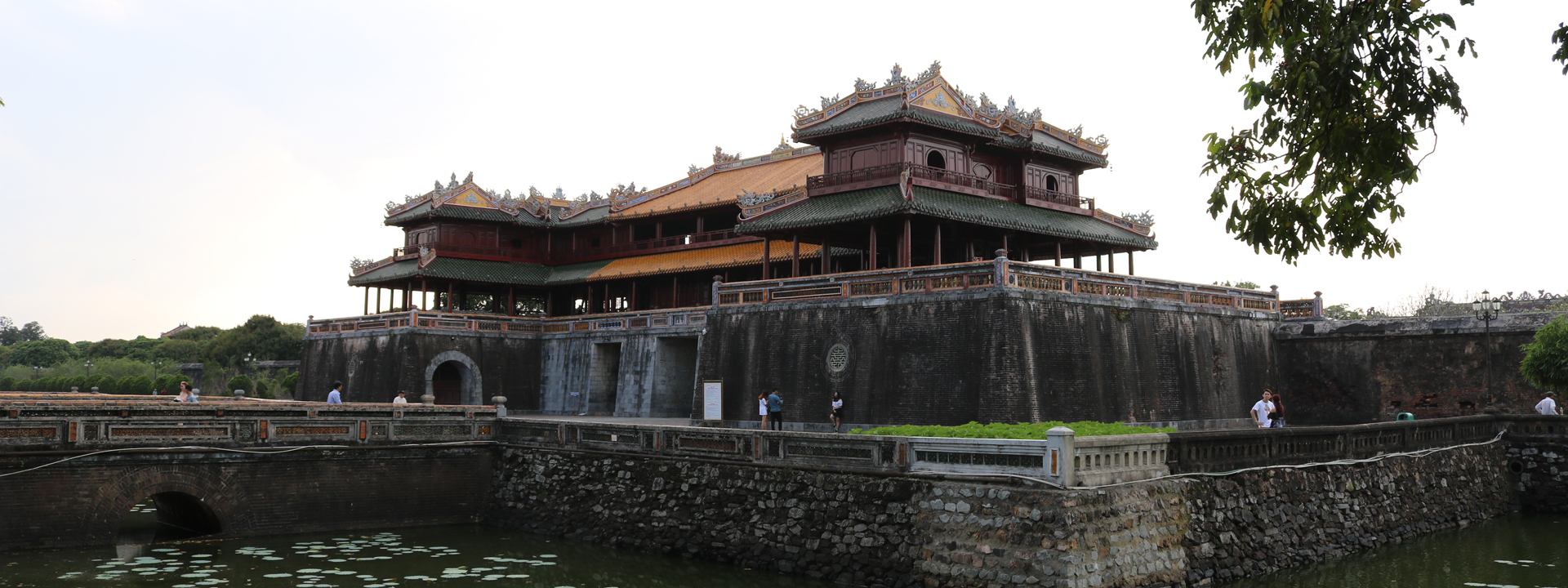
Relive the golden age of the Nguyen dynasty, the last monarchy of Vietnam, by exploring the Forbidden City of Hue, the former capital of Vietnam kingdom, by learning about Vietnam’s ancient military engineering with Nine Holy Cannons, following the footsteps of historical figures through the Meridian Gate, marveling at the gilded throne where Nguyen king ruled their kingdom at Thai Hoa Palace, soaking up the tranquility of the royal library Thai Binh Pavilion, appreciating vibrant traditional performances and theatrical architecture at Duyet Thi Duong Royal Theater, visiting the residence of the last king and queen of Vietnam, and admiring the priceless collection of artifacts and antiques at the serene Hue Museum of Royal Antiquities.
Available options
Hue Private Guided Tour
Pickup included
What's included
Hue Imperial City Entrance Fee
Tour Guide
Private Transportation
Detailed itinerary
1
At the start of the tour, the towering Stage of Flag, the patrol deck guarding the southern side of the citadel, warmly welcomes you to come inside and admire the magnificence of the imperial city.
2
Then, pass through the spacious Ngo Mon Square and the century-old Mai Vang Garden, between which lies the display of the Nine Holy Cannons. The masterpieces of ancient military engineering offer a glimpse into the incredible craftsmanship and defensive power of the Nguyen dynasty.
3
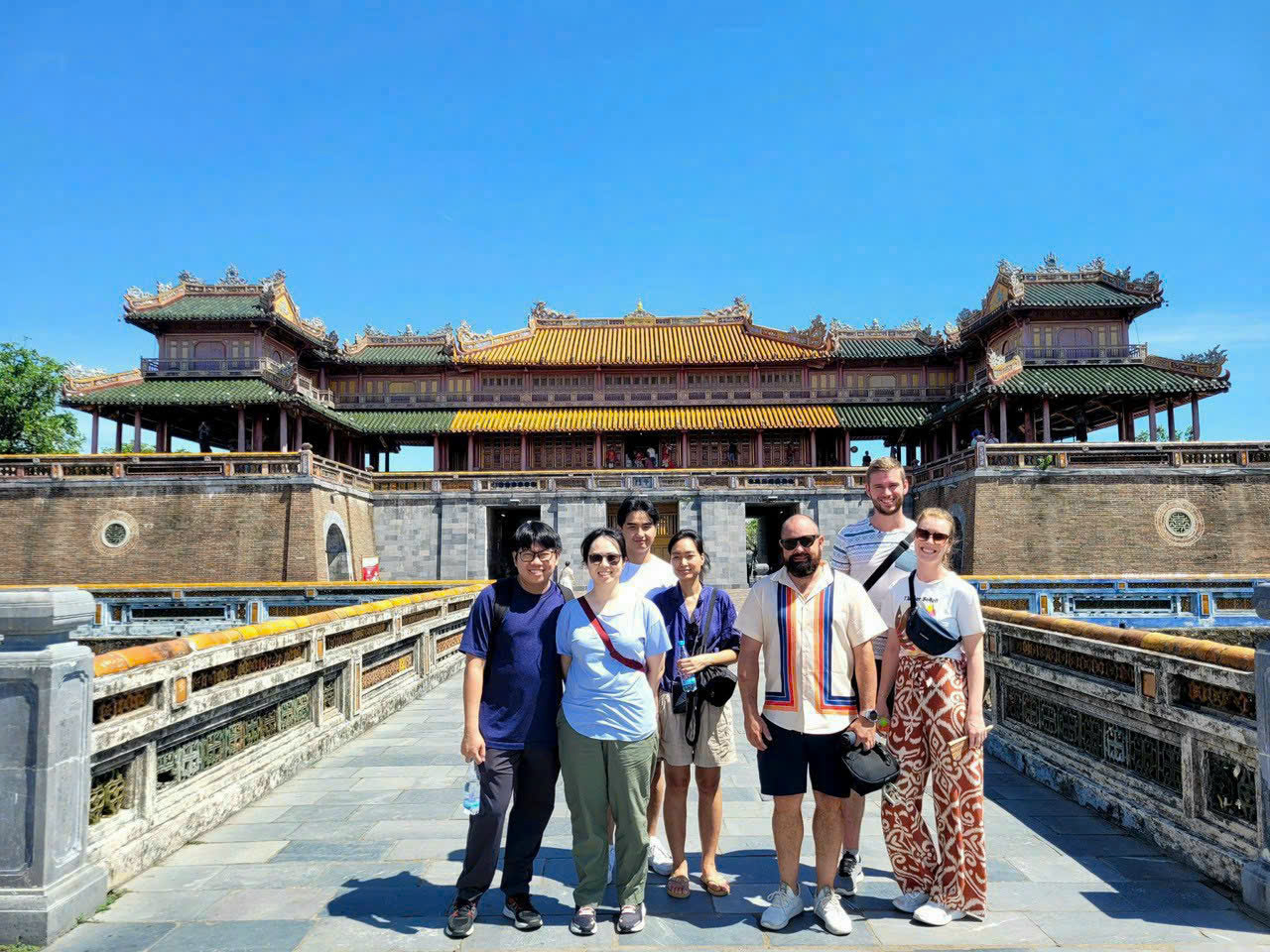
Continue to cross the external moat adorned with beautiful fragrant lotuses, the symbolic flower of Vietnam, and marvel at the majestic Meridian Gate. The grand main entrance of the Forbidden City was the silent witness of the vicissitudes of Vietnam’s history, including the historic abdication of the last king Bao Dai.
4
Stop 4
Setting foot inside the citadel, your eyes will be captivated by the splendor of Thai Hoa Palace. Hosting discussion between kings and important mandarins, the architectural treasure showcases all the beauty of Vietnamese traditional style: ingenious carpentry, goldsmithing, and sculpture with the highlight of all being the ornate gilded throne.
5
Next, delve into Vietnam’s traditional religious and spiritual life at Dien Tho Palace. Built as the residence for kings’ mothers, the gorgeous complex consisting of elegant buildings, scenic pavilions, landscaped gardens, and a Buddhist chapel reflects the deep-seated tradition of valuing filial duties of Vietnamese.
6
Proceed to visit the second-most important building in the Forbidden City, Can Chanh Palace. Devastated during the French war, the office of Nguyen kings where important emissary receptions and banquets were held is an outstanding example of historical restoration.
7
To the left of the palace nestles the only intact monument during wartime, the Thai Binh Pavilion. Flanked by the picturesque Thieu Phuong Garden, the royal library sets itself apart from the surrounding ornate structures with its tranquility and a refreshing touch of nature.
8
Right opposite the slender library building is the Royal Theater. Contrary to its simplistic appearance, the theater hides inside an enchanting world of traditional performances and theatrical architecture.
9
Go on to visit the striking Kien Trung Palace on the north side of the complex. The residence of the last king and queen of Vietnam stands out with a bright yellow shade and intricate mosaics depicting ancient mythology. The seamless blend between traditional and French styles displayed throughout its interior is a moving testimony to the harmonious combination between Western and Eastern culture.
10
Stop 10
Finally, take a closer look at the rich heritage of Nguyen monarchies by admiring the priceless collection of artifacts and antiques at the serene Hue Museum of Royal Antiquities outside the eastern borders of the castle. The stunning historic building surrounded by a lovely landscaped garden also provides great opportunities to unwind after a long walk.
What's not included
Refreshments
Available languages
Guide guide
VI
EN
Important information
Wheelchair accessible
Infants and small children can ride in a pram or stroller
Public transportation options are available nearby
Transportation options are wheelchair accessible
Not recommended for travelers with poor cardiovascular health
Travelers should have at least a moderate level of physical fitness
Meeting point
At the staircase of Phu Van Lau Pavilion, your tour guide shall be waiting with a Signboard.
About Hue
Hue, the former imperial capital of Vietnam, is renowned for its historic monuments, royal tombs, and beautiful architecture. This UNESCO World Heritage site offers a unique glimpse into Vietnam's imperial past with its well-preserved citadel, palaces, and temples.
Top Attractions
Imperial City
The Imperial City is a walled fortress and palace in the former capital of Vietnam. It was the seat of Nguyen Dynasty emperors and is a UNESCO World Heritage site.
Historical
2-3 hours
Moderate (around 150,000 VND for entrance)
Thien Mu Pagoda
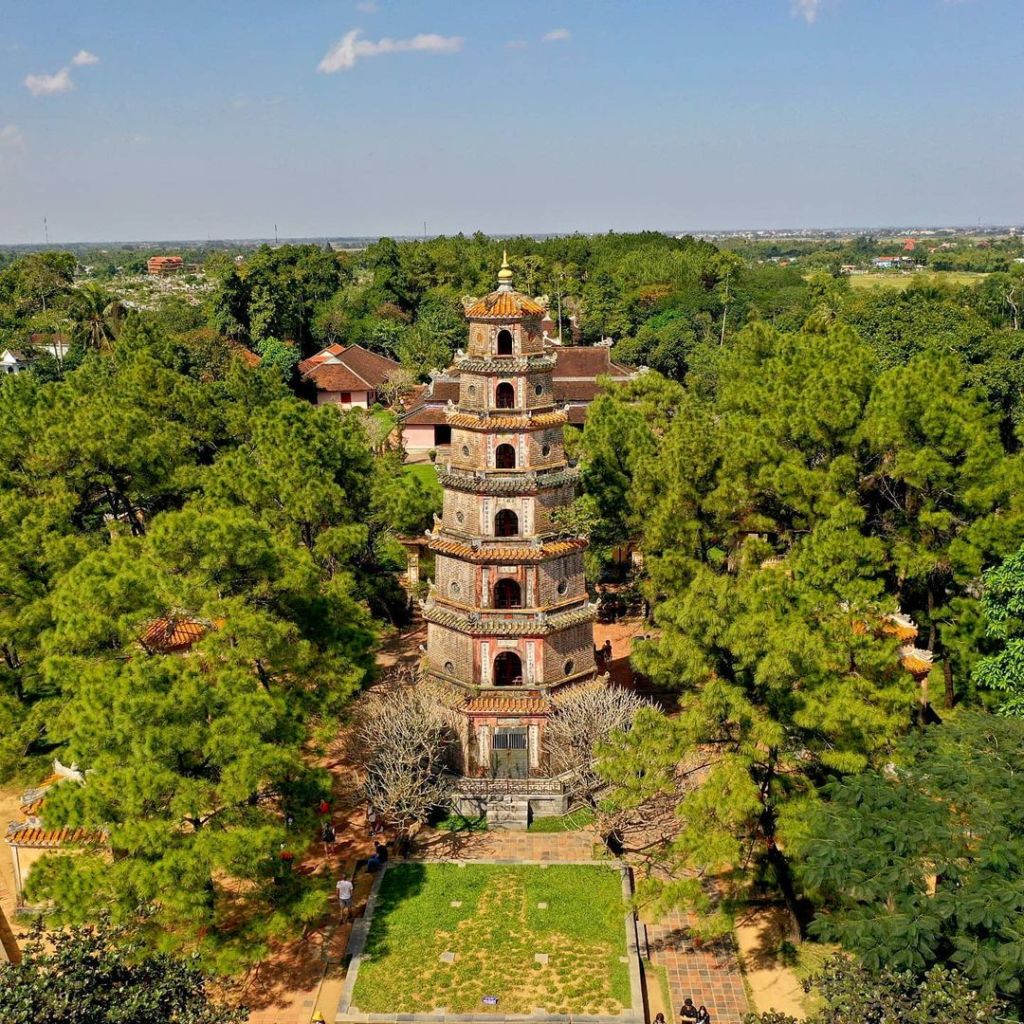
Thien Mu Pagoda is an iconic Buddhist pagoda overlooking the Perfume River. It is one of the most beautiful and historic pagodas in Vietnam.
Religious
1-2 hours
Free (donations welcome)
Tomb of Khai Dinh
The Tomb of Khai Dinh is the final resting place of Emperor Khai Dinh, the twelfth emperor of the Nguyen Dynasty. It is known for its unique blend of Vietnamese and European architecture.
Historical
1-2 hours
Moderate (around 100,000 VND for entrance)
Dong Ba Market
Dong Ba Market is the largest and oldest market in Hue, offering a wide variety of local products, including food, textiles, and souvenirs.
Market
1-2 hours
Free to enter, prices vary for items
Perfume River
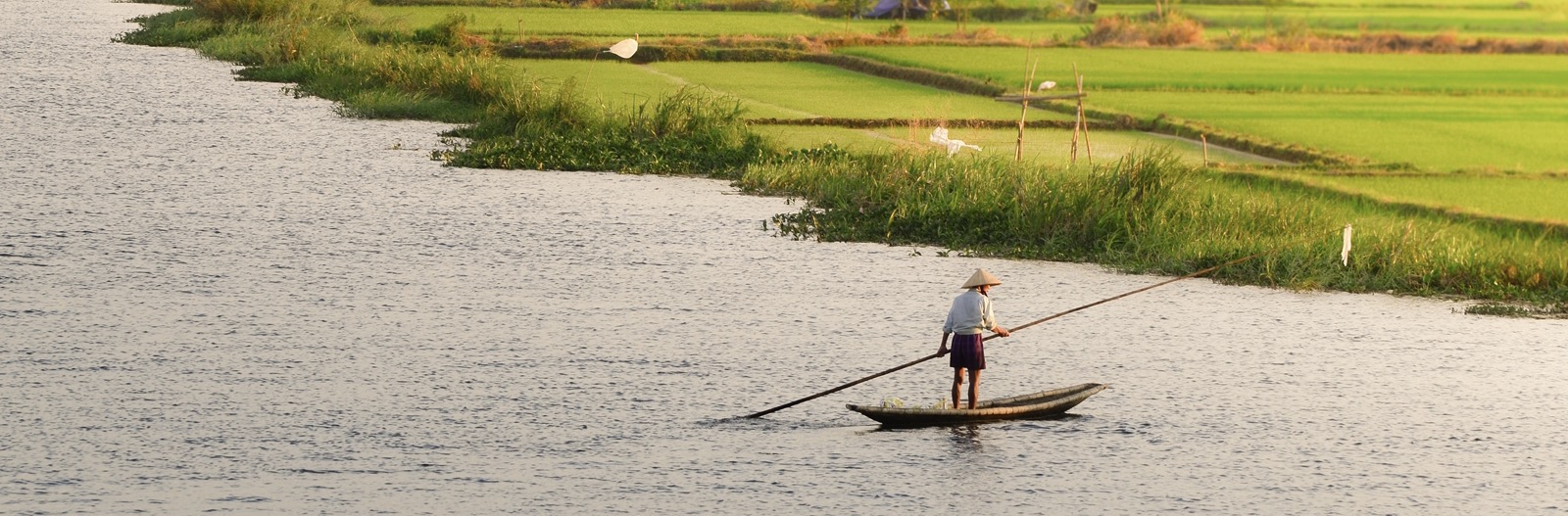
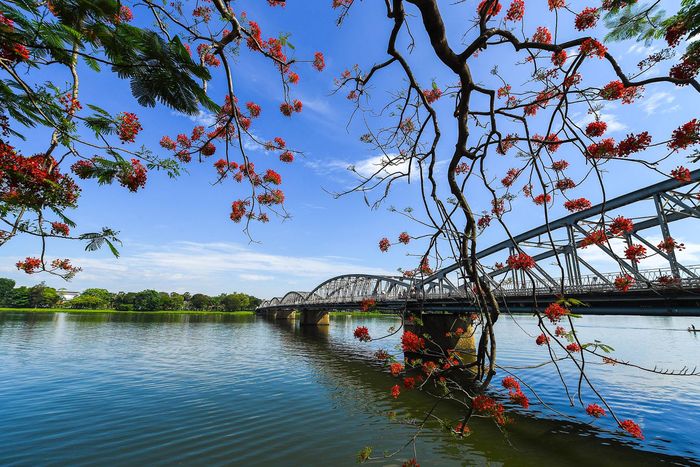
The Perfume River is a scenic river that flows through Hue, known for its beautiful views and cultural significance. It is a popular spot for boat tours and leisurely walks along the riverbank.
Nature
Varies by activity
Low to moderate (boat tours around 100,000 VND)
Must-Try Local Dishes
Bun Bo Hue
A spicy beef noodle soup with a rich, flavorful broth made from pork, beef, and lemongrass. It is typically served with rice vermicelli, slices of beef, and pork, and various herbs and vegetables.
Lunch/Dinner
Contains beef and pork, not suitable for vegetarians or vegans.
Banh Khoai
A crispy, savory pancake made from rice flour, turmeric, and water. It is filled with shrimp, pork, and bean sprouts, and served with a tangy dipping sauce.
Snack/Dinner
Contains shrimp and pork, not suitable for vegetarians or vegans.
Nem Lui
Grilled minced pork skewers wrapped in fresh herbs and served with a peanut hoisin sauce. The pork is marinated in a mixture of fish sauce, garlic, and lemongrass before being grilled.
Snack/Appetizer
Contains pork, not suitable for vegetarians or vegans.
Banh Beo
Steamed rice cakes topped with shrimp, scallions, and crispy pork rinds. They are served in small dishes and eaten with a small spoon, accompanied by a fish sauce-based dipping sauce.
Snack/Appetizer
Contains shrimp and pork, not suitable for vegetarians or vegans.
Popular Activities
Hiking in Bach Ma National Park
Boat tours on the Perfume River
Water activities at Lang Co Beach
Sunbathing and swimming at Lang Co Beach
Visiting spas and wellness centers in Hue
Exploring the Imperial City and its historical sites
Visiting local markets and shopping streets
Attending traditional performances and festivals
Best Time to Visit
February to August
The best time to visit Hue is during the dry season when the weather is warm and sunny, making it ideal for outdoor activities and sightseeing.
20°C to 33°C
68°F to 91°F
Practical Information
Language
- Official: Vietnamese
- Widely spoken: English (limited)
- English: Limited
Currency
Vietnamese Dong (VND)
Time Zone
GMT+7
Electricity
220VV, 50HzHz
Safety Information
Overall Safety Rating: Generally safe
Hue is generally a safe destination for travelers, with low crime rates and a welcoming atmosphere. However, it is important to take standard precautions to protect yourself and your belongings, such as being aware of your surroundings, avoiding isolated areas, and keeping valuables secure.
Important Precautions:
- • Be aware of your surroundings and keep valuables secure
- • Use reputable taxi companies or app-based services, such as Grab or Mai Linh
- • Bargain for better prices and be cautious when using ATMs or making purchases with credit cards
Getting there
By air
- Phu Bai International Airport • 15 km from city center
By train
Hue Railway Station
By bus
Hue Bus Station
Getting around
Public transport
Buses are affordable and convenient for getting around Hue. The system includes routes to major tourist sites like the Imperial City and Thien Mu Pagoda.
Taxis
Available • Apps: Grab, Mai Linh
Rentals
Car, Bike, Scooter
Neighborhoods
City Center
Hue University Area
An Cuu Island
Day trips
Tam Giang Lagoon
15 km from Hue • Half day to full day
Tam Giang Lagoon is a scenic and tranquil destination located just a short drive from Hue. It is the largest lagoon in Southeast Asia, offering beautiful views, peaceful boat rides, and a variety of water activities.
Vinh Moc Tunnels
25 km from Hue • Half day
The Vinh Moc Tunnels are a network of underground tunnels located near the Demilitarized Zone (DMZ) in central Vietnam. They were used by local residents during the Vietnam War to escape the bombing and shelling by American forces.
Bach Ma National Park
40 km from Hue • Full day
Bach Ma National Park is a stunning and biodiverse destination located just a short drive from Hue. It is home to a variety of wildlife, including rare and endangered species, as well as beautiful waterfalls, lakes, and hiking trails.
Festivals
Hue Festival • Biennial, typically held in April or May
Hue Traditional Boat Racing Festival • Annually, typically held in May or June
Hue Poetry Festival • Annually, typically held in August
Pro tips
- Visit the Imperial City early in the morning to avoid crowds and the heat
- Try the local street food, such as bun bo Hue and banh khoai, for an authentic and delicious culinary experience
- Take a boat tour on the Perfume River for a unique and scenic perspective of the city
- Hire a local guide or join a tour to learn more about the history and culture of Hue and the Nguyen Dynasty
- Explore the local markets, such as Dong Ba Market, for a glimpse into the daily life and culture of the city
From $25
per person
Price varies by option
Secure booking
Free cancellation available
Instant confirmation


![[SALE] Hue City Day Tour from Da Nang with Vietnamese-Speaking Tour Guide](https://res.klook.com/image/upload/activities/xmqkrttfsqnj2zikmiil.jpg)