Osnabrück Private Walking Half-Day Guided Tour
Active
1h
For a full refund, cancel at least 24 hours before the scheduled departure time.
Instant confirmation
Mobile or paper ticket accepted
About this experience
Welcome to Osnabrück, the "City of Peace". Around 780, Charlemagne, king of the Franks, erected a stone church on the banks of the Hase River, the nucleus of today's Osnabrück. It was the place where the "Peace of Westphalia'', a series of peace treaties were signed, effectively ending the Thirty Years War. Peace was proclaimed in October 1648 from the town hall and would have a significant impact on European history. The city is located in the middle of a UNESCO Geo Park, a 1.220 square kilometers in total area that is a nature reserve, offering a golden opportunity to go cycling or hiking in the country. See the pedestrian zone flanked by gorgeous 15th century half-timbered and sandstone houses, topped off with a war memorial to the soldiers who fought at Waterloo. The city palace was also the birthplace of King George I. of England. Osnabrück is also known amongst literature and art lovers through the works of some of its own sons, Erich Maria Remarque and Felix Nussbaum.
Available options
Osnabrück Private Walking Half-Day Guided Tour
What's included
Possible customizing on tour with your local guide on the spot
Private guided Tour
Local professional guide who will be with your group only
Detailed itinerary
1
It is the seat of the Roman Catholic Diocese of Osnabrück. The origins of the first church and
diocese can be traced all the way back to the great Charlemagne who founded the first church at this spot in the year 785. Wars and fires have taken their toll on the old church and so it saw a lot of changes over the centuries. The current church built in the late Romanesque style dates back to the 12th century and has a Baroque interior as a result of the changes in styles of time.
2
This place is a must for every visitor. Overlooking the square is the beautiful Lutheran St Mary's Church built in the gothic style, dating back to the 14th century.
3
Finished in 1512, the Town Hall designed in the late gothic style was the location for the negotiations that would end the The Thirty Years War (1618 - 1648) that had a lasting impact on central Europe. The main hall contains 42 portraits of the envoys representing the nations at the peace congress, as well as the rulers of the time. There is a replica of the treaty as well as many prominent relics of the imperial times located here.
4
Passing through the pedestrian zone flanked by gorgeous 15th century half-timbered and sandstone houses, we approach the portal, a war memorial dedicated to the soldier that fought at the battle of Waterloo.
5
Have a view towards the Felix-Nussbaum- House with its unusual modern architecture, and next to it is the Museum of Culture.
6
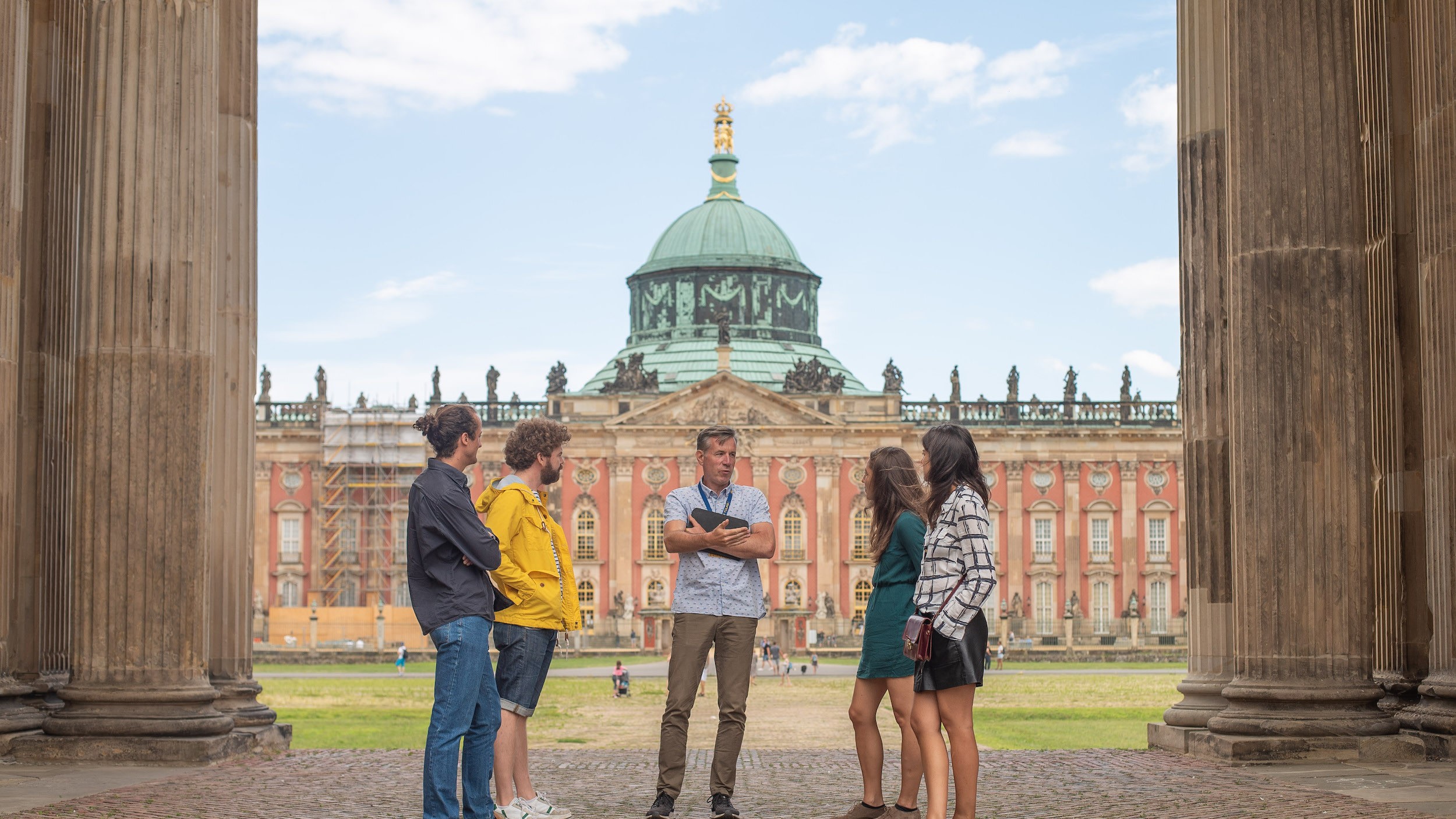
The garden of the palace is where you will also find the City Palace. This grand building used to be the residence of the protestant bishop and is now used as an administration building for the city's university. Built in the Baroque style, it serves as the residence for many bishops and princes. This palace was the birthplace of King George I. of England, a german prince on the english throne who would continue to carry on the tradition of german monarchs ruling the British Empire right up to Queen Victoria.
What's not included
Gratuities
Available languages
Guide guide
DE
EN
Reviews breakdown
Tripadvisor
4.0
1 reviews
5★
0
4★
1
3★
0
2★
0
1★
0
Important information
Wheelchair accessible
Infants and small children can ride in a pram or stroller
Service animals allowed
Public transportation options are available nearby
Suitable for all physical fitness levels
Meeting point
At the plaza In front of the central station, Hauptbahnhof, 49074 Osnabrück
About Lower Saxony
Lower Saxony, known as the Green Heart of Germany, is a state in northwestern Germany known for its diverse landscapes, rich history, and vibrant culture. From the picturesque Harz Mountains to the coastal regions of the North Sea, Lower Saxony offers a unique blend of natural beauty and historical landmarks.
Top Attractions
Harz Mountains
The Harz Mountains offer stunning landscapes, dense forests, and picturesque villages. It's a popular destination for hiking, skiing, and nature lovers.
Nature
Full day to overnight
Moderate
Lüneburg Heath
A vast area of heathland, forests, and meadows, known for its beautiful landscapes and unique flora and fauna. It's a great place for hiking and cycling.
Nature
Full day
Free to Budget
North Sea Coast
The North Sea coast offers beautiful sandy beaches, dunes, and coastal towns. It's a popular destination for swimming, sunbathing, and water sports.
Beach
Full day to overnight
Budget to Moderate
Hannover Zoo
One of the largest and most modern zoos in Europe, Hannover Zoo is home to a wide variety of animals and offers numerous exhibits and attractions.
Zoo
Half day to full day
Moderate
Bremen Town Hall and Roland Statue
A UNESCO World Heritage Site, Bremen Town Hall and the Roland Statue are iconic symbols of the city's rich history and political independence.
Historical
1-2 hours
Free to visit the exterior, guided tours available for a fee
Must-Try Local Dishes
Callenberg Pudding
A traditional dessert made with potatoes, sugar, and cinnamon, often served with whipped cream or ice cream.
Dessert
Vegetarian
Grünkohl (Kale) with Pinkel (Sausage)
A traditional winter dish made with kale, potatoes, and Pinkel sausage, often served with bacon and mushrooms.
Main Course
Contains meat, can be made vegetarian with plant-based sausage
Bremer Knipp
A traditional sausage made with corned beef, pork, and spices, often served with potatoes and vegetables.
Main Course
Contains meat
Braunkohl mit Pinkel
A traditional dish made with kale, potatoes, and Pinkel sausage, similar to Grünkohl but with a slightly different preparation.
Main Course
Contains meat, can be made vegetarian with plant-based sausage
Popular Activities
Hiking in the Harz Mountains
Skiing in the Harz Mountains
Water sports on the North Sea coast
Sunbathing on the North Sea beaches
Strolling through historic towns
Enjoying a beer in a traditional brewery
Visiting museums and galleries
Exploring historic sites
Best Time to Visit
June to August
Summer is the peak tourist season in Lower Saxony, offering warm weather and long daylight hours perfect for outdoor activities. The coastal areas are particularly popular during this time.
15°C to 25°C
59°F to 77°F
Practical Information
Language
- Official: German
- Widely spoken: English, Turkish, Russian, Polish
- English: Moderately spoken
Currency
Euro (EUR)
Time Zone
GMT+1 (Central European Time, CET), GMT+2 (Central European Summer Time, CEST during daylight saving time)
Electricity
230VV, 50HzHz
Safety Information
Overall Safety Rating: Generally safe
Lower Saxony is generally safe, with low crime rates and a welcoming atmosphere. As with any destination, it's important to be aware of your surroundings and take common-sense precautions to ensure a safe and enjoyable trip.
Important Precautions:
- • Be aware of your surroundings, especially in crowded tourist areas and on public transport.
- • Keep valuables secure and out of sight.
- • Use licensed taxis or ride-sharing services, and insist on using the meter.
Getting there
By air
- Hannover Airport • 12 km from Hannover city center
- Bremen Airport • 3.5 km from Bremen city center
By train
Hannover Hauptbahnhof, Bremen Hauptbahnhof
By bus
Hannover Central Bus Station, Bremen Central Bus Station
Getting around
Public transport
The rail network in Lower Saxony is comprehensive, connecting major cities and towns. Trains are comfortable, punctual, and efficient.
Taxis
Available • Apps: Taxi App, Uber
Rentals
Car, Bike, Scooter
Neighborhoods
Hannover City Center
Bremen Altstadt (Old Town)
Lüneburg Old Town
Cuxhaven Duhnen
Day trips
Harz Mountains
100 km from Hannover • Full day to overnight
The Harz Mountains offer stunning landscapes, dense forests, and picturesque villages. It's a popular destination for hiking, skiing, and nature lovers.
Lüneburg Heath
50 km from Hannover • Full day
A vast area of heathland, forests, and meadows, known for its beautiful landscapes and unique flora and fauna. It's a great place for hiking and cycling.
North Sea Coast (Cuxhaven)
150 km from Hannover • Full day to overnight
The North Sea coast offers beautiful sandy beaches, dunes, and coastal towns. It's a popular destination for swimming, sunbathing, and water sports.
Festivals
Bremer Freimarkt • October
Hannover Christmas Market • Late November to late December
Lüneburg Heath Festival • Late August to early September
Pro tips
- Visit the historic towns of Wernigerode and Goslar in the Harz Mountains for a charming and authentic experience.
- Take a ride on the Harz Narrow Gauge Railway for stunning views of the Harz Mountains and surrounding countryside.
- Explore the Lüneburg Heath during the late summer months to see the unique heathland blooms and enjoy the beautiful landscapes.
- Visit the Wadden Sea National Park for its unique ecosystem and birdwatching opportunities, and consider taking a guided tour or joining a conservation effort.
- Sample traditional Lower Saxon dishes, such as Grünkohl (kale) with Pinkel (sausage) or Callenberg Pudding, at local restaurants and markets.
From $25
per person
Price varies by option
Secure booking
Free cancellation available
Instant confirmation