Feuchtwangen Private Walking Tour with a Professional Guide
Active
1h
For a full refund, cancel at least 24 hours before the scheduled departure time.
Instant confirmation
Mobile or paper ticket accepted
About this experience
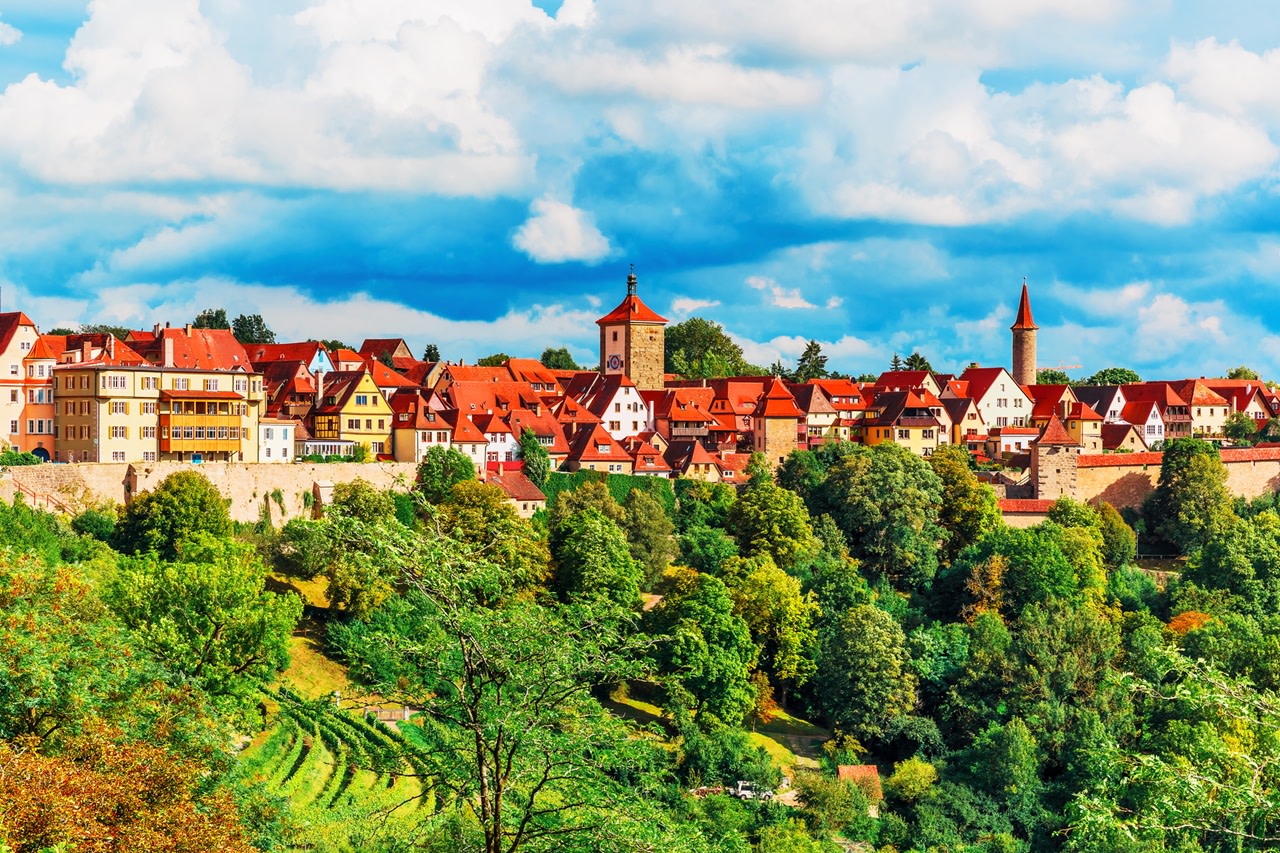
Feuchtwangen has almost a 1200 year-old history, and that has left its mark on the cityscape. During early as the 9th or 10th century, the town of Feuchtwangen has its origins in a Benedictine monastery, which was documented as being medium-wealthy. Explore the city that takes you to architectural testimonies of the imperial city past, the remnants of monastic work, and remnants of a bourgeois lifestyle in the Middle Ages. Admire its striking townhouses and the old Franconian half-timbered buildings, the Romanesque buildings in Gothic style, and many more.
Available options
Feuchtwangen Private Walking Tour with a Professional Guide
What's included
Possible customizing on tour with your local guide on the spot
Private guided Tour
Local Guide who will be with your group only
Detailed itinerary
1
The literal center of town, Markplatz (market square) is composed by a mix of bourgeois houses and old Frankish half-timbered houses which makes this place known as the "Festival hall of Franconia".
2
It is one of the symbols of the city. The former cloister church demonstrates still its romanic origins, sprinkled with gothic style particularly in the choir. The altar dedicated to St. Mary was built in the late 15th century by Michael Wohlgemut, a teacher of the famous German medieval painter Albrecht Dürers.
3
It was once the parish church of the city. The frescos in the ceiling of the choir stem from the 15th century, but the baroque altar was only finished at the end of the 17th century. Notice also the sandstone relief of Jörg von Ehenheims, a medieval knight, of the 15th century as well.
4
The Upper Gate is the only surviving Baroque gateway of the city, lovingly restaured by the city. It is also the sight for many events, hosting plays, concerts and other cultural venues.
5
Here you will learn about the legend of the hunt of Charlemagne and the foundation of the cloister church. According to it, the great emperor was hunting here a few years before his death, in 814. Here he saw a pidgeon take flight, and discovered here a fresh water source. After regaining his strenght, he continued his hunt and to thank God for His gift, he built here a church and a cloister, out of which the city grew.
6
Tour duration includes walking in between locations listed.
What's not included
Gratuities
Available languages
Guide guide
DE
EN
Important information
Wheelchair accessible
Infants and small children can ride in a pram or stroller
Service animals allowed
Public transportation options are available nearby
Suitable for all physical fitness levels
Meeting point
In the market square, Marktpl. 8, 91555 Feuchtwangen, Germany
About Bavaria
Bavaria, Germany's largest state, is renowned for its stunning Alpine landscapes, charming medieval towns, and rich cultural heritage. From the vibrant city of Munich to the picturesque castles of Neuschwanstein and Linderhof, Bavaria offers a blend of traditional and modern attractions that captivate visitors from around the world.
Top Attractions
Neuschwanstein Castle
A fairytale castle built by King Ludwig II, nestled in the Alps. It inspired Disney's Sleeping Beauty Castle.
Historical/Architecture
2-3 hours
€13 (guided tour)
Munich Residenz
The former royal palace of the Bavarian monarchs, showcasing opulent rooms and historical artifacts.
Historical/Architecture
1.5-2 hours
€10 (standard ticket)
Zugspitze
Germany's highest peak, offering stunning views and year-round outdoor activities.
Nature/Adventure
Half day to full day
€50 (cable car ticket)
Must-Try Local Dishes
Schweinshaxe
Crispy roasted pork knuckle served with sauerkraut and dumplings.
Main course
Contains pork, not vegetarian or vegan.
Weißwurst
Traditional white sausage made from veal and pork back bacon, typically served with sweet mustard and pretzels.
Breakfast
Contains pork and veal, not vegetarian or vegan.
Kaiserschmarrn
Shredded pancake served with powdered sugar and plum compote.
Dessert
Vegetarian, can be made vegan.
Popular Activities
Hiking in the Alps
Skiing and snowboarding
Mountain biking
Visiting spas and wellness centers
Strolling through parks and gardens
Enjoying beer gardens
Exploring museums and historic sites
Attending festivals and events
Best Time to Visit
June to August, December
Summer is ideal for outdoor activities, hiking, and festivals. December brings Christmas markets and winter sports in the Alps.
15°C to 25°C (summer), -5°C to 5°C (winter)
59°F to 77°F (summer), 23°F to 41°F (winter)
Practical Information
Language
- Official: German
- Widely spoken: English, French, Turkish
- English: Widely spoken in tourist areas, moderately spoken elsewhere
Currency
Euro (EUR)
Time Zone
GMT+1 (CET), GMT+2 (CEST) during daylight saving time
Electricity
230VV, 50HzHz
Safety Information
Overall Safety Rating: Generally safe
Bavaria is generally safe, with low crime rates. However, petty crimes like pickpocketing can occur in tourist areas.
Important Precautions:
- • Keep valuables secure
- • Use licensed taxis or ride-sharing apps
- • Be cautious of distractions and scams
Getting there
By air
- Munich Airport • 30 km from Munich city center
- Nuremberg Airport • 7 km from Nuremberg city center
By train
Munich Hauptbahnhof, Nuremberg Hauptbahnhof
By bus
Munich Central Bus Station, Nuremberg Central Bus Station
Getting around
Public transport
Efficient and frequent service connecting the city center to suburbs and airports.
Taxis
Available • Apps: Free Now, Taxi Deutschland
Rentals
Car, Bike, Scooter
Neighborhoods
Munich Old Town (Altstadt)
Nuremberg Old Town (Altstadt)
Bavarian Alps
Day trips
Salzburg, Austria
160 km from Munich • Full day
A charming Austrian city known for its Baroque architecture, Mozart's birthplace, and the stunning Hohensalzburg Fortress.
Linderhof Palace
95 km from Munich • Half day
A stunning palace built by King Ludwig II, surrounded by beautiful gardens and landscapes.
Rothenburg ob der Tauber
230 km from Munich • Full day
A medieval town with well-preserved walls, towers, and half-timbered houses, offering a glimpse into Germany's past.
Festivals
Oktoberfest • Late September to early October
Nuremberg Christmas Market • Late November to late December
Garmisch Classic • Early January
Pro tips
- Visit popular attractions like Neuschwanstein Castle early in the morning or late in the afternoon to avoid crowds.
- Explore local markets for authentic Bavarian food and crafts.
- Take advantage of Bavaria's extensive public transport system to save money and reduce your environmental impact.
- Learn a few basic German phrases to enhance your experience and connect with locals.
- Dress in layers, as weather can change quickly, especially in the Alps.
From $25
per person
Price varies by option
Secure booking
Free cancellation available
Instant confirmation