Padua Private Walking Tour With A Professional Guide
Active
2h
For a full refund, cancel at least 24 hours before the scheduled departure time.
Instant confirmation
Mobile or paper ticket accepted
About this experience
Being in the shadows of Venice has its ups and downs. The disadvantage is that Padua sometimes gets ignored. On the flip side, that means that its visitors can enjoy a nice and quiet visit without the hustle and bustle from its famous neighbor. Although only an hour away from Venice, Padua seems a world apart with its medieval marketplaces, fascist era buildings and Italy’s second oldest University. Not to forget that it is also the resting place of Saint Anthony, the patron saint of the illiterate, the poor, the finder of lost things, and of blessed weddings. Be sure not to get lost and walk in the footsteps of Galileo, Giotto, St. Anthony or Titian and discover why this city challenged both Venice and Verona for regional hegemony.
Available options
Padua Private Walking Tour With A Professional Guide
What's included
Possible customizing on tour with your local guide on the spot
Private guided Tour
Local Guide who will be with your group only
Detailed itinerary
1
You will see:
Piazza dei Signori
Torre dell'Orologio
Palazzo della Regione
Piazza della Frutta
Piazza dell'erbe
Via Santa Lucia
Palazzo Bo
City Hall of Padua
Pratto della Valle
Orto Botanico
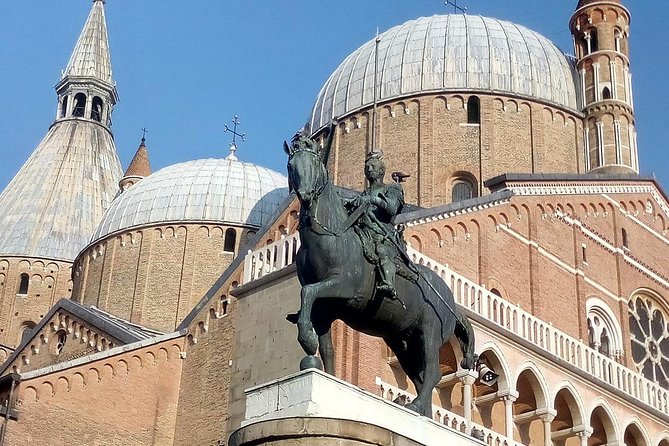
Basilica de San Antonio
Palazzo Zabarella
Catedral de Santa Maria Assunta
You will learn about:
Foundation legend by trojans
Roman period
Christianization
The sack of Attila the Hun
Arrival of the Goths and the Lombards
The Franks and Episcopal rule
Rise of the Commune
Building of St. Antony’s Basilica
Founding of the University of Padua
Venetian rule
Austrian Habsburg rule
The unification of Italy
World War I
The rise of fascism
World War II and the bombing of Padua
What's not included
Gratuities
Entrance fees
Available languages
Guide guide
EN
IT
Important information
Wheelchair accessible
Infants and small children can ride in a pram or stroller
Service animals allowed
Public transportation options are available nearby
Travelers should have at least a moderate level of physical fitness
Meeting point
At the Torre dell'Orologio tower
About Padua
Padua is a historic city in northern Italy known for its rich cultural heritage and stunning architecture. It is home to one of the world's oldest universities and a vibrant art scene, making it a must-visit for history buffs and art enthusiasts alike.
Top Attractions
Scrovegni Chapel
The Scrovegni Chapel is famous for its stunning frescoes by Giotto, which are considered some of the most important works of the early Renaissance.
Historical/Art
1 hour
€13 (includes audio guide)
Padua Cathedral (Duomo di Padova)
The Padua Cathedral is a beautiful example of Renaissance architecture and is dedicated to the Virgin Mary and Saint Anthony of Padua.
Religious/Architecture
30 minutes
Free (donations welcome)
Basilica of St. Anthony of Padua
This basilica is one of the most important religious sites in Italy and is dedicated to Saint Anthony, the patron saint of Padua.
Religious/Historical
1-2 hours
Free (donations welcome)
Prato della Valle
Prato della Valle is one of the largest squares in Europe and is surrounded by beautiful statues and a picturesque canal.
Historical/Landmark
30 minutes
Free
University of Padua Botanical Garden
This botanical garden is one of the oldest in the world and is a UNESCO World Heritage Site. It features a wide variety of plants and a beautiful historic greenhouse.
Nature/Historical
1-2 hours
€10
Must-Try Local Dishes
Risotto al Tastasal
A traditional Paduan risotto made with a spiced sausage called tastasal, which is a mix of pork, garlic, and spices.
Main Course
Contains pork
Bigoli con l'Anatra
A dish of duck ragout with bigoli, a type of thick spaghetti, served with a rich duck sauce.
Main Course
Contains duck
Frittelle di Riso
Sweet rice fritters, a traditional dessert from Padua, often filled with cream or jam.
Dessert
Vegetarian (check for dairy or egg content)
Popular Activities
Hiking in the nearby Euganean Hills
Biking along the city's bike paths
Visiting the University of Padua Botanical Garden
Enjoying a coffee at Caffè Pedrocchi
Exploring the Scrovegni Chapel
Visiting the Basilica of St. Anthony
Boating on the Brenta River
Visiting the historic cafes and museums
Best Time to Visit
April to June, September to October
The best time to visit Padua is during the spring and fall when the weather is mild, and the crowds are smaller. This period offers pleasant temperatures and fewer tourists.
15-25°C
59-77°F
Practical Information
Language
- Official: Italian
- Widely spoken: English, French, German
- English: Moderately spoken
Currency
Euro (EUR)
Time Zone
GMT+1 (CET), GMT+2 (CEST during daylight saving time)
Electricity
230VV, 50HzHz
Safety Information
Overall Safety Rating: Generally safe
Padua is a generally safe city with low crime rates. However, as with any destination, it is important to take basic precautions to ensure a safe and enjoyable trip.
Important Precautions:
- • Keep valuables secure and be aware of your surroundings in crowded areas
- • Use metered taxis or ride-sharing apps to avoid overcharging
- • Be cautious of distractions and common scams
Getting there
By air
- Marco Polo Airport • 35 km from Padua
- Treviso Airport • 60 km from Padua
By train
Padua Railway Station
By bus
Padua Bus Station
Getting around
Public transport
The bus system in Padua is extensive and covers most of the city. Buses are the primary mode of public transportation and are efficient and affordable.
Taxis
Available • Apps: FreeNow
Rentals
Car, Bike, Scooter
Neighborhoods
Centro Storico (Historic Center)
Prato della Valle
Arcella
Day trips
Venice
35 km • Full day
Venice is a unique and romantic city built on water, known for its canals, gondolas, and historic architecture.
Verona
100 km • Full day
Verona is a historic city known for its Roman amphitheater, medieval architecture, and as the setting of Shakespeare's Romeo and Juliet.
Vicenza
35 km • Half day
Vicenza is a city known for its Palladian architecture and historic landmarks, including the famous Teatro Olimpico.
Festivals
Festa del Santo • June 13
PadovaFiere • Various dates throughout the year
Pro tips
- Visit the Scrovegni Chapel early in the morning to avoid long queues and crowds
- Explore the historic center on foot to discover hidden gems and local charm
- Try local specialties like Risotto al Tastasal and Frittelle di Riso for an authentic culinary experience
- Use the bus system for efficient and affordable travel within the city
- Consider a day trip to nearby cities like Venice or Verona for a well-rounded Italian experience
From $25
per person
Price varies by option
Secure booking
Free cancellation available
Instant confirmation