Venice by Train from Rome: Enjoy a Private Day Tour Experience
Active
1d
For a full refund, cancel at least 24 hours before the scheduled departure time.
Instant confirmation
Mobile or paper ticket accepted
About this experience
A great full day walking tour in Venice, one of the most beautiful cities of Italy, taking the fast train from Rome in a relaxed and comfortable journey. After 3.50 hours you will arrive in Venice, famous for Giacomo Casanova and the composer Antonio Vivaldi. This unique town is an archipelago of 117 little islands connected by 400 bridges. Your assistant will be with you throughout the trip. You will visit Saint Mark's Square with its Basilica, the Doge's Palace (external visit, entrance fees not included) decorated by Tintoretto and Veronese, the Bell Tower and Rialto bridge, the most famous monuments of Venice. Do not miss the popular Grand Canal, the largest canal in Venice, built in Venetian-Gothic style. Explore Venice using a water bus or a romantic “Gondola” ride (optional) to enjoy the beautiful and fascinating architecture of the buildings.
Available options
(F41T) Small Group Tour Option
Pickup included
(F41TP) Private Tour
Duration: 14 hours<br/>Pickup included
What's included
One Way - Return Water Bus
Visit St. Mark's Basilica (if not possible visit the Bell Tower)
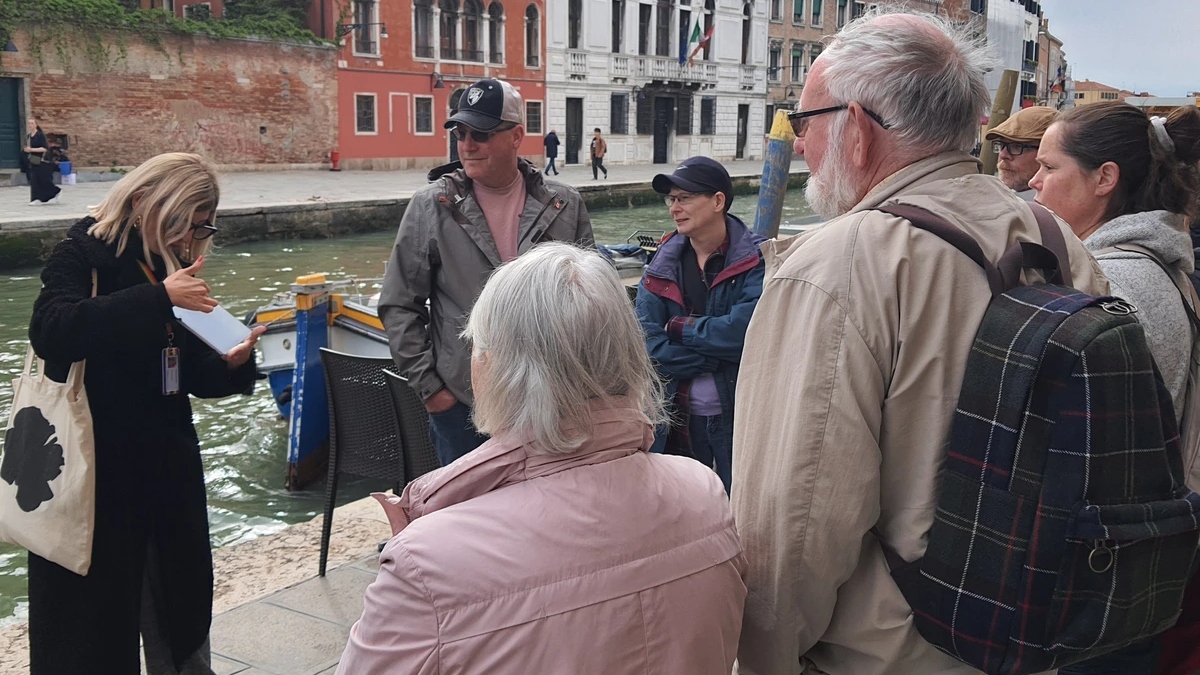
Professional Tour Assistant
Round trip ticket by fast train in 1st Class
Pick-up and drop off hotel city center
Emergency number also operational via whatsapp
Detailed itinerary
1
Stop 1
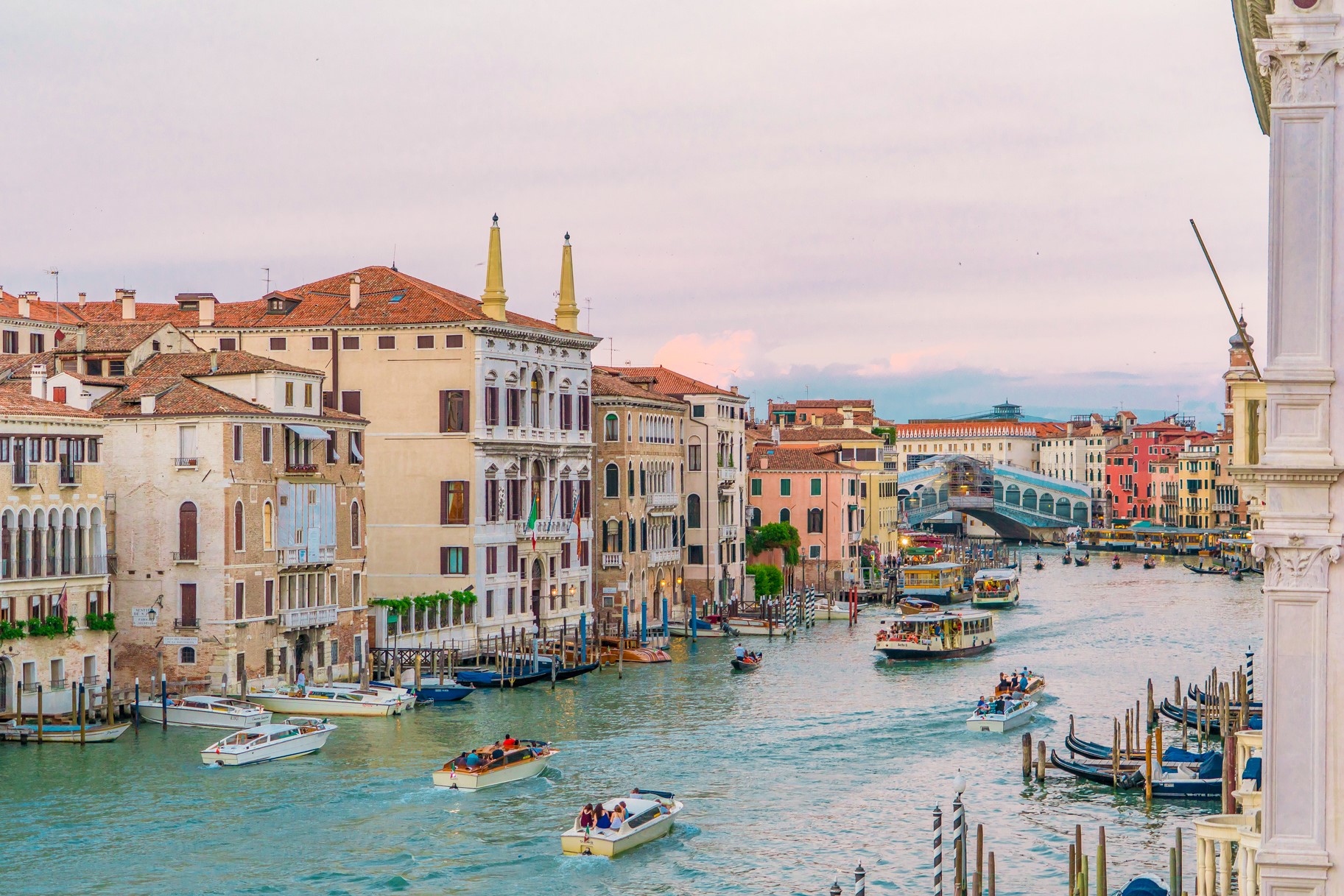
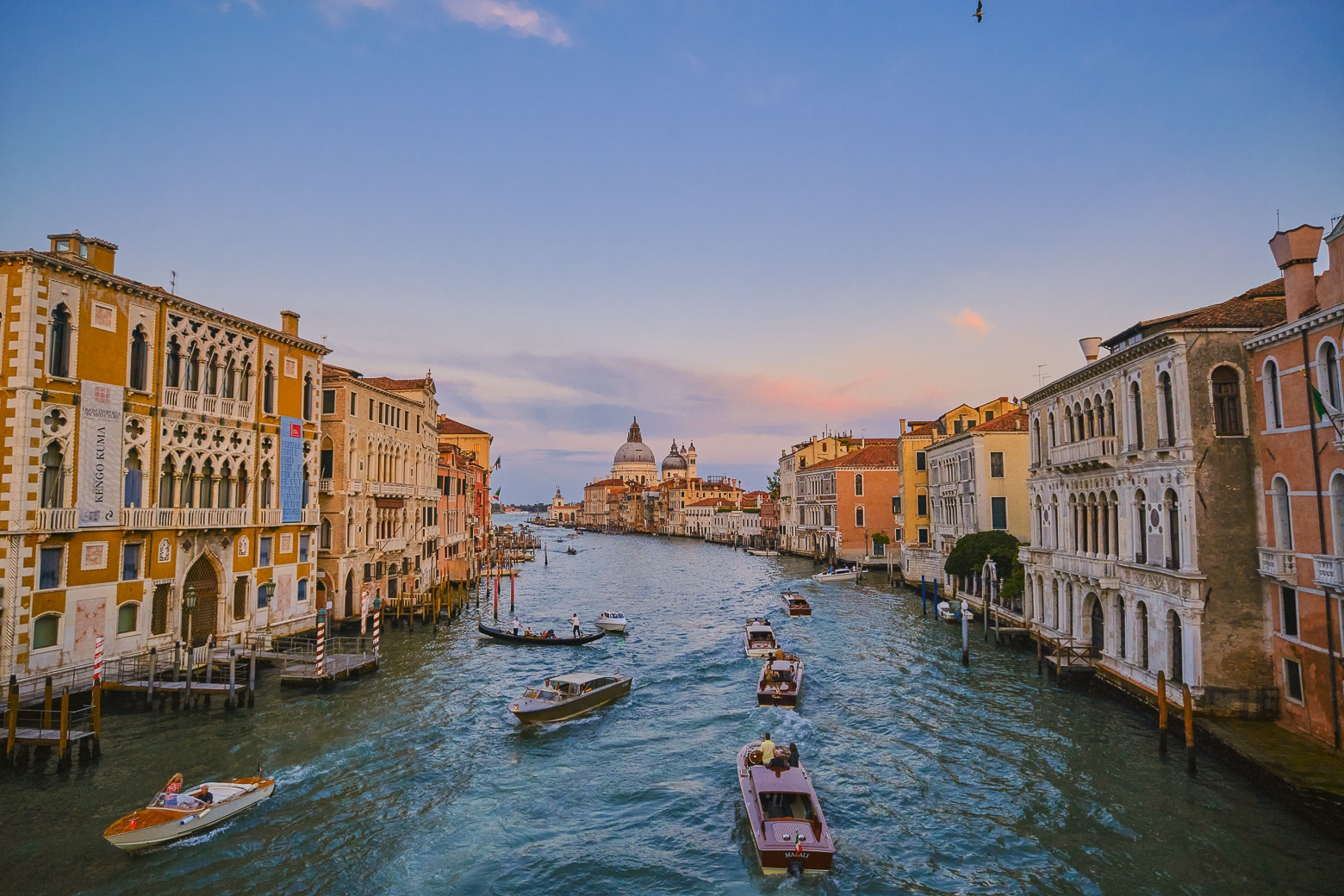
The Grand Canal is the main waterway in Venice (about 4 km long). The Grand Canal has an inverted "S" shape and divides the city into two parts, each of which groups together three districts. The width of the Grand Canal varies from 30 to 70 meters and its maximum depth is 5 meters. The Grand Canal is crossed by four bridges, the oldest is that of Rialto (1591). The other three bridges over the Grand Canal are those of the Scalzi, the Accademia and finally the Constitution Bridge, the latter designed by the architect Calatrava (inauguration 11 September 2008). Follow the course of this famous canal to discover the secrets of a unique city
2
Stop 2
The Rialto Bridge is the oldest of the four bridges of the Grand Canal. It is famous for both its architecture and its history. For years it was the fulcrum of Venice's economy.
The name "Rialto" comes from "Rivus altus", which in Italian means "deep canal", indicating that it is a flood-free area.
The structure of the bridge is similar to the previous ones, collapsed twice and burned on various occasions, and consists of two inclined ramps joined by a portico in the centre.
Crossing the Rialto Bridge you will reach the Rialto Market, a colorful place where fruit and vegetables are sold. The Market has ancient origins and has been held in this place since 1097.
3
Stop 3
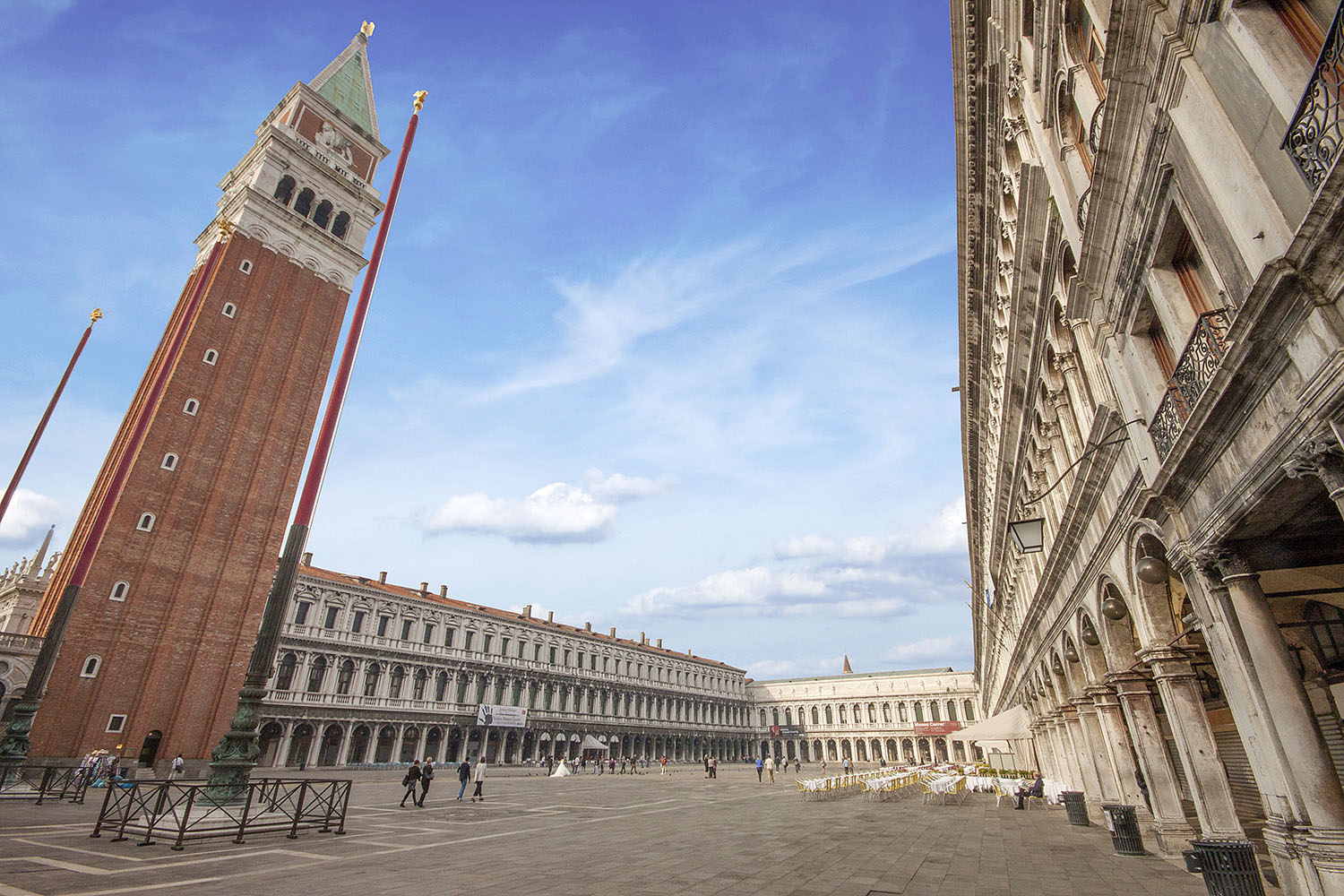
San Marco is one of the most fascinating squares in the world, so much so that Napoleon Bonaparte called it "the most beautiful hall in Europe".
It was built in the 9th century and paved in 1177, 100 years after its construction.
Piazza San Marco is the lowest area of Venice and, therefore, it is the first area to flood with high water. In these cases, the municipality of Venice installs walkways to allow the regular transit of pedestrians. If you are lucky (or unlucky, depending on your tastes), you will be able to see the square full of water.
The most important buildings in the square are the Basilica of San Marco, the Palazzo Ducale, the Correr Museum, the Campanile and the Clock Tower.
4
Stop 4
Originally this building was supposed to be an extension of the Doge's Palace. The first construction of the Basilica of San Marco began in the year 828 and ended in the year 832 to house the body of the Apostle Saint Mark brought from Alexandria as protector of the city.
The construction of the current basilica began in 1063 in Byzantine style to represent the power of the prosperous Venetian Republic. This basilica was built respecting the model of two basilicas of the ancient imperial city of Byzantium with a central plan in the shape of a Greek cross, five large domes and a particular blend of ancient and oriental art. The result is a splendid and successful combination of styles.
5
Stop 5
The Ducal Palace was probably built between the 10th and 11th centuries on the basis of a central fortified nucleus. The first renovation was carried out in the 12th century with Doge Sebastiano Ziani who transformed the fortress into an elegant palace.
Between 1339 and 1342 during the reign of Bartolomeo Gradenigo, the palace began to take on its current form. Doge Francesco Foscari extended the palace in 1424 until it reached the Basilica of San Marco.
In the early 17th century, the architect Antonio Contin added the New Prisons across the canal, connecting them to the palace with the Bridge of Sighs, where the inmates passed on their way to the new prisons. In 1797, after the fall of the Republic of Venice, the palace was adapted to house the administrative offices.
6
Stop 6
The Campanile of San Marco is one of the symbols of the city of Venice. Venetians affectionately call him "El parón de casa" (The master of the house).
At 98.6 meters high, it is one of the tallest bell towers in Italy. It stands majestically in Piazza San Marco in front of the basilica. Simple in shape, it consists of a fluted brick barrel, having a side of 12 meters and approximately 50 meters high, above which is the arched belfry. The bell tower is in turn surmounted by a die, on whose faces two walking lions and the female figures of Venice (Justice) are alternately depicted. Everything is completed by the pyramid-shaped spire, on top of which, mounted on a rotating platform to function as a weather vane, is the golden statue of the archangel Gabriel. The base of the building is embellished, on the side facing the basilica, by Sansovino's Loggia.
7
Stop 7
The Bridge of Sighs is located in the historic center of Venice, right behind Piazza San Marco, it is the only bridge in the city that is completely closed. Nowadays it is also known as the "lovers' bridge": legend says that to declare eternal love, you must kiss under the bridge during a gondola ride.
The true history of the Bridge, however, is very different: the fact that it connected the Palazzo Ducale and the Palazzo delle Prigioni is no coincidence! In fact, it served as a security passage to move prisoners from the Court to the Prisons and vice versa.
What's not included
Gondola ride (optional)
Tips
Lunch and Drinks
Available languages
Guide guide
PT
EN
IT
FR
ES
Reviews breakdown
Viator
4.5
28 reviews
5★
22
4★
2
3★
0
2★
3
1★
1
Important information
Infants and small children can ride in a pram or stroller
Specialized infant seats are available
Not recommended for travelers with poor cardiovascular health
Suitable for all physical fitness levels
Child rate applies only when sharing with 2 paying adults
Dress code is smart casual
Provide the Correct address of your accommodation , hotel, B&B
Provide the correct phone number with international country code
One day before call to confirm the pick up
Without details information we can not guarantee the correct service
Time for pick up at the hotel must be confirmed the day before between 10.00 am and 6.00 pm on the emergency phone or whatsapp
Important notes
The tour can be changed without notice due to weather and traffic. Please contact our office one day before departure for reconfirm the pick up time. In order to improve the quality of our services and to avoid delays in the collection to each hotel, we kindly ask for your cooperation to be ready at the lobby of your hotel at the scheduled time.
Head Office (from 10am to 7pm on Monday to Friday) +39 0687772364 / +39 0687760030
Tool-free (from Italy) 800960188
Emergency +39 3890055460 or +39 3208216235
Hotel pickups commence prior to this time, you must contact the local service provider to verify your exact pickup time.
Valid from the time of first use, for the duration selected.
About Rome
Rome, the capital of Italy, is a city of ancient ruins, artistic masterpieces, and vibrant culture. Known as the Eternal City, it is a living museum where every corner tells a story of its rich history spanning over 2,500 years.
Top Attractions
Colosseum
The Colosseum is an iconic symbol of Rome and one of the most famous ancient amphitheaters in the world. It was used for gladiatorial contests and public spectacles.
Historical
1-2 hours
€16 (combined ticket with Roman Forum and Palatine Hill)
Vatican City
Vatican City is an independent city-state enclaved within Rome. It is the spiritual and administrative center of the Roman Catholic Church.
Religious
Half day
€17 (Vatican Museums and Sistine Chapel), Free (St. Peter's Basilica)
Roman Forum
The Roman Forum was the political, commercial, and legal hub of the Roman Republic and Empire. It is a sprawling ruin of temples, basilicas, and arches.
Historical
1-2 hours
€16 (combined ticket with Colosseum and Palatine Hill)
Pantheon
The Pantheon is a former Roman temple, now a church, known for its large dome and oculus. It is one of the best-preserved ancient buildings in Rome.
Historical
30 minutes to 1 hour
Free
Trevi Fountain
The Trevi Fountain is a Baroque masterpiece and the largest fountain in Rome. It is a popular spot for visitors to throw coins and make wishes.
Architecture
15-30 minutes
Free
Must-Try Local Dishes
Cacio e Pepe
A simple yet delicious pasta dish made with Pecorino Romano cheese and black pepper.
Pasta
Vegetarian
Carbonara
A rich pasta dish made with eggs, Pecorino Romano, guanciale (cured pork cheek), and black pepper.
Pasta
Contains pork and eggs
Supplì
Fried rice balls filled with mozzarella and tomato sauce.
Snack
Vegetarian (some variations may contain meat)
Carciofi alla Romana
Artichokes braised with garlic, mint, and olive oil.
Vegetable
Vegetarian
Popular Activities
Hiking in the Appian Way Regional Park
Biking along the Tiber River
Rock climbing in the nearby mountains
Picnicking in Villa Borghese Gardens
Boating on Lake Albano
Enjoying a spa day at a luxury hotel
Visiting the Vatican Museums
Attending an opera at the Teatro dell'Opera di Roma
Best Time to Visit
April to June, September to October
Spring and fall offer pleasant weather and fewer crowds compared to the summer peak. Ideal for sightseeing and outdoor activities.
15-30°C
59-86°F
Practical Information
Language
- Official: Italian
- Widely spoken: English, Spanish, French
- English: Moderately spoken
Currency
Euro (EUR)
Time Zone
GMT+1 (CET), GMT+2 (CEST during daylight saving time)
Electricity
230VV, 50HzHz
Safety Information
Overall Safety Rating: Generally safe
Rome is generally safe for tourists, but pickpocketing and scams can be a problem in crowded areas. Be aware of your surroundings and take precautions to protect your belongings.
Important Precautions:
- • Keep valuables secure and out of sight
- • Use official taxis or ride-sharing services
- • Be cautious of strangers approaching you with petitions or bracelets
Getting there
By air
- Leonardo da Vinci International Airport • 35 km from city center
- Ciampino Airport • 15 km from city center
By train
Roma Termini, Roma Tiburtina
By bus
Tiburtina Bus Station, Roma Termini
Getting around
Public transport
The metro system is efficient and covers major tourist areas. It operates from 5:30 AM to 11:30 PM.
Taxis
Available • Apps: Uber, FreeNow
Rentals
Car, Bike, Scooter
Neighborhoods
Trastevere
Monti
Prancipio
Testaccio
Day trips
Ostia Antica
30 km from Rome • Half day
An ancient Roman port city with well-preserved ruins, including a theater, baths, and mosaics. It offers a glimpse into daily life in ancient Rome.
Tivoli
30 km from Rome • Full day
A picturesque town known for its stunning villas and gardens, including the famous Villa d'Este with its elaborate fountains and gardens.
Orvieto
120 km from Rome • Full day
A charming hilltop town known for its stunning cathedral, underground caves, and local wine. It offers a mix of history, culture, and scenic views.
Festivals
Natale di Roma • April 21
Festa de' Noantri • July
Rome Film Festival • October
Pro tips
- Visit major attractions early in the morning or late in the afternoon to avoid crowds
- Use public transport or walk instead of taking taxis to save money and experience the city like a local
- Try local specialties and ask for recommendations from locals and restaurant staff
- Dress modestly when visiting religious sites and be respectful of local customs and traditions
- Be aware of pickpockets and scams, especially in crowded areas and tourist hotspots
From $25
per person
Price varies by option
Secure booking
Free cancellation available
Instant confirmation