Bhutan Trekking Tour
Active
8d
For a full refund, cancel at least 24 hours before the scheduled departure time.
Manual confirmation
Mobile or paper ticket accepted
About this experience
The Kingdom of Bhutan is a landlocked country in the Eastern Himalayas and South Asia comprised of mountains and forests. The country is called by its people “Druk Yul”, meaning “The Land of The Thunder Dragon”. Trekking in Bhutan is dissimilar from other regions in Asia. You are trekking in a country steeped in Buddhist traditions, culture and mountains. Bhutan Himalaya is covered with a forest shrub. There are a lot more flora and fauna than anywhere else in this region. There are fewer villages in the high mountains. Trekking there does not require any special technical skills.
You will have opportunity to challenge yourself, relax your mind, immerse yourself in nature and local culture, also have a good night ‘s sleep under the stars. This is a wonderful experience in your life in The Kingdom of Bhutan.
Available options
Tour Price
Accommodation in 3 Star Hotel: Accommodation in twin Sharing in 3 Star Hotel/Resort.(4 & 5 star may require an additional premium).<br/>All meals : All meals (buffet system /include evening tea/snacks per pax each day).<br/>SUV Vehicles: Inland transfers by private car: SUV Vehicles<br/>Pickup included
What's included
Hotel pickup and drop-off
Local guide
7 nights accommodation
Lunch
Dinner
Driver
Breakfast
Sustainable Development Fee (SDF)
Local taxes
Coffee and/or Tea
Visa Fee
Bottled water
Accommodation as per itinerary
Guide
Detailed itinerary
1
Day 1 | Arrival in Paro
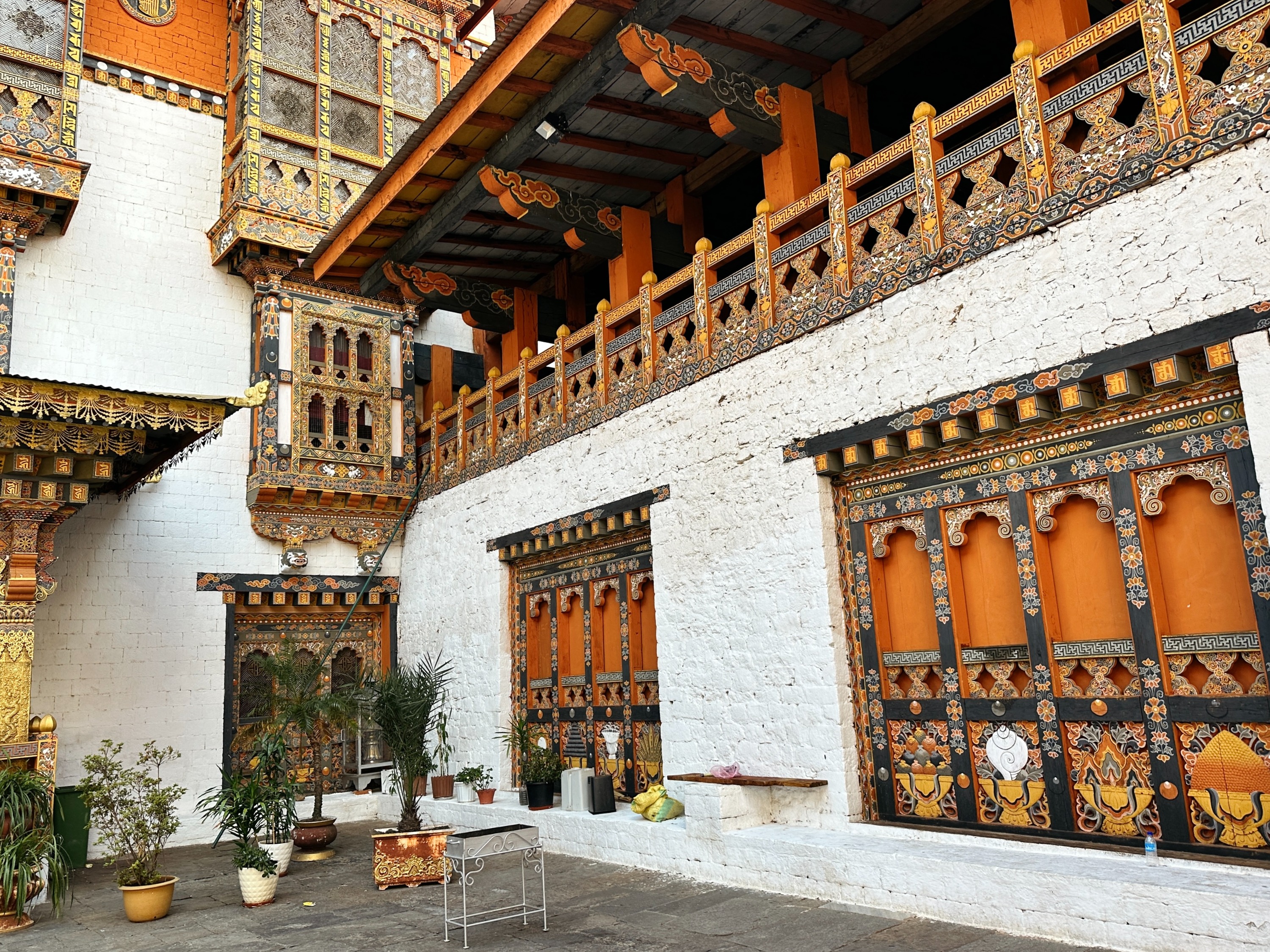
Your flight to Paro will offer you a beautiful mountain view. On this flight the views of the Everest, Kanchen Junga and other Himalayan peaks, including the sacred Jhomolhari and Jichu Drakey in Bhutan are awesome. On arrival in Paro our guide will receive you and check you into your hotel. After lunch we will see the rich history of Bhutan exhibited in the 17th century National Museum. The Paro Dzong, a massive fortress built in the 17th century now houses the monastic body. A tour of this beautiful Dzong will introduce us to the unique aspects of the Bhutanese Buddhism. A lovely stroll downhill from the Dzong over an old cantilever bridge wraps up an eventful first day in this magical kingdom.
Overnight in Paro | Altitude: 2200m
2
Day 2 | Paro sightseeing
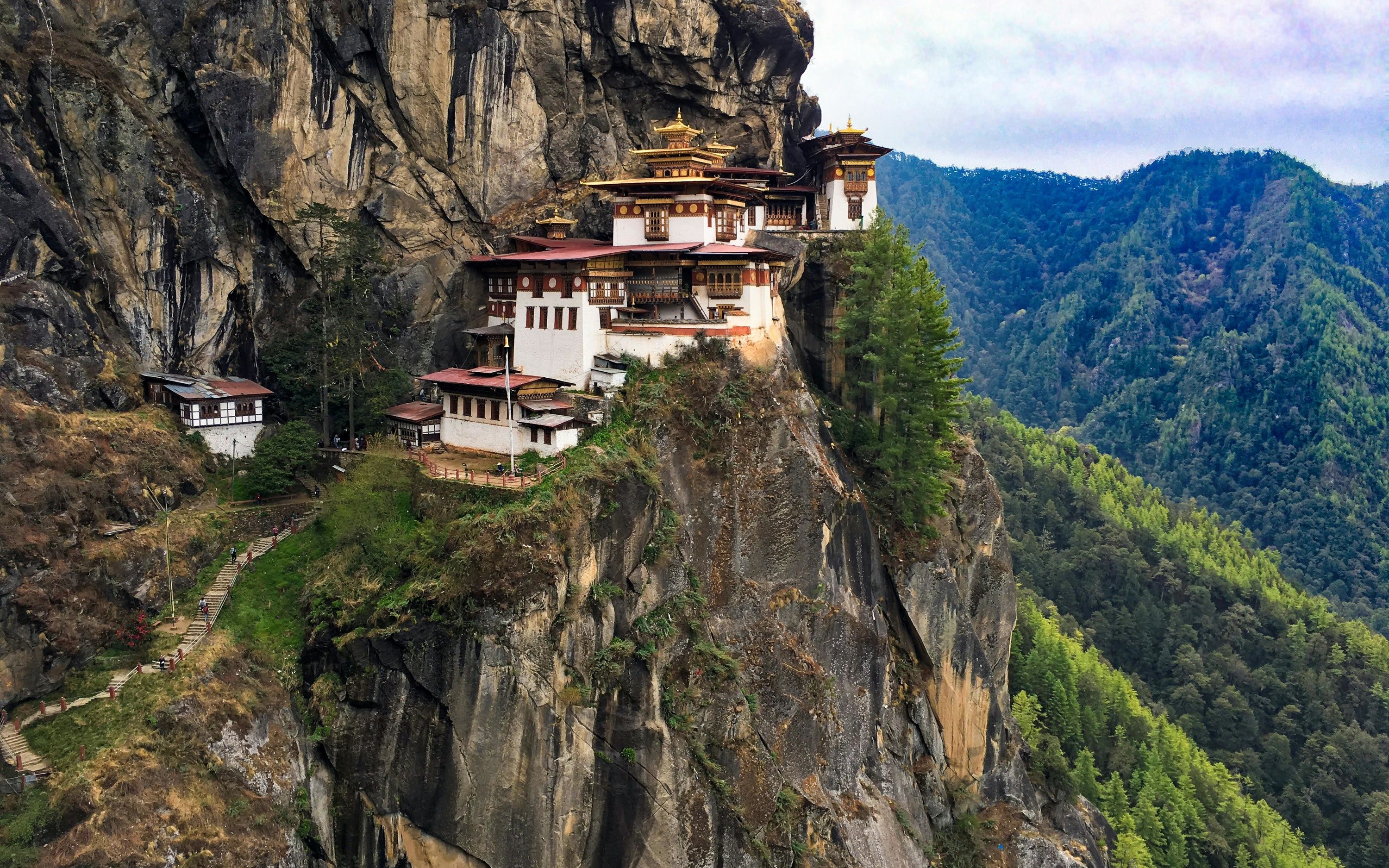
Taktsang or the tiger’s nest temple is the most revered temple to the Buddhist. This magical temple clings to a vertical granite cliff 800m above the valley. Legend has it that in the 8th century, Guru Rinpoche, a tantric master flew here on the back of a tigress Yeshey Tshogyal and meditated in a cave around which the temple is built. A hike to this temple will take up most of our morning. We can pray to bring us good luck for the rest of the journey. While returning, you can choose to eat lunch in Taktshang Cafeteria or in one of the local restaurants in Paro town.
Overnight in Paro
3
Day 3 | Start of the Druk Path Trek
Paro to Jela Dzong
Distance: 10k
Walking time: 6h
Sleeping altitude: 3000m
Today marks the beginning of our Druk Path trek. Be prepared for a challenging day, as we'll ascend approximately 1,090 meters. Our journey starts from Ta Dzong, winding through serene blue pine forests and passing by quaint farmhouses. Later, we'll descend around 100 meters from the ridge below Jela Dzong to set up camp at its base. Jela Dzong, though mostly in ruins, remains an awe-inspiring fortress perched atop the ridge and adorned with vibrant prayer flags. Weather permitting, we might be rewarded with breathtaking views of majestic mountains like Mt. Jomolhari (7,314 meters) or Gangkhar Puensum (7,570 meters). Dinner and overnight stay will be at the campsite.
4
Day 4 | Jela Dzong to Jangchublakha
Distance: 10k
Walking time: 4h
Sleeping altitude: 3200m
The trek gradually ascends for one and a half hours, then descends through lush alpine forests dotted with vibrant rhododendrons. You might encounter nomadic yak herders tending to their large, shaggy mammals. The majestic Mt. Jomolhari dominates the skyline. After a challenging uphill climb, you'll reach the serene yak pasture of Jangchulakha (3,760m), offering breathtaking panoramic views of the Himalayas.
Two more camping options await: a quick descent to the often-muddy Tshokham (3,780m), or a 25-minute hike to the picturesque yak herder's camp at Rabana (3,890m), nestled amidst blooming rhododendrons. Dinner and overnight in camp.
5
Day 5 | Jangchublakha to Jimilang Tsho
Distance: 13k
Walking time: 6h
Sleeping altitude: 3300m
The trail winds along a ridge, passing through diverse vegetation like dwarf rhododendrons and juniper trees. From the mountaintops, breathtaking views of both Thimphu and Paro unfold. After a steep descent, we reach Jimilangtsho Lake (Sand Ox Lake), home to massive trout. On a clear day, you will see Mt. Jichu Drake, the mountain peak that represents the protective deity of Paro Valley.
Our overnight camp is nestled near this serene lake.
6
Day 6 | Jimilangtsho to Labana
Distance: 15k
Walking time: 7h
Sleeping altitude: 3500m
Another long but great day walk with good mountain views. The trail will take us through dwarf rhododendrons and junipers. We will also pass the lakes of Janatso and Simkotha. The view of the far ridge across the valley which you trekked will fill you with a sense of personal satisfaction and renew you with extra confidence in yourself. Tonight is going to be the coldest of all our camps.
7
Day 7 | Labana to Thimphu
Distance: 12k
Walking time: 6h
Pass to cross: Pumo La, 4200m
An hours’ climb from the camp will take us over the highest pass on this trek at 4100m. On a clear day we can see the Gangkhar Puensum, the highest peak in Bhutan. Descending from the pass over rocky steps, we will be greeted by the sight of Thimphu far below in the valley. From this point on, it’s all downhill. We will be passing through the temple and meditation center complex of Phajoding. Our transport will meet us just as we start emerging from the forest and drive to Paro for our departure flight next day. The drive will take slight more than a hour. Overnight in Paro.
8
Day 8 | Departure
Transfer to airport for your departure flight. Our tour staff will bid you farewell at the airport.
What's not included
Alcoholic drinks (available to purchase)
Gratuities
Laundry
Travel Insurance
Flight ticket
Available languages
Guide guide
EN
Reviews breakdown
Tripadvisor
5.0
2 reviews
5★
2
4★
0
3★
0
2★
0
1★
0
Important information
Specialized infant seats are available
Public transportation options are available nearby
Not recommended for travelers with spinal injuries
Not recommended for pregnant travelers
Not recommended for travelers with poor cardiovascular health
Travelers should have at least a moderate level of physical fitness
Meeting point
Our guide and driver will be there with your placard waiting for you at the Paro International Airport.
About Thimphu
Thimphu, the capital of Bhutan, is a unique blend of traditional and modern Bhutanese culture. Nestled in the Himalayas, it offers a serene escape with vibrant markets, ancient monasteries, and a glimpse into the last remaining Buddhist kingdom in the world.
Top Attractions
Tashichho Dzong
This impressive fortress-monastery is the seat of the Bhutanese government and the summer residence of the Je Khenpo (Chief Abbot). It houses the throne room, government offices, and a monastery.
Historical/Religious
1-2 hours
Free (entry with a cultural tour permit)
Memorial Chorten
This whitewashed stupa was built in 1974 in memory of Bhutan's third king, Jigme Dorji Wangchuck. It is a popular pilgrimage site and a hub of religious activity.
Religious
30 minutes to 1 hour
Free
Buddha Dordenma
This massive bronze statue of Buddha is one of the largest sitting statues in the world. It is a significant religious site and offers panoramic views of the city.
Religious
1-2 hours
Free
Must-Try Local Dishes
Ema Datshi
A spicy stew made with chilies and cheese, often considered the national dish of Bhutan.
Main dish
Vegetarian (if made with vegetarian cheese)
Momos
Dumplings filled with meat or vegetables, steamed or fried.
Snack
Can be vegetarian or vegan
Red Rice
A staple in Bhutanese cuisine, red rice is a nutritious and flavorful grain.
Side dish
Vegetarian and vegan
Popular Activities
Hiking
Trekking
Mountain biking
Yoga
Meditation
Spa treatments
Temple visits
Festivals
Best Time to Visit
March to May and September to November
These months offer the best weather for sightseeing and outdoor activities. The skies are clear, and the temperatures are pleasant, making it ideal for exploring the city and its surroundings.
15°C to 25°C
59°F to 77°F
Practical Information
Language
- Official: Dzongkha
- Widely spoken: English
- English: Moderately spoken
Currency
Bhutanese Ngultrum (BTN)
Time Zone
BTT (UTC+6)
Electricity
230VV, 50HzHz
Safety Information
Overall Safety Rating: Generally safe
Thimphu is generally safe for travelers, with low crime rates. However, petty theft and scams can occur, especially in tourist areas.
Important Precautions:
- • Keep valuables secure.
- • Be cautious of strangers offering unsolicited help.
- • Use reputable tour operators.
Getting there
By air
- Paro International Airport • 54 km from Thimphu
By bus
Thimphu Bus Terminal
Getting around
Public transport
Buses are the most common and affordable mode of public transport. They can be crowded, especially during peak hours.
Taxis
Available • Apps:
Rentals
Car, Bike, Scooter
Neighborhoods
North Thimphu
City Center
Day trips
Punakha Dzong
70 km from Thimphu • Full day
Punakha Dzong is one of the most beautiful and historically significant dzongs in Bhutan. It served as the capital of Bhutan until 1955 and is nestled between two rivers.
Paro Valley
54 km from Thimphu • Full day
Paro Valley is known for its picturesque landscapes, historic sites, and the famous Taktsang Monastery (Tiger's Nest).
Festivals
Thimphu Tsechu • September/October (dates vary annually)
Hemisfestival • June/July (dates vary annually)
Pro tips
- Visit the Centennial Market early in the morning for the best selection of fresh produce and local snacks.
- Hire a local guide for a more in-depth understanding of Bhutanese culture and history.
- Try Bhutanese butter tea (suja) for a unique and authentic experience.
- Pack layers of clothing, as temperatures can vary significantly throughout the day.
- Respect local customs and traditions, and always ask permission before taking photographs of people or religious sites.
From $25
per person
Price varies by option
Secure booking
Free cancellation available