Brutal Tbilisi — Night Edition: Dark Side of Soviet Architecture
Active
3h - 4h
For a full refund, cancel at least 24 hours before the scheduled departure time.
Instant confirmation
Mobile or paper ticket accepted
About this experience
This is not a tour for everyone — it’s for travelers who seek something deeper, darker, and more real. When night falls, Tbilisi reveals its raw, unfiltered soul. Streetlights outline massive Soviet buildings, and the concrete whispers forgotten stories as the city slows to a haunting rhythm.
The Brutal Tbilisi: Night Edition goes beyond the usual city highlights. It explores Soviet modernism, brutalist architecture, and hidden urban art that most visitors — and even locals — never see. Guided by passionate storytellers, you’ll uncover the meaning, history, and emotion behind these striking structures.
This is where architecture meets emotion, where design turns into philosophy, and every shadow hides a story. A cinematic and deeply human journey through Tbilisi after dark — mysterious, bold, and unforgettable.
Perfect for: architecture lovers, photographers, urban explorers, and anyone looking for a unique, thought-provoking experience in Tbilisi.
Available options
Private tour
Private 3–4 hr city tour incl. travel time. Discover Tbilisi’s landmarks and hidden gems with a personal local guide.<br/>Pickup included
What's included
Private transportation
Live local guide
Photo tips
Detailed itinerary
1
Stop 1
At night, the Arashenda Building feels like a forgotten monument to another time — half dream, half ruin. Built in the early 1980s to become the grand Hotel Odishi, construction stopped when Georgia was swept by political change and civil conflict. The 17-storey frame was never finished; later, families displaced by war found shelter here, turning this abandoned project into a vertical village of survival.
Its two folded wings resemble an open book, but the story inside is full of silence and resilience. Under the dim light, cracked walls and improvised balconies create a haunting beauty. Your guide will share the building’s past and present, its human stories, and why locals call it Arashenda — “the one that did not get built.” From its open stairways, you’ll catch a striking night view of the Chronicles of Georgia nearby — a contrast of glory, loss, and endurance written in concrete and shadow.
2
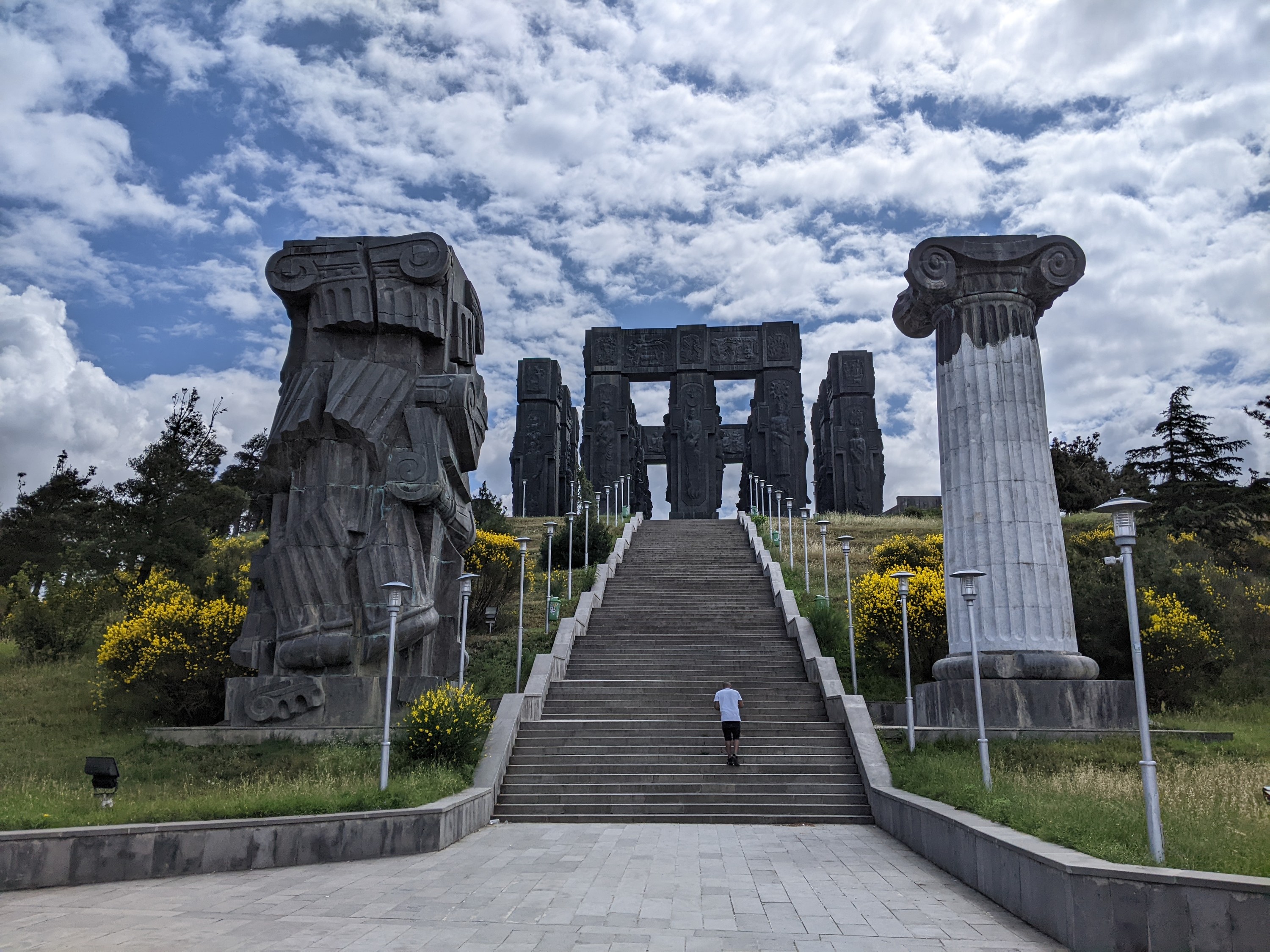
At night, the Chronicles of Georgia monument becomes one of the most impressive and atmospheric places in Tbilisi. Standing high above the city, it is illuminated by soft golden light and surrounded by deep shadows. Few people visit after dark, which makes the experience quiet, powerful, and almost otherworldly.
Your guide will lead you among the towering columns, sharing the hidden meanings and legends behind the figures carved into the stone. You will see how the lights and shadows transform the monument into a living story of Georgia’s kings, saints, and ancient faith. From the top platform, enjoy a panoramic night view over the city and the dark waters of the Tbilisi Sea — a perfect spot to feel the contrast between history, silence, and light.
3
Stop 3
At night, the Former Archaeology Museum in Digomi stands as a haunting monument to lost ambition and forgotten history. Rising above Tbilisi on Digomi Hill, this abandoned structure was built in 1988 to preserve Georgia’s ancient treasures but never fully opened its doors.
Under dim city light, the carved bas-reliefs shimmer like ghosts of the past, their figures emerging from cracked stone. The vast stairway looks like an entrance to an ancient temple — silent, cold, and magnetic. Even in daylight, the building feels otherworldly; at night, its presence deepens, surrounded by echoing emptiness.
Your guide will bring this place to life with stories of its creation, political changes, and the shifting fate of Georgian archaeology — revealing how this forgotten landmark still connects the modern skyline with the distant spirit of Old Tbilisi.
4
At night, the former Ministry of Highways of the Georgian SSR rises above the city like a surreal sculpture of light and shadow. Designed in the 1970s, its massive concrete blocks are stacked like floating bridges, symbolizing the unity of Georgia’s mountain roads. Once a bold statement of Soviet engineering and ambition, it now houses the Bank of Georgia Headquarters, blending history and modern life in one extraordinary form.
Under the night sky, the structure feels both futuristic and ancient — its illuminated corridors hanging over the hillside, its voids glowing softly in the dark. Few places in Tbilisi are so dramatic after sunset. Your guide will show you the best angles for photos and reveal the story behind this iconic landmark — a masterpiece of vision, politics, and architecture that continues to define the skyline of modern Tbilisi.
5
The Nutsubidze Skybridge is one of Tbilisi’s most striking landmarks — a symbol of bold Soviet imagination and human endurance. Built in the 1970s on the steep slopes of Nutsubidze Plateau, three massive residential blocks are connected by suspended bridges high above the city, offering one of the most dramatic panoramas in Georgia.
At night, the corridors glow faintly like floating walkways in the sky. Below, the city lights flicker; above, concrete towers fade into darkness. Visitors ride an old elevator, still operated by a kind “lift lady” who has watched generations come and go. Her quiet presence and the hum of the elevator make the ascent feel almost ritual — a small moment of connection within this grand architectural maze.
From the bridges, you’ll see Tbilisi’s skyline unfold, stretching from modern glass towers to the distant hills of the old city. It’s both eerie and beautiful — a glimpse into the city’s layered soul, suspended between past and future.
6
Stop 6
The Wedding Palace in Tbilisi, also known as the Palace of Rituals, is one of the most fascinating symbols of Soviet Georgia — a monument where architecture, ideology, and emotion merge. Built in 1984 by architect Victor Jorbenadze, it replaced traditional church weddings with a new civic ritual, blending the sacred and the socialist.
Its form is extraordinary: rising like a spiraling tower or a futuristic temple, with arches that echo ancient Georgian churches yet framed in raw concrete. Some see in it a nod to Le Corbusier’s sculptural modernism — but warmer, more spiritual, and unmistakably Georgian.
In Soviet times, couples lined up here to begin their lives in a space meant to sanctify love without religion. At night, the building glows softly from within, its windows casting curved shadows that feel both romantic and surreal. The Wedding Palace is not only an architectural masterpiece — it’s a story about love, power, and the search for beauty amid concrete and control.
What's not included
Gratuities
Meals
Available languages
Guide guide
RU
EN
Reviews breakdown
Viator
5.0
5 reviews
5★
5
4★
0
3★
0
2★
0
1★
0
Tripadvisor
5.0
5 reviews
5★
5
4★
0
3★
0
2★
0
1★
0
Important information
Public transportation options are available nearby
Not recommended for travelers with poor cardiovascular health
Suitable for all physical fitness levels
The itinerary and sequence of stops may vary depending on traffic, weather, or special events in the city, but every tour includes the key highlights and viewpoints mentioned in the description.
Not suitable for emotionally sensitive individuals — tour includes strong visual or historical impressions
Not suitable for travelers with fear of heights or claustrophobia
By booking this experience, travelers confirm they are physically and emotionally able to join and understand that the experience may include uneven terrain, long drives, or emotionally charged stories. The company is not responsible for any emotional or physical discomfort that may occur during or after the tour.
The tour operates in all weather conditions — rain or snow, the experience continues! Comfortable shoes and appropriate clothing are recommended.
Important notes
Please bring a valid ID or passport — it may be required for ticket verification or in case of police or park checks during travel.
The tour operates in all weather conditions (rain, wind, or light snow), so please dress appropriately for the season. Comfortable walking shoes, layered clothing, and a waterproof jacket are recommended.
If weather conditions become unsafe, the tour may be adjusted or rescheduled in coordination with the T&G Agency team to ensure guest safety and comfort.
About Tbilisi
Tbilisi, the capital of Georgia, is a vibrant city where ancient history meets modern culture. Known for its unique architecture, thermal baths, and rich culinary scene, it offers a blend of European and Asian influences that make it a captivating destination for travelers.
Top Attractions
Narikala Fortress
This ancient fortress offers panoramic views of Tbilisi and is a symbol of the city's rich history.
Historical
1-2 hours
Free
Sulfur Baths
A unique historical landmark where people have been bathing in sulfur-rich waters for centuries.
Religious
1-2 hours
10-20 GEL (3-6 USD)
Sameba Cathedral
One of the largest religious buildings in the Caucasus, this cathedral is an architectural masterpiece.
Religious
1 hour
Free
Mtatsminda Park
A beautiful park with panoramic views of the city, perfect for a relaxing stroll or picnic.
Nature
2-3 hours
Free
Dry Bridge Market
A popular flea market where you can find antiques, souvenirs, and local crafts.
Shopping
1-2 hours
Varies
Must-Try Local Dishes
Khachapuri
A cheesy bread filled with melted cheese, often with an egg in the center.
Main Dish
Vegetarian
Khinkali
Dumplings filled with spiced meat or mushrooms, typically served with a side of soup.
Main Dish
Vegetarian options available
Badrijani Nigvzit
Fried eggplant rolls filled with a walnut paste.
Appetizer
Vegetarian
Lobio
A rich, spicy bean stew often served in clay pots.
Side Dish
Vegetarian
Popular Activities
Hiking in the mountains
Paragliding
Rafting
Spa treatments
Thermal baths
Picnics in parks
Visiting museums
Attending festivals
Best Time to Visit
May to October
This is the best time to visit Tbilisi as the weather is warm and pleasant, ideal for exploring the city's outdoor attractions and festivals.
20°C to 35°C
68°F to 95°F
Practical Information
Language
- Official: Georgian
- Widely spoken: Russian, English
- English: Moderately spoken
Currency
Georgian Lari (GEL)
Time Zone
GMT+4
Electricity
220VV, 50HzHz
Safety Information
Overall Safety Rating: Generally safe
Tbilisi is generally safe for travelers, but petty crime and pickpocketing can occur in crowded areas.
Important Precautions:
- • Be cautious of pickpockets in crowded areas
- • Use official taxis or ride-hailing apps
- • Avoid walking alone late at night
Getting there
By air
- Shota Rustaveli Tbilisi International Airport • 17 km from city center
By train
Tbilisi Central Railway Station
By bus
Ortachala Bus Station, Didube Bus Station
Getting around
Public transport
The metro is efficient and affordable, with stations well-connected to major attractions.
Taxis
Available • Apps: Bolt, Yandex.Taxi
Rentals
Car, Bike, Scooter
Neighborhoods
Old Town
Vake
Avlabari
Day trips
Mtskheta
20 km from Tbilisi • Half day
Mtskheta is an ancient city and the former capital of Georgia, known for its historic churches and monasteries.
Kazbegi
160 km from Tbilisi • Full day
Kazbegi is a stunning mountain region with breathtaking views and outdoor activities.
Gori
80 km from Tbilisi • Half day
Gori is a city known for its historic sites, including the birthplace of Joseph Stalin.
Festivals
Tbilisi International Film Festival • March
Tbilisi Open Air • July
Tbilisi Wine Festival • October
Pro tips
- Visit the Dry Bridge Market early in the morning for the best selection of antiques and souvenirs
- Try traditional Georgian dishes at local restaurants and street food vendors
- Explore the Old Town on foot to discover hidden gems and historic sites
- Take a day trip to Mtskheta to experience Georgia's ancient history and culture
- Attend a traditional Georgian supper club for an authentic dining experience
From $25
per person
Price varies by option
Secure booking
Free cancellation available
Instant confirmation