Private Delhi Tour All Inclusive Recommended by "TRIPADVISOR"
Active
6h - 8h
For a full refund, cancel at least 24 hours before the scheduled departure time.
Instant confirmation
Mobile or paper ticket accepted
About this experience
Combine tours of Old and New Delhi in a single action-packed day on this private excursion. With private round-trip transportation included, it will be easy to move through the city, covering all the classic sights and learning about Indian culture and history. Opt to add on a traditional Indian lunch if you wish.
Available options
All Inclusive Package
Includes:: Tour with AC car+Driver+Guide+Monument Entrance fees+Rickshaw ride in old Delhi+parking fee<br/>Pickup included
Standard Package
Includes: : Car with Driver + Guide.
Entrance fees and lunch are not included.
<br/>Pickup included
What's included
Private tour.
Hotel pickup and drop-off
Transport by air-conditioned vehicle.
Packaged Bottled mineral water.
Professional English-speaking guide.
Rickshaw ride fee (If Option Selected)
Monuments Entrance fees (If Option Selected)
Detailed itinerary
1
Stop 1
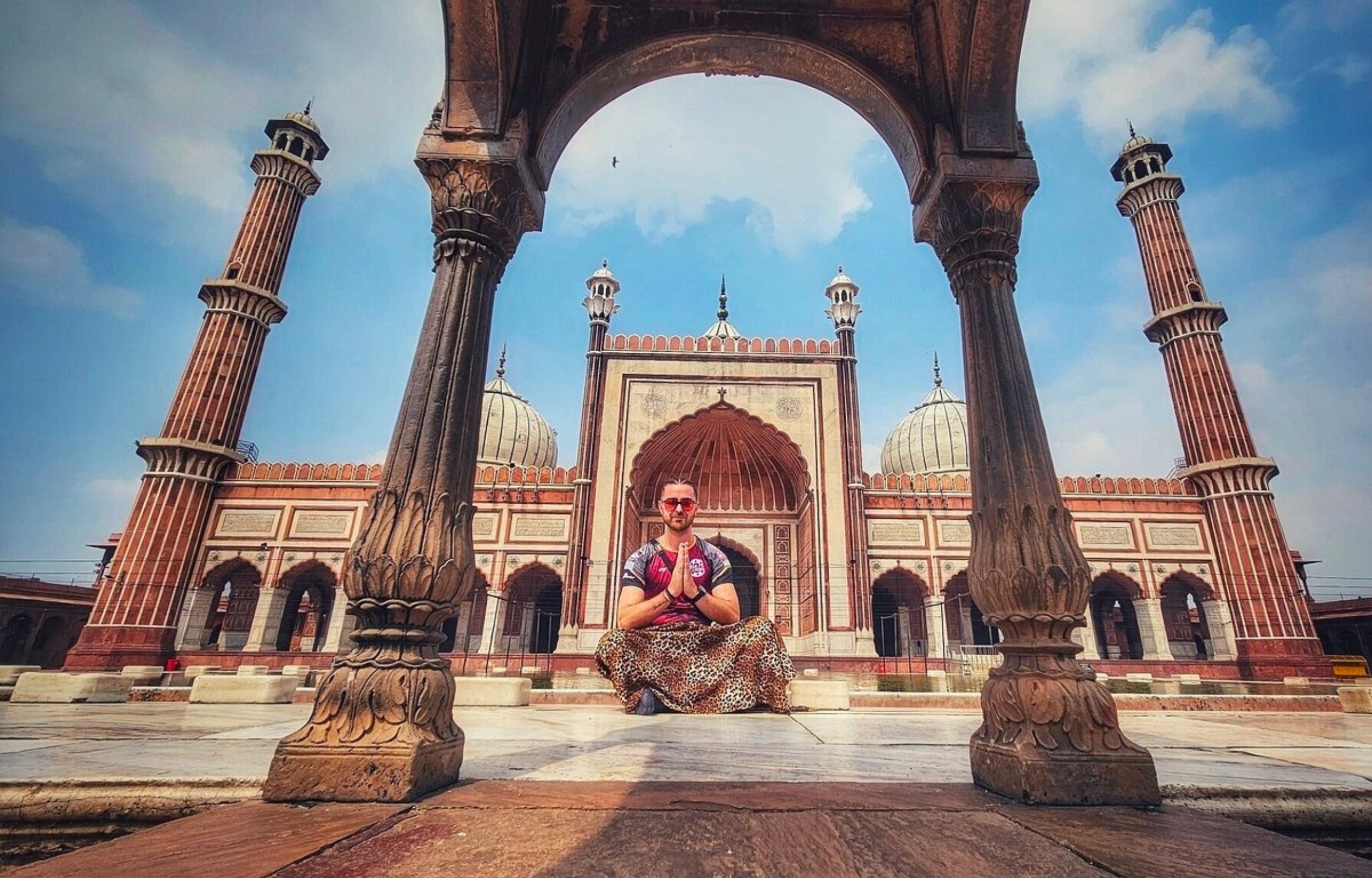
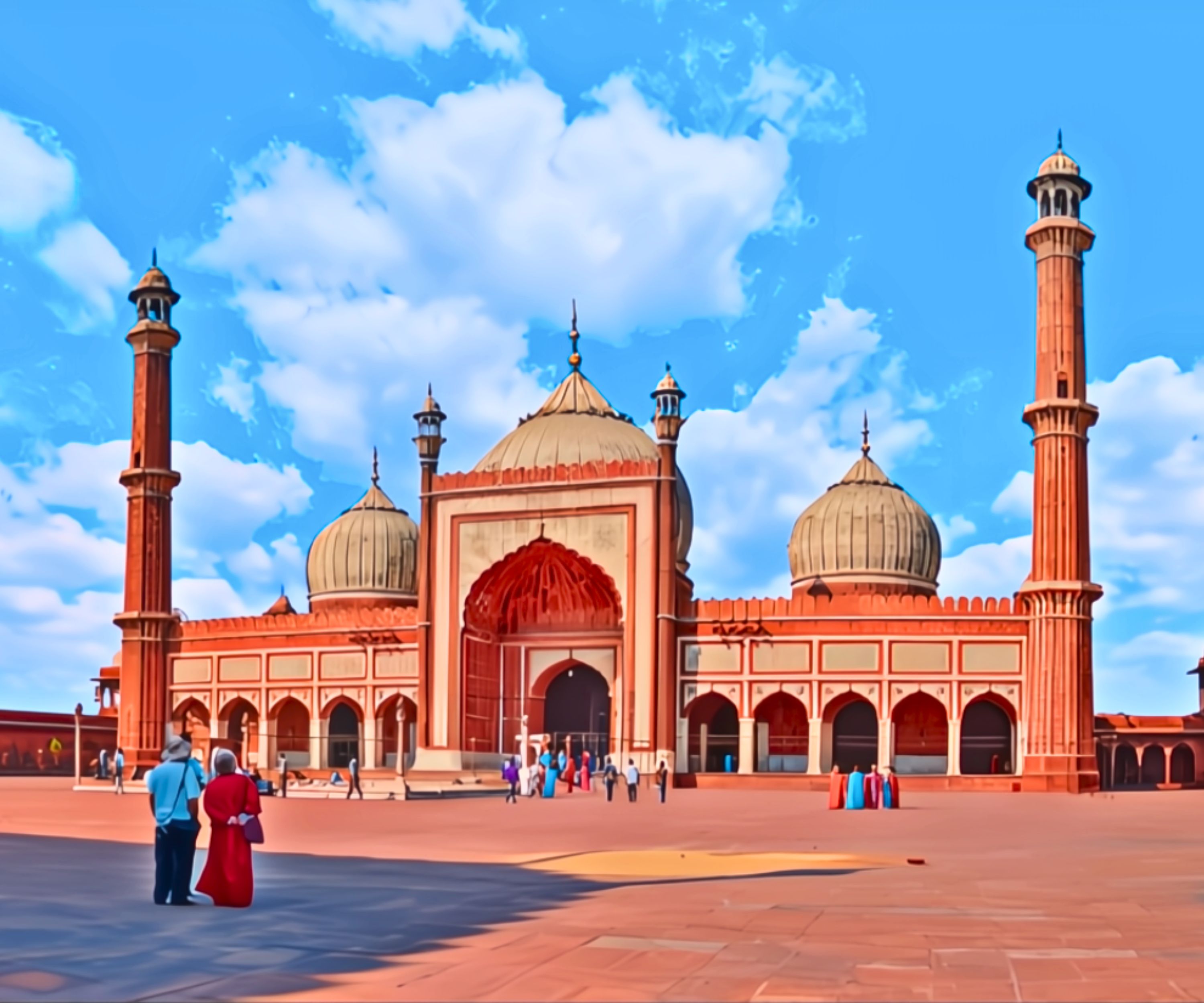
The Masjid-i Jahān-Numā, commonly known as the Jama Masjid of Delhi, is one of the largest mosques in India. It was built by Mughal Emperor Shah Jahan between 1644 and 1656 at a cost of 1 million rupees, and was inaugurated by an Imam from Bukhara, present-day Uzbekistan.The mosque was completed in 1656 AD with three great gates, four towers and two 40 metres high minarets constructed with strips of red sandstone and white marble. The courtyard can accommodate more than 25,000 people. There are three domes on the terrace which are surrounded by the two minarets. On the floor, a total of 899 black borders are marked for worshippers. The architectural plan of Badshahi Masjid, built by Shah Jahan's son Aurangzeb at Lahore, Pakistan, is similar to the Jama Masjid.
2
Stop 2
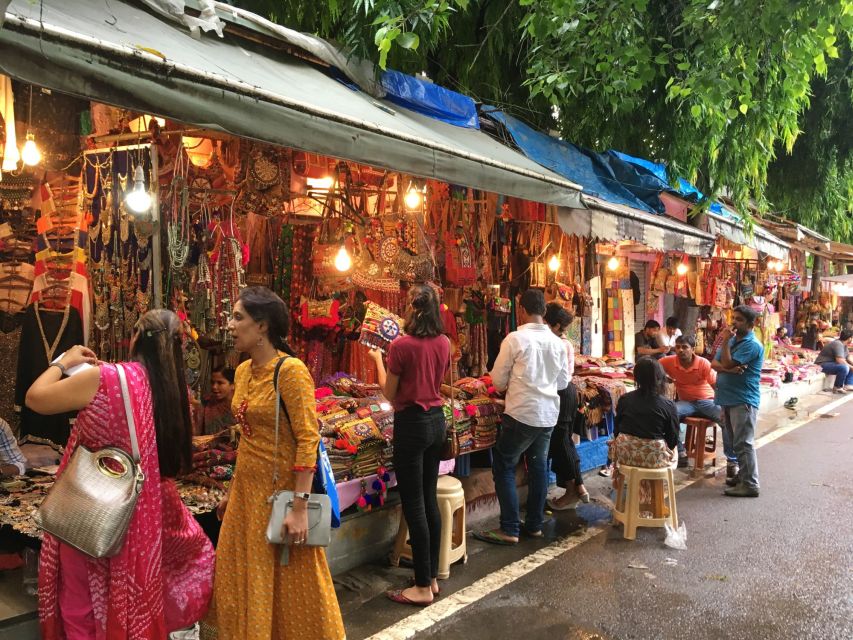
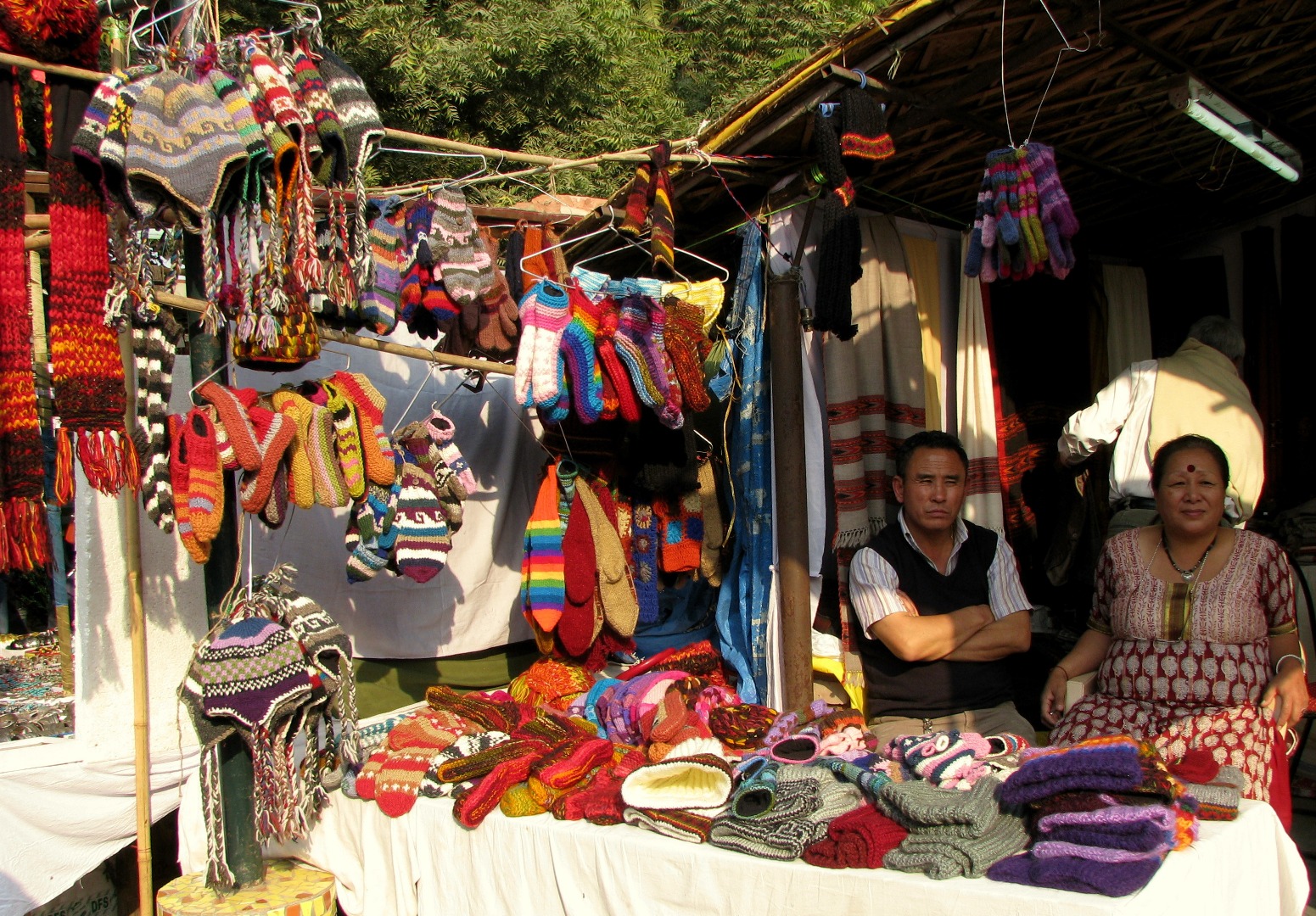
The Chandni Chowk is one of the oldest and busiest markets in Old Delhi, India. Chandni Chowk is located close to Old Delhi Railway Station. The Red Fort monument is located within the market. It was built in the 17th century by Mughal Emperor of India Shah Jahan and designed by his daughter Jahanara. The market was once divided by canals to reflect moonlight and remains one of India's largest wholesale markets.
3
Stop 3
Pass by
Red Fort (Pass by from outside only)
The Red Fort or Lal Qila (Hindustani: [laːl qiːlaː]) is a historic fort in the Old Delhi neighbourhood of Delhi, India, that historically served as the main residence of the Mughal emperors. Emperor Shah Jahan commissioned construction of the Red Fort on 12 May 1639, when he decided to shift his capital from Agra to Delhi. Originally red and white, its design is credited to architect Ustad Ahmad Lahori, who also constructed the Taj Mahal. The fort represents the peak in the Mughal architecture under Shah Jahan and combines Persian palace architecture with Indian traditions.
4
Stop 4
Gandhi Smriti, formerly known as Birla House or Birla Bhavan, is a museum dedicated to Mahatma Gandhi, situated on Tees January Road, formerly Albuquerque Road, in New Delhi, India. It is the location where Mahatma Gandhi spent the last 144 days of his life and was assassinated on 30 January 1948.
5
Stop 5
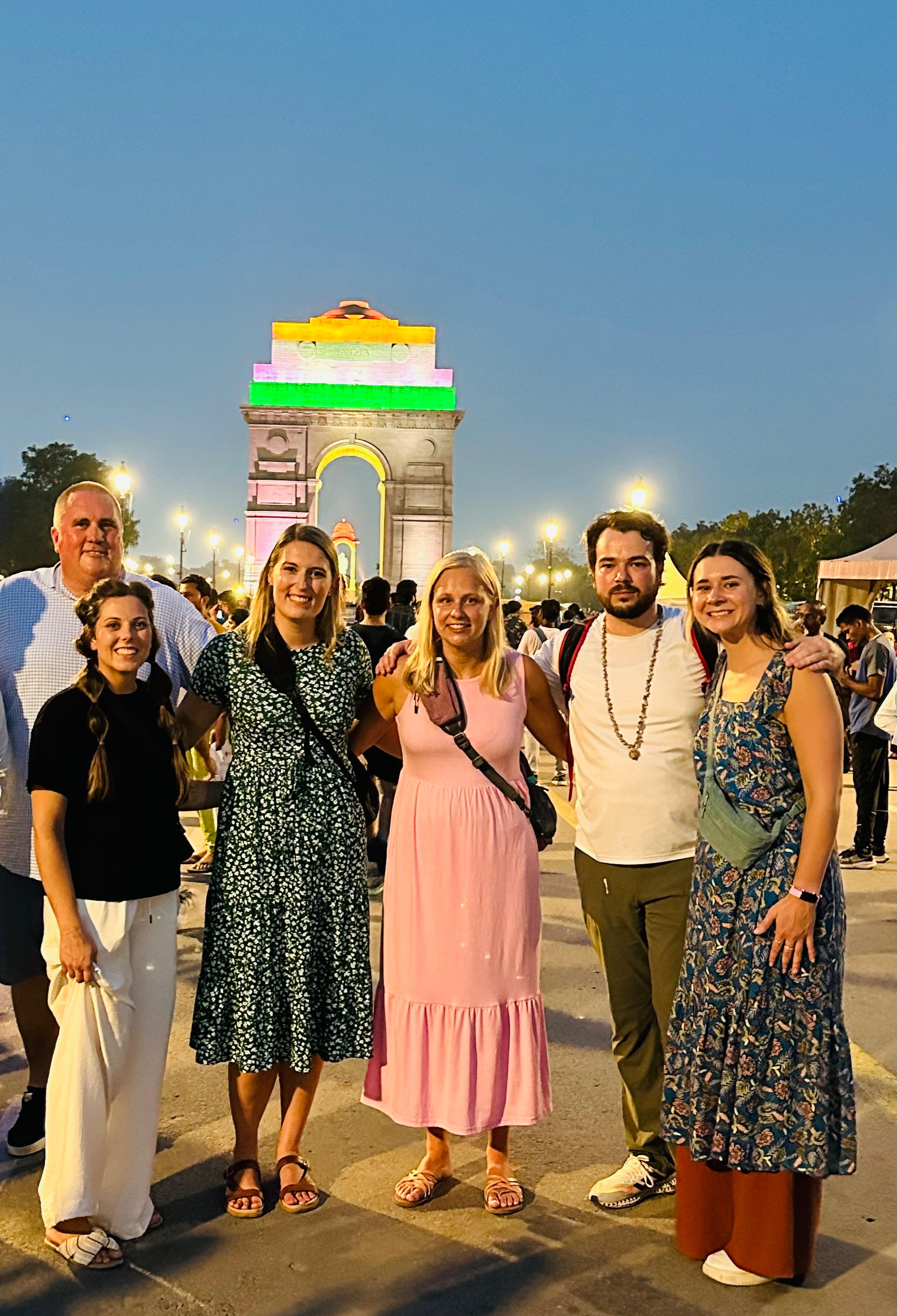
The India Gate (originally called the All India War Memorial) is a war memorial located astride the Rajpath, on the eastern edge of the "ceremonial axis" of New Delhi, India, formerly called Kingsway
6
Stop 6
Pass by
Rashtrapati Bhavan, home to the President of the world’s largest democracy, is emblematic of Indian democracy and its secular, plural and inclusive traditions. It was designed by Sir Edwin Lutyens and Herbert Baker and stands on a 330 acre estate. It took seventeen years to build this presidential palace which was completed in the year 1929. Almost seven hundred million bricks and three million cubic feet of stone were used in building this architectural marvel that has 2.5 kilometers of corridors and 190 acres of garden area. The main building covers an area of 5 acres and has 340 rooms spread over four floors. The famous Mughal Gardens of the Rashtrapati Bhavan cover an area of 15 acres and have 159 celebrated varieties of roses, 60 varieties of bougainvillea and many other verities of flowers. The Estate also has a state-of-the-art Rashtrapati Bhavan Museum Complex (RBMC) comprising the Clock Tower, the Stables and the Garages showcasing past as well as current presidencies, the regal ceremonies, and the rich flora and fauna of Rashtrapati Bhavan, amongst other things. The RBMC was inaugurated by President Pranab Mukherjee on 25th July, 2016.
7
Agrasen ki Baoli, designated a protected monument by the Archaeological Survey of India under the Ancient Monuments and Archaeological Sites and Remains Act of 1958, is a 60-meter long and 15-meter wide historical step well on Hailey Road near Connaught Place, Jantar Mantar in New Delhi, India. Although there are no known historical records to prove who built Agrasen ki Baoli, it is believed that it was originally built by the legendary king Agrasen, and rebuilt in the 14th century by the Agrawal community which traces its origin to Maharaja Agrasen. It is a popular tourist destination and hangout in New Delhi.. The Baoli is open for public viewing seven days a week from 9 am to 5.30pm. The entry is free for all. Photography charges are also nil.
8
Stop 8
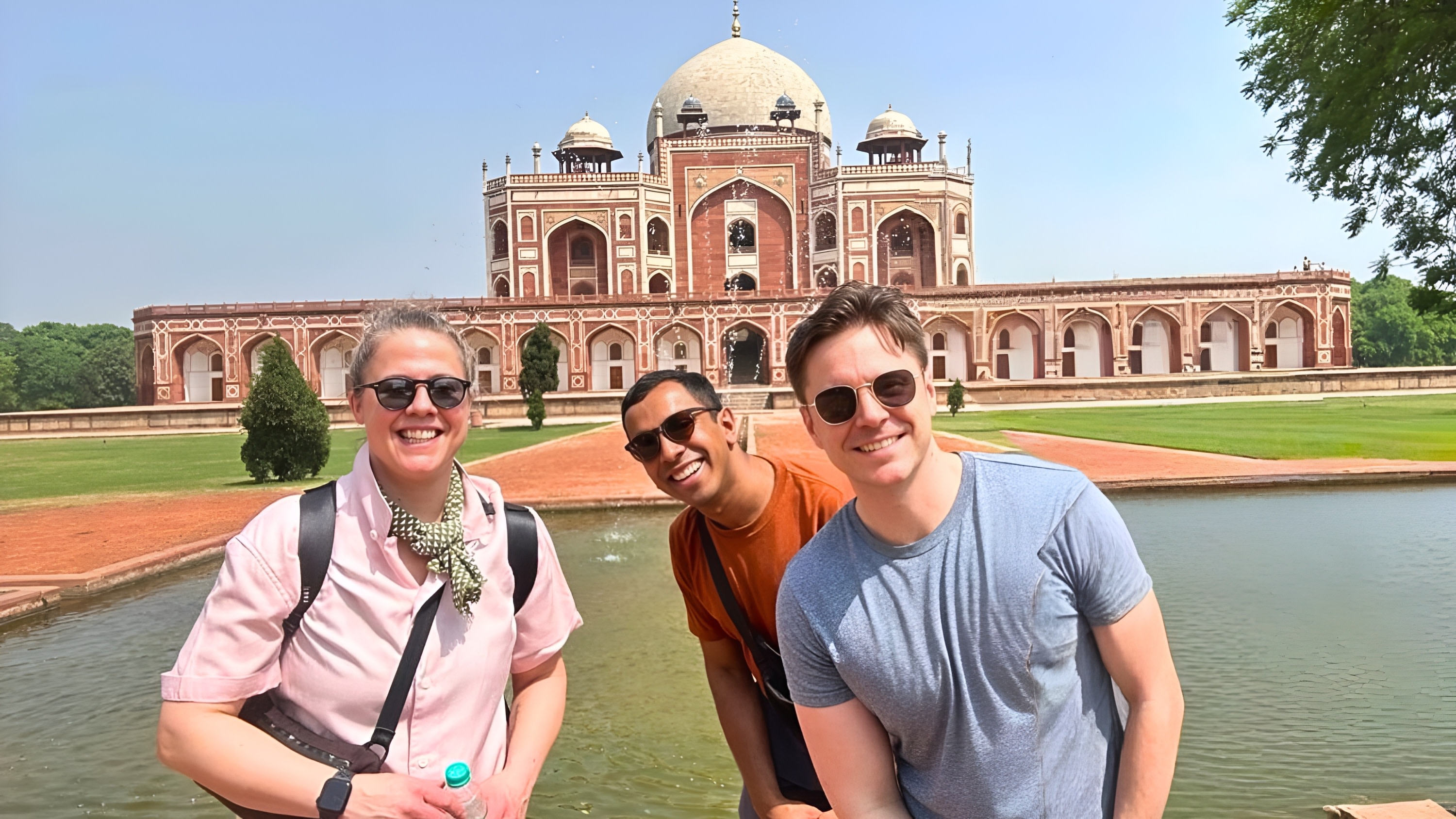
Located near the crossing of Mathura road and Lodhi road, this magnificent garden tomb is the first substantial example of Mughal architecture in India.
What's not included
Lunch.
Tips to Driver and Guide (Minimum 10 USD to each)
Available languages
Guide guide
EN
Reviews breakdown
Tripadvisor
5.0
1 reviews
5★
1
4★
0
3★
0
2★
0
1★
0
Important information
Not recommended for travelers with poor cardiovascular health
Public transportation options are available nearby
Infants are required to sit on an adult’s lap
Not recommended for travelers with spinal injuries
Suitable for all physical fitness levels
In case your hotel/pick up location is not mentioned while making the booking – Please click on My Hotel Is Not Listed option on the Booking Checkout Page and then manually enter your Hotel Name
This is a private tour/activity. Only your group will participate
If Pick up from airport: Flight details must be provided at the time of booking
Please mention your email address/WhatsApp number in the special requirement section for smooth communications.
About New Delhi
New Delhi, the capital of India, is a vibrant blend of ancient history and modern development. It offers a rich cultural experience with its historic monuments, bustling markets, and diverse cuisine. The city is a gateway to understanding India's past and present.
Top Attractions
Red Fort
A UNESCO World Heritage Site and a symbol of India's struggle for independence. Built by Emperor Shah Jahan in the 17th century.
Historical
2-3 hours
₹35 ($0.50) for Indians, ₹500 ($7) for foreigners
Qutub Minar
Another UNESCO World Heritage Site, this towering minaret is a fine example of early Indo-Islamic architecture.
Historical
1-2 hours
₹30 ($0.40) for Indians, ₹500 ($7) for foreigners
India Gate
A war memorial dedicated to the soldiers who died in World War I and the Afghan Wars. A popular evening spot for locals and tourists.
Historical
1 hour
Free
Humayun's Tomb
A UNESCO World Heritage Site and a precursor to the Taj Mahal. This beautiful Mughal garden tomb is a must-visit.
Historical
1-2 hours
₹30 ($0.40) for Indians, ₹500 ($7) for foreigners
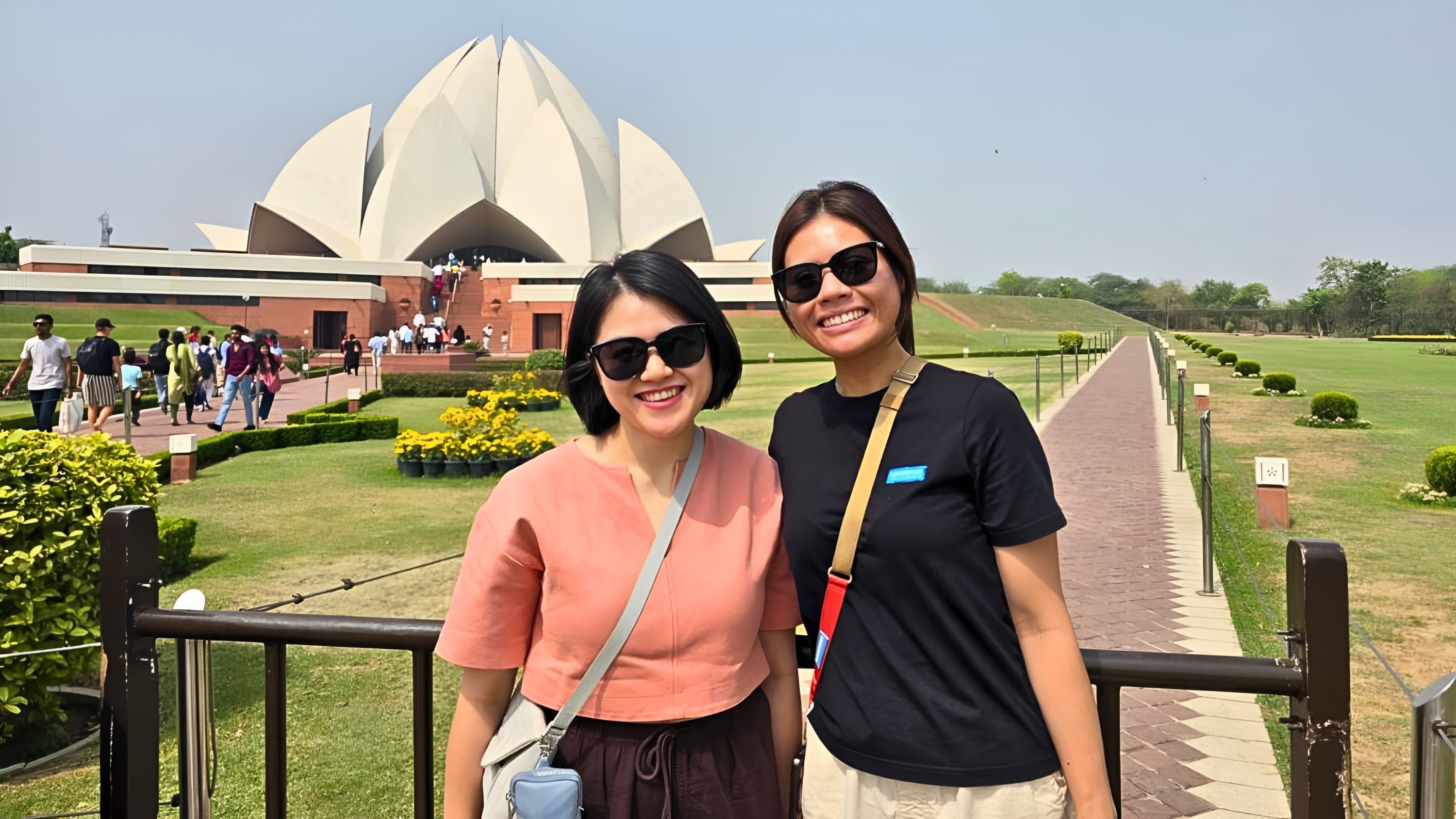
Lotus Temple
A Baha'i House of Worship known for its flower-like shape. It is a symbol of peace and unity.
Religious
1 hour
Free
Must-Try Local Dishes
Butter Chicken
Creamy tomato-based curry with tender chicken pieces, originated in Delhi.
Dinner
Non-vegetarian
Chole Bhature
Spicy chickpea curry served with deep-fried bread.
Lunch
Vegetarian
Chaat
A variety of savory snacks like Pani Puri, Bhel Puri, and Aloo Tikki.
Snack
Vegetarian, some options vegan
Paratha
Stuffed flatbread cooked on a griddle, often served with yogurt or pickle.
Breakfast
Vegetarian, some options vegan
Popular Activities
River rafting in Rishikesh
Hot air ballooning in Jaipur
Trekking in the Aravalli Range
Spa treatments in luxury hotels
Yoga and meditation in Rishikesh
Strolls in Lutyens' Delhi
Attending a classical music or dance performance
Visiting art galleries and museums
Best Time to Visit
October to March
This is the most pleasant time to visit with cooler temperatures and various festivals. It's ideal for sightseeing and outdoor activities.
15°C to 35°C
59°F to 95°F
Practical Information
Language
- Official: Hindi, English
- Widely spoken: Punjabi, Urdu, Bhojpuri
- English: Widely spoken in urban areas
Currency
Indian Rupee (INR)
Time Zone
IST (GMT+5:30)
Electricity
230VV, 50HzHz
Safety Information
Overall Safety Rating: Exercise caution
New Delhi is generally safe for tourists, but petty crimes like pickpocketing and scams can occur. Be cautious, especially in crowded areas.
Important Precautions:
- • Use trusted transport options
- • Avoid walking alone at night
- • Be cautious of strangers offering help
Getting there
By air
- Indira Gandhi International Airport • 16 km from city center
By train
New Delhi Railway Station, Old Delhi Railway Station
By bus
Inter-State Bus Terminal (ISBT), Dhaula Kuan Bus Stand
Getting around
Public transport
Clean, efficient, and air-conditioned. Connects major attractions and neighborhoods.
Taxis
Available • Apps: Ola, Uber
Rentals
Car, Bike, Scooter
Neighborhoods
Connaught Place
Old Delhi
Lutyens' Delhi
Hauz Khas
Day trips
Agra
233 km from Delhi • Full day
Home to the iconic Taj Mahal, Agra is a must-visit for history and architecture lovers.
Jaipur
268 km from Delhi • Full day or overnight
The Pink City is known for its palaces, forts, and vibrant culture.
Rishikesh
240 km from Delhi • Full day or overnight
A spiritual and adventure hub, Rishikesh is famous for yoga, meditation, and river rafting.
Festivals
Diwali • October-November (dates vary)
Holi • March (dates vary)
Republic Day • January 26
Pro tips
- Use the Delhi Metro for efficient and affordable travel around the city.
- Try street food from busy stalls to ensure freshness and hygiene.
- Bargain politely in markets, but be prepared to pay a fair price.
- Carry small denominations for shopping and street food.
- Respect local customs and traditions, especially when visiting religious sites.
From $25
per person
Price varies by option
Secure booking
Free cancellation available
Instant confirmation