Salar De Uyuni (Day Trip) - Tour in Spanish
Active
7h
All sales are final. No refund is available for cancellations.
Instant confirmation
Mobile or paper ticket accepted
About this experience
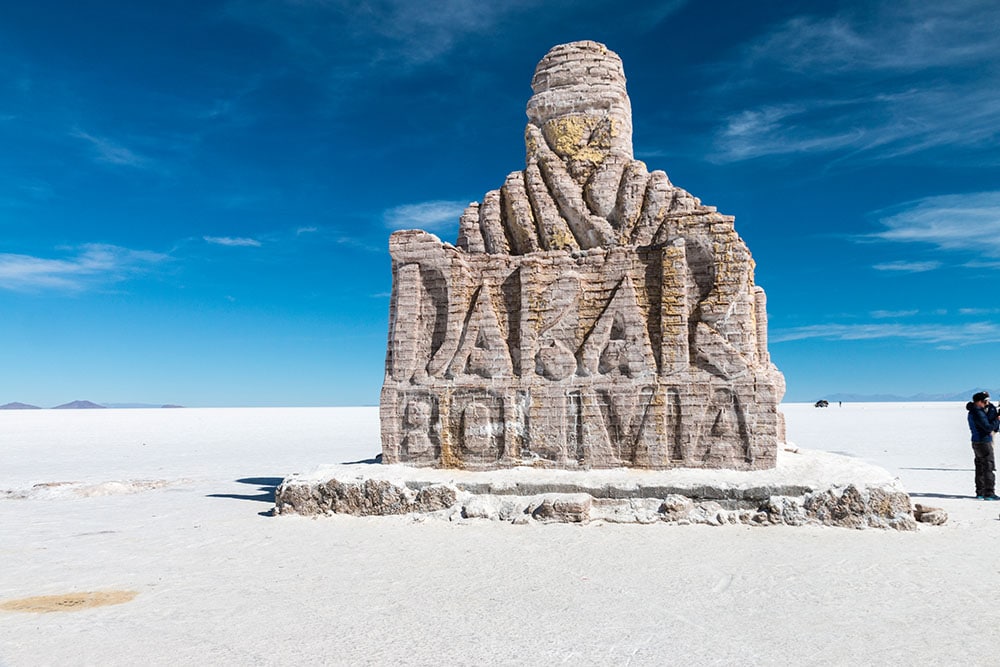
Our standard plus 1-day salt flats tour is with a maximum of 6 people to a vehicle and a Spanish-speaking guide. Classic 1-day salt flats tour for the budget backpacker - extremely popular tour leaving daily from Uyuni. A unique place in the world and a must on any trip to Bolivia. This is the best option if you are traveling on a budget but don't want to miss out on this amazing experience.
Available options
Salar De Uyuni (Day Trip) - Tour in Spanish
What's included
4X4 Transport
Lunch
Spanish speaking local guide who is well aware of the routes
Detailed itinerary
1
Stop 1
We will start the tour with a visit to the train cemetery around three kilometers awThe town served in the past as a distribution hub for the trains carrying minerals on their way to the Pacific Ocean ports. The train lines were built by British engineers who arrived near the end of the 19th century and formed a sizable community in Uyuni. The engineers were invited by British-sponsored Antofagasta and Bolivia Railway Companies, which is now Ferrocarril de Antofagasta a Bolivia. The rail construction started in 1888 and ended in 1892. It was encouraged by the then Bolivian President Aniceto Arce, who believed Bolivia would flourish with a good transport system, but it was also constantly sabotaged by the local indigenous people who saw it as an intrusion into their lives. The trains were mostly used by the mining companies. In the 1940s, the mining industry collapsed, partly due to the mineral depletion. Many trains were abandoned thereby producing the train cemetery.
2
Stop 2
Just outside the Salar de Uyuni salt flats lies the quaint salt-processing village of Colchani. This tiny village of just over 600 people is home to Bolivia’s largest salt-processing cooperative. Years ago, the inhabitants of Colchani used to exploit salt to exchange with other indigenous communities. Every year packs of llamas would travel incredible distances (up to 560km to Tarija) carrying salt, returning with coca, maize and other goods not produced in the Altiplano. This has since changed with the improvement of transport infrastructure and the salt is now sold by the cooperative in Bolivia and Brazil.
The Salar de Uyuni contains an estimated 10 billion tonnes of salt, with an impressive 25,000 tonnes of it excavated and processed at Colchani annually. During your stop in Colchani you can see handicrafts made of salt, and textile art made of llama and alpaca. This is the perfect opportunity to buy authentic Bolivian souvenirs to bring home.
The tour also includes a visit to a traditional salt factory where a local will teach you the process of extraction and refinement of salt. Despite this tour of the salt factory being free, those who take it are expected to give the local a donation for his time and effort. The tour is highly recommended if you’re interested in learning about how salt ends up on your kitchen table.
3
Stop 3
Continuing the tour, we will enter the iconic Salt Flats. We will stop to see the extraction of salt and eyes of salt (water holes where underground water sprouts). After marveling, we continue on our way and arrive at the Sal Playa Blanca hotel which was the first salt hotel in the region but due to the negative environmental impact it currently only works as a museum.
4
After lunch, we will be visiting the cactus island or Isla Incahuasi, the most visited island on the Salt Flats. This hilly and rocky outcrop of land and former island in Bolivia situated in the middle of Salar de Uyuni. Incahuasi has a total area of 24.62 hectares (61 acres) and hosts gigantic cacti (Trichocereus pasacana) and a tourist center. There are unusual and fragile coral-like structures and deposits that often consist of fossils and algae. The place is the top of the remains of an ancient volcano, which was submerged when the area was part of a giant prehistoric lake, roughly 40,000 years ago. From the top of the island, you would get a 360 degrees view of the world's largest salt flats - Salar De Uyuni.
From here we will be returning to Uyuni.
What's not included
Entrance to Isla Incahuasi (30 Bolivianos)
Entrance to Salt Microprocessing unit (5 Bolivianos)
Accommodation
Breakfast and Dinner
Available languages
Guide guide
ES
Reviews breakdown
Tripadvisor
4.9
9 reviews
5★
8
4★
1
3★
0
2★
0
1★
0
Important information
Not recommended for travelers with poor cardiovascular health
Suitable for all physical fitness levels
Meeting point
Jukil De Los Andes
About Uyuni
Uyuni is a gateway to the world's largest salt flat, Salar de Uyuni, and offers a unique blend of natural wonders, adventure, and cultural experiences. The town is a hub for exploring the surreal landscapes of the Altiplano, including colorful lagoons, geysers, and flamingo-filled wetlands.
Top Attractions
Salar de Uyuni
The world's largest salt flat, Salar de Uyuni, is a surreal and otherworldly landscape that offers stunning views, especially during the wet season when it becomes a giant mirror.
Nature
Full day or overnight trip
Moderate (depends on tour package)
Incahuasi Island
A small island in the middle of the salt flat, Incahuasi Island is covered with giant cacti and offers panoramic views of the surrounding salt flat.
Nature
Half day to full day
Moderate (included in most salt flat tours)
Train Cemetery
A unique and eerie attraction, the Train Cemetery is a collection of abandoned steam locomotives from the early 20th century, left to rust in the desert.
Historical
1-2 hours
Free
Laguna Colorada
A stunning red lagoon in the Eduardo Avaroa Andean Fauna National Reserve, Laguna Colorada is home to flamingos and other wildlife, and offers breathtaking views.
Nature
Full day or overnight trip
Moderate to Expensive (depends on tour package)
Must-Try Local Dishes
Silpancho
A traditional Bolivian dish made with beef, rice, potatoes, and a fried egg, served with a spicy sauce.
Main dish
Contains beef and eggs
Salteñas
A type of empanada filled with meat, vegetables, and a spicy sauce, typically eaten for breakfast or as a snack.
Snack
Contains meat and spices
Api
A traditional Bolivian drink made from corn, sugar, and cinnamon, often served warm.
Drink
Vegetarian
Popular Activities
Salt flat tours
Hiking in the Eduardo Avaroa Andean Fauna National Reserve
Wildlife watching
Visiting local cafés
Exploring the town center
Enjoying traditional Bolivian cuisine
Visiting local markets
Exploring the Train Cemetery
Best Time to Visit
May to October (Dry season)
The dry season offers clear skies, making it ideal for exploring the salt flat and other natural attractions. The weather is cooler and more comfortable for outdoor activities.
5°C to 20°C (41°F to 68°F)
41°F to 68°F
Practical Information
Language
- Official: Spanish
- Widely spoken: Aymara, Quechua
- English: Limited
Currency
Bolivian Boliviano (BOB)
Time Zone
GMT-4
Electricity
230VV, 50HzHz
Safety Information
Overall Safety Rating: Generally safe
Uyuni is generally safe for travelers, but petty crime can occur, especially in crowded areas. Be cautious with your belongings and avoid walking alone at night.
Important Precautions:
- • Keep valuables secure and out of sight.
- • Avoid walking alone at night.
- • Use reputable tour operators and taxis.
Getting there
By air
- Joya Andina Airport • 5 km (3.1 miles) from city center
By train
Uyuni Train Station
By bus
Uyuni Bus Terminal
Getting around
Public transport
Buses are the primary mode of public transport in Uyuni, but they are not extensive. They are mainly used for travel to nearby towns and attractions.
Taxis
Available • Apps: Not widely used
Rentals
Car
Neighborhoods
Town Center
Train Cemetery Area
Day trips
Eduardo Avaroa Andean Fauna National Reserve
180 km (112 miles) • Full day or overnight trip
The Eduardo Avaroa Andean Fauna National Reserve is a stunning natural area home to colorful lagoons, geysers, and flamingos, offering a unique and breathtaking landscape.
Laguna Verde
150 km (93 miles) • Full day or overnight trip
Laguna Verde is a stunning green lagoon in the Eduardo Avaroa Andean Fauna National Reserve, offering breathtaking views and a unique landscape.
Festivals
Carnaval de Oruro • February/March (dates vary)
Pro tips
- Book accommodations and tours in advance, especially during peak season.
- Bring warm clothing, as temperatures can drop significantly at night.
- Stay hydrated and be aware of the signs of altitude sickness.
- Use reputable tour operators and taxis to avoid scams and ensure a safe and enjoyable experience.
- Respect local customs and traditions, and be mindful of your impact on the environment.
From $25
per person
Price varies by option
Secure booking
Free cancellation available
Instant confirmation