Historic Athens Views of the City eBike Tour
Active
3h
For a full refund, cancel at least 24 hours before the scheduled departure time.
Instant confirmation
Mobile or paper ticket accepted
About this experience
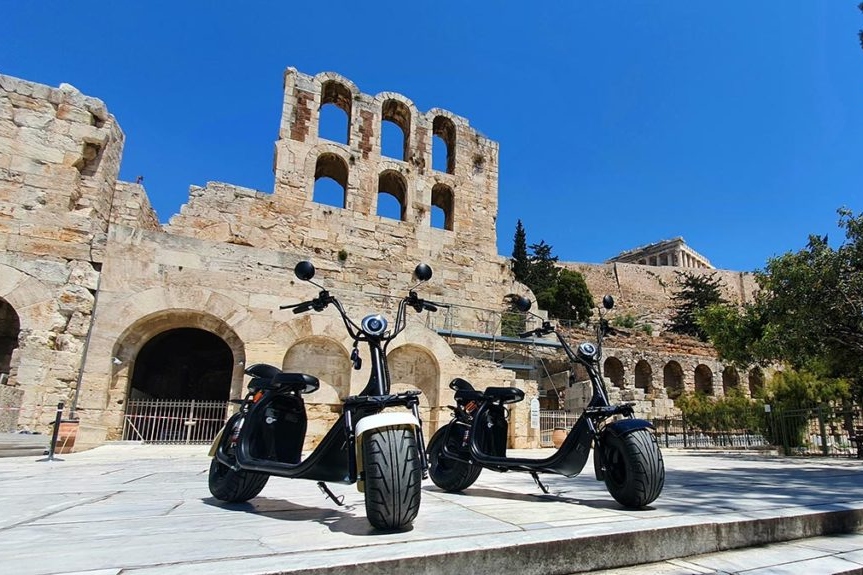
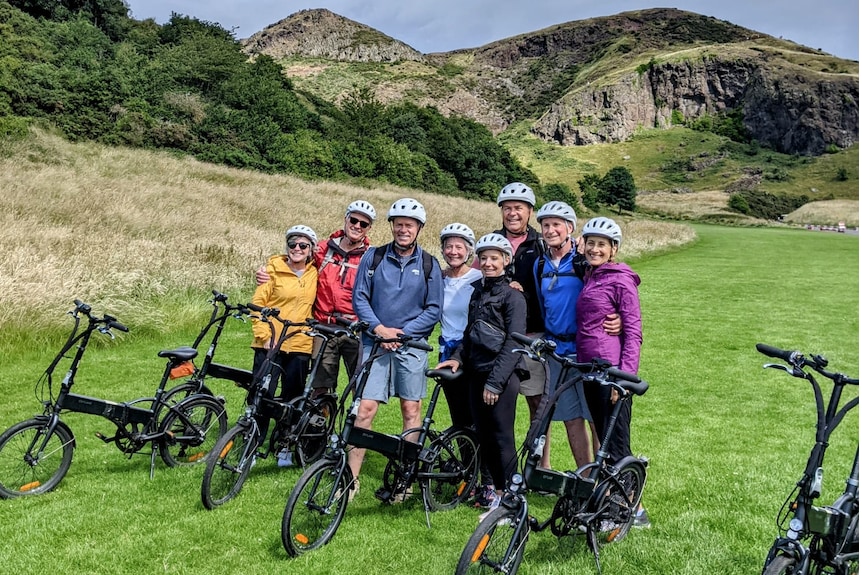
A relaxed ride that lasts almost 3 hours , with our electric bikes we can go almost everywhere!
We steepen the hill of the Nymphs where we will stop and enjoy amazing views of the Acropolis. Then we go downhill towards Aerus Pagus and the ancient
Odeon of Herodus Atticus. We continue on the aristocratic Dionysiou Aeropagitou Street.
Follows a stop at the Temple of Zeus and Hadrian's Arch and the famous evzones at the Hellenic Parliament so we take our time to get as many photos we want.
The National Gardens are a refreshing way to towards the Presidential Mansion and the Panathenaic Stadium.
On the way back we go through the picturesque Plaka , the Ancient and Roman Agora.
Available options
Historic Athens Views of the City eBike Tour
What's included
Tour Leader
Bottled water
E-Bike
Map of the City
Helmets (Adults & Children)
Detailed itinerary
1
Stop 1
The name of the hill is derived from an inscription that was dedicated to the nymphs, who were worshiped here in times of antiquity. Unlike the Gods of Mount Olympus, the Nymphs never lost their place in popular legend, and today they are still spoken about, in terms of fairies.
2
Stop 2
The Odeon of Herodes Atticus has been staging musical and theatrical performances – on and off – for two full millennia but audiences have never stopped being inspired by the iconic setting at the base of the Acropolis
3
Stop 3
Pass by
Dionyssiou Aeropagitou pedestrian street is one of the most impressive streets of Athens, if not the world, offering an extraordinary view of the southern slope of the Acropolis, where some of the city’s most significant monuments stand, along with the Parthenon itself.
4
Stop 4
The Temple of Olympian Zeus in Athens, also known as the Olympieion, was built over several centuries starting in 174 BCE and only finally completed by Roman emperor Hadrian in 131 CE. Its unusually tall columns and ambitious layout made the temple one of the largest ever built in the ancient world
5
Stop 5
Hadrian's Arch, is a monument which, in spite of the marks of time and repetitive acts of vandalism, still preserves its elegant silhouette and an admirable patina through the gradual oxidation of its pentelic (from the quarries of Mt. Penteli) white marble.
6
Stop 6
A beautiful columned building styled in the neo-classical Greek fashion, the Hellenic Parliament is an imposing building located in Syntagma Square in the centre of Athens. Completed in 1843, the Parliament building was originally the Royal Palace of Greece and was designed by German architect Friedrich von Gärtner for King Otto.
7
Stop 7
In the heart of Athens, lie the beautiful National Garden which is tranquil and peaceful in contrast to the hustle and bustle of the city. The National Garden is the perfect place to relax and ponder on after visiting all the marvellous archaeological sites that the city has to offer.
8
Stop 8
The Panathenaic Stadium is a classical cultural monument of Greece. Its history is directly connected to the Modern Olympic Games, from their revival in 1896 until the Athens Olympic Games in 2004. It is also the place from which the Olympic Flame is delivered to all the Olympic Games, Winter, Summer and Youth, as well as the Athens Authentic Marathon.
9
Stop 9
Pass by
Plaka is one of the oldest neighborhoods of Athens, located right below the Acropolis hill.
It is extremely beautiful and picturesque, distinguished for its authentic character and traditional layout.
The largest part of Plaka consists of neoclassical houses that date back to the 19th century, although archeological findings suggest that the region has been continuously inhabited since the prehistoric times.
10
Stop 10
Situated to the north-west of the Acropolis, the Ancient Agora of Athens was originally established as the administrative and trade centre of the city – hence its name, the ‘trade marketplace’. The Agora witnessed the Panathenaic Procession, the greatest celebration in the ancient city of Athens, memorialising the unification of Attica under King Theseus.
What's not included
Entrance Tickets
Meals
Available languages
Guide guide
EN
Reviews breakdown
Viator
4.4
9 reviews
5★
7
4★
1
3★
0
2★
0
1★
1
Important information
Public transportation options are available nearby
Specialized infant seats are available
Not recommended for travelers with poor cardiovascular health
Travelers should have at least a moderate level of physical fitness
Child rates include (booster seat / co-pilot bike) only. If an extra ebike needed to be booked then it would be on an adult pricing.
For children to get an ebike they must be confident riders over 1,50 m/5 feet tall and their hands should be able to grab the brakes well, Also they should know to manoeuvre well through pedestrian crowds at some points.
We keep the right to not allow kids on Ebike if we feel it is not safe.
Meeting point
Close to Thisseio Metro Station. Walk up the pedestrian road with vendors, first right and then again right and after 20 meters we are on the left. Opposite small park.
About Athens
Athens, the capital of Greece, is a city rich in history and culture, often considered the cradle of Western civilization. It is home to iconic ancient landmarks, vibrant neighborhoods, and a thriving modern scene.
Top Attractions
Acropolis of Athens
The Acropolis is the most iconic landmark in Athens, featuring ancient ruins and temples, including the Parthenon.
Historical
2-3 hours
€20 (combined ticket for multiple sites)
Ancient Agora of Athens
The heart of ancient Athens, featuring the Temple of Hephaestus and the Stoa of Attalos.
Historical
1-2 hours
€8 (included in the combined ticket)
Plaka
A charming, historic neighborhood with narrow streets, neoclassical houses, and vibrant nightlife.
Cultural
2-3 hours
Free to explore
Acropolis Museum
A modern museum showcasing artifacts from the Acropolis and its surroundings.
Museum
1-2 hours
€10
Temple of Olympian Zeus
An ancient temple dedicated to Zeus, once the largest temple in Greece.
Historical
30 minutes to 1 hour
€6 (included in the combined ticket)
Must-Try Local Dishes
Moussaka
A baked dish with layers of eggplant, minced meat, and béchamel sauce.
Dinner
Vegetarian versions available
Souvlaki
Grilled meat skewers, often served with pita bread and tzatziki.
Snack
Can be made with chicken, pork, or vegetarian options
Tzatziki
A yogurt-based dip with cucumber, garlic, and herbs.
Snack
Vegetarian and vegan options available
Baklava
A sweet pastry made with layers of filo, nuts, and honey syrup.
Dessert
Vegetarian
Popular Activities
Hiking in the mountains
Rock climbing
Scuba diving
Beach visits
Spa treatments
Café hopping
Museum visits
Theater performances
Best Time to Visit
April to June, September to October
The best time to visit Athens is during the spring and autumn months when the weather is pleasant and the tourist crowds are smaller.
18°C to 32°C
64°F to 90°F
Practical Information
Language
- Official: Greek
- Widely spoken: English, French, German
- English: Moderately spoken
Currency
Euro (EUR)
Time Zone
GMT+2 (EET)
Electricity
230VV, 50HzHz
Safety Information
Overall Safety Rating: Generally safe
Athens is generally safe for travelers, but petty crime and pickpocketing can occur in tourist areas. Be cautious with your belongings and avoid poorly lit areas at night.
Important Precautions:
- • Keep valuables secure
- • Use licensed taxis or ride-sharing apps
- • Be cautious with ATMs and credit cards
Getting there
By air
- Eleftherios Venizelos International Airport • 30 km from city center
By train
Athens Central Railway Station
By bus
KTEL Bus Station
Getting around
Public transport
Clean, efficient, and air-conditioned. Easy to navigate with clear signage in English.
Taxis
Available • Apps: Beat, Uber
Rentals
Car, Bike, Scooter
Neighborhoods
Plaka
Monastiraki
Psiri
Koukaki
Kolonaki
Day trips
Cape Sounion
65 km from Athens • Half day to full day
A scenic coastal area featuring the Temple of Poseidon with stunning views of the Aegean Sea.
Delphi
180 km from Athens • Full day
An ancient archaeological site and home to the famous Oracle of Delphi.
Meteora
350 km from Athens • Overnight
A unique landscape featuring rock formations and medieval monasteries perched atop cliffs.
Festivals
Athens Festival • May to October
Athens Epidaurus Festival • June to August
Athens International Film Festival • October
Pro tips
- Visit major attractions early in the morning or late in the afternoon to avoid crowds and heat
- Use the metro for easy and efficient travel around the city
- Explore local neighborhoods for an authentic Greek experience
- Try local street food for a quick and delicious meal
- Learn a few basic Greek phrases to enhance your experience and connect with locals
From $25
per person
Price varies by option
Secure booking
Free cancellation available
Instant confirmation