Wolfs Lair "Hitler's Headquarters" - Full Day Tour from Warsaw by private car
Active
12h
For a full refund, cancel at least 24 hours before the scheduled departure time.
Instant confirmation
Mobile or paper ticket accepted
About this experience
If you are planning to stay in Warsaw for a few days but also would like to see Wolf's Lair? We have a perfect solution for you!
A private driver will pick you up from the address provided in Warsaw by Mercedes car, comfortable for 1 up to 6 passengers and will take you to Wolf's Lair for a full-day tour.
It was Adolf Hitler's first Eastern Front military headquarters in World War II. The complex, which would become one of several Führer Headquarters, located in various parts of occupied Europe, was built for the start of Operation Barbarossa – the invasion of the Soviet Union – in 1941. It was constructed by Organisation Todt. The top secret, high security site was in the Masurian woods about 8km from the small East Prussian town of Rastenburg (Kętrzyn). Three security zones surrounded the central complex where the Führer's bunker was located. Despite the security, the most notable assassination attempt against Hitler was made at the Wolf's Lair on 20 July 1944.
Available options
Wolfs Lair
St. Lipka: Stop at Sanctuary<br/>Luxury<br/>Duration: 12 hours<br/>Warszawa - Wolfs Lair - Warsaw<br/>Luxury Car<br/>Pickup included
What's included
All Fees and Taxes
Bottled water
WiFi on board
Passenger insurance
Air-conditioned vehicle
Transport by private luxury car
Detailed itinerary
1
In the heart of Masuria on the North of Poland, in the deep forest, there are ruins of what used to be Adolf Hitler’s headquarters. Built in Gierloz in 1940-44, it attracts tourists with its dark atmosphere and a warning closed in the walls of the damaged buildings. Hitler named it ‘Wolf’s Lair’ as a reference to his pseudonym ‘Her Wolf’, which he used to sign articles in the 1920's.
Hitler's Headquarters, like most war locations, was very well camouflaged. The town hidden in the forest consists of 200 buildings in total: shelters, barracks, 2 airports, a power plant, a railway station, air-conditioning equipment, water supply, heating plant and two teletype panels.
In 1944, more than 2,000 people lived there. Hitler himself spent over 800 days in the Wolf's Lair. On July 20, 1944, Colonel Count Claus Schenk von Stauffenberg made an unsuccessful attempt on Adolf Hitler’s life. Hitler survived the explosion and brutally dealt with his opponents.
Wolf’s Lair is not only the bunkers; it’s a place where crimes against humanity were planned.
Here, it was decided to build new concentration camps, use prisoners in the German arms industry and take away the lives of hundreds of people from European nations.
There were plans to enlarge the complex, but the works were never completed due to the rapid advance of the Red Army during the Baltic Offensive in the autumn of 1944. On January 25, 1945, the Wolf's Lair was blown up and abandoned 48 hours before the Soviet army arrived.
Visiting this one-in-a-kind place is a truly remarkable experience and allows you to learn more about the history of World War II and Hitler's philosophy. The atmosphere of war is still floated in the air of the ruins, and the whole complex is a perfect example of Hitler's megalomania and his entourage.
What's not included
Food and Drinks
Available languages
Guide guide
EN
Reviews breakdown
Tripadvisor
4.3
4 reviews
5★
3
4★
0
3★
0
2★
1
1★
0
Important information
Infants and small children can ride in a pram or stroller
Specialized infant seats are available
Suitable for all physical fitness levels
Childs seats available
We are available for you 24 hours a day, 7 days a week, 365 days a year.
Please let us know if you would like to book any other language. We can provide: French, Spanish, German, Italian, Russian. Please keep in mind that the price might change.
About Warsaw
Warsaw, the capital of Poland, is a city of resilience and vibrant culture. Known for its complete reconstruction after WWII, it offers a mix of modern architecture and historic sites, making it a unique destination rich in history and contemporary energy.
Top Attractions
Old Town (Stare Miasto)
The Old Town is a UNESCO World Heritage site, showcasing the city's rich history and stunning architecture. It was meticulously rebuilt after WWII, earning Warsaw the nickname 'The Phoenix City'.
Historical/Architecture
2-3 hours
Free to explore, Royal Castle entry fee: 30 PLN
Warsaw Uprising Museum (Muzeum Powstania Warszawskiego)
This museum commemorates the 1944 Warsaw Uprising and provides a powerful insight into the city's resilience and history during WWII. The exhibits are interactive and emotionally impactful.
Historical/Museum
2-3 hours
25 PLN
Łazienki Park (Park Łazienkowski)
This vast park is a green oasis in the heart of the city, featuring beautiful gardens, palaces, and ponds. It's perfect for a relaxing stroll or a picnic.
Nature/Historical
2-3 hours
Free, Palace entry fee: 20 PLN
Warsaw Zoo (Ogrod Zoologiczny w Warszawie)
One of the largest zoos in Poland, Warsaw Zoo is home to a wide variety of animals and is known for its conservation efforts. It's a great place for families and animal lovers.
Nature/Entertainment
2-3 hours
30 PLN
Palace of Culture and Science (Pałac Kultury i Nauki)
This iconic Stalinist skyscraper is a symbol of Warsaw and offers panoramic views of the city from its observation deck. It's a must-visit for its historical significance and stunning vistas.
Architecture/Historical
1-2 hours
25 PLN
Must-Try Local Dishes
Pierogi
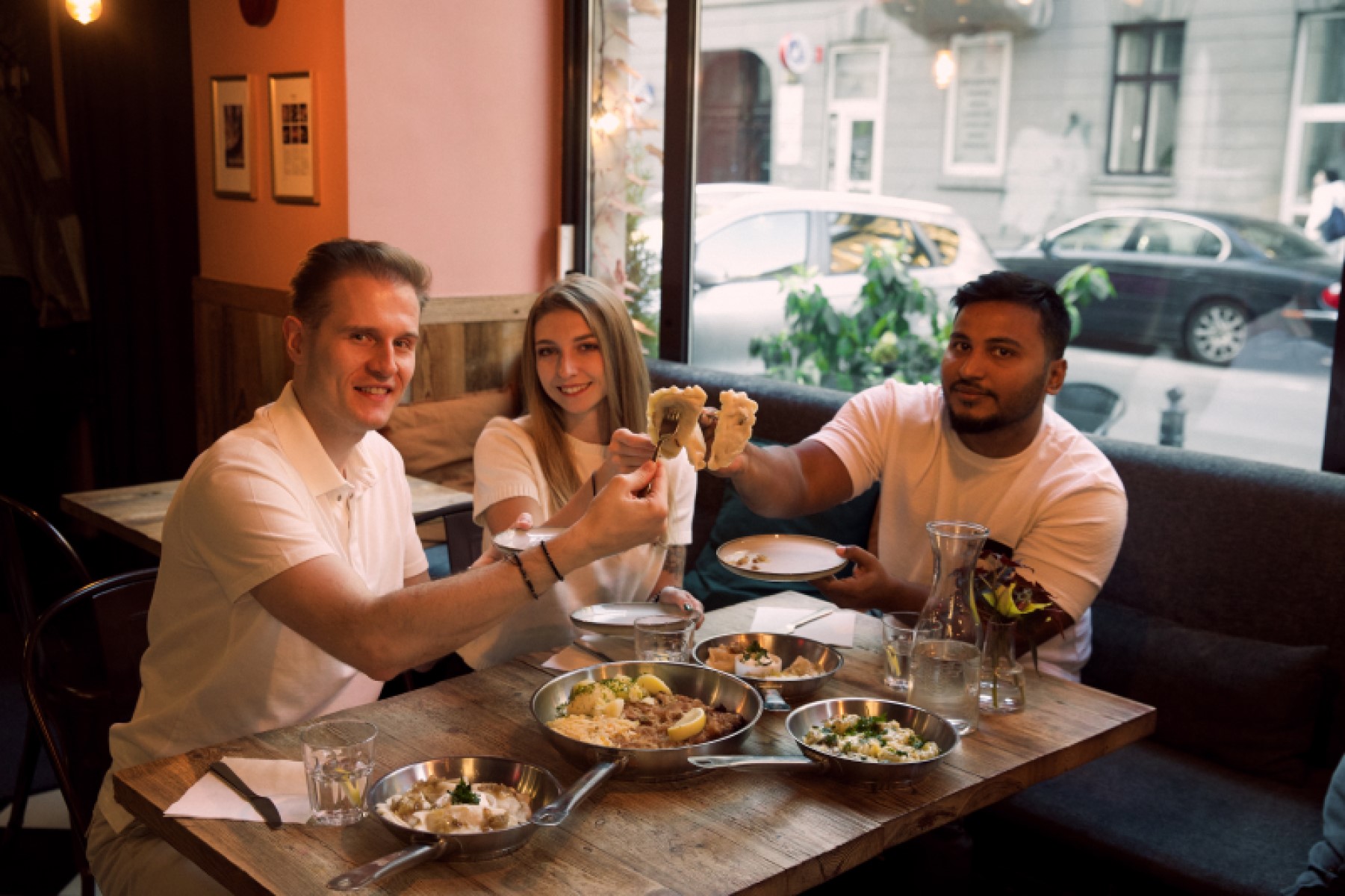
Dumplings filled with various ingredients such as meat, cheese, potatoes, or fruits. They are a staple of Polish cuisine and come in both savory and sweet varieties.
Dinner
Vegetarian options available, can be made vegan or gluten-free upon request.
Żurek
A sour rye soup often made with sausage, potatoes, and hard-boiled eggs. It's traditionally served in a bread bowl.
Lunch/Dinner
Contains meat, can be made vegetarian with substitutions.
Bigos
A hearty hunter's stew made with sauerkraut, fresh cabbage, various meats, and mushrooms. It's often considered Poland's national dish.
Dinner
Contains meat, can be made vegetarian with substitutions.
Pączki
Deep-fried doughnuts filled with jam, custard, or other sweet fillings. They are a popular treat, especially during Fat Thursday (Tłusty Czwartek).
Dessert
Vegetarian, can be made vegan or gluten-free.
Popular Activities
Biking in Łazienki Park
Kayaking on the Vistula River
Picnicking in Łazienki Park
Visiting a traditional Polish spa
Attending a classical music concert at the National Philharmonic
Exploring the Warsaw Uprising Museum
Boating on the ponds in Łazienki Park
Ice skating at the Winter Stadium
Best Time to Visit
June to August
Summer is the peak tourist season with warm weather and numerous outdoor events. It's ideal for exploring the city's parks and outdoor attractions.
15°C to 25°C
59°F to 77°F
Practical Information
Language
- Official: Polish
- Widely spoken: English, German, Russian
- English: Moderately spoken, especially among younger people and in tourist areas
Currency
Polish Złoty (PLN)
Time Zone
GMT+2 (Central European Time, CET)
Electricity
230VV, 50HzHz
Safety Information
Overall Safety Rating: Generally safe, with some areas requiring caution
Warsaw is generally a safe city for travelers, with low violent crime rates. However, petty crime, such as pickpocketing and bag snatching, can occur in tourist areas and on public transportation. Exercise caution and be aware of your surroundings, especially in crowded places and at night.
Important Precautions:
- • Keep valuables secure and out of sight, especially in crowded areas
- • Use licensed taxis or ride-sharing services to avoid scams
- • Be cautious of strangers approaching you with petitions or surveys
Getting there
By air
- Warsaw Chopin Airport • 10 km from city center
By train
Warsaw Central Station, Warsaw Wschodnia Station
By bus
Warsaw Zachodnia Bus Station, Warsaw Wschodnia Bus Station
Getting around
Public transport
The metro system is efficient, clean, and easy to navigate. It's a great way to get around quickly.
Taxis
Available • Apps: Uber, Bolt
Rentals
Car, Bike, Scooter
Neighborhoods
Old Town (Stare Miasto)
Praga
Wola
Śródmieście
Day trips
Łowicz
50 km from Warsaw • Half day to full day
A charming town known for its traditional Polish architecture, horse-drawn carriages, and the famous 'Łowiczki' horse shows. It offers a glimpse into Poland's rural past.
Modlin Fortress
40 km from Warsaw • Half day
A historic 19th-century fortress located on the Narew River, offering a fascinating insight into Poland's military history. The fortress is partially in ruins but is open for exploration and guided tours.
Nieporęt
30 km from Warsaw • Half day
A small town with a rich history, known for its beautiful palace and park complex. The palace is a great example of neoclassical architecture and offers a glimpse into the lives of Polish nobility.
Festivals
Warsaw Autumn Festival • September
Warsaw Film Festival • October
Christmas Markets • December
Pro tips
- Visit the Warsaw Uprising Museum for a powerful and emotional insight into the city's history during WWII
- Explore the vibrant and artsy Praga district for a glimpse into Warsaw's creative scene and local culture
- Take a guided tour of the Warsaw sewer system for a unique and fascinating perspective on the city's history
- Try traditional Polish dishes, such as pierogi, żurek, and bigos, at local restaurants or street food vendors
- Attend a classical music concert at the National Philharmonic or Teatr Wielki for a world-class cultural experience
From $25
per person
Price varies by option
Secure booking
Free cancellation available
Instant confirmation