Bodhgaya Full Day Tour
Active
7h - 8h
For a full refund, cancel at least 24 hours before the scheduled departure time.
Instant confirmation
Mobile or paper ticket accepted
About this experience
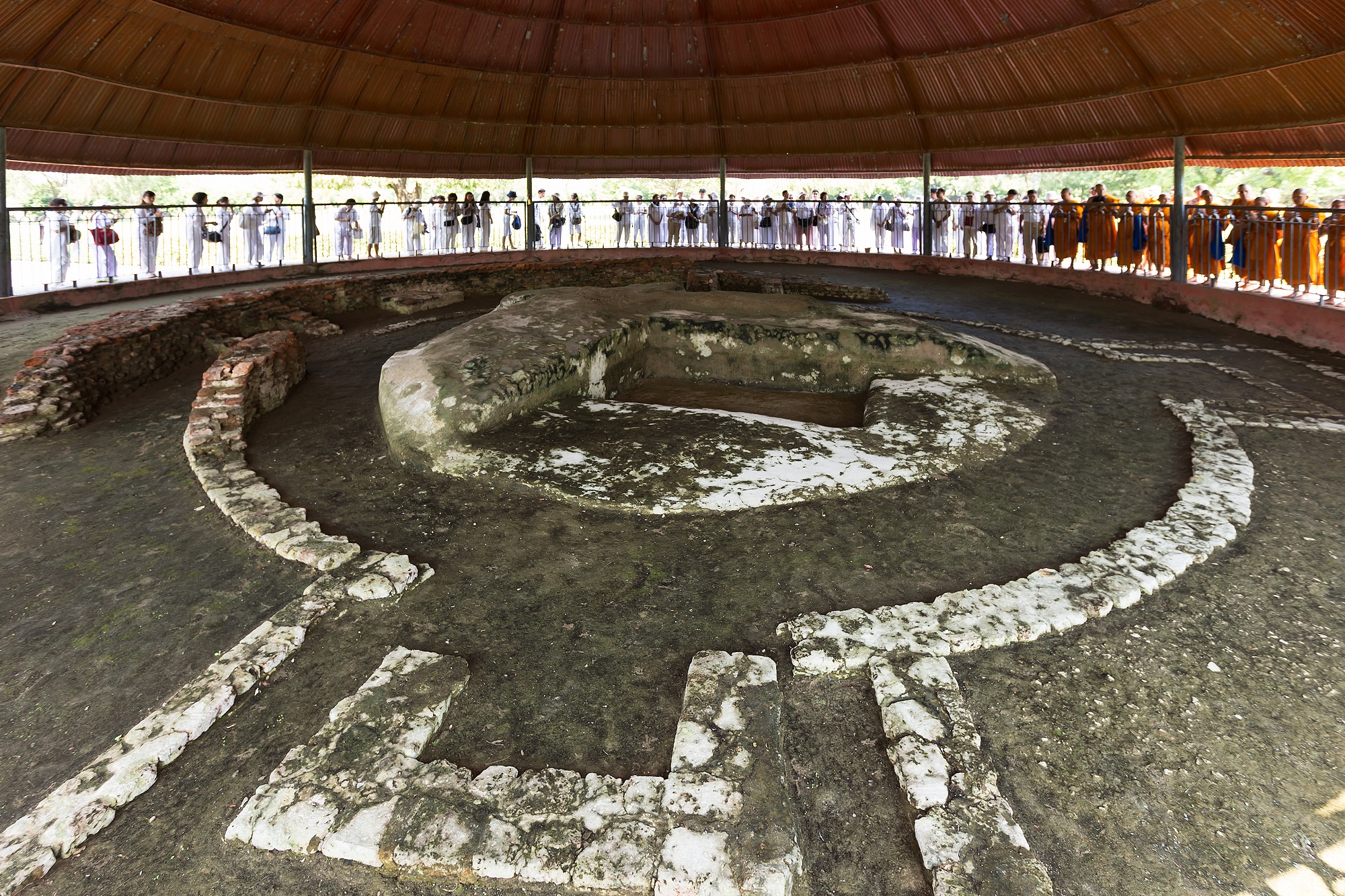
Bodh Gaya is a sacred Buddhist pilgrimage site in Bihar, India, where Gautama Buddha attained enlightenment under the Bodhi Tree. The Mahabodhi Temple, a UNESCO World Heritage Site, is the main attraction, featuring a grand stupa and the holy tree. Other key sites include the Great Buddha Statue and various monasteries built by Buddhist communities worldwide. It is a spiritual hub attracting devotees and tourists seeking peace and meditation.
Available options
CAR + GUIDE
CAR<br/>GUIDE<br/>Pickup included
CAR + GUIDE + LUNCH
LUNCH<br/>CAR<br/>GUIDE<br/>Pickup included
What's included
01 Litre mineral water bottle per person.
Parking and tolls.
Private Air Condition vehicle throughout the tour.
Professional & experienced English Speaking Guide.
Pick up & drop: Bodhgaya city Hotels Only.
All Applicable Taxes.
Detailed itinerary
1
Stop 1
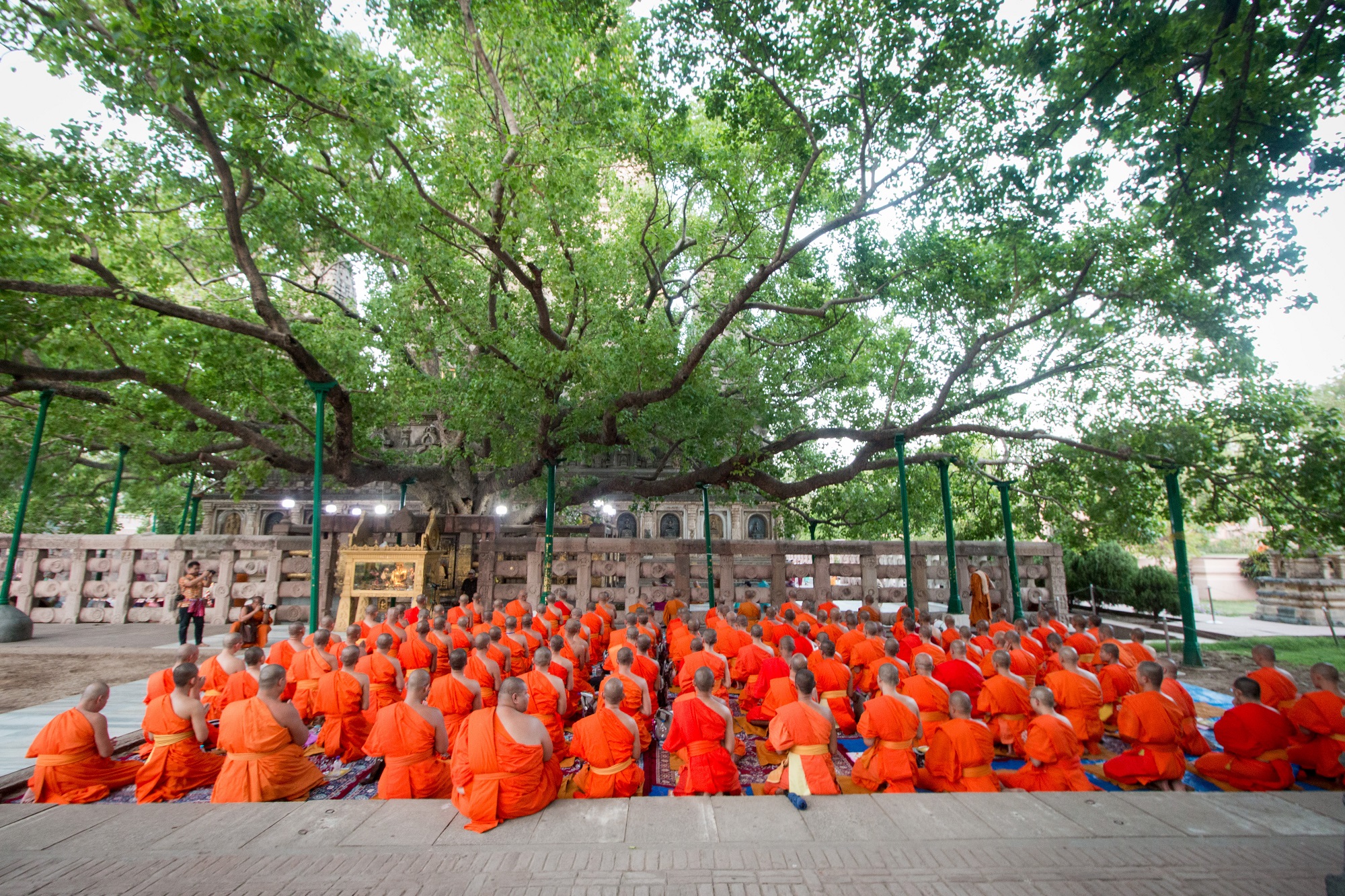
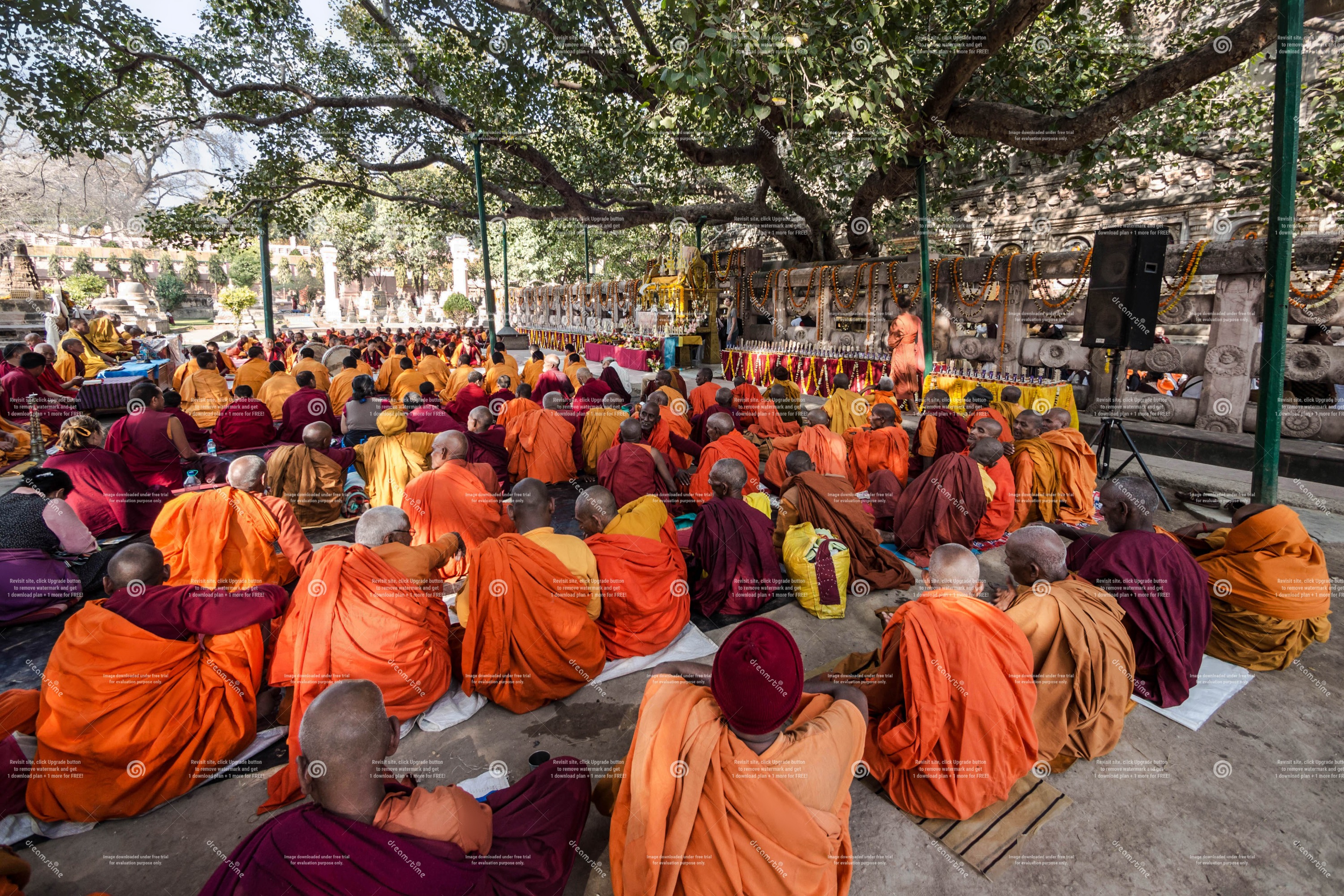
Morning pickup from Bodhgaya city hotels. Then Start your journey at the Mahabodhi Temple & Bodhi Tree a UNESCO World Heritage Site, built in the 5th–6th century CE. Meditate under the sacred Bodhi Tree, where Lord Buddha attained enlightenment.Explore the Vajrasana (Diamond Throne), where Buddha sat in deep meditation. Visit the Mucalinda Lake, where a snake is believed to have protected Buddha from storms. Witness Buddhist monks chanting prayers, creating a peaceful atmosphere.
Note: Free entry (₹100–₹300 for camera/video permits)
2
Stop 2
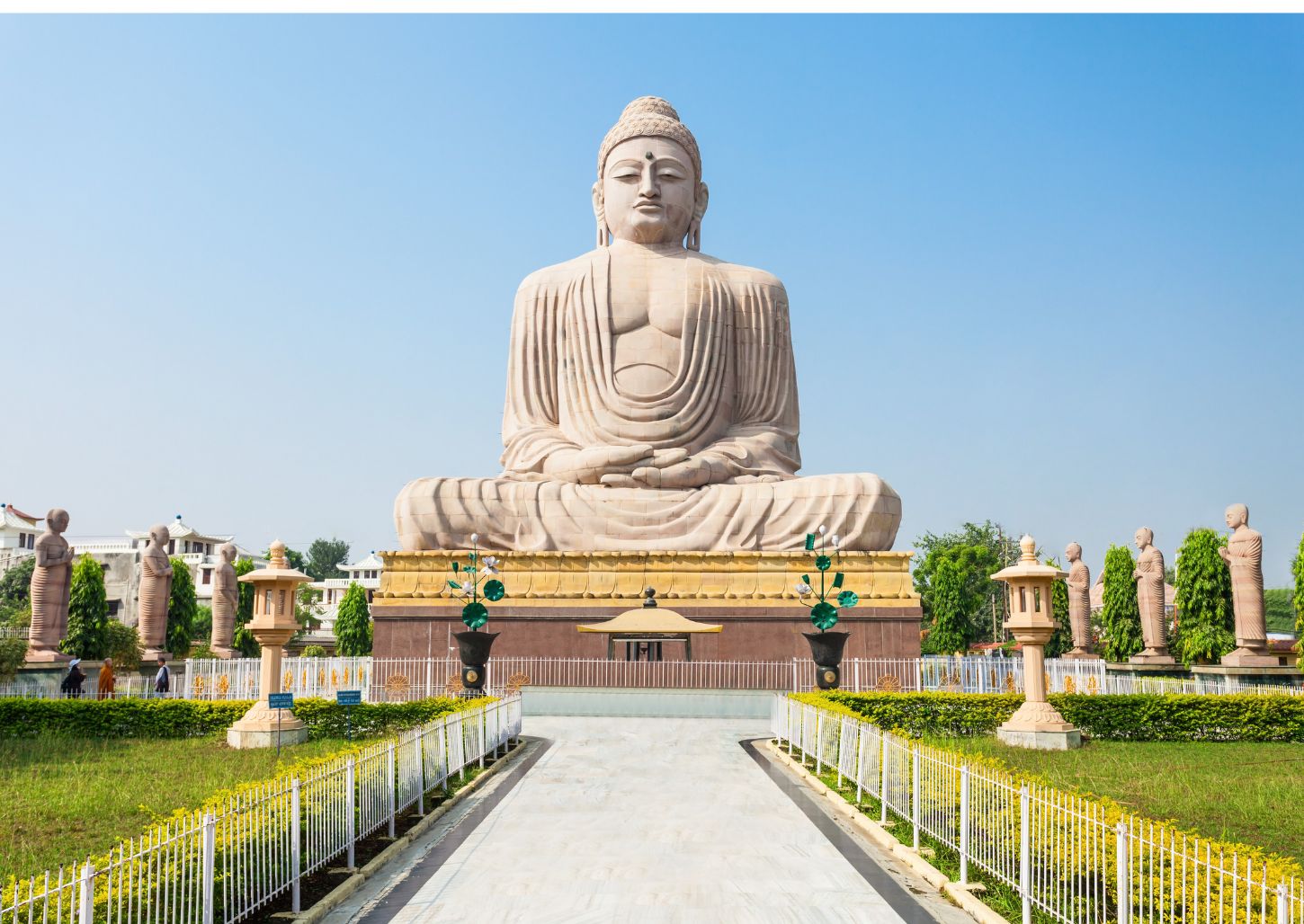
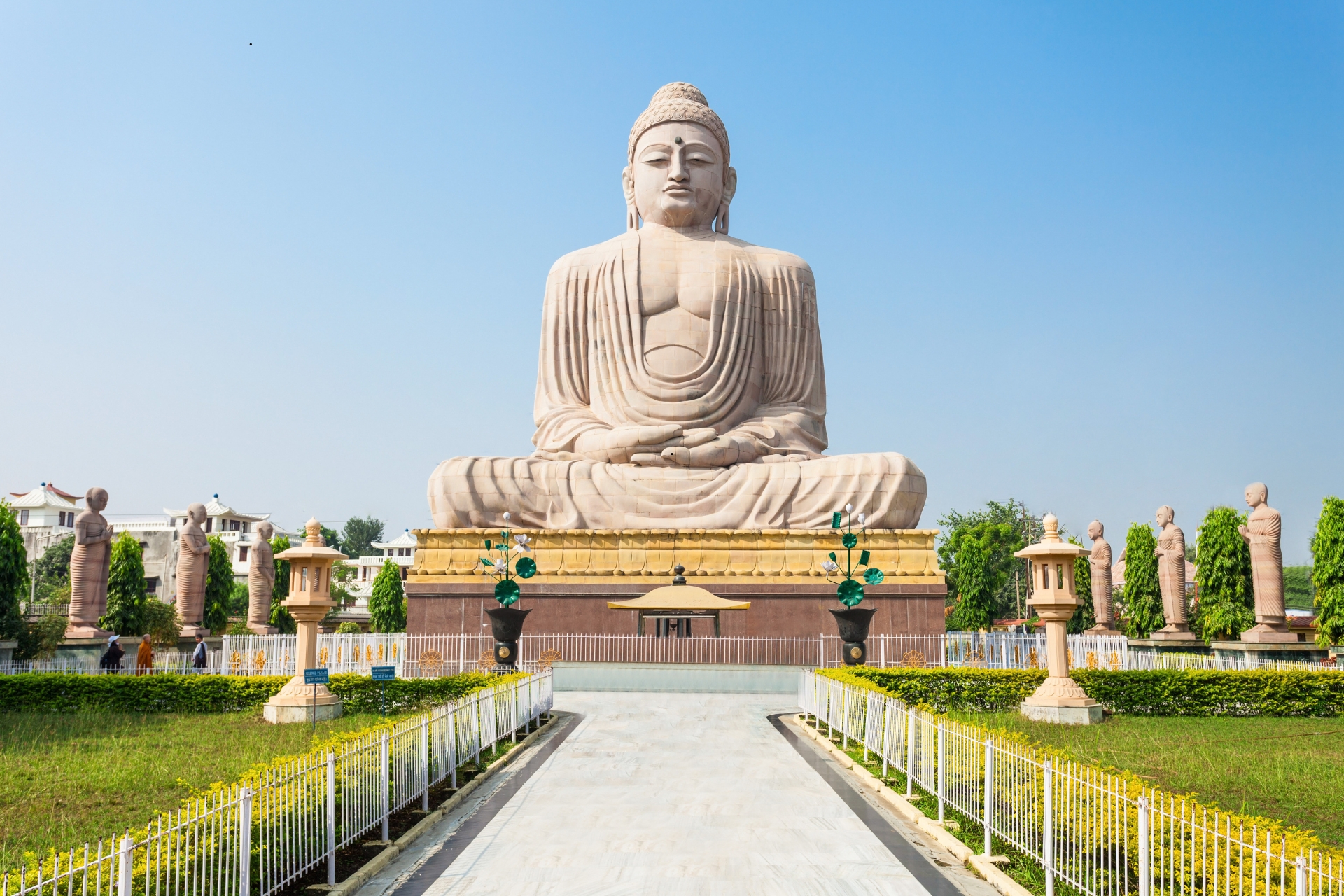
Visit the 80-feet tall Great Buddha Statue, made of sandstone and red granite. And admire the serene posture of Buddha in dhyana mudra (meditative pose), surrounded by smaller disciple statues.
3
Explore the Metta Buddha Statue, a newly built symbol of loving-kindness and compassion. Take in the stunning design and peaceful atmosphere, perfect for meditation and photography.
4
Explore the Thai Monastery, featuring golden Thai-style architecture and a stunning golden Buddha idol. Visit the Indosan Nippon Japanese Temple, built in Japanese architectural style, with intricate wooden carvings.
5
Experience Tibetan Buddhist traditions at the Tibetan Karma Temple, adorned with prayer wheels and colorful murals. Visit the Royal Bhutan Monastery, built by Bhutanese monks, featuring beautiful carvings depicting Buddha’s life.
After visiting Tibetan & Bhutanese Monastery, enjoy lunch at good restaurant.
6
Visit Sujata Stupa, built in honor of Sujata, a woman who offered kheer (rice pudding) to Buddha before his enlightenment. Explore Sujata Kuti, the village where she lived, and learn about this significant pre-enlightenment event.
7
Explore the Bodh Gaya Archaeological Museum, showcasing ancient Buddhist relics, sculptures, and scriptures. Admire artifacts from the Mauryan and Gupta periods, including statues of Buddha and Bodhisattvas.
8
Visit the Sleeping Buddha Statue, symbolizing Buddha’s Mahaparinirvana (final liberation). Observe its peaceful expression, representing enlightenment beyond life and death.
Later drop back to your hotel.
What's not included
Tips and gratuities are optional, based on guest discretion and service satisfaction.
Entrance fee for the monuments is charged directly at the site
Available languages
Guide guide
EN
Important information
Infants are required to sit on an adult’s lap
Suitable for all physical fitness levels
If pickup from Gaya hotels, railway station, or airport is required, an additional charge will apply, payable directly.
Tour can be customized as per customer's requirement or location.
Car Type: for one to two people, four Seater Sedan.
Car Type: for three to four people, five Seater Innova.
Car Type: for five to eight people, nine Seater Tempo Traveler.
The entrance fees mentioned are approximate, as per government norms, and are subject to change in the future.
About Bodh Gaya
Bodh Gaya is a sacred Buddhist site where Siddhartha Gautama, the Buddha, attained enlightenment under the Bodhi Tree. It's a spiritual hub with ancient temples, monasteries, and a profound sense of peace. The Mahabodhi Temple Complex, a UNESCO World Heritage Site, is the focal point of pilgrimage and meditation.
Top Attractions
Mahabodhi Temple Complex
The Mahabodhi Temple Complex is a UNESCO World Heritage Site and the most sacred Buddhist pilgrimage site. It includes the Bodhi Tree, where Buddha attained enlightenment, and the Mahabodhi Temple, a magnificent structure with intricate carvings.
Religious/Historical
2-3 hours
Free (donations welcome)
Great Buddha Statue
The 80-foot tall statue of Buddha in the Mahabodhi Temple Complex is one of the largest Buddha statues in India. It is a significant landmark and a focal point for meditation and reflection.
Religious/Architectural
30 minutes to 1 hour
Free (donations welcome)
Vishnupad Temple
Vishnupad Temple is a Hindu temple dedicated to Lord Vishnu. It is built on the site where it is believed that Lord Vishnu left his footprints. The temple is an example of ancient Indian architecture and is a significant pilgrimage site for Hindus.
Religious/Historical
1 hour
Moderate (donations welcome)
Sujata Stupa
Sujata Stupa marks the spot where Sujata, a village girl, offered a meal to the Buddha before his enlightenment. The stupa is a peaceful place for meditation and reflection.
Religious/Historical
30 minutes to 1 hour
Free (donations welcome)
Thai Monastery (Wat Thai Bodhgaya)
The Thai Monastery is a beautiful example of Thai architecture and is known for its intricate carvings and golden spires. It is a peaceful place for meditation and reflection.
Religious/Architectural
30 minutes to 1 hour
Free (donations welcome)
Bodh Gaya Museum
The Bodh Gaya Museum houses a collection of artifacts related to the history and culture of Bodh Gaya. It provides valuable insights into the region's rich heritage.
Museum
1 hour
Moderate (entry fee applies)
Must-Try Local Dishes
Litti Chokha
A traditional Bihari dish made of roasted wheat balls (litti) served with a spicy mashed vegetable (chokha) made from roasted eggplant, potatoes, and tomatoes.
Main Course
Vegetarian, Gluten-free (if made with gluten-free flour)
Dal Pitha
A Bihari specialty made of lentil dumplings (pitha) cooked in a spicy tomato-based gravy.
Main Course
Vegetarian
Malpua
A sweet pancake made from flour, bananas, and sugar, deep-fried and soaked in sugar syrup.
Dessert
Vegetarian
Thukpa
A Tibetan noodle soup with vegetables, meat, or tofu, often flavored with garlic and ginger.
Main Course
Vegetarian or non-vegetarian options available
Popular Activities
Hiking in nearby hills
Exploring ancient ruins
Meditation at the Mahabodhi Temple Complex
Visiting hot springs in Rajgir
Visiting monasteries and temples
Attending Buddhist festivals
Boating in nearby lakes
Visiting during winter for pleasant weather
Best Time to Visit
October to March
The best time to visit Bodh Gaya is during the cooler months. The weather is pleasant, making it ideal for sightseeing and outdoor activities.
15°C to 30°C
59°F to 86°F
Practical Information
Language
- Official: Hindi, Bhojpuri
- Widely spoken: English
- English: Moderately spoken in tourist areas
Currency
Indian Rupee (INR)
Time Zone
GMT+5:30 (Indian Standard Time)
Electricity
230VV, 50HzHz
Safety Information
Overall Safety Rating: Generally safe
Bodh Gaya is generally safe for travelers, but it is important to be aware of your surroundings and take necessary precautions. Petty crime, such as pickpocketing and scams, can occur, especially in crowded areas.
Important Precautions:
- • Be cautious of your belongings in crowded areas
- • Use reputable tour operators and guides
- • Avoid walking alone at night in less crowded areas
Getting there
By air
- Gaya International Airport • 12 km from Bodh Gaya
By train
Gaya Junction
By bus
Gaya Bus Stand
Getting around
Public transport
Local buses are affordable and cover most areas within Bodh Gaya. They can be crowded and may not have fixed schedules.
Taxis
Available • Apps: Ola, Uber
Rentals
Car, Bike, Scooter
Neighborhoods
Temple Area
Market Area
Residential Area
Day trips
Nalanda
65 km from Bodh Gaya • Full day
Nalanda is an ancient center of learning and a UNESCO World Heritage Site. It is home to the ruins of Nalanda University, one of the world's first residential universities.
Rajgir
70 km from Bodh Gaya • Full day
Rajgir is an ancient city with a rich history and religious significance. It is known for its hot springs, ancient stupas, and the Vulture's Peak where Buddha preached.
Vaishali
80 km from Bodh Gaya • Full day
Vaishali is an ancient city known for its association with Lord Buddha and the Licchavi kingdom. It is home to several Buddhist and Jain pilgrimage sites.
Festivals
Buddha Purnima • Full moon day in May/June (varies each year)
Kalachakra Initiative • Varies (typically every few years)
Vesak (Vaisakhi) • April/May (varies each year)
Pro tips
- Visit the Mahabodhi Temple Complex early in the morning for a peaceful meditation experience and to avoid crowds
- Hire a local guide or join a guided tour to gain a deeper understanding of the history and significance of Bodh Gaya's attractions
- Try local Bihari and Tibetan cuisine at the many restaurants and street stalls in the market area
- Attend a meditation retreat or teachings by Buddhist monks to immerse yourself in the spiritual ambiance of Bodh Gaya
- Explore the international monasteries in Bodh Gaya to learn about different Buddhist traditions and practices
From $25
per person
Price varies by option
Secure booking
Free cancellation available
Instant confirmation