Seine River Direct Access Guided Cruise
Active
1h
For a full refund, cancel at least 24 hours before the scheduled departure time.
Instant confirmation
Mobile or paper ticket accepted
About this experience
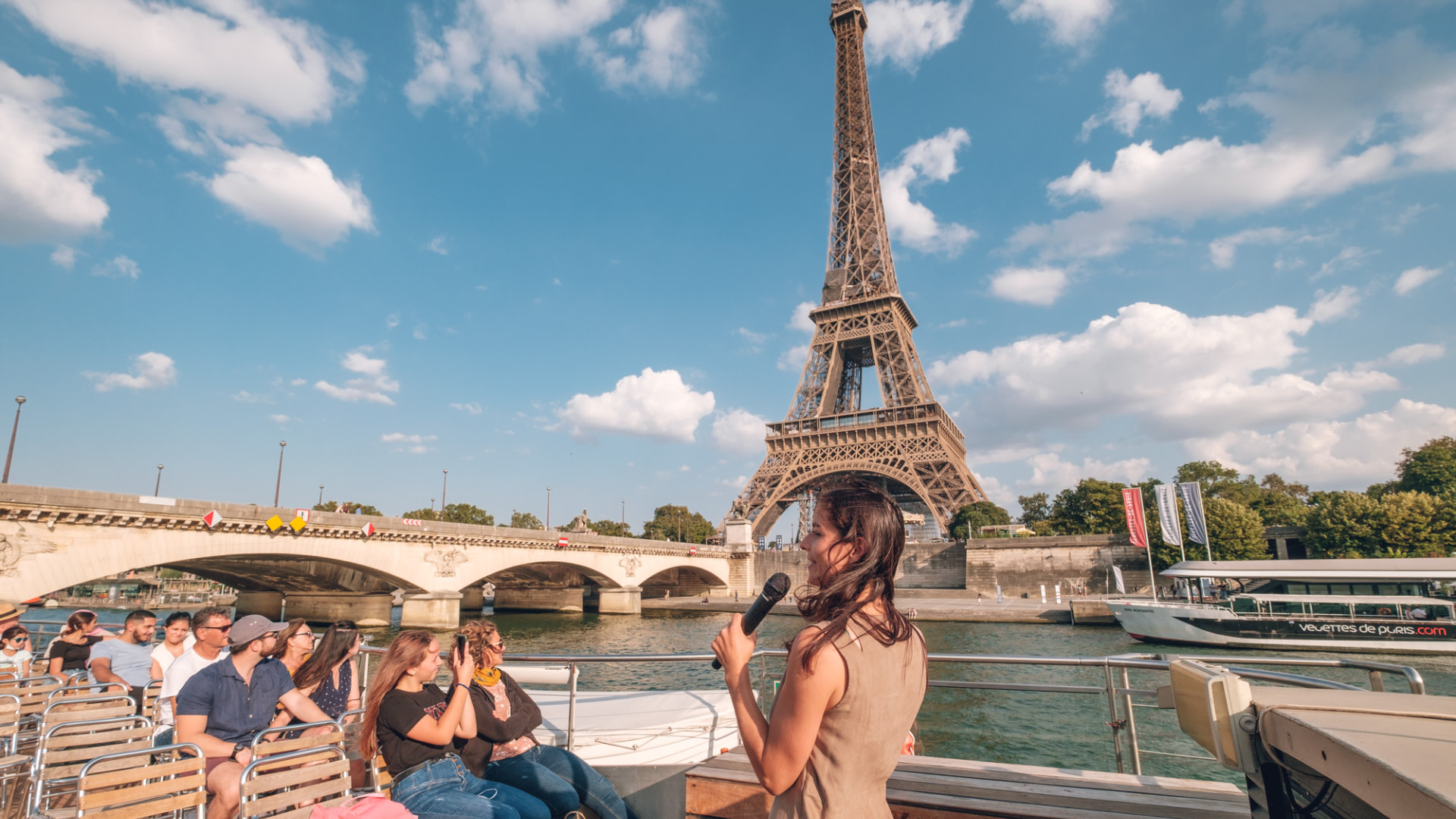
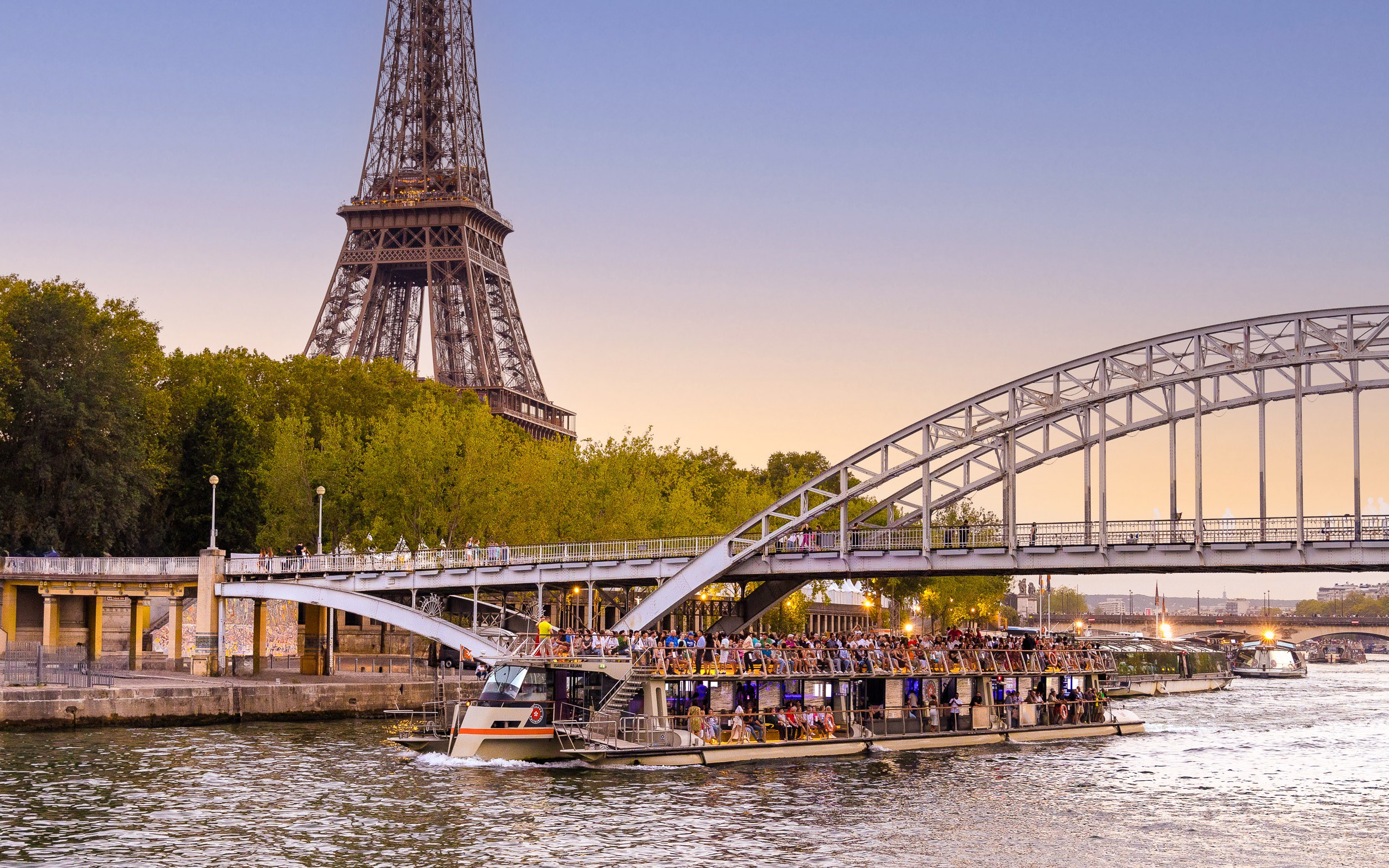
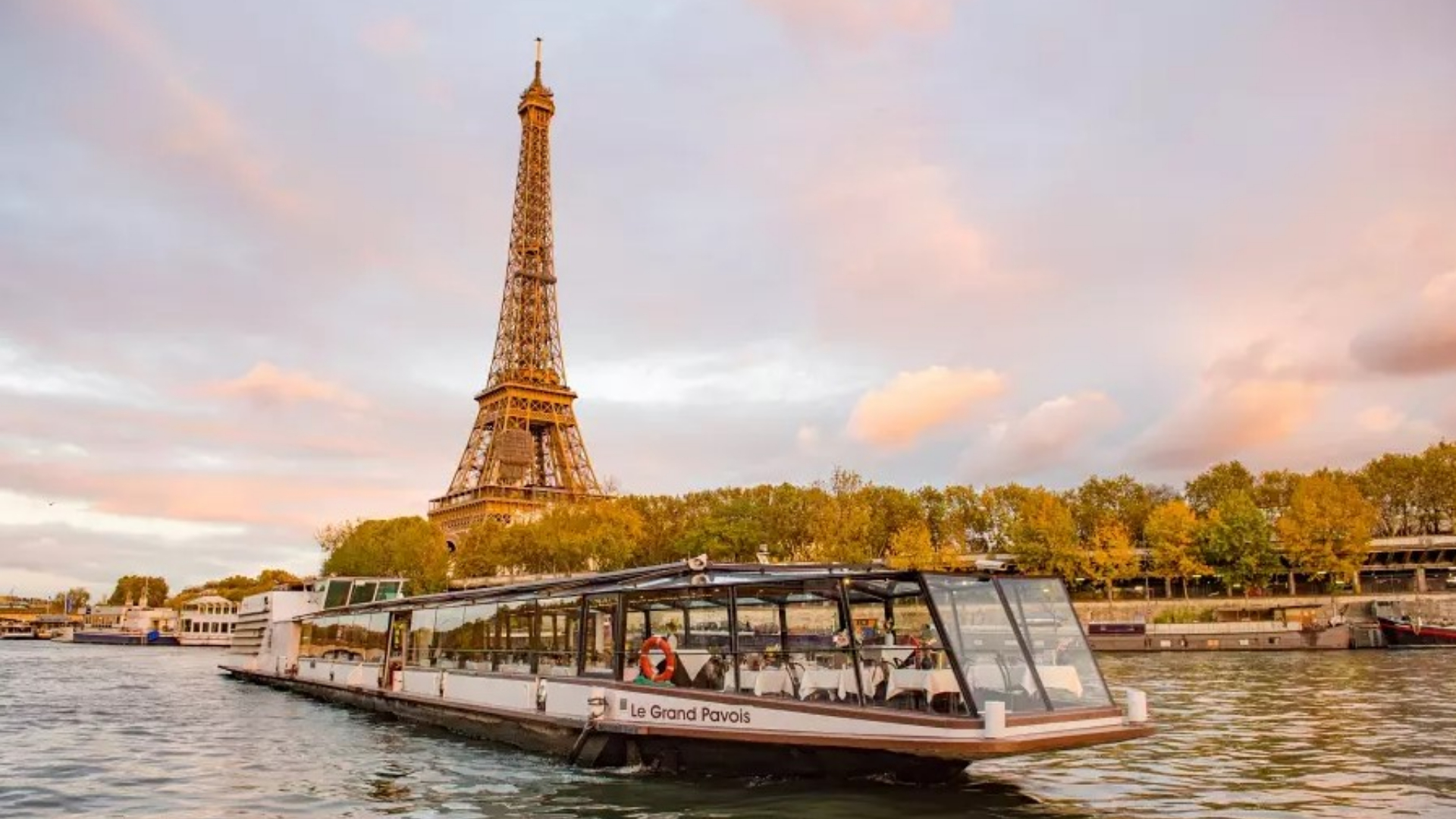
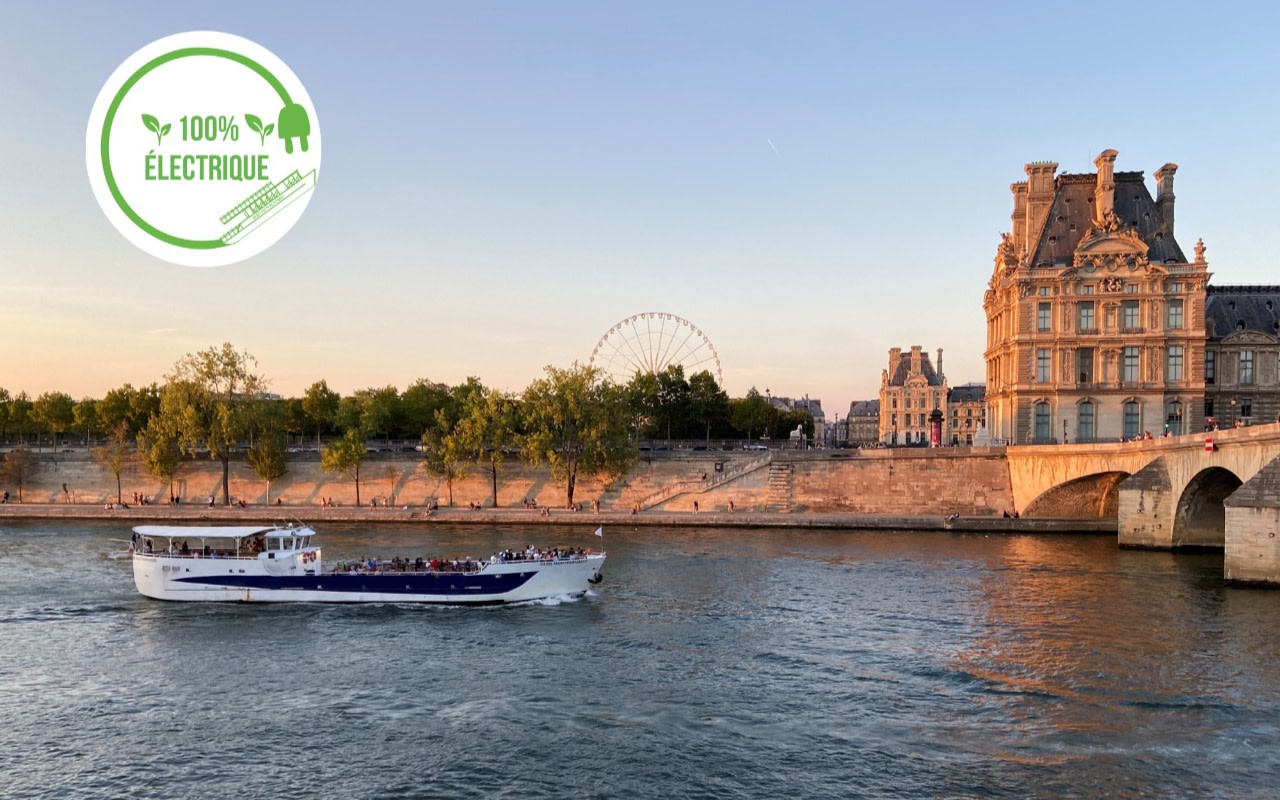
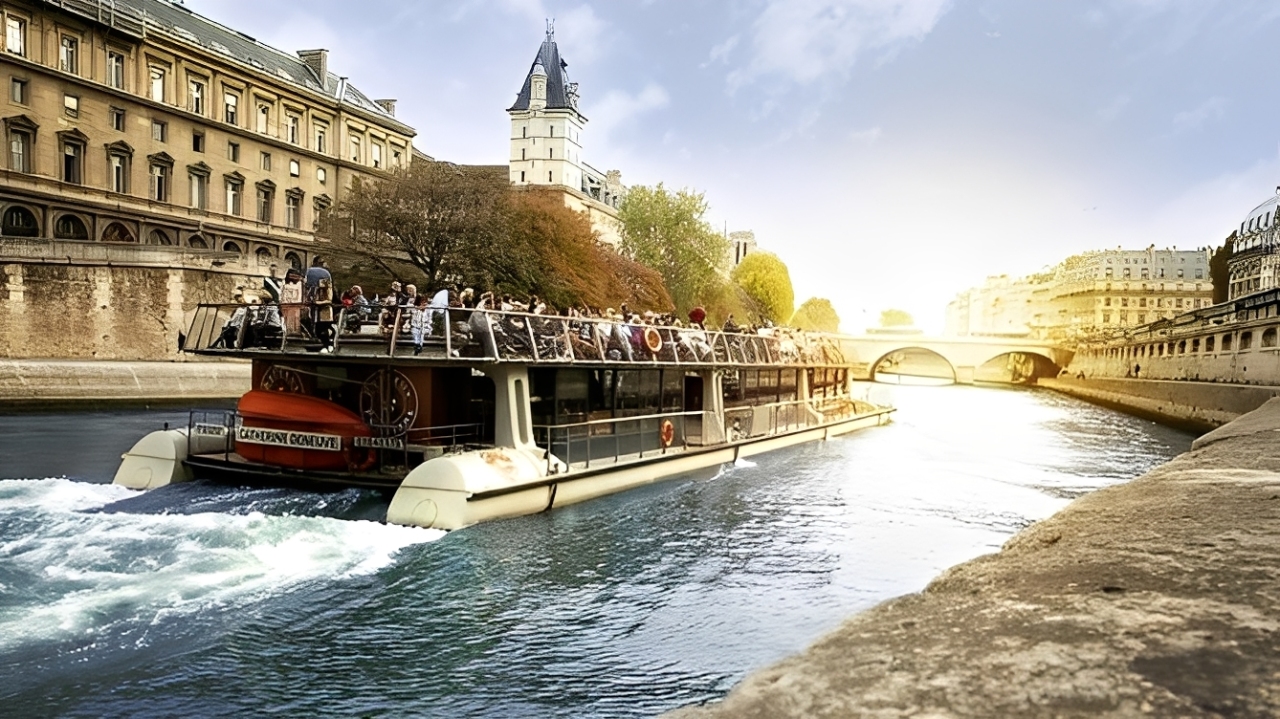
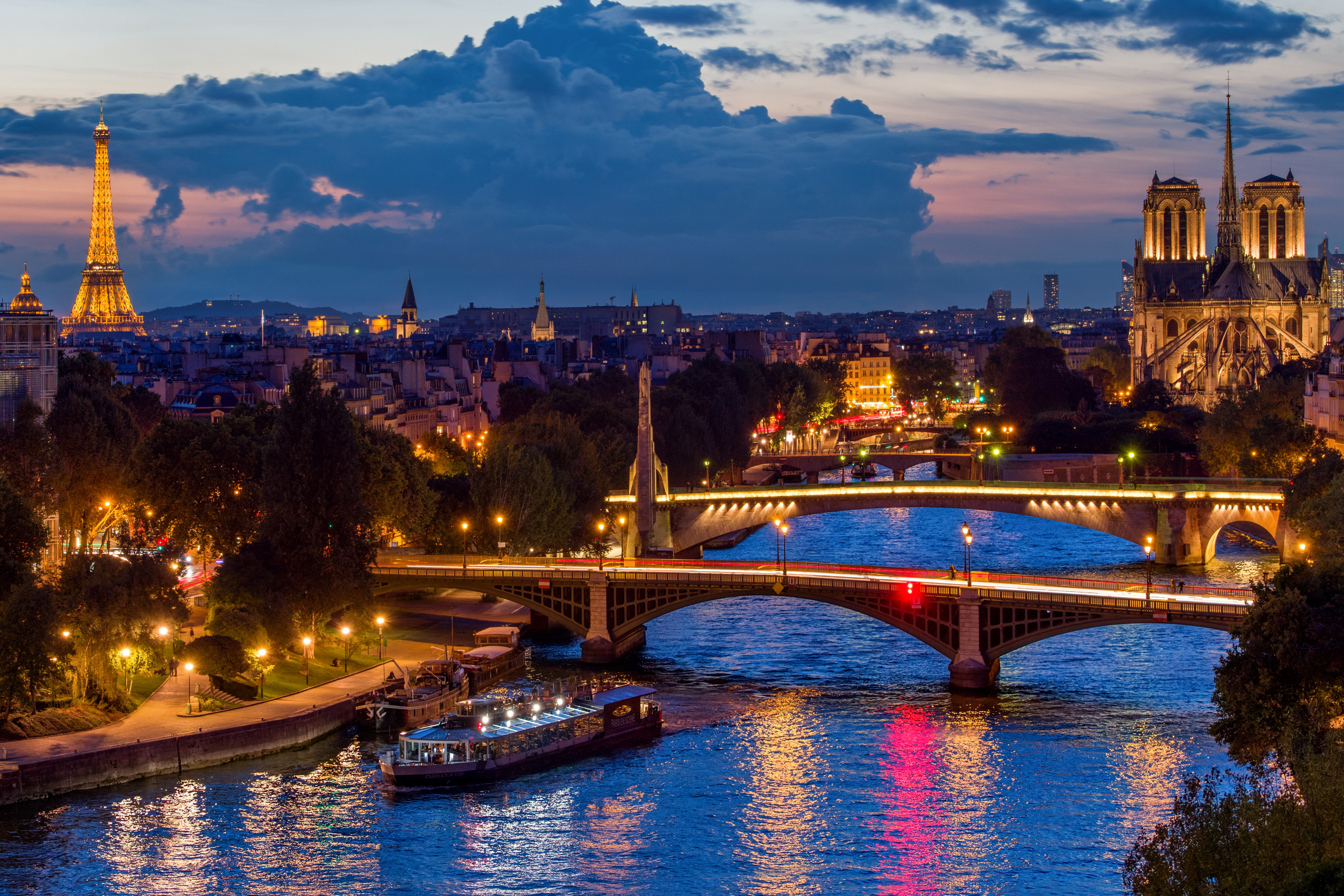
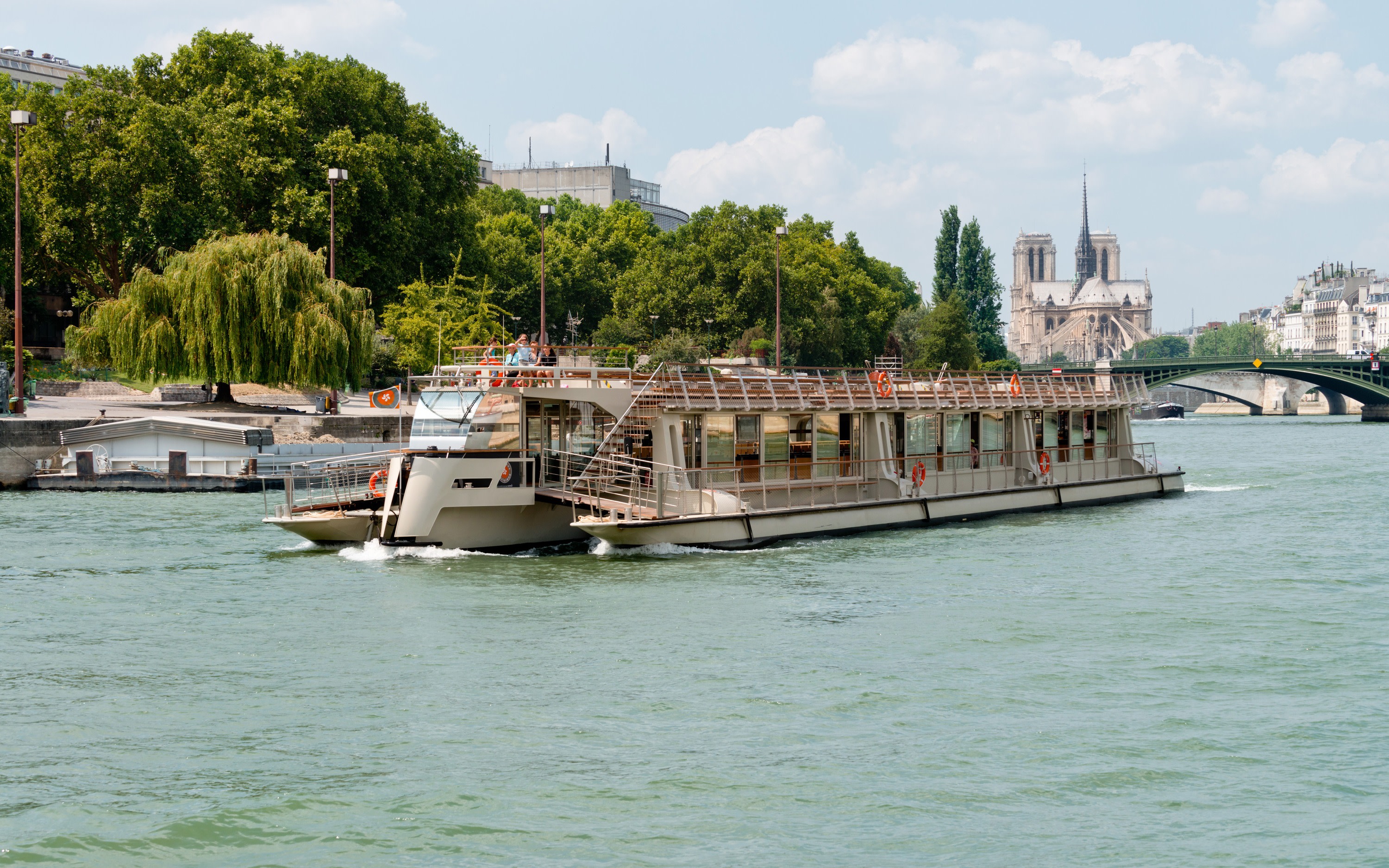
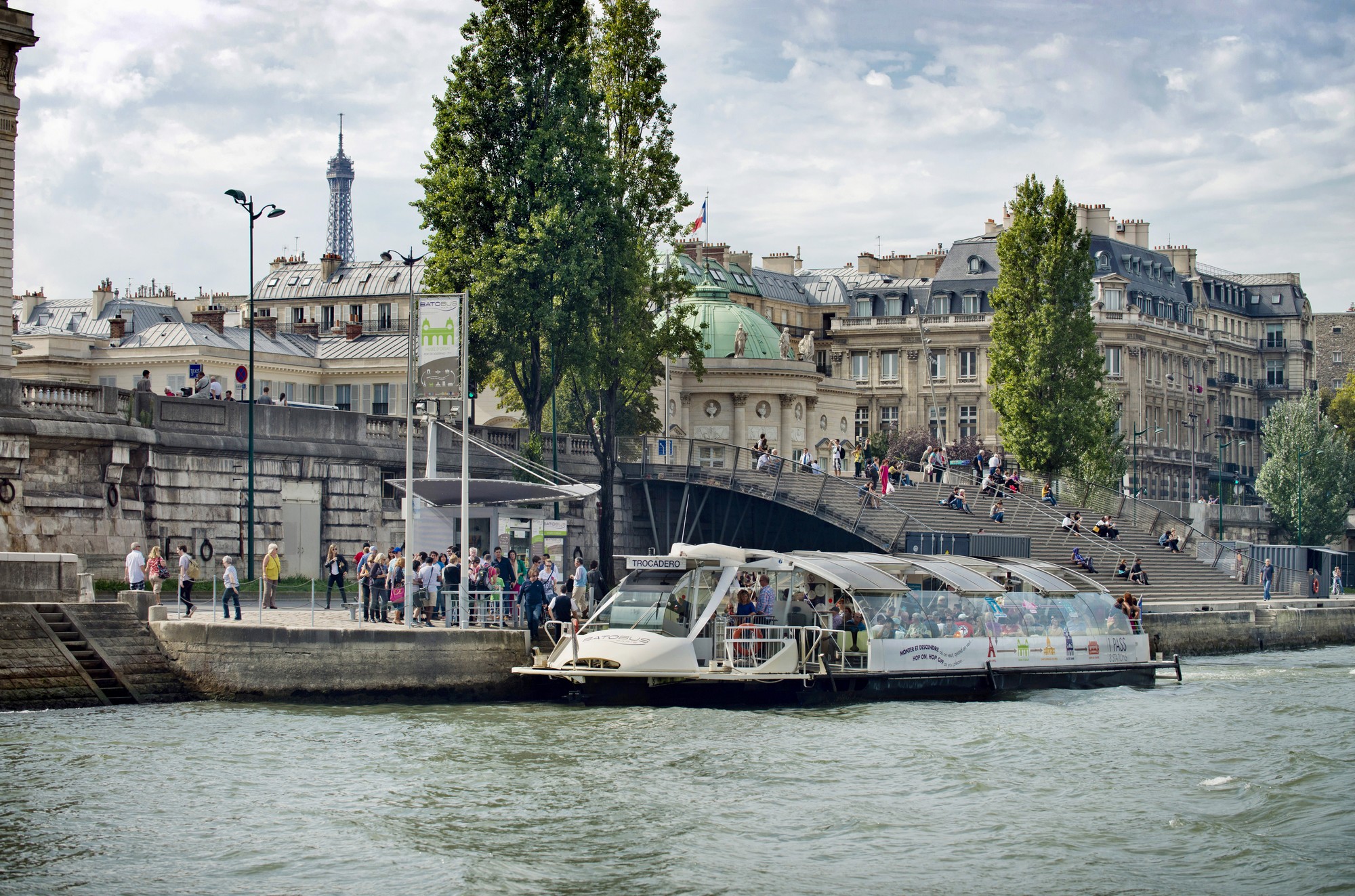
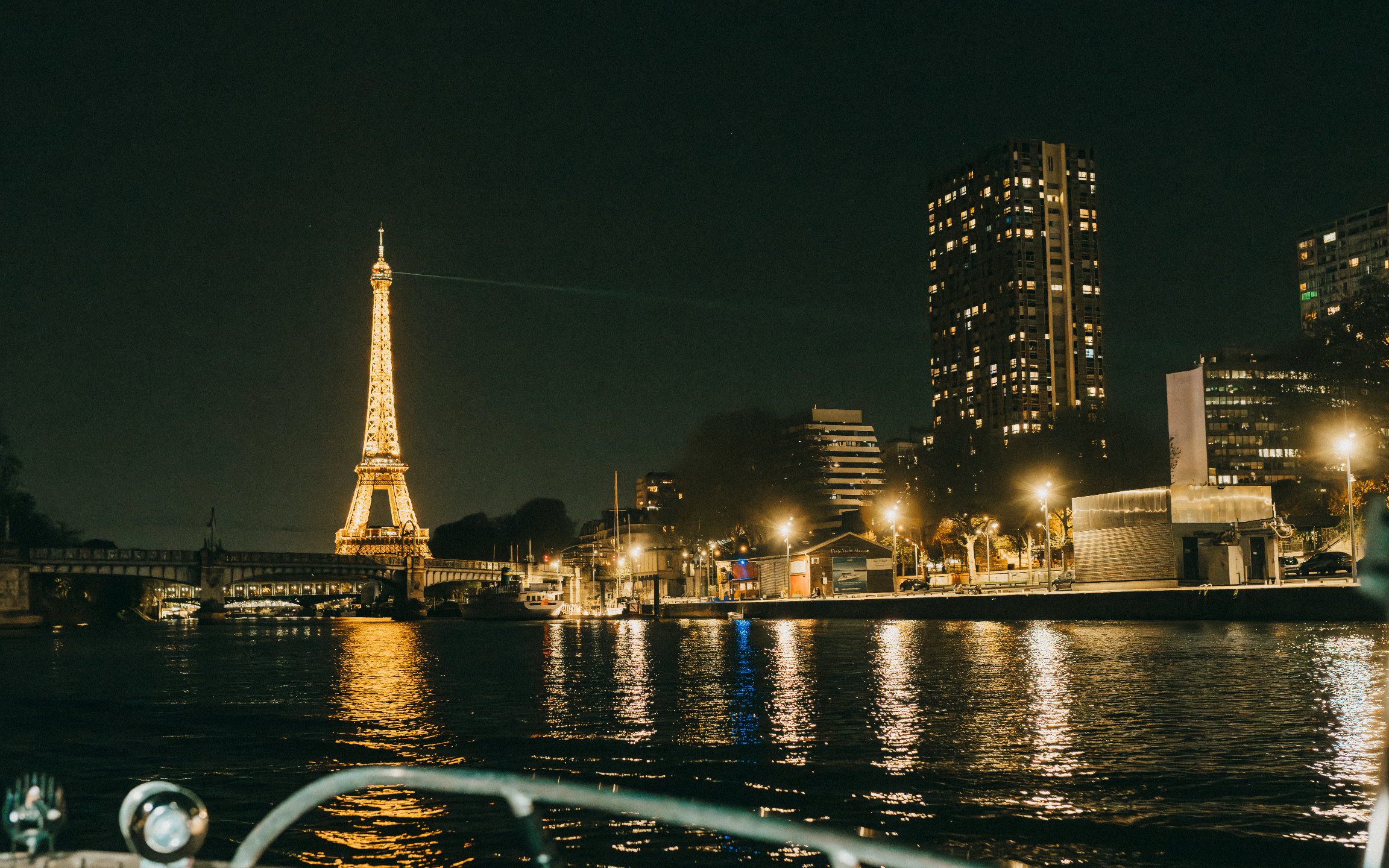
Embark on one of our 100% electric boats and discover all the secrets of Paris thanks to the expert knowledge of our guide by passing by the most emblematic monuments of Paris: the Eiffel Tower, Notre-Dame Cathedral, Orsay Museum, Louvre Museum, Grand Palais ... This cruise has been created in order to surprise you between breathtaking views of the monuments on the docks of the Seine river and unique comments. Parisians or visitors, adults or children, wonderement assured.
The best way to visit Paris, guaranteed without blister on your feet!
Available options
Seine River Guided Cruise Direct Access Ticket with Vedettes de Paris
What's included
1H Cruise on 100% electric boat
Live Guide
Detailed itinerary
1
Stop 1
Pass by
The Eiffel Tower was built by French engineer Gustave Eiffel, for the 1889 Universal Exhibition in Paris. This magnificent technical feat was achieved in a mere two years, two months and five days. It stands 324 metres tall, and the metal structure weighs 7,300 tonnes. Parisians were scandalised by its metallic look and height. It was built to last
20 years. A radio antenna was added to the top in 1903, saving the tower from demolition. It has now become the monument symbolic of Paris.
2
The American Church in Paris with its green clock-tower was the first American Church built outside the US, in 1931. The stained-glass windows by Louis Comfort Tiffany have been listed as a historic monument.
3
With its golden dome over the royal chapel, the Hotel des Invalides was built to the orders of Louis XIV as a military hospital for injured soldiers and officers. Today, the royal chapel houses the tomb of France’s first Emperor, Napoleon I.
4
Stop 4
Pass by
Alexandre III bridge was built for the 1900 Universal Exhibition and to seal the Franco-Russian Alliance. Its central feature is the Paris coat of arms covered in gold leaf and two nymphs symbolising the river Seine.
On the other side of the bridge, you’ll see the arms of Saint Petersburg, and two nymphs symbolising the river Neva.
5
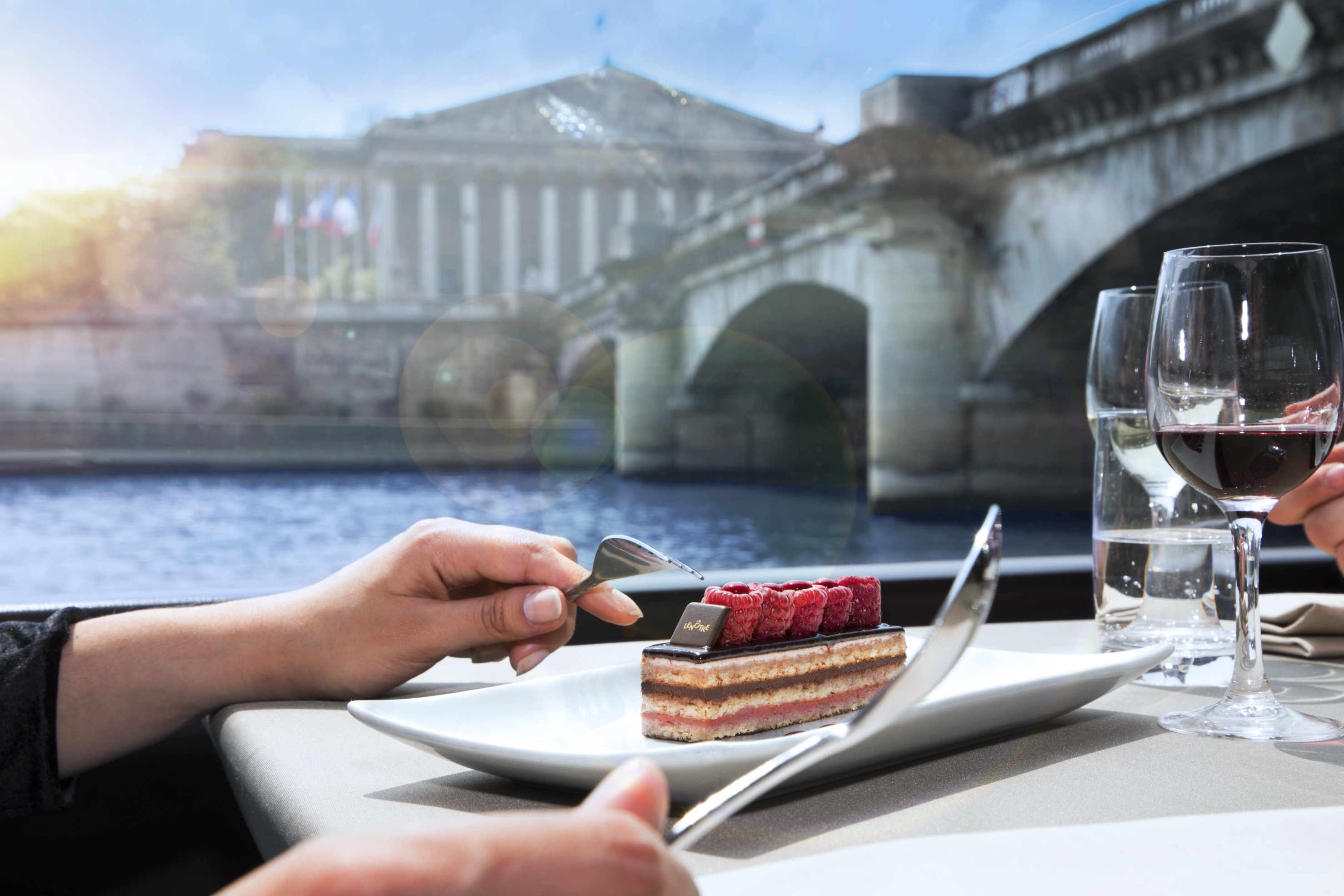
Pont de la Concorde was built using stones from the former Bastille prison after it was famously stormed during the French Revolution in 1789. It leads to the Palais Bourbon on your right, seat of the National Assembly, and to your left to the Place de la Concorde.
6
Stop 6
Pass by
The former Orsay railway station, built for the 1900 Universal Exhibition in Paris, which had a railway line leading to the south-west of France, was turned into a museum in the 1980s to house
19th-century art, including works by the greatest Impressionists and Post-Impressionists such as Auguste Renoir, Claude Monet and Vincent Van Gogh.
7
The Institut de France, former Collège des Quatre Nations, was built using funds bequeathed by cardinal Mazarin in 1661. It houses five academies, the most famous being the Académie Française. Its members’ job is to contribute to the French language, updating and modifying the official French dictionary.
8
Stop 8
Pass by
The Pont Neuf, or New Bridge, which is actually the oldest bridge in Paris was the first Parisian bridge to be built in stone with pavements rather than houses lining it.
It features 381 grimacing stone masks, all individually decorated and unique.
9
Pont Saint-Michel, built at the request of Napoleon III, hence the two imperial Ns on its pillars. To the right, it leads to the Latin Quarter, so called because students at the University of Paris there spoke Latin until the 19th century.
10
Stop 10
Pass by
Ile de la Cité is the presumed birthplace of Paris. The Parisii tribe first settled here 300 years before the Common Era, calling the island Lutetia.
11
Stop 11
Paris’s Gothic masterpiece, Notre-Dame Cathedral. Its construction started in 1163 and was completed nearly two centuries later, in 1345. The cathedral features a host of gargoyles
and sculptures.
The south rose window, called the Rose du Midi, is dedicated to the New Testament and was a gift from the French king, Saint Louis.
12
The Tournelle Bridge, and on its right, a statue of Saint Genevieve, patron saint of Paris, with her back to us. It was sculpted by Paul Landowski, who later sculpted the Christ the Redeemer
statue in Rio de Janeiro.
13
Stop 13
Pass by
The Arab World Institute was inaugurated in 1987 by president François Mitterrand. The cultural centre focuses on history, art, society, religions and science in the Arab world.
14
Featuring former town houses dating from the 17th century, like the Hotel Lambert and the Hotel Lauzun, Ile Saint Louis is one of the most prestigious areas of Paris. Many celebrities have lived there, including Charles Baudelaire and Georges Moustaki.
15
Stop 15
Pass by
Since 1357, the Hotel de Ville de Paris has been the seat of the Paris City Council. The construction draws much inspiration from Neo-Renaissance style. It is open to visitors, you can visit the banquet hall, designed to the template of the Hall of Mirrors in Versailles.
16
Stop 16
Pass by
The Louvre museum used to be a royal palace. It was turned
into a museum in 1793. It is the largest monument in Paris with
over four kilometres of façades and nearly 14 kilometres of galleries. The Louvre is the most visited museum in the world, exhibiting 38,000 works, including the Winged Victory of Samothrace, the Venus de Milo and of course the Mona Lisa.
17
Stop 17
Pass by
The place de la Concorde was where King Louis XVI and his wife Queen Marie-Antoinette were executed during the French Revolution. The central feature is an obelisk from Luxor in Egypt. It is 34 centuries old and was brought to France in 1836.
18
Stop 18
Pass by
Built for the 1900 Universal Exhibition in Paris, the Grand Palais is a great feat of architecture. Its glass roof is considered to be the largest in Europe. It has now become a venue for cultural events and exhibitions, a funfair and the largest skating rink in Europe.
19
Stop 19
Pass by
The Palais de Chaillot is located on the place du Trocadero. Built in 1937 for the Universal Exhibition, it comprises two Neoclassical pavilions, flanking an esplanade that overlooks the Trocadero gardens. It houses the City of Architecture and Heritage, the National Navy Museum, the Museum of Humankind, and the National Theatre of Chaillot.
What's not included
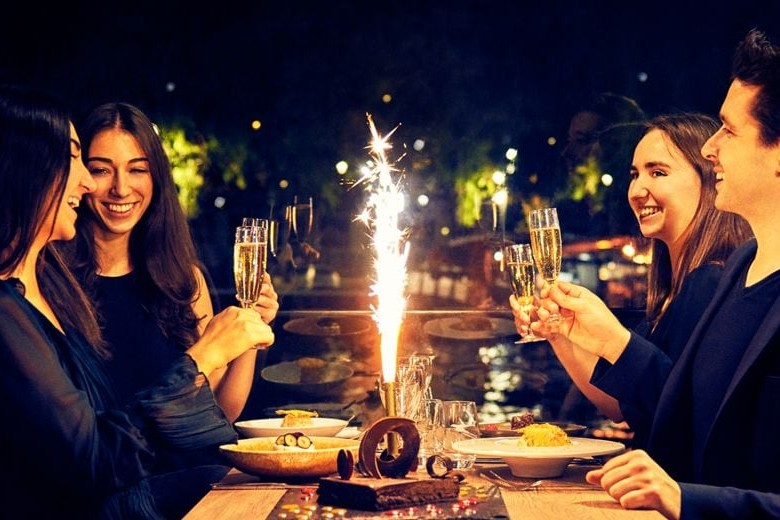
Glass of Duval Leroy Champagne (if not selected)
Available languages
Audio guide
DE
EN
IT
FR
NL
ES
Written guide
DE
EN
IT
FR
NL
ES
Guide guide
EN
FR
Reviews breakdown
Viator
4.1
106 reviews
5★
65
4★
15
3★
10
2★
8
1★
8
Tripadvisor
4.1
81 reviews
5★
47
4★
17
3★
3
2★
4
1★
10
Important information
Wheelchair accessible
Public transportation options are available nearby
Infants are required to sit on an adult’s lap
Transportation options are wheelchair accessible
Suitable for all physical fitness levels
We only serve alcoholic drinks to travelers 18 years old and above. Minor travelers under 18 years old will be served non-alcoholic drinks.
Meeting point
The boarding is on the dock at the foot of the Eiffel Tower, down the 3 big flags (red, white, blue) "Vedettes de Paris".
Go straight to the boarding control to show your ticket.
Metro station : Trocadero (line 6/9), Bir Hakeim (line 6) orChamp de Mars-Tour Eiffel (RER line C).
Important notes
Please present your e-ticket Directly at at the embark zone 20 minutes before the cruise.
About Paris
Paris, the capital of France, is a city steeped in history, art, and romance. Known for its iconic landmarks, world-class museums, and charming neighborhoods, Paris offers a unique blend of timeless elegance and modern vibrancy. From the Eiffel Tower to the Louvre, the city is a treasure trove of cultural and historical gems.
Top Attractions
Eiffel Tower
The Eiffel Tower is Paris's most iconic landmark and a symbol of France. Built in 1889 for the World's Fair, it offers breathtaking views of the city.
Architecture
2-3 hours
€17.10-€26.80 (depending on the level)
Louvre Museum
The Louvre is the world's largest art museum and a historic monument in Paris. It houses thousands of works of art, including the Mona Lisa and the Venus de Milo.
Museum
3-4 hours
€17 (full price), free for under 18s and EU residents under 26
Notre-Dame Cathedral
Notre-Dame is a masterpiece of French Gothic architecture and one of the most famous cathedrals in the world. It has been undergoing restoration since the 2019 fire.
Historical/Religious
1-2 hours
Free (towers and crypts may have reopening fees in the future)
Montmartre
Montmartre is a historic and artistic district known for its bohemian past, charming streets, and the stunning Sacré-Cœur Basilica.
Cultural
Half-day
Free to explore (Sacré-Cœur dome visit €6)
Palace of Versailles
The Palace of Versailles is a grand royal château and garden located just outside of Paris. It was the principal royal residence of France from 1682 to 1790.
Historical
Full day
€18-€28 (depending on the pass)
Must-Try Local Dishes
Croissant
A buttery, flaky pastry made from laminated dough. Best enjoyed fresh from a local bakery.
Breakfast
Contains gluten and dairy
Baguette
A long, thin loaf of French bread with a crispy crust and soft interior. Often served with cheese or ham.
Breakfast/Lunch
Contains gluten
Steak Frites
A classic French dish consisting of steak and French fries, usually served with a side of salad and béarnaise sauce.
Lunch/Dinner
Contains gluten (if served with fries) and meat
Crêpes
Thin pancakes that can be filled with a variety of sweet or savory ingredients, such as Nutella, cheese, or ham.
Snack/Dessert
Can be made gluten-free and vegetarian/vegan options available
Popular Activities
Hot air balloon rides
Rock climbing in Fontainebleau forest
Kayaking on the Seine
Picnicking in the Luxembourg Garden
Boat tours on the Seine
Spa day at a luxury hotel
Visiting museums and galleries
Attending a cabaret show
Best Time to Visit
June to August
Summer is the peak tourist season in Paris, with warm weather and long daylight hours. This is the best time to enjoy outdoor activities and festivals. However, it's also the busiest and most expensive time to visit.
15°C to 25°C (59°F to 77°F)
59°F to 77°F
Practical Information
Language
- Official: French
- Widely spoken: English, Spanish, Arabic, Portuguese
- English: Moderately spoken
Currency
Euro (EUR)
Time Zone
GMT+1 (Central European Time, CET), GMT+2 (Central European Summer Time, CEST) during daylight saving time
Electricity
230VV, 50HzHz
Safety Information
Overall Safety Rating: Generally safe
Paris is generally safe for travelers, but pickpocketing and petty theft can be a problem in tourist areas. Be aware of your surroundings and take precautions to protect your belongings.
Important Precautions:
- • Keep valuables secure and out of sight
- • Be cautious of pickpockets in crowded areas and on public transport
- • Use licensed taxis or ride-sharing services
Getting there
By air
- Charles de Gaulle Airport • 25 km (15.5 miles) from city center
- Orly Airport • 14 km (8.7 miles) from city center
By train
Gare du Nord, Gare de Lyon
By bus
Bercy Seine, Porte Maillot
Getting around
Public transport
The Paris Metro is one of the most efficient and extensive subway systems in the world, covering all major attractions and neighborhoods.
Taxis
Available • Apps: Uber, G7
Rentals
Car, Bike, Scooter
Neighborhoods
Le Marais
Montmartre
Latin Quarter
Saint-Germain-des-Prés
Champs-Élysées
Day trips
Versailles
17 km (10.5 miles) from Paris • Full day
The Palace of Versailles is a grand royal château and garden located just outside of Paris. It was the principal royal residence of France from 1682 to 1790 and is famous for its opulent interiors and vast gardens.
Giverny
75 km (47 miles) from Paris • Half day to full day
Giverny is a charming village known as the home of the famous impressionist painter Claude Monet. The village is home to Monet's House and Gardens, which inspired many of his most famous works.
Château de Fontainebleau
55 km (34 miles) from Paris • Full day
The Château de Fontainebleau is a grand royal château and park located just outside of Paris. It was a residence of the French monarchs from Louis VII to Napoleon III and is known for its beautiful architecture and vast forests.
Festivals
Fête de la Musique • June 21st (annual)
Paris Fashion Week • February and September (annual)
Nuit Blanche • First Saturday in October (annual)
Pro tips
- Learn a few basic French phrases to enhance your experience and show respect for the local culture
- Use public transport, walk, or bike to get around the city and avoid traffic and parking issues
- Consider purchasing a Paris Museum Pass or a multi-day public transport pass to save money on attractions and transport
- Explore the city's many neighborhoods and hidden gems, not just the major tourist attractions
- Try local specialties and enjoy the dining experience slowly and leisurely
From $25
per person
Price varies by option
Secure booking
Free cancellation available
Instant confirmation