Tours in the Port DE Tuk Tuk
Active
1h - 1h
For a full refund, cancel at least 24 hours before the scheduled departure time.
Instant_then_manual confirmation
Mobile or paper ticket accepted
About this experience
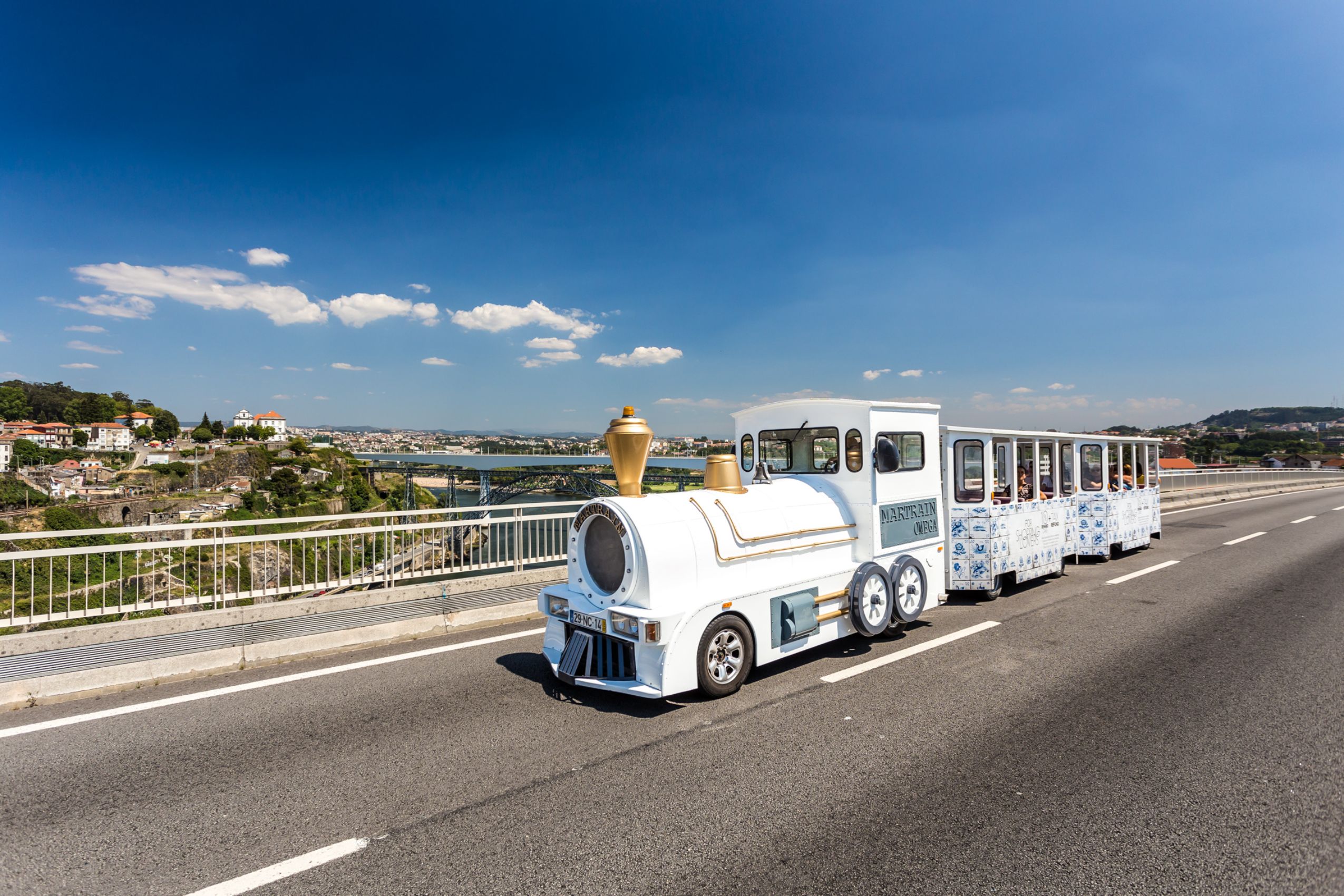
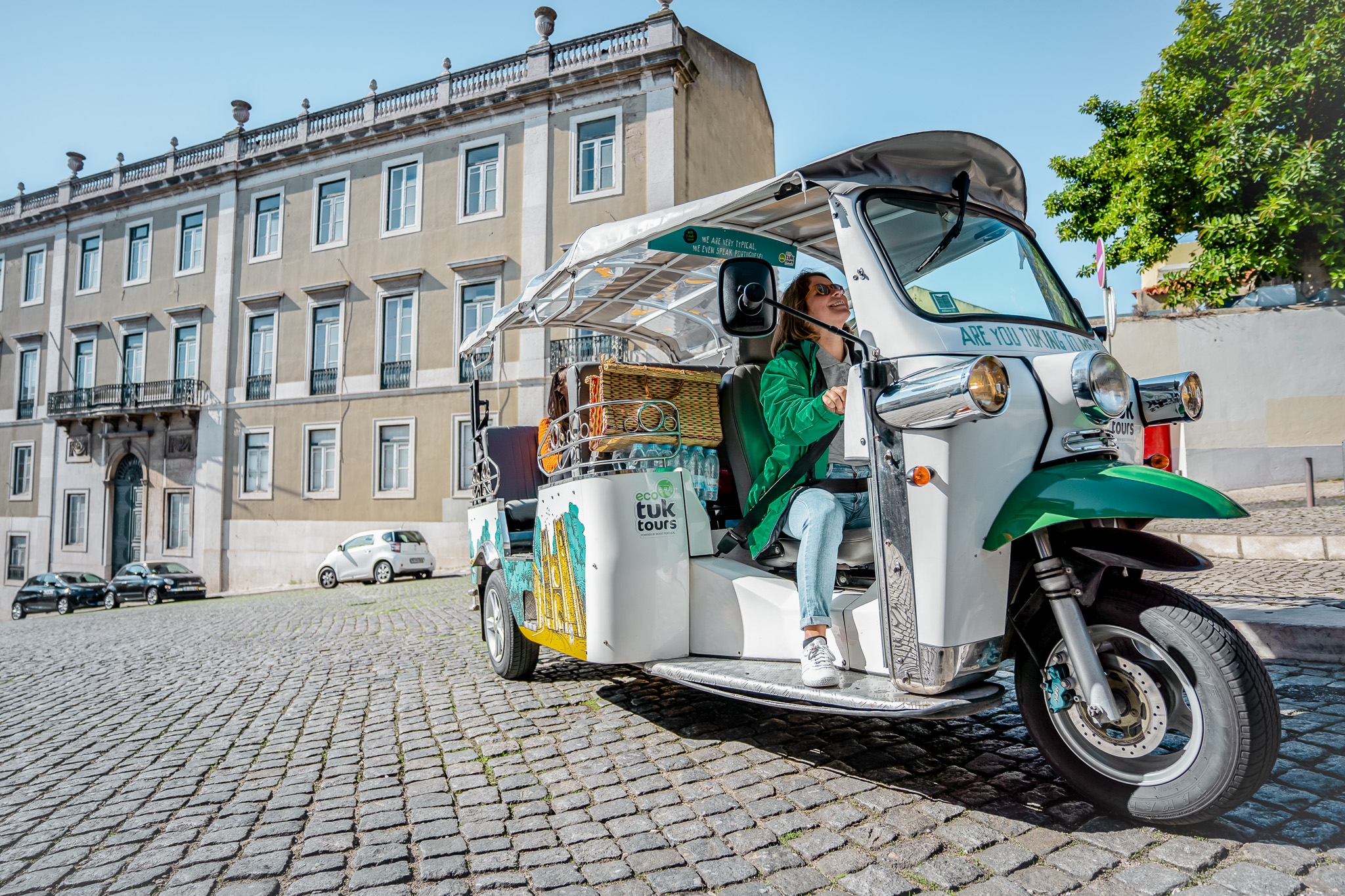
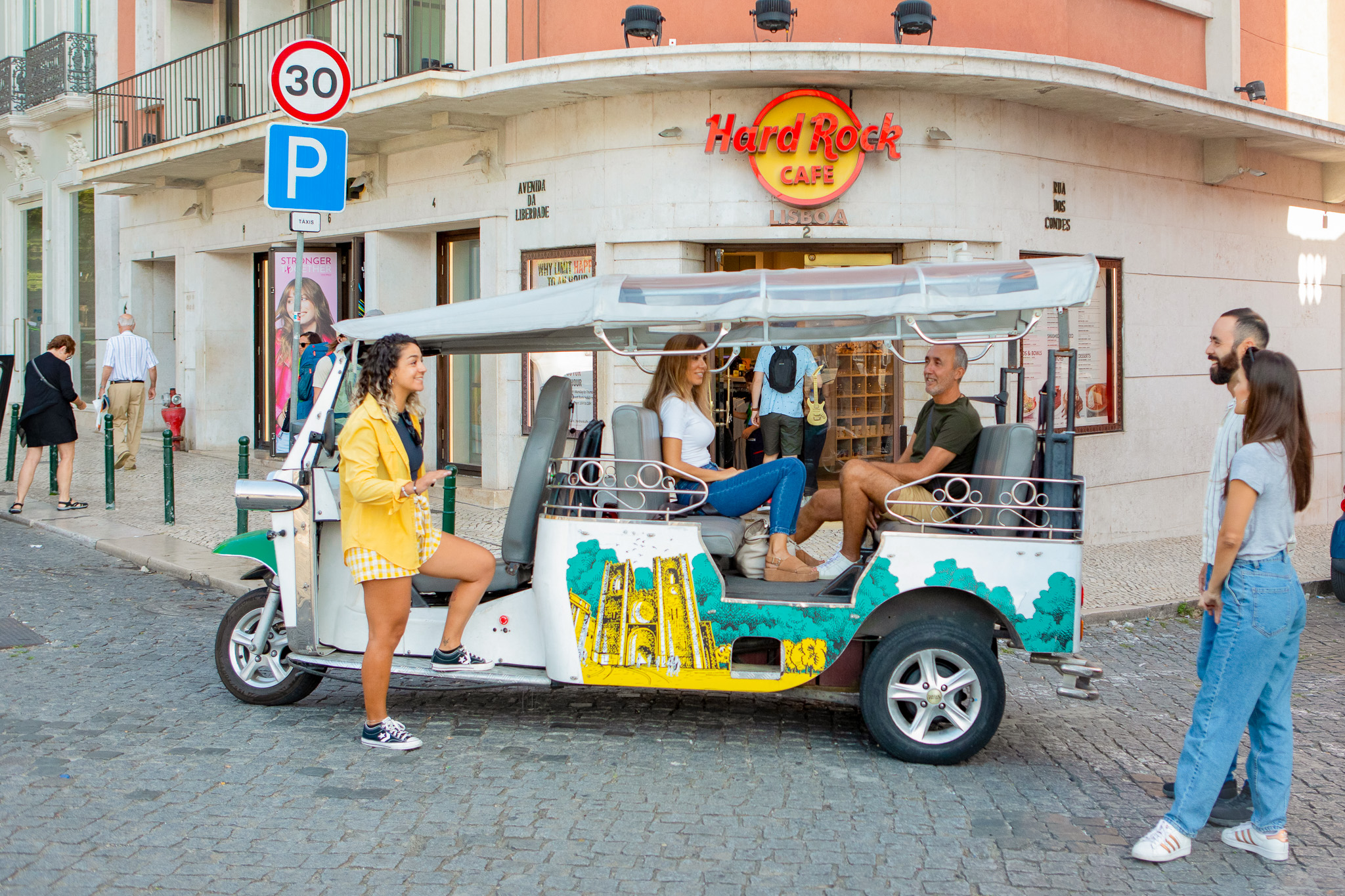
Tour in Tuk Tuk is the best option to discover a city like Porto. With narrow and steep streets, Tuk Tuk delivers agility, ease and convenience in your experience.
We have already scheduled the sights, but we are open to customize your tour DE according to your preference, just consult us.
Caring, polite and patient driver.
Visit to secret and exclusive sights.
We also give information about the sights with some stops for visits and photos.
For convenience, pick-up can be done at addresses in the centre of Porto.
Available options
Tuk Tuk Port 2 cities 90/105m
Tuk Tuk 2 Cities 90 to 105 min: Discover the two major central cities of Porto in 90 to 105 minutes.
Port tour of Tuk Tuk 60
Tour of the city of Porto
What's included
Tuk Tuk with driver
Detailed itinerary
1
Located in the Plaza DA Batalha, right in the historic centre of Porto, close DA St. Benedict DE Station and DA See.
Inaugurated in 1798 as the Royal Theatre DE São João, it was the first theatre built DE root in Porto.
Destroyed POR a fire in 1908 and rebuilt and reopened in 1920, with a project by the architect José Marques DA Silva (the same architect DA St. Benedict DE Station).
In 1992, he was elevated to the category DE National Theatre.
Neoclassical style and Beaux-Arts.
Imposing facade with columns, sculptures and inscriptions.
Richly decorated interior: golden frescoes, painted ceilings and cabins.
It is one of the main centres DE theatre and performing arts DE Portugal.
It receives classical and contemporary pieces, festivals, debates, workshops and cultural events.
It also promotes its own theatrical production and supports national and international companies.
It can be visited in shows or guided tours (on schedule).
Guided tours cover history, backstage and architecture.
2
Stop 2
The station was built in the early 20th century, officially inaugurated on 5 DE October DE 1916.
The building replaced the old Convent DE Saint Benedict DE Avé-Maria, which was demolished to give way to the new building.
The architectural design is by the architect José Marques DA Silva, and the style relates to Beaux-Arts, French influence.
The building has the shape of “U” and is connected POR internal tunnels to the rail network, connecting to Port-Campanhã and other lines.
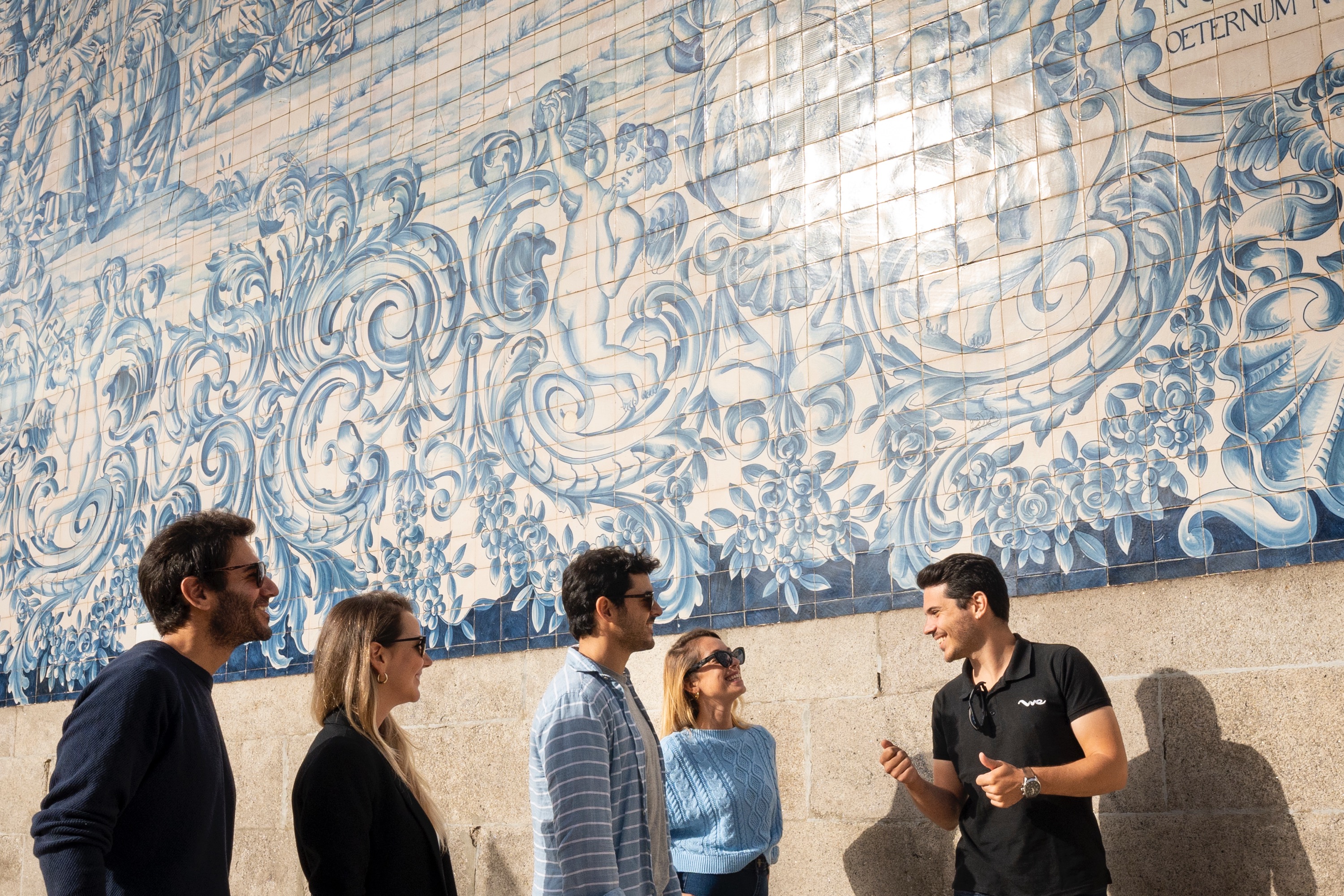
One of the biggest attractions DA station is its interior coated with more DE 20,000 historic tiles.
These panels were painted POR Jorge Colaço between 1905 and 1908, and illustrate scenes DA history DE Portugal, rurality, transport and historical moments.
In the upper parts of the atrium, you can see inscriptions such as “Douro” and “Minho”, which are important rivers DA region.
The station is a terminal for urban and regional trains.
3
Stop 3
Pass by
Begun in the twelfth century, in Romanesque style, was being expanded and modified over the centuries.
It underwent major changes in the 14th and 17th centuries, especially in Gothic style (claustro) and Baroque style (facade and chapels).
It was a key piece during the Christian Reconquest and the consolidation of the Kingdom DE Portugal.
Dominant Romanesque style, but with Gothic, Baroque and Manieristic elements.
Romanesque rosacea on the facade.
Sinear towers with coruchées.
Gothic cloister decorated with tiles from the century. XVIII
Baroque altar-mor.
It was on the day DE Dom Pedro IV (D. Pedro I of Brazil) celebrated Mass before beginning the siege of Porto, during the liberal wars.
The See was also the scene DE real weddings.
4
Stop 4
Pass by
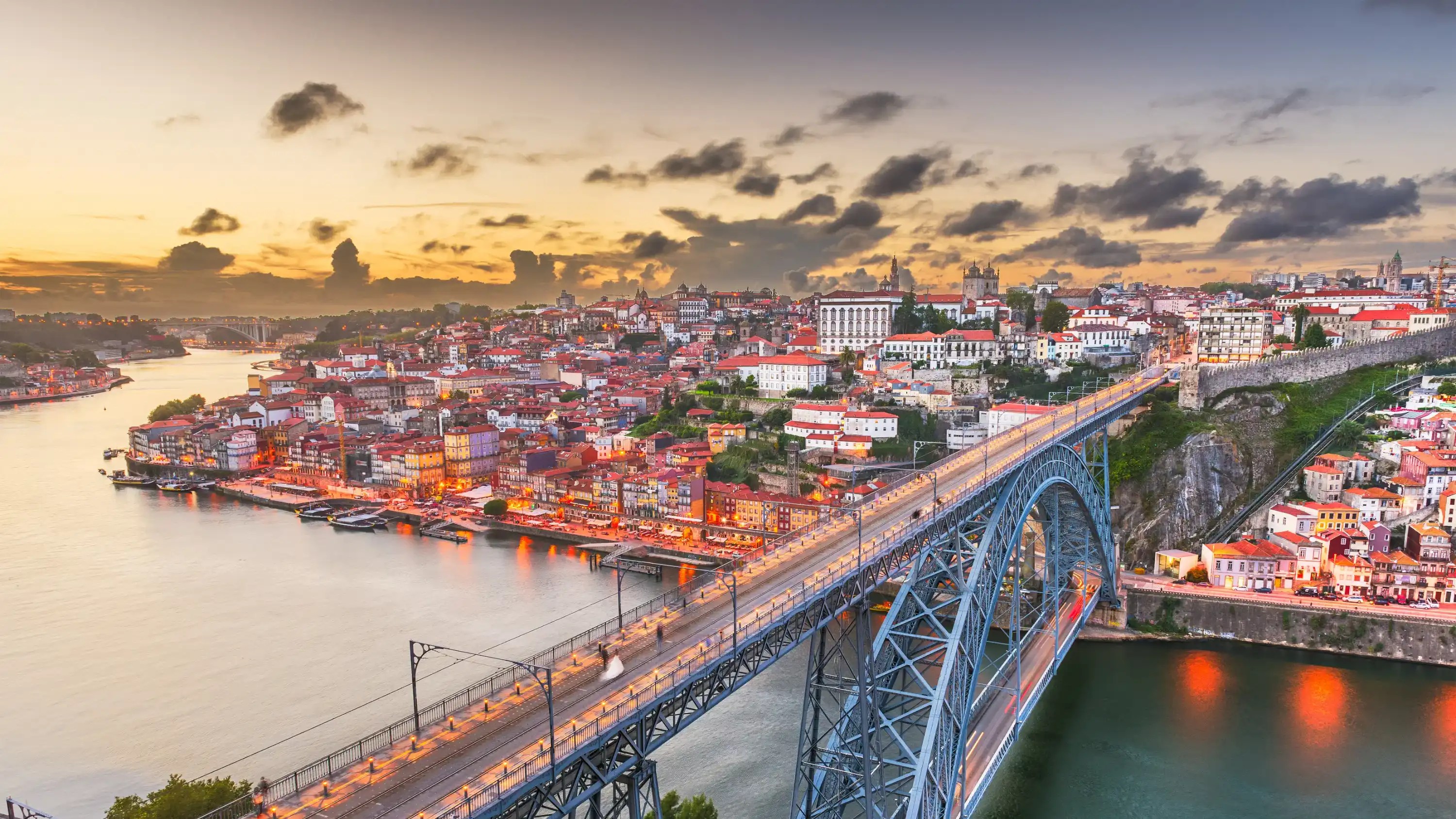
Connects the cities of Porto and Villa Nova DE Gaia, crossing the river Douro.
It lies between the Ribeira do Porto and the Cais DE Gaia, with direct views of the Porto wine warehouses.
Inaugurated in 1886.
Designed by engineer Théophile Seyrig, who was a partner DE Gustave Eiffel (yes, DA Eiffel Tower).
It replaced an earlier bridge DE wood and iron (Pênsil Bridge).
At the time, it was one of the largest metal-bound bridges in the world.
Bridge in double board:
Upper board: Today is used by the Port Metro (Line D) and pedestrians.
Bottom board : for cars and pedestrians.
Central arc in iron with 172 meters DE go.
Maximum height : about 45 meters above the river.
One of the biggest symbols DA the city of Porto.
It is a strategic passage between the shores north (Port) and south (Gaia).
Classified as a National Monument since 1982.
Often used as DE panoramic viewpoint (especially the top board).
5
Location DA in the historic area of Porto, descending from near the Seine to the banks of the river Douro, with visible stretches near the D. Louis I Bridge and the Miradouro das Virtudes.
Built in the 14th century, during the reign DE D. Fernando I (hence the name Fernandina).
It replaced and enlarged the old Romanesque wall, which no longer DAva account of the city's growth.
It was used to protect the port DE invasions and control commercial entrances and exits.
Medieval style, made DE granite.
It had several towers, doors, and stoves (some still visible).
It surrounded the old city and was connected to strategic points, such as the river.
It began to lose military importance in the following centuries.
Much of it was demolished in the 19th century with urban expansion.
Some pieces are still DE foot and restored, especially:
Track next DA the Porto
Track between the Largo do Muro dos Bacalhoeiros and Ribeira
Postigo do Carvão, the only medieval door still existing
Great spot for photos DA city and the river.
6
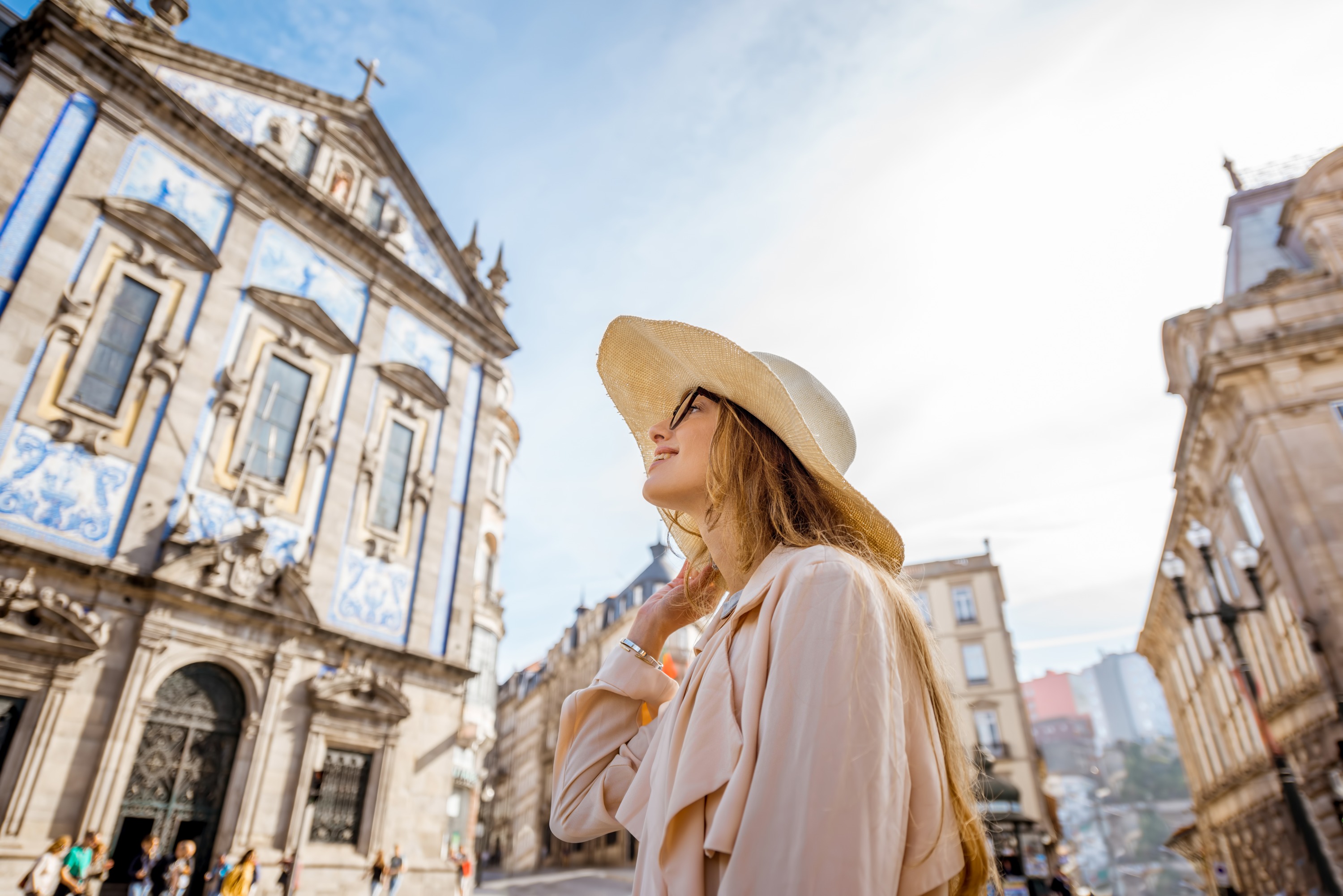
Location DA in the Plaza da Batalha, right in the centre of Porto.
Close DA Station DE São Bento, the National Theatre of São João and Rua DE Santa Catarina.
Built between 1709 and 1739, replacing an old chapel.
DE dictated to Saint Ildefonso de Toledo, Spanish archbishop of the 7th century.
Style: Baroque with proto-rococo influence.
Granite structure with two towers and curved fronton.
Interior with:
Baroque golden straw
Decorated side altars
A large retable in carved wood from the 18th century
The facade is covered with about 11,000 blue and white tiles
Created in 1932 POR Jorge Colaço, famous Portuguese azulejista.
Show scenes DA life DE Santo Ildefonso and passages from the Gospel.
It is one of the most photographed places in Porto.
The staircase in front and the contrast of the tiles with the granite create a striking look.
At night, the lighting highlights the details DA facade.
7
Stop 7
Pass by
It is located in the centre of Porto, starting near PLAZA DA BATALHA and extending to the Marquês area.
It is a pedestrian street (mostly), frequented POR locals and tourists.
It is the main shopping street DA city.
It has a mix DE modern and traditional shops:
International brands: Zara, Bershka, H&M, FNAC, etc.
Typical shops DE footwear, clothing and souvenirs.
Shoppings like the ViaCatarina Shopping, with theme food square.
Café Majestic : one of the most beautiful and historic cafés DE Portugal, in the style of Belle Époque.
Chapel of Souls: church with facade covered POR beautiful blue tiles, very photographed.
Bolhão Market: A few steps away, is the most iconic traditional market DA city.
Always busy, with street artists, live music, and tourists taking photos.
Great place to observe local life, Shopping or just stroll.
8
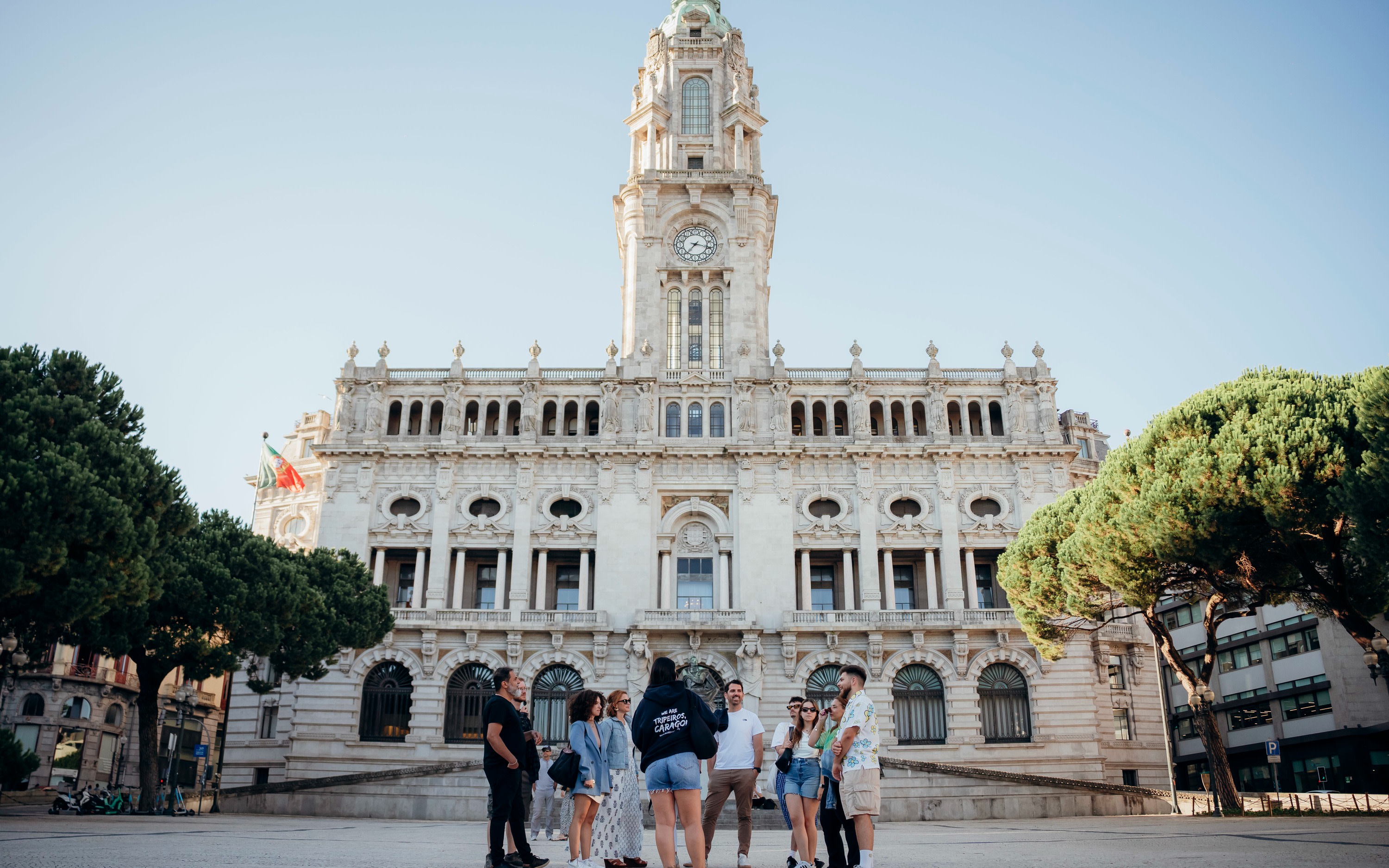
It is located at the top DA Avenida dos Aliados, in the heart of the centre of Porto.
The building faces DE to the Plaza DA Liber DA de and is one of the most imposing landmarks in the city.
Neoclassical style with monumental influences of the 20th century.
Construction started in 1920 and completed in 1957.
Designed by the architect Correia DA Silva.
Central tower with clock, DE 70 meters DE height.
Granite facade with sculptures and bracelets.
Interior with marble stairs and artistic glazing.
Headquarters of the municipal executive of Porto.
It houses the offices of the mayor, DE administrative departments and meeting rooms of the municipality.
It also hosts official events, ceremonies and temporary exhibitions.
It is possible to visit the interior DA the chamber on guided visits, usually by marking.
During special events such as Open Day or Day DA City, the public can explore the building for free.
9
But it is popularly called DE Plaza de los Leones POR causa DA fonte central con esculturas DE leones.
In the centre of Porto, near THE Rectorate DA Universi DA Porto, Church of Carmo, Church of the Carmelites and the Lello Livraria.
It is one OF the most emblematic areas of the city, especially among students and tourists.
Fountain in neobarroco style installed in the 19th century.
There are four bronze-winged lions that run water through their mouths.
It is one of the most photographed points DA city.
Rectorate DA Universi DA Porto – historic building and center of academic life.
Church of Carmo and Church of the Carmelites – two churches side by side, with beautiful tiles.
Lello - one DA the world's most famous bookstores, near the square.
Various cafes, bars and pastries.
Very frequented POR students, tourists and street artists.
Point DE encounter and DE passage between tourist and university areas.
At night, there is young movement, especially POR because of the nearby bars.
10
Stop 10
Pass by
Carmelite Church and Carmelite Church
In the centre of Porto, next to the Plaza de los Leones and the Rectorate DA Universidade do Porto.
Near the Lello Bookstore and the Clérigos Tower
1. Church of the Carmelites
Built between 1616 and 1628.
Style: Classical Baroque.
It was part DE a female convent DA the Order of the Descalces Carmelites.
More sober and discrete facade.
Interior with golden retables, typical of Portuguese Baroque.
2. Church of Carmo
Built between 1756 and 1768.
Style: Baroque and Rococo.
It was a male convent DA the Order of the Carmelites.
Facade richly decorated with rococo elements.
Side covered POR a panel of blue and white tiles (added in 1912), representing the Imposition of the Escapulario to St. Simon Stock.
They are separated POR a very narrow house, known as:
“The narrowest house in Porto” served to fulfill the ancient canonical rule that prohibited direct contact between nuns and monks.
It is only about 1 meter DE wide!
11
Founded in 1799, POR the initiative DA Misericordia do Porto.
It was designed by English architect John Carr, in neoclassical style.
Construction took decades and was not fully completed until the 19th century.
Style: Neoclassical English, rare in Portugal.
Structure in granite, with austere and imposing facade.
Large plant in “U”, with inner courtyards.
Considered one of the most important hospital buildings in the country in historical and architectural terms.
It is a central and university hospital, integrated in:
University Hospital Center of Porto (CHUP)
It functions as a public and university hospital, with links to the Faculty DE Medicina DA Universidade do Porto.
It offers specialized medical services, emergencies, surgery, research and teaching.
Classified as a National Monument since 1910.
The building remains in operation, although with several modernised wings.
12
Located in the Baixa do Porto, close DA Torre dos Clérigos, Centro Portuguese DE Fotografia, Hospital DE Santo António and Rectorate DA Universidade do Porto.
Square DE João Chagas, but is known as Garden DA Cordoaria.
It comes DA the old function of the zone, where the “corders” (string manufacturers) worked.
It was a wide, long space used to stretch and twist the ropes.
It was transformed into a garden in the 19th century.
Reformulated by landscape architect Émile David (the same from Crystal Palace).
Today it is a green space, with:
Walking routes
Centuries old trees
Banks and Shadow
Quiet environment, ideal for rest
DE stack for the sculptures of the artist Juan Muñoz: various bronze human figures spread across the garden, in mysterious positions.
Sculpture DE Ramalho Ortigão, Portuguese writer.
Used as a setting for cultural events, book fairs and performances.
13
Located in the former Chain DA Relations, next DA the Tower of the Clergy and close to the Garden DA Cordoaria, in Baixa do Porto.
Built in the eighteenth century (1767), it was originally a prison and courthouse: the Port Relation Chain.
Historical figures passed POR, such as Camilo Castelo Branco, who was imprisoned in the 19th century.
DE activated as prison in 1974 and rehabilitated in the 1990s to host the photography center.
Public institution dedicated DA to the preservation, promotion and dissemination of photography in Portugal.
Founded in 1997.
It brings together a national and international photographic collection, with emphasis on ancient cameras, negatives, historical portraits and Collections DE Portuguese photographers.
Temporary and permanent exhibitions DE photography.
National Photographic Archive.
Exhibition DE old photographic equipment.
Visit to the historic building, with rooms DE old prison, grids and cells.
Free entry.
Open to the public on extended hours (except holidays).
14
Stop 14
Pass by
Located in Rua dos Clérigos, right in the centre of Porto, close to Livraria Lello, Plaza dos Leões and Jardim DA Cordoaria.
The Church of Clergy was built between 1732 and 1750.
The tower was completed in 1763.
Masterpiece by Italian architect Nicolau Nasoni, central figure of Baroque in northern Portugal.
Built for the Brotherhood of Poor Clergy.
Baroque style, with curved shapes and crafted decoration.
Church : Oval plant (rare in Portugal), with golden scale and baroque organs.
Tower : has 76 meters DE height, is one of the tallest buildings DA old town.
It's 225 steps to the top.
Amazing panoramic view DE 360o over the Porto and the Douro.
The tower is a visual symbol DA cida DE, visible from various points.
Great spot for photos at sunset.
At night, the tower is usually lit.
Entry is paid to climb the tower and visit the museum.
Includes:
Panoramic tower
Museum with sacred art and pieces DA Brotherhood
Access to the church.
Available languages
Guide guide
PT
EN
IT
ES
Reviews breakdown
Tripadvisor
5.0
26 reviews
5★
26
4★
0
3★
0
2★
0
1★
0
Important information
Service animals allowed
Public transportation options are available nearby
Not recommended for travelers with spinal injuries
Suitable for all physical fitness levels
Security belt DE
Meeting point
Plaza DA Batalha , in front of the national theater São João and near the street Santa Catarina.
About Porto
Porto, the second-largest city in Portugal, is a vibrant coastal city known for its rich history, stunning architecture, and delicious cuisine. With its picturesque Ribeira district, historic bridges, and world-famous port wine cellars, Porto offers a unique blend of cultural heritage and modern charm.
Top Attractions
Ribeira District
The Ribeira district is the historic heart of Porto, known for its colorful buildings, narrow streets, and lively atmosphere. It's a UNESCO World Heritage site and a must-visit for anyone coming to Porto.
Historical
2-3 hours
Free to explore
Livraria Lello
Livraria Lello is one of the most famous bookstores in the world, known for its stunning neo-Gothic interior and as an inspiration for J.K. Rowling's Harry Potter series.
Cultural
1 hour
€6 (includes a book voucher)
Clérigos Tower
The Clérigos Tower is a iconic Baroque bell tower that offers panoramic views of Porto. Climbing the 240 steps to the top is well worth the effort for the breathtaking views.
Architecture
1 hour
€5
Dom Luís I Bridge
This double-deck iron bridge spans the Douro River, connecting Porto to Vila Nova de Gaia. The upper deck offers stunning views of the river and the city.
Architecture
30 minutes
Free
Port Wine Cellars
Vila Nova de Gaia is home to many of Porto's famous port wine cellars, where you can learn about the history of port wine and enjoy tastings.
Cultural
2-3 hours
€10-€30
Must-Try Local Dishes
Francesinha
A hearty sandwich made with layers of meat, covered in melted cheese and a special sauce, served with fries.
Lunch/Dinner
Contains meat and dairy
Bacalhau à Brás
A traditional Portuguese dish made with shredded cod, onions, potatoes, and eggs.
Lunch/Dinner
Contains fish and eggs
Tripas à Moda do Porto
A traditional Porto dish made with tripe, beans, and spices, slow-cooked to perfection.
Lunch/Dinner
Contains meat
Pastéis de Nata
Delicious custard tarts with a flaky pastry crust, often dusted with cinnamon or powdered sugar.
Dessert
Contains dairy and eggs
Popular Activities
Hiking in the Serra do Pilar
Kayaking on the Douro River
Sunbathing at Praia do Castelo do Queijo
Enjoying a port wine tasting
Visiting the Livraria Lello
Exploring the Ribeira district
Swimming at Praia do Castelo do Queijo
Boat tours on the Douro River
Best Time to Visit
May to September
This is the peak tourist season with warm weather and plenty of sunshine. It's ideal for exploring the city and enjoying outdoor activities.
18°C to 28°C
64°F to 82°F
Practical Information
Language
- Official: Portuguese
- Widely spoken: English, Spanish, French
- English: Widely spoken in tourist areas
Currency
Euro (EUR)
Time Zone
GMT+1 (Western European Time)
Electricity
230VV, 50HzHz
Safety Information
Overall Safety Rating: Generally safe
Porto is generally a safe city for travelers, with low violent crime rates. However, petty crime, such as pickpocketing and bag snatching, can occur in tourist areas and on public transportation.
Important Precautions:
- • Keep valuables secure and out of sight, especially in tourist areas and on public transportation
- • Be cautious when using taxis, and always ensure the meter is running or agree on a price before starting your journey
- • Avoid walking alone at night in quiet or poorly lit areas
Getting there
By air
- Francisco Sá Carneiro Airport • 11 km (7 miles) from city center
By train
Porto Campanhã, Porto São Bento
By bus
Porto Bus Terminal (Terminal de Camionagem de Porto)
Getting around
Public transport
The metro system is efficient and easy to use, with six lines connecting major points of interest.
Taxis
Available • Apps: Bolt, Uber
Rentals
Car, Bike, Scooter
Neighborhoods
Ribeira
Bolhão
Foz do Douro
Miguel Bombarda
Day trips
Braga
50 km (31 miles) • Full day
Braga is a historic city known for its beautiful churches, monasteries, and the Bom Jesus do Monte sanctuary.
Guimarães
40 km (25 miles) • Full day
Guimarães is a historic city known as the birthplace of Portugal. It's home to a well-preserved medieval center and the stunning Guimarães Castle.
Douro Valley
80 km (50 miles) • Full day
The Douro Valley is a stunning wine region known for its terraced vineyards, port wine cellars, and scenic boat tours.
Festivals
São João Festival • June 23-24
Festa de São João • June 24
Porto Wine Festival • September
Pro tips
- Visit the Livraria Lello bookstore early in the morning or late in the afternoon to avoid the crowds and long queues
- Take a port wine tasting tour to learn about the history of port wine and sample a variety of wines from different cellars
- Explore the historic center of Porto on foot, as many of its narrow streets and charming squares are best discovered by walking
- Try the local cuisine, such as Francesinha, Bacalhau à Brás, and Tripas à Moda do Porto, at traditional restaurants and cafes
- Take a day trip to the Douro Valley to see the stunning vineyards, visit port wine cellars, and enjoy a scenic boat tour on the Douro River
From $25
per person
Price varies by option
Secure booking
Free cancellation available