Delhi Private Guided Tour with Pickup
Active
8h
For a full refund, cancel at least 24 hours before the scheduled departure time.
Instant confirmation
Mobile or paper ticket accepted
About this experience
Experience Delhi like a local with the comfort of a private, air-conditioned car and your own expert guide. Unlike group tours, this is a fully personalized experience — you choose the pace and focus. See both Old and New Delhi in one day, from UNESCO-listed monuments to bustling markets, with a traditional rickshaw ride included. Enjoy hotel or airport pickup across Delhi and NCR, bottled water, and the insights of a knowledgeable guide who brings the city’s history and culture to life.
Available options
Car, Guide & Entry Fees
Duration: 8 hours<br/>Pickup included
Guide and Car service
Duration: 8 hours<br/>Water bottle<br/>Pickup included
Just local guide
Pickup included
Including all with food
Pickup included
What's included
Experienced driver for safe and comfortable travel
Hotel or airport pickup and drop-off in Delhi, Noida, Gurugram, Faridabad, Ghaziabad & NCR
Professional English-speaking guide
Parking fees and fuel charges
Private air-conditioned vehicle for the entire tour
All applicable taxes and service charges
Bottled mineral water during the tour
Detailed itinerary
1
Stop 1
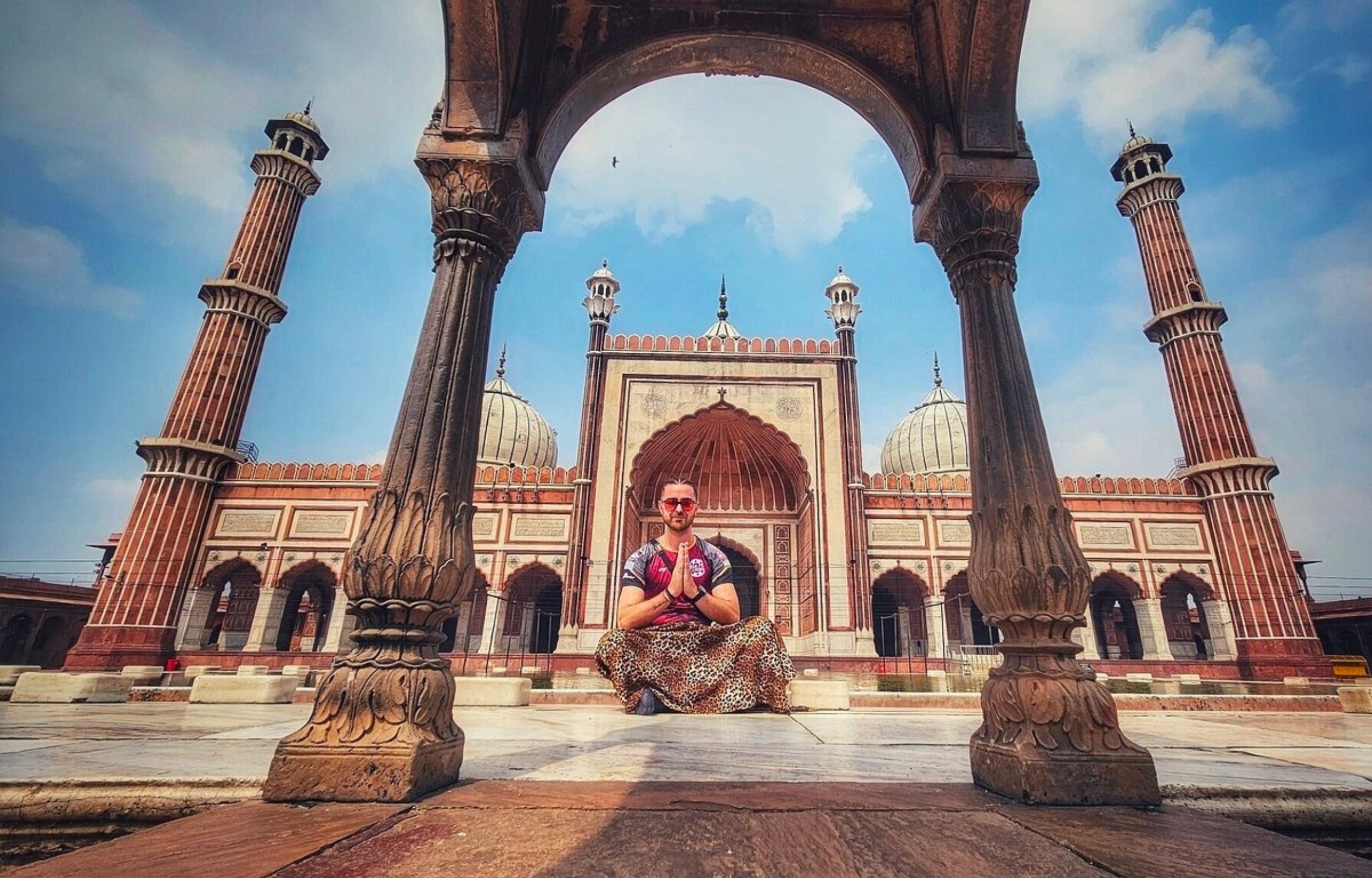
Explore Jama Masjid, one of the largest and most magnificent mosques in India. Located in the heart of Old Delhi, it boasts stunning Mughal architecture, intricate carvings, and offers a serene space for prayer and reflection.
2
Stop 2
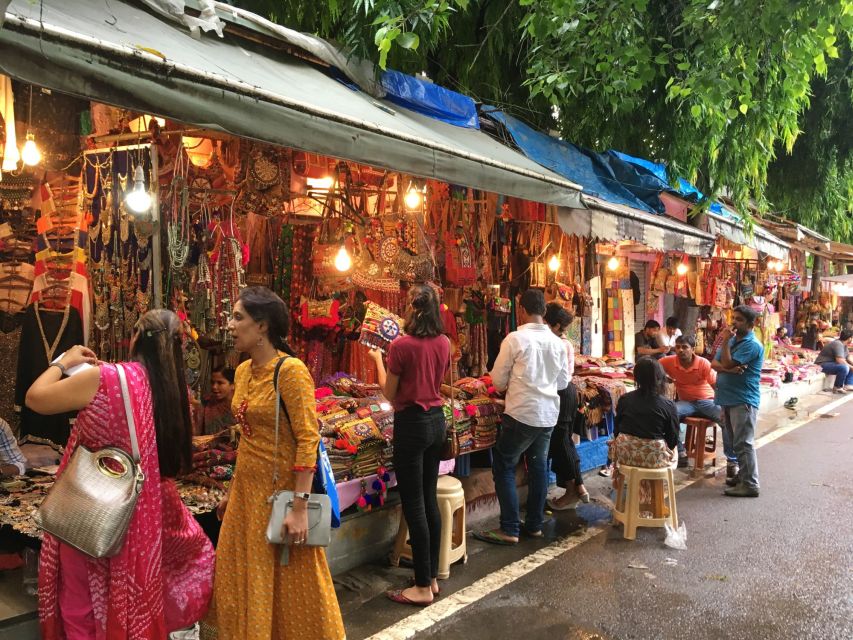
The original Chandni Chowk, half-moon-shaped square, was situated before the Townhall; its reflection used to shimmer in the moonlit water pool located at the front. A shallow water channel, whose source was the Yamuna, ran through the middle of the straight street now referred to as the Chandni Chowk bazaar, with roads and shops on either side of the channel.
3
Stop 3
Khari Baoli is a famous street and wholesale spice market located in Delhi, India, known as Asia's largest. It's situated in Chandni Chowk, near the historic Fatehpuri Masjid. The market is a vibrant hub for spices, nuts, dry fruits, and other food products. Despite its name, which refers to a historical stepwell, the market is a bustling center for spice trading and a popular tourist attraction.
4
Stop 4
Pass by
The Red Fort, also known as Lal Qila is a historic Mughal fort located in Delhi, India, previously serving as the primary residence of the Mughal emperors.
5
Stop 5
Akshardham' means the divine abode of God. It is hailed as an eternal place of devotion, purity and peace. Swaminarayan Akshardham at New Delhi is a Mandir – an abode of God, a Hindu house of worship, and a spiritual and cultural campus dedicated to devotion, learning and harmony. Timeless Hindu spiritual messages, vibrant devotional traditions and ancient architecture all are echoed in its art and architecture.The mandir is a humble tribute to Bhagwan Swaminarayan (1781- 1830), the avatars, devas and great sages of Hinduism. The traditionally-styled complex was inaugurated on 6 November 2005 with the blessings of HH Pramukh Swami Maharaj and through the devoted efforts of skilled artisans and volunteers.
6
Stop 6
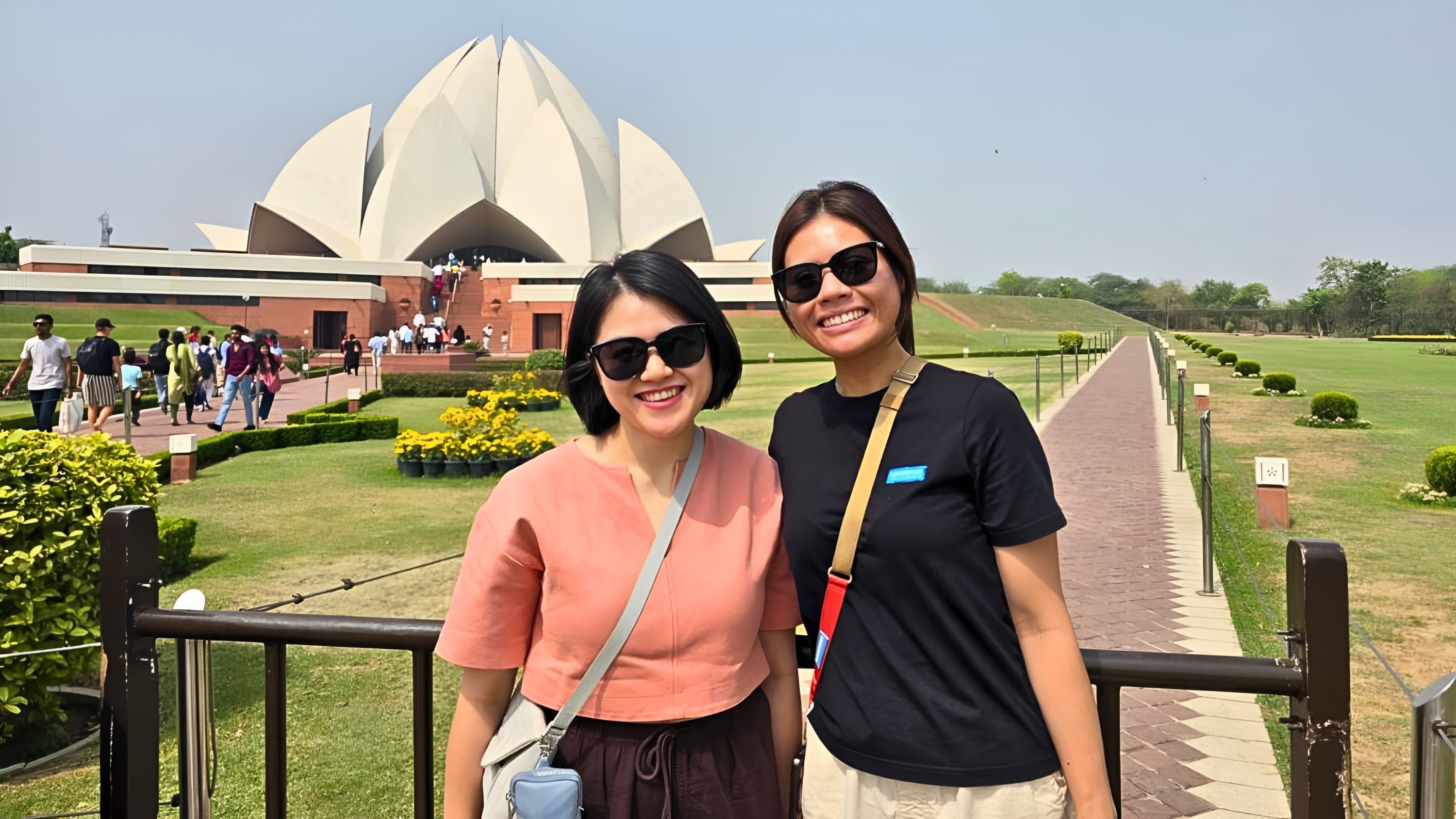
The Lotus Temple is a Baháʼí House of Worship in Kalkaji, New Delhi, Delhi, India. It was completed in December 1986. Notable for its lotus-like shape, it has become a prominent attraction in the city. Like all Bahá’í Houses of Worship, the Lotus Temple is open to all people, regardless of religion or any other qualification. The building is composed of 27 free-standing marble-clad "petals" arranged in clusters of three to form nine sides,[1] with nine doors opening onto a central hall with a height of slightly over 34 metres[1] and a capacity of 1,300 people.[2] The Lotus Temple has won numerous architectural awards[3][4] and has been featured in many newspaper and magazine articles.[5]
7
Stop 7
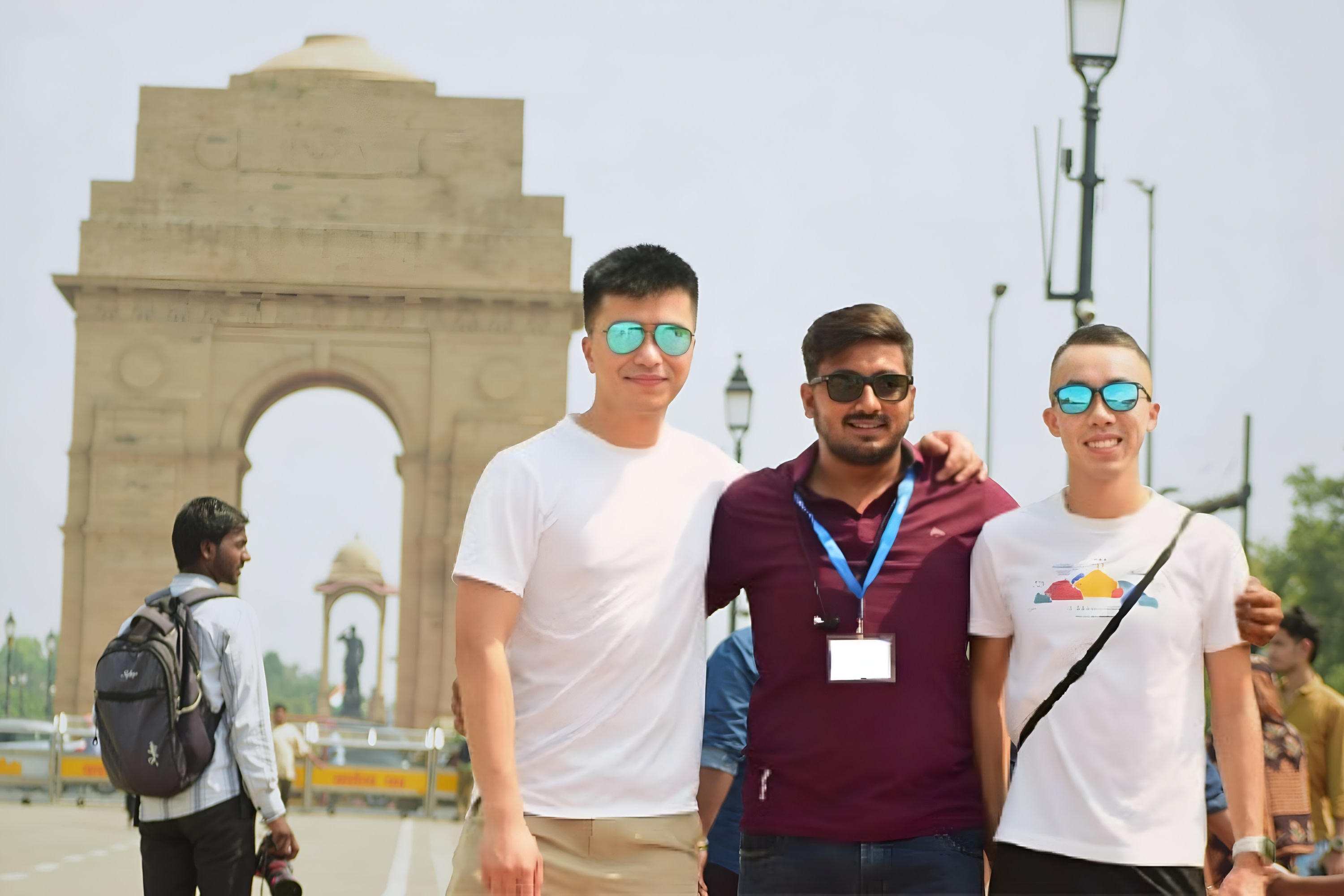
The India Gate (formerly known as All India War Memorial) is a war memorial located near the Rajpath (officially called Kartavya path) on the eastern edge of the "ceremonial axis" of New Delhi. It stands as a memorial to 74,187 soldiers of the Indian Army who died between 1914 and 1921 in the First World War, in France, Flanders, Mesopotamia, Persia, East Africa, Gallipoli and elsewhere in the Near and the Far East, and the Third Anglo-Afghan War. 13,300 servicemen's names, including some soldiers and officers from the United Kingdom, are inscribed on the gate.[2] Designed by Sir Edwin Lutyens, the gate evokes the architectural style of the ancient Roman triumphal arches such as the Arch of Constantine in Rome, and later memorial arches; it is often compared to the Arc de Triomphe in Paris, and the Gateway of India in Mumbai.
8
Stop 8
The Rashtrapati Bhavan (pronunciationⓘ, ISO: Rāṣṭrapati Bhavana; lit. 'Presidential Palace'; formerly Viceroy's House (1931–1947) and Government House (1947–1950)) is the official residence of the President of the Republic of India at the western end of Rajpath, Raisina Hill in New Delhi. It was constructed during the British Raj.
9
Agrasen Ki Baoli (also known as behens Ki Baoli; transl. Baoli of Agrasen) is a 60-meter long and 15-meter wide historical stepwell in New Delhi, India.[1]
10
Stop 10
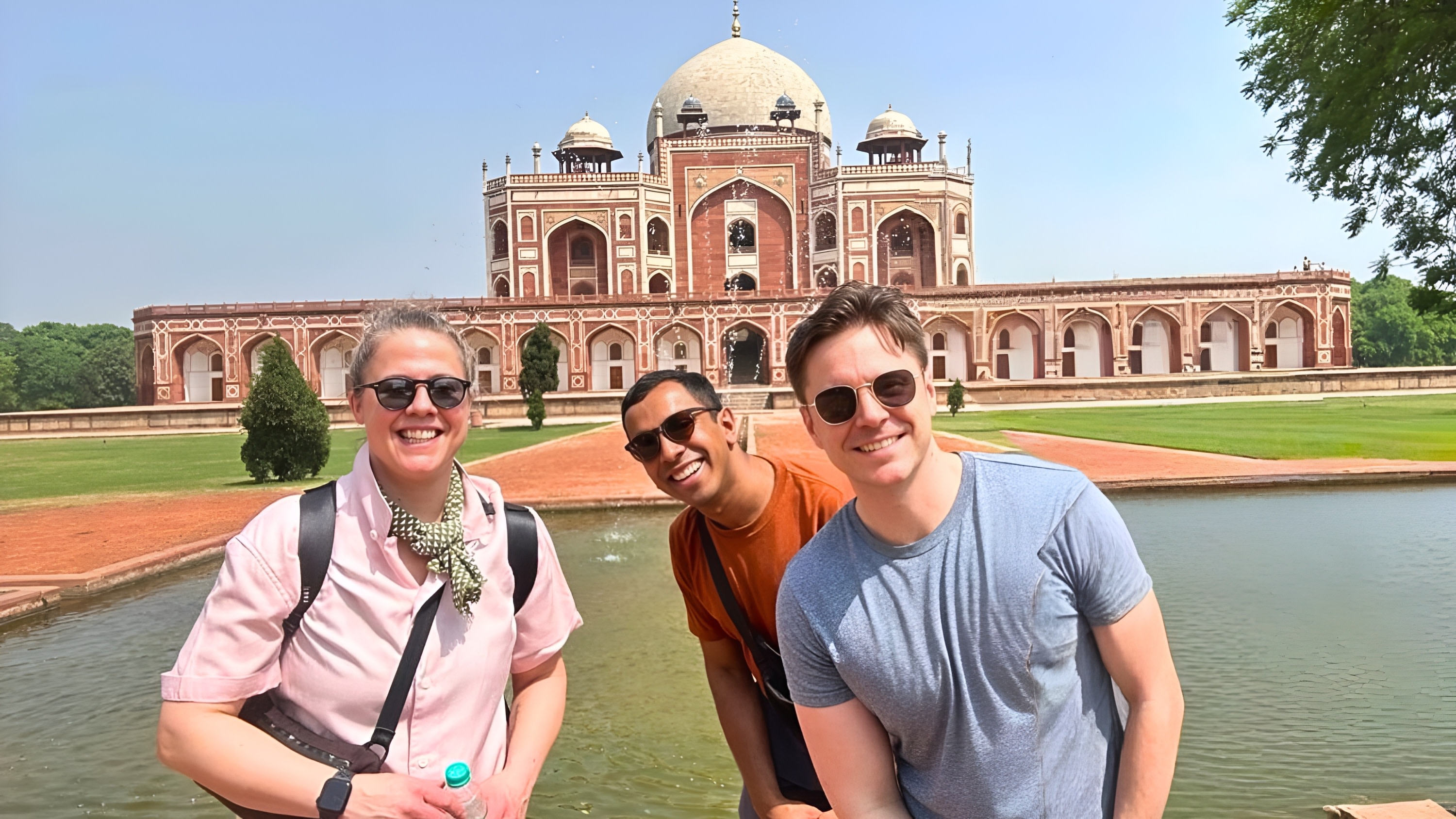
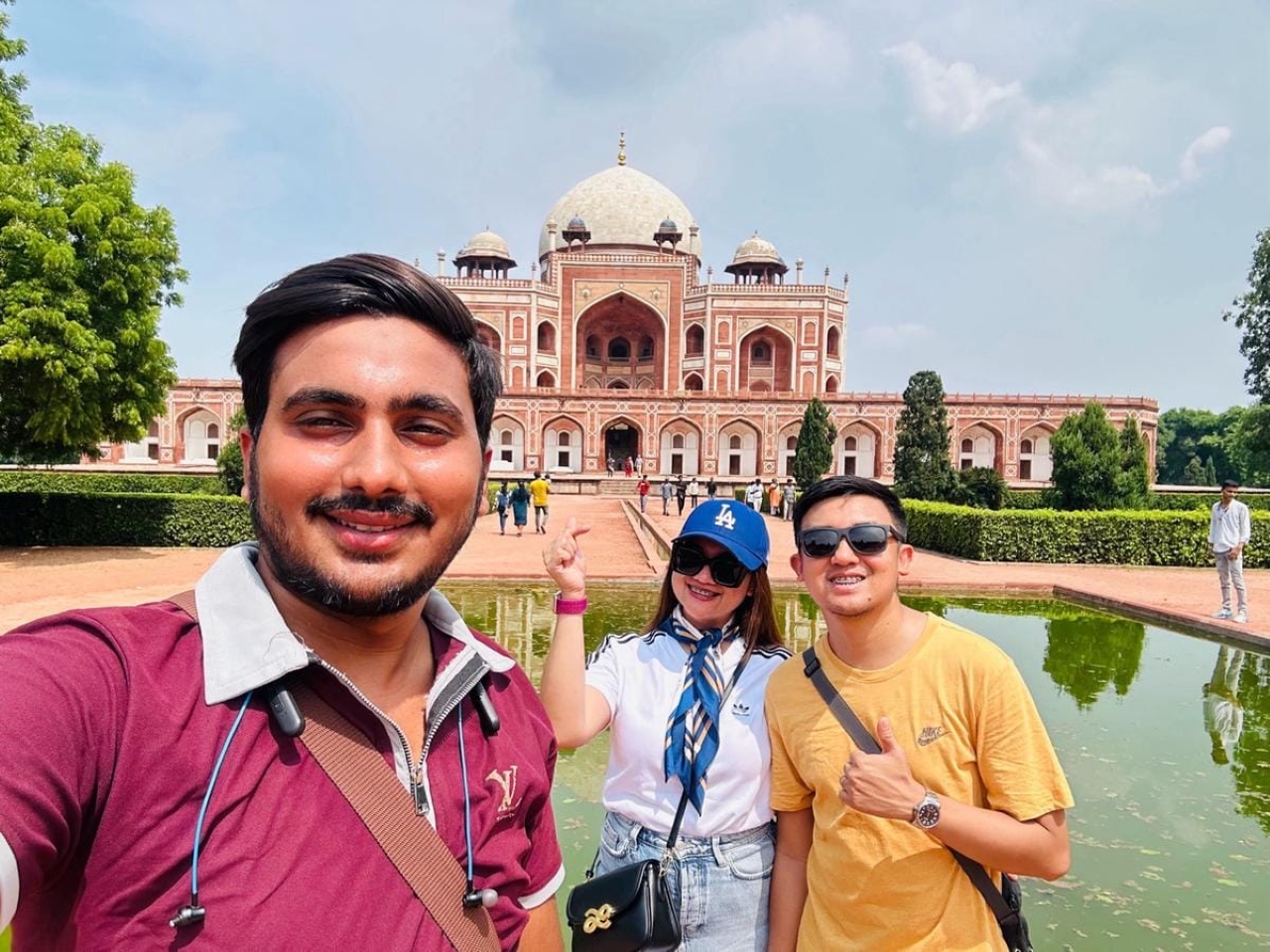
Humayun's tomb (Persian: Maqbara-i Humayun) is the tomb of Mughal Emperor Humayun situated in Delhi, India.[1] The tomb was commissioned by Humayun's first wife and chief consort, Empress Bega Begum under her patronage[2][3][4][5][6] in 1558, and designed by Mirak Mirza Ghiyas and his son, Sayyid Muhammad,[7] Persian architects chosen by her.[8][9] It was the first garden-tomb on the Indian subcontinent,[10] and is located in Nizamuddin East, Delhi, close to the Dina-panah Citadel, also known as Purana Qila (Old Fort), that Humayun found in 1538. It was also the first structure to use red sandstone at such a scale.[11][12] The tomb was declared a UNESCO World Heritage Site in 1993,[10] and since then has undergone extensive restoration work, which is complete.[13] Besides the main tomb enclosure of Humayun, several smaller monuments dot the pathway leading up to it, from the main entrance in the West, including one that even pre-dates the main tomb itself, by twenty years.
11
Stop 11
The Qutb Minar, also spelled Qutub Minar and Qutab Minar, is a minaret and victory tower comprising the Qutb complex, which lies at the site of Delhi's oldest fortified city, Lal Kot, founded by the Tomar Rajputs.[3] It is a UNESCO World Heritage Site in the Mehrauli area of South Delhi, India.[4][5] It was mostly built between 1199 and 1220, contains 399 steps, and is one of the most-frequented heritage spots in the city.[6][7][4] After defeating Prithviraj Chauhan, the last Hindu ruler of Delhi before the Ghurid conquest of the region,[8][9] Qutab-ud-din Aibak initiated the construction of the victory tower, but only managed to finish the first level. It was to mark the beginning of Islamic rule in the region. Successive dynasties of the Delhi Sultanate continued the construction, and, in 1368, Firuz Shah Tughlaq rebuilt the top parts and added a cupola.[10]
What's not included
Monument entry tickets (Optional, not included)
Meals and drinks
Tips or gratuities
Personal expenses
Available languages
Guide guide
DE
EN
IT
FR
ES
Important information
Wheelchair accessible
Public transportation options are available nearby
Infants are required to sit on an adult’s lap
Transportation options are wheelchair accessible
Not recommended for travelers with spinal injuries
Not recommended for pregnant travelers
Suitable for all physical fitness levels
About Jaipur
Jaipur, the capital of Rajasthan, is a vibrant city known for its rich history, stunning architecture, and colorful culture. As the first planned city of India, it offers a unique blend of traditional Rajasthani heritage and modern amenities, making it a must-visit destination for travelers.
Top Attractions
Amber Fort
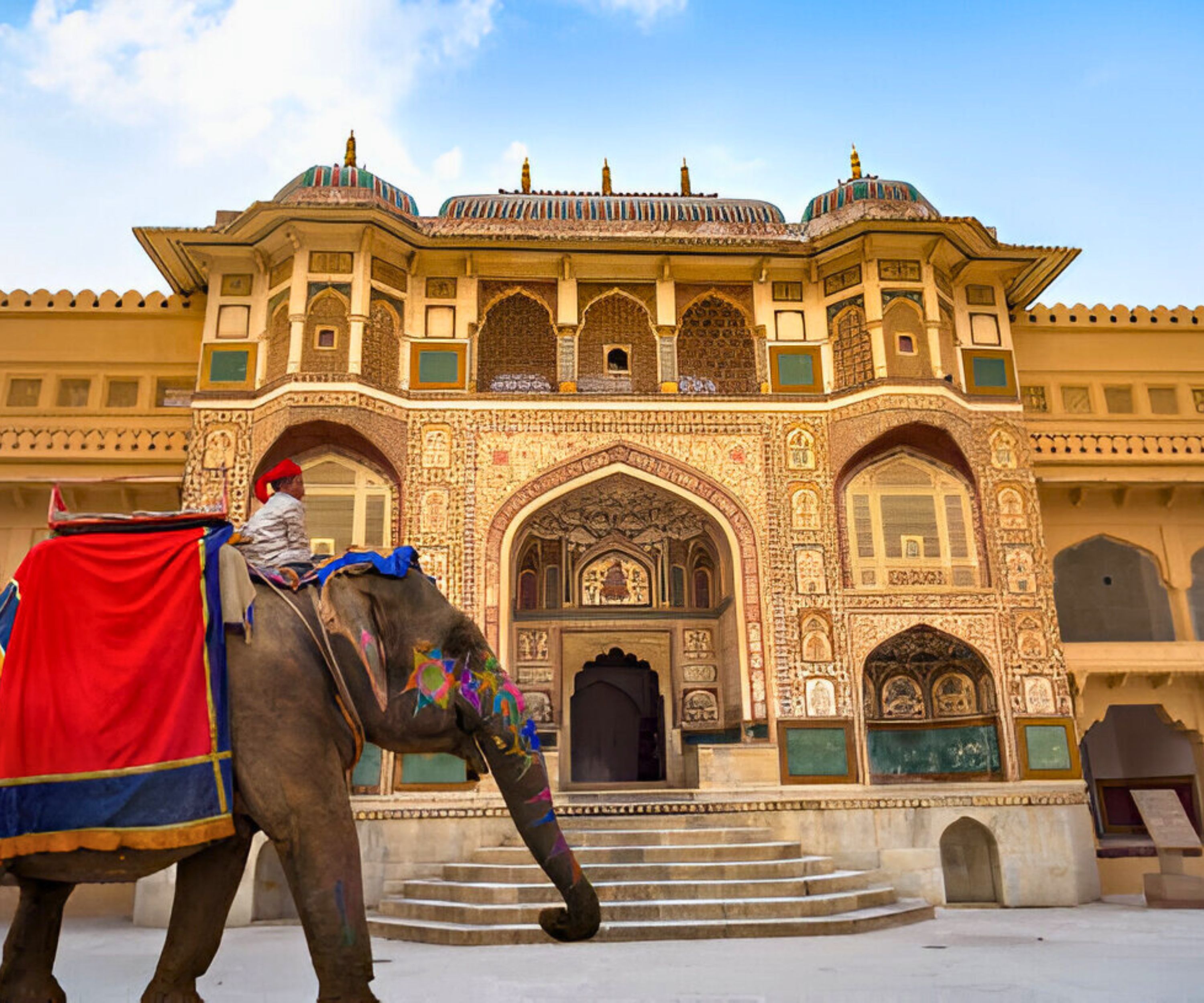
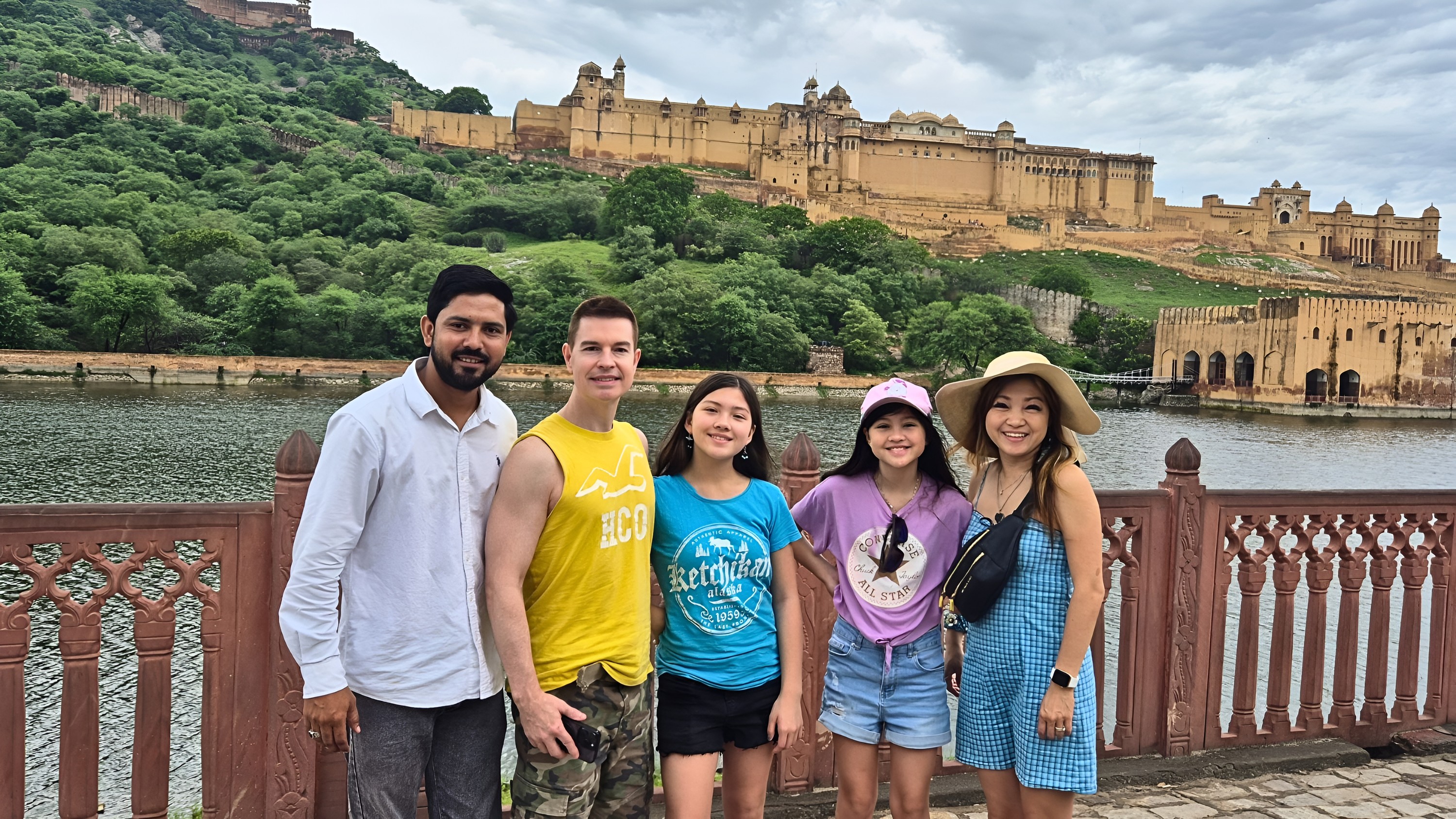
Amber Fort is a majestic fort located on a hilltop overlooking Maota Lake. It is known for its stunning architecture, intricate carvings, and historical significance.
Historical
2-3 hours
INR 250 (foreigners), INR 50 (Indians)
Hawa Mahal
Hawa Mahal, or the Palace of Winds, is a five-story pyramidal structure made of red and pink sandstone. It is famous for its intricate latticework and unique architecture.
Architectural
1 hour
INR 50 (foreigners), INR 10 (Indians)
City Palace
City Palace is a complex of courtyards, gardens, and buildings that served as the seat of the Maharaja of Jaipur. It is known for its stunning architecture and rich history.
Historical
2-3 hours
INR 700 (foreigners), INR 70 (Indians)
Jantar Mantar
Jantar Mantar is a collection of architectural astronomical instruments built by Maharaja Sawai Jai Singh II. It is a UNESCO World Heritage Site and a testament to India's rich scientific heritage.
Historical
1-2 hours
INR 50 (foreigners), INR 10 (Indians)
Nahargarh Fort
Nahargarh Fort is a majestic fort located on the edge of the Aravalli Hills. It offers panoramic views of the city and is known for its historical significance and architectural beauty.
Historical
1-2 hours
INR 50 (foreigners), INR 10 (Indians)
Must-Try Local Dishes
Dal Baati Churma
A traditional Rajasthani dish made of lentils (dal), baked wheat balls (baati), and sweet crumbled wheat (churma).
Main Course
Vegetarian
Laal Maas
A spicy meat curry made with mutton or goat, cooked in a rich gravy made with red chilies and spices.
Main Course
Non-vegetarian
Ghewar
A traditional Rajasthani sweet made of flour, ghee, and sugar, deep-fried to a golden brown color and soaked in sugar syrup.
Dessert
Vegetarian
Popular Activities
Hot air ballooning
Trekking in the Aravalli Mountains
Wildlife safaris in Ranthambore National Park
Spa and wellness treatments
Yoga and meditation retreats
Leisurely walks in the Pink City
Visiting historic forts and palaces
Exploring local markets and bazaars
Best Time to Visit
October to March
This is the best time to visit Jaipur as the weather is pleasant and ideal for sightseeing. The cool temperatures make it comfortable to explore the city's attractions.
15°C to 30°C
59°F to 86°F
Practical Information
Language
- Official: Hindi
- Widely spoken: English, Rajasthani
- English: Moderately spoken
Currency
Indian Rupee (INR)
Time Zone
IST (GMT+5:30)
Electricity
230VV, 50HzHz
Safety Information
Overall Safety Rating: Generally safe
Jaipur is generally safe for travelers, with a low crime rate and friendly locals. However, as with any destination, it is important to take precautions and be aware of your surroundings.
Important Precautions:
- • Use trusted transportation options
- • Be cautious of your belongings in crowded areas
- • Avoid drawing unnecessary attention to yourself
Getting there
By air
- Jaipur International Airport • 13 km from city center
By train
Jaipur Junction
By bus
Sindhi Camp Bus Stand, Narayan Singh Circle Bus Stand
Getting around
Public transport
Buses are the most common mode of public transport in Jaipur. They are affordable but can be crowded.
Taxis
Available • Apps: Ola, Uber
Rentals
Car, Bike, Scooter
Neighborhoods
Pink City
Civil Lines
Bani Park
Day trips
Abu Road
270 km from Jaipur • Full day
Abu Road is a picturesque town nestled in the Aravalli Mountains. It is known for its scenic beauty, lush greenery, and the famous Dilwara Temples.
Ranthambore National Park
180 km from Jaipur • Full day
Ranthambore National Park is a renowned wildlife sanctuary known for its tiger population and diverse flora and fauna. It is a popular destination for wildlife enthusiasts and nature lovers.
Pushkar
150 km from Jaipur • Full day
Pushkar is a sacred town known for its ancient temples, holy lake, and vibrant markets. It is a popular pilgrimage site and a hub for spiritual seekers and travelers.
Festivals
Jaipur Literature Festival • January
Elephant Festival • March
Gangaur Festival • March/April
Pro tips
- Hire a local guide for a more enriching and personalized experience
- Visit major attractions early in the morning or late in the afternoon to avoid crowds and the heat
- Bargain when shopping at local markets and bazaars, but do so respectfully and politely
- Carry small denominations of cash for local shopping and transportation
- Use app-based transportation services for transparency and convenience
From $25
per person
Price varies by option
Secure booking
Free cancellation available
Instant confirmation