Seville Audio guided walking tour 3h20 and 28 audio commentaries
Active
3h
For a full refund, cancel at least 24 hours before the scheduled departure time.
Instant confirmation
Mobile or paper ticket accepted
About this experience
Experience Seville differently thanks to our audio guided tour and let yourself be carried away by the Andalusian soul! At your own pace, explore 8.4 km of a route that mixes iconic places and secret nooks. Guided by an interactive 3D map and 28 audio commentary, discover the richness of the city between culture, legends and traditions.
From Plaza Nueva or the nearest point, take a loop route through Santa Cruz, its flowery streets and patios, to the Alcazar, the Cathedral and its Giralda, Plaza de España, Torre del Oro, Triana and María Luisa Park.
Simple and convenient: the application works offline, with real-time geolocation. Comments are available in French, English and Spanish, and accessible on five devices.
Unlimited and flexible access: start wherever and whenever you want, and enjoy every break to enjoy Seville.
Available options
Seville Audio guided walking tour 3h20 and 28 audio commentaries
What's included
Recommendations for the best photo opportunities
28 immersive audio comments along the way (history...)
Immediate access to the audioguided circuit, no tickets or materials to collect
Offline mode (no data consumption during the visit)
Interactive navigation with 3D map to discover the most beautiful streets, squares and neighborhoods
3 languages available: French, English, Spanish
Text transcripts of all audio content
No deadlines or expirations
Admire the hidden gems that lie off the beaten track
Detailed itinerary
1
If you hadn’t heard of Seville mushrooms before you arrived, chances are you’d be surprised! Here is the metropol parasol park, more commonly known as las Setas de Sevilla, that is, the mushrooms of Seville.
2
The beautiful building that makes the corner of the street is the Palace of the Marquis de la Motilla. Seville is filled with sumptuous palace houses, which are all hidden treasures to discover!
3
You now reach Sierpes Street, one of Seville’s main shopping streets. This narrow pedestrian street is still very lively and is one of the busiest in the city.
4
We reach Plaza Nueva, on the other side of the City Inn. As the name suggests, it is the new public square of the city.
5
Here you are in front of another emblematic image of the city of Seville and one of the most visited places, its Plaza de Toros. It is the largest and most important bullfighting arena in Spain.
6
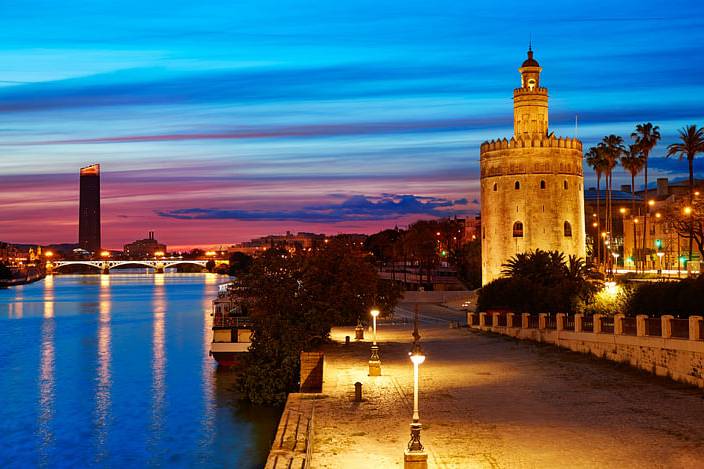
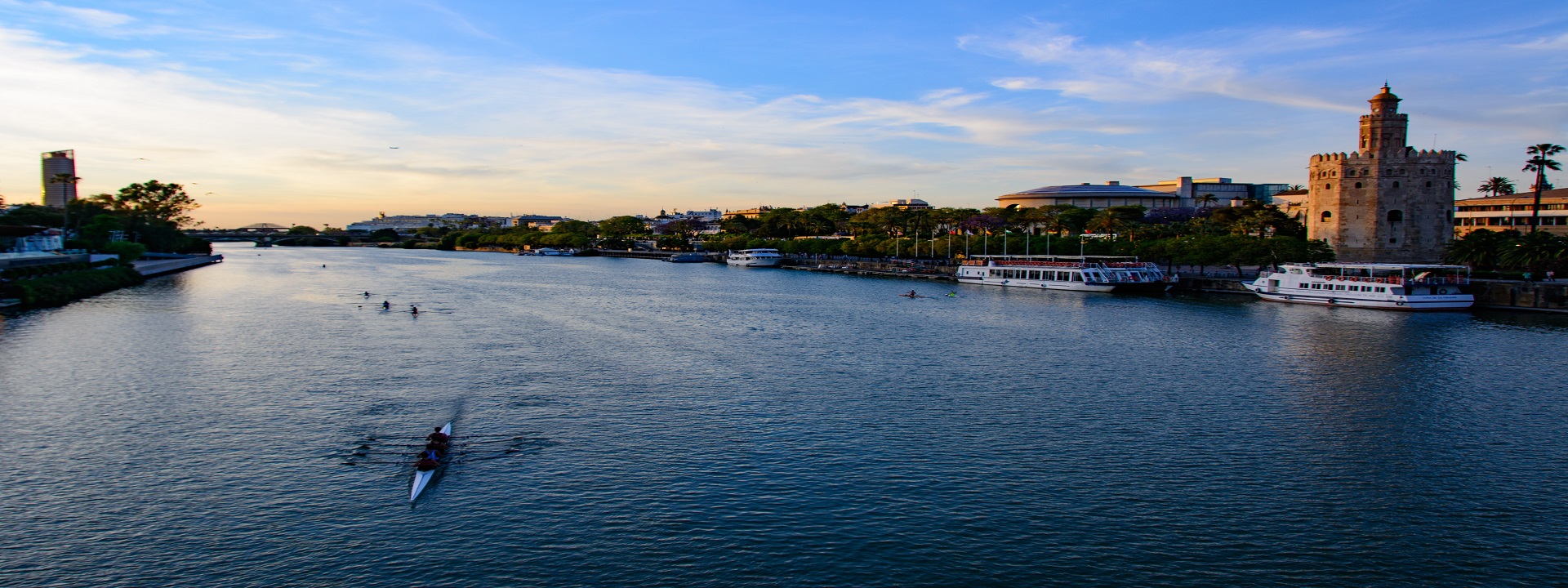
Seville owes him everything. This is the one called the Great River in Arabic: Guadalquivir. This river, which is the only navigable river in Spain, brought glory and wealth.
7
So here you are on the other side, along Betis Street, which was the name given by the Romans to Guadalquivir. You are in the bohemian and flamenco district of Triana.
8
You are in the small square of Santa Ana Church, the most famous in the neighborhood. It is even called the Cathedral of Triana!
9
Stop 9
Pass by
The San Telmo bridge that brings you back to the left bank allows you to have an unobstructed view of the iconic Torre de Oro.
10
Here is another imposing, if not the most elegant, building in Seville: the Palace of San Telmo. It is a large rectangle flanked by four towers and has a large central patio.
11
Another famous building in Seville, here you are in front of the Royal Tobacco Factory. The New World not only brought gold to Europe, it also introduced a fascinated population to a miraculous plant: tobacco.
12
Here you are in front of the beautiful Lope de Vega theatre. It was built at the base for the 1929 Ibero-American World’s Fair and was then called the theatre of the exhibition.
13
Stop 13
Pass by
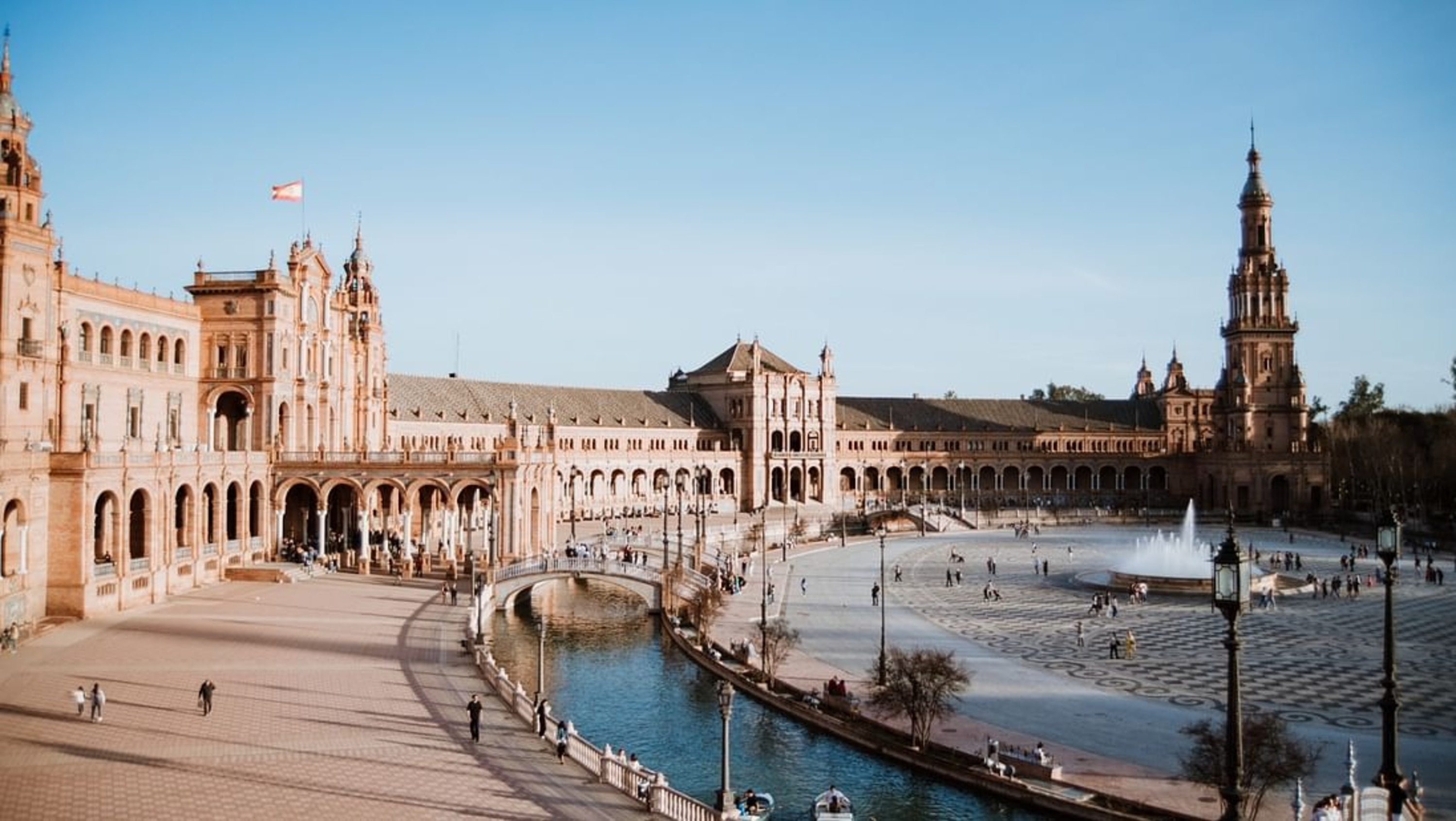
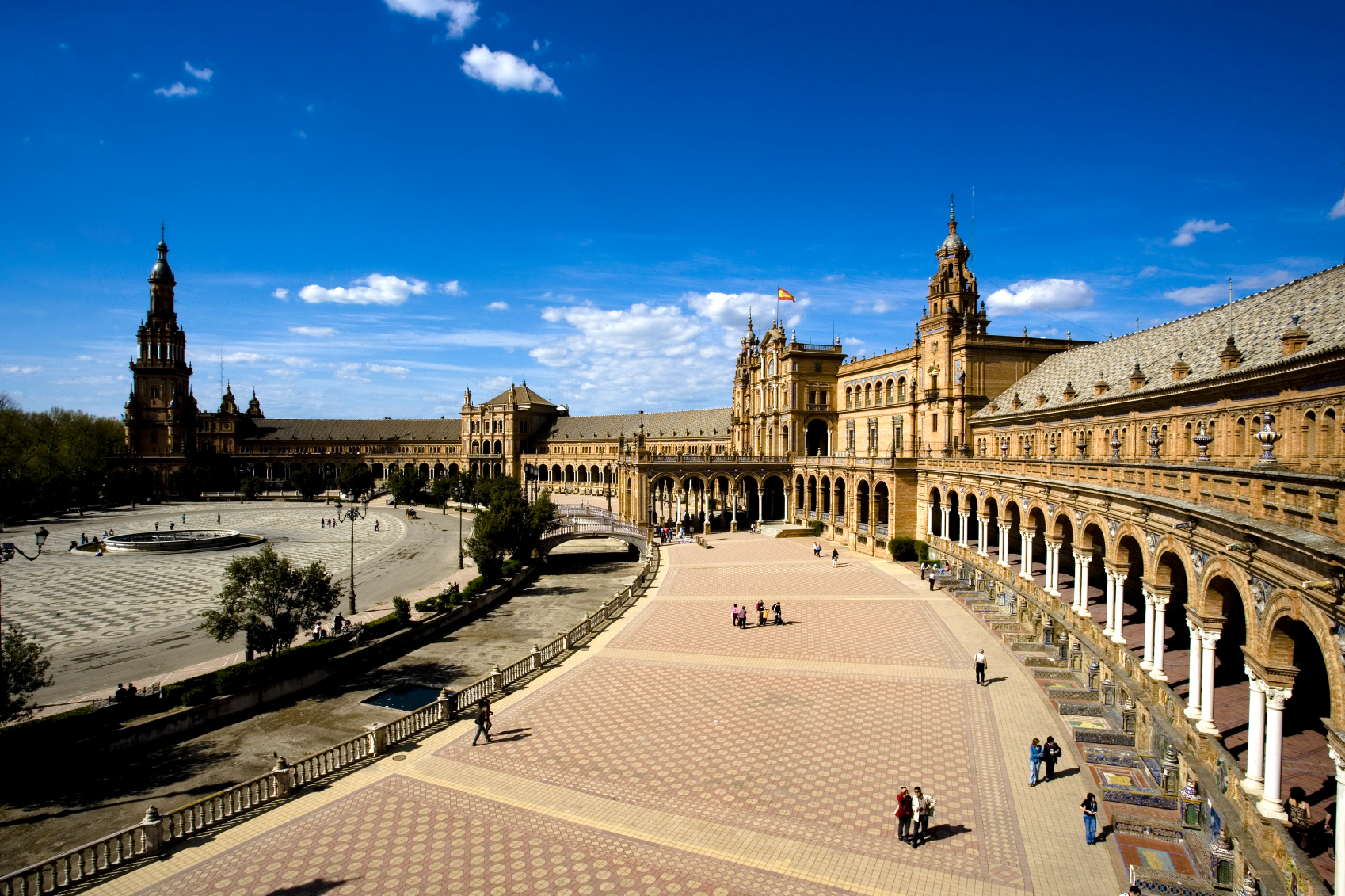
You now pass through part of Maria Luisa’s park which leads you to the Spanish Steps. These gardens, which once belonged to the Palace of San Telmo, were bequeathed to the municipality by Princess Marie-Louise, whose name he takes.
14
Stop 14
Pass by
In the heart of the magnificent Spanish Steps, you can imagine that there is something special behind this place. No city in the world creates this kind of place for no reason!
15
You are in the Prado Garden of San Sebastian, literally, the San Sebastian Meadow. It is located on the site of the ancient hermitage of San Sebastian, built in the 13th century, and which gave it its name.
16
You enter the Murillo Gardens, which run along the Alcazar and separate the old town from the southern part of Seville. If they are so beautiful and have such a botanical variety, it is because they belonged to the Alcazar until 1862.
17
Seville has been well known in France for a long time. No Low-cost Flights to discover the wonders of Andalusia, but Beaumarchais’ pen to imagine the romantic life of its inhabitants.
18
To your right is the entrance to the Church of the Convent of San José del Carmen, known as Little Thérèse. It is a cloistered Catholic convent that was founded in 1586 by Santa Teresa for the order of the discarded Carmelites.
19
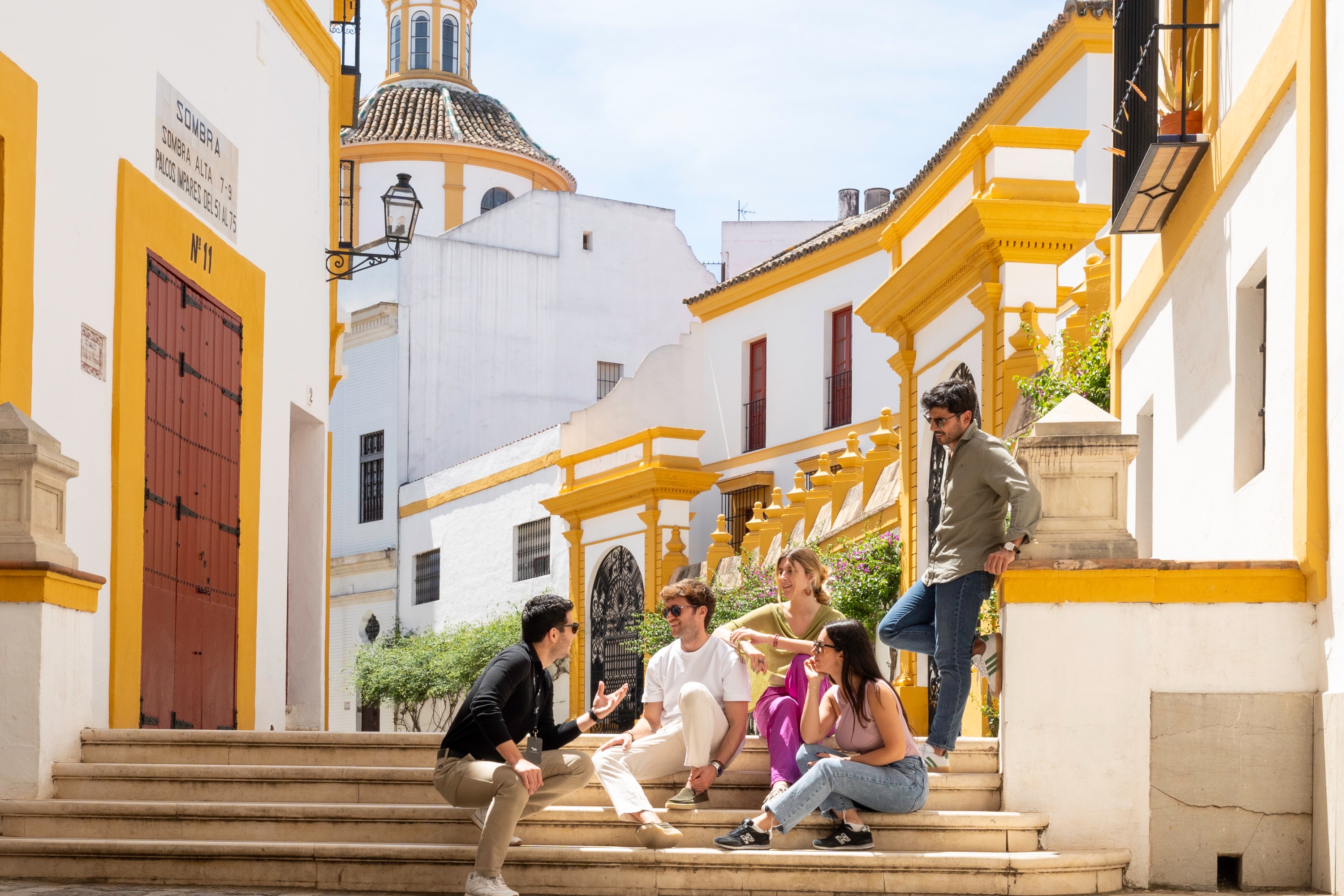
You are in the heart of the Santa Cruz district, arguably the most beautiful area of the city. It is in any case the most picturesque with its cobblestone streets with white and yellow houses.
20
The beautiful baroque building you see on this square is the Hospital of the Venerable. It was built at the end of the 17th century to accommodate churchmen weakened by their age.
21
Stop 21
Pass by
You are now getting to the heart of the matter, and it is not the excitement around you that will say otherwise. The red door that you see, from which a long queue leaves, is the Lions Gate, the entrance to the Alcazar.
22
See on your left, the old tower that makes the corner. It would almost go unnoticed! Yet it is one of the remains of the fortress built by the Almohads around the old city center in the mid-12th century.
23
This large square monument is the building of the General Archives of India. You can imagine that we are talking here about Columbus' India, that is, the Americas.
24
Stop 24
Pass by
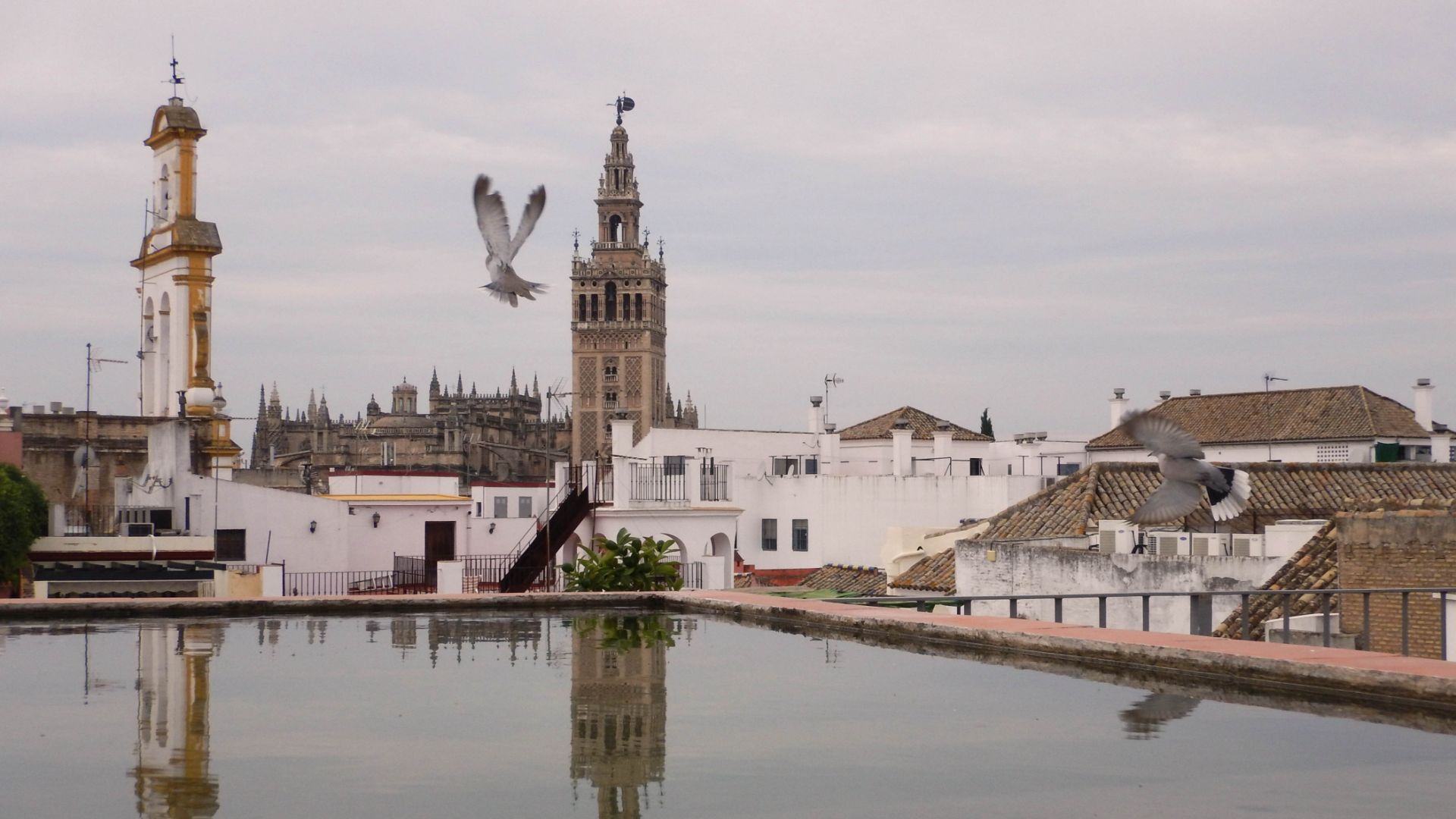
So, you noticed, here the amount of things to see per square meter is impressive! But this is the one you've all been waiting for, the splendid Cathedral of Seville.
25
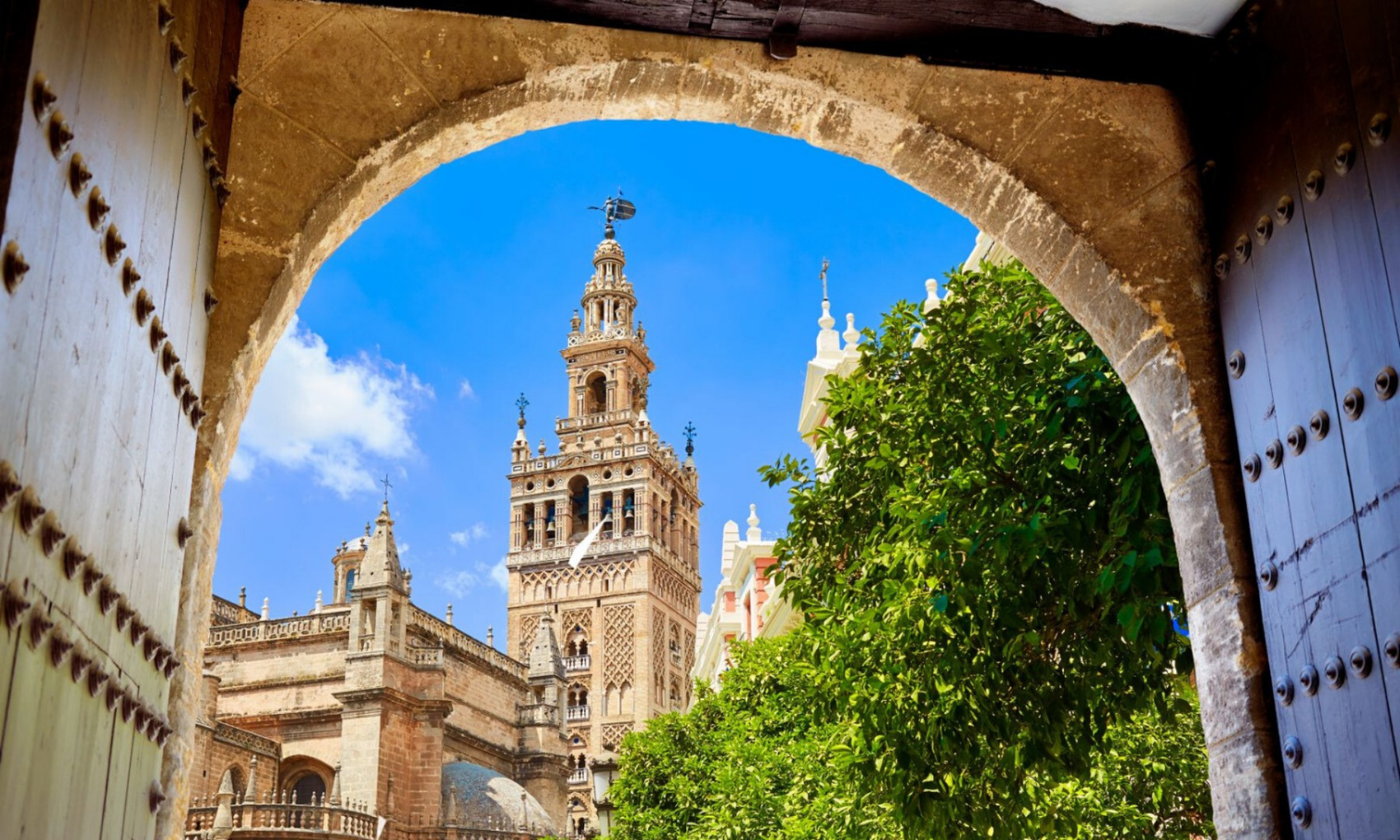
So this is the famous minaret that is so much talked about. On the site of the cathedral of Seville, there was, in the time of the Visigoths, a small church that was destroyed when the Umayyads took control of the Iberian peninsula.
26
If you don’t want to visit it, you can see what the patio of the Orangers looks like here. The door through which you can admire the patio is Puerta del Perdón.
27
You arrive at the narrow and beautiful San Francisco Square, considered the heart of the city in the 16th century. It celebrated major holidays and was home to the main civil authorities.
28
Change of scenery with the beautiful baroque church of the Divine Saviour. It is the largest church in Seville after the cathedral of course.
What's not included
Entrance fees to paying establishments along the route (optional)
Headphones or headphones (optional)
Available languages
Audio guide
EN
FR
ES
Written guide
EN
FR
ES
Reviews breakdown
Viator
5.0
2 reviews
5★
2
4★
0
3★
0
2★
0
1★
0
Important information
Service animals allowed
Public transportation options are available nearby
Suitable for all physical fitness levels
Meeting point
We build our circuits in the form of a loop so that you can easily start the tour at the point closest to you, the guidance will adapt automatically. If you are nearby, we recommend an ideal Check-out Point.
Important notes
Activating your audio-guided circuit:
1. Download the INWAY mobile app from your App Store or directly via this link: www.in-way.fr/app
2. Open the application and enter your code to unlock the circuit: SVQ63987
About Seville
Seville, the capital of Andalusia, is a city rich in history, culture, and vibrant traditions. Known for its stunning architecture, including the iconic Alcázar and Seville Cathedral, the city offers a unique blend of Moorish and Spanish influences. The warm climate, lively festivals, and delicious cuisine make it a captivating destination for travelers.
Top Attractions
Real Alcázar de Sevilla
The Alcázar is a stunning royal palace with a mix of Moorish, Gothic, and Renaissance architecture. It is a UNESCO World Heritage Site and features beautiful gardens and courtyards.
Historical/Architecture
2-3 hours
€11.50 (General admission)
Seville Cathedral and Giralda Tower
The Seville Cathedral is the largest Gothic cathedral in the world and a UNESCO World Heritage Site. The Giralda Tower offers panoramic views of the city.
Historical/Religious
1-2 hours
€11 (General admission)
Plaza de España
This iconic plaza is a masterpiece of Regionalism architecture, featuring a semi-circular plaza with beautiful tiled benches and a large fountain.
Architecture/Cultural
1-2 hours
Free
Barrio de Santa Cruz
The historic Jewish quarter of Seville, known for its narrow, winding streets, charming plazas, and vibrant atmosphere.
Cultural/Historical
1-2 hours
Free to explore
Triana Market
A traditional market offering a variety of fresh produce, meats, cheeses, and local specialties. It's a great place to experience the local culture and cuisine.
Cultural/Shopping
1 hour
Free to enter, prices vary
Must-Try Local Dishes
Gazpacho
A cold soup made from tomatoes, cucumbers, bell peppers, garlic, and olive oil. It's a refreshing dish perfect for hot summer days.
Appetizer
Vegan
Salmorejo
A thicker and creamier version of gazpacho, made with tomatoes, bread, garlic, and olive oil. Often topped with hard-boiled eggs and jamón.
Appetizer
Vegetarian
Rabo de Toro
A traditional stew made with oxtail, red wine, and vegetables. It's a hearty and flavorful dish that's a staple in Andalusian cuisine.
Main Course
Contains meat
Pescaíto Frito
Fried small fish, typically served as a tapas dish. It's a popular snack in Seville, often enjoyed with a glass of wine.
Appetizer
Contains fish
Popular Activities
Hiking in the nearby Sierra Morena mountains
Biking along the Guadalquivir River
Relaxing in the gardens of the Real Alcázar
Enjoying a traditional spa experience
Visiting the numerous museums and galleries
Attending flamenco performances
Boating on the Guadalquivir River
Swimming at nearby beaches
Best Time to Visit
April to June, September to October
The best time to visit Seville is during spring and autumn when the weather is pleasant and the city is lively with festivals and events. The temperatures are comfortable, and the tourist crowds are manageable.
20°C to 35°C
68°F to 95°F
Practical Information
Language
- Official: Spanish
- Widely spoken: English, French
- English: Moderately spoken
Currency
Euro (EUR)
Time Zone
GMT+1 (CET), GMT+2 (CEST during daylight saving time)
Electricity
230VV, 50HzHz
Safety Information
Overall Safety Rating: Generally safe
Seville is generally safe for travelers, but petty crime such as pickpocketing can occur in crowded areas. Be cautious and take standard precautions to protect your belongings.
Important Precautions:
- • Keep valuables secure and out of sight
- • Be cautious of pickpockets in crowded areas
- • Use licensed taxis or ride-sharing apps
Getting there
By air
- Seville Airport • 10 km from city center
By train
Santa Justa Station
By bus
Plaza de Armas, Príncipe Pío
Getting around
Public transport
The bus network is the primary form of public transport in Seville, covering most of the city and its suburbs.
Taxis
Available • Apps: Cabify, Uber
Rentals
Car, Bike, Scooter
Neighborhoods
Santa Cruz
Triana
Arsenal
Macarena
Day trips
Córdoba
140 km from Seville • Full day
Córdoba is a historic city known for its stunning Mosque-Cathedral, a UNESCO World Heritage Site, and its beautiful patios and gardens.
Ronda
130 km from Seville • Full day
Ronda is a picturesque town perched on a cliff, known for its dramatic views, historic bullring, and ancient Arab baths.
Cádiz
120 km from Seville • Full day
Cádiz is a coastal city known for its beautiful beaches, historic sites, and vibrant carnival celebrations.
Festivals
Feria de Abril • Two weeks after Easter
Semana Santa • The week leading up to Easter
Feria de San Miguel • Late September to early October
Pro tips
- Visit the Real Alcázar early in the morning to avoid crowds and enjoy the gardens in peace
- Explore the Triana neighborhood for authentic ceramics, flamenco, and local cuisine
- Try salmorejo, a thicker and creamier version of gazpacho, at a local bodega
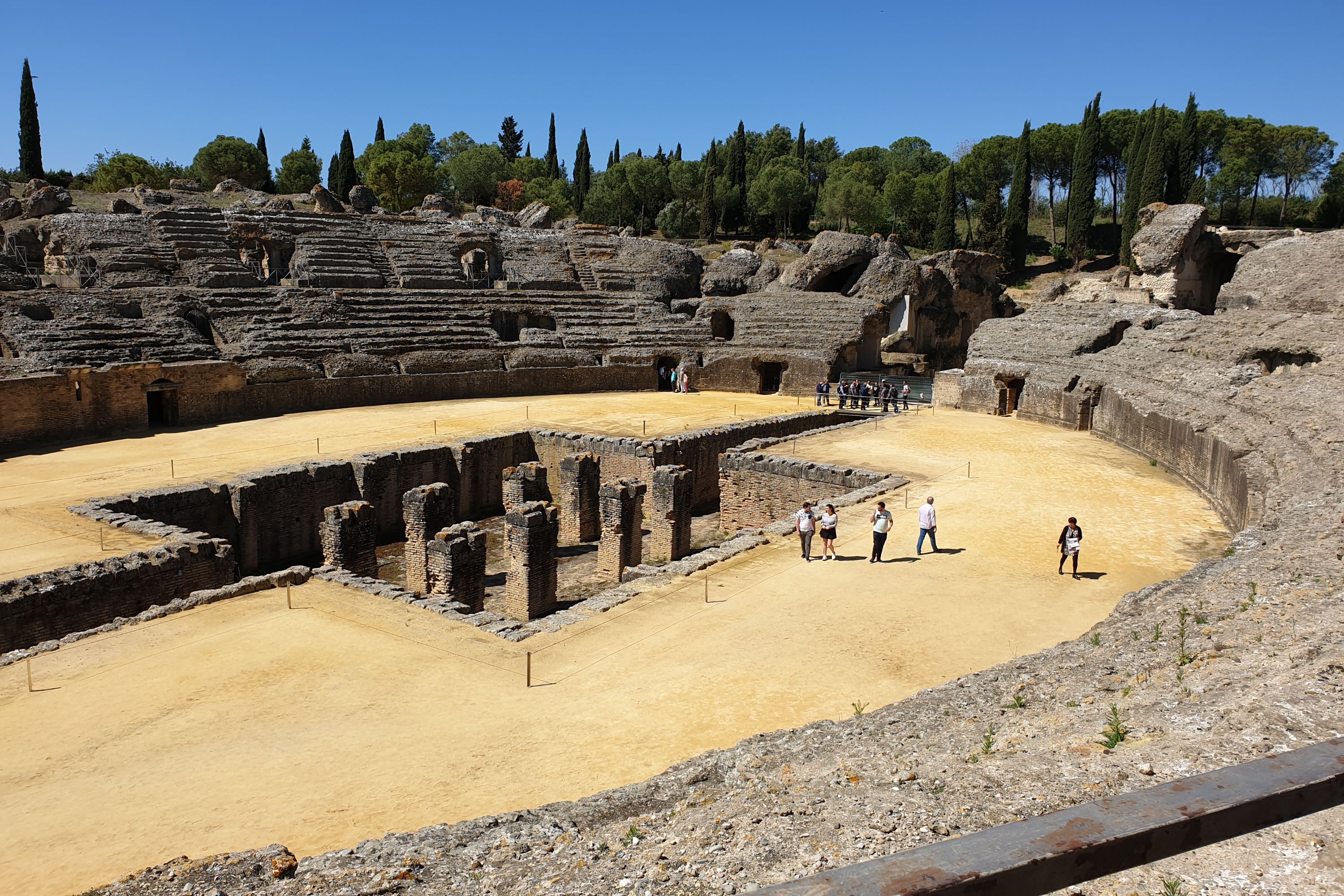
- Take a day trip to Itálica to explore the ancient Roman ruins near Seville
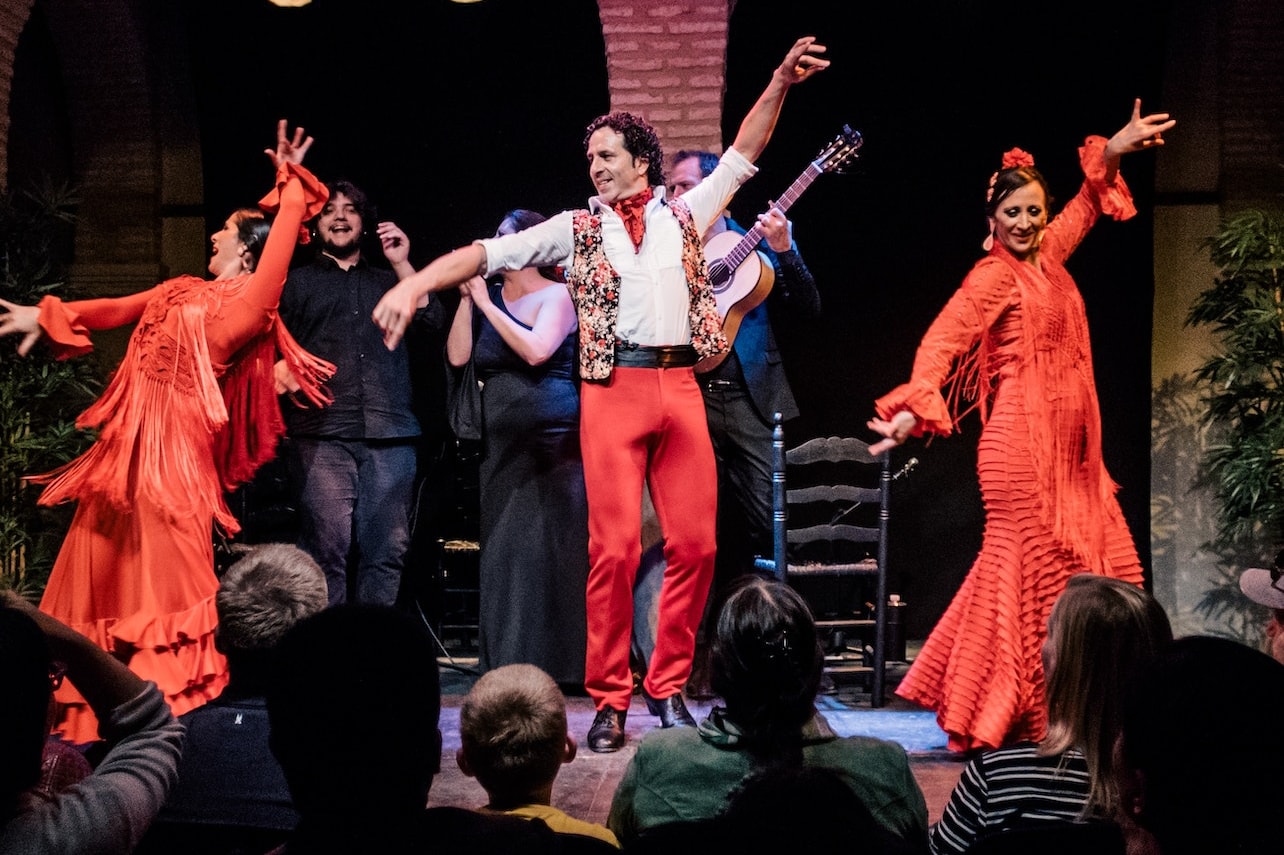
- Attend a flamenco performance at a local tablao for an authentic cultural experience
From $25
per person
Price varies by option
Secure booking
Free cancellation available
Instant confirmation