Barcelona in One Day: Gaudí, Gothic Quarter &Tapas (Private Tour)
Active
5h
For a full refund, cancel at least 24 hours before the scheduled departure time.
Instant confirmation
Mobile or paper ticket accepted
About this experience
Barcelona in one perfect day!
Discover the city in the most complete and comfortable way on this private full-day experience that combines history, local flavors, and Gaudí’s greatest masterpiece.
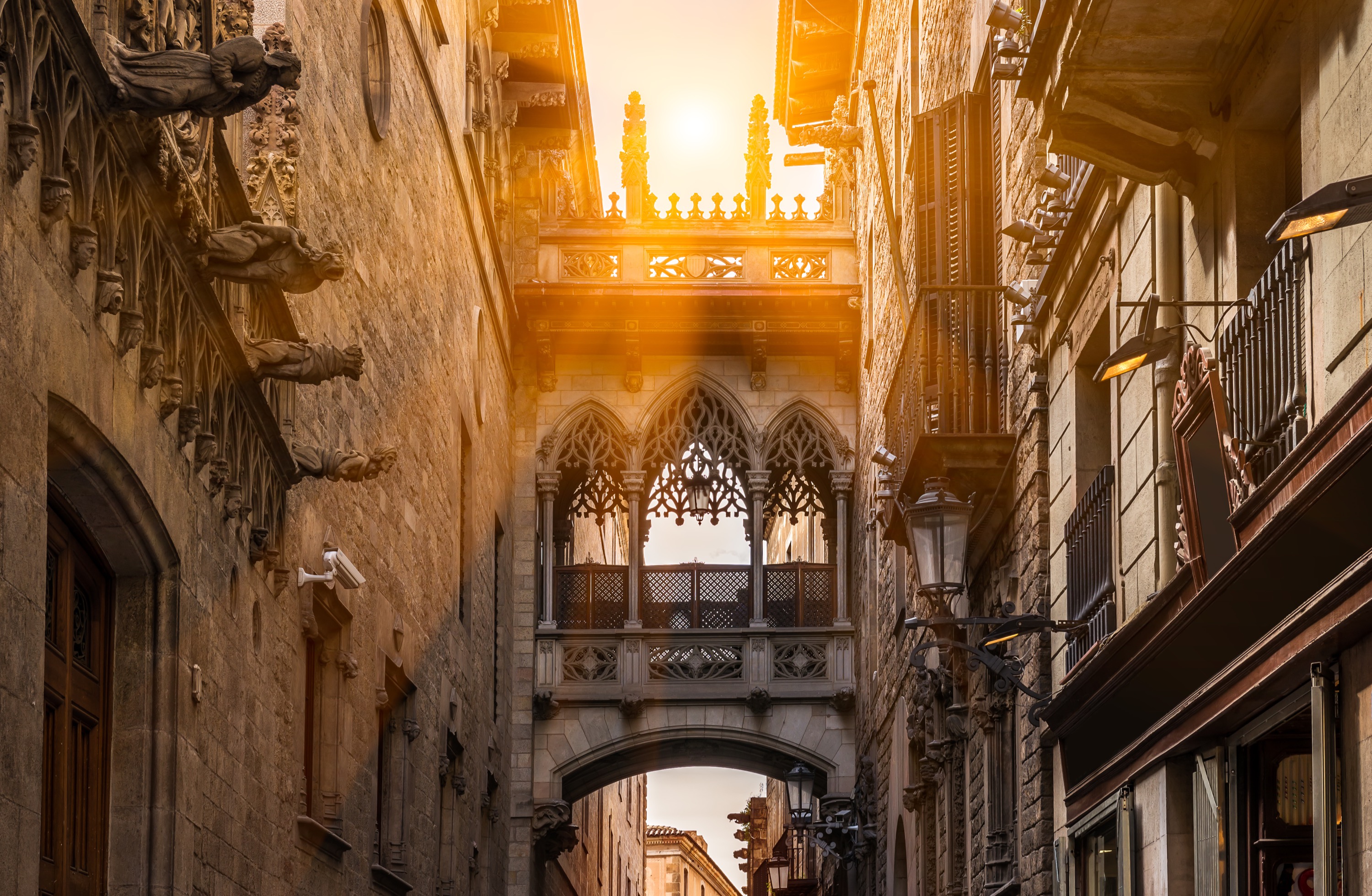
Accompanied by a licensed expert guide, you will explore the atmospheric streets of the Gothic Quarter, uncover hidden squares and local stories, and enjoy selected tapas stops that introduce you to the city’s authentic culinary culture. Your guide adapts the pace and route to your interests, ensuring a relaxed and fully personalized visit.
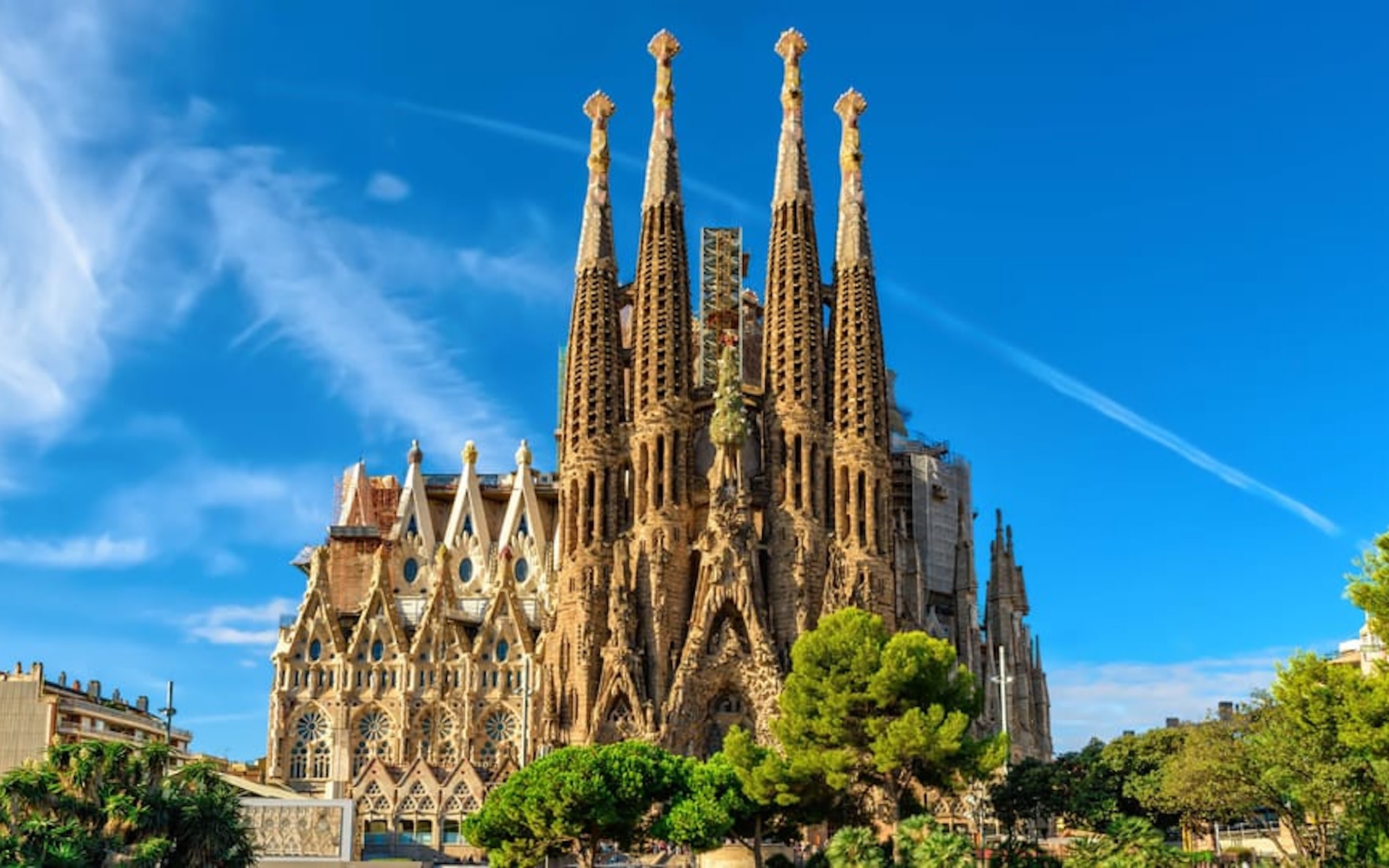
The day concludes with a skip-the-line guided tour of the Sagrada Familia, where you will dive into Gaudí’s extraordinary vision, symbolism, and architecture, including the interior and museum with original sketches and models.
Designed for travelers who want to see the best of Barcelona in one seamless day, this private tour offers expert guidance, smooth organization, cultural depth, and memorable local experiences — without stress or rushing.
Available options
Private Tour – Sagrada Audio
More affordable option: Private guided city tour with tapas, plus skip-the-line Sagrada Familia visit with audio guide.<br/>Duration: 4 hours<br/>Official Audio guided Sagrada
Barcelona in One Day: Gaudí, Gothic Quarter &Tapas (Private Tour)
Private Day Tour + Park Güell
Park Güell Guided Tour: Guided visit of Park Güell with skip-the-line entrance, exploring Gaudí’s iconic terraces, mosaics, and panoramic views.<br/>Most popular option. : Most popular option. Includes Park Güell for a more complete Gaudí experience.<br/>Duration: 6 hours
What's included
Discover hidden corners and local stories beyond the usual tourist routes
Explore Barcelona’s historic Gothic Quarter and Modernism with a licensed expert guide
Breaks for restrooms and refreshments included
Skip-the-line guided visit of the Sagrada Familia, including interior and museum
2–3 tapas stops (light lunch). Taste traditional tapas at selected local spots, away from tourist traps. Tast at the Boqueria Market, Sample cherished local delicacies: Iberian sausages and cheeses.
Carefully timed itinerary to avoid peak crowds
tickets to Metro
Stop to see La Pedrera and Casa Batllò. Private tour with flexible pace and personalized itinerary
Detailed itinerary
1
In the Plaça Nova, in Barcelona's Gothic Quarter, almost touching the wall of the former Roman city, seven giant letters contrast with their historic backdrop. They are part of the alphabet created by Joan Brossa to spell out the word Barcino, the principal name of the Colonia Iulia Augusta Faventia Paterna Barcino, which was the origin of present-day Barcelona. The letters, six of them made of bronze and one of aluminium, are bolted to the ground and make up a fun and original display, very much in keeping with this Barcelona-born artist's visual poems
2
Stop 2
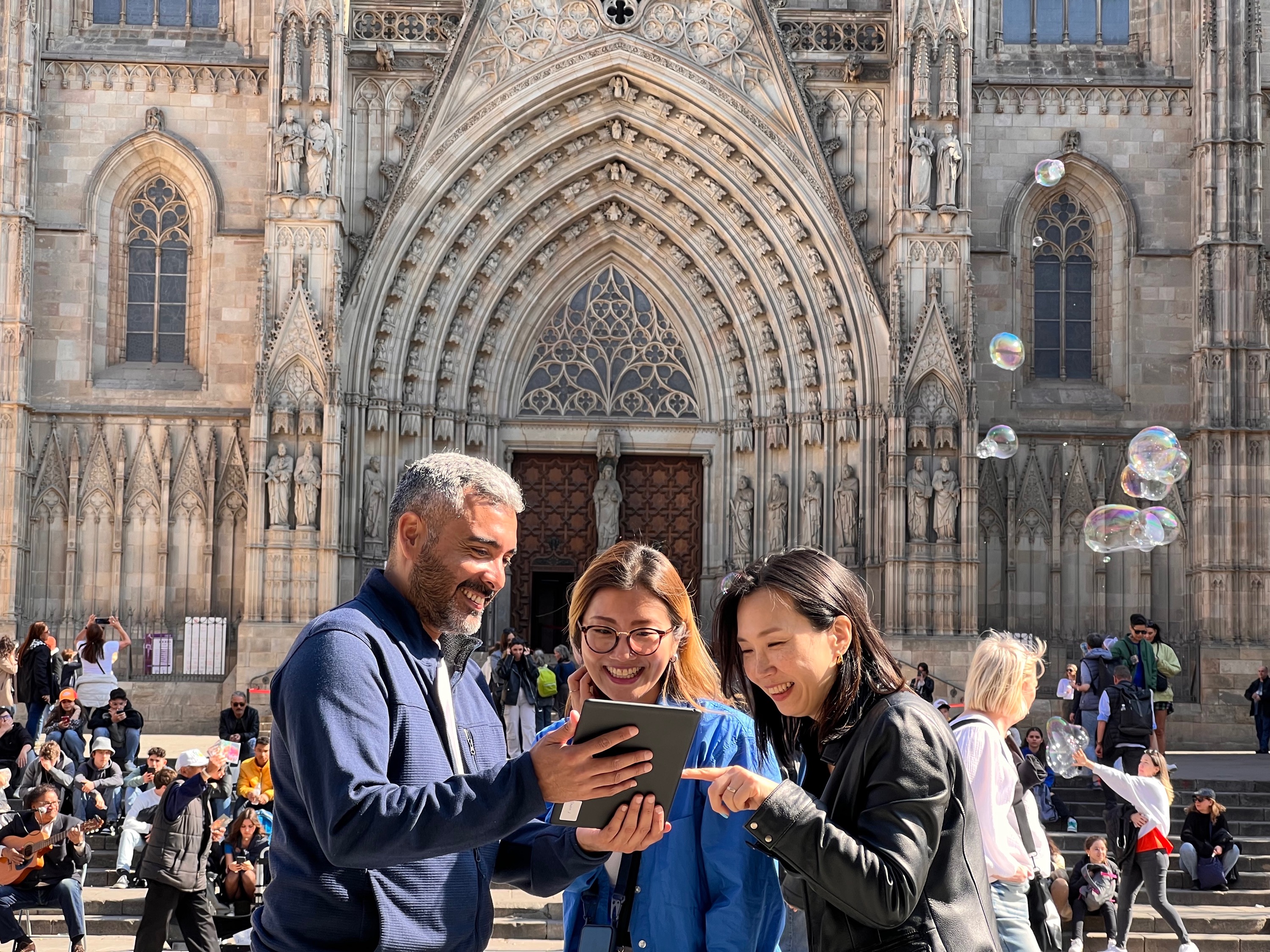
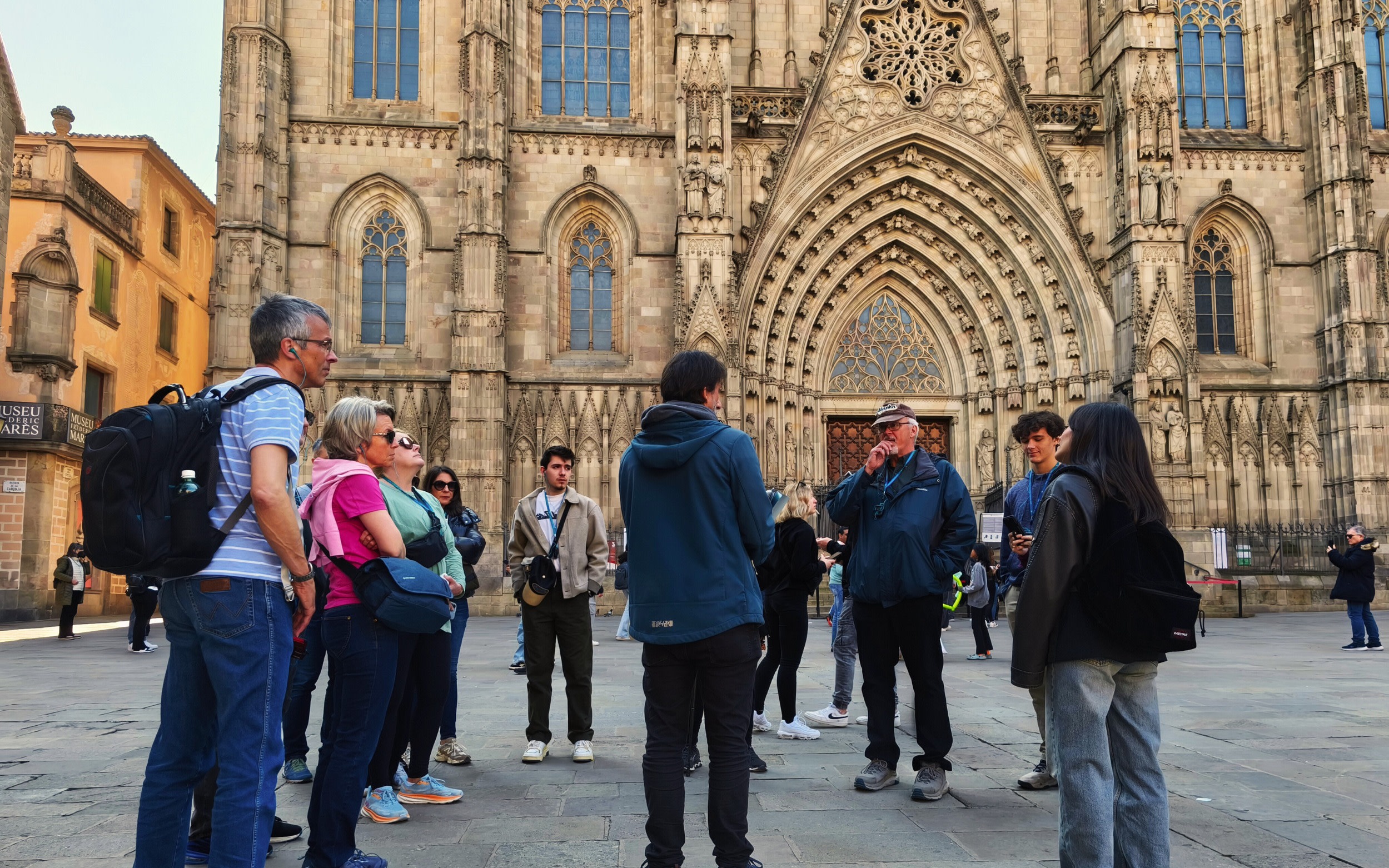
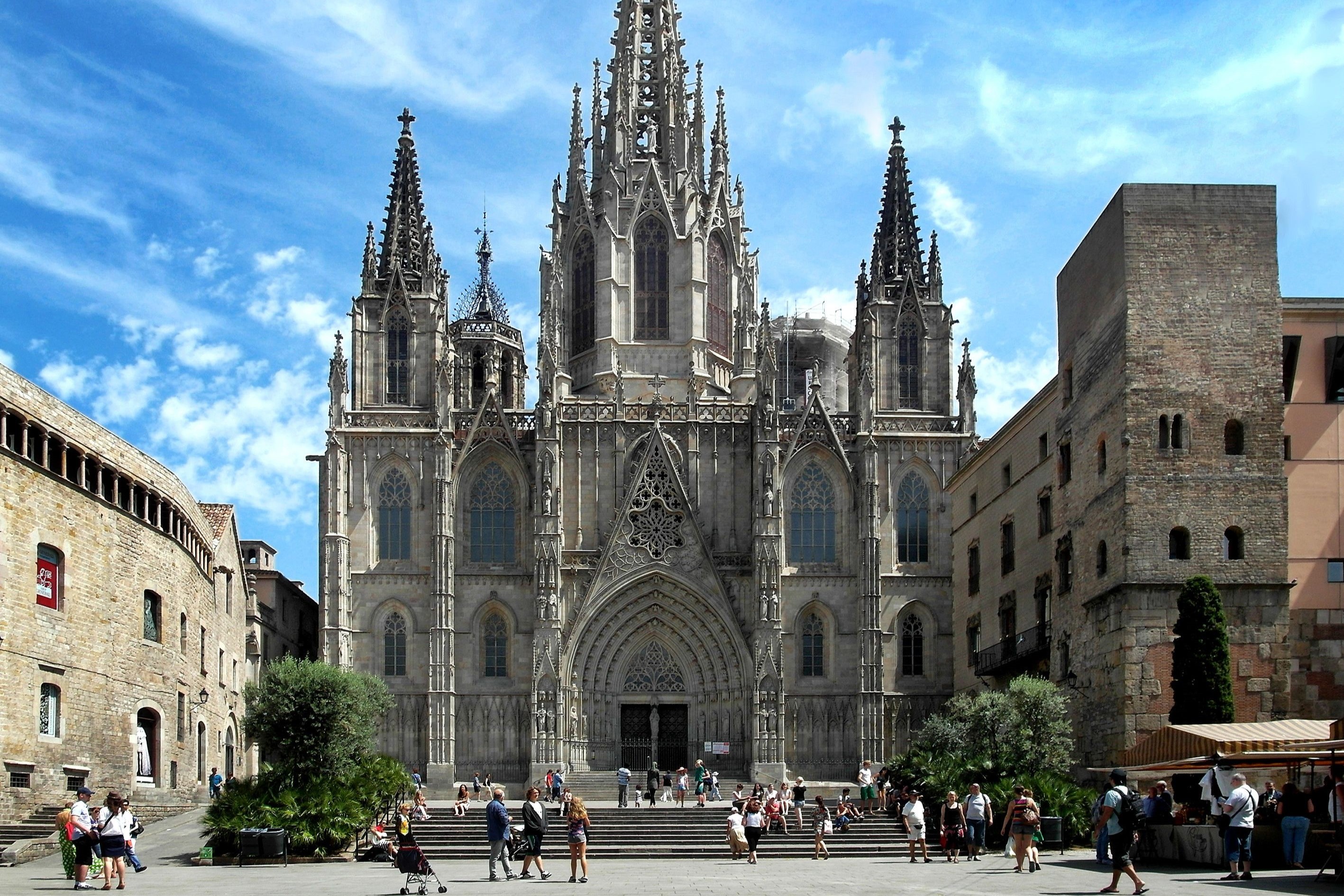
Visit the interior of Barcelona's stunning Cathedral, a masterpiece of Gothic architecture. Marvel at its intricate details, including the impressive nave, beautiful chapels, and the tranquil cloister with its fountain. Learn about the cathedral's history, built over several centuries, and the religious significance it holds for the city.
3
The Casa de l'Ardiaca, the residence of the ecclesiastical hierarchy from the 12th century onwards, has undergone many alterations over the years, such as the ones carried out in the early 16th century which connected the building with the dean's residence. This was also the period when the porticoed central courtyard was built and the Renaissance-style decorations, which tie in with the flamboyant Gothic style of the original building, completed. A staircase leads to the upper terrace, a balcony in the purest Romeo and Juliet style.
4
Stop 4
The Conjunt Monumental de la Plaça del Rei in Barcelona is, arguably, the Gothic architectural ensemble which best exemplifies the city's medieval past. The royal palace, the Palau Reial Major, and its surrounding buildings, enclose a harmonious and peaceful square which is still imbued with Barcelona's splendour during the Middle Ages.
5
Stop 5
The Plaça Sant Jaume has been the city's political centre almost since its inception. Today the Plaça Sant Jaume is an open space, a "lung" in the middle of the Gothic Quarter. The square is the site of the most important buildings in the lives of Barcelona and Catalonia: City Hall and the Palau de la Generalitat.
6
The Jewish Quarter of medieval Barcelona is home to one of Europe’s oldest synagogues, which has been restored and opened to the public. From the 9th century to the 14th century Barcelona had a large Jewish community that is thought to have numbered around 4,000 people. Two neighborhoods of narrow streets, called "calls" from the Hebrew word "kahal", which means community or congregation, sprung up around them.
7
La Rambla is exactly 1.2 kilometers long and nearly everyone who visits Barcelona walks along with it. La Rambla was laid out in 1766, following the contours of the medieval city walls that had bounded this part of Barcelona since the 13th century. The locals took it to their hearts straightaway. In Barcelona, a city of narrow, winding streets, the Rambla was the only space where everyone could stroll and spend their leisure time. And we mean everyone. Because of its central location, the Rambla became a meeting place for all the social classes.
8
Stop 8
La Rambla's history is the Boqueria Market's history. The evolution from a past of peddlers to a modern and charming present, full of color and life. The market is a metaphor for Barcelona's life, a human river that is the delight for those who like watching.
9
Stop 9
Casa Batlló, is a building in the center of Barcelona. It was designed by Antoni Gaudí and is considered one of his masterpieces. A remodel of a previously built house, it was redesigned in 1904 by Gaudí and has been refurbished several times after that. Gaudí's assistants Domènec Sugrañes i Gras, Josep Canaleta and Joan Rubió also contributed to the renovation project.
The local name for the building is Casa dels ossos (House of Bones), as it has a visceral, skeletal organic quality. It is located on the Passeig de Gràcia in the Eixample district, and forms part of a row of houses known as the Illa de la Discòrdia (or Mansana de la Discòrdia, the "Block of Discord"), which consists of four buildings by noted Modernista architects of Barcelona.
Like everything Gaudí designed, Casa Batlló is only identifiable as Modernisme or Art Nouveau in the broadest sense. The ground floor, in particular, has unusual tracery, irregular oval windows and flowing sculpted stone work. There are few straight lines, and much of the façade is decorated with a colorful mosaic made of broken ceramic tiles (trencadís). The roof is arched and was likened to the back of a dragon or dinosaur. A common theory about the building is that the rounded feature to the left of centre, terminating at the top in a turret and cross, represents the lance of Saint George (patron saint of Catalonia, Gaudí's home), which has been plunged into the back of the dragon.
10
Stop 10
La Pedrera or "The stone quarry", a reference to its unconventional rough-hewn appearance, is a modernist building in Barcelona, Catalonia, Spain. It was the last private residence designed by architect Antoni Gaudí and was built between 1906 and 1912.
The building was commissioned in 1906 by Pere Milà and his wife Roser Segimon. At the time, it was controversial because of its undulating stone facade, twisting wrought-iron balconies and designed by Josep Maria Jujol. Several structural innovations include a self-supporting stone façade, and a free-plan floor, underground garage and the spectacular terrace on the roof.
In 1984, it was declared a World Heritage Site by UNESCO. Since 2013 it has been the headquarters of the Fundació Catalunya La Pedrera which manages the visit to the building, exhibitions and other cultural and educative activities at Casa Milà.
11
Stop 11
The Sagrada Familia, the jewel of Gaudi's architecture and the skyline of the city of Barcelona, is worth visiting in depth, calmly, without queues or rooms full of people ...
The astonishment of walking and observing the details of this Temple in its interior are priceless. And also, we choose for you the best schedule to achieve it.
Our proposal focuses on the evening, starting at 4 pm. when the flow of visitors usually decreases and you will have the chance to visit the Sagrada Familia at your own pace.
Available languages
Guide guide
EN
IT
FR
ES
Reviews breakdown
Viator
4.8
15 reviews
5★
14
4★
0
3★
0
2★
1
1★
0
Tripadvisor
5.0
3 reviews
5★
3
4★
0
3★
0
2★
0
1★
0
Important information
Wheelchair accessible
Infants and small children can ride in a pram or stroller
Public transportation options are available nearby
Transportation options are wheelchair accessible
Suitable for all physical fitness levels
Carefully timed itinerary to avoid peak crowds Breaks for restrooms and refreshments included
Meeting point
Hotel Lamaro access door, just in front of the Cathedral
About Barcelona
Barcelona is a vibrant city on the northeastern coast of Spain, known for its rich cultural heritage, stunning architecture, and lively atmosphere. It seamlessly blends medieval history with modernist masterpieces, making it a unique and appealing destination for travelers.
Top Attractions
Sagrada Família
Antoni Gaudí's unfinished masterpiece, a stunning basilica that combines Gothic and Art Nouveau forms. It's a UNESCO World Heritage Site and a must-visit.
Architecture
1.5-2.5 hours
€26-€34 (depending on access to towers)
Park Güell
Another Gaudí masterpiece, this park features colorful mosaics, whimsical structures, and beautiful city views.
Architecture
1.5-2 hours
€10 (Monumental Zone)
La Rambla
A famous pedestrian street filled with shops, restaurants, street performers, and the famous La Boqueria market.
Street
1-2 hours
Free (shopping and dining costs vary)
Casa Batlló
A unique building designed by Gaudí, known for its surrealist design and colorful façade.
Architecture
1 hour
€35-€45 (depending on the tour)
Gothic Quarter
The historic heart of Barcelona, filled with medieval streets, ancient buildings, and hidden plazas.
Historical
2-3 hours
Free (some attractions may have entry fees)
Must-Try Local Dishes
Pa amb tomàquet
Bread rubbed with tomato, garlic, and olive oil, often served as an appetizer.
Snack
Vegetarian
Fideuà
A paella-like dish made with short, thin noodles, seafood, and saffron.
Main Course
Contains seafood
Crema Catalana
A Catalan version of crème brûlée, made with egg yolks, sugar, and cinnamon.
Dessert
Vegetarian
Patatas Bravas
Fried potato cubes topped with a spicy tomato sauce and garlic aioli.
Snack
Vegetarian
Popular Activities
Hiking in Montserrat
Water sports in Barceloneta
Rock climbing
Beach lounging in Barceloneta
Spa treatments
Strolling through parks and gardens
Visiting museums and galleries
Attending festivals and events
Best Time to Visit
May to June, September to October
The peak season offers pleasant weather and is ideal for exploring the city's attractions. The crowds are manageable, and the city is vibrant with festivals and events.
20°C to 28°C
68°F to 82°F
Practical Information
Language
- Official: Catalan, Spanish
- Widely spoken: English, French
- English: Moderately spoken
Currency
Euro (EUR)
Time Zone
GMT+1 (CET), GMT+2 (CEST during daylight saving time)
Electricity
230VV, 50HzHz
Safety Information
Overall Safety Rating: Generally safe
Barcelona is generally safe, but like any major city, it has its share of petty crime and scams. Be aware of your surroundings, especially in touristy areas and on public transportation.
Important Precautions:
- • Be cautious of pickpockets, especially in crowded areas and on public transportation.
- • Keep an eye on your belongings, especially in touristy areas and on public transportation.
- • Be cautious of fake petitions or distractions to steal from you.
Getting there
By air
- Barcelona-El Prat Airport • 12 km from city center
By train
Sants Station, Estació de França
By bus
Estació d'Autobusos Sants, Estació d'Autobusos Nord
Getting around
Public transport
The metro system is efficient, clean, and covers most of the city. It's a great way to get around quickly and affordably.
Taxis
Available • Apps: Free Now, Cabify
Rentals
Car, Bike, Scooter
Neighborhoods
Eixample
Gràcia
Barceloneta
Gothic Quarter
El Raval
Day trips
Montserrat
50 km from Barcelona • Half day to full day
A stunning mountain range with a historic monastery, offering hiking, scenic views, and religious sites.
Girona
100 km from Barcelona • Full day
A charming medieval city with a well-preserved Jewish Quarter, a stunning cathedral, and a rich history.
Sitges
40 km from Barcelona • Half day to full day
A picturesque coastal town known for its beaches, nightlife, and historic sites.
Festivals
La Mercè Festival • Late September
Sant Jordi • April 23
Festa Major de Gràcia • Mid-August
Pro tips
- Visit popular attractions like the Sagrada Família and Park Güell early in the morning or late in the afternoon to avoid crowds.
- Explore the city's neighborhoods on foot or by bike to discover hidden gems and local culture.
- Try local specialties like pa amb tomàquet, fideuà, and crema catalana at local markets and restaurants.
- Use the T-Casual pass for unlimited travel on public transportation, which is more cost-effective than single tickets.
- Be cautious of pickpockets, especially in crowded areas and on public transportation, and keep an eye on your belongings.
From $25
per person
Price varies by option
Secure booking
Free cancellation available
Instant confirmation