Walking Tour on the Origins of Football in Bilbao and Biscay
Active
3h
For a full refund, cancel at least 24 hours before the scheduled departure time.
Instant confirmation
Mobile or paper ticket accepted
About this experience
If you are passionate about football, with this tour you can learn first hand all the secrets that hide the sport in Bilbao and its surroundings: the house where 'Pichichi' was born, the first sports newspaper in Spain, the 'alirón', the barge... and much more!
Available options
Tour in English
Tour in Spanish
What's included
Bilbao Walking Tour
Public transportation
Gift souvenir
Possibility to customize the tour
Local expert guide
Detailed itinerary
1
We will observe the house where Rafael Moreno 'Pichichi' was born, learn about his career and reflect on his contribution to the professionalism of football in Spain
2
We will locate the old Café Donostiarra, above which the first Athletic Club headquarters was installed in 1901. In addition, this will allow us to discuss the date of incorporation of the club.
3
We will know the history and evolution of both the Church and the Bridge of San Anton, which because of their historical importance appear on the shield of the Athletic Club.
We will also analyze other elements and symbols that appear on the shields of many other Biscayan teams.
4
We will locate the location of the old Salon Vizcaya, a performance hall in which, according to legend, the expression 'sing the alirón' emerged, used in Spain to refer to the conquest of a League title.
5
We will know the old site of the Café Lyon d'Or, prominent place in the many intellectuals, both from the city and outside, installed their talks at the beginning of the 20th century.
We will evoke the figure of one of those talkers, Jacinto Miquelarena, and his role in the consolidation of sports journalism in Spain as director of the newspaper Excelsior, which began publication in 1924.
6
We will locate the old Café García, where meetings prior to the legal constitution of the Athletic Club were held throughout 1901.
7
We will stop by the statue of Sabino Arana to inquire about the origin of Basque nationalism, which coincides with the arrival of industrialization and football in the region.
We will also analyze the different positions (from rejection to propaganda) that Basque nationalism had with regard to football during the early years of the 20th century.
8
We will observe the former site of the Zamacois Gymnasium, one of the pioneering centers in gymnastics practice in the city, and reflect on the relationship of some of its members with the Athletic Club.
9
We will pay attention to the fountain of Plaza de Jado, whose spout is a representation of the Coronation Cup, the first national football competition played in Spain.
We will review the details of that Coronation Cup of 1902, as well as the participation of Vizcaya FC, which ended up proclaimed champions.
10
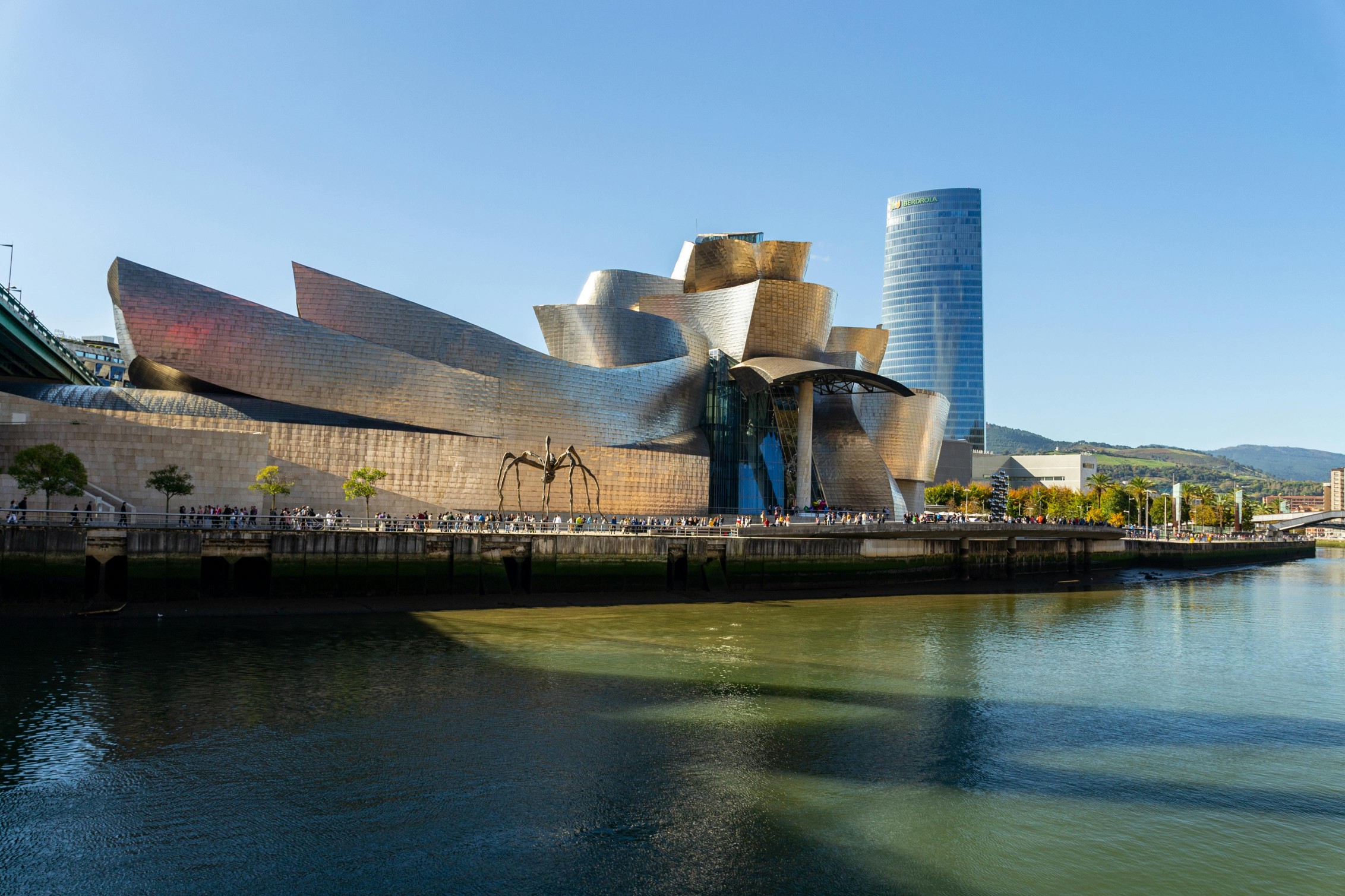
We will cross, next to the Guggenheim Museum, the surroundings of the old camp of the English, scene of many of the first football matches held in Bilbao at the end of the 19th century.
We will reflect on the role of the British sailors and coaches who brought football to the region and created the city’s first organized sports club, the Nervion Shipyard Athlete Club, and we will cite some other fields used during the early years of football.
11
We will walk along the shore of the estuary of Bilbao, which the Athletic Club sails aboard a barge whenever it conquers any title. We will also remember the history of the Acero Club de Olabeaga, which was the first club to celebrate a title with a barge ride.
12
We will look outside the Casa de la Misericordia in Bilbao and analyze its relationship with the name of the stadium of San Mamés and the identification of the Athletic Club with the lions.
13
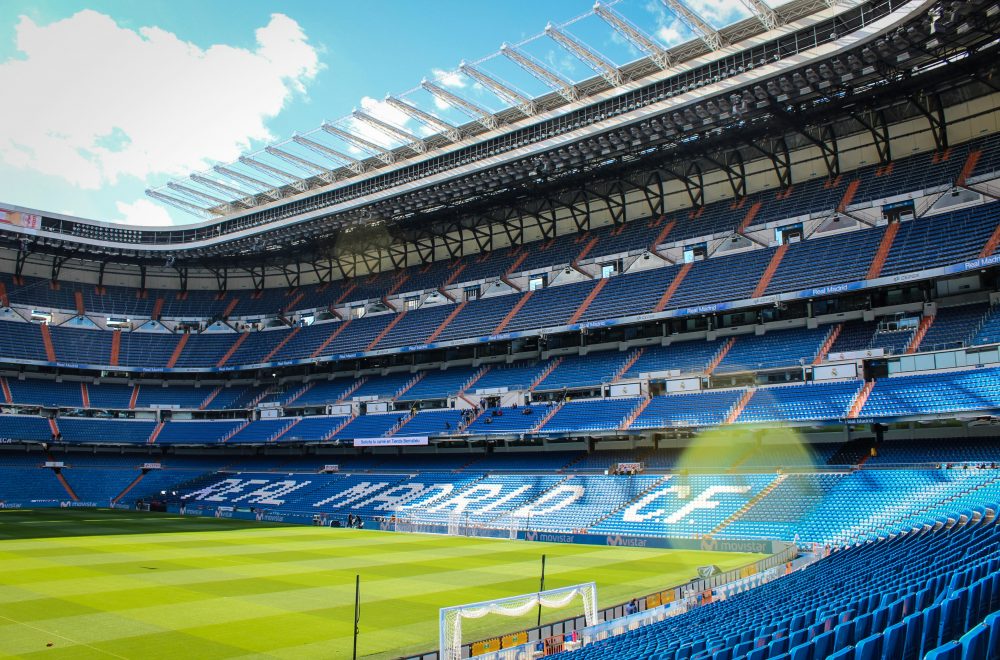
We will examine the exterior of San Mamés Stadium, commenting on some of its architectural curiosities while remembering all the fields used by the Athletic Club before settling in the old San Mamés.
What's not included
Tickets for stadium tours, museums or other points of interest (starting at EUR 15 per adult and EUR 5 per child)
River cruise on the estuary (starting at EUR 14 per adult and EUR 10 per child)
Meals
Gratuities
Available languages
Guide guide
EN
ES
Reviews breakdown
Tripadvisor
5.0
1 reviews
5★
1
4★
0
3★
0
2★
0
1★
0
Important information
Infants and small children can ride in a pram or stroller
Service animals allowed
Public transportation options are available nearby
Travelers should have at least a moderate level of physical fitness
Meeting point
We will meet outside the restaurant Peña Athletic del Casco Viejo. The guide will carry a blue notebook.
About Bilbao
Bilbao is a vibrant city in northern Spain, known for its stunning architecture, rich cultural heritage, and bustling culinary scene. Nestled in the Basque Country, it offers a unique blend of modern innovation and traditional charm, with the iconic Guggenheim Museum and the historic Casco Viejo (Old Town) as its highlights.
Top Attractions
Guggenheim Museum
The Guggenheim Museum Bilbao is an iconic modern and contemporary art museum designed by architect Frank Gehry. It houses a vast collection of works by renowned artists and is a must-visit for art enthusiasts.
Museum
2-4 hours
€20 (general admission)
Casco Viejo (Old Town)
The Casco Viejo is the historic heart of Bilbao, featuring narrow medieval streets, traditional Basque buildings, and a vibrant atmosphere. It is home to numerous shops, bars, and restaurants.
Historical
2-3 hours
Free to explore
Donaostean Etorbidea (Avenue of Good Weather)
This elegant avenue is lined with beautiful buildings, shops, and cafes. It is one of the main shopping and dining districts in Bilbao and offers a glimpse into the city's modern side.
Architecture
1-2 hours
Free to explore
Mount Artxanda
Mount Artxanda offers panoramic views of Bilbao and is a popular spot for hiking and outdoor activities. You can reach the summit by funicular or on foot.
Nature
1-2 hours
€3.60 (funicular ride)
Must-Try Local Dishes
Pintxos
Small, elaborate snacks served on bread, often with a toothpick. They are a staple of Basque cuisine and can be found in bars throughout Bilbao.
Snack
Vegetarian and vegan options available
Bacalao al Pil Pil
A traditional Basque dish made with salted cod, garlic, and olive oil. The sauce, known as pil pil, is the highlight of this dish.
Main Course
Contains fish
Txuleta
A thick-cut rib steak, often served with a simple pepper sauce. It is a popular dish in Basque Country and a must-try for meat lovers.
Main Course
Contains beef
Marmitako
A hearty tuna and potato stew, traditionally made by Basque fishermen. It is a comforting and flavorful dish.
Main Course
Contains fish
Popular Activities
Hiking in Mount Artxanda
Surfing in nearby coastal towns
Cycling along the Nervión River
Beach relaxation in nearby coastal towns
Spa treatments at local hotels
Strolling along the Nervión River
Visiting museums and art galleries
Exploring historic neighborhoods
Best Time to Visit
June to September
Summer is the peak tourist season in Bilbao, offering warm weather and a variety of outdoor activities. The city hosts numerous festivals and events during this time.
18°C to 25°C
64°F to 77°F
Practical Information
Language
- Official: Spanish, Basque
- Widely spoken: English, French
- English: Moderately spoken
Currency
Euro (EUR)
Time Zone
GMT+1 (Central European Time, CET)
Electricity
230VV, 50HzHz
Safety Information
Overall Safety Rating: Generally safe
Bilbao is generally a safe city, with low crime rates and a welcoming atmosphere. However, as with any city, it is important to take precautions to protect yourself and your belongings.
Important Precautions:
- • Keep valuables secure and out of sight
- • Be cautious when using ATMs, especially at night
- • Use licensed taxis or ride-sharing apps
Getting there
By air
- Bilbao Airport • 12 km from city center
By train
Bilbao-Abando Station
By bus
Termibus Station
Getting around
Public transport
The Bilbao Metro is efficient and easy to use, covering most of the city and some suburban areas. It is clean, punctual, and connects to major attractions.
Taxis
Available • Apps: Free Now, Cabify
Rentals
Car, Bike, Scooter
Neighborhoods
Abando
Casco Viejo (Old Town)
Indautxu
Deusto
Day trips
San Sebastián
100 km (62 miles) • Full day
San Sebastián is a beautiful coastal city known for its stunning beaches, world-class gastronomy, and vibrant culture. It is a popular day trip from Bilbao, offering a mix of relaxation and exploration.
Santander
100 km (62 miles) • Full day
Santander is a charming coastal city known for its beautiful beaches, historic architecture, and relaxed atmosphere. It is a popular day trip from Bilbao, offering a mix of relaxation and cultural exploration.
Vitoria-Gasteiz
60 km (37 miles) • Half day
Vitoria-Gasteiz is a historic city known for its well-preserved medieval old town, green spaces, and vibrant culture. It is a popular day trip from Bilbao, offering a mix of history and nature.
Festivals
Aste Nagusia (Great Week) • First week of August
Bilbao International Film Festival (BIFFF) • October
Bilbao Jazz Festival • July
Pro tips
- Visit the Guggenheim Museum early in the morning or late in the afternoon to avoid crowds and enjoy the outdoor sculptures in the best light
- Try pintxos (Basque tapas) at the local bars in the Casco Viejo, and don't be afraid to ask for recommendations from the bartender
- Take a day trip to the nearby coastal towns of San Sebastián or Lekeitio for a mix of relaxation and cultural exploration
- Explore the city's green spaces, such as the Doña Casilda Iturrizar Park or the Mount Artxanda, for a break from the urban environment
- Visit the La Ribera Market for fresh local produce, seafood, and Basque delicacies, and don't miss the opportunity to try some of the local cheeses and wines
From $25
per person
Price varies by option
Secure booking
Free cancellation available
Instant confirmation