Notre Dame Paris Cathedral Early Access Guided Walking Tour
Active
2h
For a full refund, cancel at least 24 hours before the scheduled departure time.
Instant confirmation
Mobile or paper ticket accepted
About this experience
This isn’t just a walk around Notre-Dame — it’s a journey through the heart of Paris, blending history, architecture, literature, and local life. Begin in Square Viviani, a hidden garden steeped in history, then explore the legendary Shakespeare and Company, where literary icons like Hemingway and Joyce once roamed. Discover the stories behind Notre-Dame Cathedral, Parvis Jean-Paul II, Sainte-Chapelle, Palais de Justice, Conciergerie, and the medieval Tour d’Horloge, all vividly brought to life by your guide. Stroll through the vibrant Marché aux Fleurs, soak in the charm of Place de la Dauphine, and finish at the Statue of Henry IV on Pont Neuf overlooking the Seine. With self-guided time inside Notre-Dame combined with expert storytelling outside, this tour reveals hidden literary corners, medieval history, and Parisian culture that most visitors never see, offering a complete, unforgettable experience in the city’s historic heart.
Available options
Notre Dame Walking Tour
Semi Private Notre Dame Tour
Max 12 guests for a more intimate guided tour experience.
What's included
Explore the interior of Notre-Dame Cathedral at your own pace with a self-guided visit
Enjoy panoramic views of the Île de la Cité and the Seine River
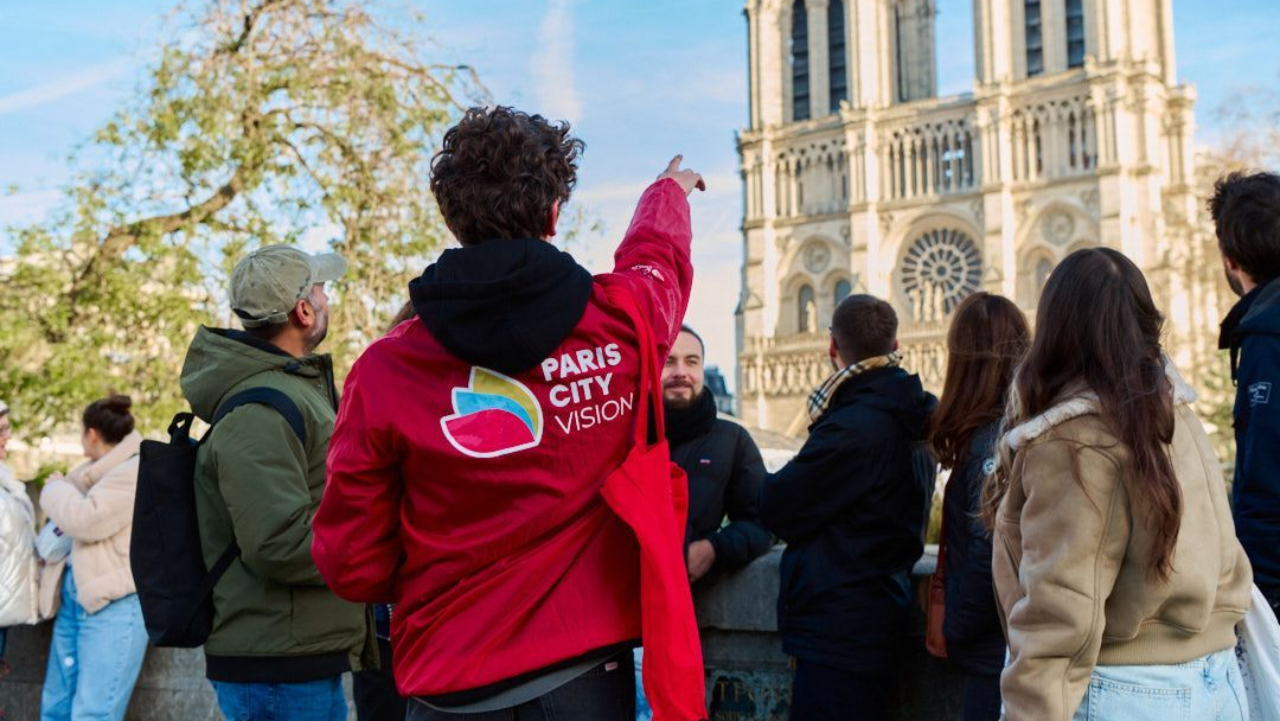
Experience a guided walking tour led by a friendly, expert local guide
Hidden corners and secret details of the Île de la Cité
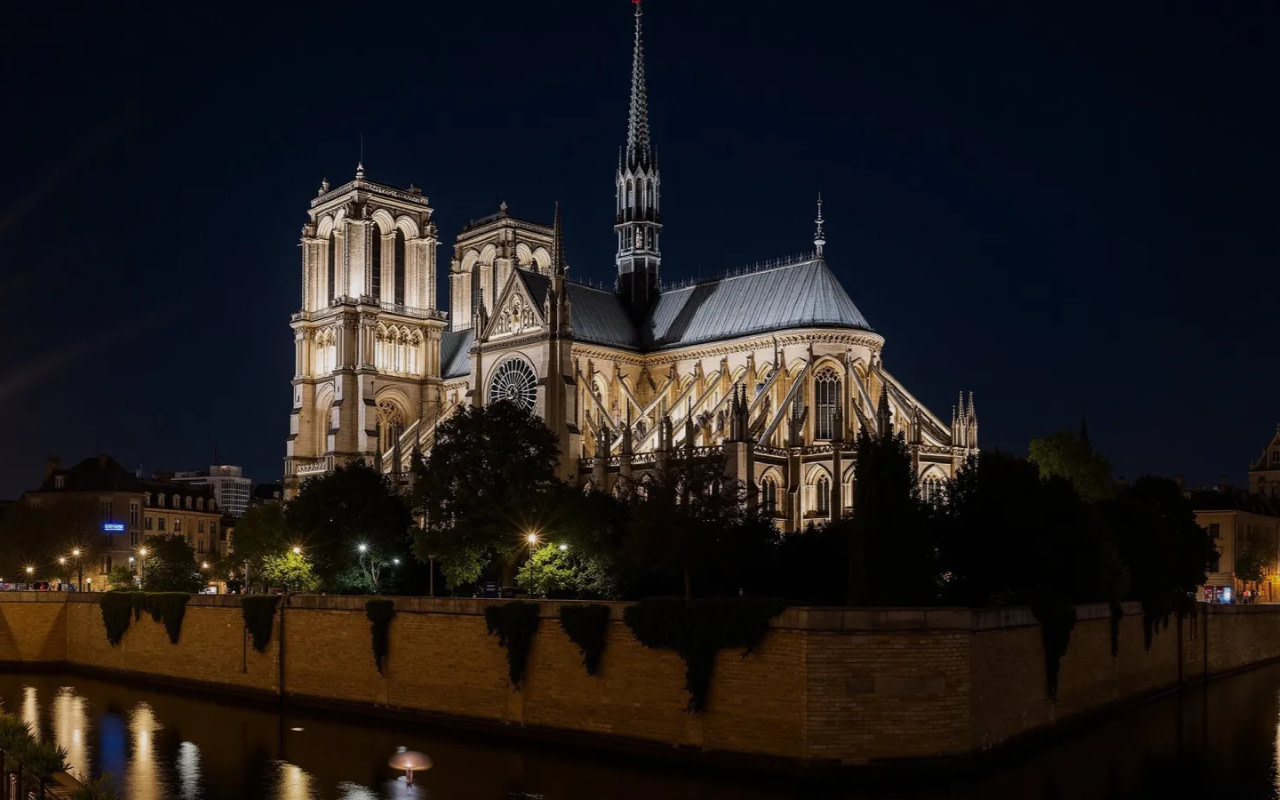
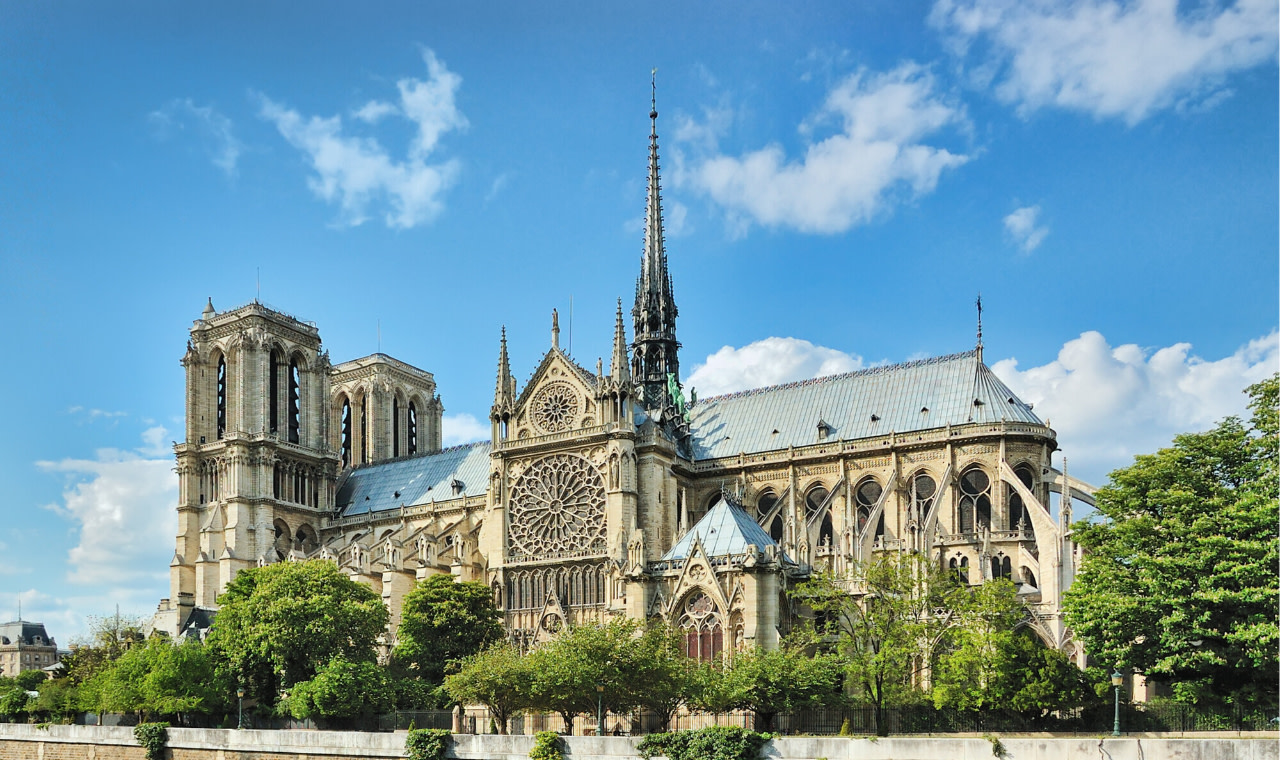
Iconic Notre-Dame Cathedral and its stunning Gothic architecture
Detailed itinerary
1
The tour begins at Square Viviani, a peaceful garden in the Latin Quarter just steps from Notre-Dame. Shaded by old trees and overlooking the Seine, this small square offers a quiet introduction to Paris’s layered history, from ancient Roman roads to medieval Paris. Nearby stands the legendary Shakespeare and Company bookstore, a symbol of Paris’s literary soul. Founded in the 20th century, it became a meeting place for writers such as Ernest Hemingway, James Joyce, and later Beat Generation authors. During a 15-minute stop, your guide will bring this corner to life, sharing stories of the garden, the neighborhood, and the creative spirit that made Shakespeare and Company a haven for writers, artists, and travelers from around the world.
2
Stop 2
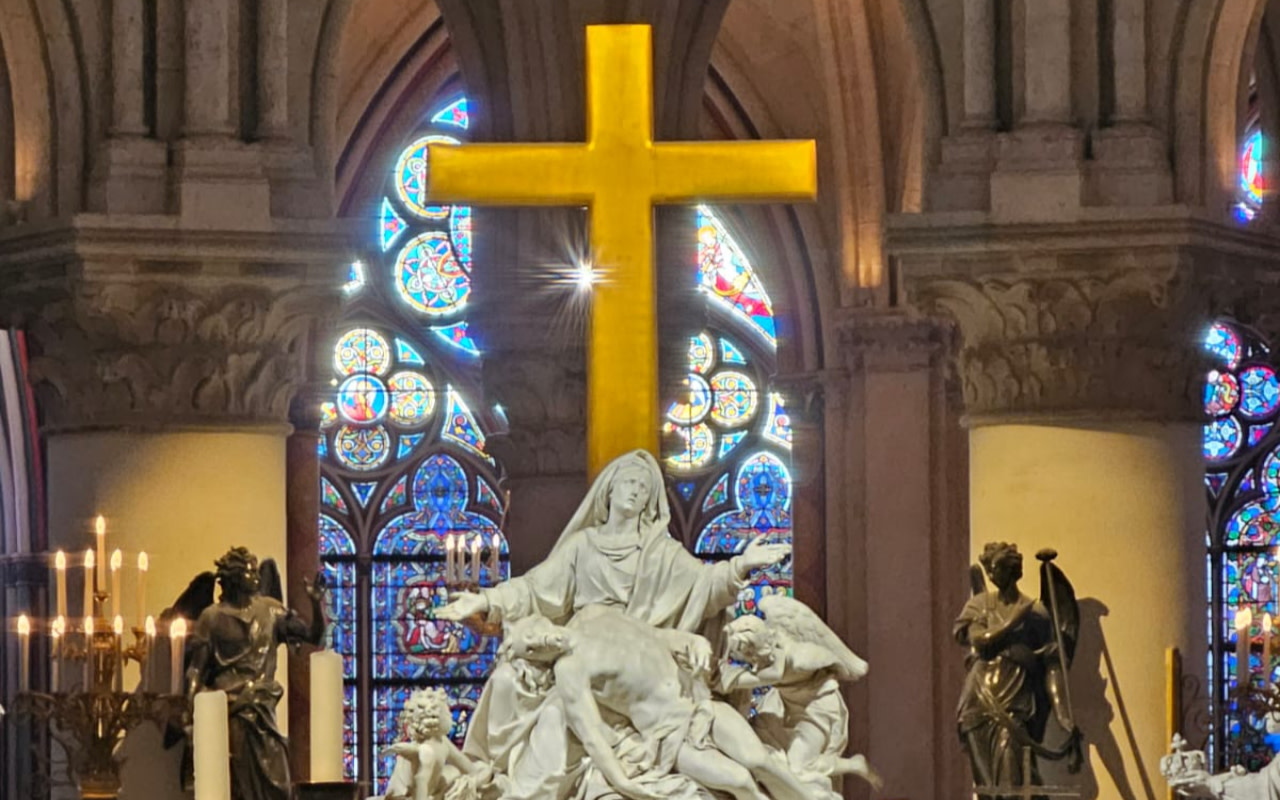
You will then enter Notre-Dame Cathedral for a self-guided interior visit of approximately 45 minutes. This portion of the experience is not guided, allowing travelers to explore the cathedral independently and at their own pace. Take time to admire the vast Gothic nave, stained-glass windows, chapels, and the remarkable atmosphere of this historic monument. The self-guided visit offers freedom to pause, reflect, and fully absorb Notre-Dame’s beauty before rejoining the group outside to continue the walking tour.
3
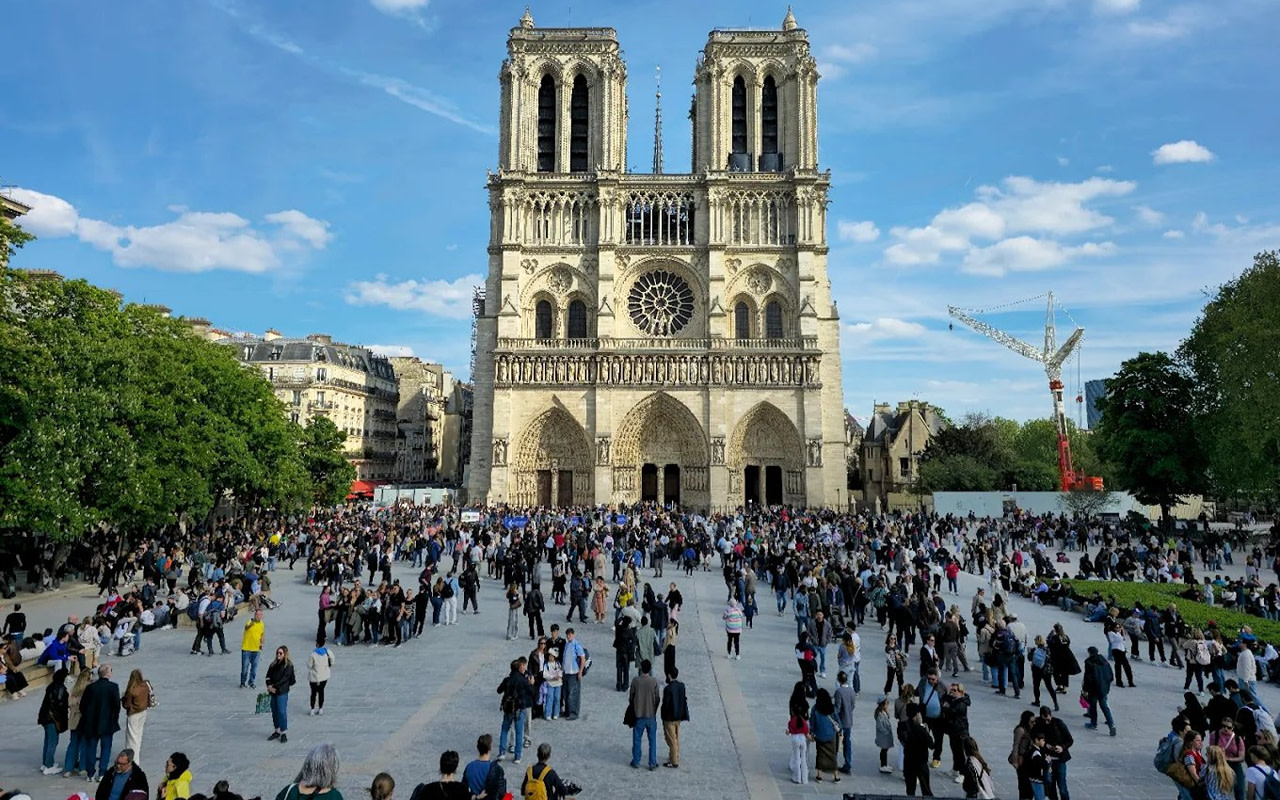
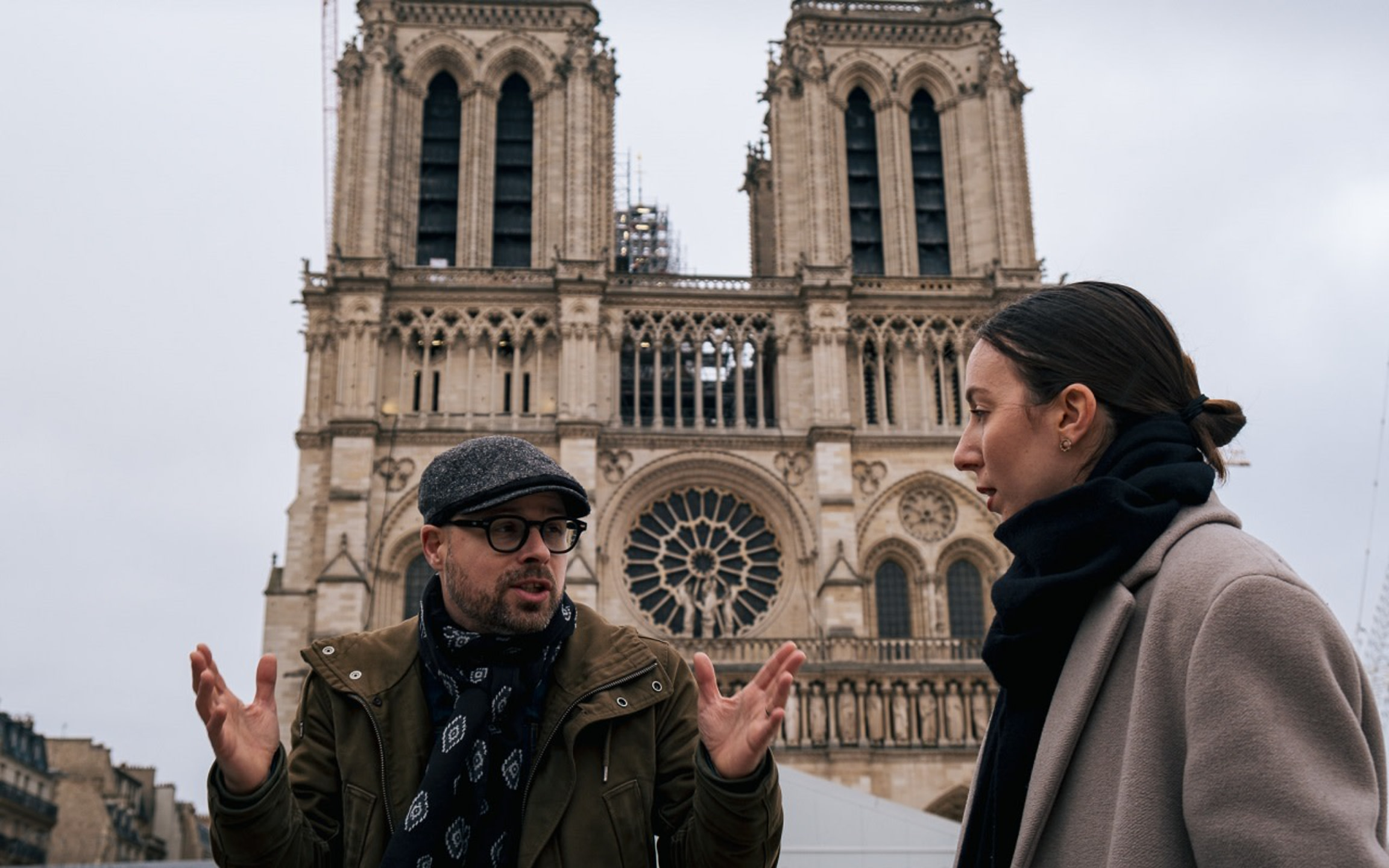
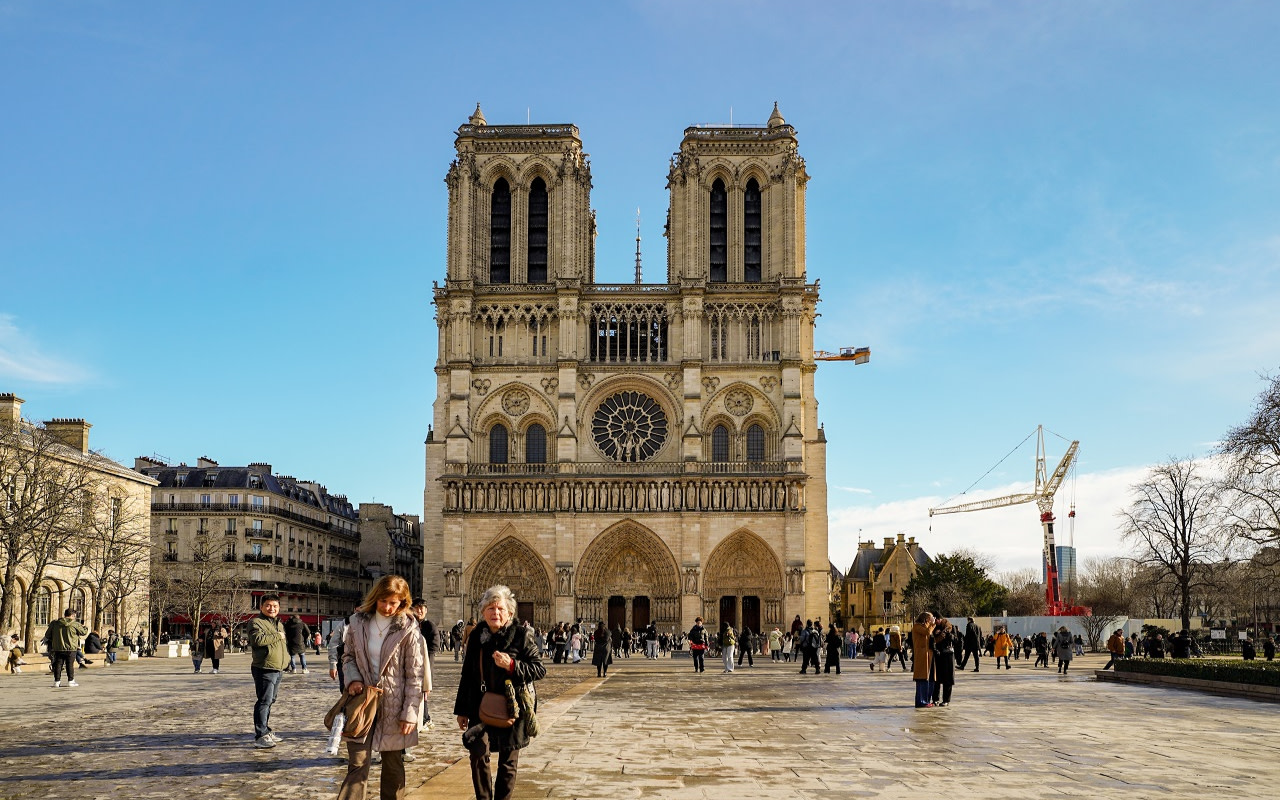
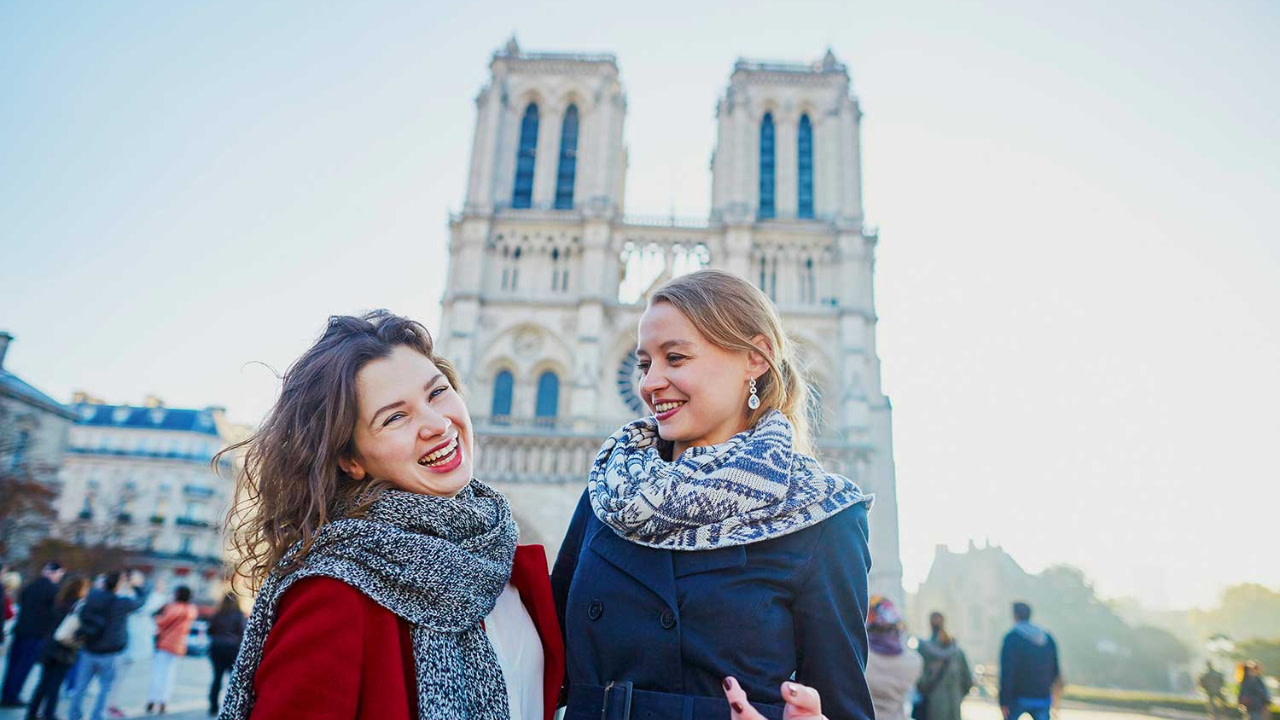
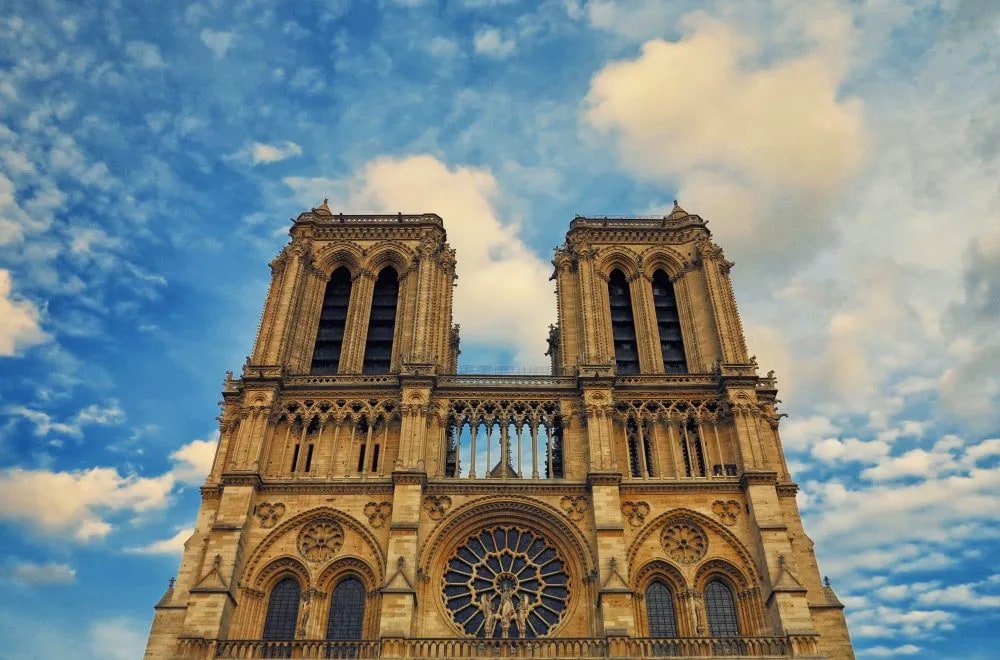
The tour continues at Parvis Notre-Dame – Place Jean-Paul II, the grand square in front of the cathedral and its historical forecourt. This is where your guide brings Notre-Dame to life, explaining its architecture, construction, symbolism, and centuries of history. From the famous western façade and its sculpted portals to the towers and rose window, your guide will decode the details that many visitors overlook. Standing on the parvis, you will also learn about the square’s deeper past, including its role as the point from which all distances in France are measured. This guided stop offers essential context after entering the cathedral.
4
The walk then leads to the Marché aux Fleurs, Paris’s historic flower market located on the Île de la Cité. Established in the 19th century, this colorful market has long supplied Parisians with flowers, plants, and garden curiosities. As you stroll past its iron pavilions and vibrant displays, your guide will share stories of daily life on the island, the market’s traditions, and its connection to the surrounding landmarks. This stop adds a lively, local touch to the tour, offering a glimpse into a quieter side of Paris just moments away from Notre-Dame.
5
The tour continues past the Préfecture de Police, a key institution of Parisian public life located on the Île de la Cité. From this point, your guide will explain the building’s role in maintaining order in the capital and its historical importance, particularly during major moments in Paris’s past. You’ll learn how this site has witnessed centuries of political change, revolutions, and daily life on the island. This stop offers insight into the less visible side of Paris’s history, highlighting how authority, security, and the city’s evolution have shaped the area surrounding Notre-Dame.
6
Stop 6
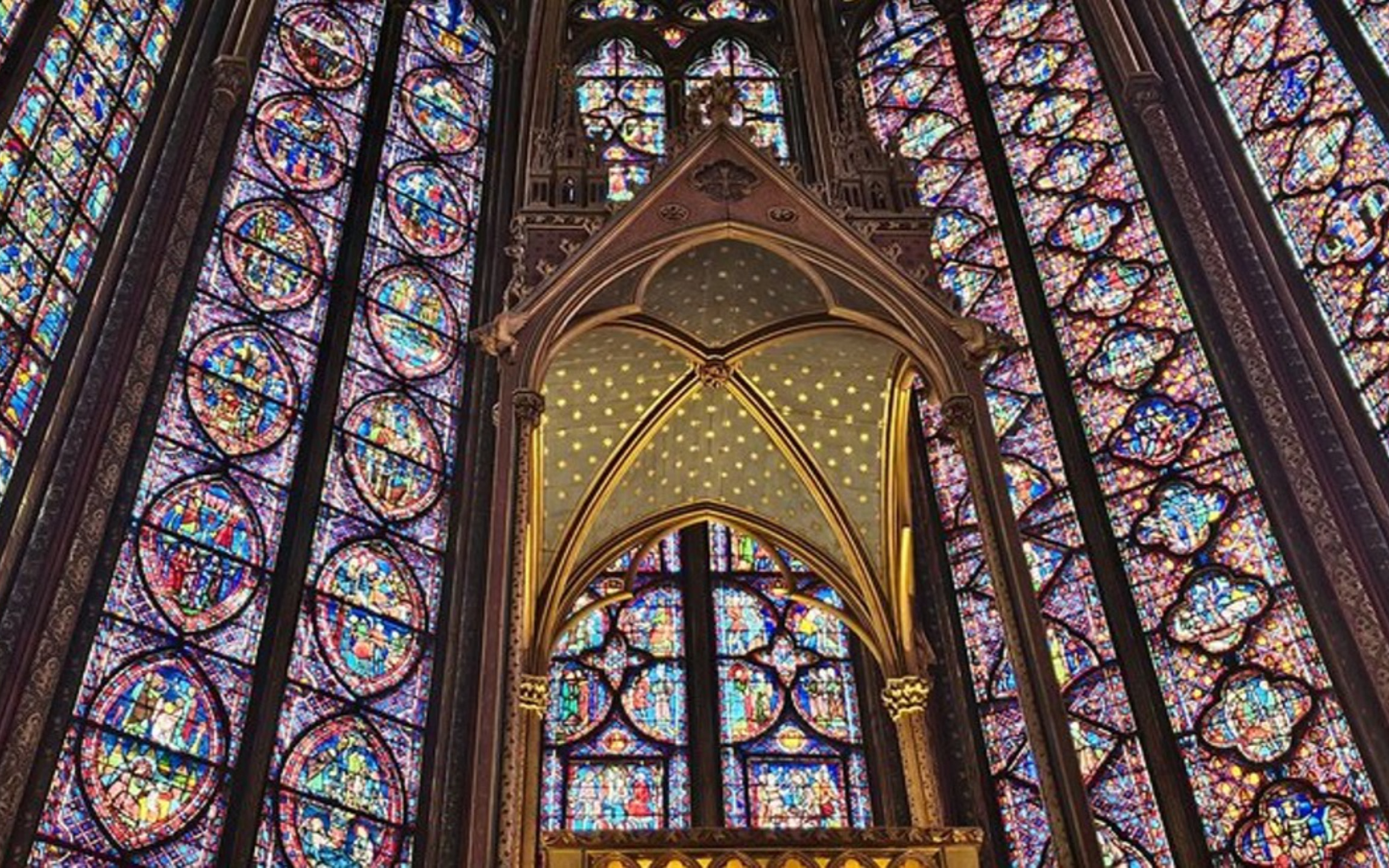
The walk passes by Sainte-Chapelle, one of the most extraordinary Gothic monuments in Paris. From the outside, your guide will explain the chapel’s purpose, its royal origins, and why it was built in the 13th century to house sacred relics, including the Crown of Thorns. You’ll learn how its soaring structure was designed to support an unparalleled expanse of stained glass, transforming light into a central element of worship. This stop provides historical and architectural context, helping you understand why Sainte-Chapelle is considered a masterpiece of medieval craftsmanship and a jewel of the Île de la Cité.
7
Stop 7
The tour continues to the Palais de Justice, Paris’s historic judicial complex on the Île de la Cité. Your guide will bring its history to life, explaining its evolution from a medieval royal palace to the center of France’s judicial system. Learn about its architecture, famous trials, and its role in shaping Parisian and national history. Standing outside, you’ll hear stories of the palace’s dramatic past, including royal events, revolutions, and the administration of justice, providing insight into the city’s legal and political heritage.
8
Stop 8
Next, the tour passes the Conciergerie, once the royal palace’s prison and later a key site during the French Revolution. Your guide will recount its dramatic history, including its role as the final holding place for prisoners such as Marie-Antoinette. From the outside, you’ll learn about its medieval architecture, fortified halls, and the transformation from royal residence to revolutionary prison. This stop offers a vivid glimpse into Paris’s turbulent past and the stories that unfolded along the Seine.
9
The tour continues to the Tour d’Horloge, the oldest clock tower in Paris, standing as a symbol of the city’s medieval history. Your guide will explain its origins in the 14th century, its role in regulating life in the city, and the intricate details of the clock’s design. From here, you’ll learn about the tower’s defensive and administrative functions, as well as its connection to the adjacent Palais de Justice. This stop brings to life a piece of Paris’s civic and architectural heritage that has stood for centuries.
10
Stop 10
Next, we stroll to Square Place de la Dauphine, a quiet, triangular square at the western tip of the Île de la Cité. Built in the early 17th century, it offers a peaceful oasis in the heart of Paris. Your guide will describe its history, the harmonious architecture of the surrounding buildings, and how it has been a gathering place for Parisians for centuries. With benches, trees, and views of the Seine, this charming square gives travelers a sense of Parisian daily life and the evolution of the city’s urban design.
11
Stop 11
The tour concludes at the Statue of Henry IV on the Pont Neuf, Paris’s oldest bridge. Your guide will share stories of Henry IV’s reign, his influence on the city, and the bridge’s architectural significance. Learn about its original design, the decorative elements, and how it connected the Île de la Cité to both banks of the Seine. This final stop offers a scenic and historical finale, framing the bridge, the river, and the enduring legacy of one of France’s most celebrated monarchs.
What's not included
Additional food and drinks
Transportation
Entry/Admission - Sainte-Chapelle
Available languages
Guide guide
EN
Important information
Infants and small children can ride in a pram or stroller
Service animals allowed
Public transportation options are available nearby
Not recommended for travelers with spinal injuries
Suitable for all physical fitness levels
The entrance to Notre-Dame Cathedral in Paris is free and open to all. The services offered are independent of access to the interior of the building.
Wheelchairs, motorised scooters or any other device to assist mobility are not recommended, as we cannot guarantee: that all footpaths/sidewalks/curbs will have suitable ramps.
Please bring: Photo ID, Comfortable shoes and water (we will be waiting in the sun), Church dress code: A scarf or jumper to cover your shoulders
Not recommended for travellers with limited mobility
Please wear comfortable shoes as this tour involves a fair amount of walking, including over uneven surfaces, cobblestones, hills, inclines, declines and stairs.
Please be aware that due to the recent re opening of Notre Dame the Cathedral is extremely popular causing wait times to increase. This is completely out of our control.
Operates in all weather conditions, please dress appropriately.
Please wear modest clothing suitable for a place of worship (avoid wearing transparent or tight-fitting clothing, cover shoulders, torso, stomach and thighs, for men remove hats, caps or bonnets indoors).
Meeting point
Meet us at 2 Rue du Fouarre, 75005 Paris, right next to Square René Viviani. Our guide will be holding a black sign that reads “Bonjour” for easy spotting.
Please arrive 15 minutes before the tour time. Latecomers risk losing the experience.
Important notes
Meet us at 2 Rue du Fouarre, 75005 Paris, right next to Square René Viviani. Our guide will be holding a black sign that reads “Bonjour” for easy spotting.
Please arrive 15 minutes before the tour time. Latecomers risk losing the experience.
About Paris
Paris, the capital of France, is a city steeped in history, art, and romance. Known for its iconic landmarks, world-class museums, and charming neighborhoods, Paris offers a unique blend of timeless elegance and modern vibrancy. From the Eiffel Tower to the Louvre, the city is a treasure trove of cultural and historical gems.
Top Attractions
Eiffel Tower
The Eiffel Tower is Paris's most iconic landmark and a symbol of France. Built in 1889 for the World's Fair, it offers breathtaking views of the city.
Architecture
2-3 hours
€17.10-€26.80 (depending on the level)
Louvre Museum
The Louvre is the world's largest art museum and a historic monument in Paris. It houses thousands of works of art, including the Mona Lisa and the Venus de Milo.
Museum
3-4 hours
€17 (full price), free for under 18s and EU residents under 26
Notre-Dame Cathedral
Notre-Dame is a masterpiece of French Gothic architecture and one of the most famous cathedrals in the world. It has been undergoing restoration since the 2019 fire.
Historical/Religious
1-2 hours
Free (towers and crypts may have reopening fees in the future)
Montmartre
Montmartre is a historic and artistic district known for its bohemian past, charming streets, and the stunning Sacré-Cœur Basilica.
Cultural
Half-day
Free to explore (Sacré-Cœur dome visit €6)
Palace of Versailles
The Palace of Versailles is a grand royal château and garden located just outside of Paris. It was the principal royal residence of France from 1682 to 1790.
Historical
Full day
€18-€28 (depending on the pass)
Must-Try Local Dishes
Croissant
A buttery, flaky pastry made from laminated dough. Best enjoyed fresh from a local bakery.
Breakfast
Contains gluten and dairy
Baguette
A long, thin loaf of French bread with a crispy crust and soft interior. Often served with cheese or ham.
Breakfast/Lunch
Contains gluten
Steak Frites
A classic French dish consisting of steak and French fries, usually served with a side of salad and béarnaise sauce.
Lunch/Dinner
Contains gluten (if served with fries) and meat
Crêpes
Thin pancakes that can be filled with a variety of sweet or savory ingredients, such as Nutella, cheese, or ham.
Snack/Dessert
Can be made gluten-free and vegetarian/vegan options available
Popular Activities
Hot air balloon rides
Rock climbing in Fontainebleau forest
Kayaking on the Seine
Picnicking in the Luxembourg Garden
Boat tours on the Seine
Spa day at a luxury hotel
Visiting museums and galleries
Attending a cabaret show
Best Time to Visit
June to August
Summer is the peak tourist season in Paris, with warm weather and long daylight hours. This is the best time to enjoy outdoor activities and festivals. However, it's also the busiest and most expensive time to visit.
15°C to 25°C (59°F to 77°F)
59°F to 77°F
Practical Information
Language
- Official: French
- Widely spoken: English, Spanish, Arabic, Portuguese
- English: Moderately spoken
Currency
Euro (EUR)
Time Zone
GMT+1 (Central European Time, CET), GMT+2 (Central European Summer Time, CEST) during daylight saving time
Electricity
230VV, 50HzHz
Safety Information
Overall Safety Rating: Generally safe
Paris is generally safe for travelers, but pickpocketing and petty theft can be a problem in tourist areas. Be aware of your surroundings and take precautions to protect your belongings.
Important Precautions:
- • Keep valuables secure and out of sight
- • Be cautious of pickpockets in crowded areas and on public transport
- • Use licensed taxis or ride-sharing services
Getting there
By air
- Charles de Gaulle Airport • 25 km (15.5 miles) from city center
- Orly Airport • 14 km (8.7 miles) from city center
By train
Gare du Nord, Gare de Lyon
By bus
Bercy Seine, Porte Maillot
Getting around
Public transport
The Paris Metro is one of the most efficient and extensive subway systems in the world, covering all major attractions and neighborhoods.
Taxis
Available • Apps: Uber, G7
Rentals
Car, Bike, Scooter
Neighborhoods
Le Marais
Montmartre
Latin Quarter
Saint-Germain-des-Prés
Champs-Élysées
Day trips
Versailles
17 km (10.5 miles) from Paris • Full day
The Palace of Versailles is a grand royal château and garden located just outside of Paris. It was the principal royal residence of France from 1682 to 1790 and is famous for its opulent interiors and vast gardens.
Giverny
75 km (47 miles) from Paris • Half day to full day
Giverny is a charming village known as the home of the famous impressionist painter Claude Monet. The village is home to Monet's House and Gardens, which inspired many of his most famous works.
Château de Fontainebleau
55 km (34 miles) from Paris • Full day
The Château de Fontainebleau is a grand royal château and park located just outside of Paris. It was a residence of the French monarchs from Louis VII to Napoleon III and is known for its beautiful architecture and vast forests.
Festivals
Fête de la Musique • June 21st (annual)
Paris Fashion Week • February and September (annual)
Nuit Blanche • First Saturday in October (annual)
Pro tips
- Learn a few basic French phrases to enhance your experience and show respect for the local culture
- Use public transport, walk, or bike to get around the city and avoid traffic and parking issues
- Consider purchasing a Paris Museum Pass or a multi-day public transport pass to save money on attractions and transport
- Explore the city's many neighborhoods and hidden gems, not just the major tourist attractions
- Try local specialties and enjoy the dining experience slowly and leisurely
From $25
per person
Price varies by option
Secure booking
Free cancellation available
Instant confirmation