City Image Tour Melbourne
Active
2h
For a full refund, cancel at least 24 hours before the scheduled departure time.
Instant confirmation
Mobile or paper ticket accepted
About this experience
City Image Tour is created and delivered by Anthony McInneny, a visual artist, academic, and urban researcher who lived in the city centre in the 1980s, and returned in 2003 to create public artworks, and was part of the City of Melbourne's Arts Advisory Committee between 2004 and 2008. Anthony taught in RMIT University's Master of Art, Art in Public Space program from 2008 to 2014, and he has exhibited and published widely about public space for the last 10 years. The tour is designed to be walked and read as the story of the two Melbournes that have made this city the Cultural Capital of Australia. Art meets architecture in unique public spaces created in the transformation of the historic city to a riverfront city. Pivoting on the iconic Federation Square, we'll explore the city form, its cobblestone alleys and contemporary bluestone laneways, its pedestrianised heritage bridges, postmodern plaza, riverside promenade, and newest park that links the cultural and sporting precincts
Available options
City Image Tour Melbourne
What's included
The material to make the momento in Federation Square.
Detailed itinerary
1
The Australian Centre for the Moving Image (ACMI). ACMI was designed by Lab Architecture Studio and Bates Smart (2002) and its interior and public spaces renewed in 2021 by BKK Architects and Razorfish. ACMI anticipated the ubiquitous nature of digital screen culture and its collection of 21C content and technologoy builds on the basis of the State Film Centre library of film and television, established in 1946. Through the postmodern façade of ACMI we connect to Federation Square, Melbourne’s iconic public space, the Ian Potter Centre at the National Gallery of Victoria, and onto the Yarra River.
2
Stop 2
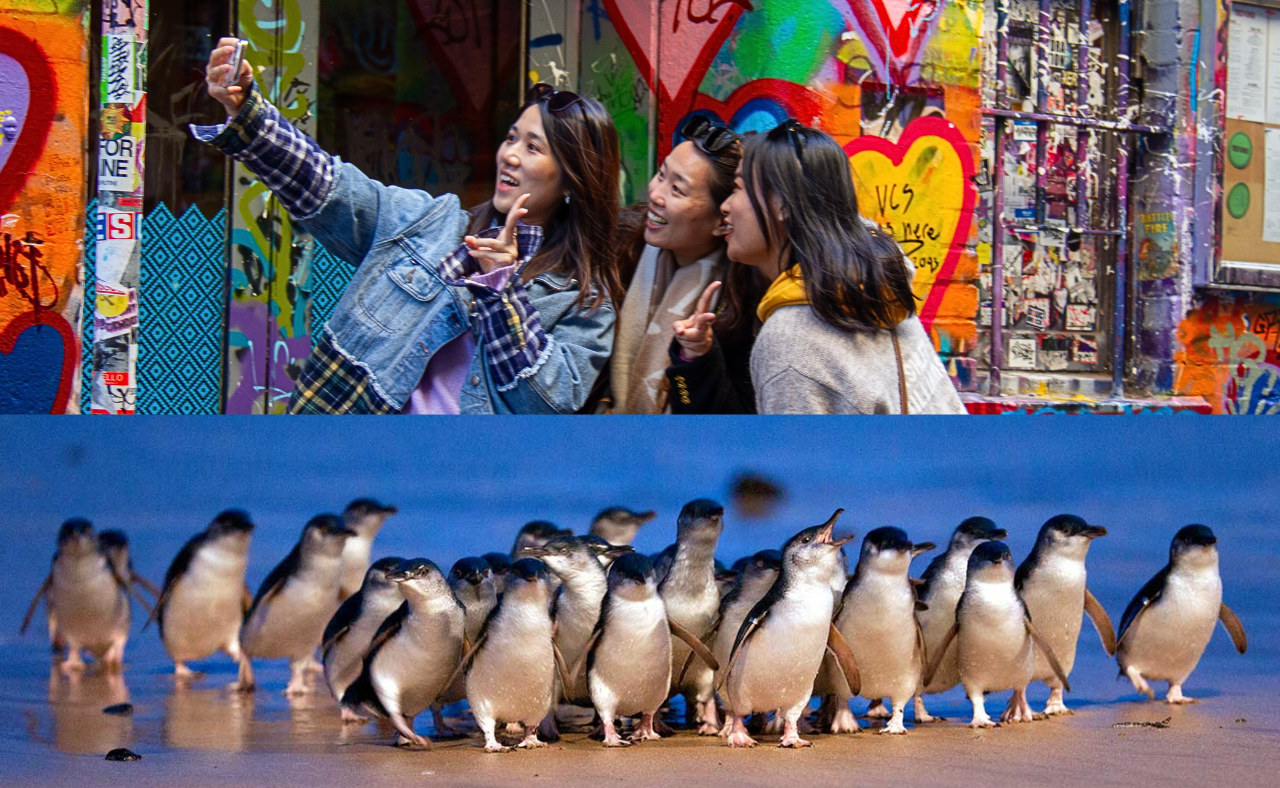
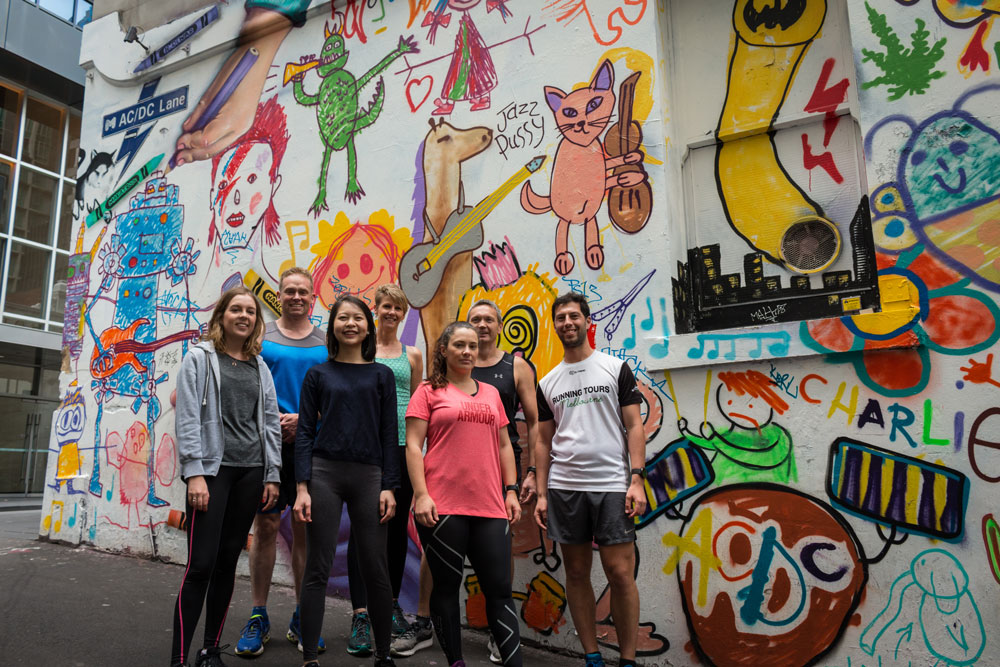
The cobblestone alley of Hosier Lane is a prime example of the original 1837 design for the city grid by Robert Hoddle. Heading north from ACMI, we experience Melbourne’s famous street art culture. Hosier Lane became an outdoor gallery in 1996, when City Lights studio began to appropriate this space with lightboxes and street art. Hosier lane attracts annually as many visitors as most museums of art. Local, National, and International street artists come to Melbourne create works in this landmark site.
3
Stop 3
Between Flinders Lane and the Town Hall is the site of Melbourne’s original City Square, established in 1980. This controversial space was cut in half in the 1990s and is the area now known as the New City Square. The Vault (1980-1981), a modernist sculpture by Ron Roberston Swan in the original square, was immediated removed back in the 1980s and is now situated at the Australian Centre for Contemporary Art. The new New Melbourne City Square (2025) was designed by a collaboration of architects RSHP, Hassell, and Weston Williamson + Partners. Contemporary Art. The New Melbourne City Square hosts the entrance to the Town Hall Station (2025) and a digital interpretation of the Mockridge Fountain that was an integral part of the first New City Square (1996-2017).
4
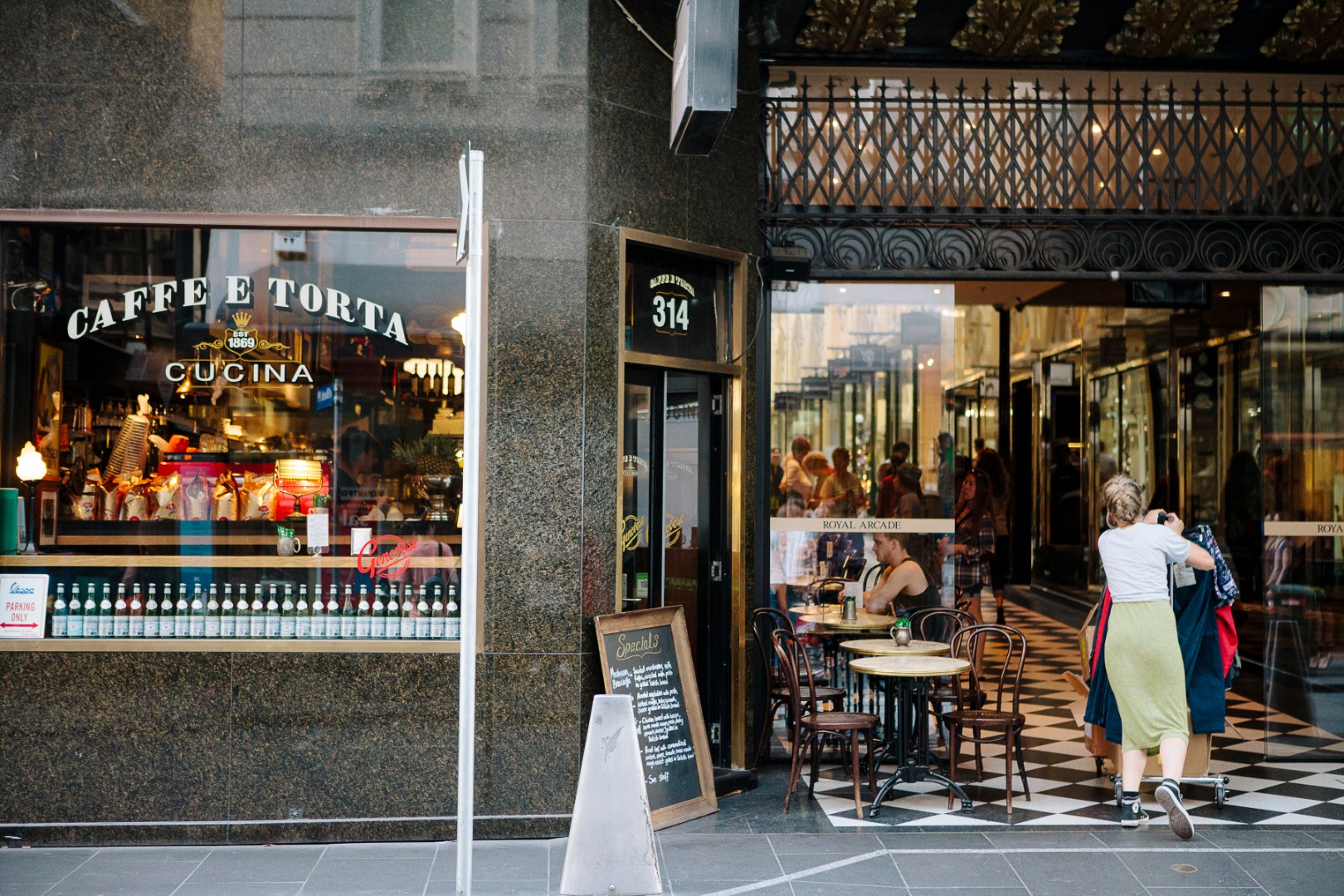
Diagonally opposite the New, New Melbourne City Square is the Nicholas Building (1926), designed by Harry Norris for the Nicholas Brothers, who made their fortune from creating the Aspro during WWI, as an alternative to Asprin. Today the building is home to a community of 200 artists and creatives. The building’s L-shaped Cathedral Arcade, takes us from Swanston Street to the cultural heart Flinders Lane, the City Library, Ross House and the warehouse living of this former rag trade area.
5
Stop 5
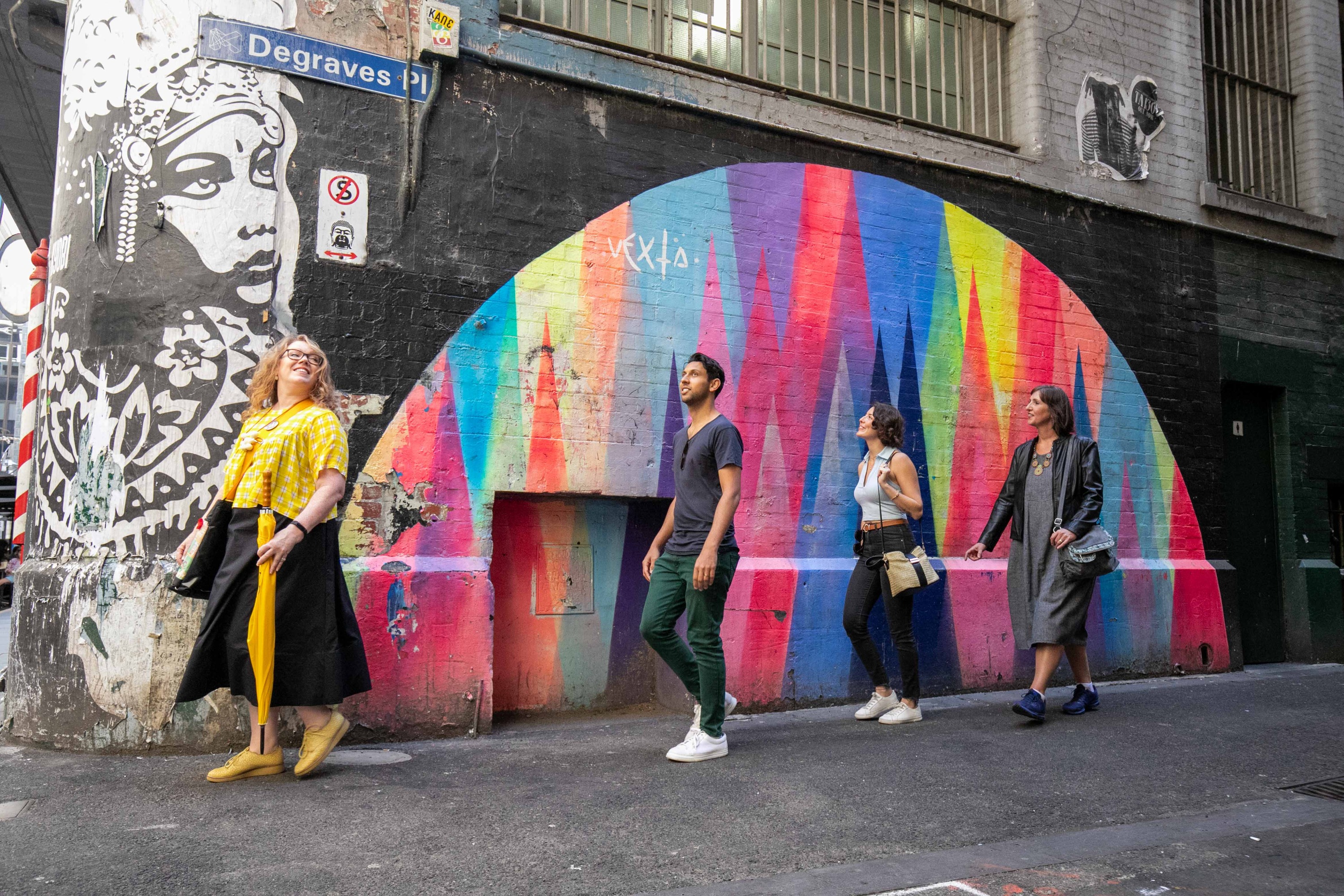
The Degraves Street & Centre Place intersection of Flinders Lane pivots on cafés, high end street food, boutiques, and culture. On one corner of lane of Centre Place, the Majorca Building (1930) boasts an exotic Spanish/Moorish Art Nouveau style. The design is by Harry Norris with façades of strongly coloured faience (glazed ceramics), and an ornate entrance from the original bluesstone lane of Centre Place. Down Degraves street, the underground Campbell Arcade opened as a Creative Space initiative of the City of Melbourne (2025) and connects with Flinders Street Station and Town Hall stations.
6
Stop 6
Built in 1854, and designed by Fawcett and Ashworth Architects, the northern façade and Eastern main entrance are of French Renaissance style. Under the impressive Clock Tower at the intersection with Elizabeth Street, a heritage listed and restored underground tunnel takes us to the north bank of the Yarra River. The first rail line to Flinders Street connected Port Melbourne to the City centre. This line was surveyed by the world’s first Steam Engine Company Stephenson (established in 1823) and the line opened in 1854 as Australia’s first city rail line.
7
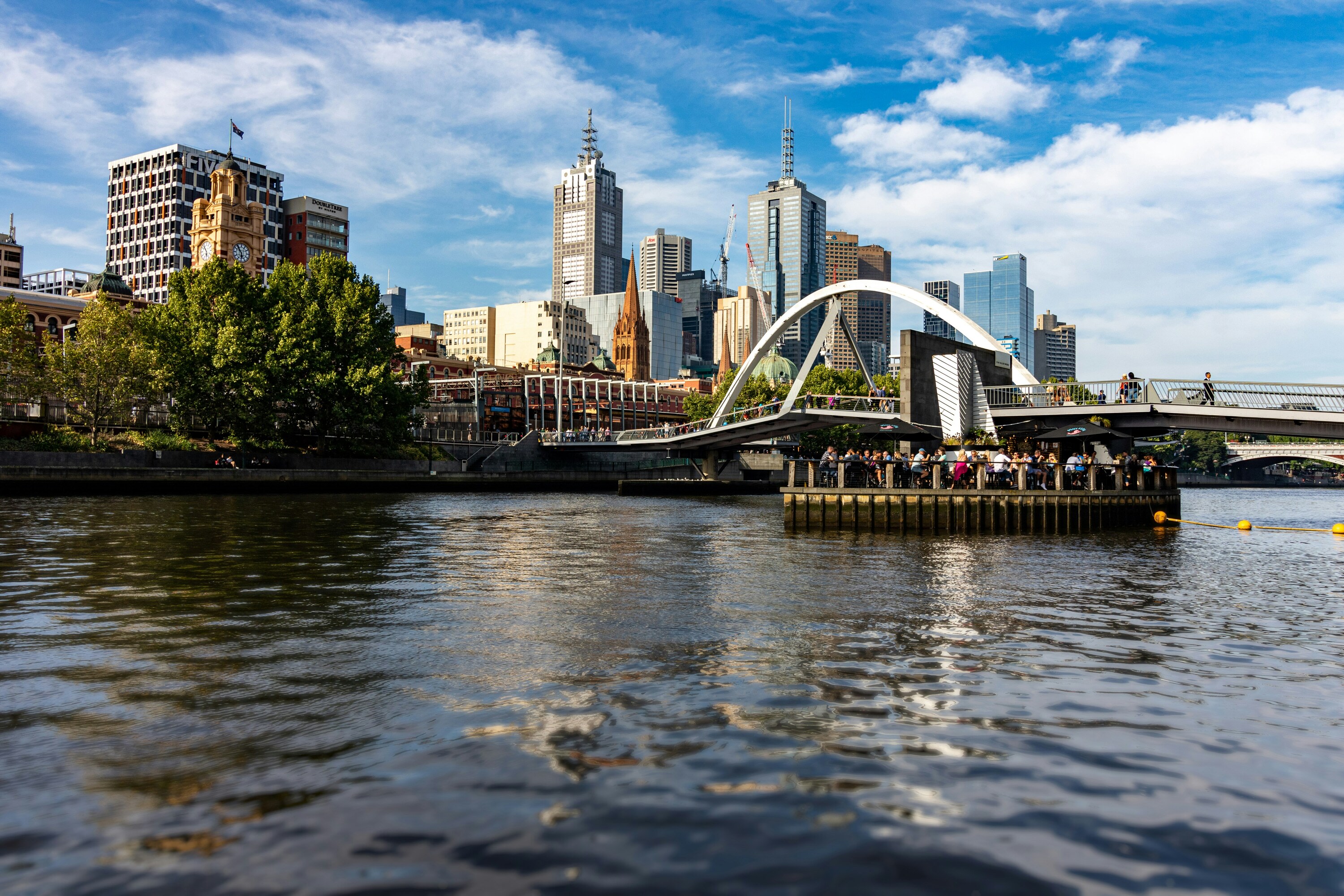
We connect to the Yarra River and arrive at the northbank entrance to the Evan Walker pedestrian Bridge (1992). The bridge is named after the former Minister for Public Works who oversaw the construction of Southgate (1992) that is the original project to reorientate Melbourne to the river. The north bank of the Yarra River is a pedestrian route connecting three kilometres of river front. It is now part of the Green Line environmental restoration project to create a natural corridor from the Sports Precinct to the new Docklands precinct. On the Northbank, the City of Melbourne has coverted the original railway signal box (1854) into a youth digital art centre, featuring digital glas windows for the projection of digital video art. The pedestrial path is lined with speakers for the creation and presentation of sound works.
8
This steel railway bridge was built in 1886, and replaced earlier rail connections with Port Melbourne as a modern solution to the transport of people and goods from the only port at the time. The line and bridge were decommissioned for rail use in 1987 and replaced with a light rail system through the famous Melbourne tram network. The rails were removed and the bridge was heritage listed for cultural significance. The bridge was redeveloped in 2001 and opened in 2006 as a pedestrian connection. The Travellers, by Nadim Karam 2005, is a gigantic kinetic sculpture that tells the story of the traditional owners who inhabited the area called Melbourne, and the immigrants who migrated from over 130 different countries to make Melbourne the multicultural capital of Australia
9
We cross the Sandridge Brigde and land on the Southbank Promenade (1992) designed by Denton Corker and March. Along the promenade heading east, are a series of public art and distinct public spaces. Red Stair Amphitheatre as a new public space of free public entertainment. Faultline (1996), is a sculpture by Iranian-Australian artist Hossein Valamanesh. The Ponyfish Island (1992) is a bar-restaurant underneath the Evan Walker Bridge and sits uniquely in the middle of the Yarra River. Orphelia (1992), the most loved public artwork in Melbourne is by Deborah Halpren. Dervishes (1981), by Clement Meadmore, is a world class example of modernist sculpture, mostly appreciated as a giant piece of play equipment.
10
Hamer Hall 1982, was designed by Roy Grounds, the same architect who designed the National Gallery of Victoria (NGV) that form tow of the three cultural centres in this precinct. The third is the State Theatre with its tower symbolizing the pitch of a circus tent, as this site was traditional the place when circuses came to town. Between Hamer Hall and the State Theatre is Inge King's Forward Surge. Commissioned by the William Angliss Art Fund, 1976, it is remarkable not only because of its form, scale, and location but because Inge King defies societal norms of the time by being a female sculpture working with architectural scale steel sculptures.
11
Stop 11
Designed by designed by Lab Architecture Studio and Bates Smart (2002), Federation Square is Melbourne's answer to the Sydney Opera House. From here we see St Paul’s Cathedral (1891) designed by William Butterfiled. The controversy over the original design of Fed Square, as it is known, saw several features removed to clear this view. Fed Square was declared national heritage in 2019. In Federation Square is Nearamnew (2002), a public artwork by Paul Carter. Tour participants are encouraged to make a momento from the embossed surface of Nearamnew that is integrated into the billowing post modern plaza.
12
Birrarung Marr was designed by a team that included in-house landscape architects Ronald Jones and Helena Piha of the City of Melbourne, as well as external consultants like Taylor Cullity Lethlean (for detailed design), and Paul Thompson (for planting design). It opened in 2002 as Melbourne's newest public park. ArtPlay, a children’s art centre was established by the City of Melbourne in 2004 in the last remaining buildings of the former railway yards. In the parklands of Birrurung Marr is Birrarung Wilam (Common Ground) 2006. This contains works by indigenous artists Vicki Couzens (Kirrae Wurrong/Gunditjmara); Lee Darroch (Yorta Yorta, Mutti Mutti and Trawlwoolway); Treahna Hamm (Yorta Yorta). On the waters edge is the gigantic Angel (1988), by Halpern. This mosaic sculpture was the first sculptural work by the printmaker and once resided in the mote of the NGV in St Kilda Road.
13
The William Barak Bridge is named after the last traditional ngurungaeta (elder) of the Wurundjeri-willam clan, the pre-colonial inhabitants of present-day Melbourne. The bridge connects the cultural precinct with the sporting precinct of Melbourne. On the cultural side of this bridge is Federation Bells, an installation and musical instrument comprising 39 upturned bells. It was created for celebrations of the centenary of Australia's federation in 2001. Designed by Anton Hasell and Neil McLachlan in collaboration with Swaney Draper Architects, the immersive instrument is designed to be played and musicians have composed music that is played daily from 12.30 to 1.30 and 5.00 until 6.00. We conclude our tour in this site. Next to Federation Bells is a large flat area overlooking the MCG, home of Australian Rules Football. This flat area is where Circuses pitch their big top tents, including the world famous Circus Oz.
Available languages
Guide guide
EN
Important information
Infants and small children can ride in a pram or stroller
Service animals allowed
Public transportation options are available nearby
Travelers should have at least a moderate level of physical fitness
Meeting point
We meet at the Flinders Street entrance to the Australian Centre for the Moving Image (ACMI), on the bluestone pavement
About Melbourne
Melbourne, the vibrant capital of Victoria, is renowned for its dynamic arts scene, world-class dining, and sporting culture. With a unique blend of historic and modern architecture, lush parks, and a thriving coffee culture, Melbourne offers a rich and diverse travel experience.
Top Attractions
Federation Square
Federation Square is Melbourne's cultural heart, hosting major events, exhibitions, and cultural institutions like the Australian Centre for the Moving Image (ACMI).
Cultural
1-3 hours
Free (some attractions may have entry fees)
Royal Botanic Gardens Victoria
The Royal Botanic Gardens is a 94-acre oasis in the heart of Melbourne, featuring a diverse range of plants, lakes, and walking trails.
Nature
1-3 hours
Free
Melbourne Cricket Ground (MCG)
The MCG is Australia's most iconic sports venue, hosting major events like the Australian Open, AFL, and cricket matches.
Sports
1-3 hours (longer for events)
Free to enter (tours and events have fees)
Great Ocean Road
The Great Ocean Road is one of the world's most scenic drives, featuring breathtaking coastal views, the Twelve Apostles, and the lush Otway Ranges.
Scenic Drive
Full day or overnight trip
Free to drive (attractions may have entry fees)
Queen Victoria Market
The Queen Victoria Market is Melbourne's largest and most iconic market, offering a vast array of fresh produce, gourmet foods, clothing, and souvenirs.
Market
1-3 hours
Free to enter (food and shopping at your expense)
National Gallery of Victoria (NGV)
The NGV is Australia's oldest and most visited art museum, featuring an extensive collection of international and Australian art.
Art
1-3 hours
Free (some exhibitions may have entry fees)
Must-Try Local Dishes
Avocado Toast
A popular breakfast dish featuring toasted sourdough bread topped with mashed avocado, often accompanied by poached eggs, feta, or smoked salmon.
Breakfast
Vegetarian (can be made vegan without eggs or feta)
Lamb Rump
A tender and flavorful cut of lamb, often served medium-rare with a variety of sides such as roasted vegetables, mashed potatoes, or a rich red wine jus.
Dinner
Contains meat
Pavlova
A meringue-based dessert topped with whipped cream and fresh fruit, often enjoyed during the summer months.
Dessert
Contains dairy and egg whites (can be made gluten-free)
Flat White
A popular Australian coffee drink, similar to a latte but with a higher coffee-to-milk ratio and a velvety microfoam texture.
Drink
Contains dairy (can be made with plant-based milk alternatives)
Popular Activities
Hiking in the Dandenong Ranges
Hot air ballooning in the Yarra Valley
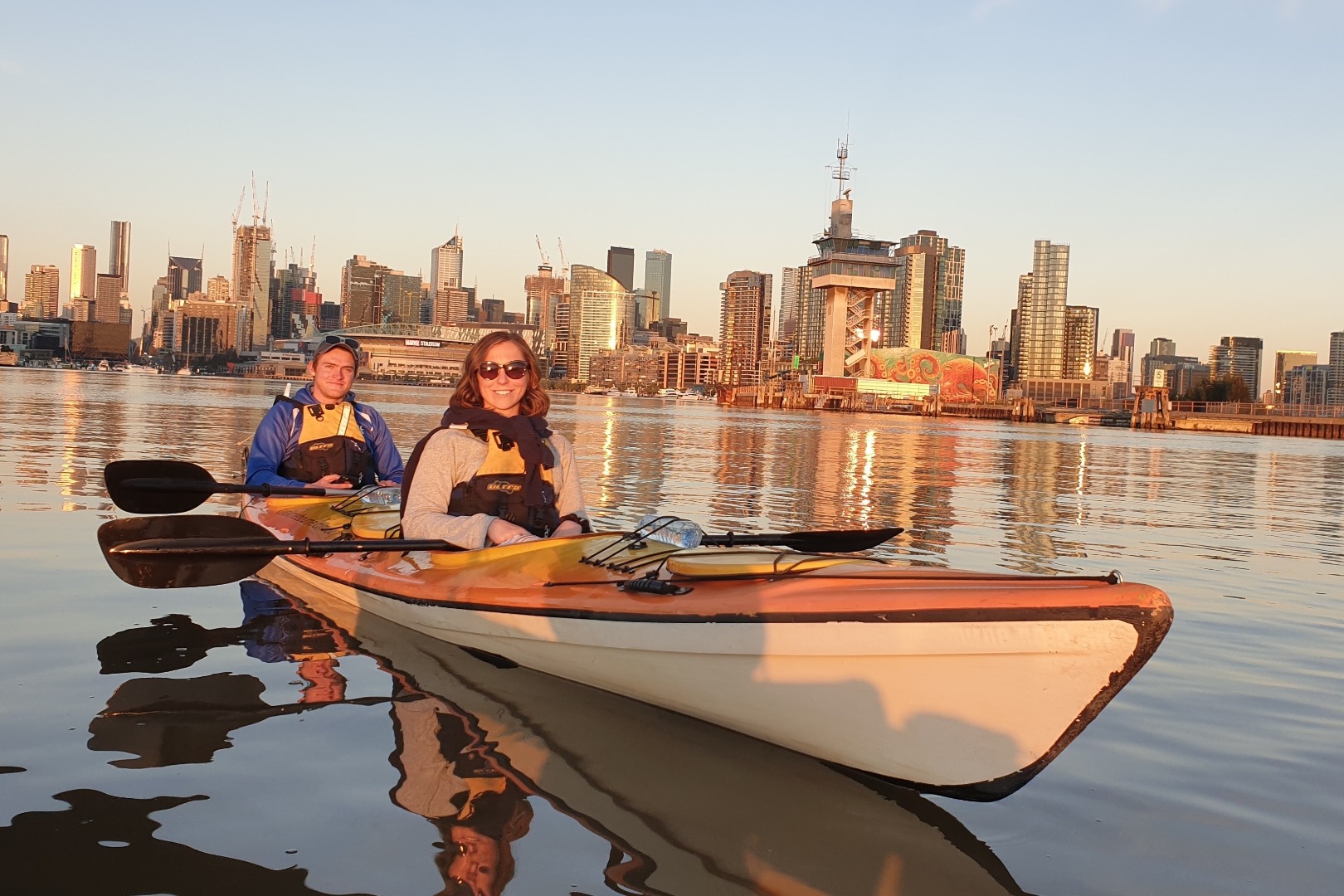
Kayaking on the Yarra River
Spa and wellness retreats
Picnics in the Royal Botanic Gardens
Beachcombing at St Kilda Beach
Visiting museums and galleries
Attending live performances and events
Best Time to Visit
December to February (Summer)
Summer is the peak tourist season with warm weather, outdoor festivals, and vibrant nightlife. However, it can be crowded and more expensive.
15-25°C
59-77°F
Practical Information
Language
- Official: English
- Widely spoken: Mandarin, Italian, Greek, Vietnamese, Arabic
- English: Widely spoken
Currency
Australian Dollar (AUD)
Time Zone
AEST (UTC+10) during standard time, AEDT (UTC+11) during daylight saving time (October to April)
Electricity
230VV, 50HzHz
Safety Information
Overall Safety Rating: Generally safe
Melbourne is generally a safe city for travelers, with low crime rates and a welcoming atmosphere. However, as with any major city, it's important to be aware of your surroundings and take precautions to protect yourself and your belongings.
Important Precautions:
- • Be aware of your surroundings and keep your belongings secure, especially in crowded areas
- • Use reputable taxi companies or ride-sharing services, such as Uber or Didi, and always check the fare before starting your journey
- • Book tours and tickets through official channels or reputable tour operators
Getting there
By air
- Melbourne Airport • 23 km from city center
By train
Southern Cross Station
By bus
Southern Cross Coach Terminal
Getting around
Public transport
Trams are a convenient and iconic way to get around Melbourne. The free tram zone in the city center is a great way to explore.
Taxis
Available • Apps: Uber, Didi
Rentals
Car, Bike, Scooter
Neighborhoods
Fitzroy
St Kilda
Carlton
Southbank
Brunswick
Day trips
Yarra Valley
60 km from Melbourne • Full day
The Yarra Valley is a picturesque wine region known for its award-winning wineries, gourmet dining, and stunning natural landscapes.
Mornington Peninsula
80 km from Melbourne • Full day or overnight
The Mornington Peninsula offers beautiful beaches, coastal walks, hot springs, and a range of outdoor activities.
Phillip Island
140 km from Melbourne • Full day or overnight
Phillip Island is a scenic island known for its wildlife, particularly the famous Penguin Parade, as well as beautiful beaches and coastal walks.
Festivals
Australian Open • Mid-January
Melbourne International Comedy Festival • March to April
Melbourne International Film Festival (MIFF) • August
Pro tips
- Use the free tram zone in the city center to explore Melbourne's attractions and neighborhoods
- Get a myki card for easy and discounted travel on trams, trains, and buses
- Visit the Queen Victoria Market for fresh produce, gourmet foods, and unique souvenirs
- Explore Melbourne's laneways and street art for a unique and authentic experience
- Try Melbourne's famous coffee culture at one of the city's many specialty coffee shops and cafes
From $25
per person
Price varies by option
Secure booking
Free cancellation available
Instant confirmation