Pompeii from Naples: Smart Audio Guide with Travel Instructions
Active
8h - 10h
For a full refund, cancel at least 24 hours before the scheduled departure time.
Instant confirmation
Mobile or paper ticket accepted
About this experience
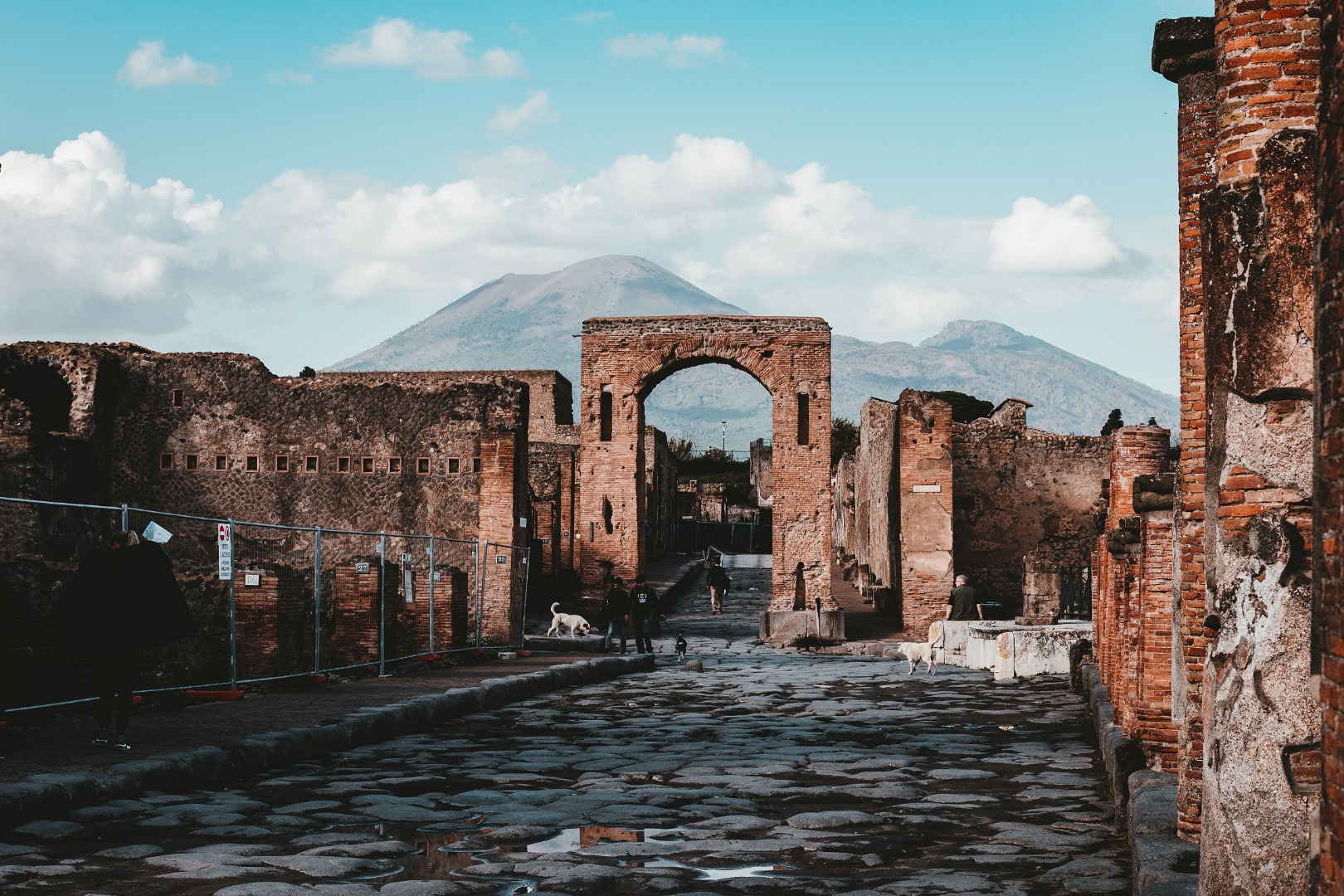
Discover the amazing landmarks of Pompeii with our innovative solution, which revolutionizes guided tours, making travel safer and more flexible. Meet the Smart Audio Guide, your perfect travel companion, always available on your mobile phone. The app uses GPS to find your location and guide you step by step to each attraction. It also shows pictures and gives you useful information about every site, just like a tour guide.
With the Smart Audio Guide, you don’t need to join a group of strangers. You can take your time at the places you like most and spend less time at the ones you don’t find interesting. This app lets you explore Pompeii your way and learn everything about its history, just like an archaeologist!
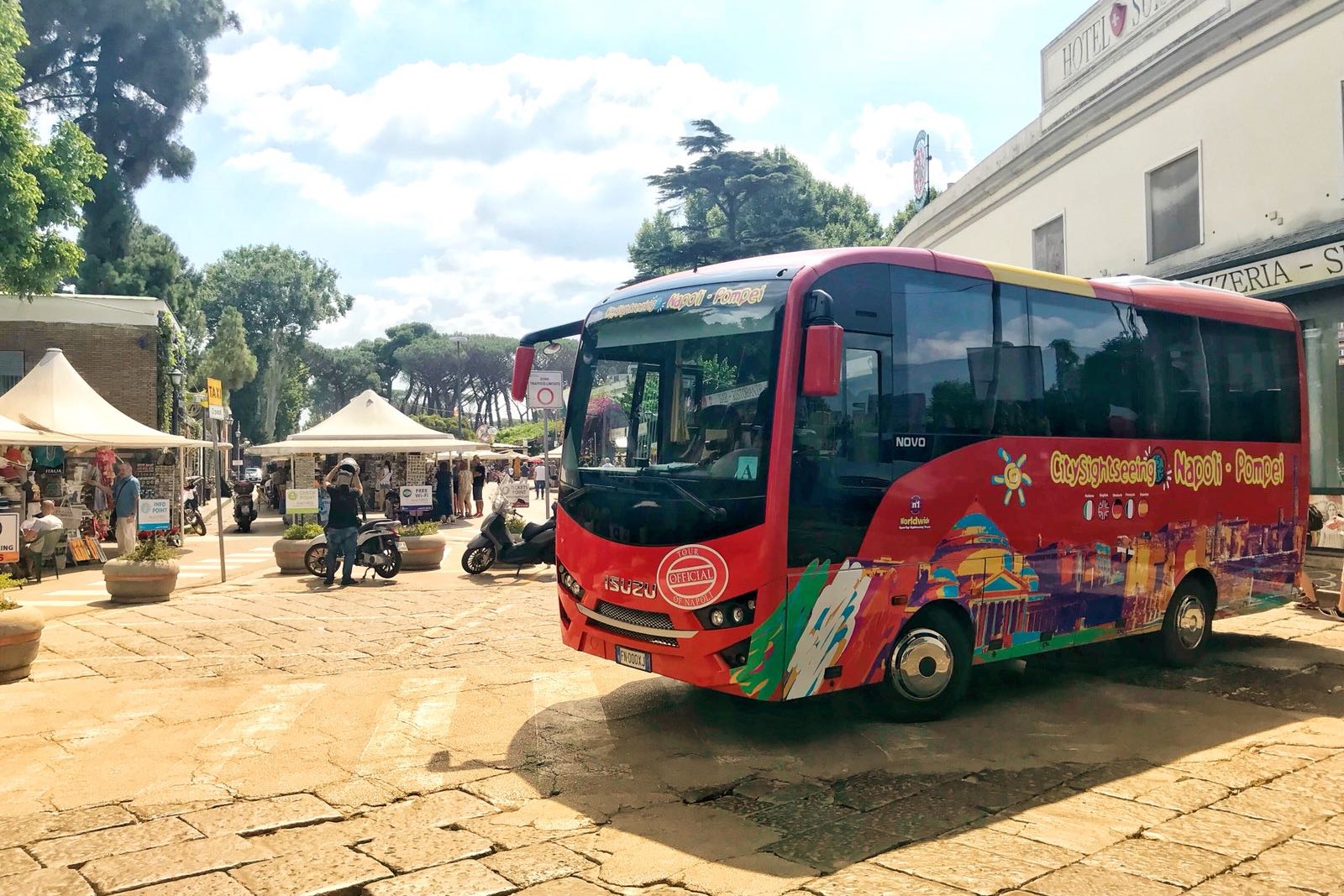
Also the app will give you information about round trip from Naples to Pompeii. You'll get access to the app before tour. See images in the description for details.
Important!!! This is a mobile app, so make sure your phone has active roaming or data to use it while traveling.
Available options
Pompeii from Naples: Smart Audio Guide with Travel Instructions
Pickup included
What's included
Non-stop access by a human assistant via WhatsApp
Smart Audio Guide will arrange the attractions suitable for you
Smart Audio Guide which is a customized mobile app prepared specially for you
Travel information from Naples to Pompeii and back
Fully customized 1-day itinerary starting from Naples
You can use 1 x Smart Audio Guide on multiple phones in the same time
Detailed itinerary
1
The villa is renowned for its remarkable frescoes that cover the walls of several rooms. These frescoes depict various scenes, including rituals, ceremonies, and myths associated with the cult of Dionysus, the Greek god of wine, fertility, and ecstasy.
2
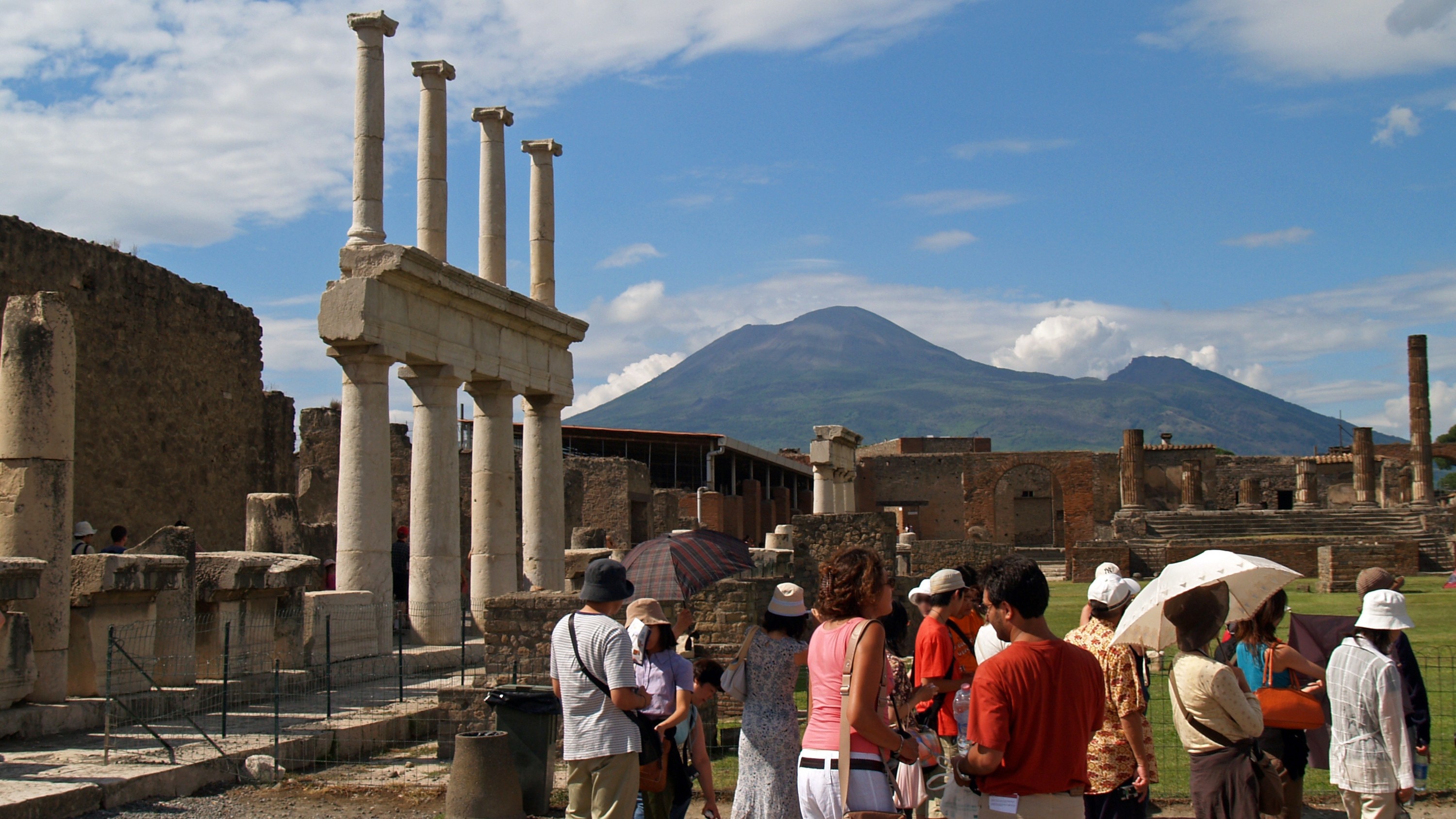
The Forum was a large, open rectangular space measuring about 38 by 142 meters. It was paved with stone and surrounded by a variety of important public buildings, temples, and statues.
3
The temple was originally dedicated to Jupiter, the chief god of Roman mythology, who was the god of the sky and thunder. Later, it became a Capitoline Triad temple, dedicated to Jupiter, Juno (his wife), and Minerva (the goddess of wisdom and war).
4
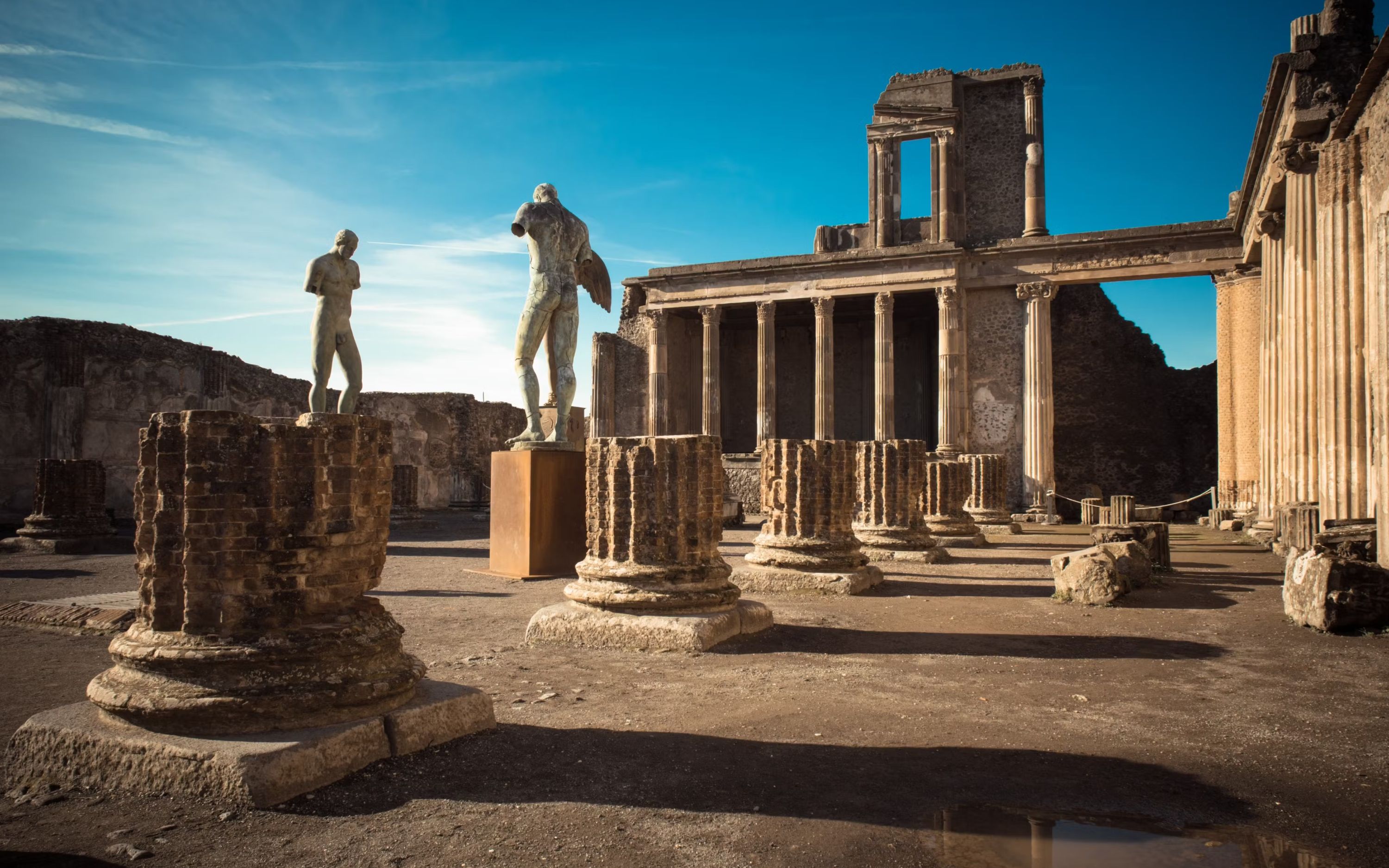
In ancient Roman architecture, a basilica was a large public building typically used as a meeting hall, law court, or marketplace. The Basilica of Pompeii served as a gathering place for civic and commercial activities.
5
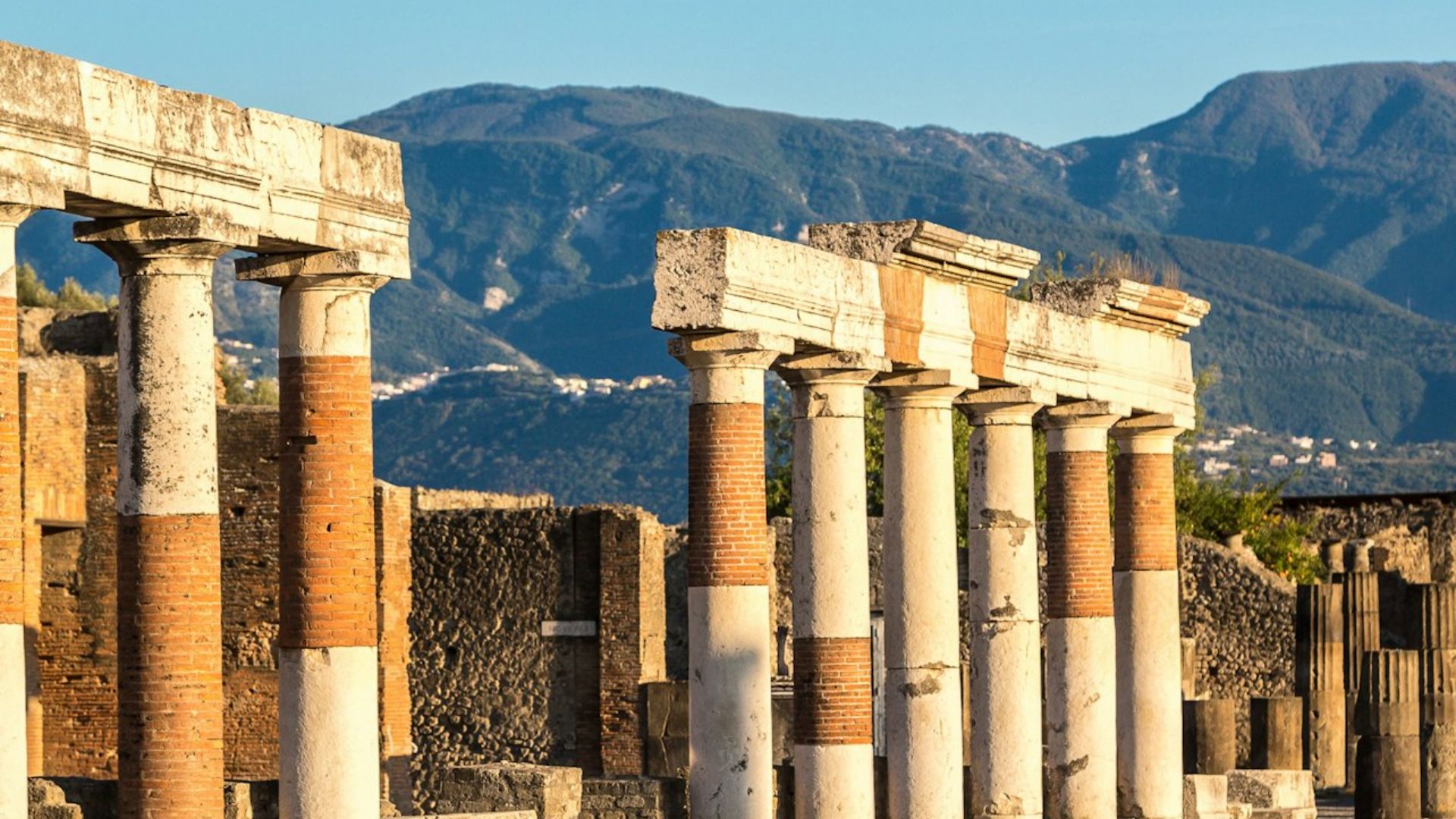
The temple was surrounded by a portico or colonnade, forming a peristyle that enclosed the sanctuary's courtyard. This provided a grand and formal setting for religious rituals and gatherings.
6
Stop 6
The Lupanare of Pompeii (also known as the Lupanar Grande) is one of the most famous structures in the ancient city. It was Pompeii’s main brothel and offers unique insights into Roman attitudes toward sexuality, social stratification, and everyday life in the 1st century CE.
7
Stop 7
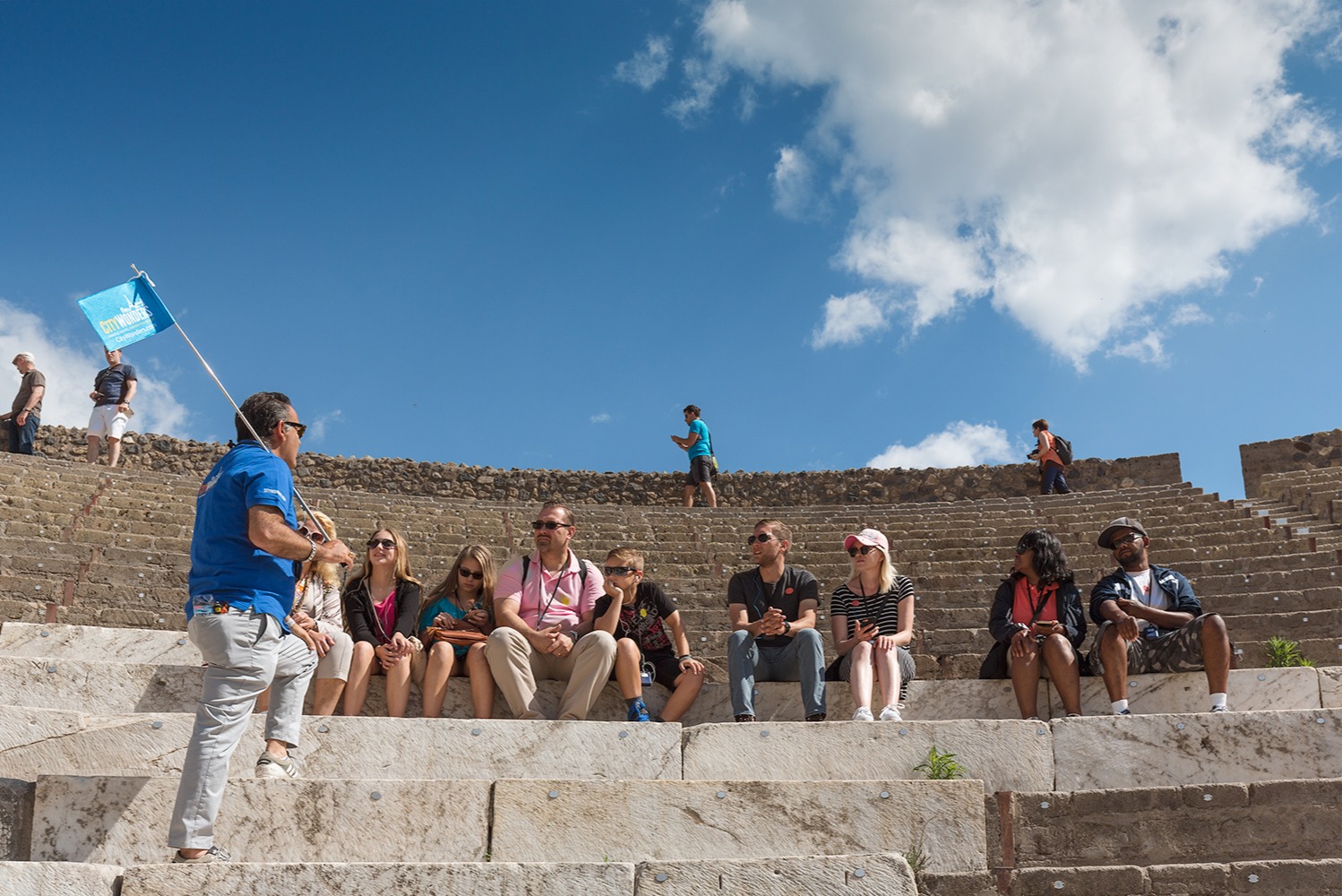
The Teatro Grande could accommodate 5,000–6,000 spectators, making it a central venue for public entertainment in Pompeii.
8
The Amphitheater of Pompeii (Anfiteatro di Pompeii) is the oldest surviving stone amphitheater in the Roman world and one of the most remarkable structures in the ancient city. Built around 70 BCE, it predates the Colosseum in Rome by over a century and highlights the importance of public entertainment in Roman culture.
9
Is named after its owner, Julia Felix, whose name is inscribed on a property rental advertisement discovered during excavations.
Julia Felix is believed to have been a wealthy and enterprising woman who capitalized on her property’s prime location and versatility.
10
Stop 10
The Stabian Baths are believed to be among the oldest baths in the Roman world, with their initial construction dating back to the Samnite period (before Roman control). Over time, the baths underwent significant renovations and expansions, particularly during the Roman period, incorporating advanced technologies for heating and water distribution.
11
The Palestra Grande (Large Palaestra) in Pompeii is an impressive public space designed for athletic training, exercise, and social activities. Its scale and architectural design highlight the Roman emphasis on physical fitness and community life.
12
Is a specific sculpture by the Polish artist Igor Mitoraj that was exhibited in the ancient city of Pompeii. Mitoraj's sculptures often evoke classical themes and are known for their modern interpretations of ancient forms.
13
The Torre di Mercurio is thought to have been a multi-story structure, potentially including an upper level used for living quarters and a ground floor for commercial purposes, such as shops or workshops. It is situated at a strategic location, perhaps near crossroads or along a bustling street, underscoring its potential role in Pompeii's urban dynamics.
14
The house is most famous for the bronze statue of a dancing faun, which was found in the impluvium (a basin to collect rainwater) of the Tuscan atrium. This statue, which gives the house its name, is a fine example of Hellenistic art.
15
The house is named after the Dioscuri, the twin brothers Castor and Pollux from Greek and Roman mythology. These mythological figures were considered protectors of sailors and were associated with strength, loyalty, and brotherhood.
16
The house features a well-preserved atrium with an impluvium at the center, surrounded by highly decorated walls and rooms. A large, elegant peristyle with a colonnaded courtyard is a highlight of the villa. This area would have been lush with plants and served as a serene setting for leisure and social gatherings.
17
Stop 17
The house is located in the Regio VI district of Pompeii. It is believed to have been owned by two freedmen, Aulus Vettius Conviva and Aulus Vettius Restitutus, based on inscriptions found in the house. Freedmen were former slaves who had gained their freedom and often became wealthy through trade or business.
18
Numerous artifacts were discovered, including a treasure hoard of over 100 silver items, including cups, plates, and bowls, found in a storage room.
What's not included
Entrance & public transportation tickets: ~30 euro
Make sure you have roaming/mobile data for your phone
Food & drink
Available languages
Audio guide
EN
Written guide
EN
Reviews breakdown
Tripadvisor
5.0
4 reviews
5★
4
4★
0
3★
0
2★
0
1★
0
Important information
Public transportation options are available nearby
Infants are required to sit on an adult’s lap
Not recommended for travelers with spinal injuries
Not recommended for pregnant travelers
Not recommended for travelers with poor cardiovascular health
Travelers should have at least a moderate level of physical fitness
Important notes
If you want to see how Smart Audio Guide looks/ works, we prepared a small demo at the our official YouTube channel: https://youtu.be/WTiGezcBxsk
About Naples
Naples, Italy's third-largest city, is a vibrant and chaotic metropolis known for its rich history, incredible food, and vibrant street life. As the birthplace of pizza, Naples offers a unique blend of ancient ruins, stunning coastal views, and a bustling urban atmosphere.
Top Attractions
Naples National Archaeological Museum
One of the most important archaeological museums in the world, housing a vast collection of artifacts from the Roman era, including those from Pompeii and Herculaneum.
Museum
2-3 hours
€15
Pompeii
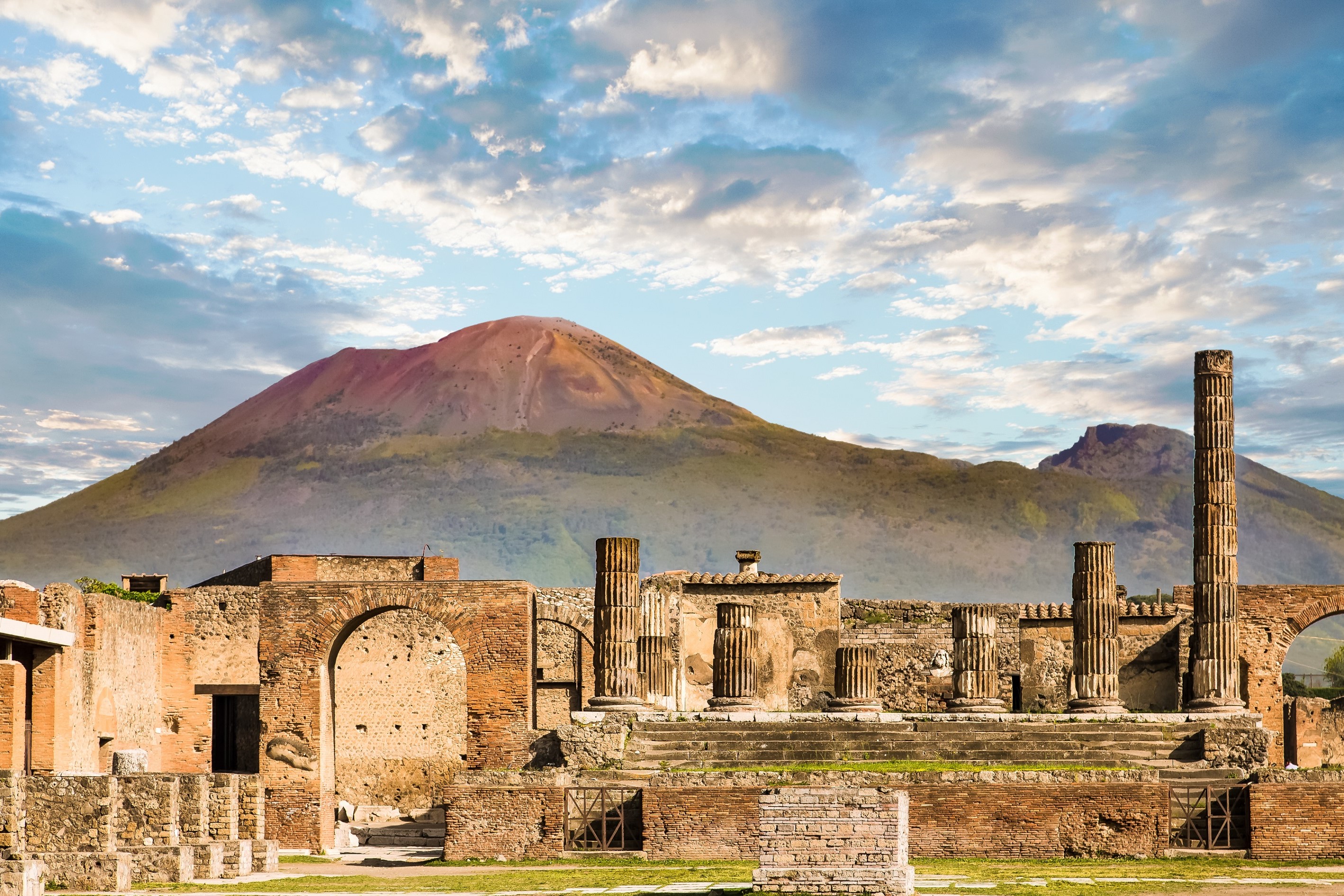
The ancient Roman city of Pompeii, preserved by volcanic ash from the eruption of Mount Vesuvius in 79 AD. It's a UNESCO World Heritage site and one of the most famous archaeological sites in the world.
Historical
Half day to full day
€15
Castel dell'Ovo
A medieval castle located on the former island of Megaride, connected to the mainland by a causeway. It offers stunning views of the Bay of Naples and a rich history.
Historical
1-2 hours
Free
Mount Vesuvius
The famous volcano that erupted in 79 AD, destroying Pompeii and Herculaneum. It's an active volcano and offers a unique hiking experience with breathtaking views.
Nature
Half day
€10
Galleria Umberto I
A beautiful 19th-century shopping gallery with a stunning glass and iron roof, elegant shops, and cafes. It's a great place to experience the city's vibrant atmosphere.
Architecture
1-2 hours
Free to enter
Must-Try Local Dishes
Pizza Margherita
The original Neapolitan pizza, made with simple ingredients: tomatoes, mozzarella, basil, and olive oil. It's a UNESCO Intangible Cultural Heritage and a must-try in Naples.
Dinner
Contains gluten and dairy.
Spaghetti alle Vongole
A classic Neapolitan dish made with spaghetti, clams, garlic, white wine, and parsley. It's a delicious and simple representation of the local seafood cuisine.
Dinner
Contains gluten and seafood.
Sfogliatella
A traditional Neapolitan pastry made with layers of crispy, flaky dough filled with sweet ricotta cheese and semolina. It's a popular breakfast or snack item.
Dessert
Contains gluten and dairy.
Babà al Rhum
A small, rum-soaked cake that's a popular dessert or afternoon snack in Naples. It's often served with whipped cream or pastry cream.
Dessert
Contains gluten and dairy.
Popular Activities
Hiking Mount Vesuvius
Boat tours to nearby islands
Scuba diving in the Bay of Naples
Beach relaxation on the Amalfi Coast
Spas and wellness centers
Coffee and pastry at historic cafes
Visiting museums and historical sites
Attending local festivals and events
Best Time to Visit
April to June, September to October
The peak season offers the best weather for exploring the city's attractions and enjoying outdoor activities. The weather is warm but not too hot, and the crowds are manageable.
15-28°C
59-82°F
Practical Information
Language
- Official: Italian
- Widely spoken: English, Napolitan (local dialect)
- English: Moderately spoken
Currency
Euro (EUR)
Time Zone
GMT+1 (CET), GMT+2 (CEST) during daylight saving time
Electricity
230VV, 50HzHz
Safety Information
Overall Safety Rating: Exercise caution
Naples is a vibrant and exciting city, but it can also be chaotic and overwhelming. While violent crime is relatively low, petty crime such as pickpocketing and scams is common, especially in tourist areas. It's important to be aware of your surroundings and take precautions to protect yourself and your belongings.
Important Precautions:
- • Keep your valuables secure and out of sight.
- • Be cautious of your surroundings, especially in crowded areas and on public transportation.
- • Use licensed taxis or ride-sharing services, and always ensure the meter is running.
Getting there
By air
- Naples International Airport • 5 km from city center
By train
Napoli Centrale, Napoli Garibaldi
By bus
Napoli Centrale, Napoli Garibaldi
Getting around
Public transport
The metro system is clean and efficient but has limited coverage. It's useful for reaching major attractions and connecting to other public transport.
Taxis
Available • Apps: MyTaxi, FreeNow
Rentals
Car, Bike, Scooter
Neighborhoods
Historic Center (Centro Storico)
Chiaia
Posillipo
Quartieri Spagnoli
Day trips
Pompeii
25 km • Half day to full day
The ancient Roman city of Pompeii, preserved by volcanic ash from the eruption of Mount Vesuvius in 79 AD. It's a UNESCO World Heritage site and one of the most famous archaeological sites in the world.
Herculaneum
15 km • Half day
An ancient Roman town, also preserved by the eruption of Mount Vesuvius in 79 AD. Herculaneum is smaller and less crowded than Pompeii, offering a more intimate and well-preserved look at Roman life.
Sorrento
50 km • Full day
A charming coastal town known for its stunning views of the Bay of Naples, lemon groves, and historic center. It's a popular destination for day trips from Naples.
Festivals
Festa di San Gennaro • September 19
Pizzafest • June
Napoli Teatro Festival • June to July
Pro tips
- Learn a few basic Italian phrases to communicate with locals and enhance your experience.
- Try the local specialties, such as pizza, seafood, and pastries, and support local businesses.
- Be cautious of your surroundings, especially in crowded areas and on public transportation, and take precautions to protect yourself and your belongings.
- Visit the historic center and other attractions early in the morning or late in the afternoon to avoid crowds and the heat.
- Use public transportation, walk, or bike instead of driving to reduce your environmental impact and experience the city like a local.
From $25
per person
Price varies by option
Secure booking
Free cancellation available
Instant confirmation