Orkney Islands Private Full Day Tour
Active
6h - 8h
For a full refund, cancel at least 24 hours before the scheduled departure time.
Instant confirmation
Mobile or paper ticket accepted
About this experience
Stepping back in time and delving into the rich tapestry of Orkney’s past with our expertly guided tours. The Orkney Islands are a treasure trove of Neolithic wonders, boasting some of the world’s most well-preserved archaeological sites. From the ancient village of Skara Brae to the majestic Ring of Brodgar, our tours offer you a unique opportunity to walk in the footsteps of those who shaped history thousands of years ago. Discover the secrets of Orkney’s ancient landscape and uncover the stories behind these remarkable sites. And not forgetting the role Scapa Flow did play in both world wars and the magnificent "Miracle of camp 60" The Italian Chapel and many more.
Available options
Orkney Private Full day Tour
Duration: 8 hours<br/>drinks: Water<br/>East mainland/West Mainland<br/>Minivan<br/>Skarabrae and Italian Chapel : Entry tickets included<br/>Pickup included
What's included
Private transportation
Bottled water
Italian Chapel Entry Fee
Driver Guide
Skara Brae Entry Fee
Detailed itinerary
1
Stop 1
Skara Brae, is one of the best-preserved Neolithic sites in Europe and is a UNESCO World Heritage Site. Dating back to around 3100 BCE, Skara Brae provides a remarkable glimpse into the daily life of early humans during the Neolithic period, long before the construction of the Egyptian pyramids or Stonehenge. The site is often compared to a prehistoric version of a modern suburb, highlighting its significance in understanding human history and settlement patterns during the Stone Age.
2
Stop 2
Stones of Stenness, is part of the UNESCO World Heritage Site known as the Heart of Neolithic Orkney, which also includes other ancient sites such as Skara Brae, the Ring of Brodgar, and Maeshowe. The Standing Stones of Stenness date back to around 3000 BCE, making them older than Stonehenge in England.
3
Stop 3
The Ring of Brodgar, is one of the most impressive and significant archaeological sites in Europe, dating back to the late Neolithic period, around 2500 BCE to 2000 BCE. This ancient monument is part of the UNESCO World Heritage Site known as the Heart of Neolithic Orkney, which also includes other major sites like Skara Brae and Maeshowe. The stones are large, some reaching up to 4 meters (13 feet) in height, and the circle measures approximately 104 meters (341 feet) in diameter, making it one of the largest stone circles in the British Isles.
4
Unstan Tomb is a chambered cairn, a type of tomb constructed from large stones and covered with a mound of earth. Unstan Tomb is a prehistoric burial site located on the Orkney Islands, Scotland, and is part of the rich archaeological landscape that makes up the Heart of Neolithic Orkney UNESCO World Heritage Site. The tomb is located on the island of Stenness and dates to around 2500 BCE, during the late Neolithic period.
5
Stop 5
Italian Chapel was originally built by Italian prisoners of war (POWs) during World War II. In 1942, approximately 1200 Italian POWs were brought to Orkney to work on the construction of the Churchill Barriers, a series of causeways built to protect the naval base at Scapa Flow from enemy attacks.
The Italian prisoners, many of whom were skilled artisans, created the chapel using the materials available to them, such as scrap metal, wood, and concrete, as well as their own creativity and resourcefulness.
The Italian Chapel is not only a piece of art but also a symbol of hope and resilience. During the war, the chapel provided the Italian POWs with a place of solace and spiritual refuge. Despite the harsh conditions of captivity, they poured their heart and soul into building the chapel
6
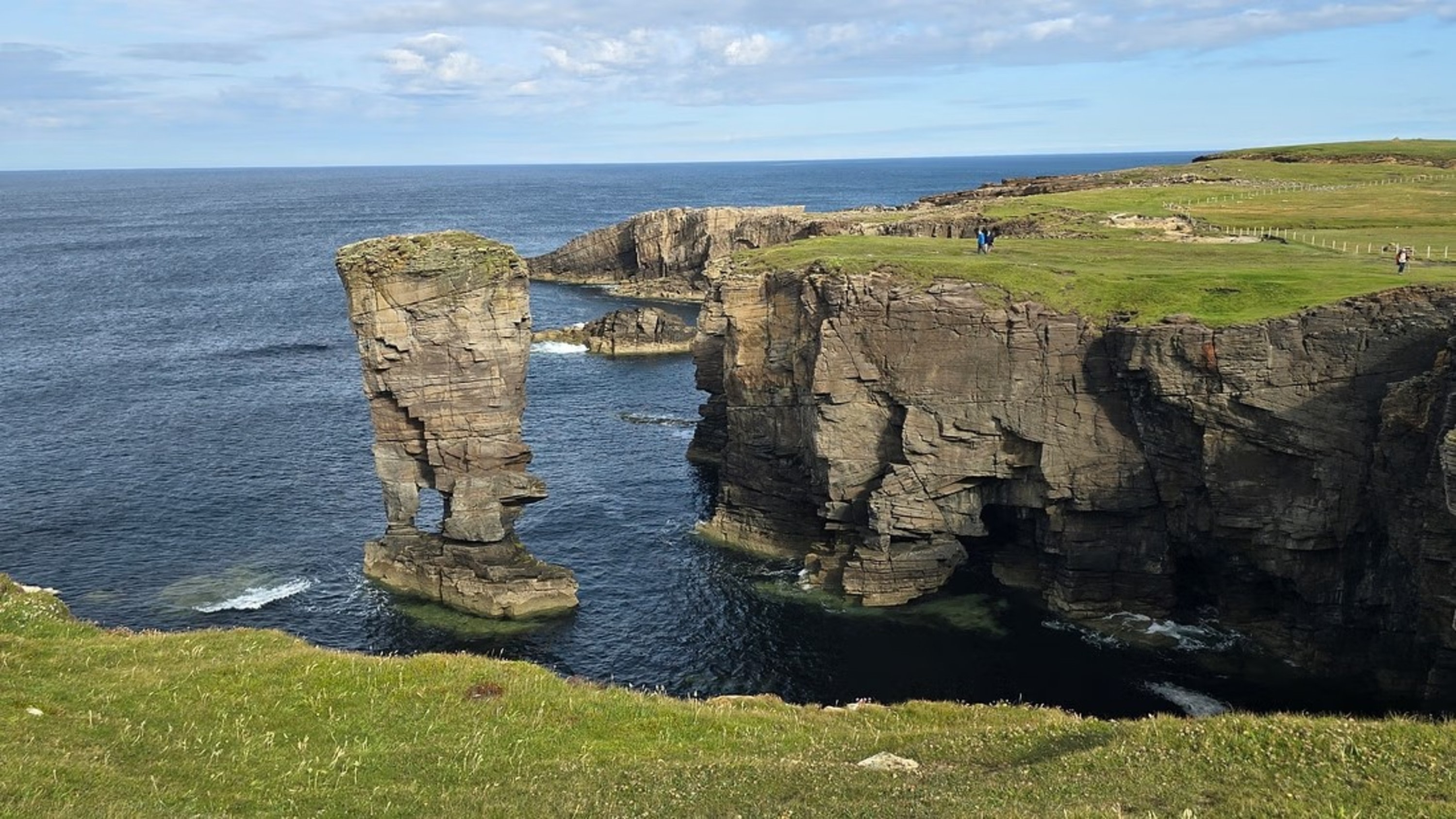
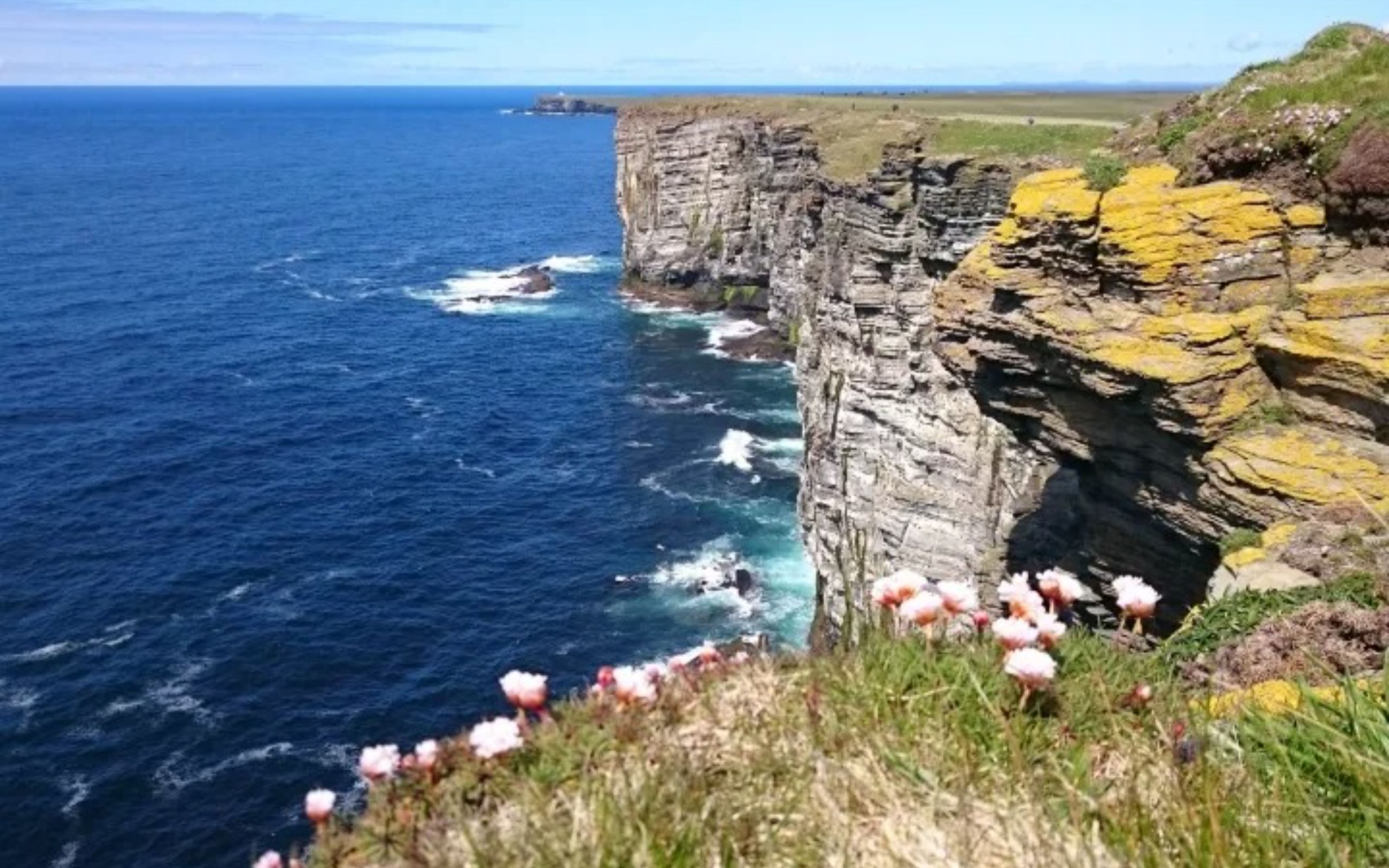
These dramatic cliffs offer some of the most breathtaking coastal views in the Orkney archipelago. The area is renowned for its geological features, including impressive rock formations and sea stacks that have been shaped by centuries of erosion. The cliffs are composed mainly of sandstone and are home to a variety of seabird species, making it a popular spot for birdwatching. Puffins, guillemots, and kittiwakes are often seen nesting along the cliffs in the summer months. The site offers a sense of wilderness and isolation, making it a must-see for visitors to Orkney who appreciate natural beauty and dramatic landscapes.
7
The Brough of Birsay is a small tidal island located off the northern coast of the Orkney Islands in Scotland. This fascinating archaeological site is accessible by foot during low tide, via a causeway that links it to the mainland. The island is renowned for its rich history, having been a strategic location throughout various periods, particularly the Norse era.
The Brough of Birsay has been inhabited for thousands of years, with evidence of both Pictish and Norse settlements. It was once a thriving centre of power for the Norse in Orkney, particularly during the Viking Age (around 8th to 12th centuries).
The island is also known for its rich wildlife, including seabirds and seals, making it a popular destination for nature lovers and birdwatchers. The surrounding waters are home to various marine species.
8
The Broch of Gurness is a well-preserved Iron Age site located on the northern coast of the Orkney Islands, Scotland. It is a "broch", a type of ancient stone structure unique to Scotland, built around 2,000 years ago (approximately 500 BCE to 200 CE). The Broch of Gurness is one of the best examples of a broch in Orkney and offers a fascinating insight into prehistoric life in the region.
The Broch of Gurness is thought to have been built during the Iron Age as part of a larger cultural and economic network in Orkney. It reflects the wealth and importance of the Orkney Islands during this period, which had active trade with the mainland of Scotland, Scandinavia, and beyond.
Today, the Broch of Gurness is a popular archaeological site and a remarkable example of prehistoric architecture, offering visitors a glimpse into life in Iron Age Orkney.
9
Iron and bronze age Broch Towers, and you will also see where the Atlantic meet the North sea.
Admission Fee of £7.50 for Adults, Concessions £6.00,Child £4.50,Family Ticket 1, £15.00, Family Tickets2, £21.50 and Family Ticket 3 is £25.50 will be included to the price.
The Remaining Hours is travelling
What's not included
Snacks
But you can buy your own alcoholic drinks
Entry Fee to Broch of Gurness
Breakfast
Available languages
Audio guide
EN
Guide guide
EN
Reviews breakdown
Viator
3.8
4 reviews
5★
2
4★
1
3★
0
2★
0
1★
1
Tripadvisor
5.0
1 reviews
5★
1
4★
0
3★
0
2★
0
1★
0
Important information
Public transportation options are available nearby
Specialized infant seats are available
Not recommended for travelers with spinal injuries
Not recommended for travelers with poor cardiovascular health
Travelers should have at least a moderate level of physical fitness
Meeting point
Behind kirkwall information centre, bus station stand 5, Look out for a White, Black and orange minivan with inscription of Experience Orkney on it.
Important notes
will have sign up with your names on it .
About Scotland
Scotland is a country in the United Kingdom known for its dramatic landscapes, rich history, and vibrant culture. From the bustling cities of Edinburgh and Glasgow to the rugged Highlands and serene islands, Scotland offers a diverse range of experiences for travelers.
Top Attractions
Edinburgh Castle
A historic fortress that dominates the skyline of Edinburgh, offering a glimpse into Scotland's past.
Historical
2-3 hours
£18
Loch Ness
A large, deep freshwater loch known for its legendary monster, Nessie, and stunning scenery.
Nature
Full day
Free to visit, tours vary
Glasgow Cathedral
A stunning example of Scottish Gothic architecture and one of the few medieval cathedrals in Scotland to have survived the Reformation intact.
Religious
1-2 hours
Free
Isle of Skye
A picturesque island known for its dramatic landscapes, including the Old Man of Storr and the Quiraing.
Nature
Full day to multi-day
Free to explore, tours vary
St. Andrews
A historic town known as the home of golf and the University of St. Andrews, with a rich medieval history.
Historical
Full day
Varies by attraction
Must-Try Local Dishes
Haggis
A savory pudding made from sheep's offal, oatmeal, and spices, traditionally cooked in a sheep's stomach.
Main dish
Contains meat and offal, not suitable for vegetarians or vegans.
Cullen Skink
A creamy smoked haddock soup with potatoes and onions.
Soup
Contains fish, not suitable for vegetarians or vegans.
Cranachan
A traditional Scottish dessert made with whipped cream, raspberries, honey, and toasted oats.
Dessert
Contains dairy, can be made vegan with substitutions.
Popular Activities
Hiking in the Highlands
Whale watching
White-water rafting
Whisky tasting tours
Spa days
Scenic train journeys
Visiting museums and galleries
Attending festivals
Best Time to Visit
June to August
This is the warmest and driest time of the year, ideal for outdoor activities and festivals. However, it is also the busiest tourist season.
12°C to 20°C
54°F to 68°F
Practical Information
Language
- Official: English, Scottish Gaelic
- Widely spoken: English
- English: Widely spoken
Currency
British Pound (GBP)
Time Zone
GMT (UTC+0) or BST (UTC+1) during daylight saving time
Electricity
230VV, 50HzHz
Safety Information
Overall Safety Rating: Generally safe
Scotland is generally safe for travelers, with low crime rates in most areas. However, petty crime and pickpocketing can occur in tourist areas and crowded places.
Important Precautions:
- • Keep valuables secure in crowded areas
- • Use licensed taxis or ride-sharing apps
- • Be cautious when using ATMs at night
Getting there
By air
- Edinburgh Airport • 13 km (8 miles) from city center
- Glasgow Airport • 11 km (7 miles) from city center
By train
Edinburgh Waverley, Glasgow Central
By bus
Edinburgh Bus Station, Glasgow Bus Station
Getting around
Public transport
Efficient and comfortable, with scenic routes through the Highlands.
Taxis
Available • Apps: Uber, FreeNow
Rentals
Car, Bike, Scooter
Neighborhoods
Old Town, Edinburgh
West End, Glasgow
Highlands
Day trips
Stirling Castle
40 km (25 miles) from Edinburgh • Half day to full day
A historic castle that played a significant role in Scottish history, offering stunning views and a rich past.
Loch Lomond and The Trossachs National Park
50 km (31 miles) from Glasgow • Full day
A beautiful national park with lochs, mountains, and forests, offering a variety of outdoor activities.
Melrose Abbey
70 km (43 miles) from Edinburgh • Half day
A stunning ruin of a Cistercian abbey with intricate stone carvings and a rich history.
Festivals
Edinburgh Festival Fringe • August
Hogmanay • December 31 - January 1
Up Helly Aa • Last Tuesday in January
Pro tips
- Visit during the shoulder seasons for fewer crowds and pleasant weather
- Explore beyond the major cities to discover Scotland's diverse landscapes and culture
- Try traditional Scottish dishes and whisky for an authentic experience
- Use public transport or rent a car for flexibility and to explore remote areas
- Book accommodations and popular attractions in advance, especially during peak season
From $25
per person
Price varies by option
Secure booking
Free cancellation available
Instant confirmation