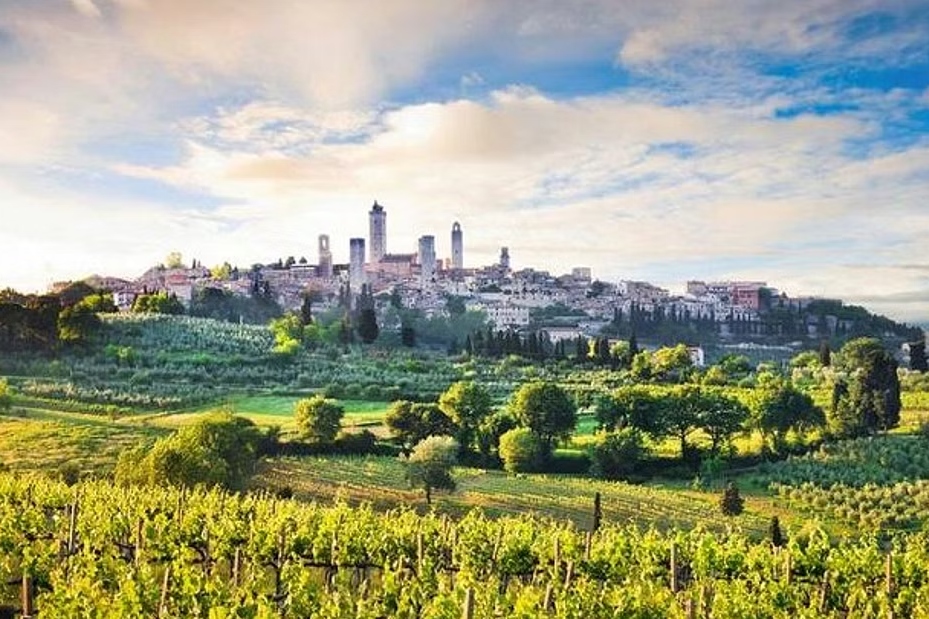
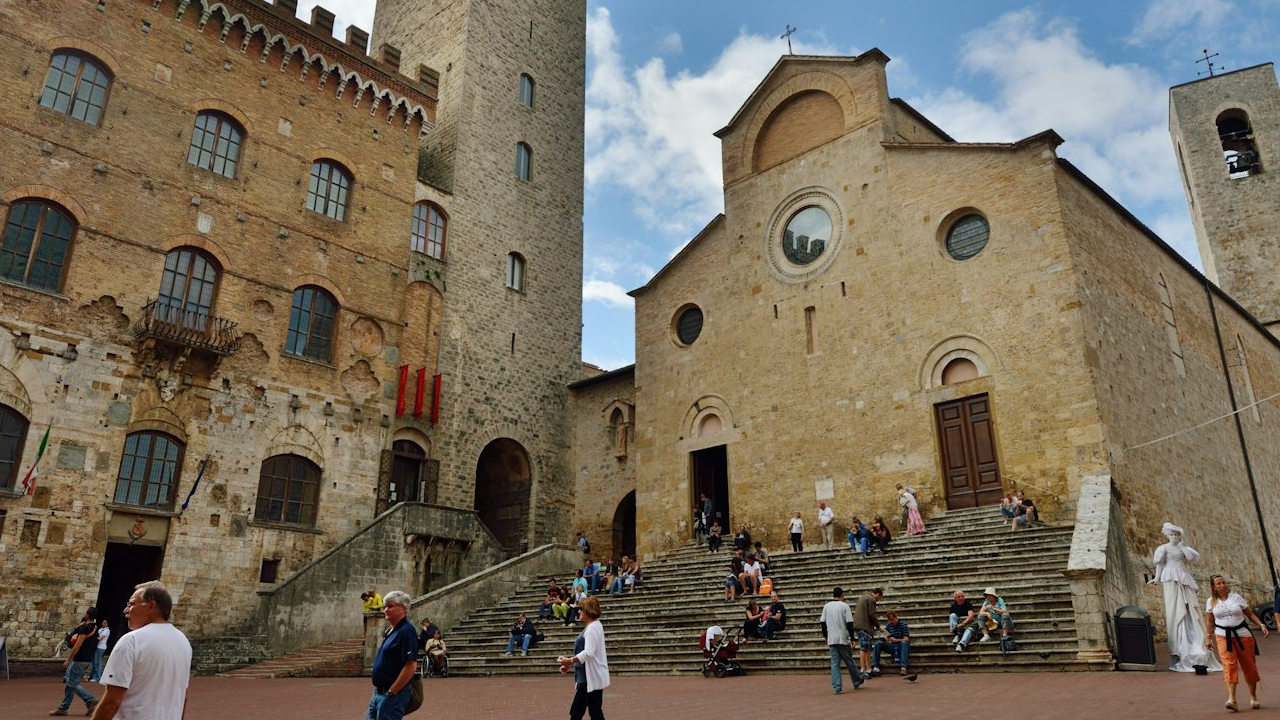
Florence and Siena Renaissance Discovery: A self-guided tour
Active
6h
For a full refund, cancel at least 24 hours before the scheduled departure time.
Instant confirmation
Mobile or paper ticket accepted
About this experience
Discover Florence's Renaissance splendor and artistic genius with our self-guided audio tour app, allowing you to explore the cradle of the Renaissance at your own pace. Begin at the magnificent Duomo with Brunelleschi's revolutionary dome, then proceed to witness Michelangelo's iconic David in the intimate Galleria dell'Accademia. Immerse yourself in the world's greatest Renaissance art collection at the Uffizi Gallery, before exploring the political heart of the republic at Palazzo Vecchio and Piazza della Signoria. Experience Medici grandeur at the lavish Pitti Palace and peaceful Boboli Gardens, then discover spiritual masterpieces at Santa Croce where Giotto revolutionized Western art. Stroll across the medieval Ponte Vecchio and through the authentic Oltrarno artisan quarter, before ascending to Piazzale Michelangelo for breathtaking panoramic views, embodying the perfect fusion of artistic genius, architectural innovation, and natural beauty.
Available options
Florence and Siena Renaissance Discovery: A self-guided tour
What's included
Access to the audio guide for 70+ Florence, Siena and Tuscany attractions and hidden spots.
Offline content.
Self-guided walking tour (app).
Detailed itinerary
1
Stop 1
Pass by
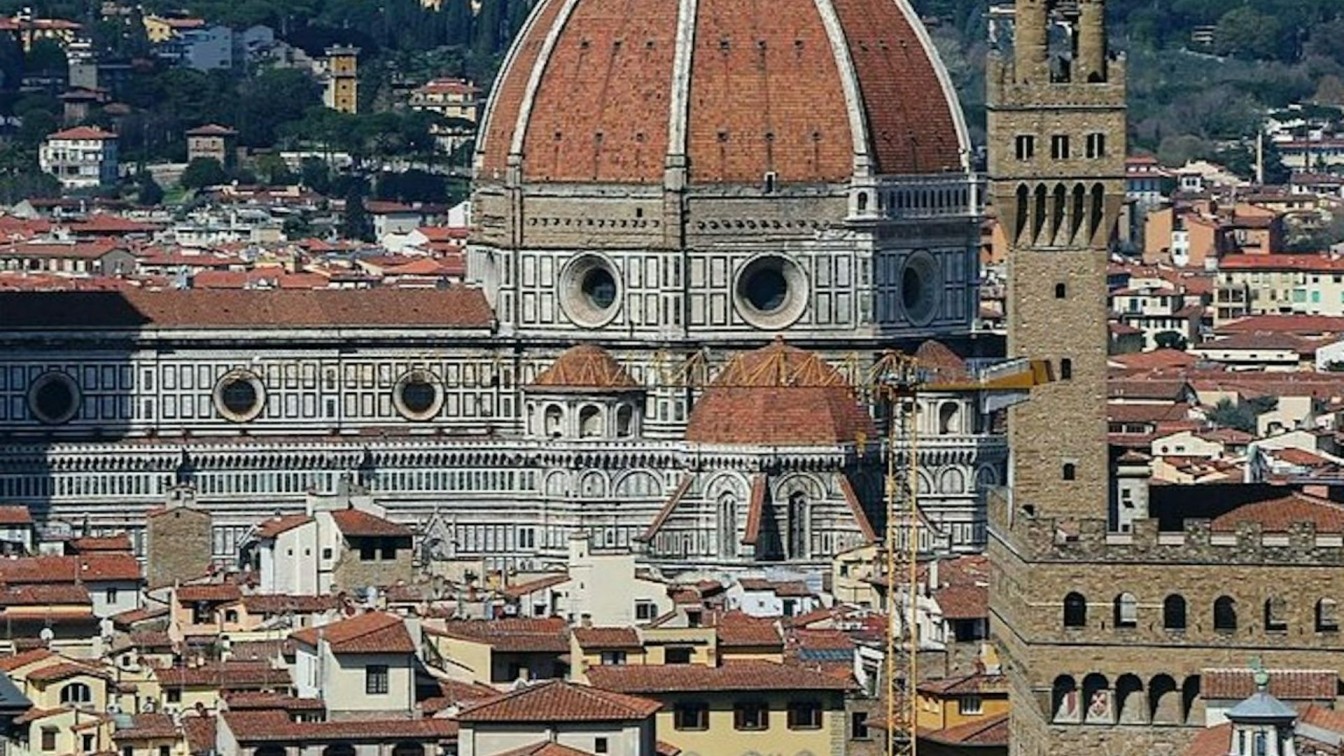
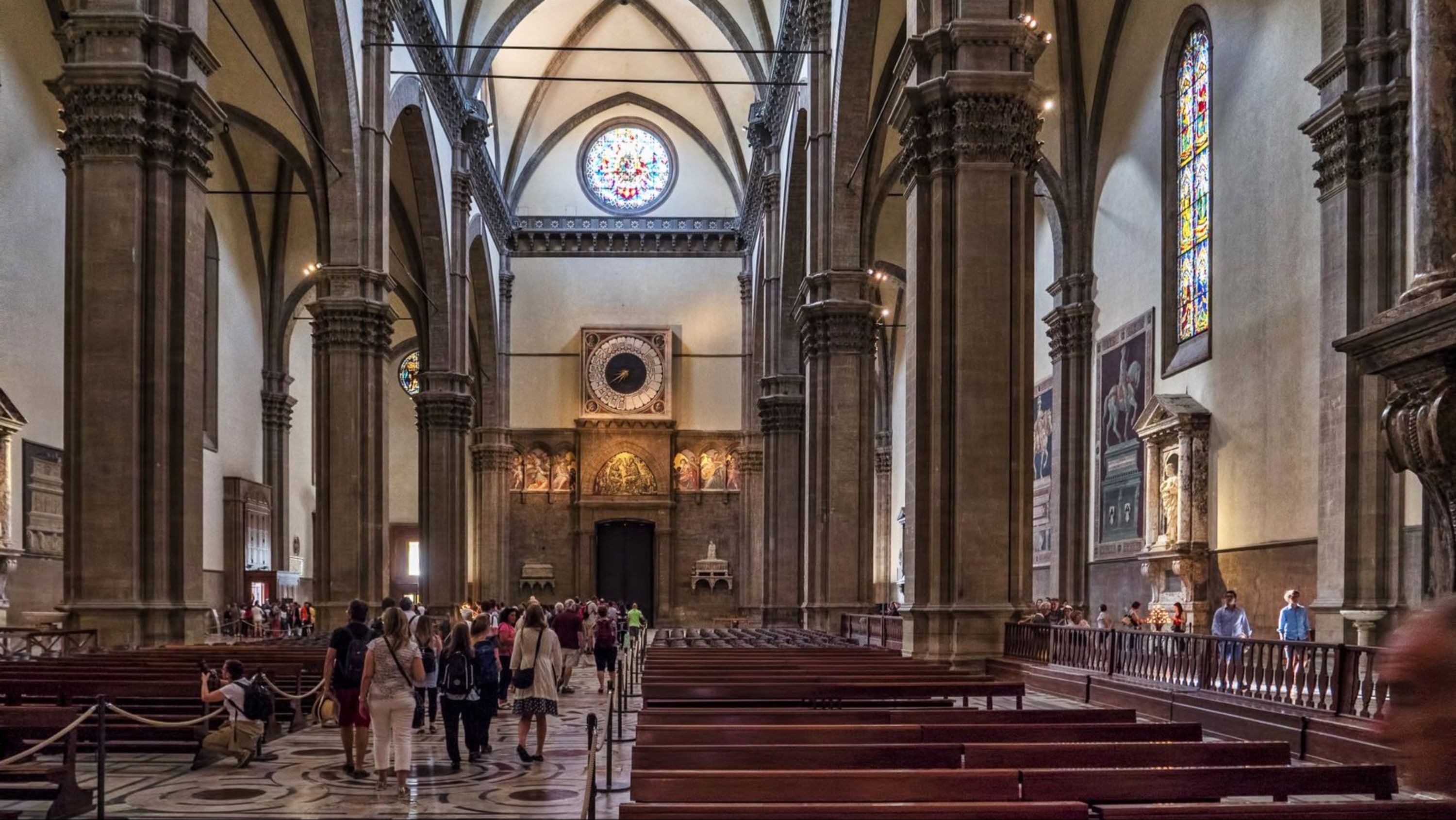
The magnificent Cattedrale di Santa Maria del Fiore dominates Florence's skyline with Brunelleschi's revolutionary Renaissance dome and striking green-white marble facade. This Gothic masterpiece took over 140 years to complete and represents the architectural ambition of medieval Florence reaching toward the heavens. Climb the 463 steps inside the dome for breathtaking panoramic views and witness the engineering genius that inspired countless architects worldwide.
2
This elegant 84-meter Gothic tower showcases Giotto's architectural mastery with its harmonious proportions and colorful marble decorations. The campanile's intricate reliefs and sculptures tell the story of human creativity and divine inspiration through biblical and allegorical scenes. Climb the 414 steps for spectacular close-up views of Brunelleschi's dome and the terracotta rooftops of Renaissance Florence spread below.
3
One of Florence's oldest buildings features stunning bronze doors that Michelangelo called the "Gates of Paradise" for their artistic perfection. The octagonal structure houses magnificent Byzantine mosaics depicting the Last Judgment in golden splendor above an intimate sacred space. Lorenzo Ghiberti's masterful bronze panels revolutionized Renaissance art with their innovative use of perspective and narrative detail.
4
Stop 4
Pass by
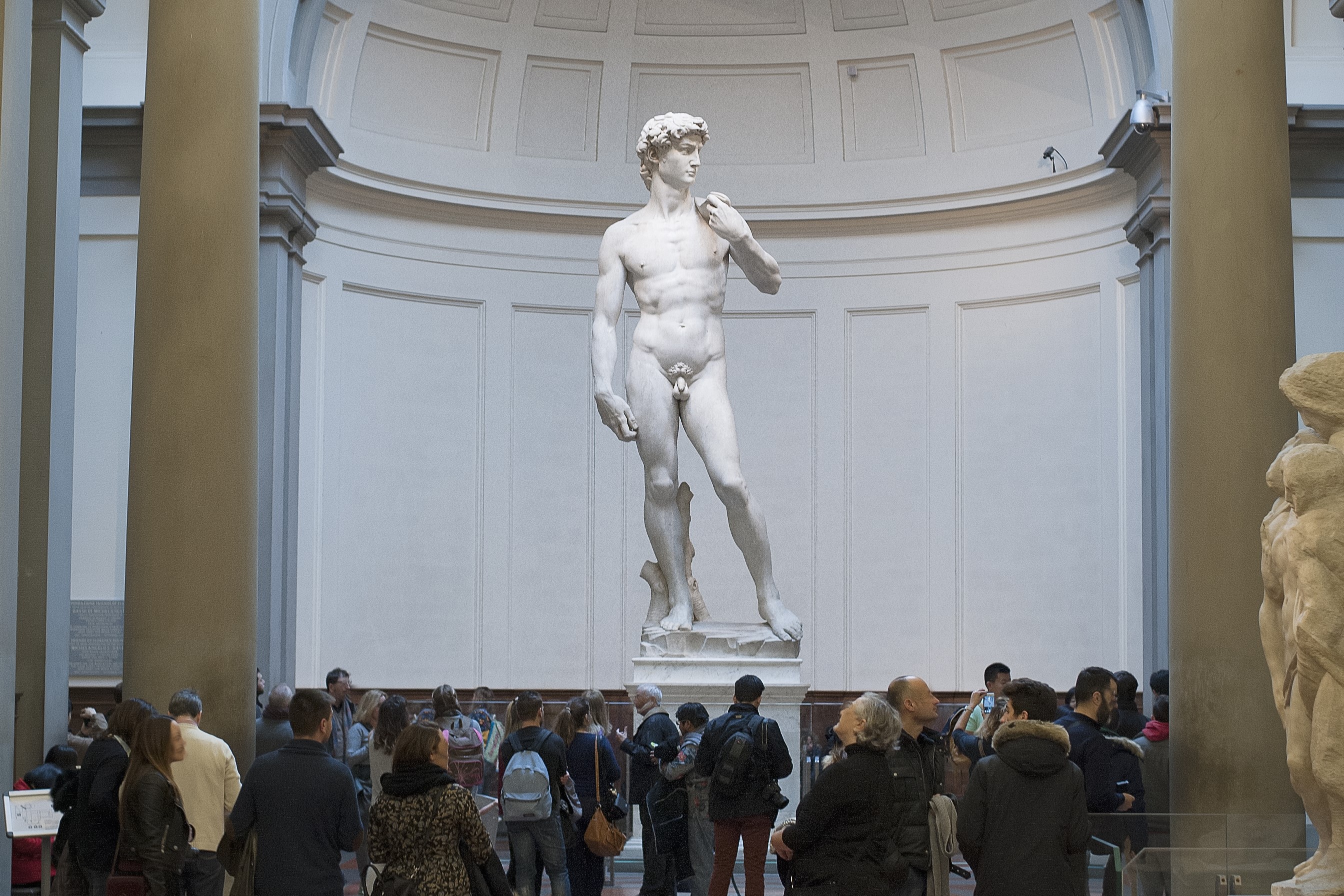
Home to Michelangelo's iconic David, this museum showcases the master's unfinished sculptures and other Renaissance treasures in intimate galleries. The 5-meter tall marble statue reveals incredible anatomical detail carved from a single block of stone when the artist was just 26 years old. Beyond David, explore Michelangelo's "Prisoners" sculptures and works by Botticelli that demonstrate Florence's artistic supremacy during the Renaissance.
5
Stop 5
Pass by
The world's most important collection of Renaissance art fills the former Medici offices with masterpieces by Botticelli, Leonardo da Vinci, and Raphael. Vasari's elegant palazzo houses Botticelli's "Birth of Venus" and "Primavera" alongside works that defined Western artistic tradition for centuries. The gallery's chronological layout tells the complete story of Renaissance art's evolution from medieval traditions to humanistic perfection.
6
Stop 6
Pass by
Florence's town hall for over 700 years stands as a fortress-like symbol of republican power with its imposing tower and crenellated walls. The lavishly decorated chambers showcase Medici grandeur through Vasari's frescoes celebrating Florentine military victories and cultural achievements. Climb the tower for magnificent views while exploring the political heart of the Renaissance republic that fostered artistic and intellectual innovation.
7
Stop 7
Florence's most famous bridge spans the Arno River with its distinctive shops built directly on the medieval stone structure since the 13th century. Originally home to butchers, the bridge now houses goldsmiths and jewelers beneath the Vasari Corridor that connected the Medici palaces. This architectural marvel survived World War II bombing and remains the only Florentine bridge to retain its original medieval appearance.
8
Stop 8
Pass by
The Medici family's grand Renaissance residence showcases their wealth and power through opulent apartments and world-class art collections. This massive 15th-century palazzo houses multiple museums including the Palatine Gallery with works by Titian, Raphael, and Rubens displayed in ornate frescoed rooms. The palace demonstrates how Renaissance princes lived while patronizing arts and culture that defined European civilization.
9
Stop 9
Pass by
These formal Italian gardens behind Pitti Palace offer a green escape with sculptures, grottos, and panoramic views over Florence's terracotta rooftops. Designed for the Medici court, the gardens showcase Renaissance landscape architecture with geometric layouts, classical statues, and hidden surprises throughout 111 acres. The elevated paths provide perfect viewpoints for understanding Florence's topography and appreciating its harmonious integration with surrounding Tuscan hills.
10
Stop 10
Pass by
The largest Franciscan church in the world houses tombs of Michelangelo, Galileo, and Machiavelli alongside Giotto's revolutionary frescoes. This Gothic masterpiece showcases the spiritual and intellectual achievements of Renaissance Florence through its art, architecture, and illustrious burials. The Pazzi Chapel by Brunelleschi demonstrates perfect Renaissance proportions while frescoes by Giotto marked the beginning of realistic painting in Western art.
11
Stop 11
Pass by
The Medici family church features Brunelleschi's harmonious Renaissance architecture and Michelangelo's unfinished facade that adds mysterious beauty. The Old Sacristy by Brunelleschi showcases early Renaissance design principles while the Medici Chapels display the family's wealth through precious marble and sculptural decoration. This church embodies the intimate relationship between Renaissance art, architecture, and powerful patronage that flourished in Florence.
12
Stop 12
Pass by
These ornate burial chambers demonstrate Medici power through Michelangelo's sculptures and precious stone decorations in the New Sacristy. The Chapel of the Princes dazzles with semi-precious stone inlays and marble work that took centuries to complete as the family's ultimate statement of grandeur. Michelangelo's allegorical figures of Day, Night, Dawn, and Dusk reveal his philosophical depth while honoring the Medici dukes.
13
Stop 13
This bustling covered market showcases Tuscan culinary traditions with fresh produce, local specialties, and artisanal foods in a beautiful 19th-century iron and glass structure. Sample regional delicacies like aged Pecorino cheese, Tuscan olive oil, and prosciutto while experiencing authentic Florentine daily life. The market's vibrant atmosphere and high-quality ingredients reflect the same attention to craftsmanship that characterizes Florence's artistic heritage.
14
Stop 14
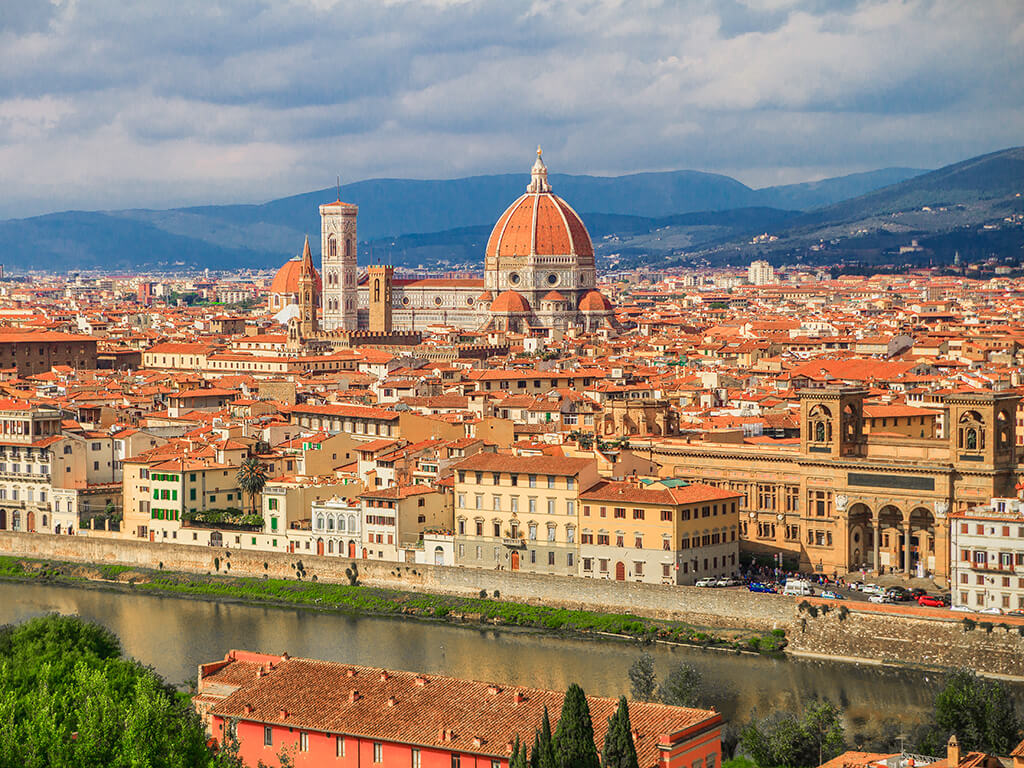
This panoramic terrace offers the most spectacular views of Florence's Renaissance skyline with the Duomo, Palazzo Vecchio, and Arno River spread below. Designed in the 19th century to honor Michelangelo, the piazza features bronze copies of his most famous works against the backdrop of rolling Tuscan hills. Sunset visits provide magical golden light over the city that inspired the Renaissance and continues enchanting visitors with its timeless beauty.
15
Stop 15
This exquisite Romanesque church crowns one of Florence's highest hills with its geometric marble facade and peaceful cemetery atmosphere. The interior features magnificent mosaics, Renaissance chapels, and one of Italy's most beautiful marble pulpits and floors. The basilica's elevated position and spiritual serenity provide contemplative views over Florence while showcasing earlier architectural traditions that influenced Renaissance development.
16
Stop 16
This "other side of Arno" neighborhood maintains authentic Florentine character with artisan workshops, antique shops, and local trattorias away from tourist crowds. Traditional craftspeople still practice techniques passed down through generations in tiny workshops creating leather goods, jewelry, and restoration work. The area offers glimpses into daily Florentine life while preserving the artistic traditions that have defined the city for centuries.
17
This medieval fortress houses one of the world's finest Renaissance sculpture collections in peaceful galleries away from major crowds. The museum features masterpieces by Donatello, Michelangelo, and Cellini displayed in atmospheric stone chambers of Florence's former prison. The beautiful courtyard with its graceful arches provides a tranquil setting for admiring Italy's sculptural heritage.
18
This authentic neighborhood in Oltrarno preserves the real Florence with artisan workshops, local markets, and the stunning Brunelleschi-designed basilica. The shabby-chic piazza comes alive with daily markets and evening aperitivo while traditional craftspeople continue centuries-old techniques. Away from tourist crowds, this area offers genuine Florentine life where locals shop, work, and socialize.
What's not included
Private transportation
Entry fees to tourist attractions or museums.
Our app-based self-guided tour has no physical guide on-site.
Available languages
Audio guide
EN
Written guide
EN
Reviews breakdown
Viator
2.0
1 reviews
5★
0
4★
0
3★
0
2★
1
1★
0
Important information
Not recommended for travelers with spinal injuries
Not recommended for travelers with poor cardiovascular health
Public transportation options are available nearby
Suitable for all physical fitness levels
Meeting point
Visitors are encouraged to personalize their experience by choosing their own starting point and the order in which they wish to explore.
Important notes
INSTRUCTIONS
1 – Download the CloudGuide App
The first step is to install the CloudGuide app. The app can be found under the name CloudGuide in the app stores (iOS and Android). You can also get our app here: cloudguide.me/get.
Get started by exploring our comprehensive how to use guide: cloudguide.me/l/howtouse_en_web.
2 – Get the guide
Once downloaded, open the app. Click "I HAVE A CODE". Type using the keyboard or paste the code that can be found above your ticket on the left, just below the barcode (a 12-digit number starting with “A”, one code per visitor).
Click "START TOUR". You can pre-download or use your guide in streaming. Once activated on your phone, the guide grants access to content for the following 30 days.
3 - Go to the starting point
When you're ready to start the guide, head to the suggested starting point (or feel free to customize the order of your tour).
4 - Need help?
If you have any issues with access codes or in-app purchases, please contact us at help@cloudguide.me. We have also prepared a list of the most common issues and the ways to solve them: cloudguide.me/l/issues.
5 – Didn’t receive your code?
If you haven’t received your access code (a 12-digit number starting with “A” — one code per visitor), please contact us at help@cloudguide.me. Be sure to include your booking number and the name of the tour, and we’ll assist you as soon as possible.
TIP: Having troubles? Apps and phones aren’t perfect. Sometimes they freeze or crash. If this happens, simply close the app (don’t just minimise it!) and reopen it. In most cases that should help.
We hope you enjoy the visit!
About Florence
Florence, the capital of Italy's Tuscany region, is a treasure trove of art, architecture, and history. Known as the birthplace of the Renaissance, it's home to iconic masterpieces, stunning cathedrals, and a rich cultural heritage that continues to captivate visitors from around the world.
Top Attractions
Duomo
The Florence Cathedral, known as the Duomo, is a masterpiece of Renaissance architecture. Its iconic dome, designed by Brunelleschi, offers panoramic views of the city.
Architecture/Religious
2-3 hours
Free to enter the cathedral, €18 for the climb to the dome
Uffizi Gallery
One of the world's most famous art museums, the Uffizi Gallery houses works by Botticelli, Michelangelo, and Leonardo da Vinci.
Museum/Art
2-3 hours
€20
Ponte Vecchio
A medieval stone bridge famous for its jewelry shops. It's one of the most iconic landmarks in Florence.
Architecture
30 minutes to 1 hour
Free
Piazzale Michelangelo
A panoramic terrace offering breathtaking views of Florence. It's a perfect spot for sunset and photography.
Scenic Viewpoint
1-2 hours
Free
Accademia Gallery
Home to Michelangelo's famous statue of David, the Accademia Gallery is a must-visit for art lovers.
Museum/Art
1-2 hours
€16
Must-Try Local Dishes
Bistecca alla Fiorentina
A thick-cut, grilled T-bone steak, seasoned simply with salt and pepper. It's a must-try for meat lovers.
Dinner
Contains beef, not suitable for vegetarians or vegans
Ribollita
A hearty vegetable and bread soup, traditionally made with leftover bread and vegetables. It's a classic Florentine dish.
Lunch/Dinner
Vegetarian, can be made vegan
Lampredotto
A Florentine street food made from the fourth and final stomach of a cow. It's typically served in a sandwich.
Lunch
Contains beef, not suitable for vegetarians or vegans
Cantucci
Almond biscotti traditionally served with Vin Santo, a sweet Tuscan wine. They are crunchy and perfect for dipping.
Dessert
Contains almonds, can be made gluten-free
Popular Activities
Hiking in the Tuscan countryside
Cycling tours
Hot air balloon rides
Wine tasting tours
Spa day at a luxury hotel
Strolling through the gardens of Villa medici
Visiting museums and art galleries
Attending opera or concerts
Best Time to Visit
April to June, September to October
These months offer pleasant weather and fewer crowds compared to the summer peak. Ideal for sightseeing and outdoor activities.
15-28°C
59-82°F
Practical Information
Language
- Official: Italian
- Widely spoken: English, French, Spanish
- English: Moderately spoken
Currency
Euro (EUR)
Time Zone
GMT+1 (CET), GMT+2 (CEST during daylight saving time)
Electricity
230VV, 50HzHz
Safety Information
Overall Safety Rating: Generally safe
Florence is generally safe for tourists, but pickpocketing and petty theft can occur, especially in crowded areas. Be aware of your surroundings and take precautions to protect your belongings.
Important Precautions:
- • Keep valuables secure and out of sight
- • Be cautious of your surroundings, especially in crowded areas
- • Use licensed taxis or ride-sharing apps
Getting there
By air
- Florence Airport • 5 km from city center
- Pisa International Airport • 85 km from city center
By train
Santa Maria Novella Station
By bus
Villa Costanza Bus Station, Florence Airport Bus Terminal
Getting around
Public transport
The bus network covers the entire city and is the primary mode of public transport. Buses are frequent and reliable.
Taxis
Available • Apps: MyTaxi, FreeNow
Rentals
Car, Bike, Scooter
Neighborhoods
Santa Maria Novella
Oltrarno
San Lorenzo
Santa Croce
Day trips
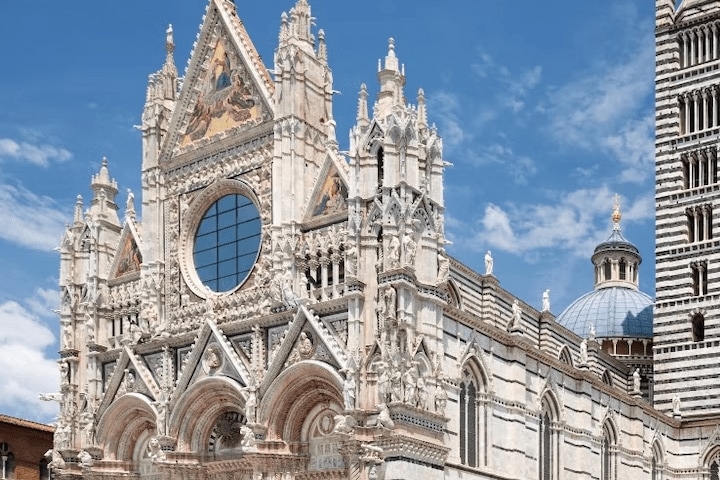
Siena
70 km from Florence • Half day to full day
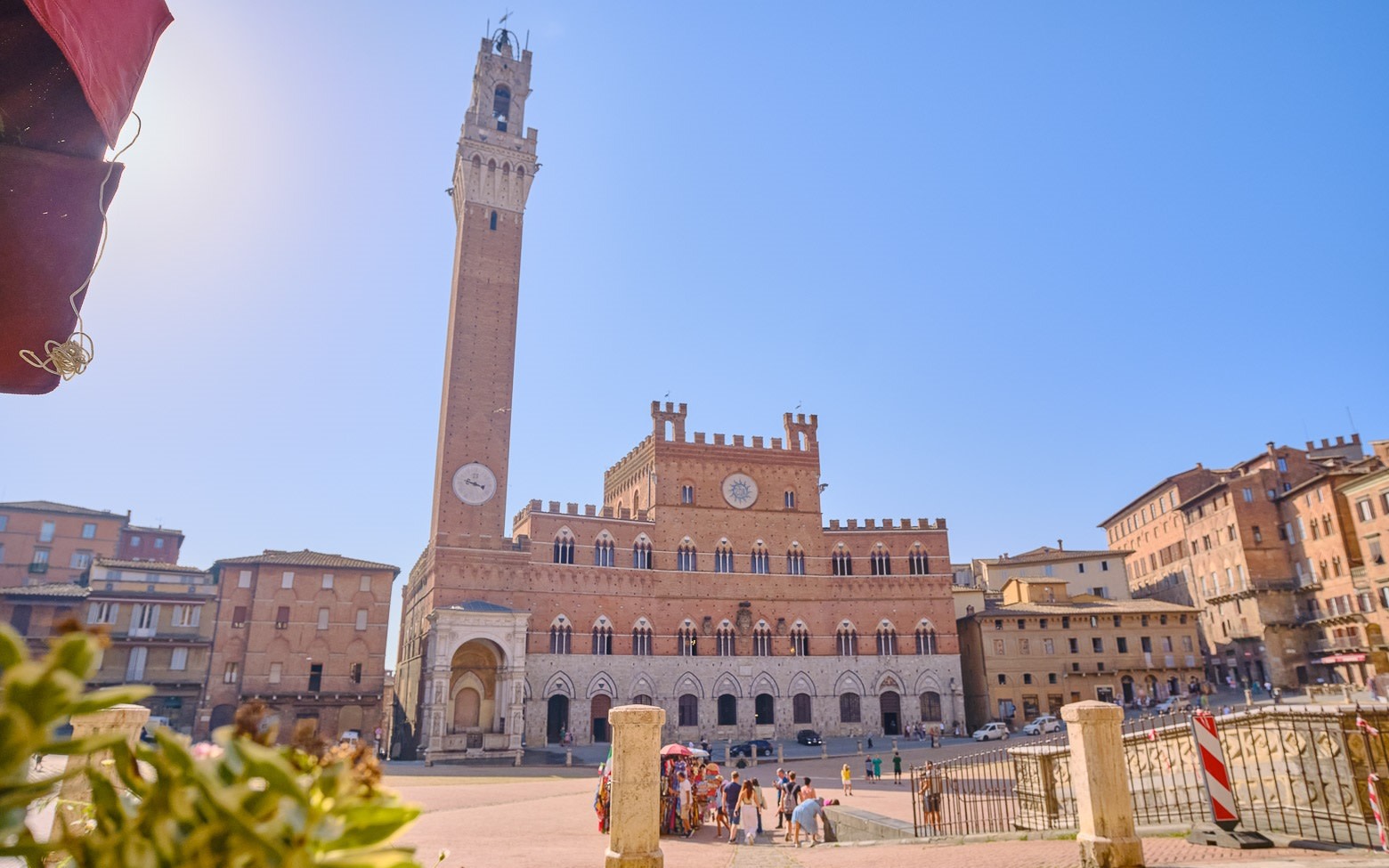
A medieval city known for its stunning Piazza del Campo and the Palio, a traditional horse race held twice a year.
Pisa
85 km from Florence • Half day
Home to the iconic Leaning Tower of Pisa, this city offers a mix of historic sites and scenic views.
Chianti Wine Region
30-50 km from Florence • Full day
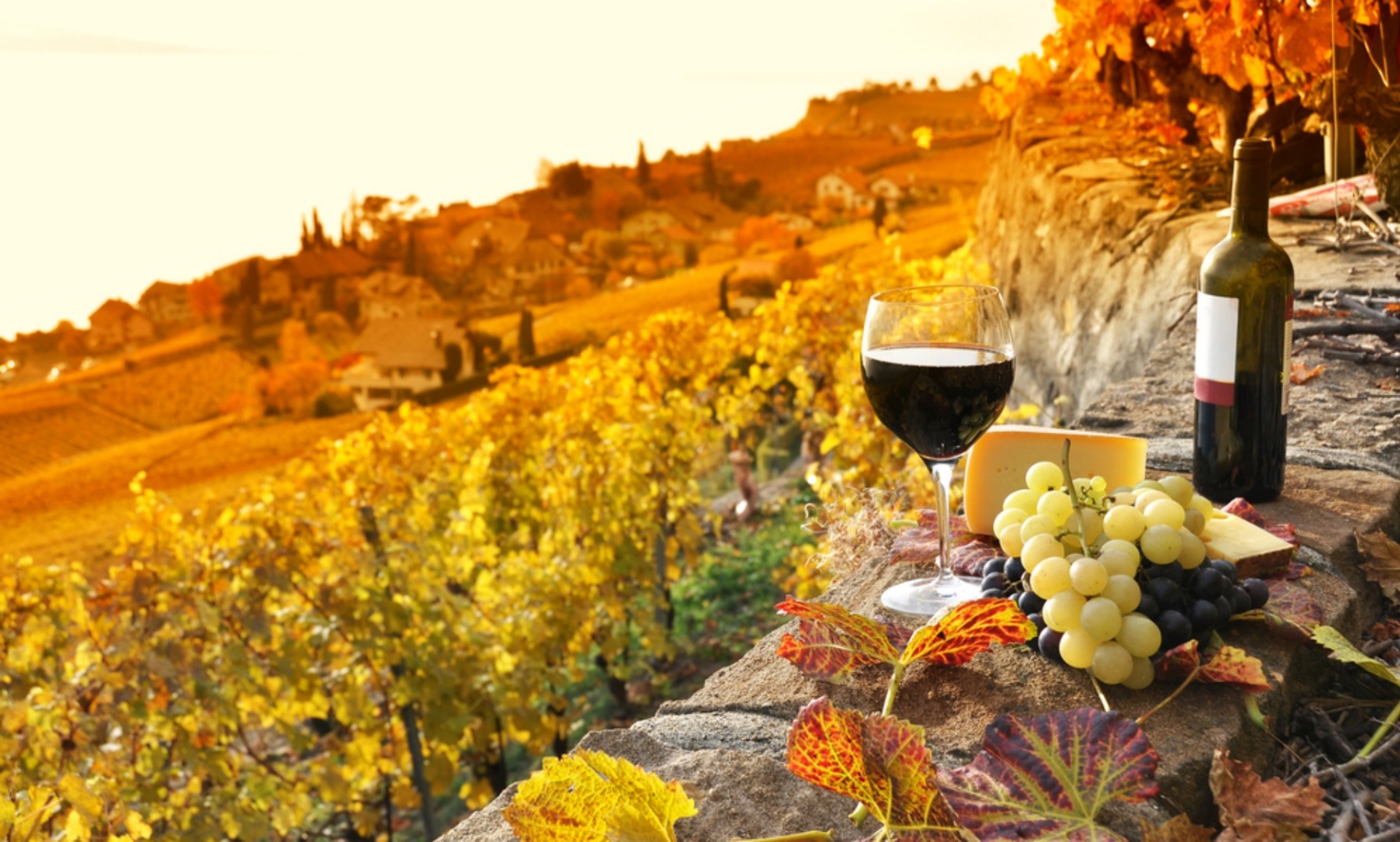
A picturesque wine region known for its rolling hills, vineyards, and charming villages.
Festivals
Festa di San Giovanni • June 24
Calcio Storico Fiorentino • June (dates vary)
Firenze dei Fiori • April to June
Pro tips
- Visit major attractions early in the morning or late in the afternoon to avoid crowds
- Book tickets for popular attractions in advance to save time and avoid long queues
- Explore the city's hidden gems, such as the Oltrarno neighborhood and the secret passages of the Palazzo Vecchio
- Try local specialties like Bistecca alla Fiorentina, Ribollita, and Lampredotto
- Learn a few basic Italian phrases to enhance your experience and connect with locals
From $25
per person
Price varies by option
Secure booking
Free cancellation available
Instant confirmation