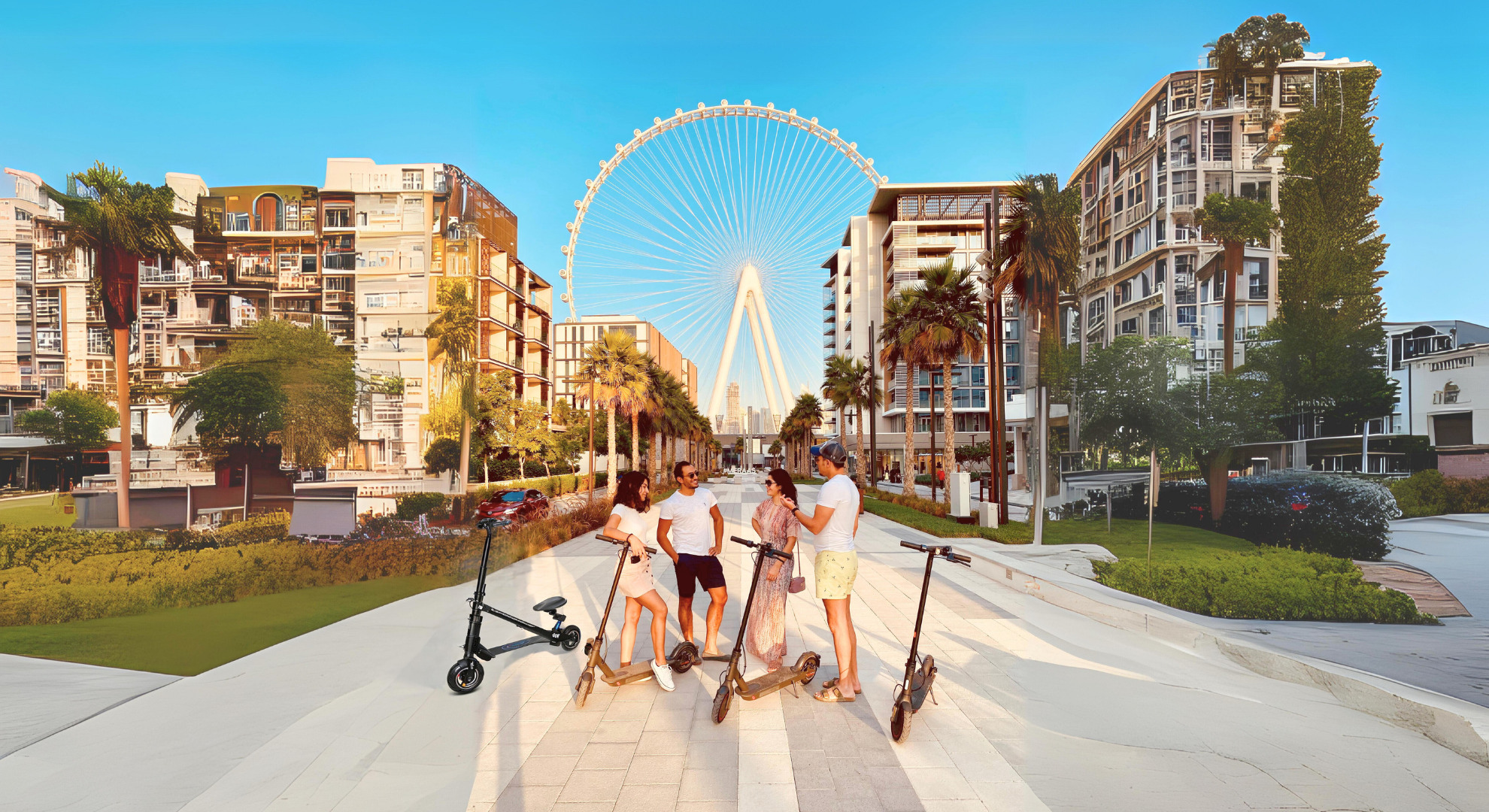
Dubai's Hidden Gems: Self Guided City Tour
Active
9h
For a full refund, cancel at least 24 hours before the scheduled departure time.
Instant confirmation
Mobile or paper ticket accepted
About this experience
Discover Dubai's extraordinary transformation from humble fishing village to futuristic metropolis with our self-guided audio tour app, allowing you to explore the City of Gold at your own pace. Begin at the iconic Burj Khalifa piercing the clouds as the world's tallest building, then descend into the sprawling Dubai Mall with its indoor aquarium and dancing fountains. Cross the historic Dubai Creek aboard a traditional wooden abra to explore the atmospheric Gold Souk where glittering displays have dazzled traders for over a century. Wander through the aromatic Spice Souk and discover Emirati heritage in the beautifully restored Al Fahidi Historical District with its wind-tower architecture and hidden art galleries. Marvel at the architectural masterpiece of Jumeirah Mosque before venturing to the palm-shaped island and witnessing the sail-shaped silhouette of the legendary Burj Al Arab.
Available options
Dubai's Hidden Gems: Self Guided City Tour
What's included
Access to the audio guide for 60+ Dubai attractions and hidden spots.
Self-guided walking tour (app)
Digital City Map.
Detailed itinerary
1
Stop 1
Pass by
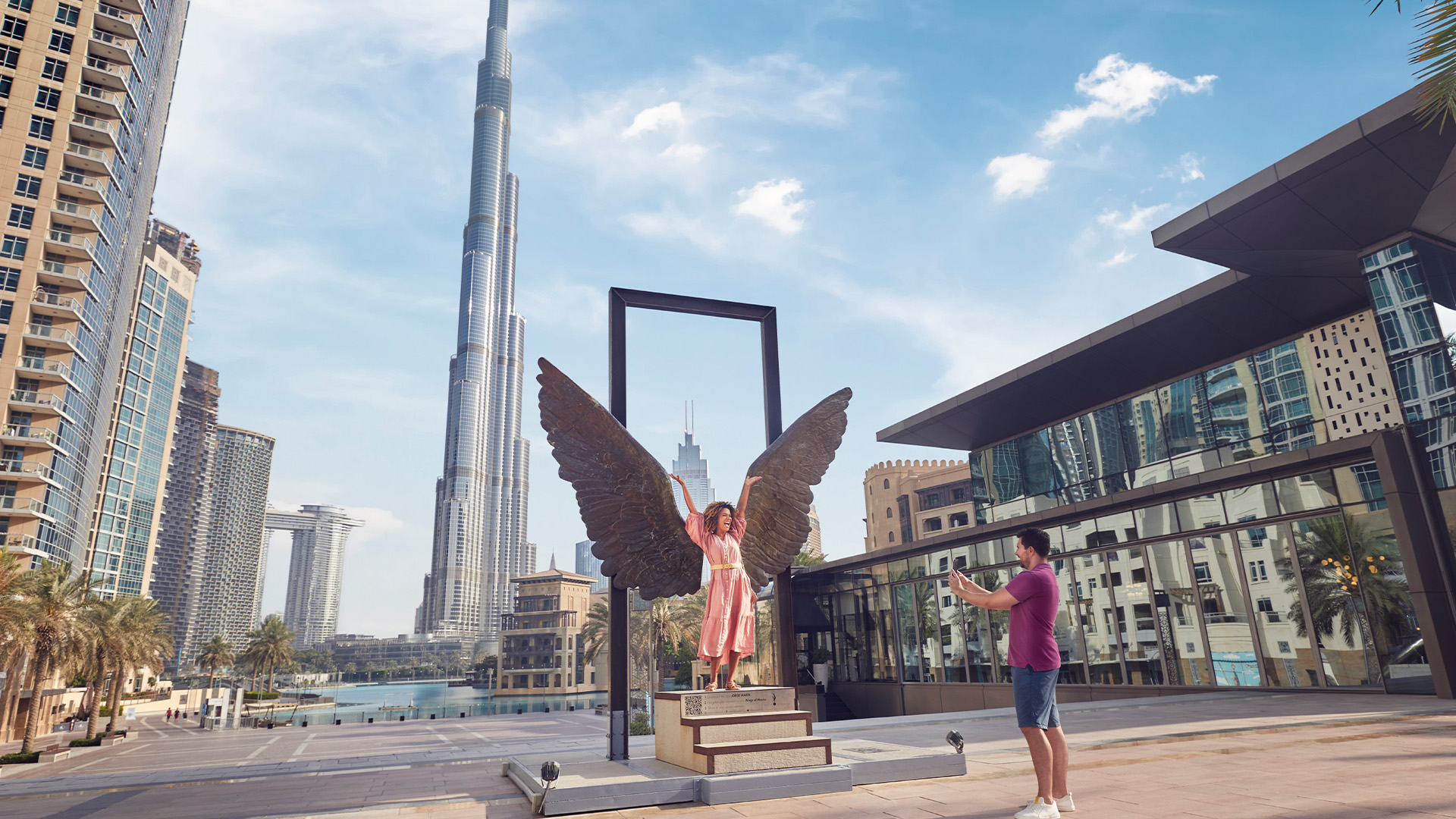
Soaring 828 meters into the Arabian sky, the Burj Khalifa stands as humanity's tallest structure and Dubai's most iconic symbol of ambition and engineering excellence. This needle-shaped tower took six years and 12,000 workers to complete, featuring the world's highest observation deck, highest restaurant, and highest nightclub. The building's Y-shaped floor plan was inspired by a desert flower native to the region, creating a structure that appears to spiral upward while managing the immense wind forces at such unprecedented heights.
2
Stop 2
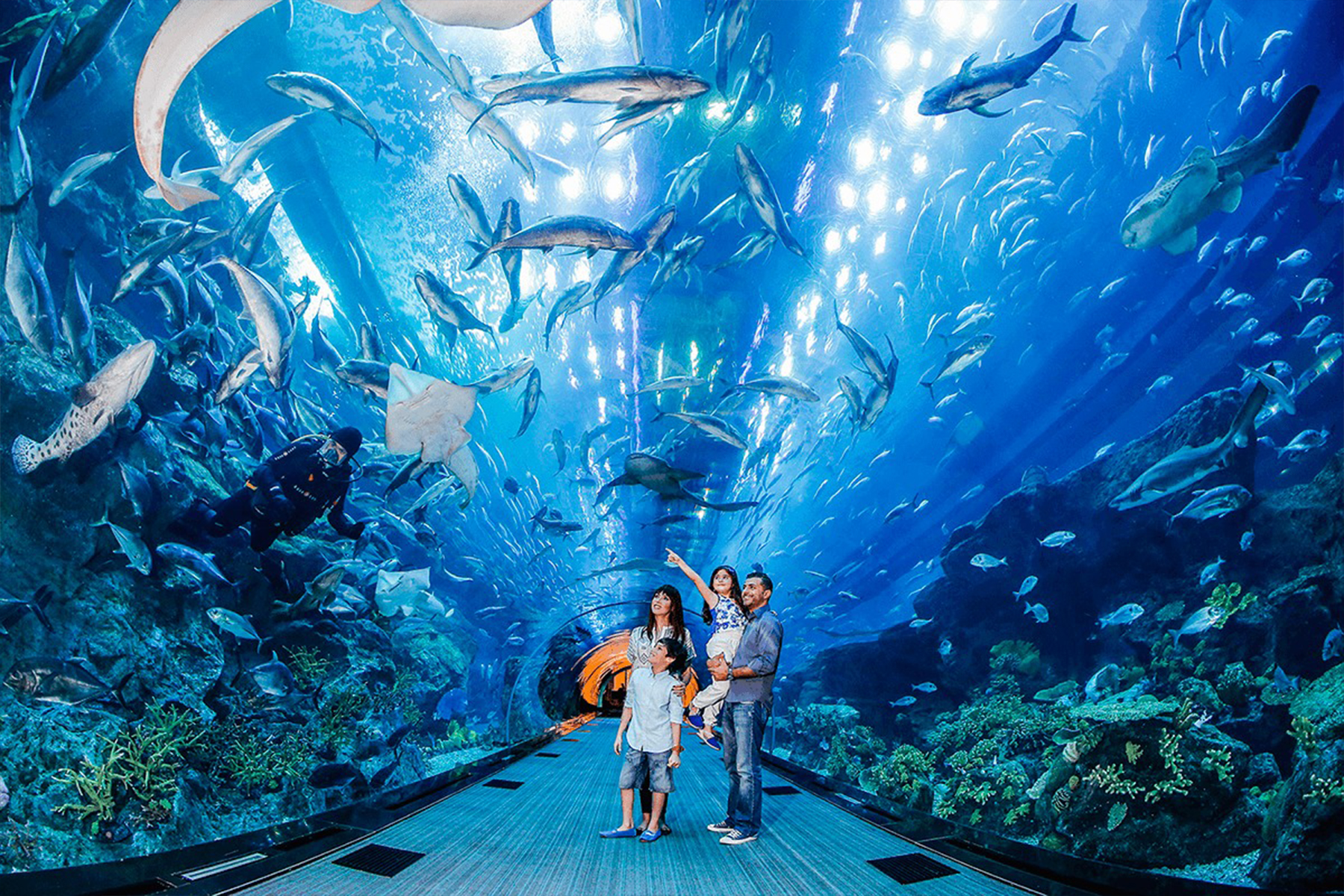
The world's largest shopping destination spans 1.1 million square meters at the base of Burj Khalifa, housing over 1,200 retail outlets, 200 restaurants, and extraordinary attractions beyond mere shopping. The Dubai Aquarium holds 10 million liters of water behind one of the world's largest acrylic panels, showcasing sharks, rays, and thousands of marine creatures in a climate-controlled underwater world. The Dubai Fountain performs choreographed water shows every 30 minutes after sunset, with jets shooting 150 meters high in perfect synchronization with music echoing across Burj Lake.
3
Stop 3
This natural saltwater inlet was Dubai's original lifeline, where pearl divers, fishermen, and traders plied their trade for centuries before oil transformed the region forever. Traditional wooden abra boats have ferried passengers between Deira and Bur Dubai since the 1800s, offering a charming five-minute crossing for just one dirham while dhows carrying cargo from Iran and India line the wharves. The creek's historic importance is evident in the restored buildings along its banks, now housing museums, cultural centers, and atmospheric waterfront restaurants.
4
Stop 4
The labyrinthine lanes of the Gold Souk dazzle with over 300 retailers displaying an estimated 10 tons of gold in shop windows at any given time, representing one of the world's largest gold markets. Traditional covered walkways protect shoppers from the desert sun while window displays glitter with 18-karat, 22-karat, and 24-karat gold jewelry in Arabian, Indian, and Western styles. Prices are determined by the daily gold rate plus craftsmanship fees, and bargaining is expected—skilled negotiators can often secure discounts of 20-30 percent from initial asking prices.
5
Stop 5
The aromatic lanes of the Spice Souk transport visitors to an older Dubai where merchants sold frankincense, saffron, and exotic spices brought by dhow from India, Persia, and the Horn of Africa. Sacks overflowing with colorful spices, dried fruits, nuts, and traditional remedies line narrow passageways where vendors have traded for generations using skills passed from father to son. The heady mixture of cardamom, cinnamon, and rose petals creates an intoxicating sensory experience while friendly shopkeepers offer samples and explain the origins and uses of their wares.
6
This beautifully preserved neighborhood showcases traditional Emirati architecture from the late 19th and early 20th centuries, when wind towers ingeniously cooled homes before air conditioning existed. Narrow sikkas (alleyways) wind between coral-and-gypsum buildings housing museums, art galleries, traditional cafes, and cultural centers that illuminate Dubai's pre-oil heritage. The district's quiet courtyards and restored buildings provide a striking contrast to the futuristic skyline visible just beyond, revealing the authentic roots from which modern Dubai has grown.
7
Stop 7
Pass by
Housed in the 18th-century Al Fahidi Fort, Dubai's oldest existing building, this museum traces the emirate's remarkable journey from pearling village to global metropolis through engaging dioramas and multimedia displays. Life-sized recreations transport visitors to traditional souks, desert camps, and underwater pearl-diving scenes that illuminate daily life before the discovery of oil transformed everything. Archaeological artifacts from Al Qusais graves dating back 4,000 years prove that this strategic location has attracted human settlement for millennia.
8
Stop 8
Pass by
This stunning white mosque built in the medieval Fatimid style is one of the few in Dubai open to non-Muslim visitors, offering guided cultural tours that demystify Islamic faith and traditions. Twin minarets flank an elaborate dome in what many consider the most beautiful mosque in the UAE, particularly spectacular when illuminated at night against the dark sky. The Sheikh Mohammed Centre for Cultural Understanding operates the Open Doors, Open Minds program here, answering questions about Islam, Emirati culture, and local customs in an atmosphere of warm hospitality.
9
Stop 9
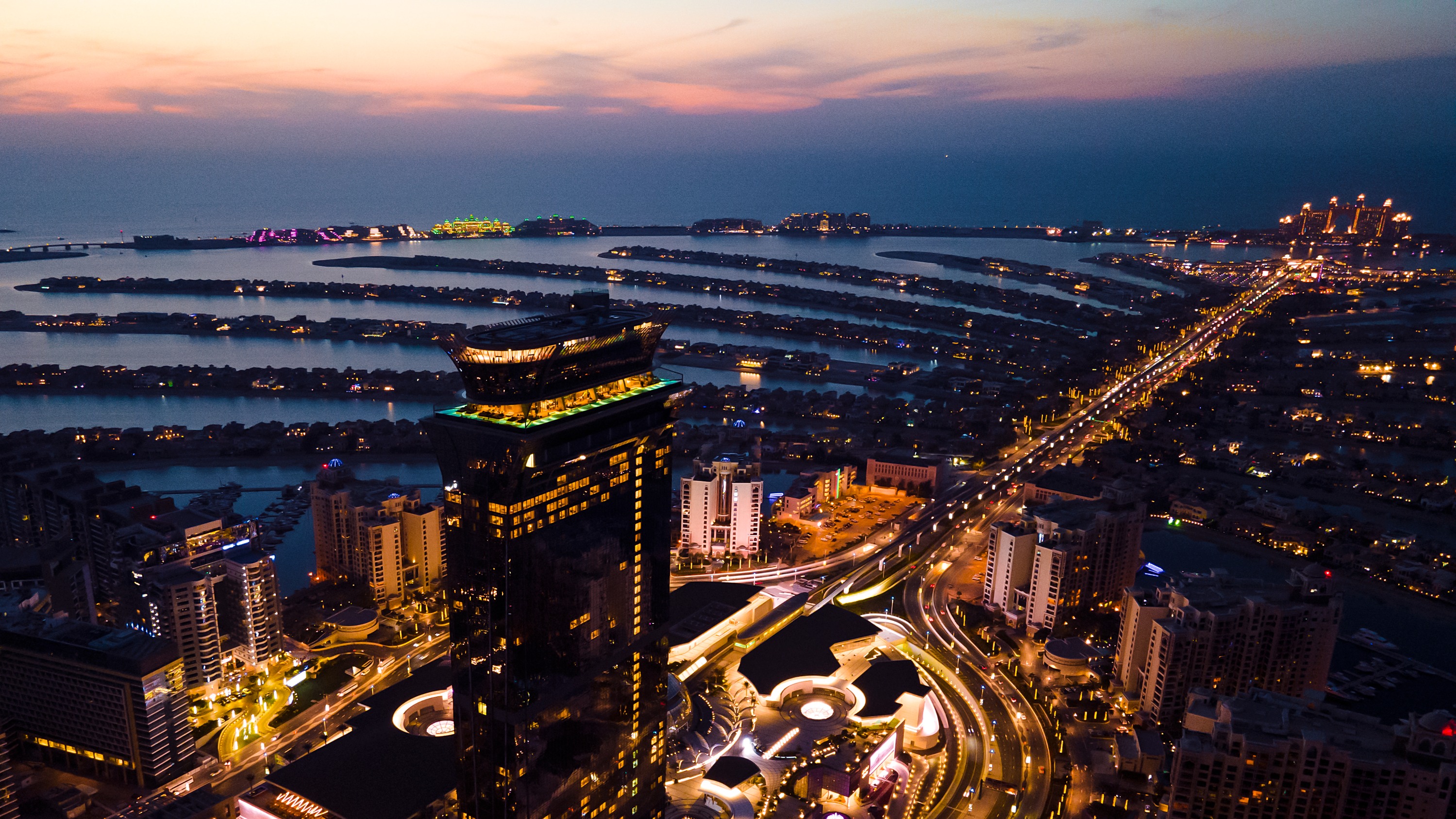
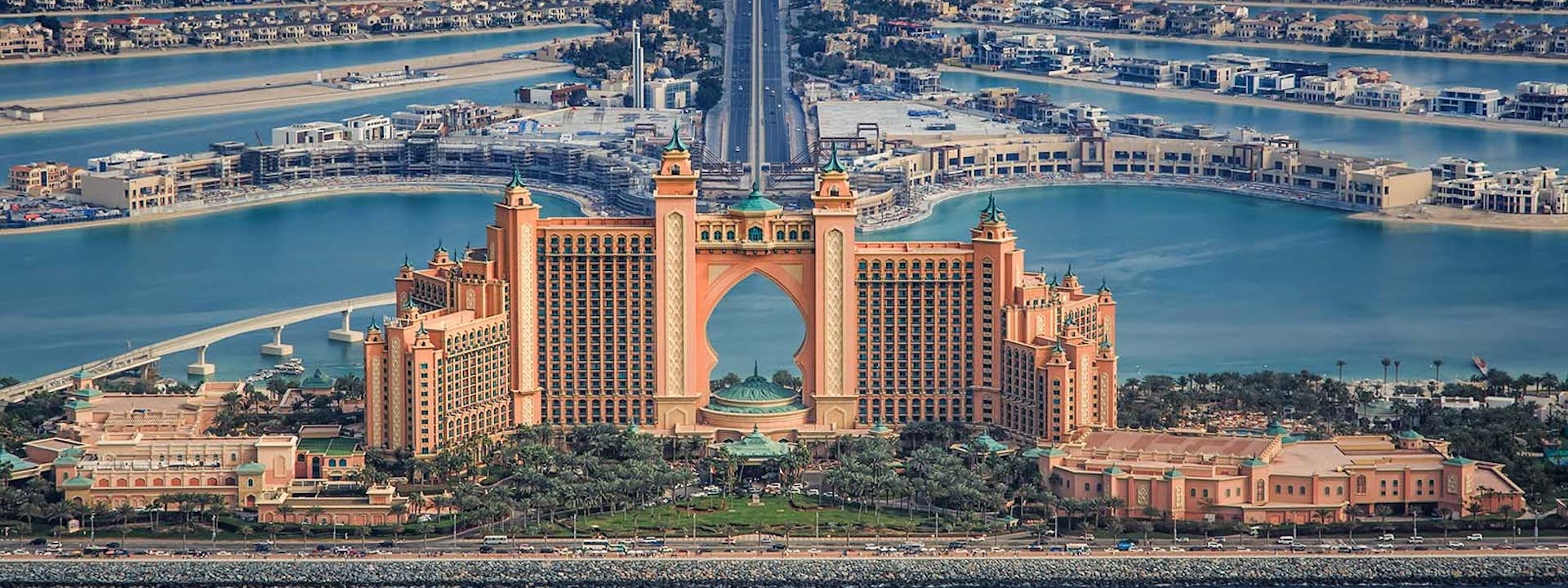
This palm-tree-shaped artificial archipelago added 78 kilometers of beachfront to Dubai when completed in 2006, representing one of the largest land reclamation projects in human history. The Palm required 94 million cubic meters of sand dredged from the seafloor and reinforced with rock to create a stable island that now hosts luxury hotels, private villas, and the iconic Atlantis resort at its crescent tip. The Palm Monorail whisks visitors along the trunk while the View at The Palm observation deck offers aerial perspectives of this audacious engineering achievement.
10
Stop 10
Pass by
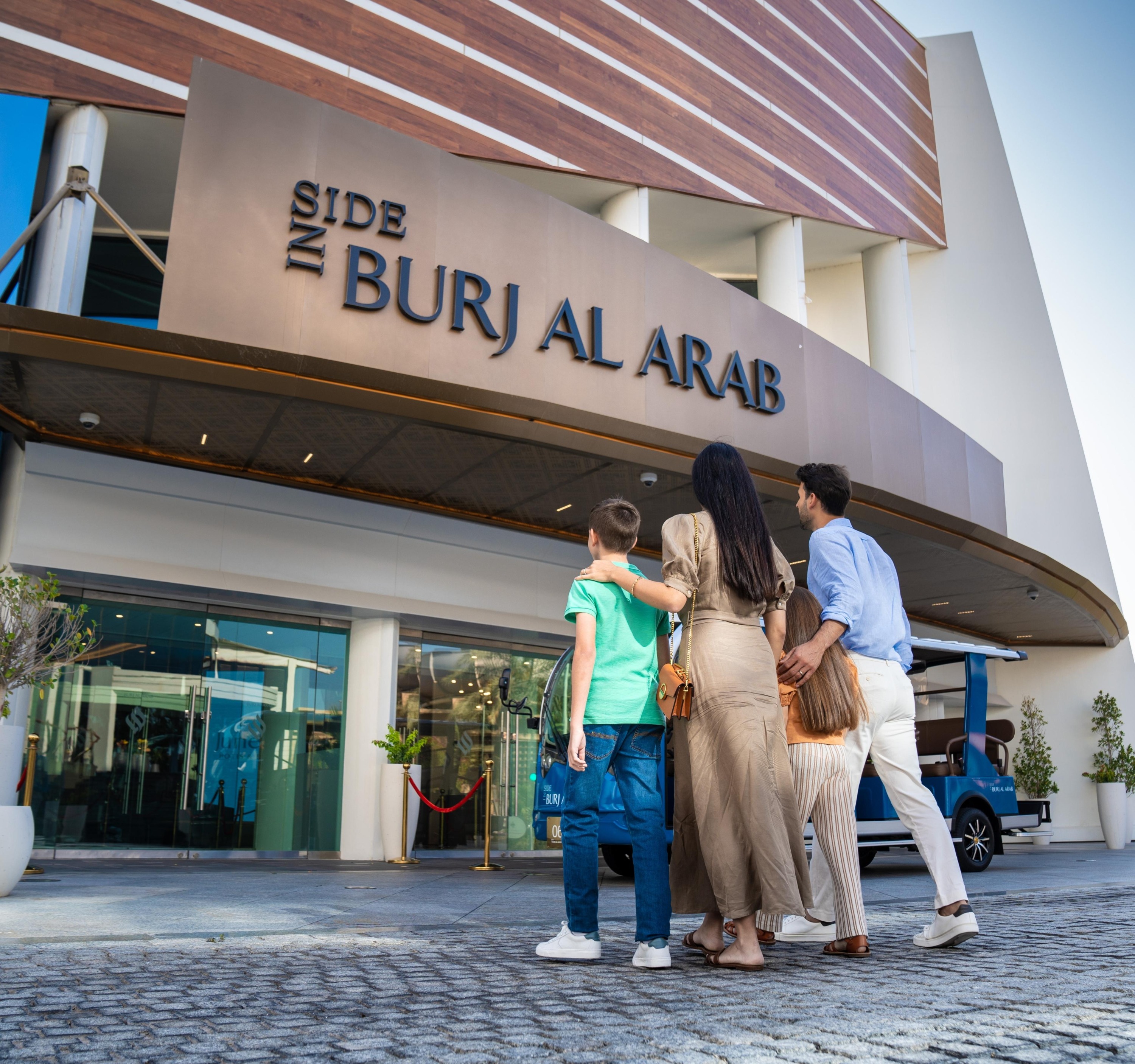
This sail-shaped hotel rising 321 meters from its own artificial island has become Dubai's most recognizable landmark since opening in 1999 as the world's only self-proclaimed seven-star hotel. The building's innovative design features a Teflon-coated fiberglass facade that glows with ever-changing LED displays after dark while the interior dazzles with gold leaf, marble, and the world's tallest atrium at 180 meters. While room rates start at $1,000 per night, visitors can experience the opulence through afternoon tea, dinner reservations, or the viewing deck at the helipad where stunning photographs await.
11
Stop 11
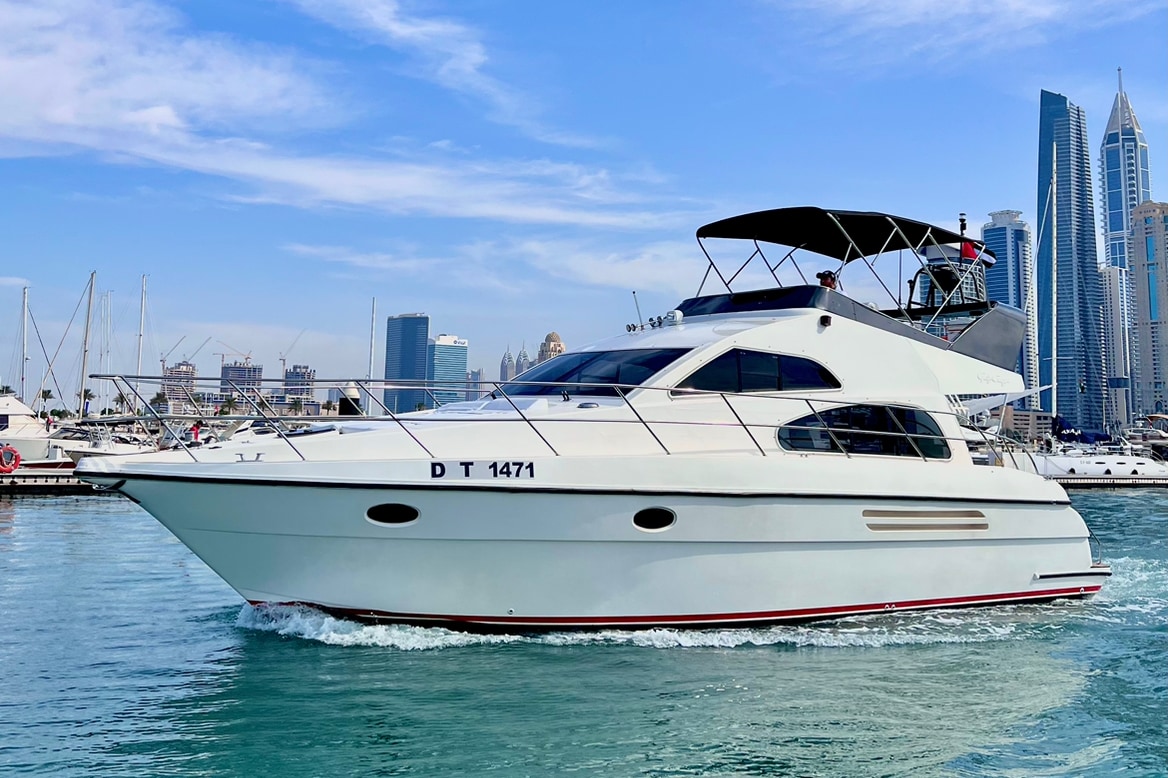
This 3-kilometer artificial canal city represents the world's largest man-made marina, lined with 200 high-rise towers housing 120,000 residents in what was empty desert just two decades ago. The Marina Walk promenade buzzes with restaurants, cafes, and yachts bobbing in the turquoise waters while the Ain Dubai observation wheel—the world's largest at 250 meters—dominates the skyline. Evening brings a festive atmosphere as residents and visitors stroll past the illuminated towers while dhow dinner cruises glide through the canyon of glittering skyscrapers.
12
Stop 12
This elaborate resort recreates an ancient Arabian citadel with wind towers, waterways, and traditional architecture housing luxury hotels, a souk with 75 boutiques, and over 40 restaurants with views of the Burj Al Arab. Abra boats navigate 3 kilometers of meandering waterways connecting the resort's components while the Talise Spa offers hammam treatments in opulent surroundings. The reconstruction provides an idealized vision of old Arabia that never quite existed but creates magical atmospherics, particularly at sunset when the Burj Al Arab silhouette frames the artificial waterways.
13
This trendy beachfront development in Jumeirah brings a Mediterranean vibe to the Arabian Gulf with colorful murals, laid-back restaurants, and boutique shops along a 2.5-kilometer waterfront promenade. The Laguna Waterpark offers slides and attractions for families while the beach itself provides free access to warm waters with views across to the World Islands and distant Palm Jumeirah. Street art, quirky installations, and a relaxed bohemian atmosphere distinguish La Mer from Dubai's more polished developments, attracting a younger crowd seeking sunset cocktails and late-night entertainment.
14
Stop 14
Pass by
This 150-meter-tall architectural landmark shaped like a giant picture frame offers visitors the unique experience of viewing old and new Dubai on opposite sides from a glass-floored sky bridge connecting twin towers. The frame's placement in Zabeel Park was carefully chosen to showcase traditional Deira and Bur Dubai when looking north while the futuristic Downtown skyline dominates the southern view. Interactive exhibits trace Dubai's transformation from 1950s fishing village to 21st-century marvel while a transparent floor section provides vertiginous thrills for brave visitors.
15
The atmospheric streets of old Deira pulse with the energy of traders from across Asia and Africa who have gathered here for decades, creating Dubai's most authentically multicultural neighborhood. Iranian, Indian, Pakistani, and African merchants crowd narrow lanes selling everything from textiles and perfumes to electronics and traditional medicine in a sensory overload far removed from climate-controlled malls. The area's countless hole-in-the-wall restaurants serve authentic cuisines from across the subcontinent at prices that recall Dubai before the oil boom transformed it into a playground for the wealthy.
What's not included
Private transportation
Entry fees to tourist attractions or museums.
Our app-based self-guided tour has no physical guide on-site.
Available languages
Audio guide
EN
Written guide
EN
Important information
Not recommended for travelers with spinal injuries
Not recommended for travelers with poor cardiovascular health
Public transportation options are available nearby
Suitable for all physical fitness levels
Meeting point
Visitors are encouraged to personalize their experience by choosing their own starting point and the order in which they wish to explore.
Important notes
INSTRUCTIONS
1 – Download the CloudGuide App
The first step is to install the CloudGuide app. The app can be found under the name CloudGuide in the app stores (iOS and Android). You can also get our app here: cloudguide.me/get.
Get started by exploring our comprehensive how to use guide: cloudguide.me/l/howtouse_en_web.
2 – Get the guide
Once downloaded, open the app. Click "I HAVE A CODE". Type using the keyboard or paste the code that can be found above your ticket on the left, just below the barcode (a 12-digit number starting with “A”, one code per visitor).
Click "START TOUR". You can pre-download or use your guide in streaming. Once activated on your phone, the guide grants access to content for the following 30 days.
3 - Go to the starting point
When you're ready to start the guide, head to the suggested starting point (or feel free to customize the order of your tour).
4 - Need help?
If you have any issues with access codes or in-app purchases, please contact us at help@cloudguide.me. We have also prepared a list of the most common issues and the ways to solve them: cloudguide.me/l/issues.
5 – Didn’t receive your code?
If you haven’t received your access code (a 12-digit number starting with “A” — one code per visitor), please contact us at help@cloudguide.me. Be sure to include your booking number and the name of the tour, and we’ll assist you as soon as possible.
TIP: Having troubles? Apps and phones aren’t perfect. Sometimes they freeze or crash. If this happens, simply close the app (don’t just minimise it!) and reopen it. In most cases that should help.
We hope you enjoy the visit!
About Dubai
Dubai is a city of superlatives, known for its futuristic architecture, luxury shopping, and vibrant culture. It offers a unique blend of traditional Arabic heritage and modern innovation, making it a captivating destination for travelers.
Top Attractions
Burj Khalifa
The tallest building in the world, offering breathtaking views from its observation decks.
Architecture
1-2 hours
AED 149-500 (USD 40-140)
Dubai Mall
One of the largest shopping malls in the world, featuring a vast array of retail stores, dining options, and entertainment venues.
Shopping
Half day to full day
Free entry, activities vary in cost
Palm Jumeirah
A man-made island shaped like a palm tree, featuring luxury resorts, residential areas, and the iconic Atlantis The Palm resort.
Architecture
Half day to full day
Varies by activity
Old Dubai (Al Fahidi)
The historic district of Dubai, showcasing traditional Emirati architecture, museums, and cultural experiences.
Historical
2-3 hours
Free to explore, museum entry AED 3 (USD 0.80)
Dubai Creek
A historic waterway that divides Dubai into two main sections, offering traditional abra rides and access to souks.
Cultural
2-3 hours
AED 1 (USD 0.30) for abra ride
Dubai Marina
A modern waterfront district featuring luxury yachts, high-rise buildings, and a vibrant dining and nightlife scene.
Waterfront
Half day to full day
Free to explore, activities vary in cost
Must-Try Local Dishes
Al Harees
A traditional Emirati dish made from wheat and meat, slow-cooked to a porridge-like consistency.
Main Course
Contains meat, not suitable for vegetarians.
Machboos
A spiced rice dish cooked with meat, typically chicken or lamb, and flavored with saffron and cardamom.
Main Course
Contains meat, not suitable for vegetarians.
Luqaimat
Sweet dumplings made from a batter of flour, yeast, and cardamom, deep-fried and drizzled with date syrup.
Dessert
Vegetarian, contains gluten.
Kahwa
A traditional Arabic coffee flavored with cardamom and served with dates.
Drink
Contains caffeine, can be prepared with or without sugar.
Popular Activities
Dune bashing
Skydiving
Hot air ballooning
Skiing at Ski Dubai
Beach lounging
Spa treatments
Yacht cruises
Shopping
Best Time to Visit
November to March
This is the best time to visit Dubai, with pleasant weather ideal for outdoor activities and sightseeing. The city hosts numerous events and festivals during this period.
20-30°C
68-86°F
Practical Information
Language
- Official: Arabic
- Widely spoken: English
- English: Widely spoken
Currency
United Arab Emirates Dirham (AED)
Time Zone
GMT+4
Electricity
220-240VV, 50HzHz
Safety Information
Overall Safety Rating: Very safe
Dubai is generally very safe, with low crime rates and a strong police presence. However, travelers should still exercise caution and be aware of their surroundings.
Important Precautions:
- • Use licensed taxis or ride-hailing apps
- • Be cautious when using ATMs
- • Avoid sharing personal information with strangers
Getting there
By air
- Dubai International Airport • 5 km from city center
- Al Maktoum International Airport • 50 km from city center
By bus
Al Ghubaiba Bus Station, Gold Souk Bus Station
Getting around
Public transport
Modern, efficient, and air-conditioned. Uses a contactless payment system (Nol Card).
Taxis
Available • Apps: Uber, Careem
Rentals
Car, Bike, Scooter
Neighborhoods
Downtown Dubai
Jumeirah
Deira
Dubai Marina
Day trips
Abu Dhabi
140 km from Dubai • Full day
The capital of the UAE, offering a mix of modern architecture and traditional heritage sites.
Hatta
115 km from Dubai • Half day to full day
A picturesque mountain area with a dam, heritage village, and outdoor activities.
Musandam Peninsula
200 km from Dubai • Overnight
A stunning coastal area known as the 'Norway of Arabia' for its fjords and clear waters.
Festivals
Dubai Shopping Festival • January-February
Dubai World Cup • March
Dubai Food Festival • February-March
Pro tips
- Visit popular attractions early in the morning or late in the afternoon to avoid crowds and heat.
- Use the Nol Card for easy and discounted access to public transport.
- Bargain when shopping in souks, but do so politely and respectfully.
- Try traditional Emirati dishes at local restaurants for an authentic culinary experience.
- Book tickets for popular attractions, such as the Burj Khalifa, in advance to avoid long queues.
From $25
per person
Price varies by option
Secure booking
Free cancellation available
Instant confirmation