Giza Pyramids and Great Sphinx Half Day Group Tour
Active
4h
For a full refund, cancel at least 24 hours before the scheduled departure time.
Instant confirmation
Mobile or paper ticket accepted
About this experience
We made a group tour for travelers staying around the pyramids including a professional tour guide with the cheapest price you will ever see
Available options
car only
Duration: 4 hours<br/>Pickup included
Car + Guide
Duration: 5 hours<br/>Pickup included
Car,Guide,Entry fee,lunch,golf
Entry fees<br/>Pickup included
Group tour car + guide
Duration: 4 hours
Car + Guide +Entry fees
Pickup included
Car, Guide, Entry fees, lunch
Duration: 6 hours<br/>Pickup included
What's included
Tour guide
Bottled water
Air-conditioned vehicle
Detailed itinerary
1
Stop 1
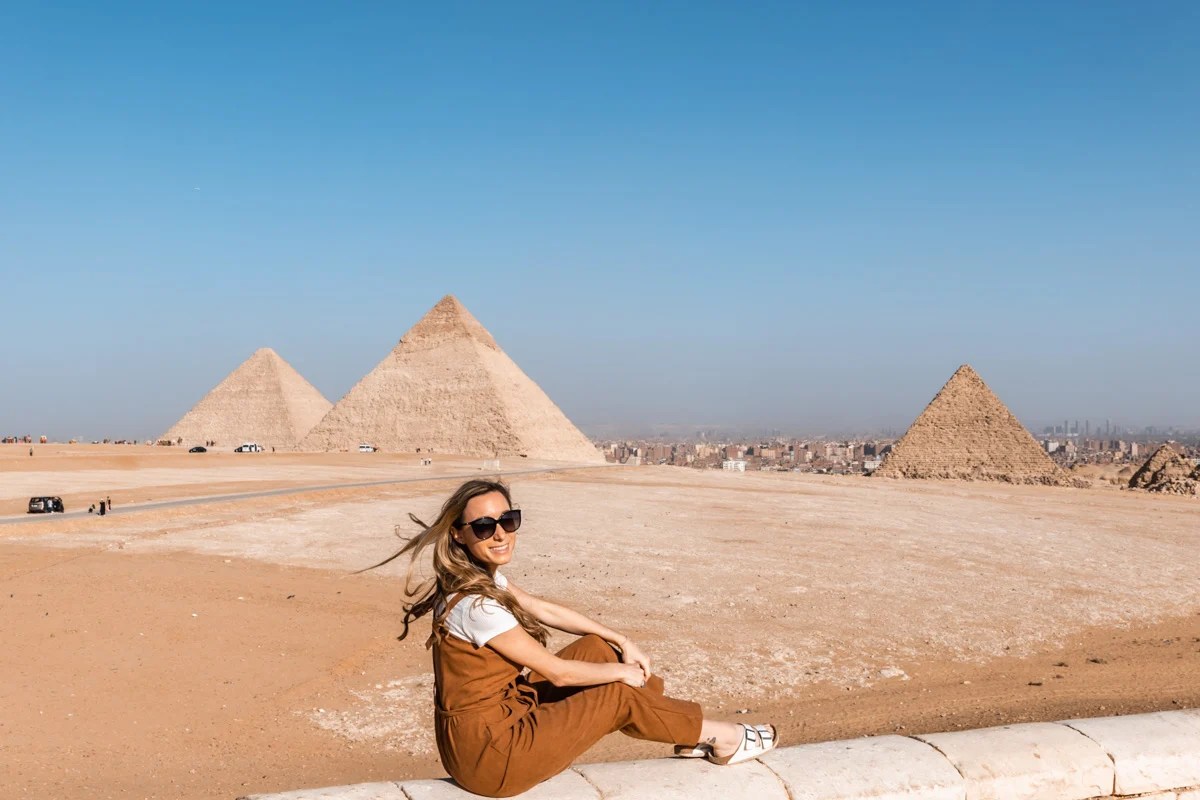
The Great Pyramid of Giza[a] is the largest Egyptian pyramid. It served as the tomb of pharaoh Khufu, who ruled during the Fourth Dynasty of the Old Kingdom. Built c. 2600 BC, over a period of about 26 years, the pyramid is the oldest of the Seven Wonders of the Ancient World, and the only wonder that has remained largely intact. It is the most famous monument of the Giza pyramid complex, which is part of the UNESCO World Heritage Site "Memphis and its Necropolis". It is situated at the northeastern end of the line of the three main pyramids at Giza
2
Stop 2
The pyramid of Khafre or of Chephren is the middle of the three Ancient Egyptian Pyramids of Giza, the second tallest and second largest of the group. It is the only pyramid out of the three that still has cladding at the top. It is the tomb of the Fourth-Dynasty Pharaoh Khafre (Chefren), who ruled c. 2558−2532 BC
Like the Great Pyramid, a rock outcropping was used in the core. Due to the slope of the plateau, the northwest corner was cut 10 m (33 ft) out of the rock subsoil, and the southeast corner was built up.
The stones used at the bottom are very large, but as the pyramid rises, the stones become smaller, becoming only 50 cm (20 in) thick at the apex. The courses are rough and irregular for the first half of its height but a narrow band of regular masonry is clear in the midsection of the pyramid. At the northwest corner of the pyramid, the bedrock was fashioned into steps. Casing stones cover the top third of the pyramid, but the pyramidion and part of the apex are missing
3
Stop 3
The pyramid of Menkaure is the smallest of the three main pyramids of the Giza pyramid complex, located on the Giza Plateau in the southwestern outskirts of Cairo, Egypt. It is thought to have been built to serve as the tomb of the Fourth Dynasty King Menkaure.
Size and construction
A diagram of the pyramid.
Menkaure's pyramid had an original height of 65.5 meters (215 ft), and was the smallest of the three major pyramids at the Giza Necropolis. It now stands at 61 m (200 ft) tall with a base of 108.5 m (356 ft). Its angle of incline is approximately 51°20′25″. It was constructed of limestone and Aswan granite. The upper portion was cased in the normal manner with Tura limestone. The construction of the outer casing of the pyramid was halted at sixteen to eighteen layers of granite following Menkaure's death, only seven of which remain today due to vandalism and erosion. Part of the granite was left in the rough.
4
Stop 4
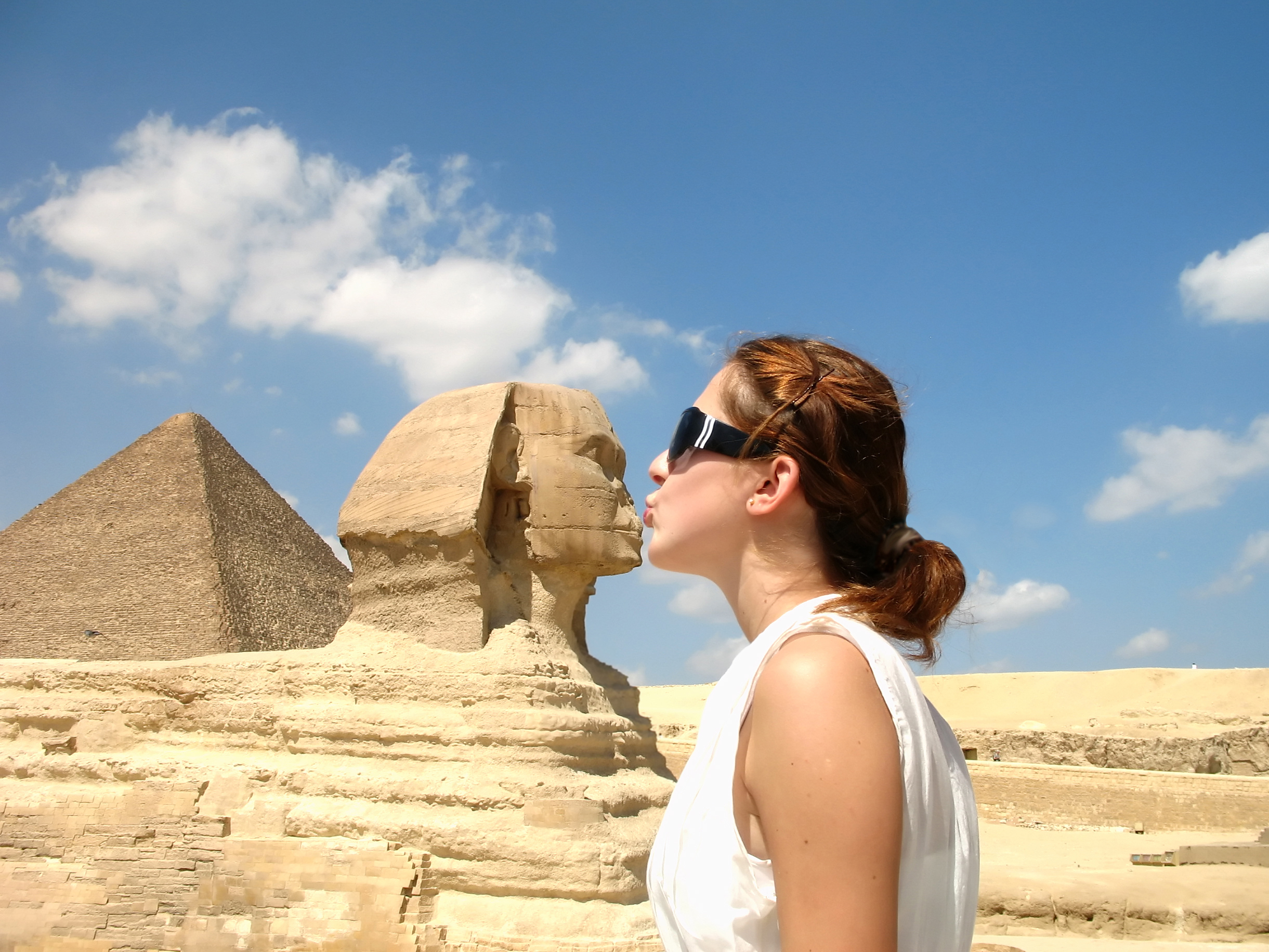
The Great Sphinx of Giza is a limestone statue of a reclining sphinx, a mythical creature with the head of a human and the body of a lion.[1] Facing east, it stands on the Giza Plateau on the west bank of the Nile in Giza, Egypt. The original shape of the Sphinx was cut from bedrock of the Eocene-aged Mokattam Formation, and has since been restored with layers of limestone blocks. It measures 73 m (240 ft) long from paw to tail, 20 m (66 ft) high from the base to the top of the head and 19 m (62 ft) wide at its rear haunches. The Sphinx is the oldest known monumental sculpture in Egypt and one of the most recognizable statues in the world. The face of the Sphinx remains a matter of scholarly dispute; it appears to represent the pharaoh Khufu or one of his sons, pharaohs Djedefre and Khafre. Archaeological evidence suggests that it was created by ancient Egyptians of the Old Kingdom during the reign of Khufu (c. 2590–2566 BC) or Khafre (c. 2558–2532 BC)
5
The Giza Plateau (Arabic: هضبة الجيزة) is a limestone plateau in Giza, Egypt, the site of the Fourth Dynasty Giza pyramid complex, which includes the pyramids of Khufu, Khafre and Menkaure, the Great Sphinx, several cemeteries, a workers' village and an industrial complex. It forms the northernmost part of the 160 km2 (62 sq mi) Pyramid Fields in the Western Desert edge of the Nile Valley that are part of the UNESCO World Heritage Site, Memphis and its Necropolis
What's not included
Personal items
Tipping
Available languages
Guide guide
EN
Reviews breakdown
Tripadvisor
5.0
2 reviews
5★
2
4★
0
3★
0
2★
0
1★
0
Important information
Wheelchair accessible
Infants and small children can ride in a pram or stroller
Public transportation options are available nearby
Infants are required to sit on an adult’s lap
Transportation options are wheelchair accessible
All areas and surfaces are wheelchair accessible
Not recommended for travelers with poor cardiovascular health
Suitable for all physical fitness levels
Meeting point
When you arrive at the pyramids main gate you will find a wall written on it (WELCOME TO THE PYRAMIDS OF GIZA) and our tour guide holding our company's sign
About Western Desert
The Western Desert of Egypt, also known as the Libyan Desert, is a vast and captivating landscape of sand dunes, oases, and ancient ruins. This arid region offers a unique blend of natural wonders and historical sites, making it a fascinating destination for adventurous travelers.
Top Attractions
Bahariya Oasis
A lush oasis in the heart of the Western Desert, known for its palm groves, hot springs, and ancient ruins.
Nature/Historical
2-3 days
Moderate
White Desert
A surreal landscape of white chalk rock formations shaped by wind erosion, creating a moon-like terrain.
Nature
1-2 days
Moderate
Siwa Oasis
An isolated oasis with a rich history, known for its ancient temples, mud-brick architecture, and unique culture.
Historical/Cultural
2-3 days
Moderate
Must-Try Local Dishes
Kushari
A hearty dish made with rice, lentils, pasta, and topped with spicy tomato sauce and crispy onions.
Main Dish
Vegetarian
Ful Medames
A staple breakfast dish of mashed fava beans, often served with garlic, lemon, and olive oil.
Breakfast
Vegetarian, Vegan
Baklava
A sweet pastry made with layers of filo dough, nuts, and honey syrup.
Dessert
Vegetarian
Popular Activities
Sandboarding
Dune bashing
Camel trekking
Hot springs
Oasis picnics
Stargazing
Visiting ancient ruins
Exploring local markets
Best Time to Visit
October to April
This period offers the most pleasant weather for exploring the desert, with cooler temperatures and clear skies. It's ideal for outdoor activities and sightseeing.
15°C to 30°C
59°F to 86°F
Practical Information
Language
- Official: Arabic
- Widely spoken: English
- English: Moderately spoken in tourist areas
Currency
Egyptian Pound (EGP)
Time Zone
EET (GMT+2)
Electricity
220VV, 50HzHz
Safety Information
Overall Safety Rating: Exercise caution
The Western Desert is generally safe, but travelers should be aware of the harsh environment and limited services in remote areas.
Important Precautions:
- • Carry plenty of water and sun protection
- • Inform someone of your travel plans
- • Have a reliable means of communication
Getting there
By air
- Marsa Matruh International Airport • 250 km north of the Western Desert
By bus
Cairo Bus Station, Alexandria Bus Station
Getting around
Public transport
Buses are available but infrequent. Schedules can be unpredictable.
Taxis
Available • Apps: None widely available
Rentals
Car
Neighborhoods
Bahariya Oasis
Siwa Oasis
Day trips
Farafra Oasis
150 km from Bahariya Oasis • Half day to full day
A smaller oasis with a relaxed atmosphere, known for its hot springs and ancient ruins.
Dakhla Oasis
200 km from Bahariya Oasis • Full day
A large oasis with a rich history, offering a variety of activities and attractions.
Festivals
Siwa Cultural Festival • Annual, dates vary
Eid al-Fitr • Varies based on the Islamic lunar calendar
Pro tips
- Hire a local guide for a more insightful and safe desert experience
- Carry plenty of water and sun protection, as the desert can be extremely hot and dry
- Stay overnight in the desert to experience the magical night sky and tranquility
- Respect local customs and traditions, especially in conservative areas
- Plan your trip during the cooler months for a more comfortable experience
From $25
per person
Price varies by option
Secure booking
Free cancellation available
Instant confirmation

![Siwa Oasis From Cairo&Giza 3 Days 2 Nights all Inclusive[Private]](https://media-cdn.tripadvisor.com/media/attractions-splice-spp-674x446/12/17/35/7d.jpg)