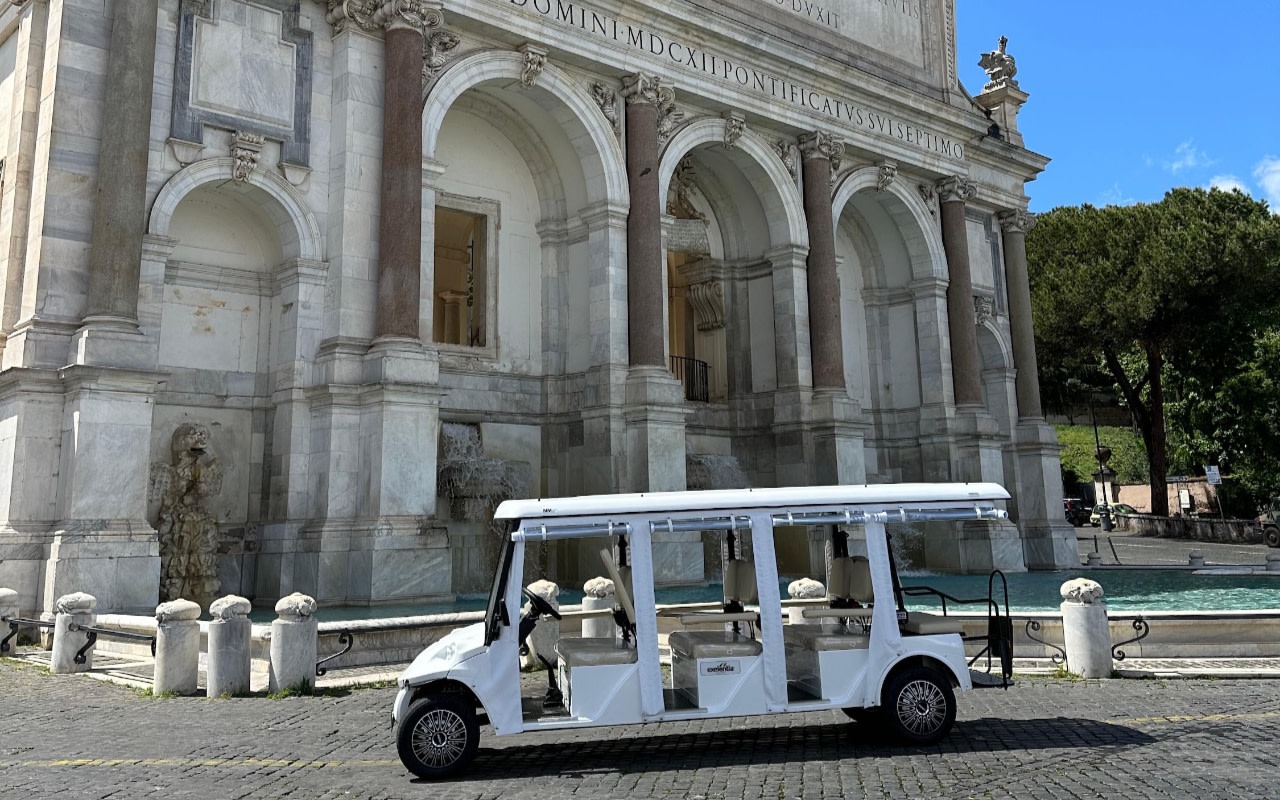
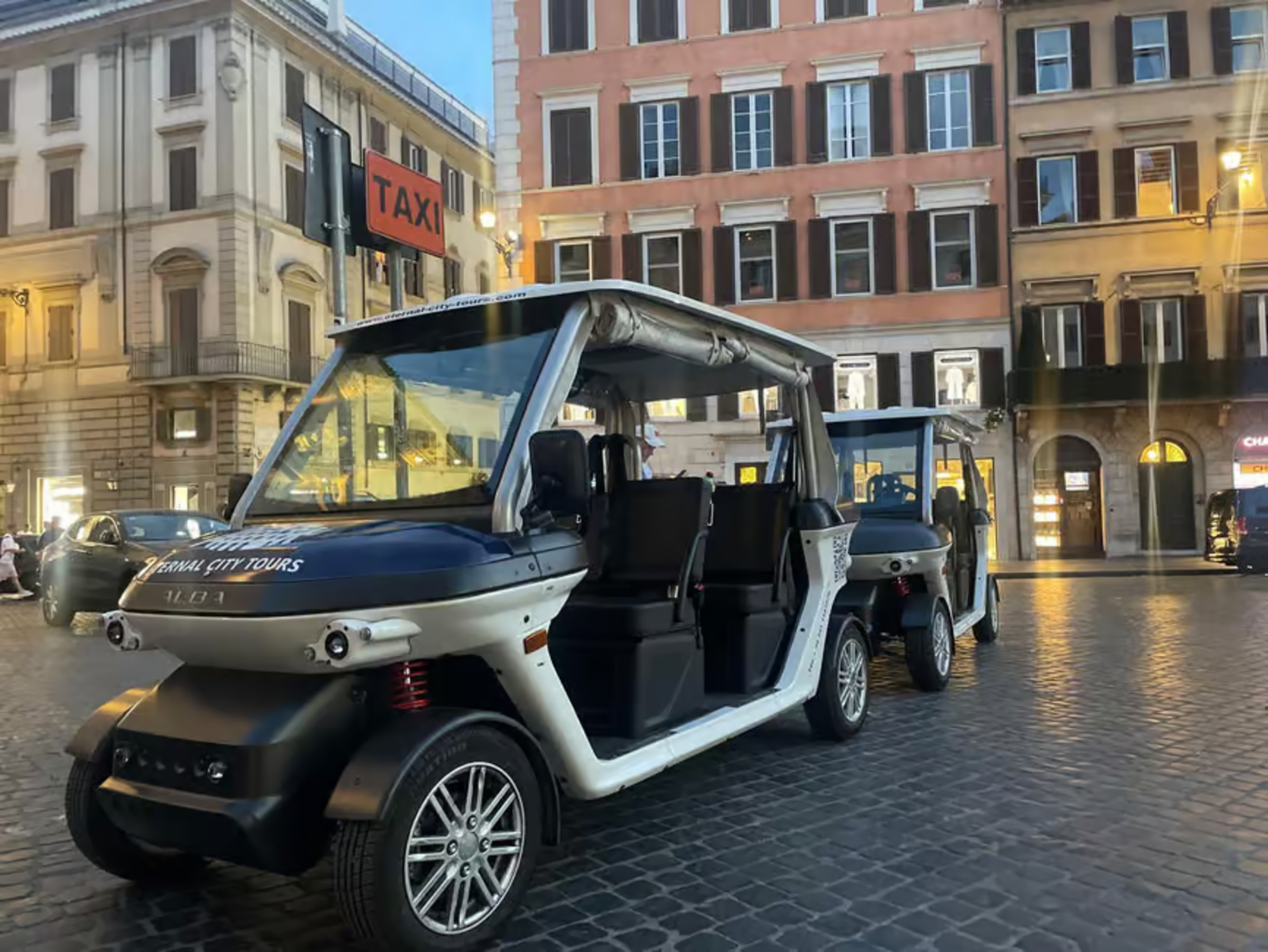
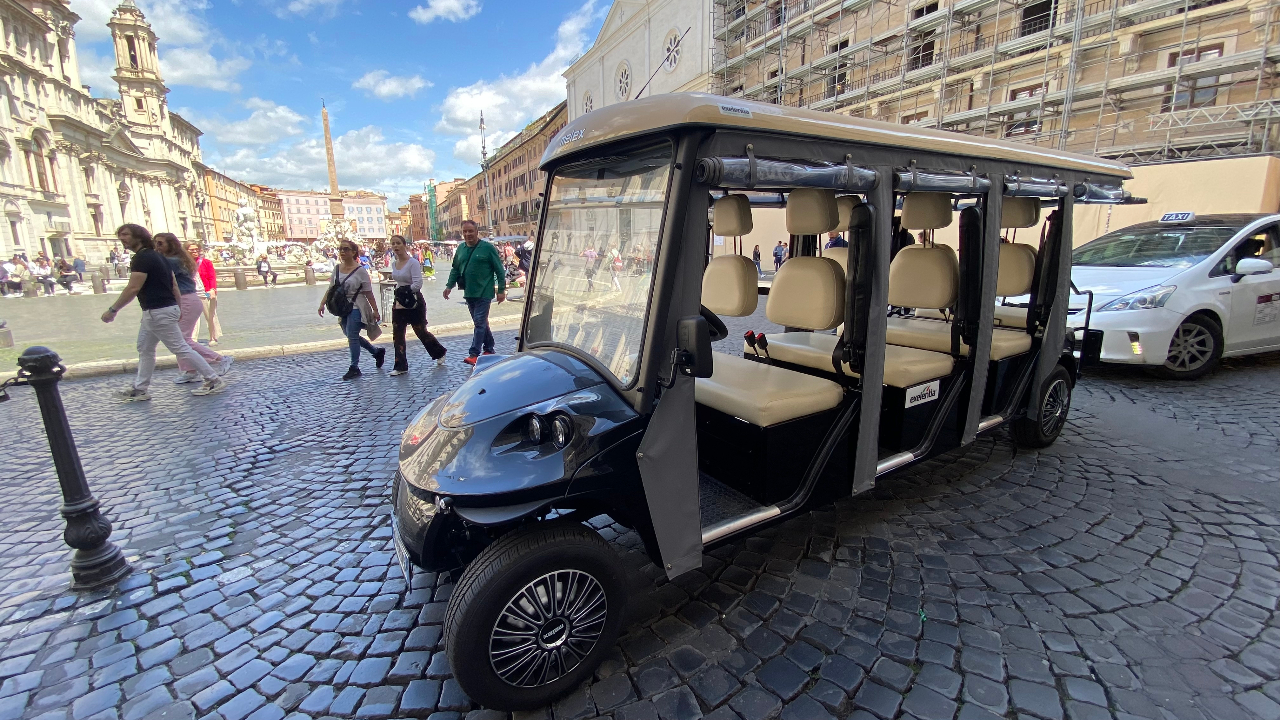
Rome : Golf Car City Tour with Local Guide
Active
1h - 2h
For a full refund, cancel at least 24 hours before the scheduled departure time.
Instant_then_manual confirmation
Mobile or paper ticket accepted
About this experience
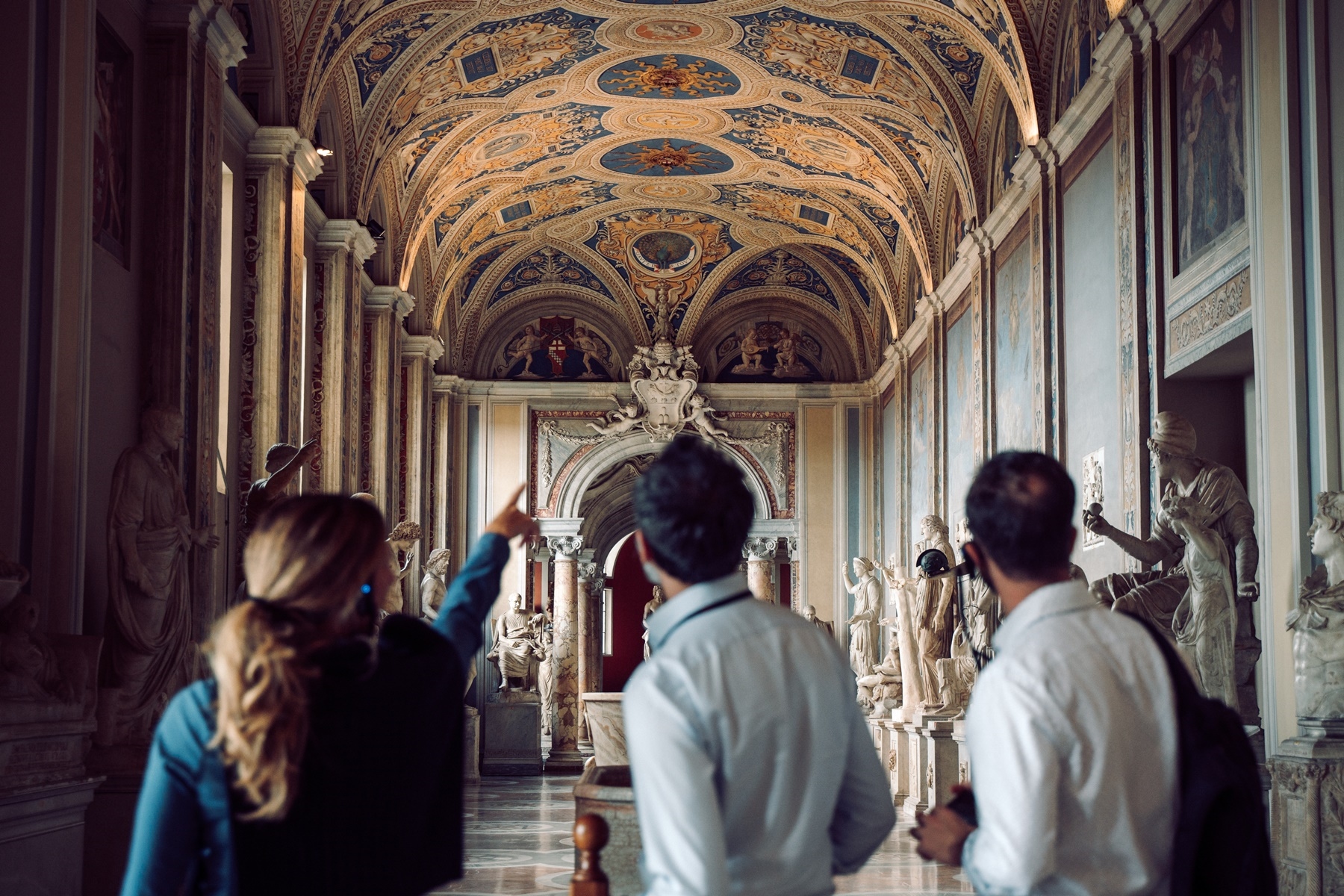
During this unforgettable experience, you will have the opportunity to discover not only the iconic monuments of Rome, but also the lesser-known places that tell fascinating stories. Our local Guide, passionate about his city, will take you on a journey through time, revealing curiosities and anecdotes that make Rome's history unique.
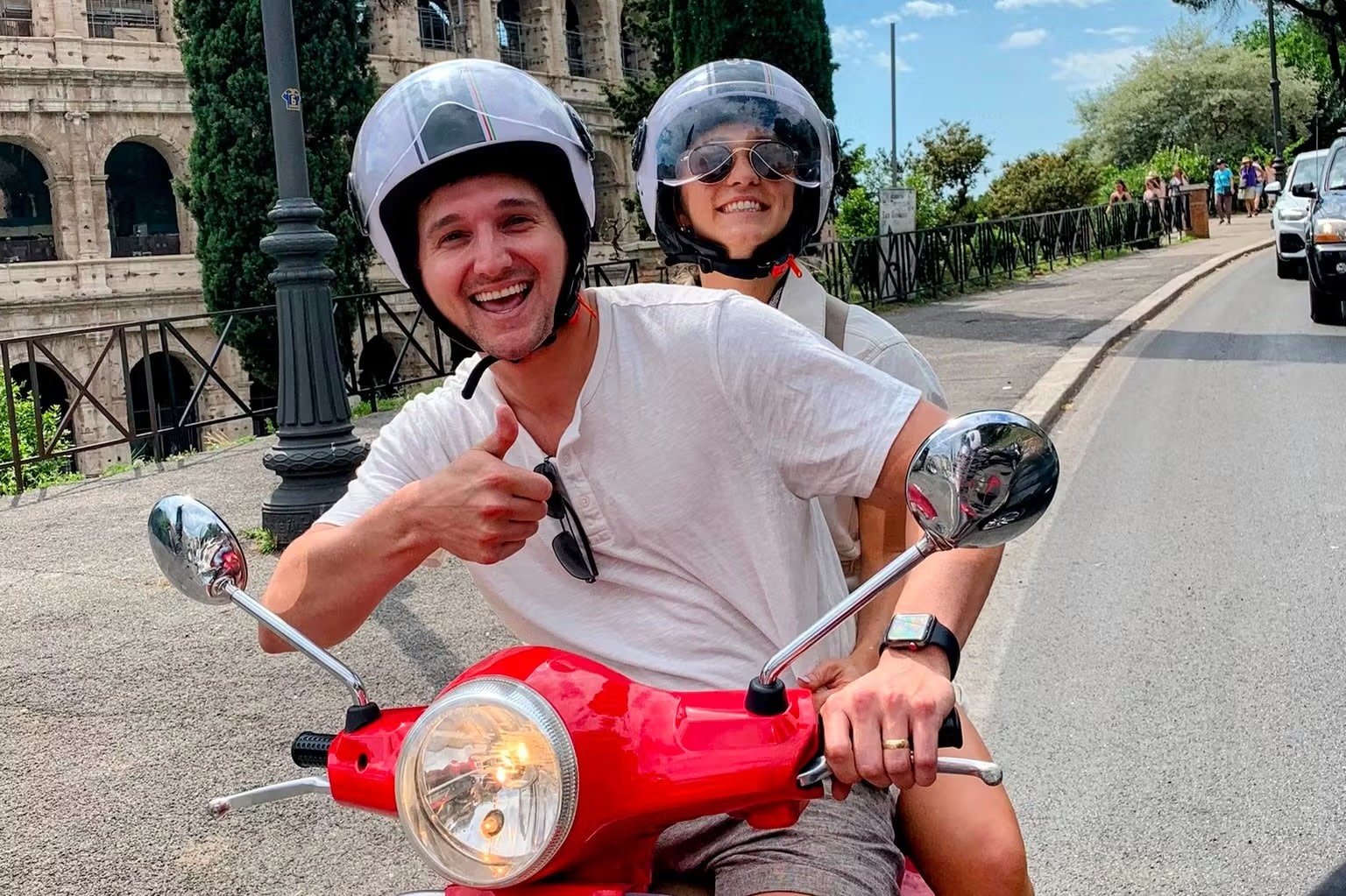
We will begin our journey in emblematic places such as the Colosseum and the Roman Forum, where we will relive the emotions of ancient gladiator games and the political strategies of the Leaders of the time. We will continue to the historic districts, such as Trastevere and the Jewish Ghetto, where you can taste the true Roman life, with its lively markets and culinary traditions.
. There will be moments of reflection in places of worship, where architecture and spirituality intertwine in a timeless embrace.
Available options
Rome : Golf Car City Tour with Local Guide
What's included
Fun and laughter and culture
Detailed itinerary
1
Stop 1
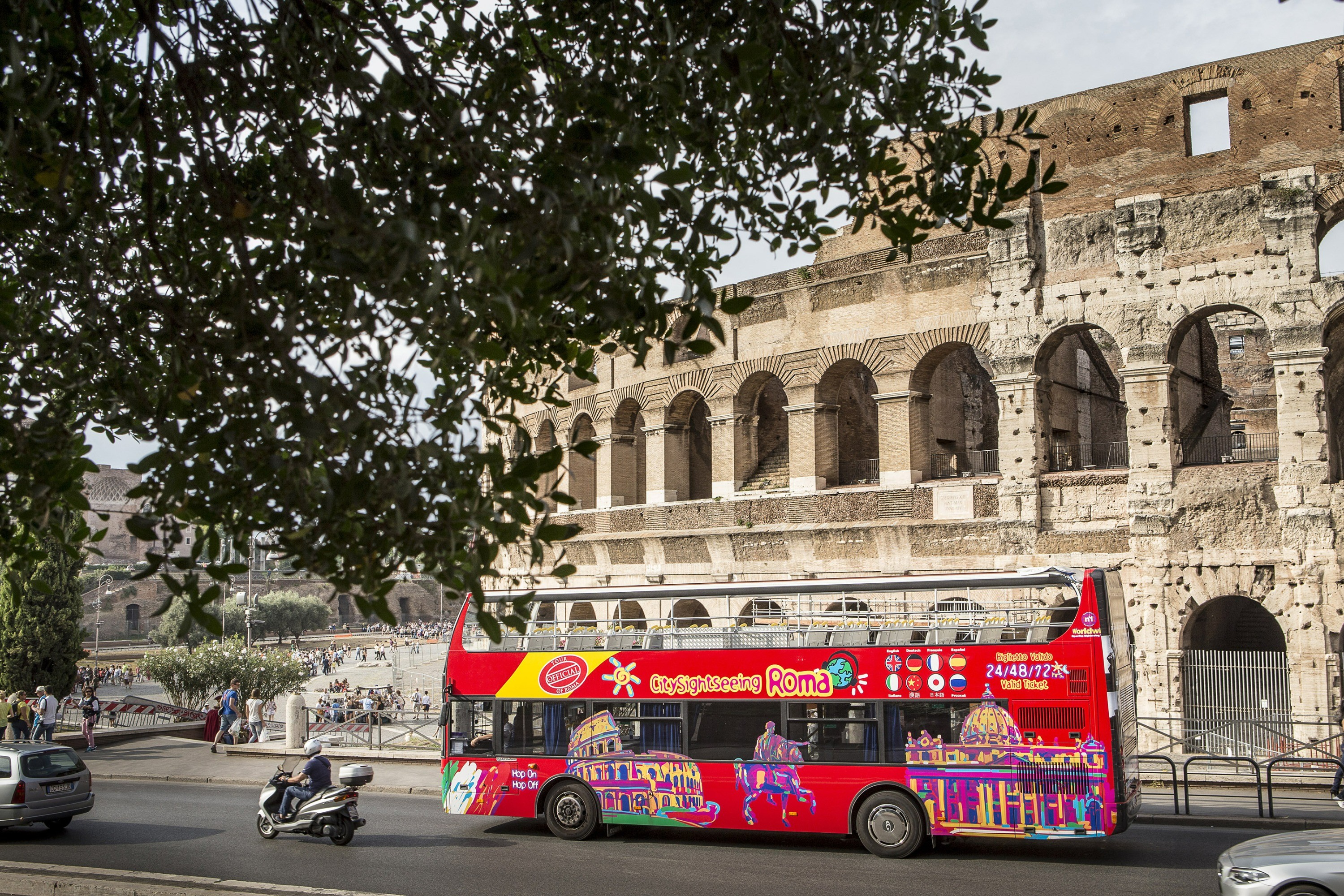
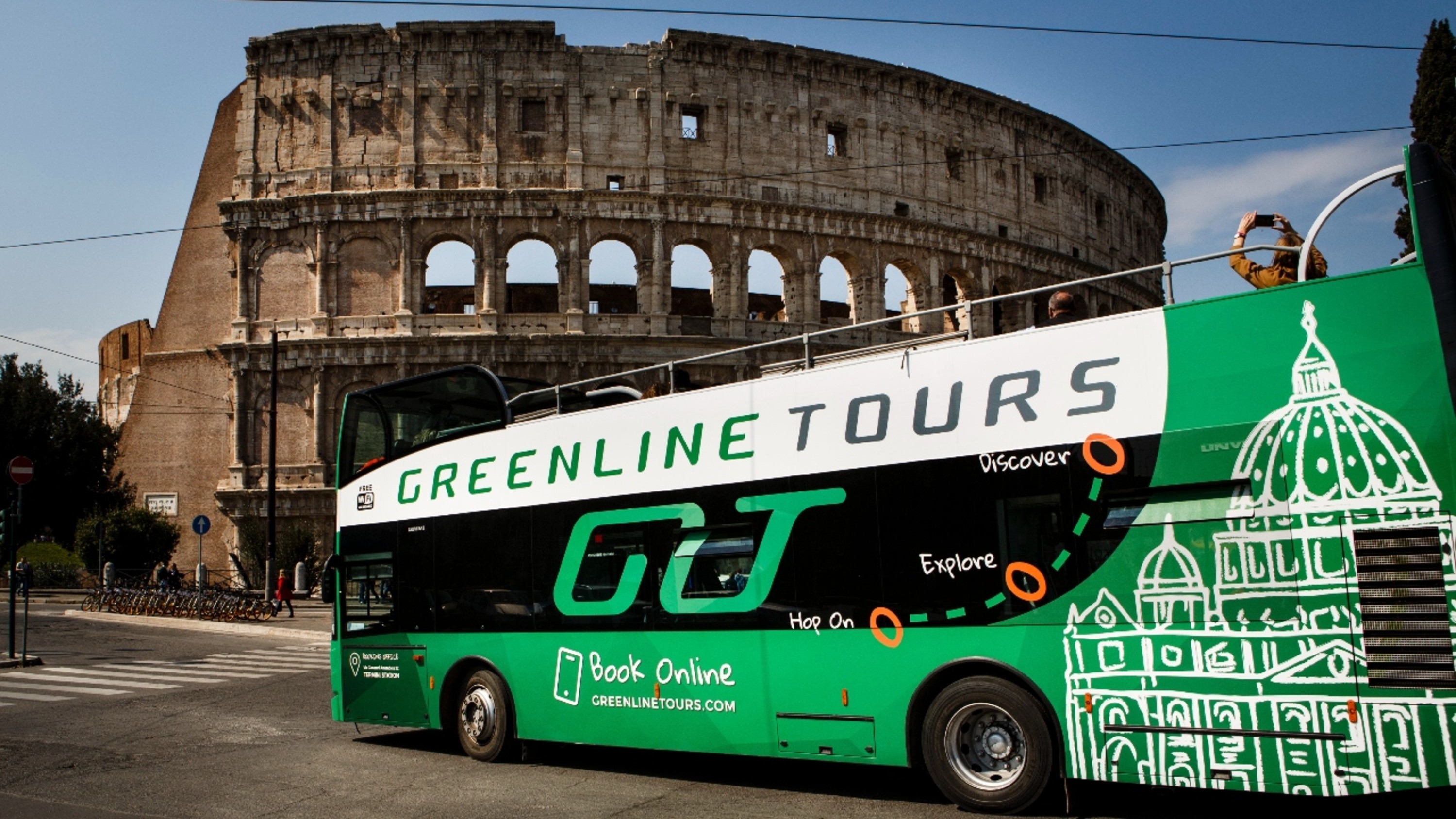
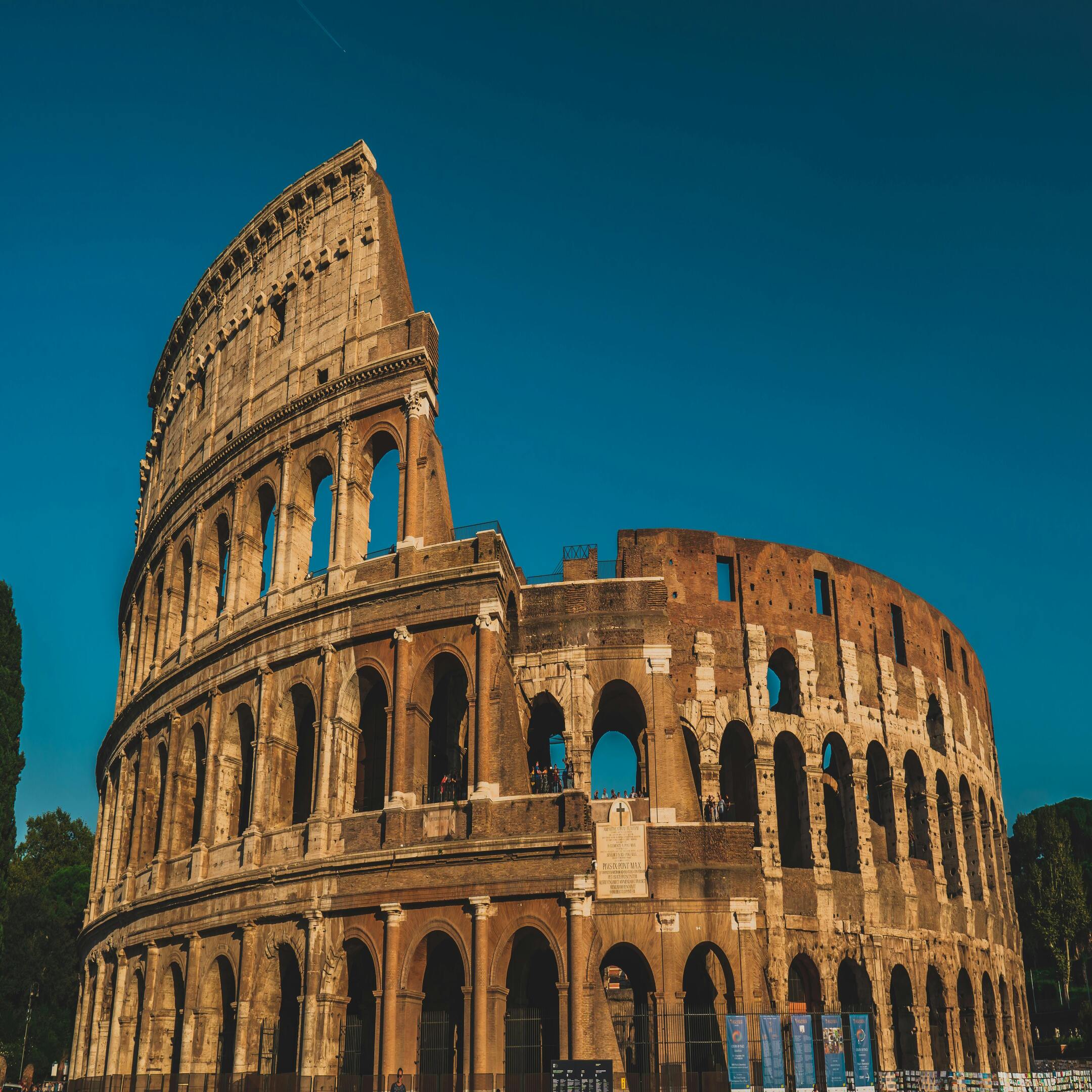
The Colosseum, also known as the Flavian Amphitheatre, is one of the most iconic and representative monuments of Rome and antiquity. Built between 70 and 80 AD.C. under the emperors Vespasian and Titus, the Colosseum is the largest amphitheater ever built and could accommodate between 50,000 and 80,000 spectators.
The architecture of the Colosseum is an extraordinary example of Roman engineering. The structure is elliptical, with a length of about 189 meters and a width of 156 meters. It consists DA four levels, each characterized DA columns of different architectural styles: Doric, Ionic and Corinthian. The external facade was originally covered with travertine, while inside it had a complex system of steps and corridors.
The Colosseum is famous for the shows that took place there, including gladiator fights, naval battles and theatrical performances. These events were part of Roman culture and served as both entertainment and propaganda
2
Stop 2
Pass by
Piazza Venezia is one of the most famous squares in Rome, located in the heart of the city. It is characterized DA a large open area that serves DA a junction between several important roads. At the center of the square is the imposing Monument to Vittorio Emanuele II, a large white marble structure dedicated to the first king of Italy. This monument is also known as the “Altar of the Fatherland” and features a series of staircases, columns and statues, as well as panoramic views of the city.
The square is surrounded by historic buildings, including Palazzo Venezia, a Renaissance palace that housed the famous Venetian ambassador and later Mussolini. The square is a place of great historical and cultural importance and often serves DA a starting point to explore other nearby tourist attractions, such as the Roman Forum and the Colosseum
3
Stop 3
Trajan's Point of Sale is an ancient architectural complex located in the center of Rome, near the Roman Forum and the Colosseum. Built in the 2nd century AD.C. During the reign of Emperor Trajan, the Point of Sale is considered one of the earliest examples of a covered shopping mall in history.
The complex is characterized DA a series of multi-level buildings that housed shops, shops and offices. The structures are built in brick and travertine, and their architecture presents characteristic details of the Roman era, such as arches and columns. The Point of Sale is located on a hill and offers panoramic views of the Forum and the surrounding city.
Inside, visitors can explore the ruins of shops, which once sold a variety of goods, including food, textiles and luxury items. The Trajan Point of Sale also houses the Museum of the Imperial Forums, which exhibits archaeological finds and offers information on everyday life in ancient Rome.
4
The Altar of the Fatherland, officially known as the Monument to Victor Emmanuel II, is an imposing structure located in Rome, in Piazza Venezia. It is dedicated to the first king of Italy and represents a symbol of national unity.
Built in white Carrara marble, the Altar of the Fatherland is characterized DA a majestic facade and a series of stairs leading to a viewing platform. The structure is adorned with numerous statues, columns and reliefs celebrating historical events and significant figures in Italian history.
At the center of the Altar is the tomb of the unknown soldier, a memorial dedicated to Italian soldiers who fell in the war. The eternal flame, which burns in perpetual honor, is a further element of respect and memory.
From an architectural point of view, the Altar of the Fatherland presents a neoclassical style, with Baroque influences, and stands out for its grandeur and beauty.
5
Temple of Apollo Sosiano is an ancient Roman temple located in the heart of Rome, near the Theatre of Marcellus and the Forum Boarium. Built in the 2nd century BC.C. and dedicated to the god Apollo, the temple is part of an architectural complex that reflects the importance of the cult of Apollo in the Roman religion.
The temple is known for its particular architecture, which combines Greek and Roman elements. It was originally characterized DA a cell, or interior space, in which the statue of the god stood, and DA a series of Corinthian columns that adorned its facade. The structure was also equipped with a wide staircase leading to the entrance, creating an imposing effect.
The name “Sosiano” comes DA an important Roman politician, Marco Sosio, who is said to have financed the construction of the temple. The site has undergone several transformations over the centuries and, like many other ancient structures, has undergone damage and modifications over time.
6
Stop 6
Marcello's Theatre is an ancient Roman theatre located in the heart of Rome, near the Tiber River and the Jewish Ghetto. Built between 13 and 11 a.C. during the reign of Emperor Augustus, the theater is named after the emperor’s nephew, Marcus Claudius Marcellus.
The theater could accommodate up to 20,000 spectators and was used for plays, concerts and other cultural events. Its structure is characterized DA classical architecture, with three orders of stone steps, columns and arches flanking the facade. Marcello's Theatre is considered a precursor to the more famous Colosseum, but has a simpler and less elaborate design.
Today, Marcello's Theatre is partially preserved and much of the structure has been reused over the centuries. Some medieval and Renaissance buildings were built in and around the site, making it an example of how ancient ruins were integrated into urban life in Rome.
7
Temple of Portunus, also known as Temple of Portunus or Temple of Portunus, is an ancient Roman temple located in the Forum Boarium, near the Tiber River in Rome. Built in the 2nd century BC.C., is dedicated to Portunus, the Roman god associated with ports and navigation, as well as the protection of property and people.
The temple is an excellent example of Republican-era Templar architecture, with a rectangular plan and a raised cell. One of the distinctive features of the Temple of Portunus is its architectural style, which combines Greek and Italic elements. The façade is adorned with an Ionic columns DA portico, while the walls are built of travertine blocks and bricks.
One of the peculiarities of the temple is its preservation; it is one of the best preserved Roman temples, thanks also to its reuse over the centuries. After the fall of the Roman Empire, the temple was transformed into a church, thus contributing to its preservation.
8
The Arch of Janus is an ancient triumphal arch located in Rome, in the district of Sant’Angelo, near the Tiber River. Probably built in the fourth century AD.C., the arch is dedicated to Janus, the two-faced Roman god who symbolized the principles of beginning and end, war and peace.
The arch has a two-opening structure, distinguished by its unique design compared to other Roman triumphal arches, which usually have only one opening. The facade of the arch is decorated with reliefs and inscriptions, although many of these details have been lost over the centuries. Originally, the arch was part of a larger complex and served as access to an important area of the city.
The Arch of Janus features an imposing silhouette and DA architecture that reflects the late Roman style. Although it is not one of Rome's best known monuments, its particular shape and history make it a fascinating DA visit.
9
The Fontana dei Tritoni is an imposing fountain located in Piazza Bocca della Verità, Rome. Built in 1715 to a design by the Roman architect and sculptor Giovanni Lorenzo Bernini, the fountain is a Badges example of Baroque art.
The fountain is characterized DA a large circular marble basin, DA which comes out a sculptural group representing two Tritons, the marine deities of Roman mythology, emerging from the waters. The Newts are represented holding a large shell, DA which water gushes. The Triton figures are richly carved and show remarkable attention to detail, with lively expressions and dynamic poses.
10
Stop 10
The Mouth of Truth is a famous monument located in Rome, precisely in the church of Santa Maria in Cosmedin, near the Tiber River. It is a large marble mask, representing a human face with an open mouth, which probably dates back to the first century AD.C.
According to tradition, the Mouth of Truth was used as a truth test: it was said that anyone who lied while putting their hand in the mouth of the mask would be bitten. This myth has made the Mouth of Truth a symbol of integrity and truth over the centuries.
The mask is made of Carrara marble and is of considerable size, with a diameter of about 1.75 meters. His expression is characterized DA expressive and detailed traits, reflecting the artistic skill of the Roman era.
11
The Temple of Hercules, also known as the Temple of Hercules Olivary, is an ancient Roman temple located in the Forum Boarium, near the Tiber River. It is estimated that it was built around the third century BC.C. and is dedicated to the god Hercules, an important figure in Roman and Greek mythology, associated with strength, courage and protection.
This temple is one of the oldest in Rome and has a circular structure, a rare design for Roman temples, which usually had a rectangular plan. The temple cell, which housed the statue of the god, is surrounded by DAta columns in the Corinthian style. The facade of the temple is characterized DA a portico with six columns, which gives it a monumental and majestic appearance.
The Temple of Hercules is also known to have hosted markets and commercial activities, as the Forum Boarium was an important trading center of the time. Today, unfortunately, only a few ruins remain, but the site continues to be an important testimony.
12
Stop 12
The Circus Maximus is an ancient Roman circus located in the heart of Rome, between the Palatine Hill and the Aventine Hill. Built in the 6th century BC.C. and expanded in the following centuries, the Circus Maximus is known to have been one of the main places of entertainment in ancient Rome, dedicated mainly to chariot races.
With a length of about 621 meters and a width of 118 meters, the Circus Maximus could accommodate up to 250,000 spectators, making it one of the largest performance buildings ever built. Its structure was characterized DA a long central straight, flanked DA two curves, where the wagons ran. The bleachers were arranged on several levels, allowing a large audience to watch the events.
Chariot races were popular and spectacular events, often accompanied DA celebrations and parties. The Circus Maximus also hosted other types of shows, such as public games and athletic competitions.
What's not included
Gratuities
Available languages
Guide guide
EN
Reviews breakdown
Tripadvisor
5.0
2 reviews
5★
2
4★
0
3★
0
2★
0
1★
0
Important information
Public transportation options are available nearby
Specialized infant seats are available
Suitable for all physical fitness levels
Meeting point
Easily accessible by metro Repubblica in front of the metro republica in front of cafe "Picarozzi"
About Rome
Rome, the capital of Italy, is a city of ancient ruins, artistic masterpieces, and vibrant culture. Known as the Eternal City, it is a living museum where every corner tells a story of its rich history spanning over 2,500 years.
Top Attractions
Colosseum
The Colosseum is an iconic symbol of Rome and one of the most famous ancient amphitheaters in the world. It was used for gladiatorial contests and public spectacles.
Historical
1-2 hours
€16 (combined ticket with Roman Forum and Palatine Hill)
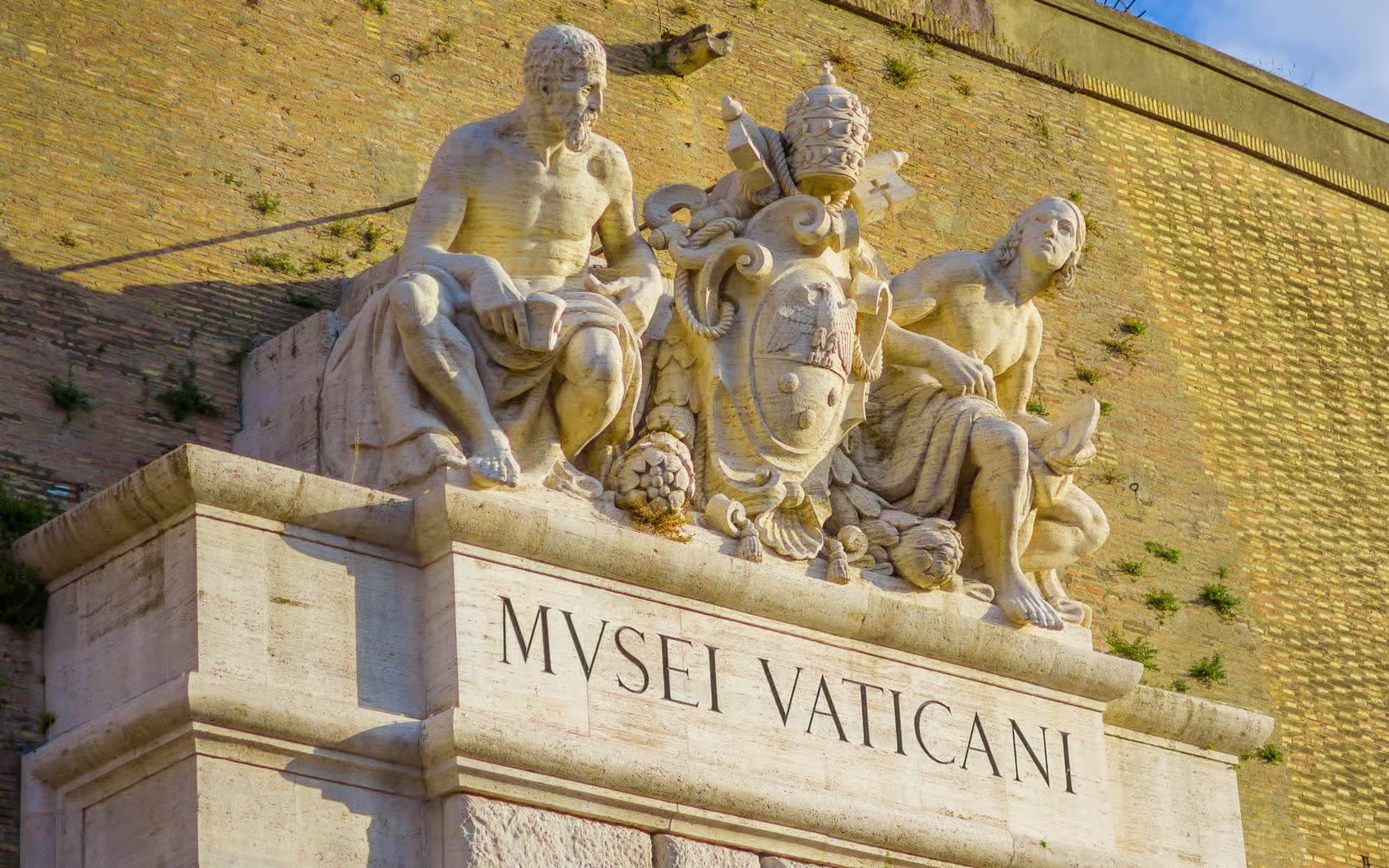
Vatican City
Vatican City is an independent city-state enclaved within Rome. It is the spiritual and administrative center of the Roman Catholic Church.
Religious
Half day
€17 (Vatican Museums and Sistine Chapel), Free (St. Peter's Basilica)
Roman Forum
The Roman Forum was the political, commercial, and legal hub of the Roman Republic and Empire. It is a sprawling ruin of temples, basilicas, and arches.
Historical
1-2 hours
€16 (combined ticket with Colosseum and Palatine Hill)
Pantheon
The Pantheon is a former Roman temple, now a church, known for its large dome and oculus. It is one of the best-preserved ancient buildings in Rome.
Historical
30 minutes to 1 hour
Free
Trevi Fountain
The Trevi Fountain is a Baroque masterpiece and the largest fountain in Rome. It is a popular spot for visitors to throw coins and make wishes.
Architecture
15-30 minutes
Free
Must-Try Local Dishes
Cacio e Pepe
A simple yet delicious pasta dish made with Pecorino Romano cheese and black pepper.
Pasta
Vegetarian
Carbonara
A rich pasta dish made with eggs, Pecorino Romano, guanciale (cured pork cheek), and black pepper.
Pasta
Contains pork and eggs
Supplì
Fried rice balls filled with mozzarella and tomato sauce.
Snack
Vegetarian (some variations may contain meat)
Carciofi alla Romana
Artichokes braised with garlic, mint, and olive oil.
Vegetable
Vegetarian
Popular Activities
Hiking in the Appian Way Regional Park
Biking along the Tiber River
Rock climbing in the nearby mountains
Picnicking in Villa Borghese Gardens
Boating on Lake Albano
Enjoying a spa day at a luxury hotel
Visiting the Vatican Museums
Attending an opera at the Teatro dell'Opera di Roma
Best Time to Visit
April to June, September to October
Spring and fall offer pleasant weather and fewer crowds compared to the summer peak. Ideal for sightseeing and outdoor activities.
15-30°C
59-86°F
Practical Information
Language
- Official: Italian
- Widely spoken: English, Spanish, French
- English: Moderately spoken
Currency
Euro (EUR)
Time Zone
GMT+1 (CET), GMT+2 (CEST during daylight saving time)
Electricity
230VV, 50HzHz
Safety Information
Overall Safety Rating: Generally safe
Rome is generally safe for tourists, but pickpocketing and scams can be a problem in crowded areas. Be aware of your surroundings and take precautions to protect your belongings.
Important Precautions:
- • Keep valuables secure and out of sight
- • Use official taxis or ride-sharing services
- • Be cautious of strangers approaching you with petitions or bracelets
Getting there
By air
- Leonardo da Vinci International Airport • 35 km from city center
- Ciampino Airport • 15 km from city center
By train
Roma Termini, Roma Tiburtina
By bus
Tiburtina Bus Station, Roma Termini
Getting around
Public transport
The metro system is efficient and covers major tourist areas. It operates from 5:30 AM to 11:30 PM.
Taxis
Available • Apps: Uber, FreeNow
Rentals
Car, Bike, Scooter
Neighborhoods
Trastevere
Monti
Prancipio
Testaccio
Day trips
Ostia Antica
30 km from Rome • Half day
An ancient Roman port city with well-preserved ruins, including a theater, baths, and mosaics. It offers a glimpse into daily life in ancient Rome.
Tivoli
30 km from Rome • Full day
A picturesque town known for its stunning villas and gardens, including the famous Villa d'Este with its elaborate fountains and gardens.
Orvieto
120 km from Rome • Full day
A charming hilltop town known for its stunning cathedral, underground caves, and local wine. It offers a mix of history, culture, and scenic views.
Festivals
Natale di Roma • April 21
Festa de' Noantri • July
Rome Film Festival • October
Pro tips
- Visit major attractions early in the morning or late in the afternoon to avoid crowds
- Use public transport or walk instead of taking taxis to save money and experience the city like a local
- Try local specialties and ask for recommendations from locals and restaurant staff
- Dress modestly when visiting religious sites and be respectful of local customs and traditions
- Be aware of pickpockets and scams, especially in crowded areas and tourist hotspots
From $25
per person
Price varies by option
Secure booking
Free cancellation available