Private guided sightjogging tour through Frankfurt
Active
1h
For a full refund, cancel at least 24 hours before the scheduled departure time.
Instant confirmation
Mobile or paper ticket accepted
About this experience
Frankfurt tourists, business travelers and hobby runners will soon have the opportunity to do something for their fitness and experience Frankfurt's sights at the same time. The runners will be picked up by sightjogging guides in front of their hotels and led through Frankfurt for around an hour.
Available options
Private guided sightjogging tour through Frankfurt
Pickup included
What's included
All Fees and Taxes
Live guide (German, English and French)
Detailed itinerary
1
Stop 1
Pass by
The "Alte Oper" was built between 1872 and 1880 in the High Renaissance style. It was destroyed on March 23, 1944, and reopened on August 28, 1981 after almost five years of restoration. Today, the Alte Oper is once again one of Frankfurt's most beautiful buildings and serves as a concert and congress center. First-class gastronomy is also represented here with the L'Opéra restaurant, from whose balcony you have a fantastic view of the forecourt of the opera, and the café on the ground floor is also attractive when the weather is nice. Despite severe cuts in the Alte Oper's budget, the management still manages to offer a first-class, varied program that has already received several awards.
2
Stop 2
Pass by
The steel and concrete pedestrian bridge, which is crossed by around 10,000 people every day, connects the city center around the Römerberg with Sachsenhausen on the other side of the Main. The footbridge was built in 1869 as a neo-Gothic half-timbered structure by Peter Schmick, but has been modified several times, most recently in 1993. It had already lost its twin branches towering over the two river piers in 1911. Along with the neighboring, modern Holbeinsteg, it is the more romantic way to cross the Main on foot.
3
Stop 3
Pass by
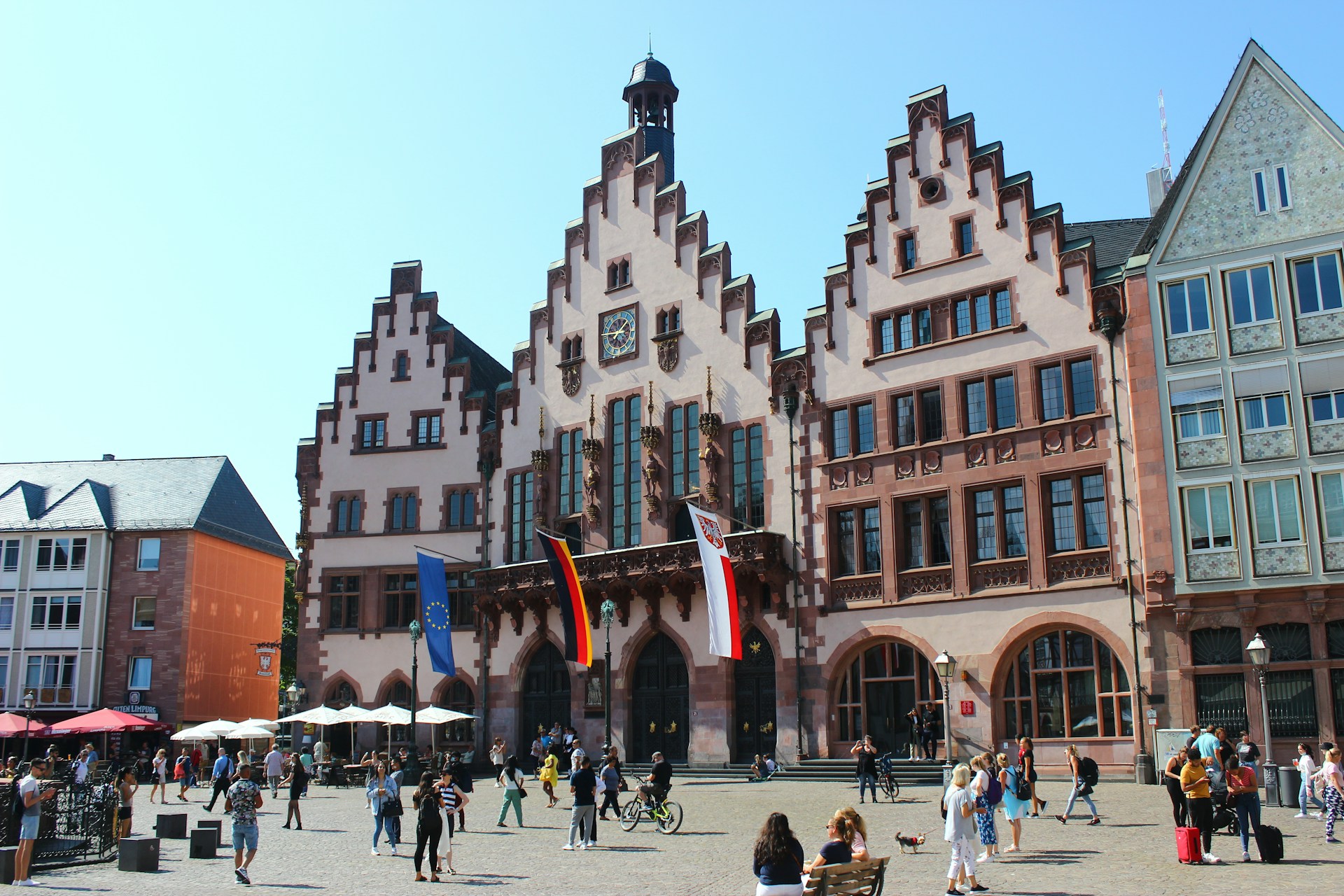
The Römer is probably one of Frankfurt's most famous landmarks and a popular postcard motif. The building complex, which includes the town hall, was acquired by the city of Frankfurt on March 11, 1405 with the "Römer" and "Goldener Schwan" and then expanded. The Römer can be visited; particularly interesting are the Kaisersaal, built after 1612 (where the German emperors were crowned and pictures of all the emperors of the Holy Roman Empire hang), as well as the Schwanenhalle and the Römerhalle, which have remained almost unchanged for 600 years. The facades have not been preserved true to the original, but were redesigned in historicizing mixed styles at the beginning of the 20th century and after the Second World War. The Römerberg with the Römer and the surrounding old town is a Frankfurt landmark that you definitely should see!
4
Stop 4
Pass by
The Städel Museum's collection presents masterpieces of European art from the early 14th century to the present day. The Graphic Collection, with its 100,000 drawings and prints from the late Middle Ages to the present day, is one of the most important cabinets in Germany; selected items in the field of sculpture complement the holdings. The Städel's collection presents masterpieces of European art from seven centuries; famous paintings from different eras and artistic landscapes from the early 14th century to the present day, making it one of the most important museums in Germany. 700 years of European art are gathered here in a selection of 2,700 paintings, 600 sculptures and 100,000 drawings and prints from Dürer, Holbein and Cranach to Rembrandt, Vermeer, Monet, Van Gogh and Cézanne to Matisse and Picasso, Bacon and Baselitz, Serra and Palermo. A highlight that should not be missed.
5
Stop 5
Pass by
Consecrated in 1833, St. Paul's Church has gone down in history not because of its use as a church, but because of its role as the "cradle of German democracy". On May 18, 1848, the representatives of the German people moved into St. Paul's Church to give Germany a liberal constitution. The almost 800 parliamentarians, including names that are still well-known today, such as Heinrich von Gagern, formulated a basic law that was also adopted by the fathers of today's basic law. After the failure of parliament and the victory of the reaction, St. Paul's Church was returned to the community in 1852. Like the entire old town of Frankfurt, St. Paul's Church was destroyed in the days of March 1944. But as early as March 17, 1947, the foundation stone for reconstruction was laid. St. Paul's Church was to become a symbol of the reconstruction of the city and a monument to democratic history.
What's not included
Snacks
Available languages
Guide guide
DE
EN
FR
Important information
Service animals allowed
Public transportation options are available nearby
Not recommended for travelers with poor cardiovascular health
Travelers should have at least a moderate level of physical fitness
Meeting point
Our guides will pick you up at your desired hotel or agreed location.
About Frankfurt
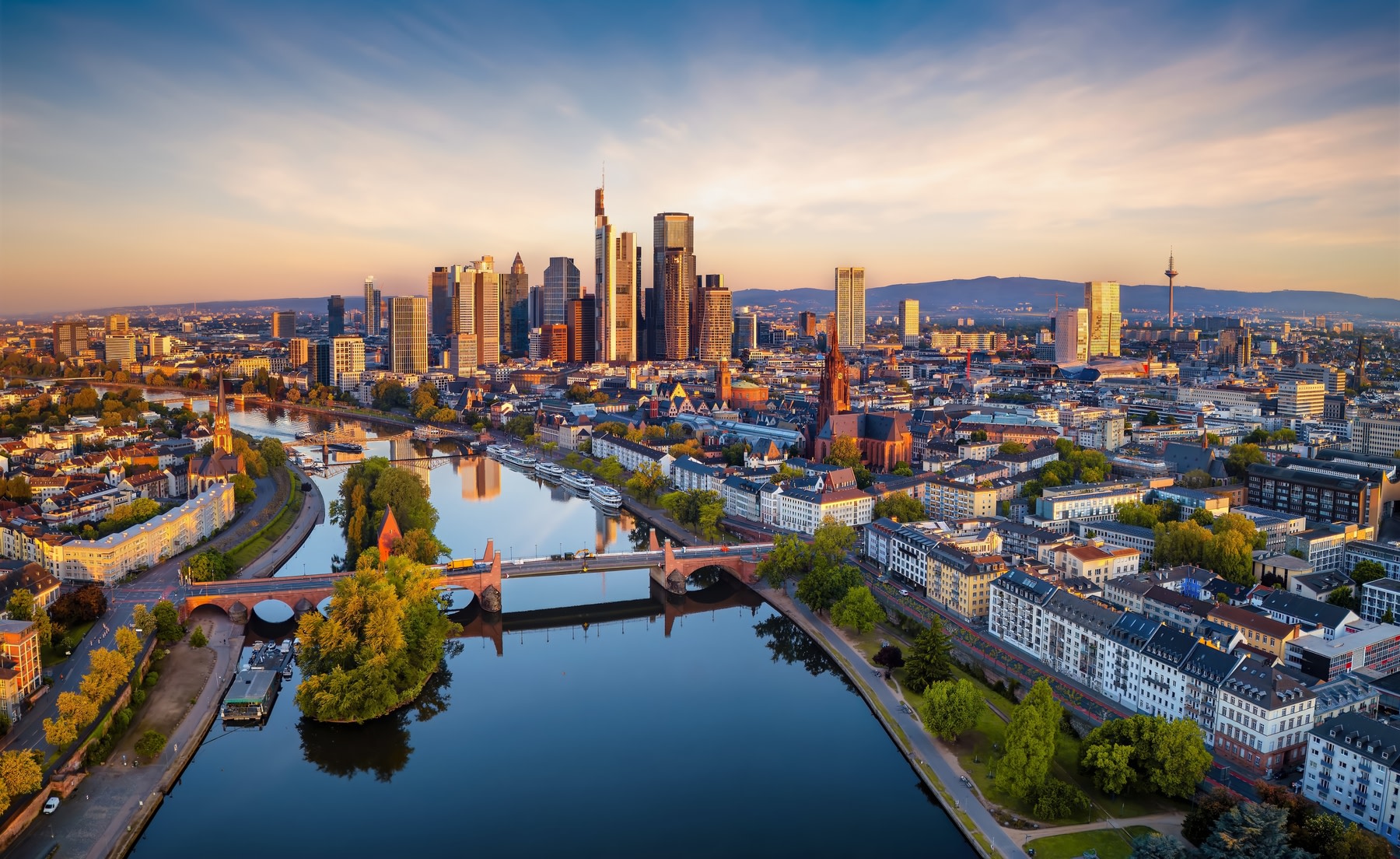
Frankfurt is a vibrant city that beautifully blends modern architecture with historic charm. Known for its impressive skyline, rich cultural scene, and as Germany's financial hub, it offers a unique urban experience with a strong connection to the Main River and lush green parks.
Top Attractions
Römerberg
Römerberg is the historic heart of Frankfurt, featuring a beautiful square surrounded by medieval buildings, including the Römer town hall. It's a great place to experience the city's rich history and architecture.
Historical
1-2 hours
Free
Museumsufer
Museumsufer is a unique cultural district along the Main River, home to some of Frankfurt's most important museums. With over 20 museums covering various topics, it's a must-visit for art and history enthusiasts.
Cultural
Half day to full day
Varies by museum, some are free on the first Sunday of the month.
Palmengarten
Palmengarten is a beautiful botanical garden and park in Frankfurt, featuring a variety of plants, flowers, and trees from around the world. It's a peaceful oasis in the city, perfect for a relaxing stroll or picnic.
Nature
1-2 hours
€7 for adults, €3.50 for children (free for children under 6)
Main Tower
Main Tower is one of Frankfurt's most iconic skyscrapers, offering a panoramic view of the city from its observation deck. It's a great place to enjoy the city's skyline and learn about its modern architecture.
Architecture
1 hour
€10.50 for adults, €6.50 for children (free for children under 6)
Zeitgeist
Zeitgeist is a lively bar and club in Frankfurt, known for its vibrant atmosphere and diverse music scene. It's a popular spot for both locals and tourists looking to experience the city's nightlife.
Entertainment
Varies
Free entry, drinks vary in price
Must-Try Local Dishes
Frankfurter Grüne Soße
A traditional Frankfurt dish made with a green sauce consisting of seven fresh herbs, boiled eggs, and potatoes. It's often served with boiled potatoes and hard-boiled eggs.
Lunch/Dinner
Vegetarian
Frankfurter Rippchen
A traditional Frankfurt dish made with pork chops, sauerkraut, and a dark beer sauce. It's often served with potato dumplings or boiled potatoes.
Lunch/Dinner
Contains pork
Frankfurter Kranz
A traditional Frankfurt cake made with layers of sponge cake, buttercream, and chocolate. It's often decorated with almonds and chocolate shavings.
Dessert
Contains gluten, dairy, and nuts
Apfelwein
A traditional apple wine from the Frankfurt region, made with a blend of sweet and sour apples. It's often served in traditional apple wine taverns and is a popular accompaniment to local dishes.
Drink
Contains alcohol
Popular Activities
Hiking in the nearby Taunus Mountains
Cycling along the Main River
Kayaking or canoeing on the Main River
Visiting the Palmengarten botanical garden
Relaxing at a thermal bath (e.g., Taunus Therme)
Enjoying a leisurely stroll along the Main River
Exploring the Museumsufer cultural district
Visiting the Römerberg historic square
Best Time to Visit
May to September
This is the best time to visit Frankfurt as the weather is warm and pleasant, ideal for exploring the city's outdoor attractions and parks. The city is lively with various cultural events and festivals.
15°C to 25°C
59°F to 77°F
Practical Information
Language
- Official: German
- Widely spoken: English, French, Turkish, Russian
- English: Widely spoken in tourist areas and by younger generations
Currency
Euro (EUR)
Time Zone
GMT+1 (Central European Time, CET), GMT+2 (Central European Summer Time, CEST) during daylight saving time
Electricity
230VV, 50HzHz
Safety Information
Overall Safety Rating: Generally safe
Frankfurt is generally a safe city for travelers, with low crime rates and a strong police presence. However, as with any major city, it's important to be aware of your surroundings and take precautions to protect yourself and your belongings.
Important Precautions:
- • Keep your belongings secure and be aware of your surroundings, especially in crowded areas and on public transportation.
- • Use licensed taxis or ride-sharing services, and always agree on the fare or use the meter before starting your journey.
- • Be cautious of strangers approaching you with petitions or surveys, as they may be trying to distract you or steal your belongings.
Getting there
By air
- Frankfurt Airport • 12 km from city center
By train
Frankfurt Hauptbahnhof, Frankfurt Süd
By bus
Frankfurt Central Bus Station
Getting around
Public transport
The S-Bahn is a fast and efficient way to get around Frankfurt and the surrounding region. It consists of nine lines and connects the city center with the suburbs and nearby towns.
Taxis
Available • Apps: Free Now, Uber
Rentals
Car, Bike, Scooter
Neighborhoods
Altstadt (Old Town)
Sachsenhausen
Westend
Bornheim
Bahnhofsviertel
Day trips
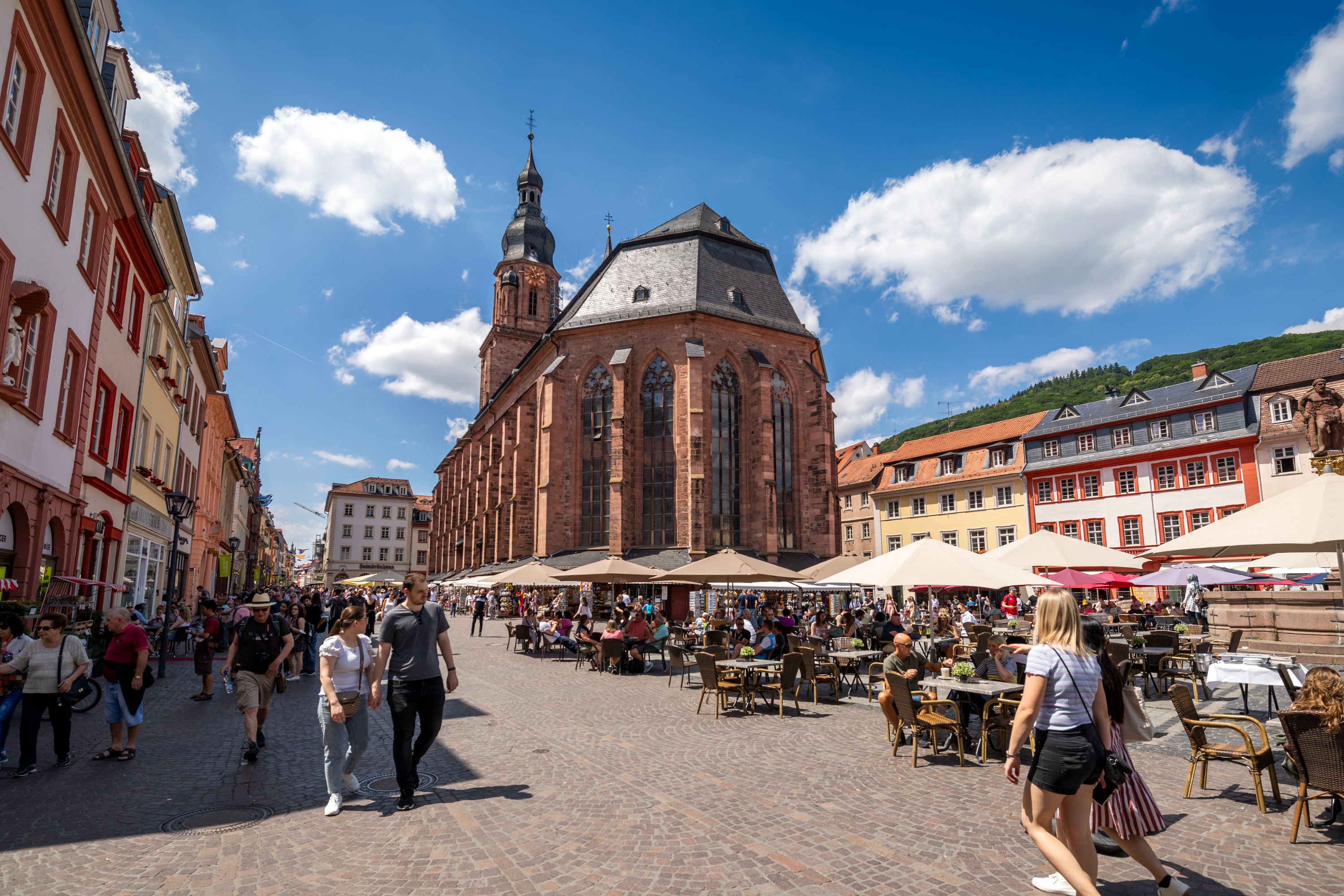
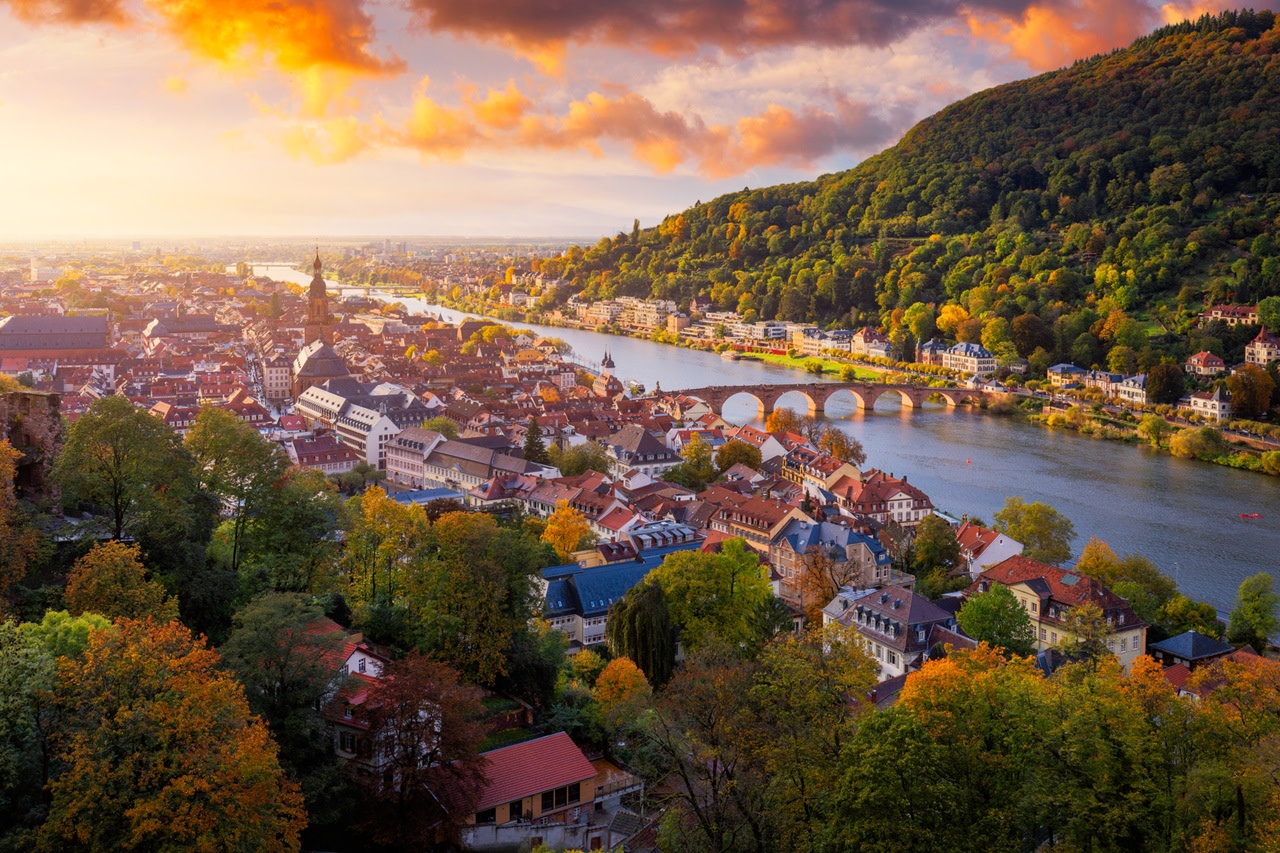
Heidelberg
85 km from Frankfurt • Full day
Heidelberg is a romantic and historic city located in the Neckar Valley, known for its beautiful castle, charming old town, and picturesque scenery. It's a popular day trip from Frankfurt, offering a glimpse into Germany's rich history and culture.
Rheinauhafen (Cologne)
190 km from Frankfurt • Full day
Rheinauhafen is a vibrant and modern district in Cologne, known for its striking architecture, museums, and riverside promenade. It's a great day trip from Frankfurt for those interested in contemporary art, history, and architecture.
Rothenburg ob der Tauber
180 km from Frankfurt • Full day
Rothenburg ob der Tauber is a picturesque medieval town located in the Franconia region of Germany. Known for its well-preserved old town, fairy-tale-like atmosphere, and rich history, it's a popular day trip destination from Frankfurt.
Festivals
Museumsuferfest • Late August to early September
Frankfurt Christmas Market • Late November to late December
Dippemess • April and October
Pro tips
- Use the RMV app for real-time information and ticket purchases for public transportation.
- Consider purchasing a Frankfurt Card for discounted entry to museums and attractions, as well as unlimited public transportation.
- Explore the city's neighborhoods on foot or by bike to discover hidden gems and local hotspots.
- Try local specialties, such as apple wine (Apfelwein) and Frankfurter Grüne Soße, at traditional taverns and restaurants.
- Visit the city's Christmas markets and festivals for a unique and festive experience.
From $25
per person
Price varies by option
Secure booking
Free cancellation available
Instant confirmation