Apostle Paul: Biblical Footsteps in Athens & Corinth Private Tour
Active
8h - 9h
For a full refund, cancel at least 24 hours before the scheduled departure time.
Instant confirmation
Mobile or paper ticket accepted
About this experience
Follow the footsteps of the Apostle Paul on this inspiring private tour, retracing key moments of his ministry in Athens and Corinth. Travel in a comfortable, air-conditioned Mercedes vehicle with a knowledgeable tour driver who shares biblical and historical insight.
In Athens, visit St. Paul’s Anglican Church, the Areopagus Hill (Mars Hill) where Paul preached, and the Cathedral of St. Denis the Areopagite. Continue to the Corinth Canal, the ancient Diolkos, and the imposing fortress of Acrocorinth.
At Ancient Corinth, stand at the Bema where Paul was judged, explore the Temple of Apollo, the Roman Agora, and the Archaeological Museum. Reflect at the Church of St. Paul and conclude at Kenchreai Port, where he departed for Ephesus.
This full-day tour offers flexible scheduling, Wi-Fi, and convenient pick-up/drop-off, blending spirituality and history for a meaningful journey in Greece.
Available options
Apostle Paul: Athens & Corinth
Pickup included
What's included
Private transportation
WiFi on board
Professional tour driver with extensive biblical history knowledge (will provide exterior insights)
Charge your devices with our 4 USB quick chargers (Type C & Apple)
Mercedes Premium A/C vehicle with cool bottled water and refreshments
PDF guide for all sights & monuments of the tour
Detailed itinerary
1
Stop 1
Pickup from your hotel, apartment, Airbnb, Athens airport, or Piraeus port.
2
Stop 2
(Mars Hill) — Located just northwest of the Acropolis, this rocky outcrop is one of the most significant biblical and historical sites in Athens. It is where Apostle Paul delivered his famous sermon to the Athenians, as recorded in the Acts of the Apostles (Acts 17:22–31). From this very spot, Paul preached about the “Unknown God” and introduced Christianity to the intellectual heart of the ancient world.
Today, visitors can stand on the same stone steps where Paul addressed the philosophers of Athens, enjoy panoramic views of the Acropolis and the Ancient Agora, and reflect on the meeting between faith and philosophy that took place here nearly 2,000 years ago.
3
Stop 3
St. Paul’s Anglican Church (closed on Mondays) — Situated at Filellinon Street 27 in the center of Athens, St. Paul’s Anglican Church is a neo-Gothic landmark built in 1843, dedicated to the Apostle Paul and serving as a spiritual home for the Anglican community in Greece.
The church stands as a symbolic reminder of Paul’s missionary journey to Athens, blending English ecclesiastical architecture with the historical setting of the city he once visited. Its stained-glass windows, serene interior, and peaceful courtyard offer a moment of reflection amid the urban energy of modern Athens.
Concerts and cultural events are occasionally held here, making it not only a place of worship but also a hub of cultural exchange and interfaith dialogue — perfectly aligned with the spirit of St. Paul’s message to the Athenians.
4
Stop 4
Holy Catholic Cathedral of Saint Denis the Areopagite — Located on Panepistimiou Street 24, this majestic cathedral is dedicated to Saint Dionysius the Areopagite, the Athenian judge of the Areopagus who was converted to Christianity by Apostle Paul’s sermon (Acts 17:34).
Built in the 19th century in neo-Renaissance style, it serves as the main Roman Catholic cathedral of Athens. The interior is richly adorned with Italian marble, frescoes, and intricate stained-glass windows depicting scenes from the life of Christ and Saint Paul’s preaching.
This cathedral represents the spiritual legacy of Paul’s mission in Athens, marking the transformation of ancient pagan wisdom into Christian faith — a testament to the enduring influence of his words on the people of Greece and beyond.
5
Stop 5
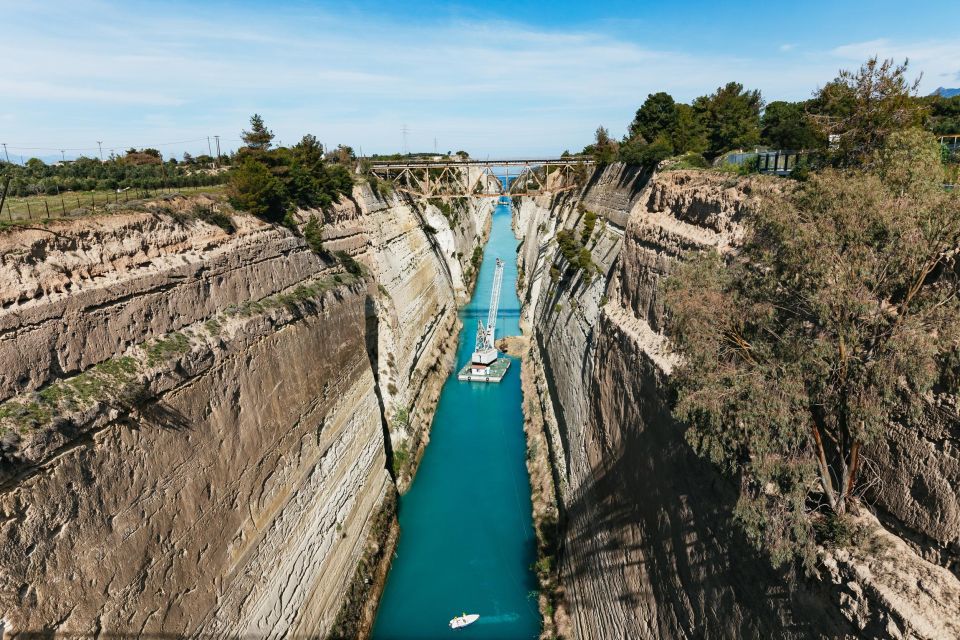
Corinth Canal — A remarkable feat of 19th-century engineering, the Corinth Canal connects the Aegean Sea (Saronic Gulf) with the Ionian Sea (Gulf of Corinth), cutting through the narrow Isthmus of Corinth.
Stretching 6.4 kilometers in length and flanked by steep limestone walls reaching up to 80 meters, the canal dramatically separates the Peloponnese from mainland Greece, effectively turning it into an island.
For biblical travelers, it symbolizes the geographical passage to Corinth, where Apostle Paul continued his missionary work after leaving Athens. Today, the site offers breathtaking panoramic views, and visitors can often witness bungee jumpers descending into the canal or small ships navigating through its narrow passage — an ideal stop for photos and reflection before entering Ancient Corinth.
6
The Diolkos of Corinth — The Diolkos is an extraordinary ancient roadway that once enabled ships to be hauled overland across the Isthmus of Corinth, linking the Saronic Gulf with the Corinthian Gulf long before the construction of the modern canal.
Dating back to the 7th century BC, this stone-paved trackway served as a crucial shortcut for merchants, soldiers, and travelers, allowing vessels to avoid the perilous circumnavigation of the Peloponnese.
In the context of the Apostle Paul’s journey, the Diolkos symbolizes the strategic importance of Corinth as a commercial and cultural crossroads of the ancient world — a city where Paul spent over a year and a half preaching, teaching, and establishing one of the earliest Christian communities (Acts 18:1–18).
Today, visitors can still see well-preserved sections of the Diolkos near the western end of the canal — a striking testament to ancient Greek ingenuity and Corinth’s pivotal role in maritime trade and missionary travel.
7
(Metropolitan Cathedral of Apostle Paul, Corinth) — Situated in the heart of modern Corinth, this impressive cathedral stands as a monument of faith dedicated to Apostle Paul, the city’s patron saint and spiritual protector. Built after the earthquake of 1858 that destroyed the old town, the church reflects a harmonious blend of Byzantine and neoclassical architecture, characterized by its grand dome, arched colonnades, and ornate marble iconostasis.
Inside, visitors are welcomed by a peaceful atmosphere and magnificent iconography depicting key moments from the Apostle’s life and ministry, including his preaching at the Bema of Ancient Corinth and his missionary journeys throughout Greece. The cathedral is a living center of worship, and each year, on June 29th, it becomes the focal point of solemn celebrations honoring Saints Peter and Paul.
The site is linking the historical Apostle’s footsteps to the enduring faith of today’s Corinthian community.
8
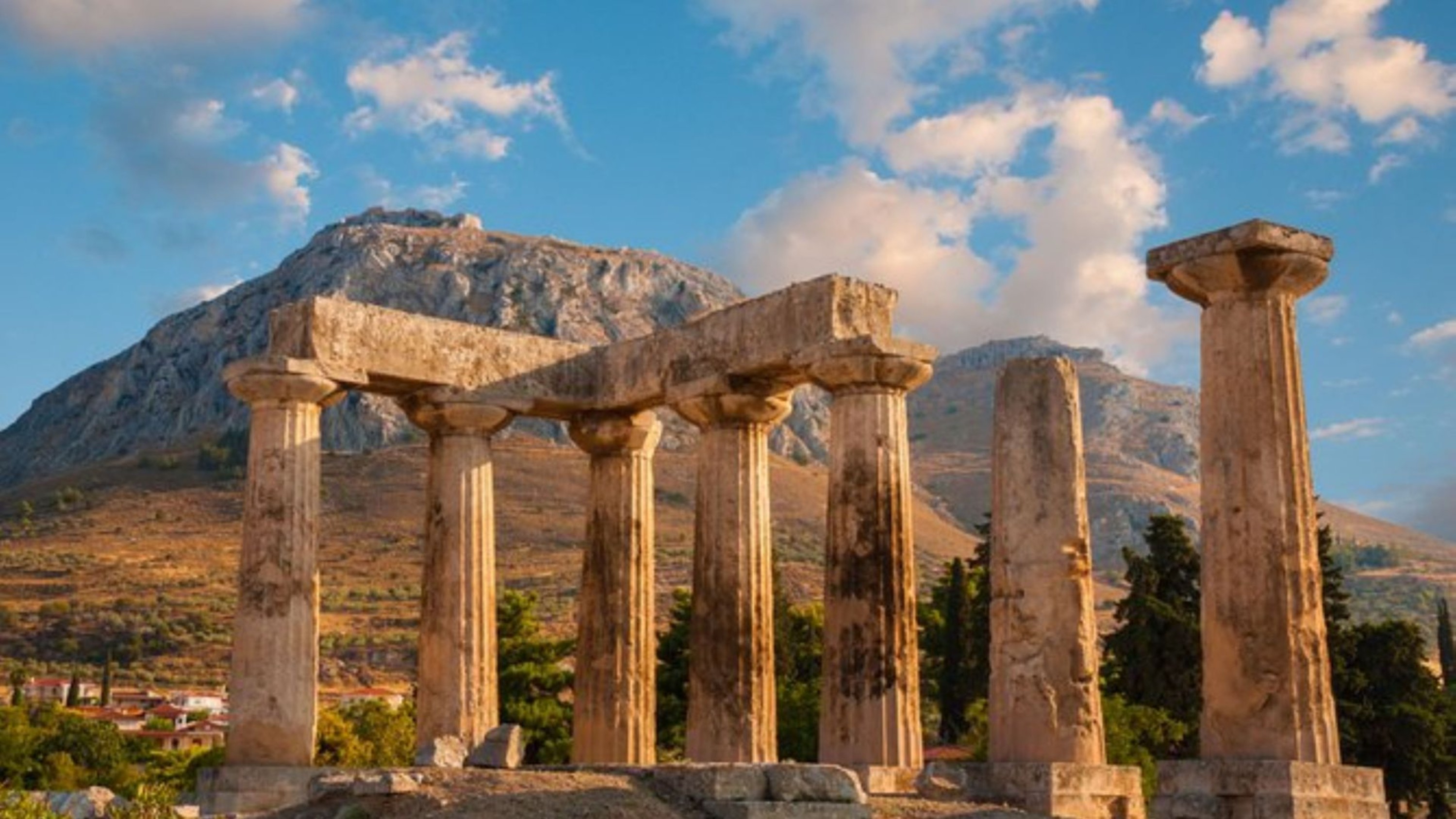
Ancient Corinth — One of the most powerful and cosmopolitan city-states of antiquity, Ancient Corinth was a major commercial hub situated between the Saronic and Corinthian Gulfs, commanding both maritime routes and land trade through the Isthmus.
In biblical history, Corinth holds great importance as one of the main centers of Apostle Paul’s missionary work. He lived and preached here around 50–52 AD, establishing a Christian community to whom he later addressed the First and Second Epistles to the Corinthians.
Visitors to the archaeological site can walk through the Roman Agora, admire the Bema (judgment seat) where Paul was brought before the Roman proconsul Gallio (Acts 18:12–17), and explore the Temple of Apollo, fountains, shops, and public buildings that once formed the bustling heart of the ancient city.
The site vividly illustrates the blend of Greek, Roman, and early Christian heritage, making Ancient Corinth a cornerstone of both classical archaeology and biblical history.
9
Situated within the archaeological site, the Archaeological Museum of Ancient Corinth houses remarkable artifacts that illuminate the city’s long and diverse history, from the Prehistoric period through Roman times and the early Christian era.
Founded in 1932 by the American School of Classical Studies, the museum features collections of statues, pottery, mosaics, inscriptions, coins, and everyday objects uncovered during excavations in the ancient city and its surrounding sanctuaries.
Among its most significant exhibits are the headless marble statue of Aphrodite, Roman portraiture, early Christian relics, and inscriptions referring to the synagogue of the Jewish community that Apostle Paul visited during his ministry (Acts 18:4).
The museum thus complements the open-air ruins by offering visitors a comprehensive understanding of Corinth’s artistic, cultural, and religious development, providing valuable context to Apostle Paul’s time in the city.
10
(Church of Apostle Paul, Ancient Corinth) — Nestled near the archaeological site of Ancient Corinth, this modest yet deeply revered church marks one of the most significant biblical landmarks in Greece. It stands close to where Apostle Paul lived, taught, and founded the early Christian community during his 18-month stay in Corinth (Acts 18:1–18).
The church’s architecture is simple and contemplative, designed to harmonize with the sacred landscape surrounding the Bema, the very platform where Paul defended his faith before the Roman proconsul Gallio. Inside, visitors find modern frescoes and icons depicting Paul’s sermon to the Corinthians and his moments of prayer and guidance.
For Christian pilgrims and cultural travelers alike, the Church of Apostle Paul in Ancient Corinth embodies the continuity of the Christian message through time, providing a serene and authentic space for reflection, prayer, and appreciation of Paul’s enduring legacy in the city that once heard his voice.
11
Towering above the ancient city, Acrocorinth is a magnificent fortified acropolis that served as Corinth’s principal defensive stronghold from antiquity through the Middle Ages. Rising over 570 meters, it offers commanding panoramic views of the Corinthian plain, the Saronic Gulf, and the surrounding mountains.
Originally fortified in the 7th century BC, Acrocorinth continued to play a vital role throughout Greek, Roman, Byzantine, Frankish, Venetian, and Ottoman periods, making it one of the most continuously occupied acropoleis in Greece.
In biblical terms, it provides a striking backdrop to Apostle Paul’s stay in Corinth, symbolizing the strength and spiritual fortitude he encouraged among the early Christians living in a city renowned for its wealth and moral challenges.
Visitors can explore ancient gates, walls, towers, and remnants of temples and chapels, including the medieval Church of St. Nicholas, all within a vast and atmospheric fortress setting.
12
Nestled along the Saronic Gulf coastline, Loutra Elenis is a peaceful seaside village located between Corinth and Epidaurus, known for its natural beauty, thermal springs, and serene coastal atmosphere.
According to local tradition, the area was named after Helen of Troy (Eleni), who is said to have bathed in its healing waters. Today, Loutra Elenis serves as an ideal rest and lunch stop during the return journey to Athens, offering travelers a chance to relax by the sea and enjoy authentic Greek cuisine in a tranquil setting.
Though not directly connected to Apostle Paul’s ministry, the stop provides a refreshing interlude that beautifully complements the biblical and historical richness of the day’s itinerary — a moment of peace and reflection before concluding the journey back to Athens.
13
Located on the eastern coast of the Corinthian Isthmus, Kenchreai (Cenchreae) served as one of the two harbors of Ancient Corinth, the other being Lechaion on the western side.
This port holds particular biblical significance as the site where Apostle Paul set sail for Syria after completing his ministry in Corinth, as recorded in Acts 18:18: “Paul stayed on in Corinth for some time. Then he left the brothers and sisters and sailed for Syria, accompanied by Priscilla and Aquila.”
Excavations at Kenchreai have revealed Roman warehouses, temples, mosaics, and early Christian basilicas, as well as imported art objects preserved underwater when part of the harbor area sank due to earthquakes.
Today, visitors can admire the tranquil seaside ruins and imagine the departure of Apostle Paul, marking the continuation of his missionary journey. The serene coastal scenery and biblical resonance make Kenchreai a fitting and reflective conclusion to the Corinth portion of the tour.
14
Stop 14
Drop-off at your hotel, apartment, Airbnb, Athens airport, or Piraeus port.
What's not included
Ancient Corinth Site & Museum - Tickets sold only on site (1 Nov–31 Mar): • €15 per adult • €8 for EU citizens aged 65+ • Free for EU citizens aged ≤25 and non-EU citizens aged ≤18
Gratuities
Lunch
Available languages
Guide guide
EL
EN
Written guide
EN
Reviews breakdown
Viator
5.0
1 reviews
5★
1
4★
0
3★
0
2★
0
1★
0
Tripadvisor
5.0
1 reviews
5★
1
4★
0
3★
0
2★
0
1★
0
Important information
Specialized infant seats are available
Service animals allowed
Public transportation options are available nearby
Infants and small children can ride in a pram or stroller
Transportation options are wheelchair accessible
Wheelchair accessible
Suitable for all physical fitness levels
Luggage: Please inform us in advance if you have any special luggage requirements, such as large items or extra bags.
For families with younger children, we offer child safety seats upon request.
Due to Greek Laws, only licensed guides (historians | archaeologists) are allowed to accompany you inside the archaeological sites and museums. Contact us after booking to arrange (upon availability) a licensed guide (historian | archaeologist) to accompany you inside the sites (extra fee).
Travel Time: Approximately 70 minutes each way, included in the total tour duration.
Special Requests: If you have any special requests or needs, please let us know when booking, and we will do our best to accommodate them.
We provide assistance to people with movement disability for boarding and alighting from the vehicle. However, it is advisable to inform us in advance if any special arrangements are required.
St. Paul's Anglican Church in Athens is closed on Mondays.
Important notes
Efcharistó! (Thank you in Greek) for choosing Athenaos Travel & Tours. We look forward to making your experience in Greece truly memorable!
Sites Opening Hours:
-Areopagus Hill (Mars Hill): 24/7
-St. Paul's Anglican Church in Athens: Closed on Mondays, Tuesday-Saturday 10:00-14:00, Sunday 10:00-11:30
-Holy Catholic Cathedral of Saint Denis the Areopagite in Athens: 07:00-13:00 & 17:30-20:00
-Corinth Canal: 24/7
-The Diolkos: 24/7
-Metropolitan Cathedral of Apostle Paul in Corinth: 07:00-13:00 & 16:30-19:30
-Ancient Corinth: 08:00-20:00
-Archaeological Museum of Ancient Corinth: 08:00-19:00
-Church of Apostle Paul in Ancient Corinth: N/A
-Acrocorinth: 08:30-15:30
-Ancient Port of Kenchreai: 24/7
About Athens
Athens, the capital of Greece, is a city rich in history and culture, often considered the cradle of Western civilization. It is home to iconic ancient landmarks, vibrant neighborhoods, and a thriving modern scene.
Top Attractions
Acropolis of Athens
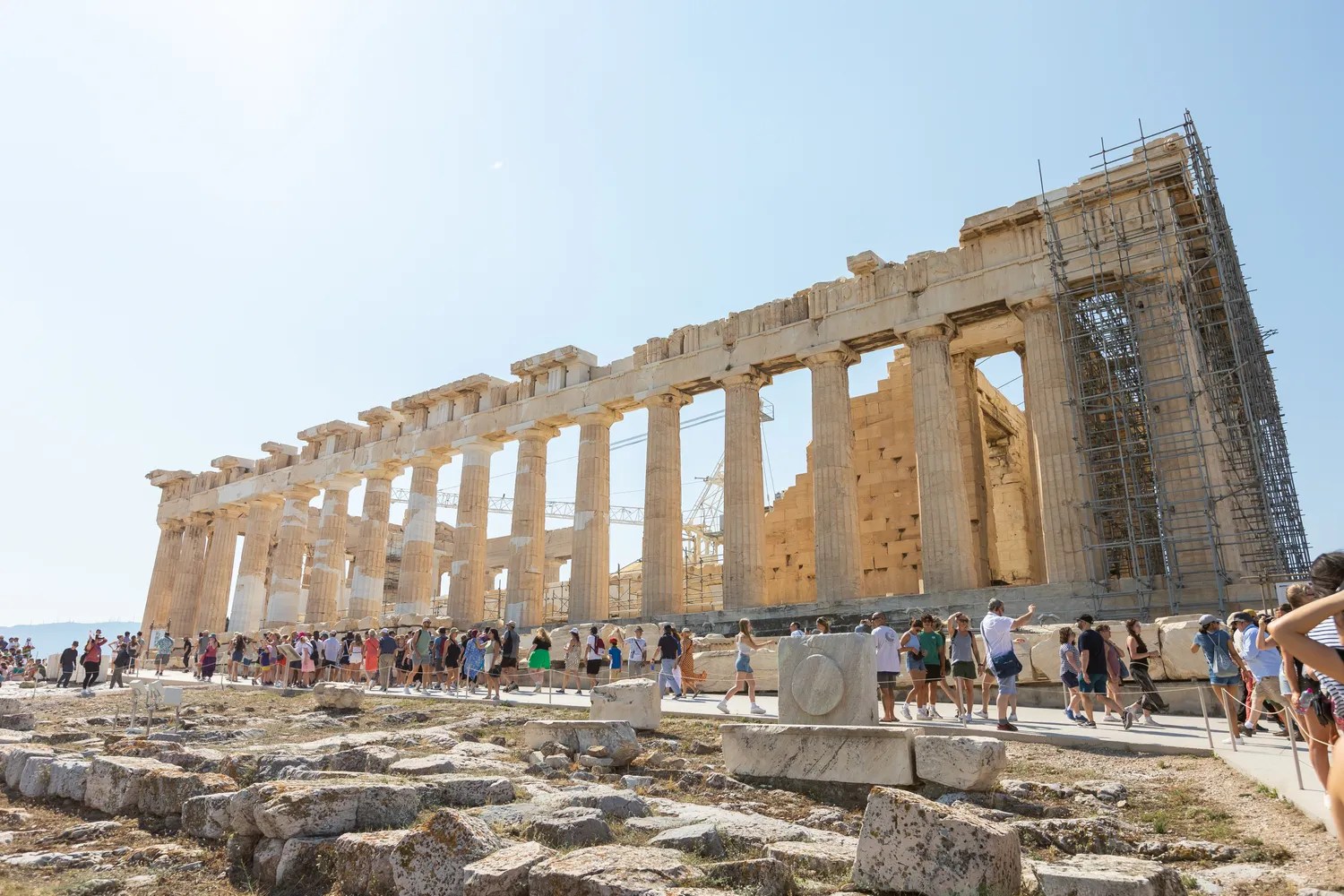
The Acropolis is the most iconic landmark in Athens, featuring ancient ruins and temples, including the Parthenon.
Historical
2-3 hours
€20 (combined ticket for multiple sites)
Ancient Agora of Athens
The heart of ancient Athens, featuring the Temple of Hephaestus and the Stoa of Attalos.
Historical
1-2 hours
€8 (included in the combined ticket)
Plaka
A charming, historic neighborhood with narrow streets, neoclassical houses, and vibrant nightlife.
Cultural
2-3 hours
Free to explore
Acropolis Museum
A modern museum showcasing artifacts from the Acropolis and its surroundings.
Museum
1-2 hours
€10
Temple of Olympian Zeus
An ancient temple dedicated to Zeus, once the largest temple in Greece.
Historical
30 minutes to 1 hour
€6 (included in the combined ticket)
Must-Try Local Dishes
Moussaka
A baked dish with layers of eggplant, minced meat, and béchamel sauce.
Dinner
Vegetarian versions available
Souvlaki
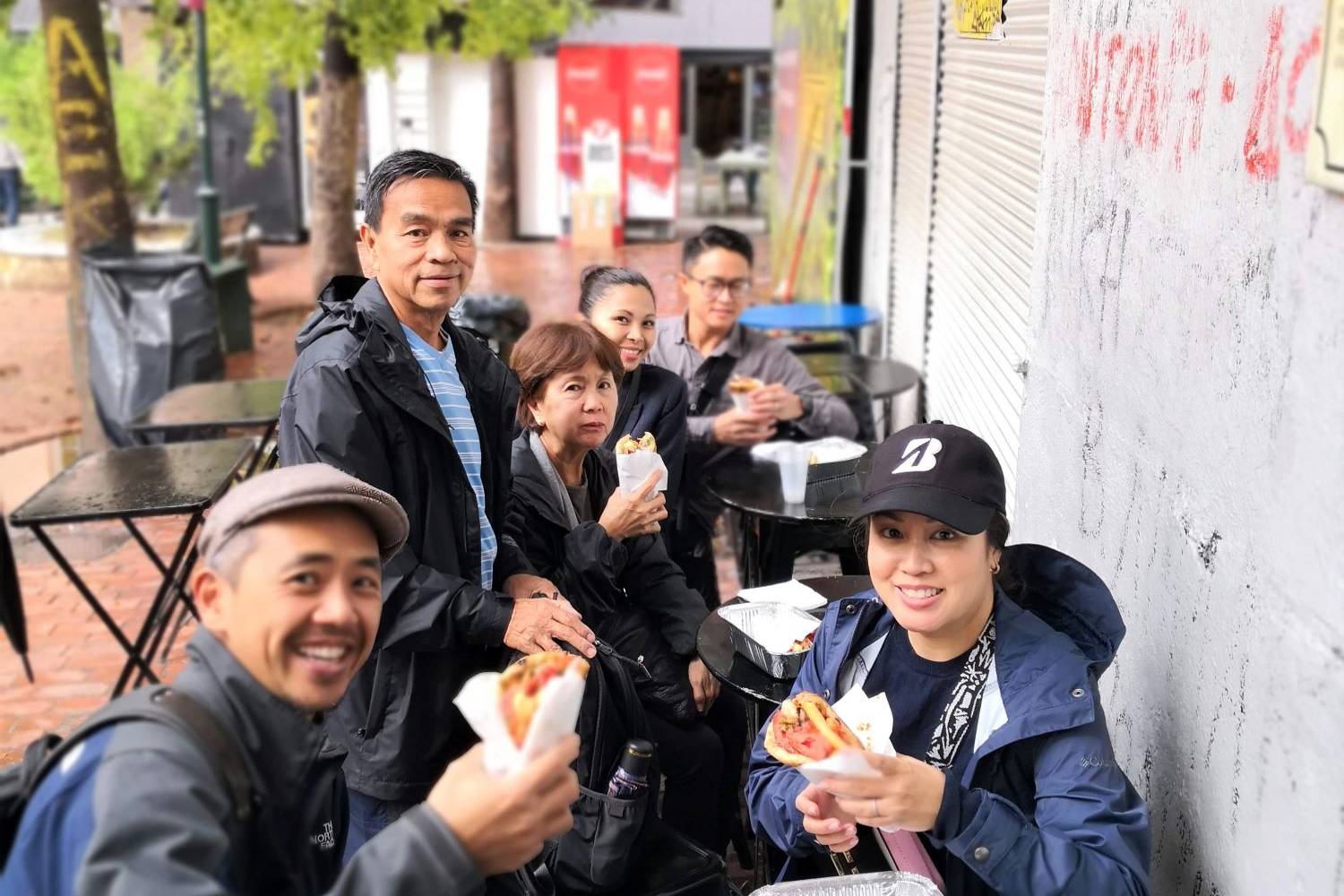
Grilled meat skewers, often served with pita bread and tzatziki.
Snack
Can be made with chicken, pork, or vegetarian options
Tzatziki
A yogurt-based dip with cucumber, garlic, and herbs.
Snack
Vegetarian and vegan options available
Baklava
A sweet pastry made with layers of filo, nuts, and honey syrup.
Dessert
Vegetarian
Popular Activities
Hiking in the mountains
Rock climbing
Scuba diving
Beach visits
Spa treatments
Café hopping
Museum visits
Theater performances
Best Time to Visit
April to June, September to October
The best time to visit Athens is during the spring and autumn months when the weather is pleasant and the tourist crowds are smaller.
18°C to 32°C
64°F to 90°F
Practical Information
Language
- Official: Greek
- Widely spoken: English, French, German
- English: Moderately spoken
Currency
Euro (EUR)
Time Zone
GMT+2 (EET)
Electricity
230VV, 50HzHz
Safety Information
Overall Safety Rating: Generally safe
Athens is generally safe for travelers, but petty crime and pickpocketing can occur in tourist areas. Be cautious with your belongings and avoid poorly lit areas at night.
Important Precautions:
- • Keep valuables secure
- • Use licensed taxis or ride-sharing apps
- • Be cautious with ATMs and credit cards
Getting there
By air
- Eleftherios Venizelos International Airport • 30 km from city center
By train
Athens Central Railway Station
By bus
KTEL Bus Station
Getting around
Public transport
Clean, efficient, and air-conditioned. Easy to navigate with clear signage in English.
Taxis
Available • Apps: Beat, Uber
Rentals
Car, Bike, Scooter
Neighborhoods
Plaka
Monastiraki
Psiri
Koukaki
Kolonaki
Day trips
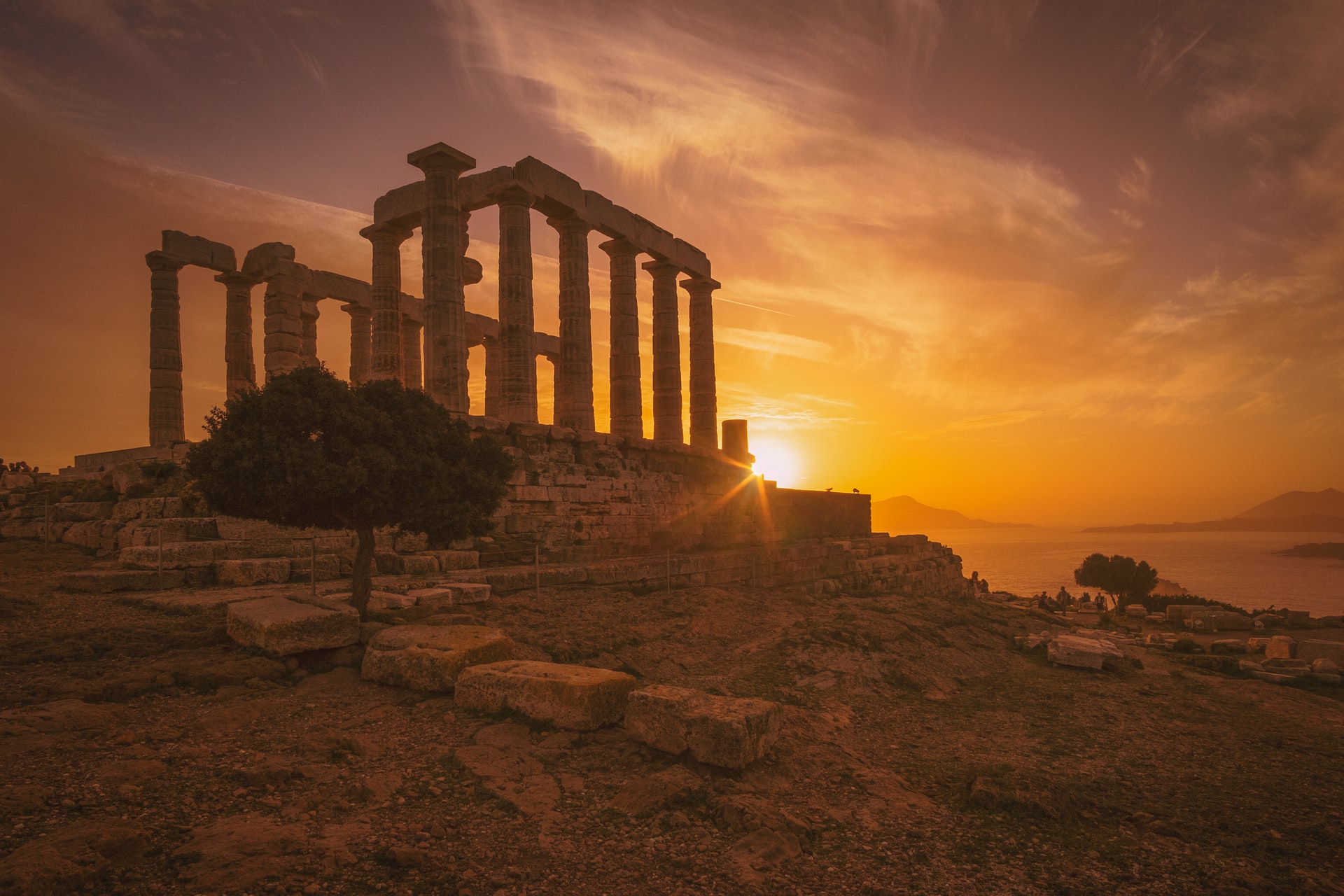
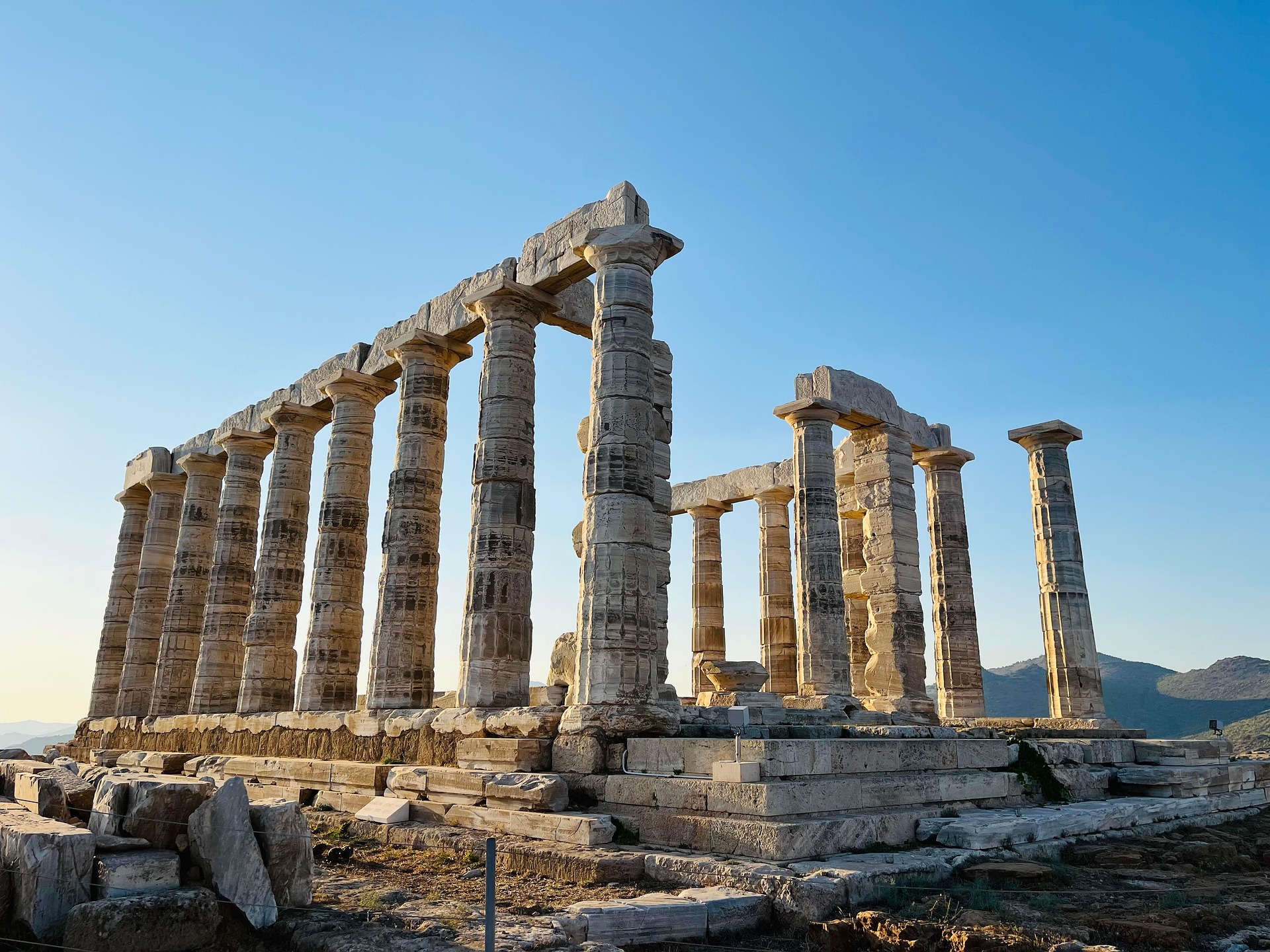
Cape Sounion
65 km from Athens • Half day to full day
A scenic coastal area featuring the Temple of Poseidon with stunning views of the Aegean Sea.
Delphi
180 km from Athens • Full day
An ancient archaeological site and home to the famous Oracle of Delphi.
Meteora
350 km from Athens • Overnight
A unique landscape featuring rock formations and medieval monasteries perched atop cliffs.
Festivals
Athens Festival • May to October
Athens Epidaurus Festival • June to August
Athens International Film Festival • October
Pro tips
- Visit major attractions early in the morning or late in the afternoon to avoid crowds and heat
- Use the metro for easy and efficient travel around the city
- Explore local neighborhoods for an authentic Greek experience
- Try local street food for a quick and delicious meal
- Learn a few basic Greek phrases to enhance your experience and connect with locals
From $25
per person
Price varies by option
Secure booking
Free cancellation available
Instant confirmation