Private Essential Florence Walking Tour with a Expert Local Guide
Active
3h
For a full refund, cancel at least 24 hours before the scheduled departure time.
Instant confirmation
Mobile or paper ticket accepted
About this experience
Would you like to take part in Florence's most comprehensive, instructive, and entertaining private walking tour? Then immediately end your search. We'll walk you around the charming cobblestone streets while telling you tales of murder and treachery, as well as interesting historical facts that will bring this magnificent Renaissance city to life.
The tour begins in Piazza della Repubblica, where you will discover the history of the city's Roman founding. Then you'll learn about Medieval Florence and the elements that led to its ascent to prominence and prosperity. There are examples of every architectural style, from the famous tower houses to the magnificent Renaissance palaces.
Following your guide, you will stroll along the most renowned designer shopping avenue, Via Tornabuoni, see stunning churches, the Medici palaces, the city's most well-known squares, the iconic Ponte Vecchio bridge, and the cobblestone alleys of Oltrarno, where there are a variety of artisan workshops.
Available options
Private Essential Florence Walking Tour with a Local Expert Guide
What's included
Friendly and knowledgeable private tour guide
Private Florence tour to explore the history and architecture of this stunning Renaissance city
Delicious gelato tasting
Detailed itinerary
1
Stop 1
The tour begins in the famous Piazza della Repubblica, where your guide will talk you through the interesting facts of the city’s Roman’s history.
2
The church of Orsanmichele is a historic building in the center of Florence. It was originally a loggia built for the storage and market of grain, later transformed into a church of the Arts, the ancient Florentine guilds. Today on the upper floors it houses a museum, with the originals of the sculptural cycle of its external niches and the famous statues of Donatello and Ghiberti.
3
We will pass Dante’s house and discover his life, his work and Florence Medieval district.
4
Stop 4
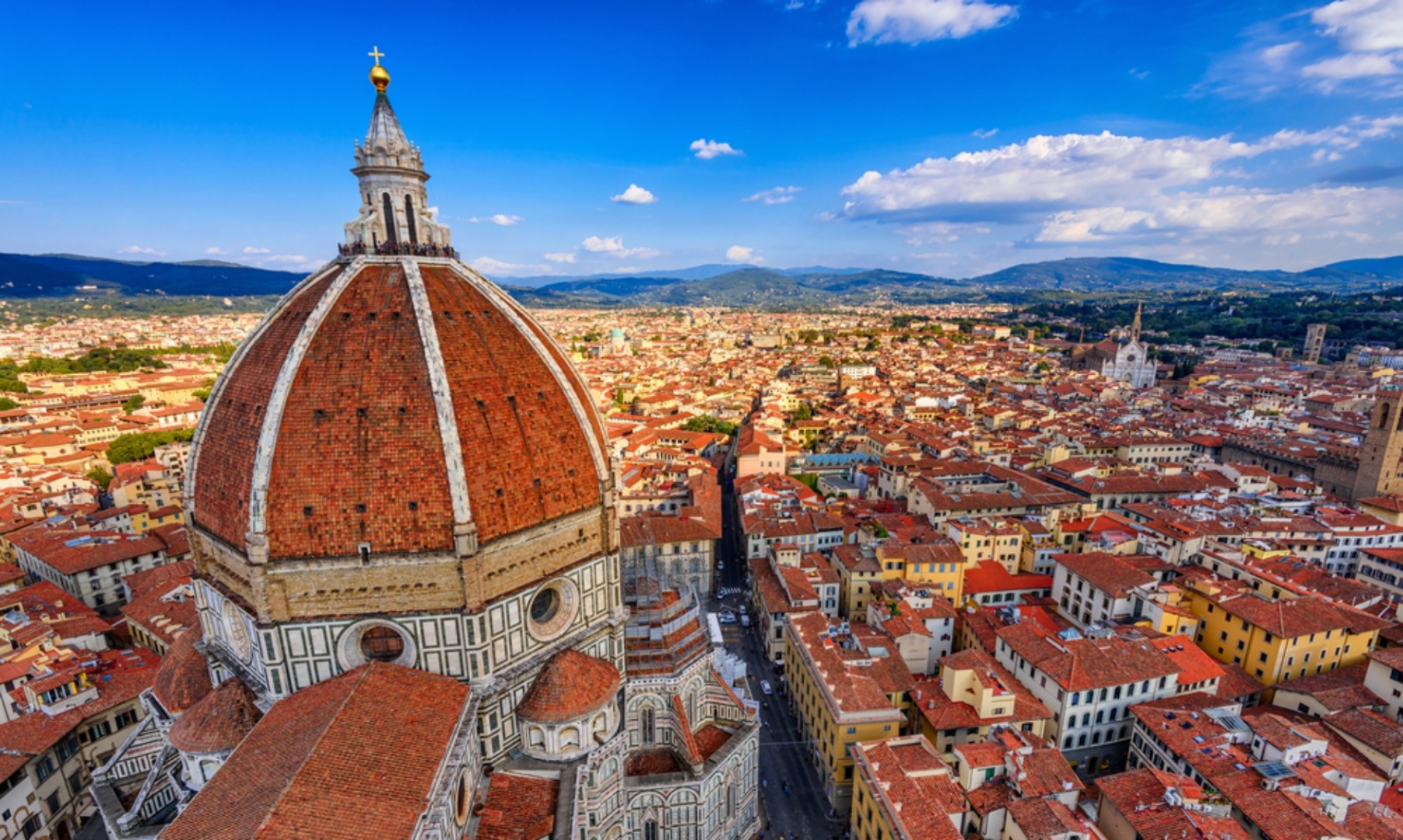
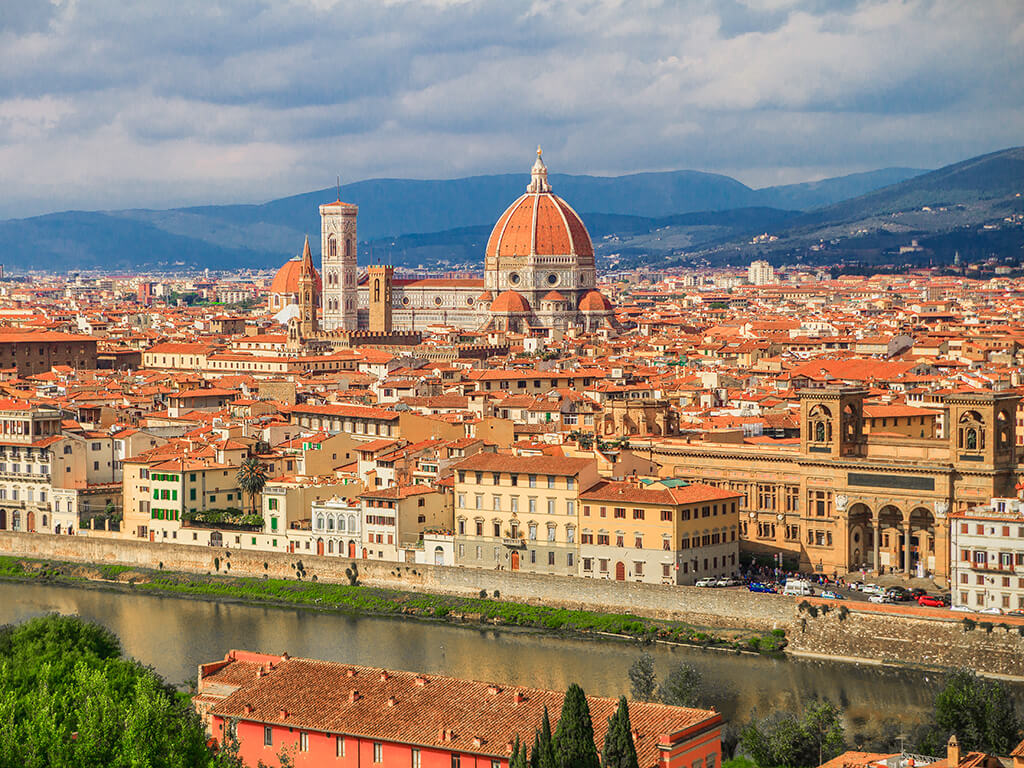
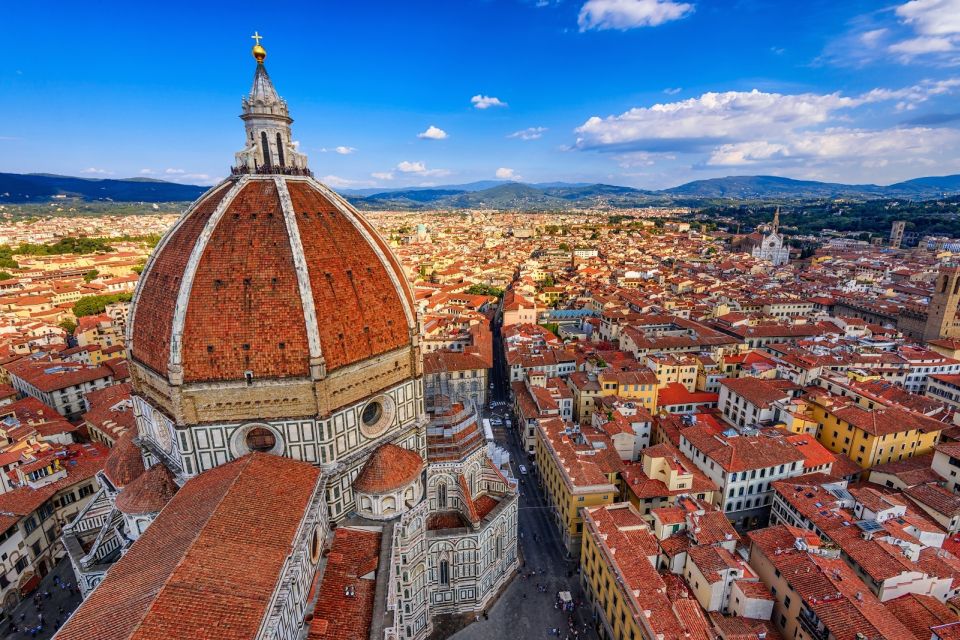
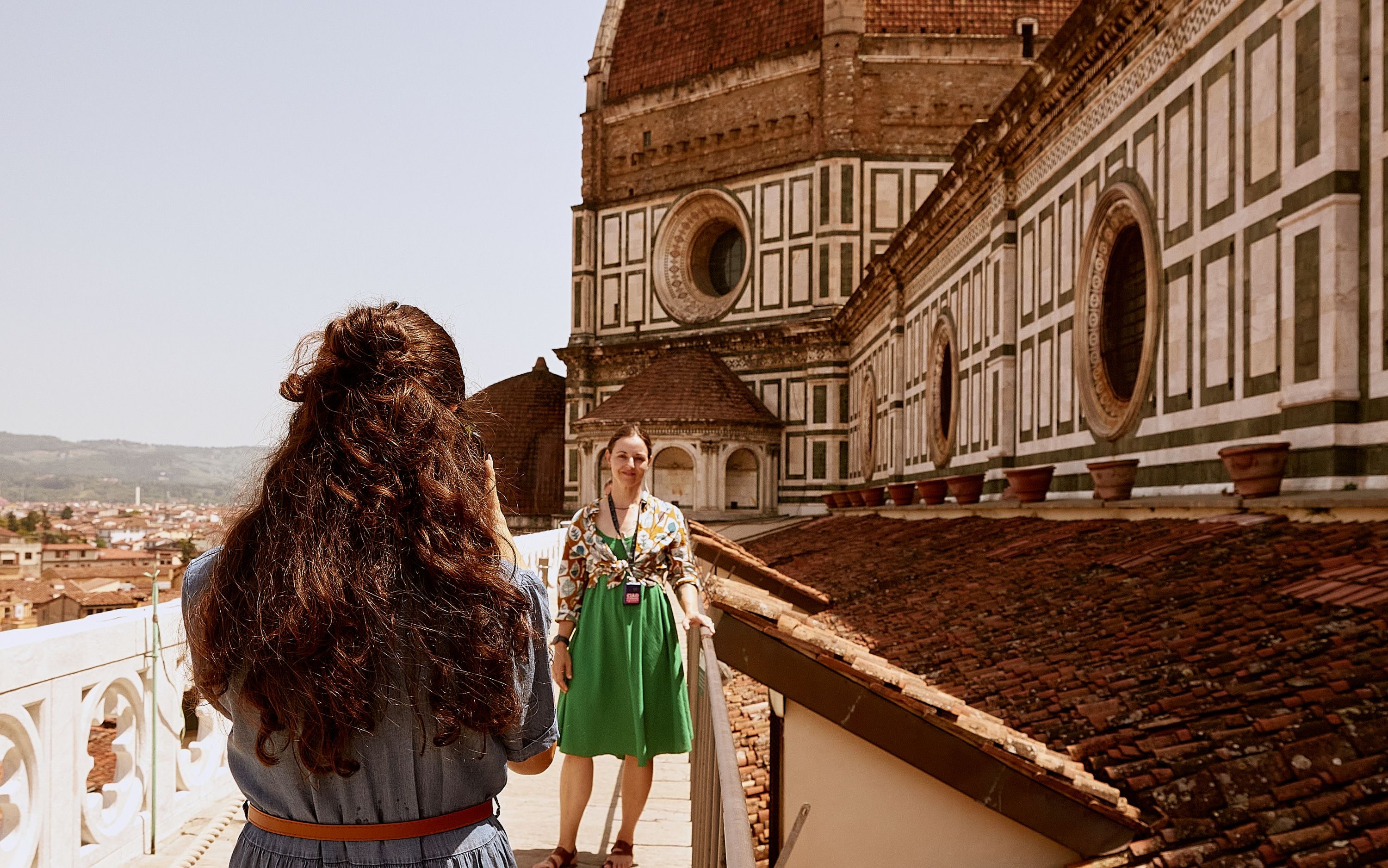
The metropolitan cathedral of Santa Maria del Fiore, commonly known as the cathedral of Florence, is the main Florentine church, symbol of the city and one of the most famous in Italy; when it was completed, in the 15th century, it was the largest church in the world, and can still boast the absolute primacy of the largest masonry dome today. It stands on the foundations of the ancient cathedral of Florence, the church of Santa Reparata, in the place that has hosted buildings of worship since Roman times.
5
Stop 5
Giotto's bell tower is the bell tower of Santa Maria del Fiore, the cathedral of Florence, and is located in Piazza del Duomo.
6
The baptistery of San Giovanni Battista is a famous religious building in Florence, located in the Piazza San Giovanni of the same name, in front of the cathedral of Santa Maria del Fiore. Dedicated to the patron saint of the city, it was for centuries the place where Florentines obtained baptism and was the place of investiture of knights and poets (Dante was also baptized here).
7
The basilica of Santa Maria Novella is one of the most important churches in Florence and stands on the square of the same name. Santa Maria Novella was the point of reference for an important mendicant order, the Dominicans.
8
Palazzo Rucellai is a palace from the 15th century, believed by most scholars to have been designed for Giovanni di Paolo Rucellai by Leon Battista Alberti between 1446 and 1451 and executed, at least in part, by Bernardo Rossellino. Its splendid facade was one of the first to proclaim the new ideas of Renaissance architecture based on the use of pilasters and entablatures in proportional relationship to each other. The Rucellai Palace demonstrates the impact of the ancient revival but does so in a manner which is full of Renaissance originality.
9
Stop 9
Palazzo Strozzi is one of the best-known Italian Renaissance palaces. Of imposing size (15 buildings were destroyed to make room for it), it is located between the homonymous Via Strozzi and Piazza Strozzi, and Via Tornabuoni, with three identical portals on every side.
10
Your guide will take you to the city’s fabulous designer shopping street, the wonderful Via Tournabuoni, and the lovely antique shopping street, Via Maggio.
11
The Basilica of Santa Trinita is one of the most important basilicas in the historical-artistic evolution of the city of Florence; according to Florentine usage, which reflects the Latin pronunciation of the nominative, it has the characteristic sdrucciola pronunciation (Trìnita). It overlooks the homonymous Piazza Santa Trinita and also gives its name to the nearby Santa Trinita bridge. We will enter inside to see the impressive frescoes by Ghirlandaio.
12
Stop 12
The Santa Trìnita bridge is another historical bridge over the Arno, which unites the historic center with the Oltrarno district, in particular connecting via de' Tornabuoni with Piazza de' Frescobaldi.
13
This lovely antique shopping street is the main avenue in the Oltrarno district used by the Medicis to reach Florence city center from Pitti Palace.
14
Stop 14
Palazzo Pitti is an imposing Renaissance palace in Florence. It is located in the Oltrarno area, a short distance from Ponte Vecchio. The original nucleus of the building dates back to 1458, as the urban residence of the banker Luca Pitti. The palace was then purchased by the Medici family in 1549 and became the main residence of the grand dukes of Tuscany, first Medici and from 1737 Habsburg-Lorraine. Following the unification of Italy, it played the role of royal palace for the House of Savoy in the five years in which Florence was the capital of the Kingdom of Italy (1865-70).
15
The church of Santa Felìcita is a Catholic place of worship in Florence, located in the Oltrarno district, between Ponte Vecchio and Palazzo Pitti. It is one of the oldest churches in Florence and host an incredible painting by Pontormo, the most important Mannerist painter.
16
Stop 16
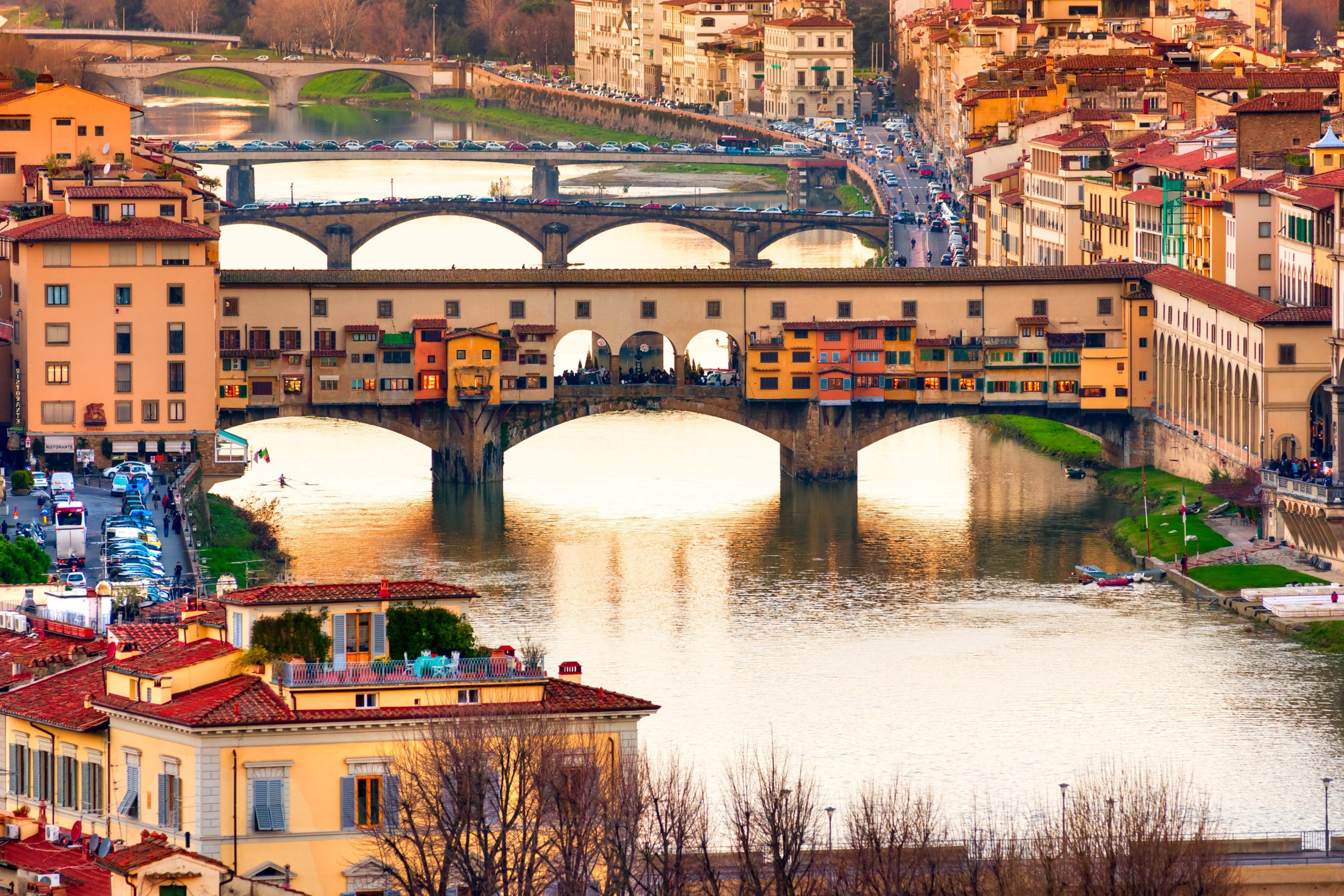
Ponte Vecchio is a historic bridge over the Arno River. The bridge connects via Por Santa Maria to via de' Guicciardini.
The name was given to what was the oldest Florentine bridge when the Carraia bridge was built, then called "Ponte Nuovo".
Beyond its historical value, the bridge has played a central role in the city's road system over time, starting from when an older bridge (or nearby) connected Roman Florentia with the Via Cassia Nuova commissioned by Emperor Hadrian in 123 AC.
17
The Vasari corridor is an elevated path that connects Palazzo Vecchio with Palazzo Pitti, passing through the Uffizi and over Ponte Vecchio. The idea of the elevated route was born to give the grand dukes the opportunity to move freely and without danger from their residence to the government palace, given the still uncertain support of the population towards the new duke and the new government system, after the ancient Florentine Republic.
18
Stop 18
The Loggia dei Lanzi, also known as Loggia della Signoria, is a structure that stands next to the Uffizi Gallery in Piazza della Signoria. It is made up of large arches that face the roadway. With Corinthian capitals, the arches are supported by a cluster of pilasters. Because the Florentine patrons found the wide arches so appealing, Michelangelo suggested encircling Piazza della Signoria with them.
19
Stop 19
Florence's town hall is called Palazzo Vecchio, or "Old Palace". It looks over Piazza della Signoria, as well as the nearby Loggia dei Lanzi's statue gallery.
This building was originally known as Palazzo della Signoria, however, due to the palace's varied uses over the course of its lengthy history, its name changed many times (Palazzo del Popolo, Palazzo dei Priori and Palazzo Ducale). After the Medici duke's home was relocated inside Palazzo Pitti across the Arno River, the structure was given its current name.
20
Stop 20
Piazza della Signoria is the main square of Florence, seat of civil power and heart of the city's social life. It is located in the central part of medieval Florence, south of the cathedral of Santa Maria del Fiore. In the past it has taken on various names, such as Piazza dei Priori or Piazza del Granduca.
Available languages
Guide guide
EN
Reviews breakdown
Tripadvisor
5.0
2 reviews
5★
2
4★
0
3★
0
2★
0
1★
0
Important information
Infants and small children can ride in a pram or stroller
Service animals allowed
Public transportation options are available nearby
Suitable for all physical fitness levels
Meeting point
Meeting point is in front of Caffè Paszkowski
About Florence
Florence, the capital of Italy's Tuscany region, is a treasure trove of art, architecture, and history. Known as the birthplace of the Renaissance, it's home to iconic masterpieces, stunning cathedrals, and a rich cultural heritage that continues to captivate visitors from around the world.
Top Attractions
Duomo
The Florence Cathedral, known as the Duomo, is a masterpiece of Renaissance architecture. Its iconic dome, designed by Brunelleschi, offers panoramic views of the city.
Architecture/Religious
2-3 hours
Free to enter the cathedral, €18 for the climb to the dome
Uffizi Gallery
One of the world's most famous art museums, the Uffizi Gallery houses works by Botticelli, Michelangelo, and Leonardo da Vinci.
Museum/Art
2-3 hours
€20
Ponte Vecchio
A medieval stone bridge famous for its jewelry shops. It's one of the most iconic landmarks in Florence.
Architecture
30 minutes to 1 hour
Free
Piazzale Michelangelo
A panoramic terrace offering breathtaking views of Florence. It's a perfect spot for sunset and photography.
Scenic Viewpoint
1-2 hours
Free
Accademia Gallery
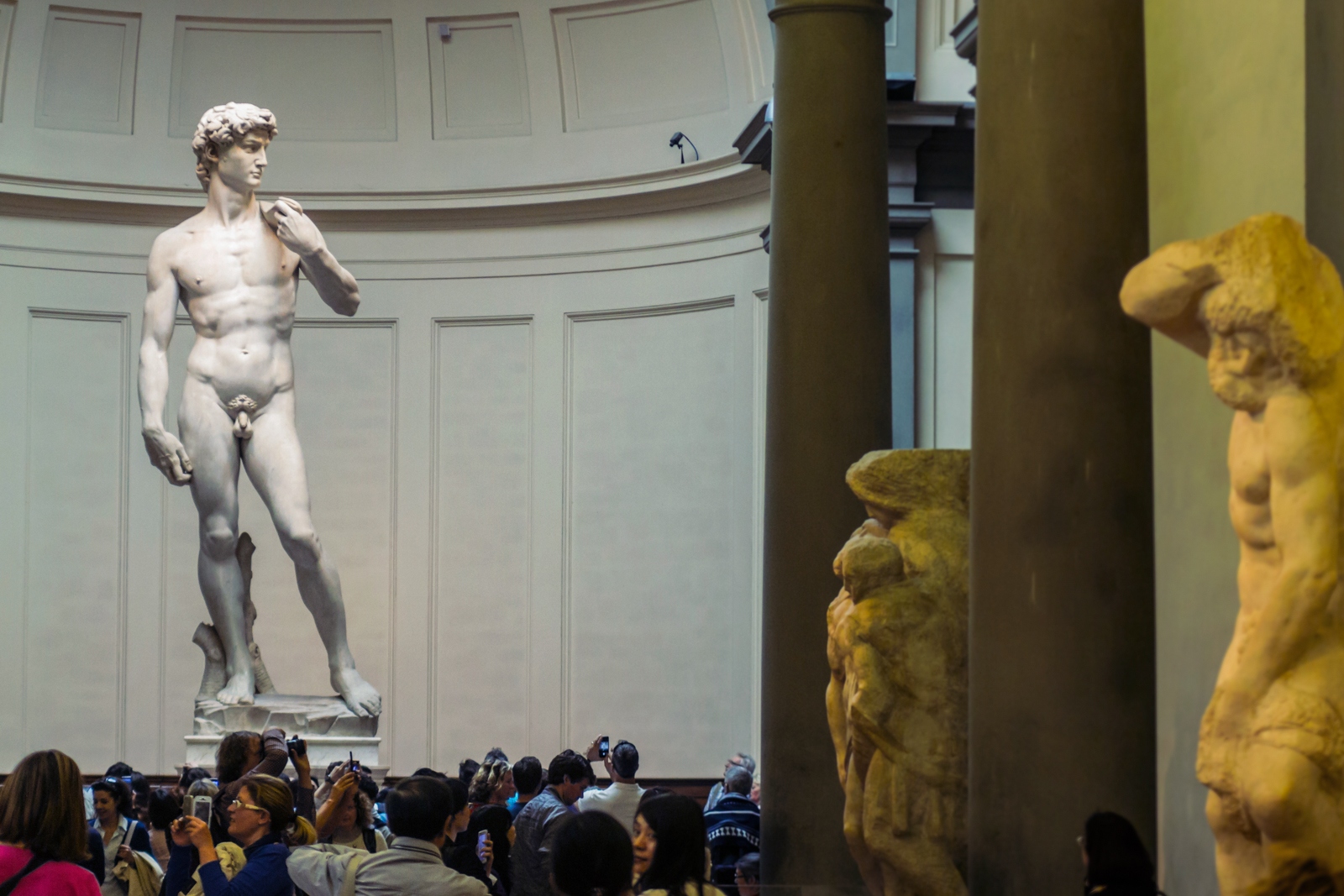
Home to Michelangelo's famous statue of David, the Accademia Gallery is a must-visit for art lovers.
Museum/Art
1-2 hours
€16
Must-Try Local Dishes
Bistecca alla Fiorentina
A thick-cut, grilled T-bone steak, seasoned simply with salt and pepper. It's a must-try for meat lovers.
Dinner
Contains beef, not suitable for vegetarians or vegans
Ribollita
A hearty vegetable and bread soup, traditionally made with leftover bread and vegetables. It's a classic Florentine dish.
Lunch/Dinner
Vegetarian, can be made vegan
Lampredotto
A Florentine street food made from the fourth and final stomach of a cow. It's typically served in a sandwich.
Lunch
Contains beef, not suitable for vegetarians or vegans
Cantucci
Almond biscotti traditionally served with Vin Santo, a sweet Tuscan wine. They are crunchy and perfect for dipping.
Dessert
Contains almonds, can be made gluten-free
Popular Activities
Hiking in the Tuscan countryside
Cycling tours
Hot air balloon rides
Wine tasting tours
Spa day at a luxury hotel
Strolling through the gardens of Villa medici
Visiting museums and art galleries
Attending opera or concerts
Best Time to Visit
April to June, September to October
These months offer pleasant weather and fewer crowds compared to the summer peak. Ideal for sightseeing and outdoor activities.
15-28°C
59-82°F
Practical Information
Language
- Official: Italian
- Widely spoken: English, French, Spanish
- English: Moderately spoken
Currency
Euro (EUR)
Time Zone
GMT+1 (CET), GMT+2 (CEST during daylight saving time)
Electricity
230VV, 50HzHz
Safety Information
Overall Safety Rating: Generally safe
Florence is generally safe for tourists, but pickpocketing and petty theft can occur, especially in crowded areas. Be aware of your surroundings and take precautions to protect your belongings.
Important Precautions:
- • Keep valuables secure and out of sight
- • Be cautious of your surroundings, especially in crowded areas
- • Use licensed taxis or ride-sharing apps
Getting there
By air
- Florence Airport • 5 km from city center
- Pisa International Airport • 85 km from city center
By train
Santa Maria Novella Station
By bus
Villa Costanza Bus Station, Florence Airport Bus Terminal
Getting around
Public transport
The bus network covers the entire city and is the primary mode of public transport. Buses are frequent and reliable.
Taxis
Available • Apps: MyTaxi, FreeNow
Rentals
Car, Bike, Scooter
Neighborhoods
Santa Maria Novella
Oltrarno
San Lorenzo
Santa Croce
Day trips
Siena
70 km from Florence • Half day to full day
A medieval city known for its stunning Piazza del Campo and the Palio, a traditional horse race held twice a year.
Pisa
85 km from Florence • Half day
Home to the iconic Leaning Tower of Pisa, this city offers a mix of historic sites and scenic views.
Chianti Wine Region
30-50 km from Florence • Full day
A picturesque wine region known for its rolling hills, vineyards, and charming villages.
Festivals
Festa di San Giovanni • June 24
Calcio Storico Fiorentino • June (dates vary)
Firenze dei Fiori • April to June
Pro tips
- Visit major attractions early in the morning or late in the afternoon to avoid crowds
- Book tickets for popular attractions in advance to save time and avoid long queues
- Explore the city's hidden gems, such as the Oltrarno neighborhood and the secret passages of the Palazzo Vecchio
- Try local specialties like Bistecca alla Fiorentina, Ribollita, and Lampredotto
- Learn a few basic Italian phrases to enhance your experience and connect with locals
From $25
per person
Price varies by option
Secure booking
Free cancellation available
Instant confirmation