Michelangelo Sculpture Tour in Florence with Skip the Line Ticket
Active
3h
For a full refund, cancel at least 24 hours before the scheduled departure time.
Instant confirmation
Mobile or paper ticket accepted
About this experience
Who was the renowned poet, painter, sculptor, and architect Michelangelo Buonarroti? Join this Michelangelo tour to walk in the artist's footsteps and explore the city where he was raised and produced many of his masterpieces.
As you stroll along the quaint cobblestone streets of this amazing Renaissance city with our knowledgeable guide, you will discover the location of Michelangelo's birth and family history, see his boyhood residence, discover what and where he studied and view his numerous works of art. As you get to know the actual him, amusing facts, tales, and anecdotes will vividly depict his rivalries and character.
You will visit the Bargello Museum, the Museo dell'Opera del Duomo, the Medici Chapels and the Accademia Gallery with our guide. You will also see interesting sites related to this renowned artist as we go from museum to museum.
The tour will end inside the Accademia Gallery, so that anybody who want to continue exploring this beautiful museum could do that.
Available options
Michelangelo Sculpture Florence Tour with Skip-the-Line Tickets
What's included
Skip the line entrance to the Accademia Gallery, Medici Chapels, Bargello and Museum of the Duomo
Learn about the artist’s life and art on a dedicated Michelangelo tour of Florence
Headsets to easily and clearly hear your guide
Friendly local guide with expert knowledge
Walk the streets of Florence with an expert guide
Detailed itinerary
1
Stop 1
Pass by
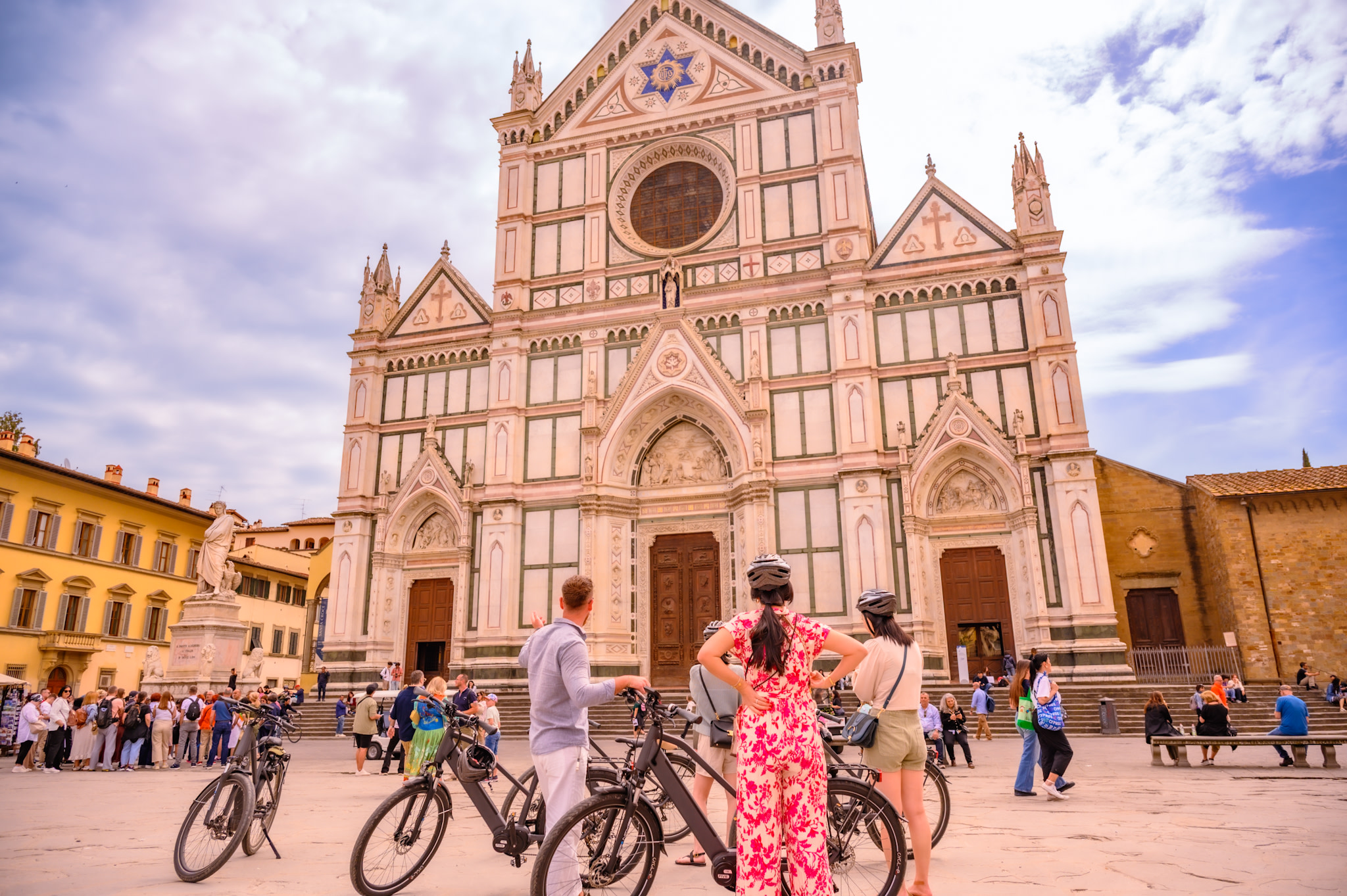
The Basilica of Santa Croce is one of the largest Franciscan churches and one of the greatest Gothic achievements in Italy.
Santa Croce is a prestigious symbol of Florence, the meeting place of the greatest artists, theologians, religious people, men of letters, humanists and politicians, who determined, through good times and bad, the identity of the late medieval and Renaissance city. Famous figures from the history of the Church such as Saint Bonaventure, Peter of Giovanni Olivi, Saint Anthony of Padua, Saint Bernardino of Siena, Saint Louis of Anjou also found hospitality inside. It was also a welcoming place for popes such as Sixtus IV, Eugene IV, Leone X and Clemente XIV.
In the church there are the tombs of the greatest artists that Italy has given to the world.
2
Stop 2
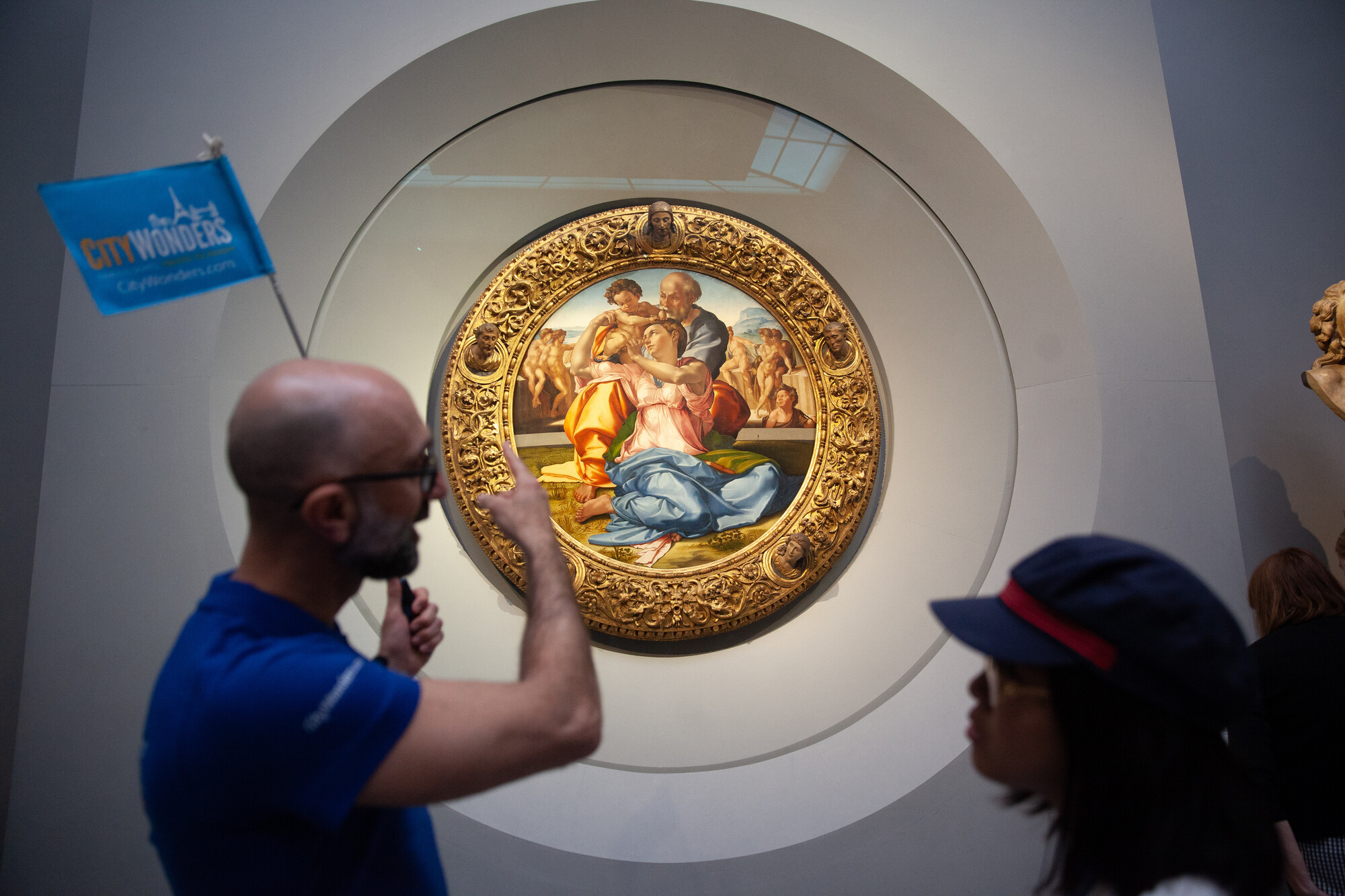
Masterpieces from the Renaissance and Mannerist periods can be found in the Bargello. We will see four of Michelangelo's most significant sculptures: Tondo Pitti, a stunning example of the renowned "non finito," Bacchus, Brutus, and David-Apollo. Important parallels can also be made with other pieces in the collection, such as the bronze David sculptures by Donatello and Verrocchio.
3
Stop 3
Pass by
Piazza della Signoria is the main square of Florence, seat of civil power and heart of the city's social life. It is located in the central part of medieval Florence, south of the cathedral of Santa Maria del Fiore. In the past it has taken on various names, such as Piazza dei Priori or Piazza del Granduca.
4
Stop 4
Pass by
The Loggia dei Lanzi, also known as Loggia della Signoria, is a structure that stands next to the Uffizi Gallery in Piazza della Signoria. It is made up of large arches that face the roadway. With Corinthian capitals, the arches are supported by a cluster of pilasters. Because the Florentine patrons found the wide arches so appealing, Michelangelo suggested encircling Piazza della Signoria with them.
5
Stop 5
Pass by
Florence's town hall is called Palazzo Vecchio, or "Old Palace". It looks over Piazza della Signoria, as well as the nearby Loggia dei Lanzi's statue gallery.
This building was originally known as Palazzo della Signoria, however, due to the palace's varied uses over the course of its lengthy history, its name changed many times (Palazzo del Popolo, Palazzo dei Priori and Palazzo Ducale). After the Medici duke's home was relocated inside Palazzo Pitti across the Arno River, the structure was given its current name.
6
The church of Orsanmichele is a historic building in the center of Florence. It was originally a loggia built for the storage and market of grain, later transformed into a church of the Arts, the ancient Florentine guilds. Today on the upper floors it houses a museum, with the originals of the sculptural cycle of its external niches and the famous statues of Donatello and Ghiberti.
7
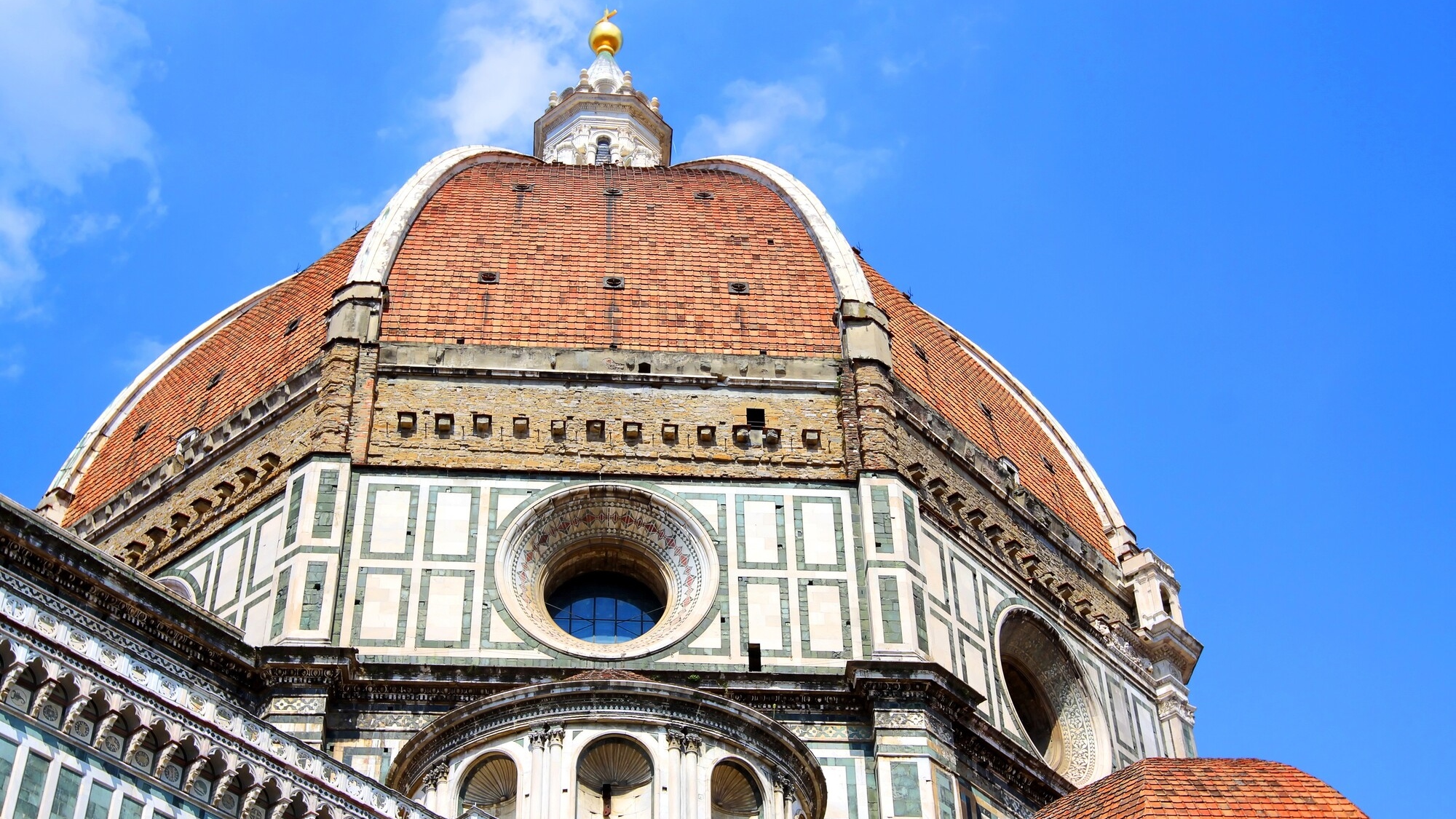
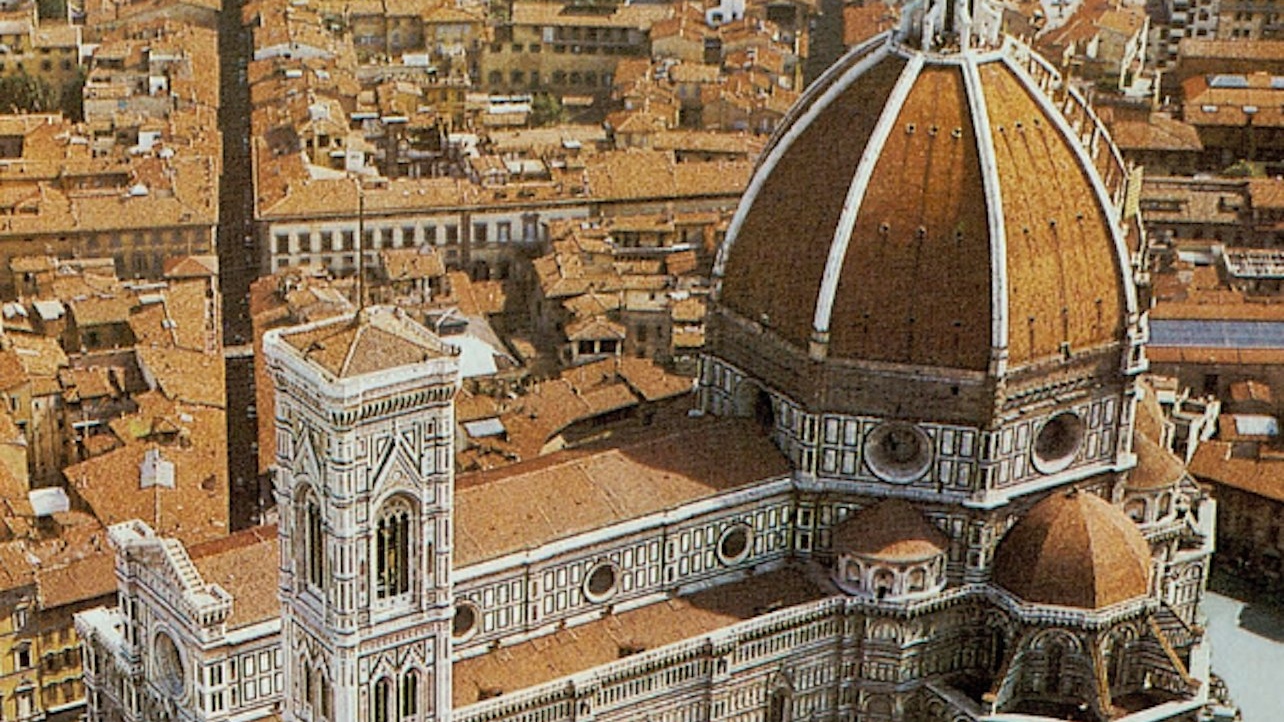
Santa Maria del Fiore is one of the largest churches in the world. The plan consists of a triple-nave basilica with the presbytery area nested within, dominated by the large octagon of the immense dome, around which are three radial apses, each consisting of five chapels. The cathedral is 153 meters (502 feet) in length, 90 meters (295 feet) wide at the transept, and 90 meters high from floor to base of the dome lantern. The title “Santa Maria del Fiore” (Our Lady of the flower) alludes to the name of the city, "Florentia", or “city of flowers”, “destined to bloom”, and to its emblem, the Florentine lily.
8
Our next stop will be the Opera del Duomo museum, where we will see the Palestrina Pietà, one of Michelangelo final creations, which is a piece of art that is impossible to see in person without being touched and moved. This Pietà, which Michelangelo carved for his own tomb, captures the agony and suffering of his latter years.
You will also see the original Gates of Paradise inside the museum, the main gate of the Baptistry of Florence (Battistero di San Giovanni), located in front of the Cathedral.
The Porta del Paradiso, in Italian, was created by Florentine goldsmith and sculptor Lorenzo Ghiberti between 1425 and 1452 and installed in the eastern portal of the Baptistery.
The Gates have been praised by generations of artists and art historians for their compelling portrayal of scenes from the Old Testament.
Over time, the seventeen-foot-tall, three-ton bronze doors became an icon of Renaissance, one of the most famous works of art in the world.
9
Visiting the New Sacristy at the Medici Chapels, where the exquisiteness of the tombs of some Medici family members will wow you, is a must-do for any Michelangelo tour of Florence. You will discover during this encounter how much the artist and his works were influenced by the Medici family.
10
Stop 10
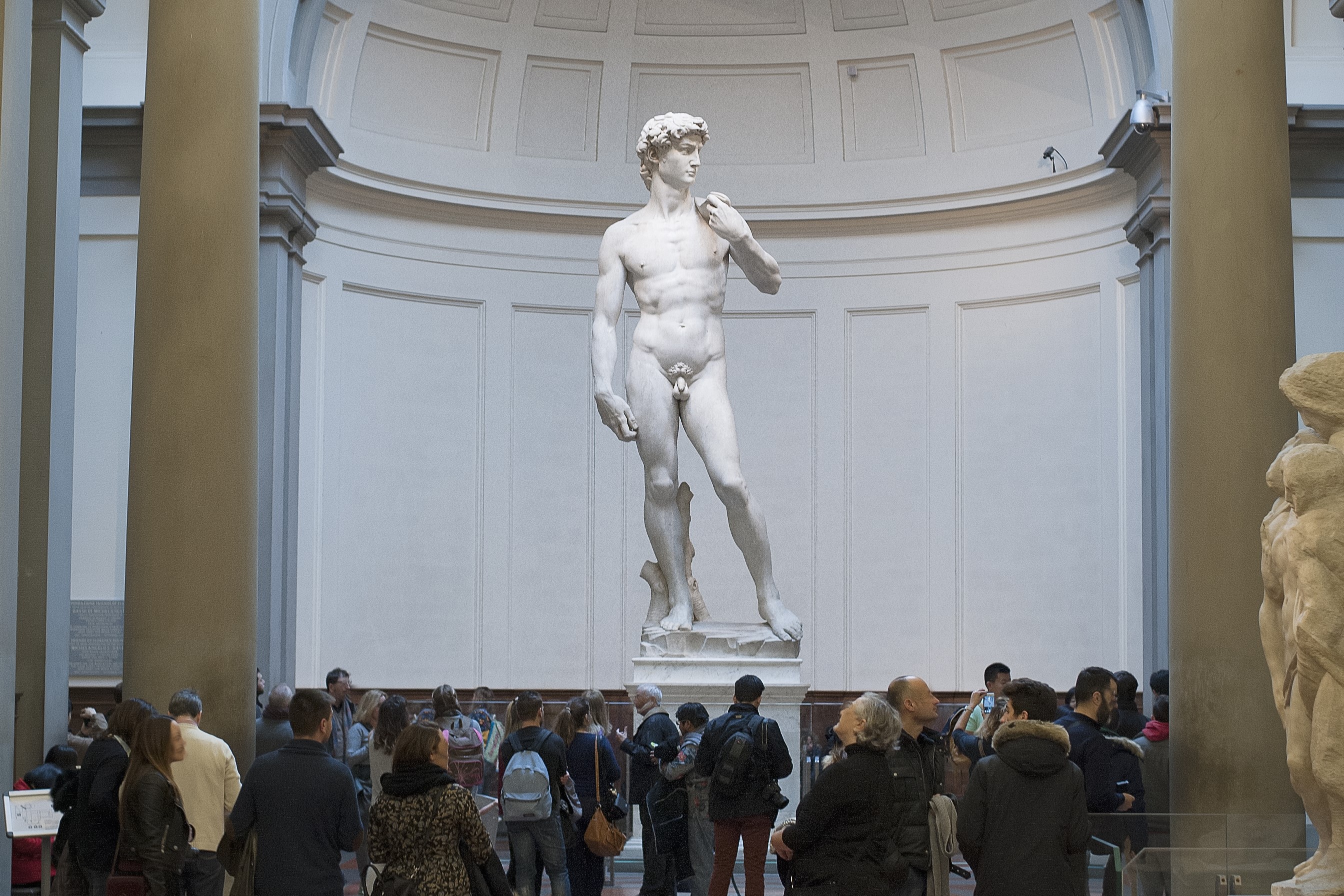
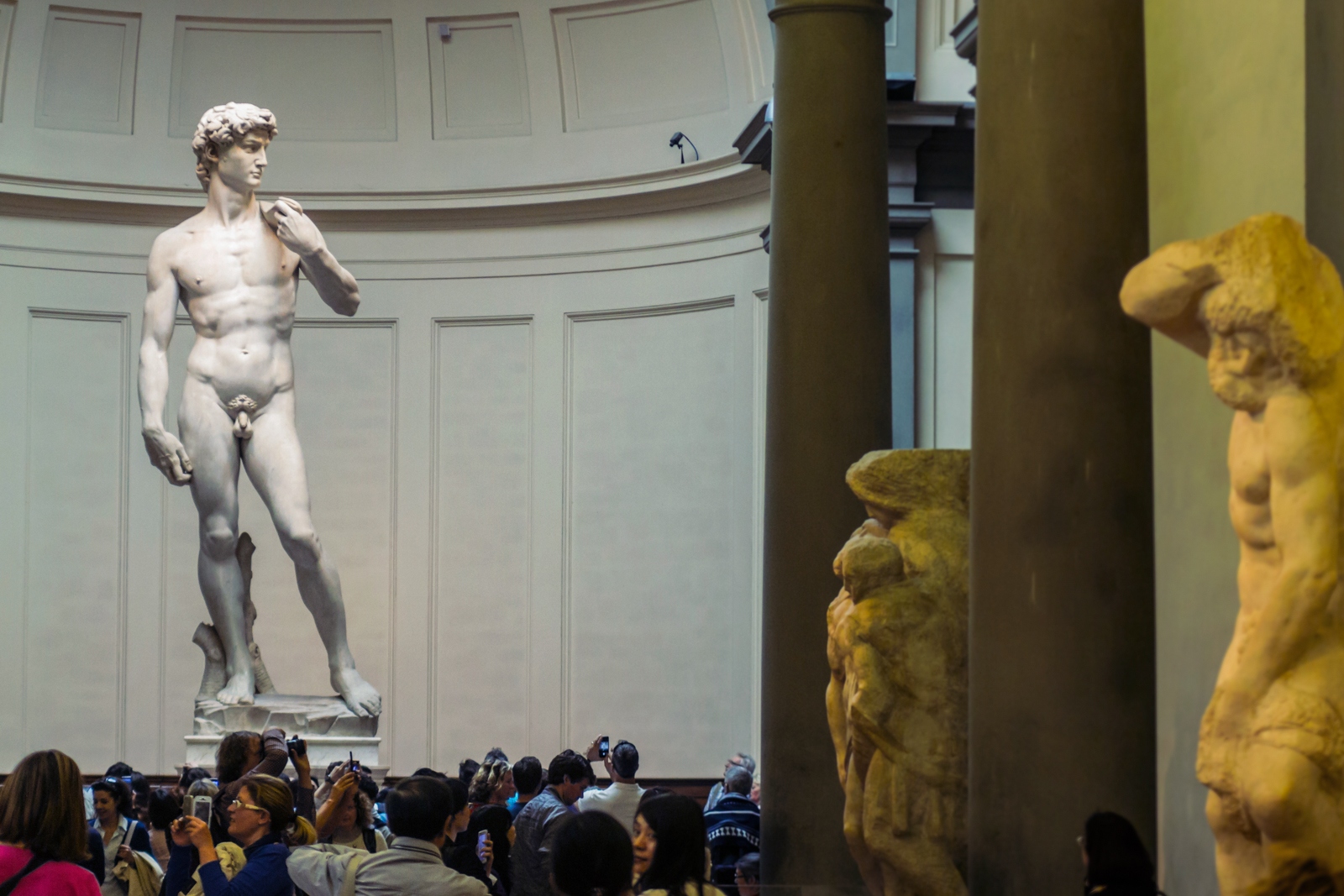
The last stop on the tour will be the renowned Accademia Museum, home of Michelangelo's David, one of the most well-known statues in existence. There will be time set out to comprehend this sculpture as well as to view another of his creations, "Prisoners," which was begun but never completed when it was commissioned for Pope Julius II's tomb.
The tour will end here, although those who want to continue exploring this beautiful museum will be welcome.
Available languages
Guide guide
EN
Reviews breakdown
Viator
5.0
2 reviews
5★
2
4★
0
3★
0
2★
0
1★
0
Tripadvisor
5.0
8 reviews
5★
8
4★
0
3★
0
2★
0
1★
0
Important information
Public transportation options are available nearby
Not recommended for travelers with spinal injuries
Not recommended for travelers with poor cardiovascular health
Suitable for all physical fitness levels
Meeting point
Meeting point is at our address in Via Vinegia 23R, right behind Palazzo Vecchio.
About Florence
Florence, the capital of Italy's Tuscany region, is a treasure trove of art, architecture, and history. Known as the birthplace of the Renaissance, it's home to iconic masterpieces, stunning cathedrals, and a rich cultural heritage that continues to captivate visitors from around the world.
Top Attractions
Duomo
The Florence Cathedral, known as the Duomo, is a masterpiece of Renaissance architecture. Its iconic dome, designed by Brunelleschi, offers panoramic views of the city.
Architecture/Religious
2-3 hours
Free to enter the cathedral, €18 for the climb to the dome
Uffizi Gallery
One of the world's most famous art museums, the Uffizi Gallery houses works by Botticelli, Michelangelo, and Leonardo da Vinci.
Museum/Art
2-3 hours
€20
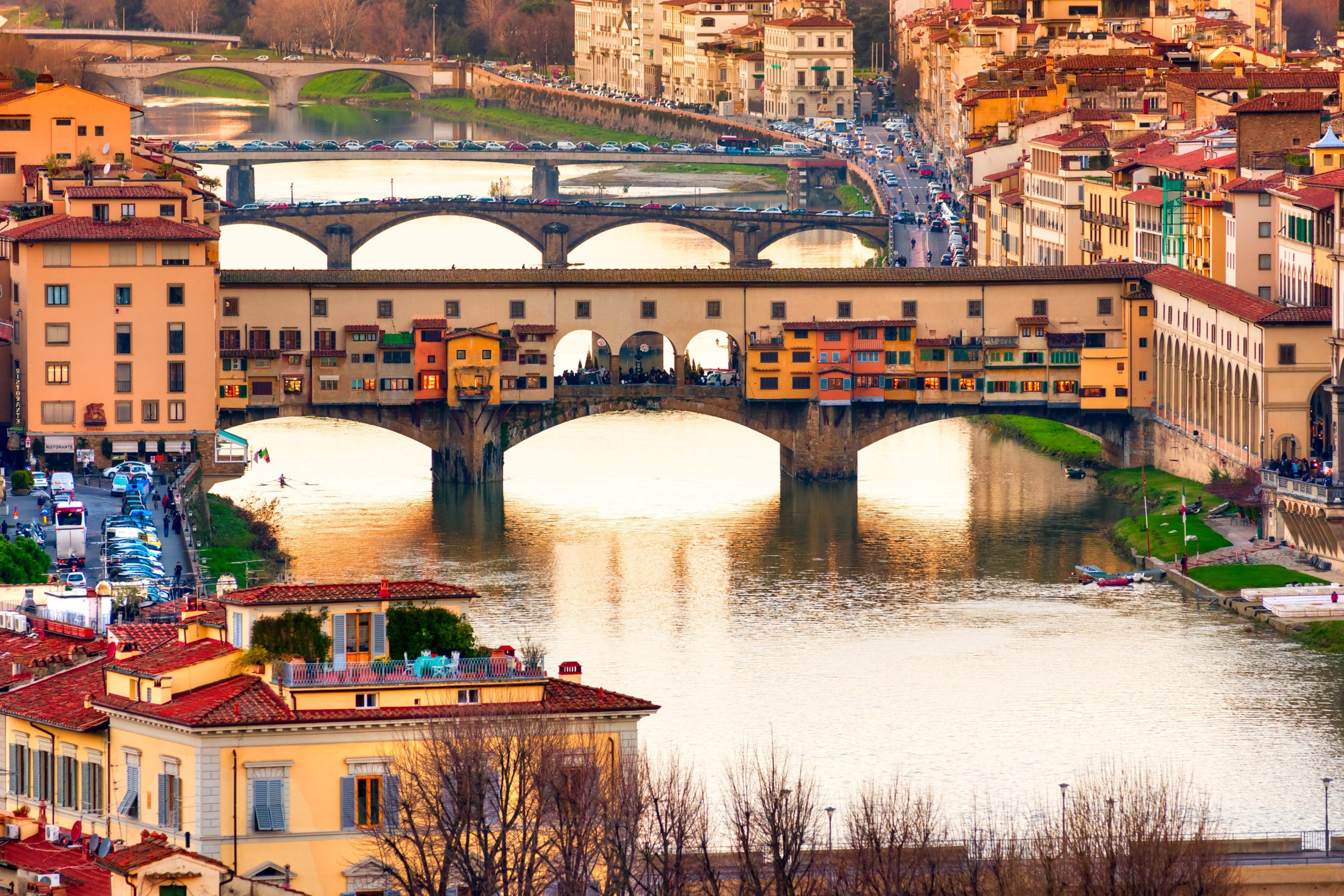
Ponte Vecchio
A medieval stone bridge famous for its jewelry shops. It's one of the most iconic landmarks in Florence.
Architecture
30 minutes to 1 hour
Free
Piazzale Michelangelo
A panoramic terrace offering breathtaking views of Florence. It's a perfect spot for sunset and photography.
Scenic Viewpoint
1-2 hours
Free
Accademia Gallery
Home to Michelangelo's famous statue of David, the Accademia Gallery is a must-visit for art lovers.
Museum/Art
1-2 hours
€16
Must-Try Local Dishes
Bistecca alla Fiorentina
A thick-cut, grilled T-bone steak, seasoned simply with salt and pepper. It's a must-try for meat lovers.
Dinner
Contains beef, not suitable for vegetarians or vegans
Ribollita
A hearty vegetable and bread soup, traditionally made with leftover bread and vegetables. It's a classic Florentine dish.
Lunch/Dinner
Vegetarian, can be made vegan
Lampredotto
A Florentine street food made from the fourth and final stomach of a cow. It's typically served in a sandwich.
Lunch
Contains beef, not suitable for vegetarians or vegans
Cantucci
Almond biscotti traditionally served with Vin Santo, a sweet Tuscan wine. They are crunchy and perfect for dipping.
Dessert
Contains almonds, can be made gluten-free
Popular Activities
Hiking in the Tuscan countryside
Cycling tours
Hot air balloon rides
Wine tasting tours
Spa day at a luxury hotel
Strolling through the gardens of Villa medici
Visiting museums and art galleries
Attending opera or concerts
Best Time to Visit
April to June, September to October
These months offer pleasant weather and fewer crowds compared to the summer peak. Ideal for sightseeing and outdoor activities.
15-28°C
59-82°F
Practical Information
Language
- Official: Italian
- Widely spoken: English, French, Spanish
- English: Moderately spoken
Currency
Euro (EUR)
Time Zone
GMT+1 (CET), GMT+2 (CEST during daylight saving time)
Electricity
230VV, 50HzHz
Safety Information
Overall Safety Rating: Generally safe
Florence is generally safe for tourists, but pickpocketing and petty theft can occur, especially in crowded areas. Be aware of your surroundings and take precautions to protect your belongings.
Important Precautions:
- • Keep valuables secure and out of sight
- • Be cautious of your surroundings, especially in crowded areas
- • Use licensed taxis or ride-sharing apps
Getting there
By air
- Florence Airport • 5 km from city center
- Pisa International Airport • 85 km from city center
By train
Santa Maria Novella Station
By bus
Villa Costanza Bus Station, Florence Airport Bus Terminal
Getting around
Public transport
The bus network covers the entire city and is the primary mode of public transport. Buses are frequent and reliable.
Taxis
Available • Apps: MyTaxi, FreeNow
Rentals
Car, Bike, Scooter
Neighborhoods
Santa Maria Novella
Oltrarno
San Lorenzo
Santa Croce
Day trips
Siena
70 km from Florence • Half day to full day
A medieval city known for its stunning Piazza del Campo and the Palio, a traditional horse race held twice a year.
Pisa
85 km from Florence • Half day
Home to the iconic Leaning Tower of Pisa, this city offers a mix of historic sites and scenic views.
Chianti Wine Region
30-50 km from Florence • Full day
A picturesque wine region known for its rolling hills, vineyards, and charming villages.
Festivals
Festa di San Giovanni • June 24
Calcio Storico Fiorentino • June (dates vary)
Firenze dei Fiori • April to June
Pro tips
- Visit major attractions early in the morning or late in the afternoon to avoid crowds
- Book tickets for popular attractions in advance to save time and avoid long queues
- Explore the city's hidden gems, such as the Oltrarno neighborhood and the secret passages of the Palazzo Vecchio
- Try local specialties like Bistecca alla Fiorentina, Ribollita, and Lampredotto
- Learn a few basic Italian phrases to enhance your experience and connect with locals
From $25
per person
Price varies by option
Secure booking
Free cancellation available
Instant confirmation