Buenos Aires Private Historical Downtown, San Telmo and La Boca Walking Tour
Active
4h
For a full refund, cancel at least 24 hours before the scheduled departure time.
Manual confirmation
Mobile or paper ticket accepted
About this experience
Discover fascinating Buenos Aires in close-up detail! You'll feel like you're witnessing and understanding how such a peculiar city and culture evolved along time in this walking tour through the city's historical areas, which takes you to more than 50 of Buenos Aires’ must-see attractions, including Plaza de Mayo, Casa Rosada, Metropolitan Cathedral (of Pope Francis fame), San Telmo (earliest neighbourhood), world-famous hyper-colourful La Boca neighbourhood and more! Learn about the history of Buenos Aires while seeing both its most famous highlights and also its lesser-known sights!
Available options
Historical Tour in French
French Speaking Guide: Buenos Aires Historical Walking Tour with French speaking guide
Buenos Aires Historical Walking Tour
Pickup included
What's included
Professional English-speaking guide
Coffee break
Detailed itinerary
1
Stop 1
The Obelisco de Buenos Aires (Obelisk of Buenos Aires) is a national historic monument and icon of Buenos Aires (hear its fascinating stories!), located at the intersection of famous Corrientes and 9 de Julio (world's widest avenue) erected to commemorate the 400 centenary of the foundation of the city.
2
The often controversial Palace of Justice of the Argentine Nation (Spanish: Palacio de Justicia de la Nación Argentina, more often referred locally as Palacio de Justicia or Palacio de Tribunales), is a large building complex located in Buenos Aires, Argentina. It is the seat of the Supreme Court and other lower courts.
3
Stop 3
Opera house: The Teatro Colón (Spanish: Columbus Theatre) is the main opera house in Buenos Aires, Argentina. It is considered one of the ten best opera houses in the world by National Geographic.
4
The extremely beautiful Teatro Nacional Cervantes in Buenos Aires is the national stage and comedy theatre of Argentina and was donated by the kings of Spain to Argentina at the beginning of the 20th century. You would never guess where the stage is, but your guide will tell you.
5
World famous Florida St. is the flamboyant downtown pedestrian street, where Harrods built its only branch outside London, England and our National Anthem was sung for the first time and the amazing Galerias Pacifico mall (built by George Soros!) shows its amazing beauty, world famous ceiling murals and fascinating stores.
6
The astonishingly beautiful club founded by the hyper-wealthy Argentine naval officers in 1882 has a most amazing art nouveau entrance made in bronze obtained from melted down canons that were used in Argentina's battle for independence.
7
Stop 7
This amazingly beautiful mall was built as a Beaux Arts building and was designed by french architects in 1889 to accommodate a shop called the Argentine Bon Marché, modelled on the Le Bon Marché in Paris and revamped to our poshest downtown mall by George Soros in 1990.
8
Stop 8
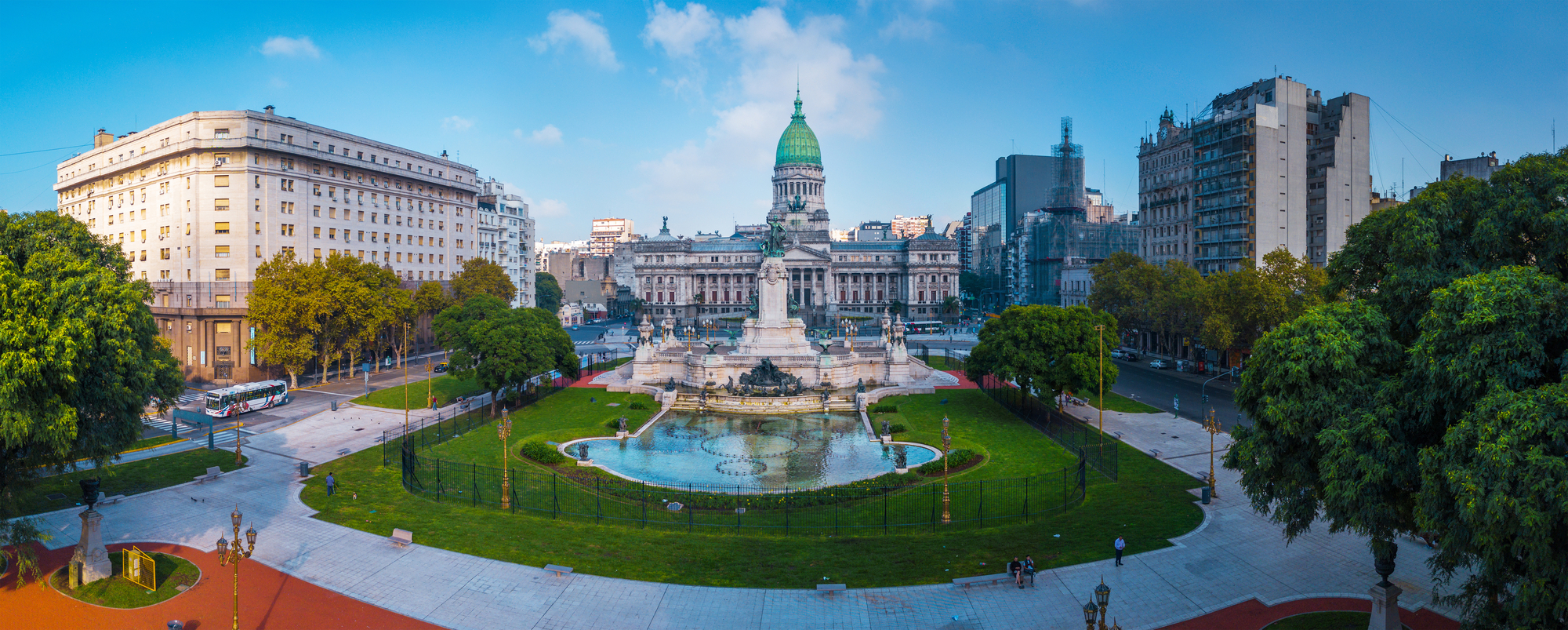
Plaza de Mayo is both the foundational place of the city, where the presidential Casa Rosada is located and the place where all important historical and political events have happened. We will explain it all, including "The mothers of the Disappeared" and the Metropolitan Cathedral where Pope Francis used to be the Bishop of, and much, much more!
9
Stop 9
This is the Metropolitan Cathedral where Pope Francis used to be the Bishop of, our main hero, General Jose de San Martin is buried and much, much more!
10
The Pirámide de Mayo located at the hub of the Plaza de Mayo, is the oldest national monument in the City of Buenos Aires. We will explain its history and meaning.
11
Our liberator and hero is buried in a beautiful tomb, but it has the strangest story: hear everything about it and him.
12
Stop 12
In 1882 the national government contracted the local businessman Eduardo Madero to take charge of the construction of a new port. It was a big failure, but in recent years it has revamped, became ultra-fashionable and represents the latest architectural trends. We willl explain it all.
13
Stop 13
The Casa Rosada (English: Pink House) is the office of the president of Argentina. The palatial mansion is known officially as Casa de Gobierno ("Government House"). The characteristic color of the Casa Rosada is baby pink, and is considered one of the most emblematic buildings in Buenos Aires. The building also houses a museum, which contains objects relating to former presidents of Argentina. It has been declared a National Historic Monument of Argentina.
14
The narrowest colonial house in Buenos Aires, built by freedmen following the 1812 abolition of slavery in Argentina.
15
Stop 15
In the past it was referred to as Hueco del Alto or Alto de la carretas as it was the place where wagons would stop before crossing the Tercero del Sur stream (today called Pasaje San Lorenzo) on their way downtown. The name had been Alto de San Pedro and later changed to Plaza del Comercio in 1822. In 1905, the name was changed once again to its current form. It is the core of the San Telmo "antique" trade (and fair).
16
Stop 16
This is the key, history-full street that links downtown with picturesque, historical San Telmo neighbourhood, oldest in town and where the world-famous San Telmo fair takes place.
17
The beautiful colonial church built on behalf of Our Lady of Belen and annexed to an armory (later the jail for women) that belonged to the Jesuits before they were expelled in 1767. It was the church of the sailormen and had an important role during the first British invasion of 1806.
18
The 1980 restoration of the former Ezeiza family mansion into the Pasaje de la Defensa ("Defensa Street Promenade"), moreover, has led to the refurbishment of numerous such structures, many of which had been conventillos (tenements) since the 1870s. As most of San Telmo's 19th century architecture and cobblestone streets remain, it has also become an important tourist attraction.
19
Stop 19
Where the country started: Historians believe the park's eastern slope to have been the site of Spanish Conquistador Pedro de Mendoza's landing on what became the first, failed attempt to establish Buenos Aires in 1536. We will explain the beautiful monument and much more.
20
Stop 20
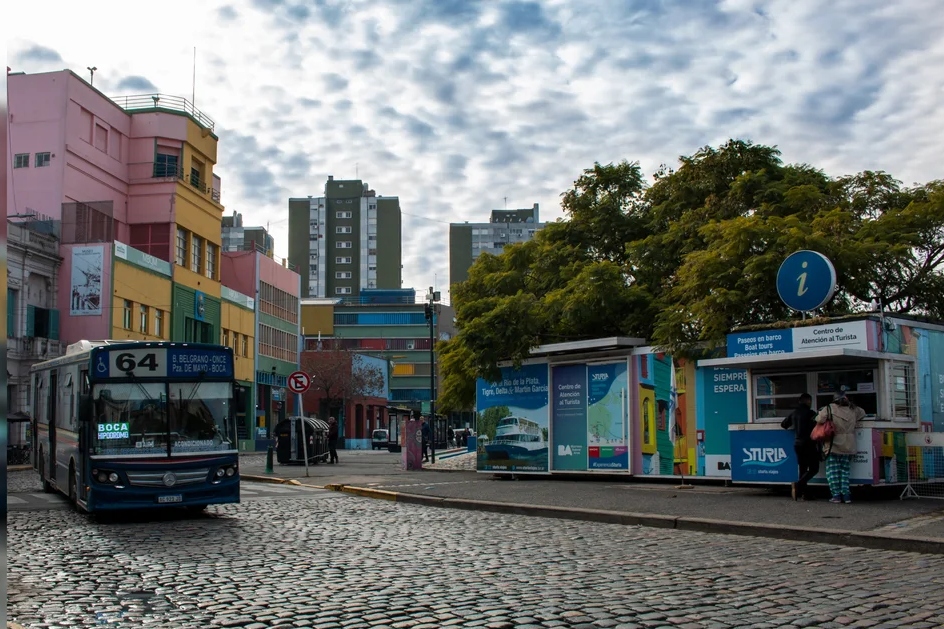
La Boca is a popular destination for tourists visiting Argentina, with its colourful houses and pedestrian street, the Caminito, where tango artists perform and tango-related memorabilia is sold. Other attractions include the La Ribera theatre, many tango clubs and Italian taverns
What's not included
Hotel pickup and drop-off
Gratuities
Food and drinks
Available languages
Guide guide
EN
FR
ES
Reviews breakdown
Viator
4.3
8 reviews
5★
5
4★
2
3★
0
2★
0
1★
1
Tripadvisor
5.0
4 reviews
5★
4
4★
0
3★
0
2★
0
1★
0
Important information
Public transportation options are available nearby
Suitable for all physical fitness levels
Children under the age of 8 are free of charge when accompanied by an adult
Minimum number of 2 passengers required for tour to operate
Note: tour operates rain or shine
Coverage of full itinerary may depend on weather, city-dynamics (riots, strikes, repairs), timing and other circumstances at time of tour.
Meeting point
This emblematic cafe is located on 505 Libertad St. corner with both Lavalle St. and the Diagonal Ave. just a block away from the city Obelisk and just across the Law Courts building
Important notes
Important: You must reconfirm directly (not your hotel concierge, but you yourself) with Buenos Aires Walking Tours as sometimes the departure location may change. If the line is busy, please try calling again, leave a message or send an email to info@ba-walking-tours.com. If you can't call within the specified timeframe, please contact Buenos Aires Walking Tours prior to your travels, or immediately upon arrival at your destination to guarantee that you will be given the correct meeting point.
Full itinerary will be covered depending on timing and circumstances at time of tour
About Buenos Aires and The Pampas
Buenos Aires, the vibrant capital of Argentina, is known for its European-influenced architecture, rich cultural scene, and passionate tango. The Pampas, a vast fertile plain, offers a glimpse into Argentina's gaucho (cowboy) culture and stunning landscapes. Together, they provide a unique blend of urban sophistication and rural charm.
Top Attractions
Recoleta Cemetery
A famous cemetery where Eva Perón is buried, featuring ornate mausoleums and a rich history.
Historical
1-2 hours
Free
La Boca
A colorful neighborhood known for its vibrant street art, tango performances, and the famous Caminito street.
Cultural
2-3 hours
Free to explore, paid shows
The Pampas
A vast fertile plain offering a glimpse into Argentina's gaucho culture, with estancias (ranches) and beautiful landscapes.
Nature
Full day or overnight
Varies by estancia (ARS 1,000-5,000 approx. USD 13-65)
Teatro Colón
One of the world's most famous opera houses, known for its stunning architecture and acoustics.
Cultural
1-2 hours (tour), longer for performances
Tour: ARS 1,200 (approx. USD 16), Performances: ARS 500-5,000 (approx. USD 6.50-65)
San Telmo Market
A historic market offering antiques, collectibles, and local crafts, with a lively Sunday market atmosphere.
Market
1-3 hours
Free to explore, varies for purchases
Must-Try Local Dishes
Asado
Argentine barbecue featuring various cuts of beef, sausages, and other meats, cooked over an open fire.
Dinner
Not vegetarian or vegan
Empanadas
Savory pastries filled with various ingredients like beef, chicken, or cheese.
Snack or Lunch
Can be vegetarian or vegan
Milanesa
Breaded and fried meat cutlet, similar to schnitzel, often served with mashed potatoes or salad.
Lunch or Dinner
Not vegetarian or vegan
Dulce de Leche
A sweet, caramel-like spread made from milk and sugar, used in various desserts.
Dessert
Vegetarian
Popular Activities
Horseback riding in The Pampas
Kayaking in Tigre Delta
Hiking in Sierra de la Ventana
Wine tasting in Palermo
Spa day in Recoleta
Strolling through Bosques de Palermo
Tango shows in La Boca
Visiting museums in Recoleta
Best Time to Visit
Spring (September to November) and Fall (March to May)
Pleasant weather, fewer crowds, and vibrant city life. Ideal for outdoor activities and exploring both the city and the Pampas.
15-25°C
59-77°F
Practical Information
Language
- Official: Spanish
- Widely spoken: English, Italian, French
- English: Moderately spoken in tourist areas, limited elsewhere
Currency
Argentine Peso (ARS)
Time Zone
GMT-3
Electricity
220VV, 50HzHz
Safety Information
Overall Safety Rating: Exercise caution
Buenos Aires is generally safe for tourists, but petty crime like pickpocketing and scams can occur, especially in crowded areas. Be aware of your surroundings and take precautions.
Important Precautions:
- • Keep valuables secure
- • Avoid flashing expensive items
- • Use reputable taxi services or app-based taxis
Getting there
By air
- Ministro Pistarini International Airport • 35 km from city center
- Aeroparque Jorge Newbery • 4 km from city center
By train
Retiro Station
By bus
Retiro Bus Terminal, Constitución Bus Terminal
Getting around
Public transport
Efficient and affordable, with six lines connecting major neighborhoods.
Taxis
Available • Apps: Uber, Cabify
Rentals
Car, Bike, Scooter
Neighborhoods
Palermo
Recoleta
La Boca
San Telmo
Day trips
Estancia Santa Susana
100 km from Buenos Aires • Full day
A traditional estancia offering horseback riding, gaucho shows, and authentic Argentine asado.
Colonia del Sacramento
100 km from Buenos Aires (by ferry) • Full day
A charming colonial town in Uruguay with cobblestone streets, historic buildings, and a relaxed atmosphere.
Tigre Delta
35 km from Buenos Aires • Half day to full day
A network of islands and waterways offering boat tours, kayaking, and nature walks.
Festivals
Carnaval de Buenos Aires • February or March (dates vary)
Festival Internacional de Cine Independiente de Buenos Aires (BAFICI) • April (dates vary)
La Noche de los Museos • November (dates vary)
Pro tips
- Use the SUBE card for convenient and discounted public transport
- Learn a few basic Spanish phrases to enhance your experience and connect with locals
- Explore beyond the tourist hotspots to discover the city's hidden gems
- Try local specialties like empanadas, milanesa, and dulce de leche
- Visit during the shoulder seasons (spring and fall) for pleasant weather and fewer crowds
From $25
per person
Price varies by option
Secure booking
Free cancellation available