Self-Guided Audio Tour of Vilnius Old Town Core
Active
2h - 3h
For a full refund, cancel at least 24 hours before the scheduled departure time.
Instant confirmation
Mobile or paper ticket accepted
About this experience
This is a English language GPS-guided (smartphone) audio tour of the central part of Vilnius Old Town. It consists of fully prepared tour with twenty-six sights.
You will receive a web link that you can open on any browser or smart device to access a fully ready GPS-aided audio guide, complete with descriptions and images. Just enable location services to activate the GPS function.
Vilnius is renowned for the architecture of its Old Town, designated as a UNESCO World Heritage Site. The city played a pivotal role in the formation of the Lithuanian nation and served as the heart of Lithuania during the 15th century when it was the largest country in Europe.
As a result of this rich history, Vilnius boasts a strong royal heritage, proudly reflecting the grandeur of that era. Religion has also been integral to Lithuania's history, resulting in a multitude of sacred buildings scattered throughout Vilnius.
Available options
Self-Guided Audio Tour of Vilnius Old Town Core
What's included
Guide: Audio: English and Written: English
Detailed itinerary
1
Stop 1
Pass by
Vilnius is renowned for the architecture of its Old Town, designated as a UNESCO World Heritage Site. The city played a pivotal role in the formation of the Lithuanian nation and served as the heart of Lithuania during the 15th century when it was the largest country in Europe.
As a result of this rich history, Vilnius boasts a strong royal heritage, proudly reflecting the grandeur of that era. Religion has also been integral to Lithuania's history, resulting in a multitude of sacred buildings scattered throughout Vilnius.
This tour focuses on the essence of Vilnius, providing a glimpse into its royal and sacred legacy. Upon completing the tour, we recommend exploring the Southern Part of Vilnius to further immerse yourself in the city's essence. This complementary experience will offer a comprehensive understanding of Vilnius's character and charm.
2
Grand Duke Gediminas (1275-1341) stands out as one of early Lithuania's most prominent rulers, credited with founding both Vilnius and Trakai and establishing Lithuania as a political entity with a vast territory. Notably, his letters first recorded the name "Vilnius" in 1323, marking the city's symbolic founding year. In 1996, artists Vytautas Kašuba and Mindaugas Šnipas crafted a monument to honor Gediminas's enduring legacy.
3
Stop 3
Pass by
The Palace of the Grand Dukes of Lithuania once served as the political, diplomatic, and cultural hub of the Lithuanian State. Originally erected in the 15th century, it showcases a blend of Gothic, Renaissance, and Early Baroque architectural elements. Following Lithuania's liberation from the Soviet Union, the palace underwent restoration and transformation into a museum.
4
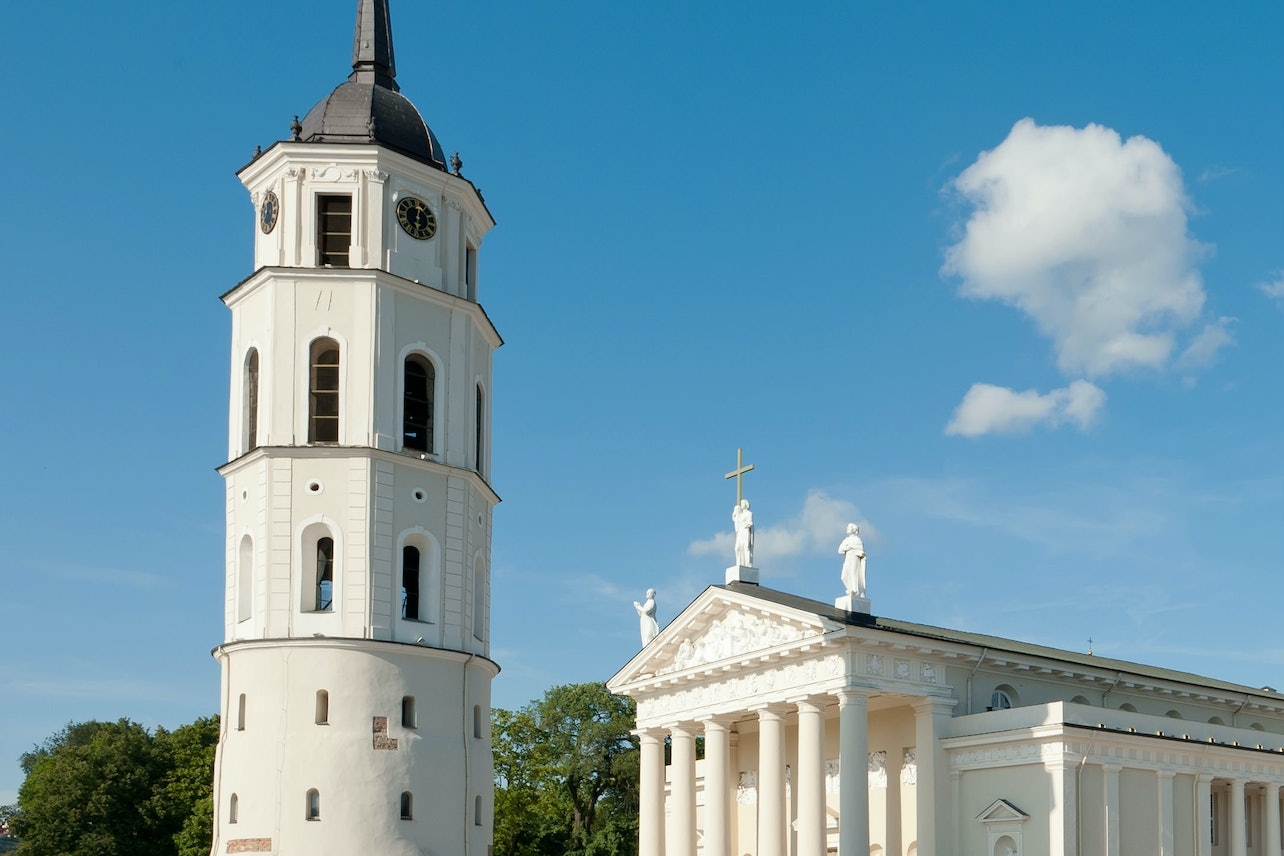
This is the primary Roman Catholic Cathedral in Lithuania, where the coronations of the Grand Dukes of Lithuania once occurred. Originally constructed in 1251 by Grand Duke Mindaugas atop a former pagan temple site, Vilnius Cathedral has undergone significant transformations over the centuries. During the Soviet era, it served as an art gallery before being returned to the Catholic Church on October 22, 1988.
5
Alongside the Basilica, the Bell Tower stands as an iconic symbol of Vilnius. Originally part of the 13th-century defensive wall, it became the 57-meter-high belfry of the Cathedral in the 16th century. Ascending the Bell Tower offers a breathtaking panorama of the city and exhibitions featuring bells, the historic clock, and images of the belfry's reconstructions.
6
Stop 6
Pass by
The Presidential Palace serves as the official residence and workplace of the President of Lithuania. Originally built in the 14th century as the residence for the Bishop of Vilnius, it has undergone numerous renovations and hosted notable figures such as Tsar Alexander I and Emperor Napoleon. Since 1997, it has been the official workplace of the President of Lithuania, with a flag bearing the President's coat of arms raised when the President is in Vilnius.
7
Stop 7
Pass by
Vilnius University is the oldest institution of higher learning in the Baltic states and one of the earliest universities in Central Europe, founded in the 16th century amid the Protestant Reformation. Its campuses showcase Gothic, Baroque, and Classical architectural styles, with the oldest building housing faculties of history, philology, and philosophy, along with the Main Library. Today, it comprises 12 faculties and approximately 23,000 students, with a history of distinguished figures such as Nobel Prize laureate Czesław Miłosz and Poland's national poet Adam Mickiewicz.
8
One of Vilnius University's most iconic features is the Church of St. Johns, dedicated to St. John the Baptist and St. John the Evangelist, along with its towering bell tower. Constructed over a span of 40 years in the early 15th century Gothic style, it later came under the administration of the Jesuit Order and became part of the university complex in the late 16th century. Throughout its history, the Church of St. Johns has hosted royal receptions, student demonstrations, and theatrical performances, and during the Soviet era, it served as a warehouse before becoming the Vilnius University Museum. Today, it remains a place of worship and received a visit from Pope John Paul II in 1993. The church's bell tower, soaring to a height of 68 meters, ranks among the tallest structures in the Old Town of Vilnius.
9
In the late 19th century, this street was christened "Literatai" as a tribute to Adam Mickiewicz, who once called this place home. Adam Bernard Mickiewicz (1798-1855) was not just a poet but also a polymath, embracing roles as a dramatist, translator, and political activist. Revered as a national poet in Poland, Lithuania, and Belarus, Mickiewicz's legacy extends beyond borders, standing as a pivotal figure in Polish Romanticism. In 2008, a group of visionary artists sought to bring the street to life by adorning it with literary-inspired art, creating a gallery of literature on its walls with plates and small objects made from various materials, paying homage to literary luminaries.
10
The M.K. Čiurlionis House, where the renowned Lithuanian painter and music composer lived between 1907 and 1908, offers visitors an immersive experience in Čiurlionis's world. Visitors can explore his personal quarters, listen to his chamber music, and view captivating art exhibitions. Opened in 1995 to mark the 120th anniversary of his birth, the museum stands as a testament to Čiurlionis's enduring legacy and profound influence on the arts.
11
This section of the Vilnius Defensive Wall, known as the "barbican," remains remarkably intact today. Constructed in the early 17th century by German engineer Friedrich Getkant, the Renaissance-style Bastion features underground gun ports and a 48-meter-long connecting tunnel, showcasing centuries of craftsmanship and defensive ingenuity. Despite enduring damage in conflicts with Moscow, it served as a military arsenal in World Wars I and II and offers exceptional panoramic views from its strategic hilltop location.
12
The Užupis Constitution, penned in 1998 by Romas Lileikis and Tomas Čepaitis, embodies the unique spirit and values of this bohemian enclave in Vilnius. Its key principles include the right to live by the River Vilnelė, the right to hot water and a tiled roof, and the right to be unique. This whimsical yet profound document has become a beloved symbol of Užupis' free-spirited ethos, drawing visitors from around the world.
13
The Bronze Angel of Užupis holds a significant place in Vilnius' bohemian enclave of Užupis. Installed in 2002, this sculpture by Romas Vilčiauskas serves as a guardian over the district, symbolizing vigilance and protection. Perched over a bridge on the Vilnelė River, the Bronze Angel's expansive wings and serene countenance offer a sense of calm and reassurance to all who encounter it. It has become a beloved landmark and meeting spot for locals and visitors alike, central to community events and celebrations, and emblematic of Užupis' distinct identity and ethos.
14
Tibet Square in Užupis, Vilnius, serves as a symbolic platform for expressing solidarity with Tibet and raising awareness about its political and cultural situation. Established in 1996 and named in honor of Tibet, the square is adorned with Tibetan symbols like prayer flags and Buddhist prayer wheels, showcasing scenes from Tibetan life. The Republic of Užupis has granted honorary citizenship to notable individuals, including the 14th Dalai Lama, who first visited Užupis in 2013. He later returned to plant a tree in Tibet Square, elevating its status to an embassy of Tibet and underscoring the Republic's commitment to peace, justice, and cultural diversity.
15
Bernardine Garden, restored to its 19th-century design by artist Vladislovas Štrausas, lies between Gediminas Hill, the Vilnelė River, and the Bernardine monastery. Established in 1469 by Lithuanian Grand Duke Kazimieras, it originally housed the Bernardine monks and later became the site of the Botanical Garden of Vilnius University in the 18th century. Today, the park features botanical and monastic exhibitions, restored historical elements, and a variety of exotic plant species, including ginkgo trees and Vilnius' oldest oak trees.
16
The Three Crosses monument in Vilnius, perched atop a prominent hill, comprises imposing crosses symbolizing Christianity. Legend has it that Franciscan monks originally erected them in the 17th century to honor seven martyred friars. Despite damage from natural disasters and wars, the current version, designed by Antoni Wiwulski in 1989, offers sweeping panoramic views and remains a favorite destination for both locals and tourists, particularly enchanting during sunrise or sunset.
17
The Museum of Applied Arts and Design occupies the historic Old Arsenal building, constructed in the mid-16th century at the behest of Grand Dukes Sigismundus the Old and Sigismundus Augustus of Lithuania and Poland. Originally one of the largest armouries in the region, it supplied armaments to key strongholds like Kyiv, Smolensk, and Polack. Despite facing significant damage during conflicts with Russia in the mid-17th century and periods of neglect in the 19th century, the building has been restored and now showcases applied arts and design.
18
Legend has it that Lithuanian Grand Duke Gediminas discovered the site for Vilnius while hunting in Šventaragis Valley. Inspired by a prophetic dream of an iron wolf atop a hill, Gediminas was urged by his court magician to establish a city there, naming it Vilnius after the nearby river Vilnia. Gediminas' Tower, the sole remaining part of the Upper Castle, was fortified with wooden structures by Gediminas and later completed in brick in 1409 under Grand Duke Vytautas. Today, the tower houses a museum exhibiting archaeological discoveries and models of Vilnius castles, along with armaments and iconographic materials from Old Vilnius. As an enduring symbol of Vilnius and Lithuania, Gediminas' Tower has left an indelible mark on the nation's history, appearing on the former national currency, the litas, and featuring prominently in Lithuanian patriotic literature and folk songs.
19
Mindaugas (1203-1263) was the first documented Grand Duke of Lithuania and the sole Christian King of Lithuania. Credited with halting the Tatars' advance, securing international recognition, and steering Lithuania towards Western civilization, he is regarded as the architect of the Lithuanian state. Historian Edvardas Gudavičius pinpointed Mindaugas's coronation date as 6th July 1253, now commemorated annually as Statehood Day in Lithuania. To mark the 750th anniversary in 2003, a 3.5-metre-tall monument depicting Mindaugas seated on a throne, adorned with royal regalia and symbols from the solar calendar, was unveiled.
20
Stop 20
Pass by
The National Museum of Lithuania, established in 1855 in Vilnius, is the country's oldest and largest repository of historical and cultural heritage. Its extensive collection includes artifacts, documents, and artworks spanning Lithuania's history from ancient times to the present day. Visitors can explore exhibits featuring archaeological discoveries, medieval weapons, traditional folk art, and items from various historical periods, including a prominent exhibit dedicated to the Grand Duchy of Lithuania. The museum also hosts temporary exhibitions, lectures, workshops, and educational programs, making it a vital institution for cultural preservation and education, fostering a deeper understanding and appreciation of Lithuania's rich history and heritage.
What's not included
Food and Drinks
Gratuities
Available languages
Audio guide
EN
Written guide
EN
Reviews breakdown
Viator
5.0
1 reviews
5★
1
4★
0
3★
0
2★
0
1★
0
Important information
Wheelchair accessible
Infants and small children can ride in a pram or stroller
Service animals allowed
Public transportation options are available nearby
Travelers should have at least a moderate level of physical fitness
Important notes
please write to guntars.gulbis@gmail.com or call +371 26126097
About Vilnius
Vilnius is the charming capital of Lithuania, known for its medieval Old Town, a UNESCO World Heritage site, and its rich history blending various cultures. The city offers a unique mix of baroque architecture, vibrant arts scene, and lively café culture, making it a captivating destination for travelers.
Top Attractions
Vilnius Old Town
A UNESCO World Heritage site, the Old Town is the heart of Vilnius, filled with cobblestone streets, baroque churches, and colorful buildings.
Historical/Architecture
Half day to full day
Free to explore
Gediminas Castle Tower
A symbol of Vilnius, this castle tower offers panoramic views of the city and is a key historical landmark.
Historical/Architecture
1-2 hours
€5
Užupis Republic
A bohemian district with its own constitution and flag, Užupis is known for its artistic community and unique charm.
Cultural/Artistic
1-2 hours
Free
Vilnius Cathedral
The main cathedral of Vilnius, located in the heart of the Old Town, is a stunning example of neoclassical architecture.
Religious/Architecture
30 minutes to 1 hour
Free (€5 for the crypts and bell tower)
Vilnius University
One of the oldest universities in Eastern Europe, Vilnius University is known for its beautiful courtyards and historic buildings.
Historical/Educational
1-2 hours
€3 for a guided tour
Must-Try Local Dishes
Cepelinai
Large dumplings filled with minced meat, curd cheese, or mushrooms, typically served with sour cream.
Main Course
Vegetarian options available (cheese or mushroom filling)
Šaltibarščiai
A cold beetroot soup made with kefir, cucumbers, and dill, perfect for summer.
Soup
Vegetarian
Kibinai
Lithuanian pastries filled with meat, cheese, or vegetables, originating from the Lithuanian Karaites.
Snack
Vegetarian options available
Šakotis
A traditional Lithuanian tree cake made from a batter of flour, eggs, and sugar, baked on a spit.
Dessert
Contains gluten and eggs
Popular Activities
Hiking in the nearby forests and parks
Cycling along the EuroVelo routes
Spa and wellness treatments
Strolling through the Old Town and parks
Visiting museums and art galleries
Attending local festivals and events
Boat rides on the Vilnia River and nearby lakes
Skiing and snowboarding at nearby resorts
Best Time to Visit
June to August
This is the warmest and most popular time to visit, with long daylight hours and plenty of festivals and outdoor activities.
15°C to 25°C
59°F to 77°F
Practical Information
Language
- Official: Lithuanian
- Widely spoken: English, Russian
- English: Moderately spoken, especially among younger people and in tourist areas
Currency
Euro (EUR)
Time Zone
GMT+2 (EET), GMT+3 (EEST) during daylight saving time
Electricity
230VV, 50HzHz
Safety Information
Overall Safety Rating: Generally safe
Vilnius is generally safe for tourists, with low crime rates and a welcoming atmosphere. However, as with any destination, it's important to stay aware of your surroundings and take basic precautions.
Important Precautions:
- • Keep valuables secure and be aware of your surroundings in crowded areas.
- • Use licensed taxis or ride-sharing apps to avoid overcharging.
- • Be cautious when accepting drinks from strangers to avoid drink spiking.
Getting there
By air
- Vilnius Airport • 6 km from city center
By train
Vilnius Railway Station
By bus
Vilnius Bus Station
Getting around
Public transport
Buses are the most common form of public transport in Vilnius. The system is efficient and covers most of the city.
Taxis
Available • Apps: Bolt, Taxify
Rentals
Car, Bike, Scooter
Neighborhoods
Old Town (Senamiestis)
Užupis
Žvėrynas
Naujamiestis
Day trips
Trakai Island Castle
26 km from Vilnius • Half day to full day
A stunning medieval castle located on an island in Lake Galvė, offering a glimpse into Lithuania's rich history and beautiful surroundings.
Kaunas
93 km from Vilnius • Full day
The second-largest city in Lithuania, known for its rich history, vibrant arts scene, and beautiful architecture.
Hill of Crosses
12 km from Šiauliai (140 km from Vilnius) • Full day
A unique and moving site featuring thousands of crosses, a symbol of Lithuanian faith and resistance.
Festivals
Vilnius International Film Festival • March
Street Music Day • June
Vilnius Christmas Market • December
Pro tips
- Visit the Užupis Republic for a unique and quirky experience, and read the Užupis Constitution for a taste of the district's independent spirit.
- Take a guided tour of the Old Town to learn about Vilnius' rich history and hidden gems.
- Try traditional Lithuanian dishes like cepelinai, šaltibarščiai, and kibinai for an authentic culinary experience.
- Explore the local craft beer scene by visiting breweries and beer bars, such as Pilies Vartai and Alaus ir Kava.
- Visit the Hill of Crosses for a deeply spiritual and culturally significant experience, best done with a guided tour for context.
From $25
per person
Price varies by option
Secure booking
Free cancellation available
Instant confirmation