Private Half-Day Walking Tour of Fes Medina with Local Guide
Active
3h - 4h
For a full refund, cancel at least 24 hours before the scheduled departure time.
Instant confirmation
Mobile or paper ticket accepted
About this experience
Discover the magic of Morocco with our Private Half-Day Walking Tour of Fez Medina with a Local Guide. Unlike group tours, this exclusive experience is fully personalized to your interests and pace, ensuring you see the very best of the world’s largest car-free urban area.
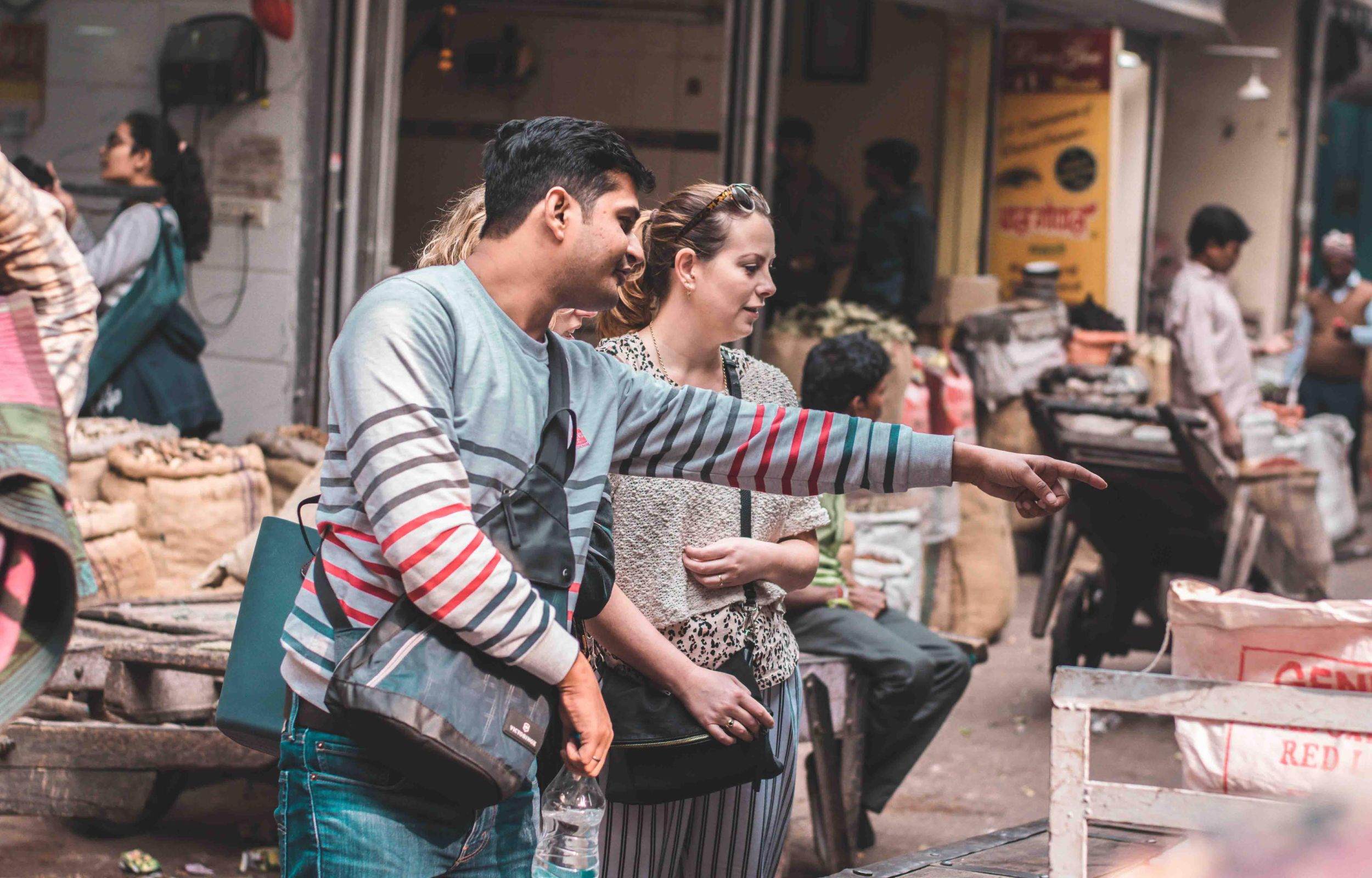
Your expert local guide will lead you through the UNESCO-listed Medina, revealing hidden gems that most visitors miss. Wander through vibrant souks, explore historic madrasas, admire intricate Islamic architecture, and visit artisan workshops where centuries-old traditions are still alive. Along the way, you’ll enjoy insider stories, cultural insights, and authentic encounters with locals.
Whether you have limited time in Fez or simply want a deeper connection to Moroccan history and culture, this private half-day walking tour is the perfect way to immerse yourself in the spirit of the Medina. With flexible timing and a knowledgeable guide by your side, you’ll experience Fez not as a tourist but as an honored guest
Available options
Private Half-Day Walking Tour of Fes Medina with Local Guide
Pickup included
What's included
Pick-up and Drop-off
Professional Local Guide
Coffee and/or Tea
Detailed itinerary
1
Visit Place R’cif in Fez Medina, one of the most vibrant squares connecting the old city with modern Fez. This lively hub is a main gateway into the historic Fes Medina, where locals gather for shopping, dining, and socializing. Surrounded by traditional cafés, fresh produce stalls, and street food vendors, Place R’cif offers travelers a true taste of Moroccan daily life. Whether you’re starting your walking tour or looking for authentic experiences, this square is the perfect introduction to Fez.
2
Place Seffarine is where one of Fez's oldest and most traditional crafts is practised: metal working (in this case, copper) using heat and a hammer to turn it into teapots, cooking pots, tea caddies, trays or containers used in the preparation of tagines or cous-cous, among other things.
3
Step into Souk Sebbaghine (the Dyers’ Market in Fez Medina), where traditional artisans use centuries-old techniques to dye fabrics in vibrant shades. Located in the heart of Fes Medina, this colorful souk is a must-see for visitors who want to experience Morocco’s authentic crafts. Watch skilled dyers at work, capture the vivid displays of hanging textiles, and immerse yourself in one of the most unique markets of Fez.
4
The al-Qarawiyyin mosque, a religious school / college was founded by Fatima al-Fihri in 859 with an associated school, or madrasa, which subsequently became one of the leading spiritual and educational centers of the historic Muslim world.
It was incorporated into Morocco’s modern state university system in 1963.
It is the oldest existing, continually operating and the first degree awarding educational institution in the world according to UNESCO and Guinness World Records and is sometimes referred to as the oldest university.
Mederssa attarin enter 20 dirhams ( 2 eur) per person
5
Stop 5
Nejjarine Museum of Wood Arts and Crafts, a work of art in itself, is a true tribute to the woodworkers who have left such a mark on the cultural heritage of Morocco. Housed in a traditional former inn or caravanserai, it has been restored and was once used by travelling merchants travelling to Fez. Goods were stored and sold on the first floor while the travellers were housed and fed on the upper floors.
The museum’s exhibition rooms are arranged around a central courtyard, where you can see everything from tools used by craftsmen to prayer beads, Berber locks, chests, large doors and musical instruments. A true journey back in time through small masterpieces.
The enter its not included 20 dirhams per person.(2 eur)
6
Stop 6
Pass by
patron saint of the city of Fez and the most revered saint in the entire country, is one of the most emblematic holy places in Morocco. Located on the Place de la Marche Verte, very close to Place Seffarine, it is a religious symbol of Islam. It is a sanctuary in which the remains of Moulay Idriss II are kept, who was one of the kings of the Idrissid dynasty and who reigned between 807 and 828. He was also the founder of the city of Fez for the second time in 810. The reason for the presence of this mausoleum dates back to 1308 when, five centuries after the death of the monarch, his body was found intact in his tomb. This is why at one point in history, more precisely from 1717 to 1824, it was decided to erect a mausoleum as a sacred place, known in Arab culture as Zaouïa. The area in which it is located is called the “Sacred Quarter”. The shrine is accessible 24 hours a day to Muslims, but not to people who practice other religions
7
Chouara Tannery (sometimes spelled Chouwara) is one of the three tanneries in the city of Fez, Morocco. It is the largest tannery in the city and one of the oldest. It is located in Fes el Bali, the oldest medina quarter of the city, near the Saffarin Madrasa along the Oued Fes (also known as the Oued Bou Khrareb).
Its not oblige to buy its free visit
8
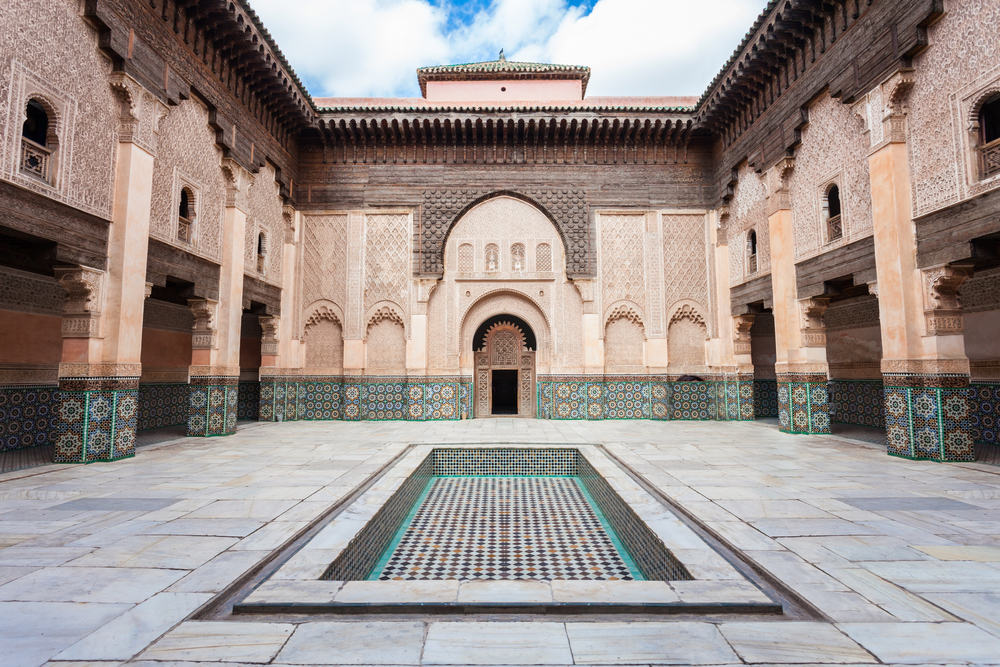
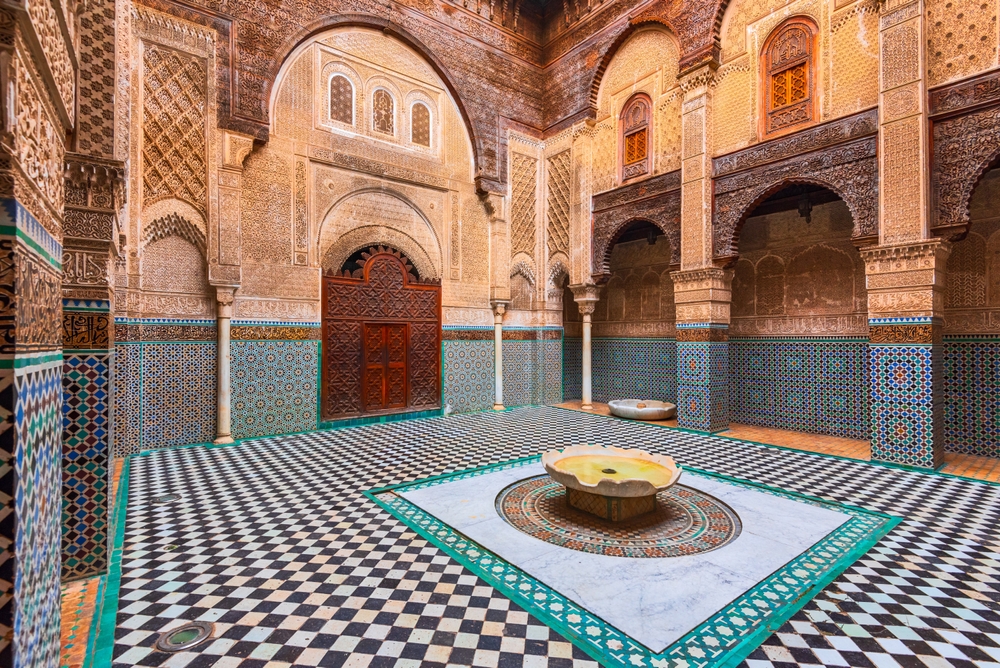
The Medersa Attarine, also known as Al-Attarine Madrasa, is a historic Islamic school in Fez, Morocco. Built between 1323 and 1325 by the Marinid sultan Abu Sa'id Uthman II , it is renowned for its stunning Moorish architecture and intricate decorations
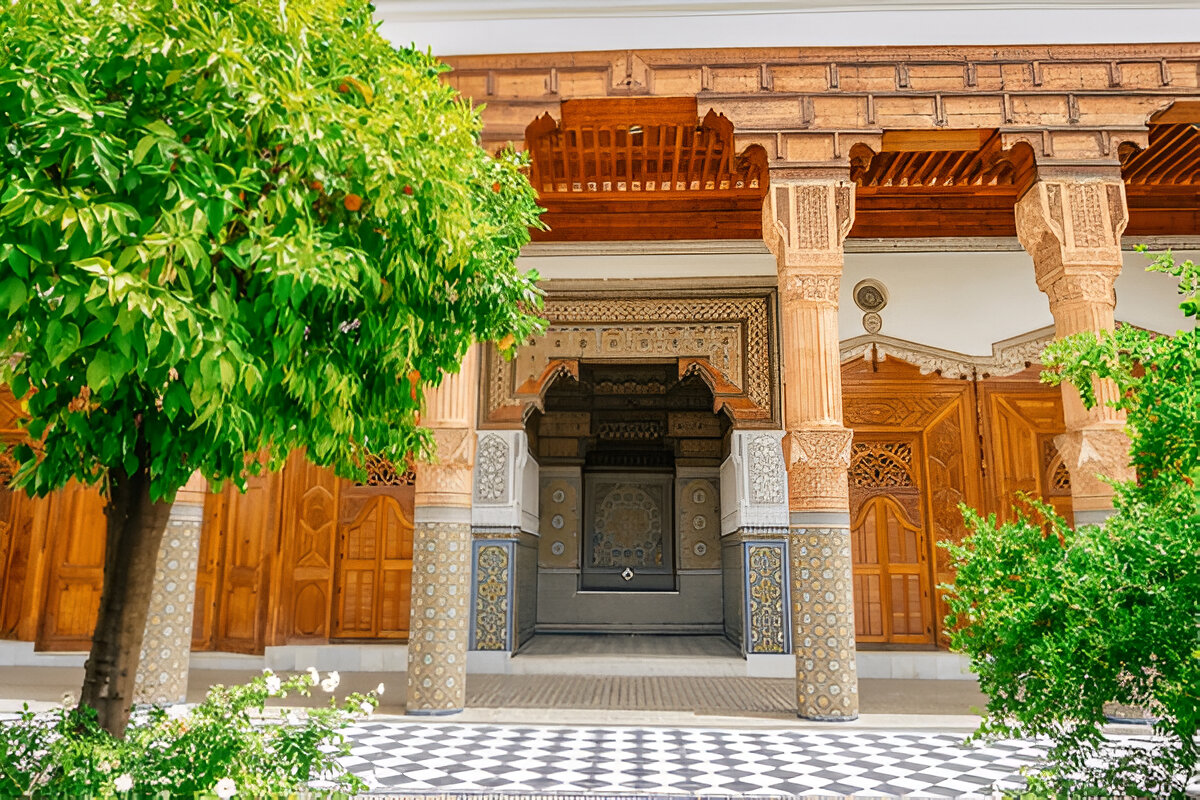
Located near the Al-Qarawiyyin Mosque, the madrasa features a beautifully ornamented courtyard with carved stucco, Arabic calligraphy, and colorful zellige mosaic tiles
entree ticket 2 euro
What's not included
Lunch
Available languages
Audio guide
EN
Guide guide
EN
Written guide
EN
Reviews breakdown
Viator
5.0
1 reviews
5★
1
4★
0
3★
0
2★
0
1★
0
Tripadvisor
5.0
38 reviews
5★
38
4★
0
3★
0
2★
0
1★
0
Important information
Wheelchair accessible
Service animals allowed
Public transportation options are available nearby
Infants are required to sit on an adult’s lap
Suitable for all physical fitness levels
About Fez
Fez is the cultural and spiritual heart of Morocco, known for its ancient medina, a UNESCO World Heritage site, and the oldest university in the world, the University of al-Qarawiyyin. It offers a rich tapestry of history, architecture, and traditional crafts.
Top Attractions
Fez Medina
The Fez Medina is a UNESCO World Heritage site and one of the largest and best-preserved medieval old cities in the world. It's a labyrinth of narrow streets, bustling markets, and historic sites.
Historical/Cultural
Full day
Free to explore, fees for specific sites
Al-Qarawiyyin University
Founded in 859 AD, Al-Qarawiyyin is the oldest continuously operating university in the world. It's a significant cultural and historical site.
Historical/Educational
1-2 hours
Free
Bou Inania Madrasa
A beautiful example of Marinid architecture, this madrasa (Islamic school) is one of the few religious sites in Fez open to non-Muslims.
Historical/Architectural
30-60 minutes
Moderate
Chouara Tanneries
One of the last remaining traditional tanneries in the world, the Chouara Tanneries offer a glimpse into an ancient craft that has changed little over centuries.
Cultural/Industrial
30-60 minutes
Free (donations appreciated)
Bab Bou Jeloud
The main gate to the Fez Medina, Bab Bou Jeloud is a beautiful example of Moroccan architecture and a great photo opportunity.
Architectural
15-30 minutes
Free
Must-Try Local Dishes
Tagine
A slow-cooked stew made with meat, vegetables, and spices, served in a conical clay pot.
Dinner
Can be made with various meats or vegetables, some vegetarian options available.
Couscous
Steamed semolina grains served with vegetables and meat, often with a rich sauce.
Lunch/Dinner
Can be made with various meats or vegetables, some vegetarian options available.
Pastilla
A savory-sweet pie made with layers of thin pastry, filled with spiced pigeon meat, almonds, and sugar.
Lunch/Dinner
Contains meat and nuts.
Harira
A hearty soup made with lentils, chickpeas, tomatoes, and spices, often served during Ramadan.
Lunch/Dinner
Vegetarian and vegan options available.
Popular Activities
Hiking in the Rif Mountains
Horseback riding in the countryside
Spa and hammam treatments
Strolling through the gardens of the Royal Palace
Exploring the Fez Medina
Visiting historic sites and museums
Attending traditional music and dance performances
Experiencing a traditional hammam
Best Time to Visit
Spring (March to May) and Fall (September to November)
The weather is pleasant, with mild temperatures and lower humidity. This is the best time for sightseeing and exploring the city.
15°C to 25°C
59°F to 77°F
Practical Information
Language
- Official: Arabic, Berber
- Widely spoken: French, English (in tourist areas)
- English: Moderately spoken in tourist areas, limited elsewhere
Currency
Moroccan Dirham (MAD)
Time Zone
GMT+1
Electricity
220VV, 50HzHz
Safety Information
Overall Safety Rating: Generally safe, but exercise caution
Fez is generally safe for travelers, but petty crime and scams can occur, especially in crowded areas. Be aware of your surroundings and take precautions to protect your belongings.
Important Precautions:
- • Keep valuables secure and out of sight
- • Be cautious of strangers offering help or services
- • Use reputable tour operators and guides
Getting there
By air
- Fes-Saïss Airport • 15 km from city center
By train
Fez Railway Station
By bus
Fez CTM Bus Station, Fez Supratours Bus Station
Getting around
Public transport
Buses are the most common form of public transport in Fez. They are affordable but can be crowded.
Taxis
Available • Apps: None widely used
Rentals
Car, Bike, Scooter
Neighborhoods
Fez Medina
Fes el Jdid
Ville Nouvelle
Day trips
Meknes
60 km • Full day
Meknes is a historic city with a rich past, known for its imperial palaces, mosques, and the famous Bab Mansour gate. It offers a mix of history, architecture, and local culture.
Volubilis
80 km • Full day
Volubilis is a UNESCO World Heritage site and the remains of a Roman city. It's one of the most important archaeological sites in Morocco, offering a glimpse into the country's Roman past.
Chefchaouen
120 km • Overnight
Chefchaouen is a picturesque mountain town known for its blue-washed buildings, narrow streets, and relaxed atmosphere. It's a great place to escape the hustle and bustle of the city and enjoy the natural beauty of the Rif Mountains.
Festivals
Fez Festival of World Sacred Music • June
Fez Festival of Sufi Culture • April
Ramadan • Date varies (Islamic calendar)
Pro tips
- Hire a local guide to navigate the medina and learn about its history and culture
- Visit the Chouara Tanneries early in the morning to avoid the heat and crowds
- Try a traditional hammam experience for relaxation and rejuvenation
- Learn a few basic phrases in Arabic or French to enhance your interactions with locals
- Bargain politely in markets and souks, but be prepared to walk away if the price is not agreeable
From $25
per person
Price varies by option
Secure booking
Free cancellation available
Instant confirmation