City Highlights by Golf Cart Rome Sightseeing Tour
Active
2h - 3h
For a full refund, cancel at least 24 hours before the scheduled departure time.
Instant confirmation
Mobile or paper ticket accepted
About this experience
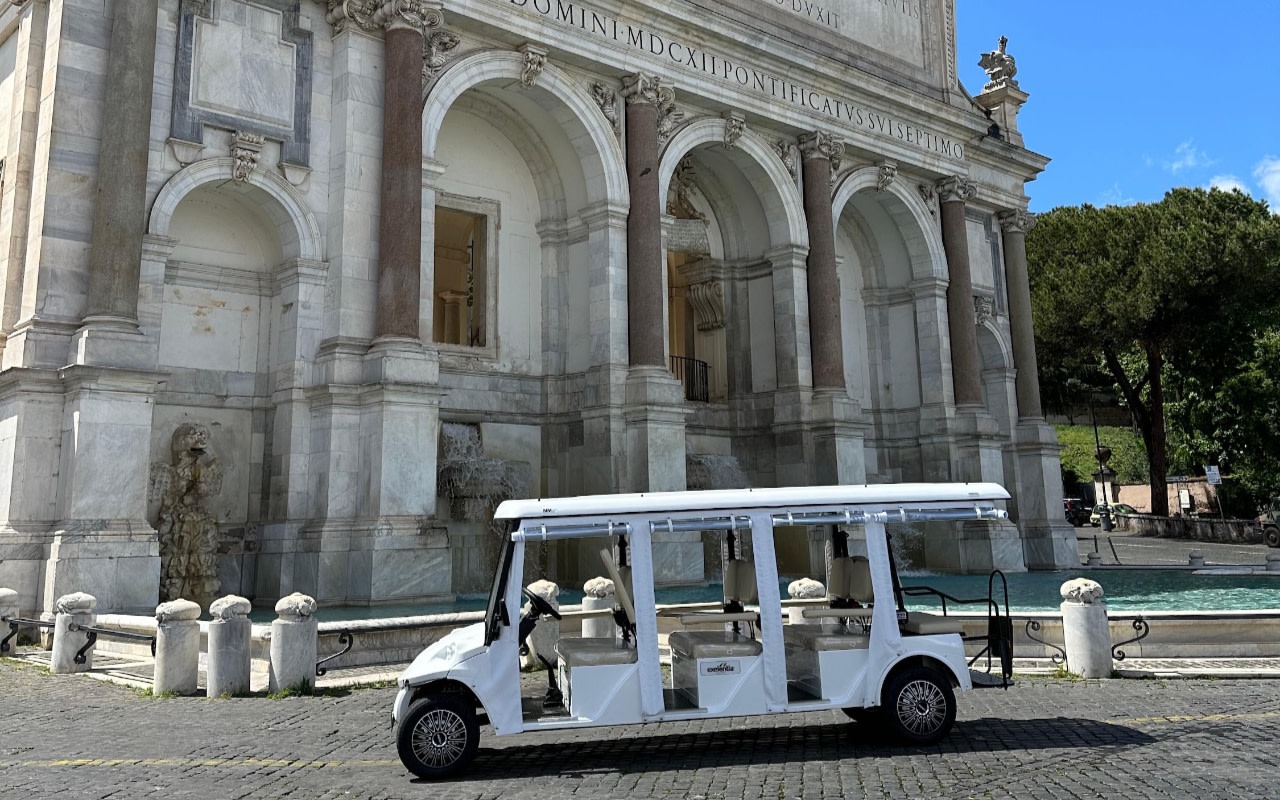
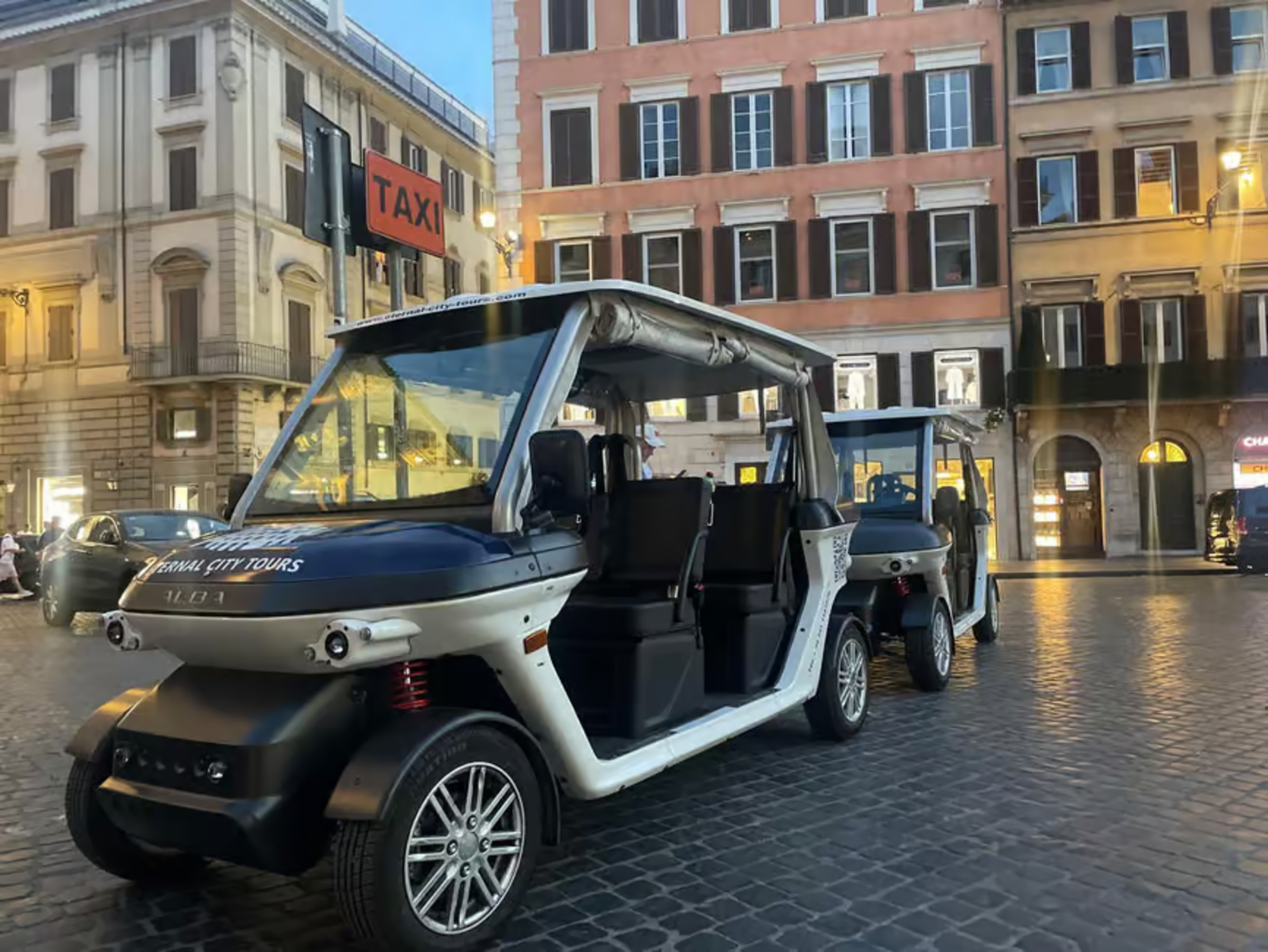
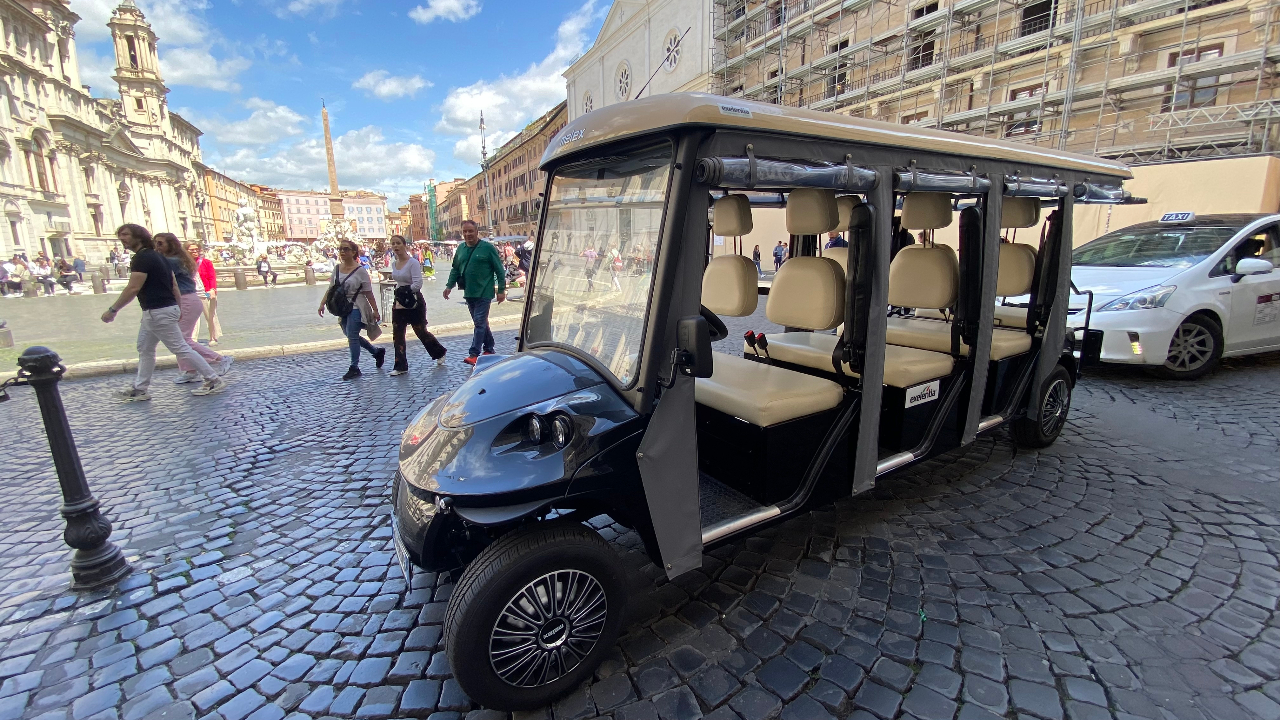
Experience the Eternal City like never before on this 2.5-hour golf cart sightseeing tour of Rome, combining the intimacy of a walking tour with the ease and comfort of effortless travel.
Your journey begins at the legendary Colosseum (outside view) before cruising past the Circo Massimo, the ancient chariot-racing stadium, and the elegant Teatro Marcello, often called the “mini Colosseum.” Continue to Piazza Venezia, home to the imposing Altare della Patria, and ascend to the enchanting Spanish Steps.
The adventure continues with a stop at the Trevi Fountain, where you can toss a coin for good luck, followed by the artistic charm of Piazza Navona, and concludes in the lively Campo de’ Fiori, perfect for soaking up the vibrant Roman atmosphere.
Sit back, relax, and let Rome’s magic unfold—one breathtaking landmark at a time on this thrilling and comfortable golf cart tour.
Available options
City Highlights by Golf Cart Rome Sightseeing Tour
What's included
Electric Golf Cart (7 seater)
Outside visit: the Colosseum, Spanish Steps, Trevi Fountain
English speaking Driver Guide
Detailed itinerary
1
Stop 1
Pass by
Sightseeing, photography
The Colosseum, officially known as the Flavian Amphitheatre, is an ancient Roman amphitheatre located in the center of Rome, Italy. Built between 72 AD and 80 AD during the reign of Emperor Vespasian, it is one of the most iconic and recognizable landmarks in the world.
2
Stop 2
Pass by
Sightseeing, photography
Palatine Hill is one of the seven hills of Rome, Italy, and it has a rich and storied history dating back to ancient times. The hill was once the site of the ancient city of Rome's most sacred and prestigious areas, including the palace of the Roman kings and the temple of Jupiter.
3
Stop 3
Pass by
Sightseeing, photography
The Circus Maximus, located in Rome, Italy, boasts a rich history dating back to the Roman Republic. Initially used for chariot races, it evolved over centuries, becoming a grand venue for public games, festivals, and spectacles, including animal hunts and gladiatorial combats.
4
Sightseeing, photography
The Giardino degli Aranci, or Orange Garden, is a tranquil park on Rome's Aventine Hill, offering stunning views. Its history dates back to the Roman era, but the garden as it exists today was designed in 1932 by Raffaele De Vico. It was commissioned to replace a former orchard and is known for its bitter orange trees, which give the garden its name and distinctive fragrance. The park is also connected to the nearby Basilica of Santa Sabina, adding to its historical and religious significance.
5
Stop 5
Pass by
Sightseeing, photography
The Theatre of Marcellus is an ancient open-air theatre in Rome, Italy. It was commissioned by Julius Caesar and completed by Emperor Augustus around 13 BC, and could hold between 11,000 and 20,000 spectators. It served as a model for the Colosseum, and was used for performances, games, and public spectacles for centuries. Over time, it was incorporated into residential buildings, and today only a portion of the original structure remains, but it still stands as a testament to the grandeur of ancient Roman architecture.
6
Stop 6
Pass by
Sightseeing, photography
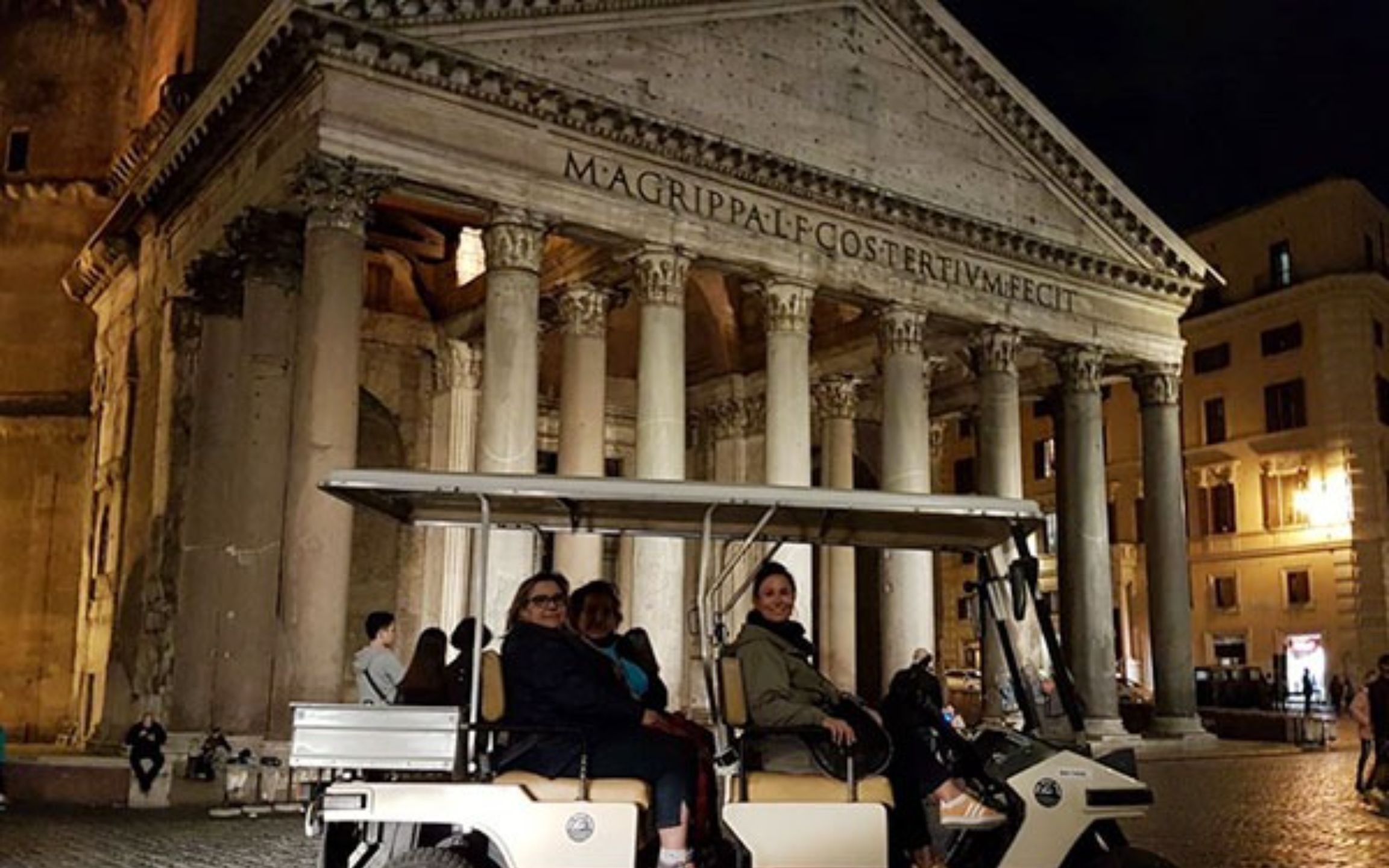
The Pantheon, a remarkably preserved ancient Roman temple, was originally built by Marcus Agrippa during the reign of Emperor Augustus in 27-25 BC. It was later rebuilt by Emperor Hadrian around 126 AD after being damaged by fire. Its purpose has been debated, with theories ranging from a temple to all gods to a symbol of imperial power. Notably, the Pantheon is famous for its massive concrete dome, which remains the largest unreinforced concrete dome in the world. Over the centuries, it has served as a church since the 7th century and has been a significant architectural inspiration throughout history.
7
Stop 7
Pass by
Sightseeing, photography
The Trevi Fountain, a stunning Baroque masterpiece in Rome, Italy, dates back to the 1st century BC when it was an aqueduct that supplied water to the city. The current fountain, however, was commissioned in 1732 by Pope Clement XII and designed by Nicola Salvi, although construction was overseen by several architects. It took 30 years to complete, and features intricate sculptures depicting the sea god Oceanus, along with other mythological figures, and embodies the theme of the triumph of water. The fountain gained further fame through films like "La Dolce Vita" and is a popular tourist attraction where visitors traditionally toss coins into the water to ensure a return to Rome.
8
Stop 8
Pass by
Sightseeing, photography
The Spanish Steps, a monumental stairway of 135 steps, were built between 1723 and 1725, connecting the Piazza di Spagna at the base with the Trinità dei Monti church at the top. They were commissioned by the French diplomat Étienne Gueffier, with the aim of linking the Spanish embassy (hence the name) with the church, which was under French patronage. The project was designed by Francesco de Sanctis and Alessandro Specchi. The steps' construction reflected a compromise between French and Spanish interests, becoming a symbol of cultural exchange and architectural grandeur in Rome.
9
Stop 9
Pass by
Sightseeing, photography
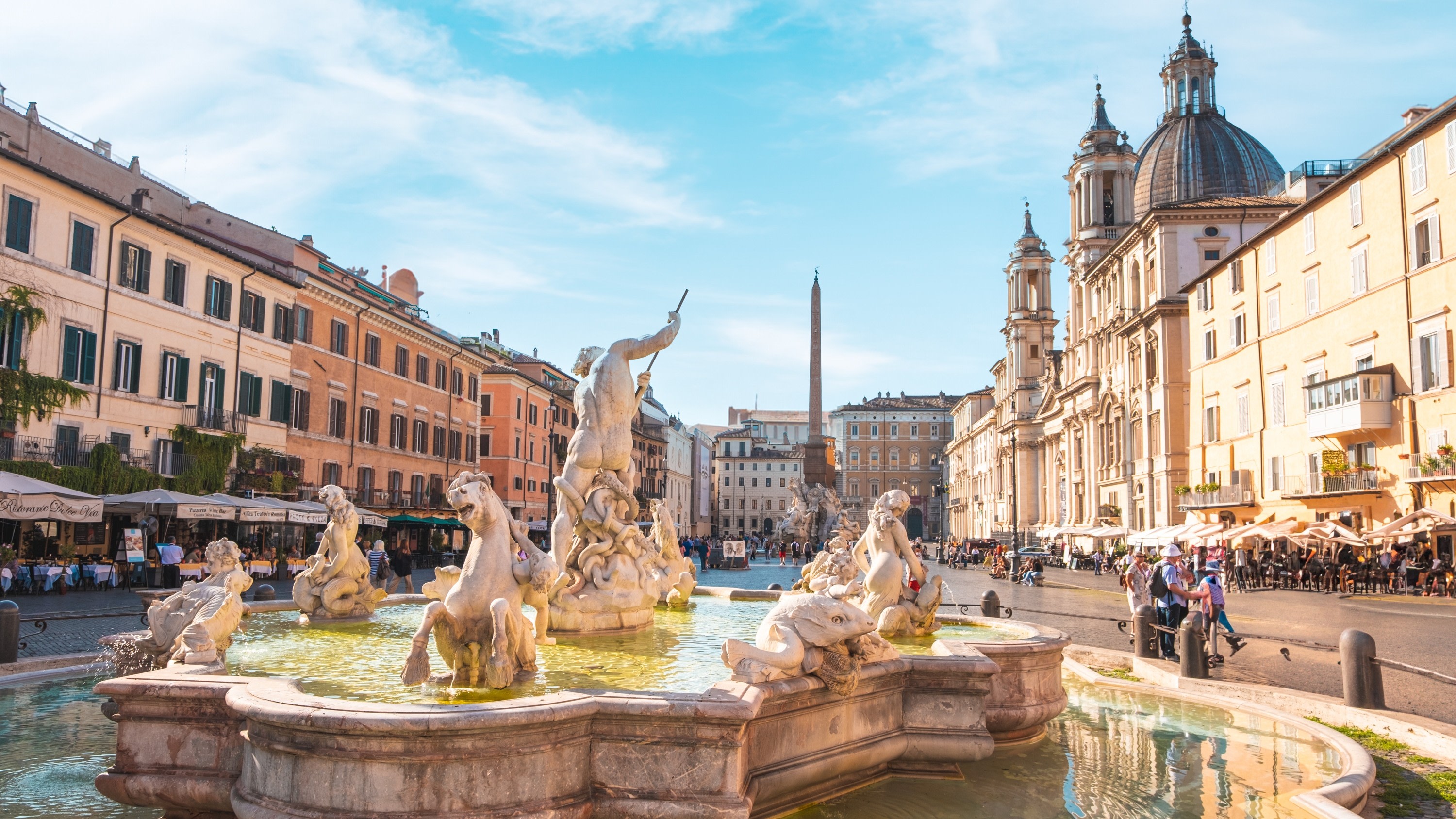
Piazza Navona in Rome is built on the site of the Stadium of Domitian, constructed in the 1st century AD. This stadium hosted athletic contests and games for the public. Over time, the stadium's structure was incorporated into surrounding buildings. In the 15th century, the area became a public square, retaining its elongated shape. Popes, particularly Innocent X, commissioned significant renovations, including the construction of the iconic Fountain of Four Rivers by Bernini, making it a prominent example of Baroque architecture and a beloved public space.
10
Stop 10
Pass by
Sightseeing, photography
Campo de' Fiori in Rome is a historic square, famous for its daily morning market. It's a lively place, filled with stalls selling fresh produce, flowers, and souvenirs. Historically, it was a site for executions during the Roman Inquisition, and the statue in the center commemorates the philosopher Giordano Bruno, who was burned at the stake there in 1600. Today, it's a popular spot for locals and tourists, buzzing with activity during the day and transforming into a vibrant nightlife destination in the evenings.
What's not included
Tips
Entrance inside the monuments
Available languages
Guide guide
DE
EN
IT
ES
Important information
Public transportation options are available nearby
Suitable for all physical fitness levels
Meeting point
From the metro station Colosseo, turn right on Via Dei Fori Imperiali and go straight to the first traffic light then, turn right on Via Cavour and turn left on the second street
The agency is located at Via del Cardello 31.
About Rome
Rome, the capital of Italy, is a city of ancient ruins, artistic masterpieces, and vibrant culture. Known as the Eternal City, it is a living museum where every corner tells a story of its rich history spanning over 2,500 years.
Top Attractions
Colosseum
The Colosseum is an iconic symbol of Rome and one of the most famous ancient amphitheaters in the world. It was used for gladiatorial contests and public spectacles.
Historical
1-2 hours
€16 (combined ticket with Roman Forum and Palatine Hill)
Vatican City
Vatican City is an independent city-state enclaved within Rome. It is the spiritual and administrative center of the Roman Catholic Church.
Religious
Half day
€17 (Vatican Museums and Sistine Chapel), Free (St. Peter's Basilica)
Roman Forum
The Roman Forum was the political, commercial, and legal hub of the Roman Republic and Empire. It is a sprawling ruin of temples, basilicas, and arches.
Historical
1-2 hours
€16 (combined ticket with Colosseum and Palatine Hill)
Pantheon
The Pantheon is a former Roman temple, now a church, known for its large dome and oculus. It is one of the best-preserved ancient buildings in Rome.
Historical
30 minutes to 1 hour
Free
Trevi Fountain
The Trevi Fountain is a Baroque masterpiece and the largest fountain in Rome. It is a popular spot for visitors to throw coins and make wishes.
Architecture
15-30 minutes
Free
Must-Try Local Dishes
Cacio e Pepe
A simple yet delicious pasta dish made with Pecorino Romano cheese and black pepper.
Pasta
Vegetarian
Carbonara
A rich pasta dish made with eggs, Pecorino Romano, guanciale (cured pork cheek), and black pepper.
Pasta
Contains pork and eggs
Supplì
Fried rice balls filled with mozzarella and tomato sauce.
Snack
Vegetarian (some variations may contain meat)
Carciofi alla Romana
Artichokes braised with garlic, mint, and olive oil.
Vegetable
Vegetarian
Popular Activities
Hiking in the Appian Way Regional Park
Biking along the Tiber River
Rock climbing in the nearby mountains
Picnicking in Villa Borghese Gardens
Boating on Lake Albano
Enjoying a spa day at a luxury hotel
Visiting the Vatican Museums
Attending an opera at the Teatro dell'Opera di Roma
Best Time to Visit
April to June, September to October
Spring and fall offer pleasant weather and fewer crowds compared to the summer peak. Ideal for sightseeing and outdoor activities.
15-30°C
59-86°F
Practical Information
Language
- Official: Italian
- Widely spoken: English, Spanish, French
- English: Moderately spoken
Currency
Euro (EUR)
Time Zone
GMT+1 (CET), GMT+2 (CEST during daylight saving time)
Electricity
230VV, 50HzHz
Safety Information
Overall Safety Rating: Generally safe
Rome is generally safe for tourists, but pickpocketing and scams can be a problem in crowded areas. Be aware of your surroundings and take precautions to protect your belongings.
Important Precautions:
- • Keep valuables secure and out of sight
- • Use official taxis or ride-sharing services
- • Be cautious of strangers approaching you with petitions or bracelets
Getting there
By air
- Leonardo da Vinci International Airport • 35 km from city center
- Ciampino Airport • 15 km from city center
By train
Roma Termini, Roma Tiburtina
By bus
Tiburtina Bus Station, Roma Termini
Getting around
Public transport
The metro system is efficient and covers major tourist areas. It operates from 5:30 AM to 11:30 PM.
Taxis
Available • Apps: Uber, FreeNow
Rentals
Car, Bike, Scooter
Neighborhoods
Trastevere
Monti
Prancipio
Testaccio
Day trips
Ostia Antica
30 km from Rome • Half day
An ancient Roman port city with well-preserved ruins, including a theater, baths, and mosaics. It offers a glimpse into daily life in ancient Rome.
Tivoli
30 km from Rome • Full day
A picturesque town known for its stunning villas and gardens, including the famous Villa d'Este with its elaborate fountains and gardens.
Orvieto
120 km from Rome • Full day
A charming hilltop town known for its stunning cathedral, underground caves, and local wine. It offers a mix of history, culture, and scenic views.
Festivals
Natale di Roma • April 21
Festa de' Noantri • July
Rome Film Festival • October
Pro tips
- Visit major attractions early in the morning or late in the afternoon to avoid crowds
- Use public transport or walk instead of taking taxis to save money and experience the city like a local
- Try local specialties and ask for recommendations from locals and restaurant staff
- Dress modestly when visiting religious sites and be respectful of local customs and traditions
- Be aware of pickpockets and scams, especially in crowded areas and tourist hotspots
From $25
per person
Price varies by option
Secure booking
Free cancellation available
Instant confirmation