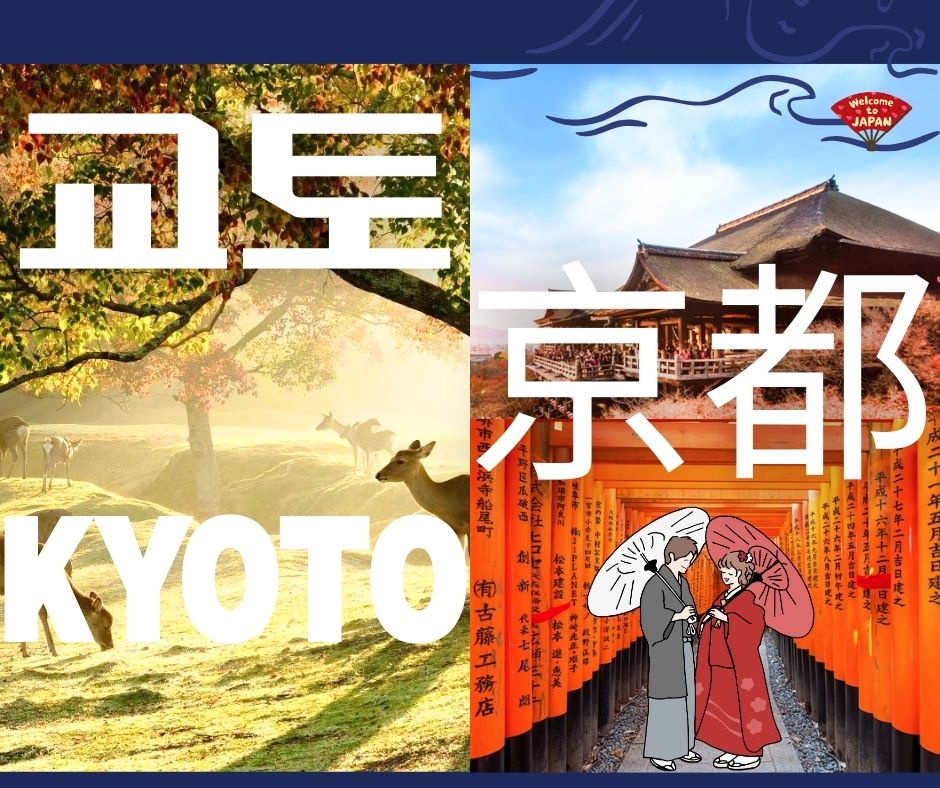
Fushimi Inari and Nara Private and Guided Tour in Spanish
Active
8h
For a full refund, cancel at least 24 hours before the scheduled departure time.
Instant confirmation
Mobile or paper ticket accepted
About this experience
We start at your hotel in Kyoto at 9:30 a.m.
In the village of Inari, we will explore the Shinto shrine Fushimi Inari Taisha, a sacred place dedicated to the deity Inari, associated with fertility, agriculture and business success. With thousands of beautiful red torii marking the way to the top of the hill.
Our next stop will be the city of Nara, the first capital of Japan between 710 and 784. During this period the great temples were built that we will visit: Kofukuji (with a spectacular pagoda) and Todaiji (the largest wooden structure in the world).
Then we will tour the majestic Park of Nara, full of deer, considered the ancient messengers of the gods.
After free time for lunch on your own, the tour will end at Kyoto Central Station at approximately 5:30 p.m. Please note that even if you do not want to have lunch, there will be a mandatory 30-minute break for the guide to recover energy.
Available options
Fushimi Inari and Nara Private and Guided Tour in Spanish
Pickup included
What's included
Local Spanish-speaking guide
Detailed itinerary
1
Stop 1
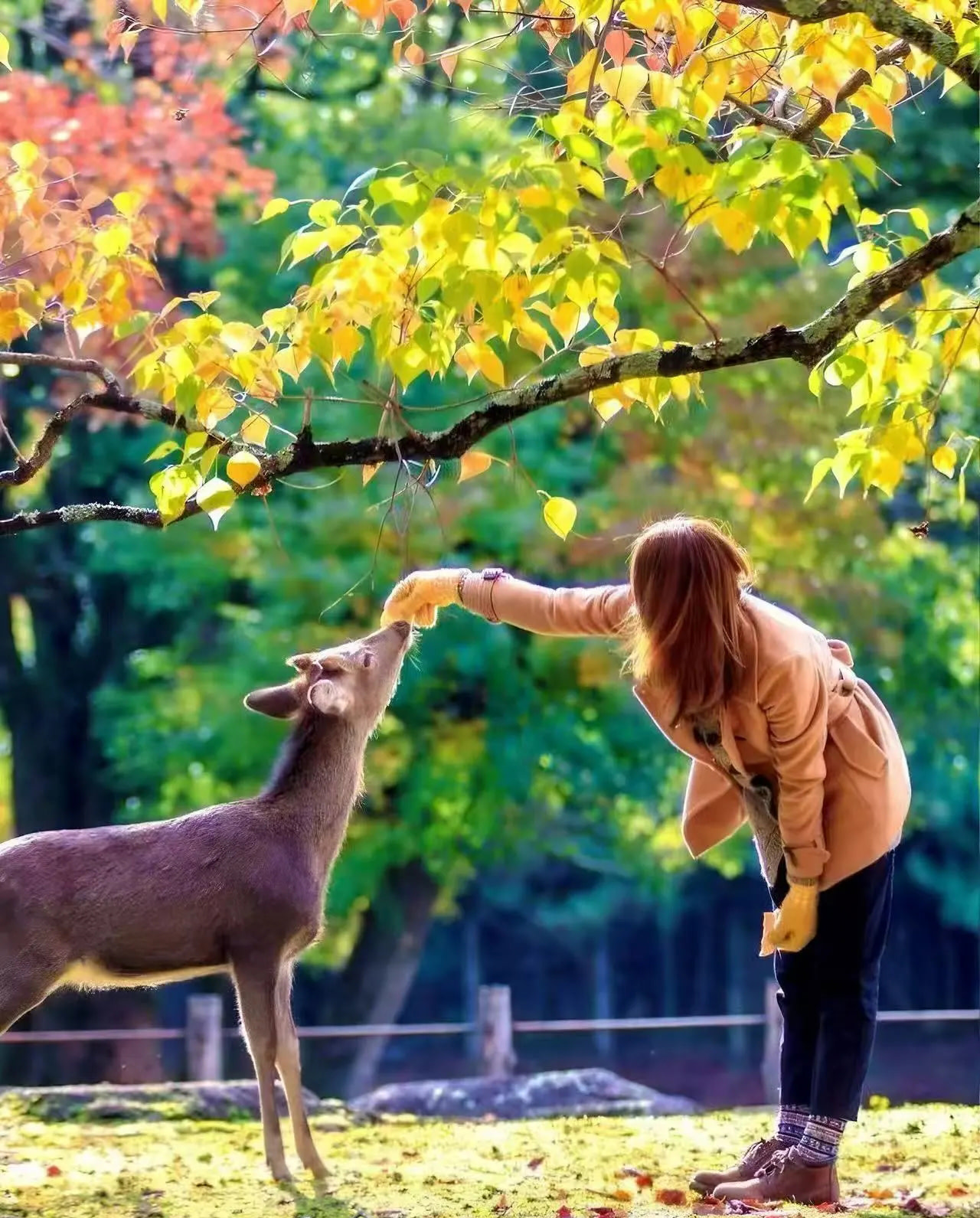
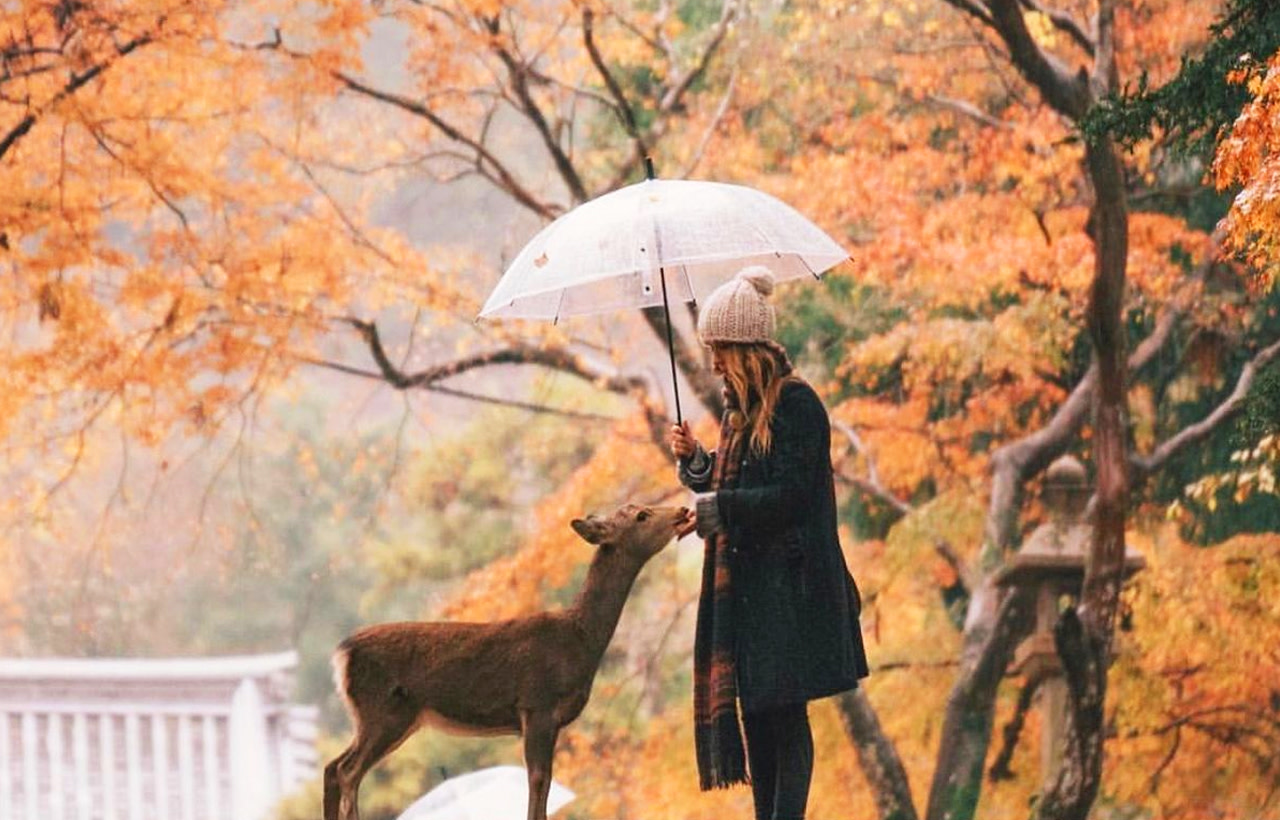
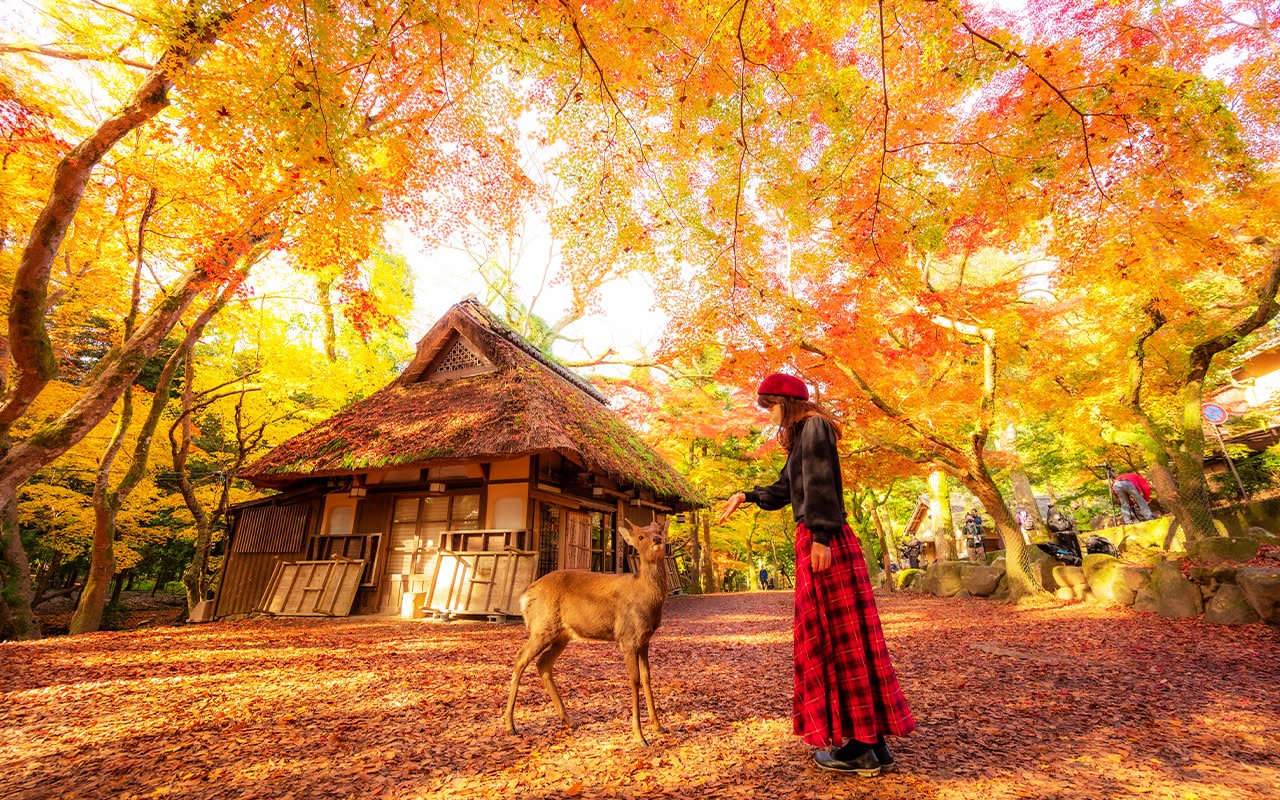
We will visit Nara Park, one of the most emblematic and quiet places in Japan. Famous for its more than 1,000 free-roaming deer, the park offers a unique experience where animals, considered sacred in Japanese culture, interact friendly with visitors.
2
Stop 2
We will visit Todai-ji Temple, one of the most impressive and significant temples in Japan. Located in Nara Park, Todai-ji is famous for hosting the Daibutsu or Great Buddha, a huge 15-meter-high bronze statue, considered one of the largest in the world. The temple was founded in the 8th century and is an important center of the Kegon Buddhist sect. Its main building, the Daibutsuden (Big Buddha Hall), is also one of the largest wooden buildings in the world. In addition to the majestic statue, the temple and its surroundings offer an atmosphere of serenity and spirituality, surrounded by nature and the sacred deer that inhabit the park. The Todai-ji Temple is a must-see for those who wish to learn more about Japanese history, religion and culture.
3
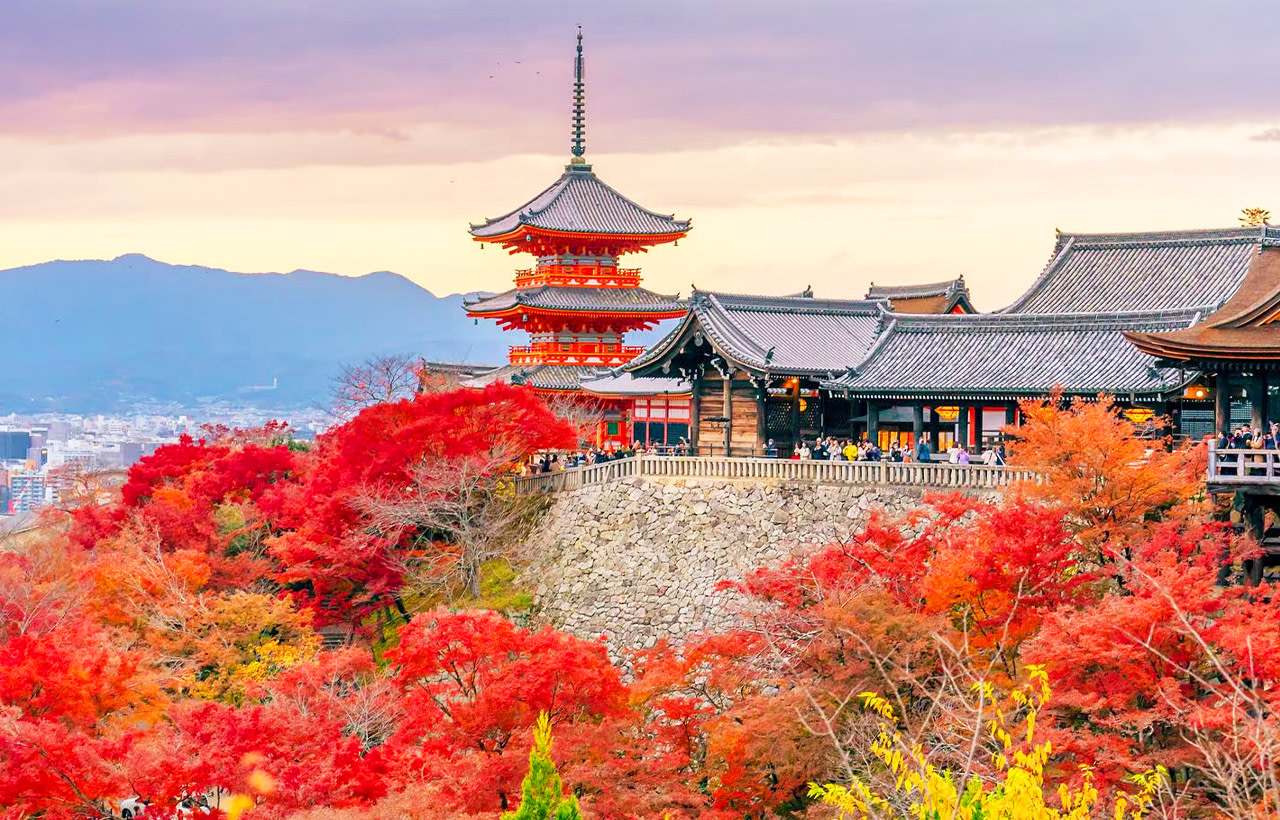
We will visit Kofuku-ji Temple, one of the oldest and most important temples in Nara. Founded in 669, Kofuku-ji was originally the family temple of the powerful Fujiwara family and played a central role in the history of Buddhism in Japan. The temple is known for its impressive architecture, which includes several historic buildings, such as the Three-Story Pagoda, which is one of the tallest buildings in Nara, and the Main Hall (Hondo), which houses important Buddhist statues.
4
Stop 4
We will visit Fushimi Inari Taisha, one of Japan’s most iconic and spiritual shrines, known for its stunning red torii trail up Inari Mountain. Dedicated to Inari, the god of rice and prosperity, this shrine is located in Kyoto and famous for its spectacular path of more than 10,000 torii gates, which create a vibrant and photogenic tunnel. The experience of walking along this trail, surrounded by nature, is unique and deeply symbolic, as each torii was donated by companies and people seeking Inari’s blessing.
Fushimi Inari is a place of great religious importance, and in addition to the Torii, the shrine has a number of small shrines and fox statues, which are the messengers of Inari. The hike to the top of the mountain offers panoramic views and a complete immersion in the serenity of the surroundings.
What's not included
Private transportation
Lunch
Available languages
Guide guide
EN
ES
Reviews breakdown
Viator
5.0
1 reviews
5★
1
4★
0
3★
0
2★
0
1★
0
Important information
Public transportation options are available nearby
Infants are required to sit on an adult’s lap
Suitable for all physical fitness levels
Meeting point
We can pick up passengers from Nara Central Station , we will communicate by telephone the exact meeting point one day before the tour.
About Nara
Nara, Japan's first permanent capital, is a city steeped in history and culture. Known for its ancient temples, friendly deer, and UNESCO World Heritage Sites, Nara offers a unique blend of natural beauty and historical significance. The city's well-preserved heritage sites and serene landscapes make it a must-visit destination in Japan.
Top Attractions
Todai-ji Temple
Todai-ji Temple is a UNESCO World Heritage Site and one of Japan's most famous and historically significant temples. It houses the Great Buddha Hall, which contains a giant bronze Buddha statue.
Historical/Religious
2-3 hours
600 JPY (5.50 USD)
Nara Park
Nara Park is famous for its friendly deer, which are considered sacred in Shinto tradition. The park is also home to several important temples and shrines.
Nature/Cultural
1-2 hours
Free (200 JPY for deer crackers)
Kasuga Taisha Shrine
Kasuga Taisha is a famous Shinto shrine with a history dating back to 768 AD. It is known for its many lanterns, which are donated by worshippers.
Religious/Cultural
1-2 hours
Free (500 JPY for the Botanical Garden)
Kofuku-ji Temple
Kofuku-ji Temple was once one of the most powerful and influential temples in Japan. It is known for its pagoda and museum, which houses many important artifacts.
Historical/Religious
1-2 hours
300 JPY (Museum) (3 USD)
Nara National Museum
Nara National Museum is dedicated to the art and history of Nara and its temples. It houses a collection of Buddhist sculptures, paintings, and other artifacts.
Museum
1-2 hours
620 JPY (5.50 USD)
Must-Try Local Dishes
Kakinoha-zushi
A type of sushi where vinegared rice and fish are wrapped in persimmon leaves, giving it a unique flavor and aroma.
Lunch/Dinner
Contains fish
Nara zuiki
A traditional Nara dish made with chicken, mushrooms, and vegetables cooked in a sweet soy-based sauce.
Dinner
Contains chicken
Nara pickles
A variety of pickled vegetables, including radish, eggplant, and cucumber, known for their unique flavors and textures.
Snack/Side
Vegetarian
Popular Activities
Hiking in Nara Park
Biking around the city
Tea ceremony
Onsen (hot spring) visit
Temple visits
Traditional crafts workshops
Winter illuminations at temples and shrines
Deer feeding in Nara Park
Best Time to Visit
Spring (March to May) and Autumn (October to November)
These seasons offer pleasant weather and are ideal for outdoor activities. Spring brings cherry blossoms, while autumn features beautiful fall foliage.
15-25°C
59-77°F
Practical Information
Language
- Official: Japanese
- Widely spoken: English (limited)
- English: Limited
Currency
Japanese Yen (JPY)
Time Zone
GMT+9
Electricity
100VV, 50/60HzHz
Safety Information
Overall Safety Rating: Very safe
Nara is a very safe city with low crime rates. Violent crime is rare, and petty crime is uncommon. However, as with any destination, it's important to take basic precautions to ensure a safe and enjoyable trip.
Important Precautions:
- • Keep valuables secure
- • Be cautious of deer in Nara Park, as they can be aggressive when looking for food
- • Avoid walking alone in poorly lit or deserted areas at night
Getting there
By air
- Kansai International Airport • 50 km (31 miles)
- Osaka International Airport (Itami) • 35 km (22 miles)
By train
Nara Station
By bus
Nara Station, Kintetsu Nara Station
Getting around
Public transport
The bus system is efficient and covers most major attractions. Day passes are available for frequent travelers.
Taxis
Available • Apps: JapanTaxi, DiDi
Rentals
Car, Bike, Scooter
Neighborhoods
Nakasenbon
Zakuracho
Sanjo-dori
Day trips
Osaka
40 km (25 miles) • Half day to full day
Osaka is a vibrant city known for its food, shopping, and nightlife. It offers a mix of modern attractions and historic sites.
Kyoto
40 km (25 miles) • Full day
Kyoto is a city rich in history and culture, with numerous temples, shrines, and gardens. It's known for its traditional tea houses, geisha districts, and historic streets.
Ise
80 km (50 miles) • Full day
Ise is home to the Ise Grand Shrine, one of Shinto's holiest sites. The city offers a serene and spiritual experience, with beautiful forests and traditional architecture.
Festivals
Nara Matsuri • April 25-26
Lantern Festival at Kasuga Taisha • February 3-4
Pro tips
- Visit Todai-ji Temple early in the morning to avoid crowds and enjoy a more serene experience.
- Buy deer crackers to feed the deer in Nara Park, but be cautious and follow the rules to ensure a safe and enjoyable interaction.
- Consider staying in a ryokan for a unique cultural experience, complete with traditional tatami rooms, onsen (hot springs), and kaiseki meals.
- Explore Nara-machi, the historic district, for a glimpse into the city's past and to shop for local crafts and souvenirs.
- Use an IC card like ICOCA for easy payments on public transportation, buses, and some shops and vending machines.
From $25
per person
Price varies by option
Secure booking
Free cancellation available
Instant confirmation


![[Kyoto & Nara Day Trip] Arashiyama Train & Nara Park & Fushimi Inari Shrine's Thousand Torii Gates & Togetsukyo Bridge & Bamboo Forest Path & Kimono Forest (Departure from Osaka)](https://res.klook.com/image/upload/activities/nwrlvoqxc4roubxbiywr.jpg)
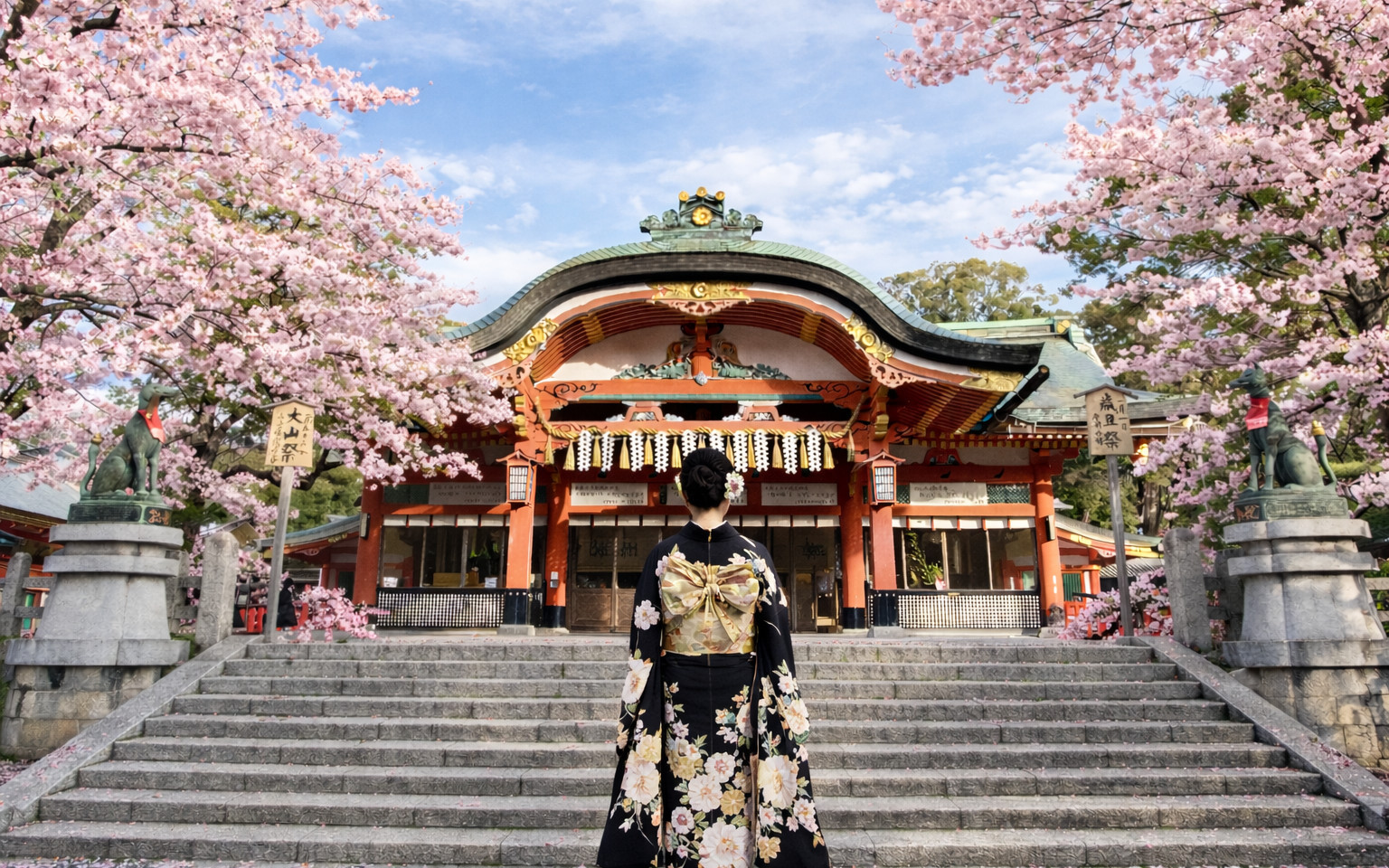
![[Small Group Tour for 4-9 People] Kyoto & Nara Day Trip | Kiyomizu-dera Temple & Fushimi Inari Shrine & Nara Park | Optional Osaka Hotel Pickup/Drop-off | Round Trip from Osaka | Chinese Service](https://res.klook.com/image/upload/activities/fhj0httwd7v9dvgkciij.jpg)
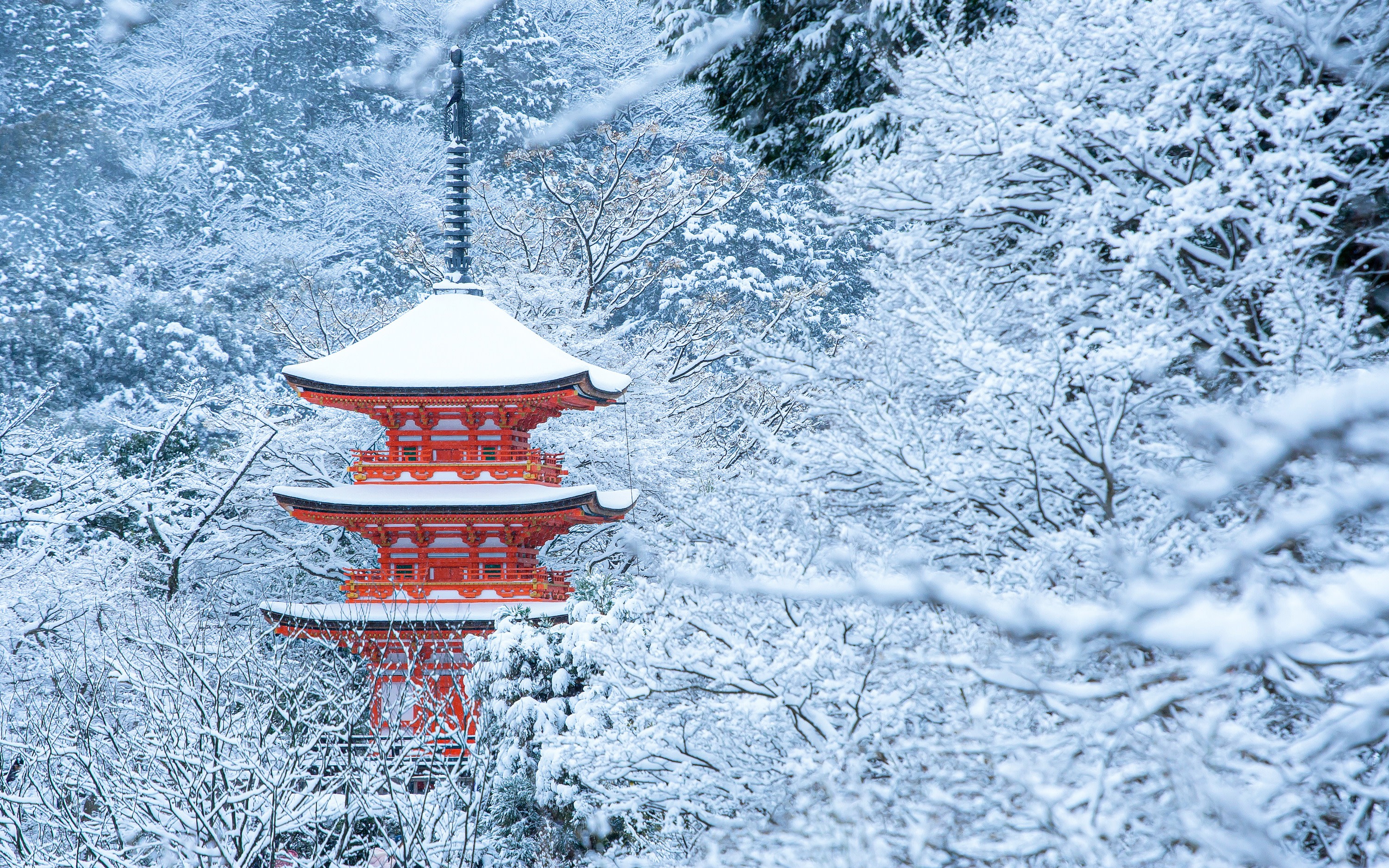
![[Kyoto & Nara Twin Ancient Capital World Heritage Tour] Kiyomizu-dera Temple & Fushimi Inari Taisha Shrine & Nara Park Day Trip (Osaka/Kyoto Departure)](https://res.klook.com/image/upload/activities/nmgput2ls6getj63uymy.jpg)
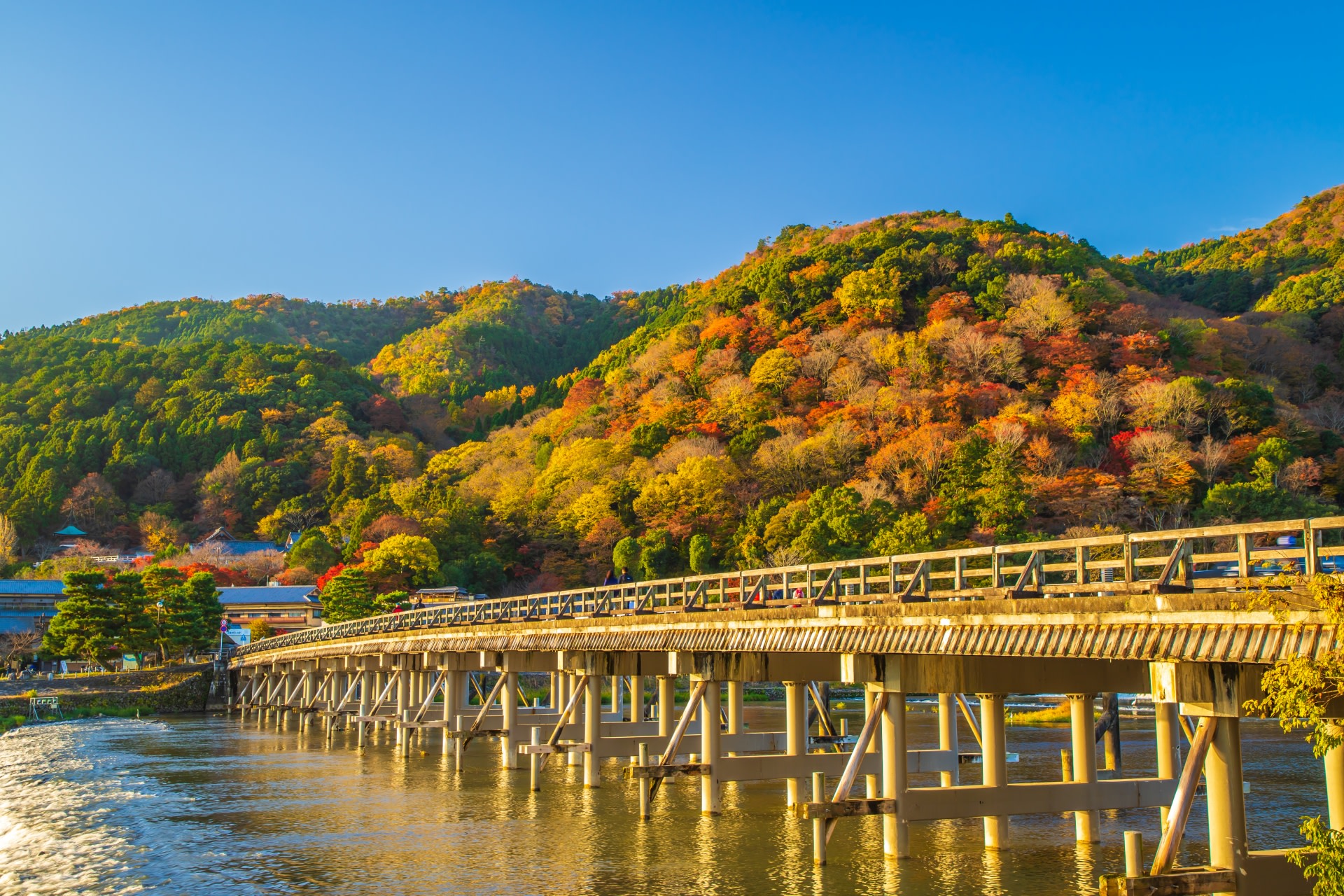
![[Kyoto & Arashiyama & Nara] Nara Park (Deer Crackers Included) & Fushimi Inari Shrine or chiikawa Shop & Arashiyama Train & Bamboo Forest One Day Tour (From Osaka)](https://res.klook.com/image/upload/activities/q32nuioacqyxapntqdop.jpg)