Slovakia’s Dark History: Legends, Hauntings & Mysteries
Active
11h - 14h
For a full refund, cancel at least 24 hours before the scheduled departure time.
Instant confirmation
Mobile or paper ticket accepted
About this experience
This is not a classic sightseeing tour or a playful ghost walk. What sets this experience apart is its focus on dark history, real events, and the thin line between fact and legend that shaped Slovakia for centuries. Instead of polished highlights, you explore places connected to executions, cruelty, superstition, fear, and unexplained phenomena. Castles are not fairy-tale monuments, but symbols of power, punishment, and isolation. Cities are revealed through stories of plague, crime, public justice, and forgotten suffering. Remote regions like Tribeč are approached through documented cases, local testimonies, and chilling theories not cheap horror.
The tour is led by a driver storyteller, creating an intimate atmosphere without crowds or scripted performances. History is always the foundation, but some questions remain unanswered.
If you seek something authentic, unsettling, and unforgettable, this journey reveals Slovakia through its darkest stories long after the daylight fades.
Available options
Slovakia’s Dark History: Legends, Hauntings & Mysteries
Pickup included
What's included
Private transportation
Bottled water
Air-conditioned vehicle
Detailed itinerary
1
Stop 1
Leaving Vienna, we travel north through Austria and into Slovakia, where the landscape gradually changes from open lowlands to rolling hills, dense forests, and mountain regions. This scenic drive leads us into areas that were historically isolated and shaped by difficult living conditions.
During the journey, your guide introduces the historical background of northern Slovakia, including medieval life, noble power, border regions, superstition, and the role fear and belief played in everyday decisions. Many legends associated with this region are rooted in real events, harsh justice, and phenomena people once could not explain.
As we approach the Orava region, the terrain becomes more rugged and remote. Small villages, forests, and mountains help explain why this part of Slovakia has inspired so many dark stories and legends. This drive provides essential historical context and sets the tone for the experiences that follow.
2
Stop 2
Guests who wish to explore further can join a guided tour inside Orava Castle. Built high on a steep rock above the river, the castle’s structure reflects its original purpose — defense, isolation, and control. Narrow staircases, thick stone walls, and dim interiors create an atmosphere that feels frozen in time.
The tour focuses on the castle’s real history: medieval justice, executions, harsh living conditions, and the lives of those who served and suffered within its walls. These realities later inspired numerous legends and stories of unexplained events.
Orava Castle also gained international fame as one of the filming locations for Nosferatu, one of the earliest and most influential horror films ever made. Its dark silhouette and unsettling atmosphere made it the perfect setting for early cinema’s vision of fear.
3
Leaving the Orava region, we travel south through central Slovakia, passing forests, valleys, and long stretches of countryside shaped by centuries of conflict and trade routes. The journey follows areas once guarded by castles and border fortifications, where control of land meant survival.
During the drive, your guide introduces the darker chapters of Slovak history connected to this region — medieval warfare, noble rivalries, public punishments, and how fear was used as a tool of power. Many legends that survive today grew from real historical events that left a strong imprint on local communities.
As we approach Trenčín, the landscape opens into the Váh River valley. High above the town, the silhouette of Trenčín Castle becomes visible on its rocky cliff, a reminder of the strategic importance of this place. The drive prepares you for a city where history, legend, and authority have always stood side by side.
4
In Trenčín, the experience continues with a guided walk through the historic town led by your driver-guide. Without entering the castle, the focus remains on the city below — where everyday life unfolded in the shadow of power, fear, and punishment.
During the walk, you will hear true historical stories connected to executions, public punishments, unexplained deaths, and local legends that have circulated for centuries. Many of these tales are rooted in documented events, shaped over time by superstition and fear. Narrow streets, old houses, and quiet squares create a setting where history feels uncomfortably close.
With Trenčín Castle towering above the town, its presence is constant — a silent reminder of authority and control. This tour reveals how the city itself became part of the darker narrative, where horror was not hidden behind castle walls but experienced in daily life.
5
In Čachtice, guests take part in a guided walk led by the driver, exploring the village and surroundings connected to one of Europe’s most disturbing historical figures, Elizabeth Báthory. Known as the “Blood Countess,” her name became synonymous with cruelty, torture, and legend.
The walk focuses on documented history as well as the stories that grew around it — noble power without limits, the fate of servants, secret investigations, and how fear shaped silence. While many elements were exaggerated over time, real court records confirm extreme brutality that shocked even her contemporaries.
With Čachtice Castle visible above the landscape, the setting adds weight to the story. Forests, paths, and ruins create an unsettling backdrop, where history and legend blur. This experience offers insight into how one woman’s crimes became one of Central Europe’s darkest and most enduring legends.
6
An optional stop brings us to the village of Zlatno, located on the edge of the Tribeč Mountains, a region long associated with unexplained events and unsettling legends. Over the years, stories have emerged about people disappearing, strange lights in the forest, sudden disorientation, and encounters locals struggle to explain.
During a short walk and talk led by your driver-guide, you will hear about documented cases, local testimonies, and theories ranging from natural phenomena and psychological effects to folklore involving demons, ancient forces, and even extraterrestrial encounters. The stories are presented as part of the region’s cultural identity rather than as facts.
Dense forests, limited signal, and deep silence create an atmosphere that continues to fuel speculation. Zlatno offers a glimpse into one of Slovakia’s most mysterious regions, where legend and unanswered questions still coexist.
7
The tour concludes in Bratislava with a guided walk focused on the city’s darker past — far from the typical highlights and postcard stories. Led by your driver-guide, this experience explores hidden corners, quiet streets, and places connected to executions, medieval crime, plague outbreaks, and long-forgotten tragedies.
You will hear stories of condemned prisoners, public punishments, haunted houses, and legends tied to nobles, soldiers, and ordinary people whose lives ended violently or mysteriously. These tales are based on historical records and local folklore, revealing how fear, disease, and superstition shaped life in the medieval and early modern city.
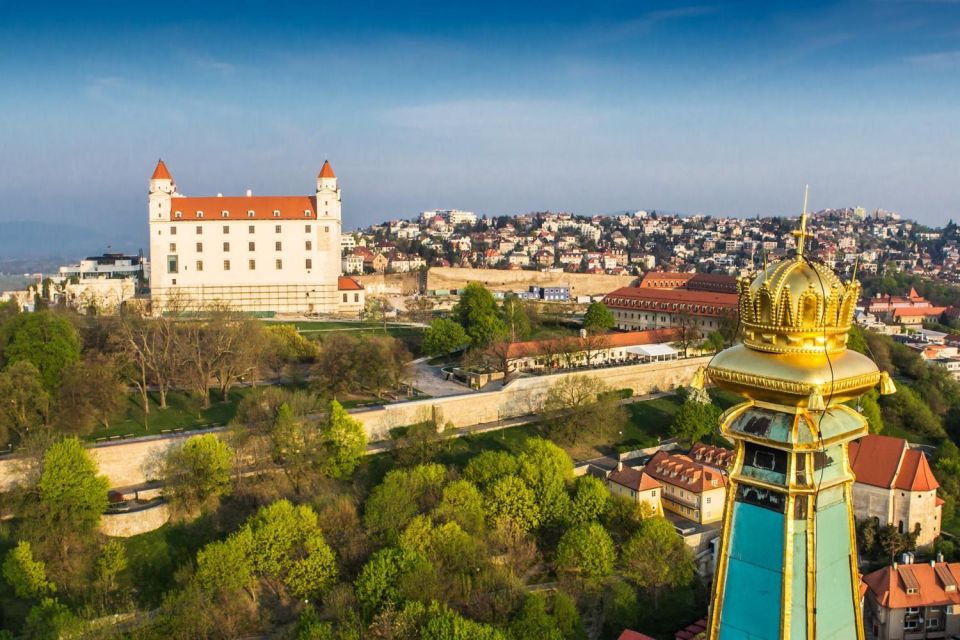
With Bratislava Castle looming above and the old town growing quieter in the evening, the atmosphere becomes noticeably different. This walk offers a final look at Slovakia’s capital through a darker lens — a reminder that beneath its charming surface lies a history marked by suffering, belief, and unresolved legends.
What's not included
Lunch
Dinner
Available languages
Guide guide
EN
Important information
Public transportation options are available nearby
Specialized infant seats are available
Not recommended for travelers with spinal injuries
Not recommended for travelers with poor cardiovascular health
Travelers should have at least a moderate level of physical fitness
About Bratislava
Bratislava, the charming capital of Slovakia, is nestled along the Danube River with a backdrop of the Little Carpathians. Known for its compact historic center, stunning architecture, and rich history, it offers a blend of medieval charm and modern vibrancy. The city's strategic location at the crossroads of several European cultures makes it a unique and fascinating destination.
Top Attractions
Bratislava Castle
This iconic castle sits atop a hill overlooking the city and the Danube River. It has a long history dating back to the 9th century and now houses a museum with exhibits on Slovak history.
Historical
1-2 hours
€6
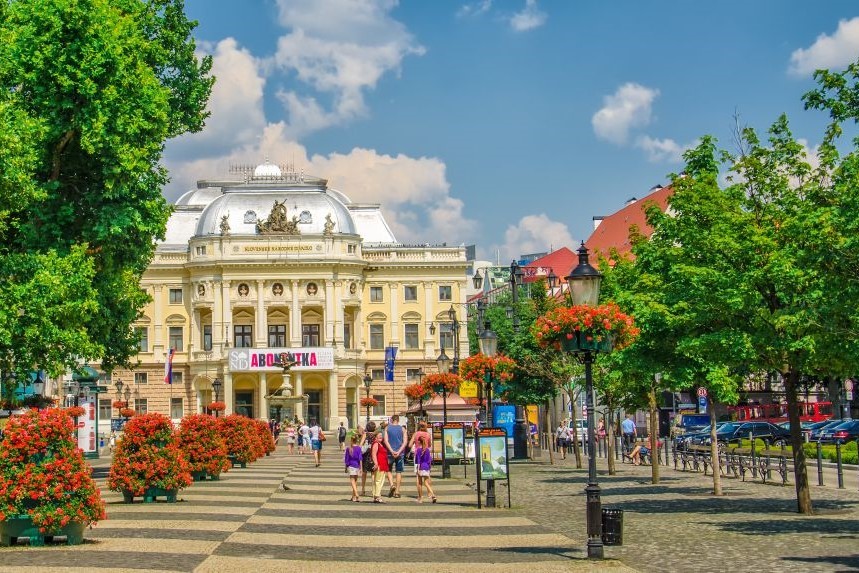
Old Town Hall
The Old Town Hall is a beautiful Gothic building that has served as the seat of the city's self-government since the 14th century. It now houses a museum with exhibits on the history of Bratislava.
Historical
30-60 minutes
€4
St. Martin's Cathedral
This Gothic cathedral is one of the most important religious buildings in Bratislava. It has been the site of coronations of Hungarian kings and queens for centuries.
Religious
30 minutes
Free (donations welcome)
Blue Church
The Blue Church is a stunning example of Art Nouveau architecture, known for its distinctive blue color and fairy-tale appearance. It was built in the early 20th century and is a popular spot for photos.
Architecture
30 minutes
Free (donations welcome)
Danube River Cruise
A Danube River cruise offers a unique perspective of Bratislava and its surroundings. You can choose from various cruise options, including dinner cruises and sightseeing tours.
Entertainment
1-2 hours
€15-30
Must-Try Local Dishes
Bryndzové halušky
Potato dumplings with sheep cheese and topped with crispy bacon. A classic Slovak dish that is a must-try.
Main dish
Contains dairy and meat
Kapustnica
A hearty soup made with sauerkraut, smoked meats, and sometimes mushrooms. It's a traditional dish often eaten during Christmas.
Soup
Contains meat
Zemiakové placky
Potato pancakes, often served with sour cream or garlic sauce. A popular street food in Slovakia.
Snack
Vegetarian
Popular Activities
Hiking in the Little Carpathians
Cycling along the Danube River
Rafting on the Danube
River cruises
Spa treatments
Coffeehouse hopping
Museum visits
Concerts and performances
Best Time to Visit
May to September
The summer months offer warm weather, outdoor festivals, and lively atmosphere. This is the best time for exploring the city's parks, enjoying river cruises, and attending cultural events.
15°C to 30°C
59°F to 86°F
Practical Information
Language
- Official: Slovak
- Widely spoken: English, German
- English: Moderately spoken in tourist areas, limited elsewhere
Currency
Euro (EUR)
Time Zone
GMT+1 (Central European Time)
Electricity
230VV, 50HzHz
Safety Information
Overall Safety Rating: Generally safe
Bratislava is generally a safe city for travelers. Petty crime, such as pickpocketing and bag snatching, can occur in tourist areas, so it's important to be vigilant. Violent crime is rare.
Important Precautions:
- • Keep valuables secure and out of sight
- • Use official taxi stands or app-based services
- • Be cautious of strangers approaching you with petitions or surveys
Getting there
By air
- Bratislava Airport • 9 km from city center
By train
Bratislava Hauptbahnhof
By bus
Bratislava Bus Station (Mlynské Nivy)
Getting around
Public transport
Buses are the backbone of Bratislava's public transport system, covering the entire city and connecting to suburbs. They are efficient and frequent.
Taxis
Available • Apps: Bolt, Freetaxi
Rentals
Car, Bike, Scooter
Neighborhoods
Old Town
Petržalka
Nový Mesto
Day trips
Vienna, Austria
80 km • Full day
Vienna, the capital of Austria, is a stunning city known for its imperial palaces, museums, and coffeehouses. It's a perfect day trip from Bratislava, offering a wealth of cultural and historical attractions.
Devín Castle
10 km • Half day
Devín Castle is a stunning ruin perched on a cliff overlooking the confluence of the Danube and Morava rivers. It has a rich history and offers beautiful views of the surrounding countryside.
Prague, Czech Republic
330 km • Overnight
Prague, the capital of the Czech Republic, is a magical city known for its stunning architecture, rich history, and vibrant culture. It's a longer trip from Bratislava but well worth the journey.
Festivals
Bratislava Music Festival • September
Bratislava Christmas Market • December
Pro tips
- Visit the UFO Bridge observation deck for the best views of the city
- Explore the local markets for fresh produce, souvenirs, and a taste of Slovak culture
- Take a day trip to Devín Castle for a unique blend of history and nature
- Try traditional Slovak dishes like bryndzové halušky and kapustnica
- Use the Bratislava Card for discounts on attractions, transport, and dining
From $25
per person
Price varies by option
Secure booking
Free cancellation available
Instant confirmation